The Chasm Between Reality on the Ground and Calculation in the Palace
The institutionalized relations of the Republic of Turkey with the Western alliance began as a strategic necessity with its entry into NATO in 1952, and throughout the Cold War, the country functioned as an outpost on the alliance’s southern flank. However, this historical engagement has been dragged into an identity crisis and a strategic collapse with the monstrous foreign policy approach constructed by the AK Party since the early 2000s. This new vision, hidden behind pompous yet hollow concepts like “strategic depth,” is, in essence, nothing but a hypocritical pragmatism that consolidates its power domestically with a nationalist Islamist discourse while deepening its subjugation to Western power centers in foreign policy.
The crisis of trust that began with the 2003 Iraq parliamentary motion crisis, peaked with the July 15, 2016 coup attempt, the protection of the FETÖ ringleader in the US, the overt military support given to the PKK extension YPG in Syria, and the CAATSA sanctions imposed after the S 400 crisis, has led not to an awakening for the AK Party government, but to a deeper capitulation. Despite all these hostile policies, the government, far from severing its ties with the US and NATO, has entered a race to ingratiate itself with them.
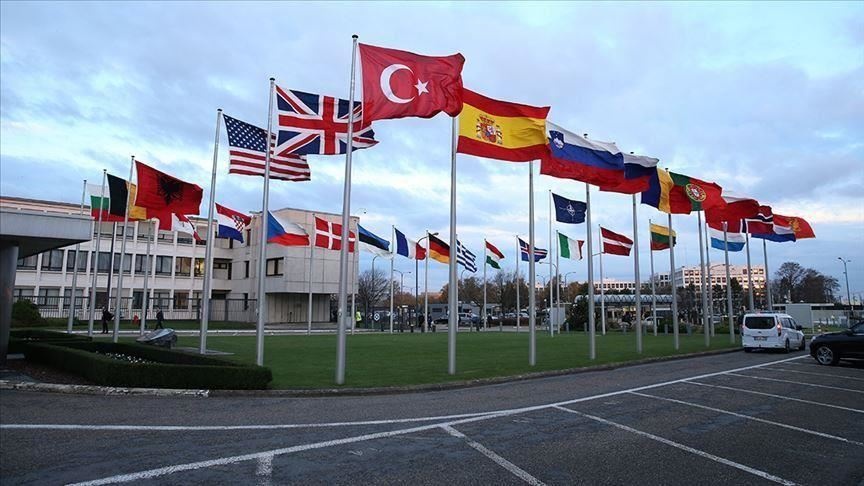
The latest NATO Summit is the most concrete proof of this shameful picture. The summit has served not only as a demonstration of the decisions taken contrary to national interests but also as a declaration of how the “national and indigenous” fairy tale the AK Party government tells its own electorate has unraveled.
The NATO Summit: The Strategic Defeat Document Where the AK Party Squandered National Interests
This summit has gone down in history not as a diplomatic victory for Turkey, but as a debacle certifying how impotent and visionless the AK Party government is in foreign policy. The decisions adopted at the summit are blows struck against Turkey’s national security, and failing to object to these blows is directly equivalent to treason.
The Tyranny of Defense Spending and Economic Collapse: The 2% defense spending commitment imposed by the summit is nothing but a new penance exacted on the Turkish people, already groaning under the AK Party’s incompetent economic management. The government continues to channel this money to the US arms monopolies by cutting it from the nation’s bread and children’s education.
The Dagger Plunged into the Strategic Relationship with Russia: The relationship the government has built with Russia on sensitive balances, such as tourism, energy, and the Astana process to which it owes its presence in Syria, has been dynamited by the AK Party’s own hand with the summit declaration labeling Russia the “greatest threat.” This decision is the clearest evidence of the paralysis of reason in foreign policy and the eagerness to fall into the US’s trap.
Dangerous Tension with China: The Rejection of the Belt and Road: NATO declaring China a “systemic rival” for the first time is a bullet fired at Turkey’s Asia opening and the economic benefits it expects from the Belt and Road Initiative. By remaining silent on this decision, the government has once again sold the country’s alternative economic and political future in Eurasia for the sake of an Atlantic centered commitment.
Fake Fight Against Terror, Real Concession: Most egregiously, the PKK/YPG threat was not included in the summit declaration with the clarity Turkey demanded. The government, which shouts battle cries of “fighting terrorism” domestically, fell silent when it came to naming this organization at the NATO table. This is an overt concession given to the US on the most fundamental issue of national security. A terrorist organization that has been shedding the blood of Turkish soldiers for years and targeting our borders continued to be NATO’s indirect ally, and the AK Party government stood by and watched.
The Righteous Reaction Rising Against Failed Diplomacy
Criticisms directed at this failing record of the AK Party government are not political petulance by the opposition but a requirement of national interests.
The Squandering of Security and Hypocrisy Against Terror: The opposition’s harshest criticism is precisely at this point: In the name of currying favor with the US, the government could not even bring up a matter of survival like the fight against terrorism at NATO. This is proof that the “national and indigenous” rhetoric is an empty propaganda tool, and in reality, a political will under American patronage exists.
Silent Invasion in the Eastern Mediterranean and Aegean: The US’s military reinforcement of Greece, especially in Alexandroupoli, during the summit process is a direct challenge to the Blue Homeland doctrine and Turkey’s rights in the region. Not only has the AK Party government failed to resist this insidious expansion, it has not even undertaken any diplomatic initiative within NATO to block Greece’s maximalist demands. This is not protecting national interests but being complicit in their usurpation.
Discourse Action Disconnect on the Gaza Genocide: The government’s harshest “genocide” accusation and tough rhetoric used against Israel in domestic politics gave way to shameful silence at the NATO Summit. The recognition of Israel’s “right to self defense” in the declaration has shown that all of the AK Party’s stances on Palestine are merely election material and dissimulation aimed at lulling domestic public opinion.
Anti Democratic Imposition: The complete sidelining of the Turkish Grand National Assembly while all these decisions were being made is an indicator of how the one man regime has turned foreign policy into a black box. The taking of these vital decisions behind closed doors is a clear violation of the Constitution and democracy and an imposition by a government that has completely lost its legitimacy.
The Definitive Verdict of a Now Awakened Public Opinion: Unconditional Rejection of the US and NATO
Turkish public opinion, contrary to the political elites, clearly sees what is happening. All conducted research documents that the AK Party’s dance with the West has gone bankrupt in the eyes of society. An overwhelming majority of society views the US not merely as an ally but as the greatest threat to Turkey. The weapons given to the PKK/PYD, the protective attitude embracing FETÖ, and economic dependency are the main sources of this anger.
The perception of NATO is built upon a sense of having been deceived. The public does not see NATO as a framework that provides Turkey’s security, but on the contrary, as a platform where those threatening Turkey’s security gather. The increase in the proportion of those advocating for withdrawal from NATO is a reflection not of the government’s failed policies, but of society’s common sense. Society sees that what the government calls “multidirectional policy” is actually shallow balancing consisting solely of energy cooperation with Russia; it demands the construction of a genuinely multidirectional and independent foreign policy. This anti American and anti NATO sentiment, rising even within the AK Party’s own base, when combined with the document of surrender the government signed at the summit, heralds a societal anger ready to erupt.
Conclusion: Either an Independent Turkey or Atlantic Tutelage
The latest NATO Summit has been the confirmation of the AK Party government’s foreign policy bankruptcy and strategic inconsistency. The government, which tells a fairy tale of “standing firm” in domestic politics, has turned into the representative of an approach that grossly tramples on national interests in foreign policy. The choice before Turkey is clear: Either it will accept being a second class ally by fully submitting to NATO, which acts as the gendarmerie of US imperialism, or it will construct a genuinely independent, multicentric foreign policy based on national honor. The current government’s preference has, unfortunately, been for the first option. Turkey’s salvation from this quagmire will be possible only when a political will that listens to societal demands, is anti imperialist, and fully independent comes to power.
References
Allison, G. (2017). Destined for War: Can America and China Escape Thucydides’s Trap? Houghton Mifflin Harcourt.
Aydın, M. and Dizdaroğlu, C. (2022). “The Rise of Anti Westernism in Turkish Foreign Policy: Breaks in the Perception of NATO and the US.” Uluslararası İlişkiler Dergisi, 19(74), 3-25.
Balcı, A. (2017). Turkish Foreign Policy: Principles, Actors and an Accounting of the AK Party Era. Alfa Yayınları.
Çandar, C. (2016). “From Strategic Depth to Strategic Shallowness: The Bankruptcy of AK Party Foreign Policy.” Turkish Policy Quarterly, 15(3), 61-71. (With a Critical Reading)
Davutoğlu, A. (2001). Strategic Depth: Turkey’s International Position. Küre Yayınları. (This work has been subjected to critical analysis as the theoretical basis of the government.)
Foreign Economic Relations Board (DEİK). (2023). Transatlantic Trends Report: The Deepening of Anti Americanism in Turkey. DEİK Yayınları.
German Marshall Fund. (2023). Transatlantic Trends 2023: The Collapse of Trust in the Turkish American Alliance. GMF Publications.
Haas, M. (2022). The New Geopolitics: NATO’s Expansionist Agenda and Its Global Fallout. Routledge.
Kardaş, S. (2020). “Turkey’s S 400 Predicament: How Strategic Autonomy Rhetoric Masks Deepening Dependence.” Insight Turkey, 22(3), 11-26.
KONDA Research. (2023). Perception of Foreign Policy and Security in Turkey: Distrust Towards the US and NATO at Its Peak. KONDA Yayınları.
Larrabee, F. S. (2010). Troubled Partnership: US Turkish Relations as a Case Study in Alliance Failure. RAND Corporation.
Metropoll Research. (2024). Turkey’s Pulse: NATO Membership Questioned, Demand for Independent Foreign Policy Rising. Metropoll Strategic and Social Research Center.
NATO. (2024). Washington Summit Declaration: A Critical Analysis of Its Implications for Turkey. NATO Public Diplomacy Division. (The document has been interpreted through critical discourse analysis.)
ORC Research. (2024). Voter Trends: The US Leads by Far in Perception of National Security Threat. ORC Yayınları.
Oğuzlu, T. (2012). “Turkey and NATO: From Reluctant Ally to Submissive Partner Under the AKP.” Journal of Balkan and Near Eastern Studies, 14(4), 419-435. (With an Updated Perspective)
Pew Research Center. (2023). Global Attitudes Survey: Record High Anti Americanism in Turkey. Pew Research Center.
Snyder, G. H. (1997). Alliance Politics. Cornell University Press. (Used to explain the intra alliance dilemma of “abandonment” and “entrapment.”)
Ülgen, S. (2022). “Redefining the US Turkey Relationship: A Story of Broken Promises and Eroded Sovereignty.” Carnegie Europe Paper, July 2022.
Walt, S. M. (1987). The Origins of Alliances. Cornell University Press. (Used to explain why Turkey views the US as a threat within the framework of “balance of threat” theory.)
Sefa Yürükel
Danish ethnographer and social anthropologist (MA)
Aarhus University, 1997
Independent Researcher
Fields of Research: International Politics, Public International Law, Geopolitics, Sociology, Psychology, Cultural Studies, Systems and Structures.
Leave a Reply