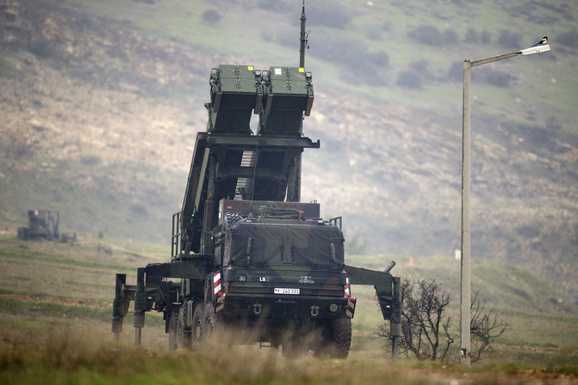
The military developments of recent days are of a nature that will fundamentally shake the balance of power in the Middle East. In a manner surprising to observers, Iran has launched a comprehensive, large-scale, and determined operation against U.S. bases. The scale of these operations reveals a military reality for which the world was unprepared.
Scope of the Operation and Strategic Impacts
In just four days, Iran has succeeded in significantly expanding its area of military superiority in the region. As a result of the operations, some of the world’s most valuable and expensive military bases, assets, and equipment have been destroyed. U.S. bases in Bahrain, Kuwait, Qatar, and Saudi Arabia rank among the largest military facilities globally. The construction of these facilities took decades and cost trillions of dollars. Thus, we are faced with a picture where a large portion of military expenditures made over thirty years has been rendered futile.
The dimensions of the observed destruction are quite striking. Radar systems worth hundreds of millions of dollars have been instantly destroyed. A large part of the military bases has been abandoned, burned, looted, and rendered unusable. At this point, an important historical comparison must be made: As far as is known, the United States has not experienced destruction on this scale in its history, except for the attack on Pearl Harbor. However, even the attack of that era cannot be compared to the scope and intensity of the operations Iran is carrying out today. No enemy in a conventional war has inflicted destruction on U.S. military forces on the scale that Iran is currently applying.
Information Flow and Censorship
The severity of the military situation is so advanced that censorship mechanisms are preventing almost all new information about this war from reaching the public. What should be noted is that the amount of information obtained about the conflict is decreasing day by day. Yet, thirty-five years ago, during the First Gulf War, we watched countless images and video streams from Iraq. Back then, even when smart bombs and camera technologies were still new, new footage could be broadcast every night. Now, almost no video recordings are accessible.
One of the most important indicators of this information restriction is the uncertainty regarding air superiority. There is no indication that the USA, considered the world’s largest military power and the country with the largest air force, has established air superiority over Iran even by the fourth day of the war. No images have emerged of American planes flying over Tehran or any part of Iran. Moreover, American soldiers setting foot on Iranian soil is unimaginable under current conditions.
Desperate Proposals of the Trump Administration
To understand how desperate this war has become, it is enough to look at the proposals coming from the Trump administration as early as the fourth day. Unbelievable ideas are being put forward, such as providing military escort to oil tankers leaving the Persian Gulf. The meaning of this proposal is quite clear: It seeks to send American ships into a region directly within the range of thousands of Iranian missiles. Yet, currently, no ships can transit through the Strait of Hormuz. The Iranians have been preparing for decades to close this strategic waterway.
Another proposal is the idea of arming Kurdish militias to invade Iran. When evaluating this proposal, one must consider Iran’s size and geographical realities. Looking at the map of Iran, it is clearly visible how vast an area the country covers. Thinking that a militia force of ten thousand people could invade Iran is unrealistic even for a force of fifty thousand or even a hundred thousand people. Iran’s geographical depth and population size render such an invasion attempt impossible from the start. Iran has the capacity to strategically neutralize even a force of this size.
Course of the War and Final Outcome
It is now possible to say that the US and Israel have already lost this war. Of course, both countries possess powerful bombs and the capacity to destroy buildings. It is theoretically possible to kill millions of civilians in their homes. However, this does not mean winning the war. Military victory is not only about destructive capacity but also about the ability to achieve strategic objectives and break the enemy’s resistance.
Iran’s military infrastructure and weapons are deployed all across the country and deep underground. Due to the nature of this configuration, neither the Americans nor especially the Israelis have any chance of reaching these targets. This situation puts the US and its allies in an extremely difficult position. There is almost no possibility for them to end the military operation they have started.
Long-Term Regional Effects
Once all these developments are over, it is predicted that the United States will never return to West Asia again. The American presence in the Middle East will permanently end. This situation will bring about a radical change in regional power balances and signal the beginning of a new geopolitical era.
References
- Cordesman, A. H. (2019). The Gulf Military Balance: The Conventional and Asymmetric Dimensions. Center for Strategic and International Studies (CSIS).
- International Institute for Strategic Studies (IISS). (2023). The Military Balance 2023. Routledge.
- Pollack, K. M. (2004). The Persian Puzzle: The Conflict Between Iran and America. Random House.
- U.S. Department of Defense. (2022). Annual Report on Military Power of Iran. Office of the Secretary of Defense.
- RAND Corporation. (2020). The Future of U.S. Bases in the Middle East. RAND Research Report.
- Fathi, N. (2020, January). Iran’s Military Doctrine: Offensive Defense. The Atlantic.
- Byman, D. (2021). Iran’s Security Policy in the Post-Revolutionary Era. Brookings Institution Press.
Sefa Yürükel
Danish ethnographer and social anthropologist (MA)
Aarhus University, 1997
Independent Researcher
Fields of Research: International Politics, Public International Law, Geopolitics, Sociology, Psychology, Cultural Studies, Systems and Structures
Leave a Reply