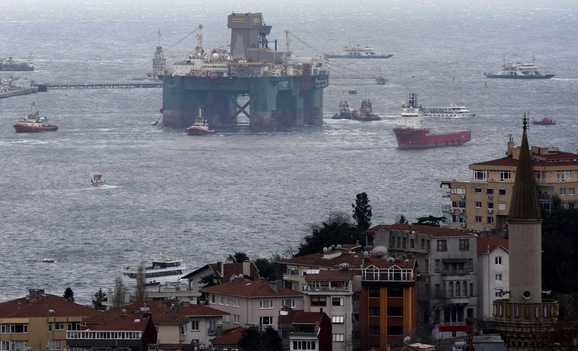
With the deepening of the globalization process, maritime transport, which forms the backbone of international trade, has gained an indispensable dimension for the economic welfare and national security of states. In an era where the overwhelming majority of global trade volume is conducted via container ships and tankers, ports have transcended their role as mere loading and unloading stations. These areas constitute the most critical links in global supply chains, are regarded as the guarantors of energy supply security, and are positioned as overseas bases for military power projection. Strategic ports that control narrow sea passages such as the Straits of Malacca, Hormuz, Bab-el-Mandeb, and the Suez Canal play a decisive role in reshaping the balance of power in the international system. The geopolitical rivalry of the twenty-first century manifests itself not in classical conflicts over land borders, but as an indirect yet intensely fierce struggle waged over maritime trade routes and the ports at the nodal points of these routes. This new era is a period of great reckoning where the intricacies of international law are shaped in the shadow of powerful navies, and free market discourses are tested by strategic imperatives.
When the principal actors of this competition are examined, it is evident that the People’s Republic of China, with its economic rise in the Asia-Pacific; the United States of America, striving to maintain global maritime dominance; and the European Union, caught between its commercial interests and the quest for strategic autonomy, are at the center. China’s port investments in the Indian Ocean, Africa, and Europe under the scope of the Belt and Road Initiative are components of a strategic encirclement attempt dubbed the “String of Pearls.” These projects are evaluated as a power projection mechanism concealed behind Beijing’s discourse of peaceful rise. In response, the Washington administration aims to reduce dependency on China-centric logistics networks by fortifying its military bases in the Pacific while establishing alternative supply chains with its allies. Through this maneuver, Washington seeks to neutralize the strategy of logistically encircling China. The European continent, on the other hand, is pursuing a policy of balance between economic pragmatism and national security sensitivities in the face of the increasing visibility of Chinese capital in ports such as Rotterdam, Hamburg, and Piraeus. In addition to these great powers, regional actors such as India, Russia, Türkiye, and Iran are also striving to expand their independent maneuverability in the multipolar world order by investing in ports within their respective geopolitical basins.
The struggle for maritime dominance, ongoing since the Age of Discovery, has acquired new dimensions today under the influence of technological developments and climate change. The melting of glaciers in the Arctic Ocean has rendered the Northern Sea Route a commercially viable alternative between Asia and Europe, increasing the interest of littoral states—particularly Russia and China—in port infrastructure within this region. Furthermore, the digitalization and smartification of port operations, while enhancing efficiency, also introduce cybersecurity vulnerabilities, placing strategic ports among the potential targets of cyber warfare. The logistical disruptions experienced during the COVID-19 pandemic have concretely demonstrated that even the slightest congestion at ports can create a domino effect on the global economy. In light of all these developments, the issue of control and security of strategic ports has ascended to the top tier of states’ national security agendas.
The Great Game in the Shadow of Ports
More than eighty percent of global trade volume is transported via sea routes, rendering oceans and coastlines the most vital arenas of competition in the international system. The uninterrupted functioning of maritime transport constitutes the backbone of supply chains, which are the cornerstone of the modern economy, and the most critical links in this chain are formed by strategic ports. These ports are far more than logistical bases where containers are loaded and unloaded; they are geopolitical assets that directly determine the economic welfare, energy supply security, and military mobility capacity of states. A country’s ability to direct the flow of global trade is directly proportional to its control or influence over these nodal points. Therefore, twenty-first-century international relations are largely shaped by moves played on the maritime chessboard and the great game sustained in the shadow of ports.
From a historical perspective, it is clearly evident that powers dominating maritime trade routes have played a decisive role in world politics. Although ancient routes like the Silk Road and the Spice Route have been replaced by modern maritime highways, the strategic chokepoints imposed by geography have never lost their significance. Transit points such as the Strait of Malacca, the Strait of Hormuz, the Suez Canal, and the Bab-el-Mandeb Strait continue to exist as clusters of intersection for global energy and commodity transportation. The ports situated around these passages function not merely as commercial stops but also as forward outposts where regional security architecture is constructed. Today, the rivalry among great powers manifests itself as an indirect struggle waged through the financing, operation, and security provision of this critical infrastructure, rather than through direct hot conflict.
The Asia-Pacific geography, in particular, is the region where port competition is most intense, given its status as the center of gravity for global manufacturing industry and consumer markets. The economic rise of the People’s Republic of China parallels the astronomical increase in the throughput volumes of mega-ports such as Shanghai, Ningbo-Zhoushan, and Shenzhen. While these ports position China at the center of global production networks, they are also concrete indicators of the country’s opening-up strategy. However, China’s primary move in maritime geopolitics lies in its effort to construct an extensive port network extending beyond its own shores into the Indian Ocean and beyond. Projects implemented under the Belt and Road Initiative grant the Beijing administration the opportunity to hold sway over alternative trade corridors, fundamentally shaking the existing maritime power balances.
When assessing the situation from the perspective of the United States and its allies, it is observed that the absolute maritime dominance sustained since the Second World War is eroding. Although the Washington administration fortifies its presence in the Pacific with naval bases such as Guam, Yokosuka, and Pearl Harbor, it is compelled to develop new strategies against China’s influence campaign conducted through civilian commercial ports. The ports of Los Angeles and Long Beach, as the busiest entry points for Transpacific trade, expose the American economy’s dependency on the Far East. To reduce this dependency and diversify supply chains, the recent encouragement of infrastructure investments in ports in India, Vietnam, and Mexico represents a notable geopolitical maneuver. Additionally, NATO’s maritime security operations and regional alliances like the QUAD are current reflections of efforts to preserve the liberal maritime order.
The position of the European continent within this global equation exhibits a dual structure oscillating between traditional commercial power and an increasing perception of geopolitical threat. Ports such as Rotterdam, Antwerp, and Hamburg are the main arteries opening the European Union to global trade and act as the guarantor of the continent’s prosperity. The efficiency and security of these ports directly affect Europe’s competitiveness. However, strategic investments made by Chinese companies in recent years in Southern European ports like Piraeus and Trieste have fueled debates in Brussels regarding national security and strategic autonomy. European decision-makers are simultaneously reliant on these investments to ensure the continuity of free trade while trying to mitigate the political risks posed by the transfer of critical infrastructure to the control of foreign states. This dilemma constitutes the fundamental dynamic of Europe’s new-era port policies.
The Indian Ocean stands out as one of the most complex and energy-laden geographies of the global power struggle. A significant portion of the world’s seaborne crude oil and liquefied natural gas traverses these waters, rendering the ocean the jugular vein of the global economy. The Gwadar Port constructed by China in Pakistan, the Hambantota port it operates in Sri Lanka, and the Kyaukpyu deep-sea port project in Myanmar under the “String of Pearls” strategy represent the most concrete steps toward establishing control over this vital energy route. In response to this encirclement attempt surrounding its coastline, India is developing Iran’s Chabahar Port and striving to create an alternative corridor opening to West and Central Asia. The modernization of Indian ports such as Mumbai and Mundra constitutes the logistical infrastructure of New Delhi’s claim to be a regional maritime power.
When it comes to the Middle East, the first thing that comes to mind is not strategic ports per se, but the narrow sea passages they control. Jebel Ali Port, belonging to the United Arab Emirates and located right at the entrance of the Strait of Hormuz, stands out as one of the largest transshipment hubs not only in the Middle East but in the world. This port is a critical center guaranteeing the functioning of global trade despite political instabilities in the Gulf region. In contrast, Iran keeps the threat of closing the Strait of Hormuz as a trump card while fortifying Bandar Abbas Port with its military and commercial capacity, and also attempts to create an alternative to Pakistan’s Gwadar Port through Chabahar in cooperation with India. Saudi Arabia, in line with its Vision 2030 goals, seeks to assume a more central role on the global logistics map by expanding Jeddah Islamic Port and King Abdullah Port on the Red Sea coast. The port competition in this region is also an extension of the Sunni-Shia geopolitical tension.
The African continent, though long remaining in the background in terms of port competition, has now transformed into one of the most dynamic stages of the new great game. In the east of the continent, Djibouti, at the entrance of the Gulf of Aden, possesses immense geostrategic weight despite its small surface area. Controlling the Bab-el-Mandeb Strait, this point hosts military bases of the United States, China, France, Japan, and even Türkiye, becoming one of the world’s most densely militarized port zones. China’s military presence in Djibouti has made history as the People’s Liberation Army Navy’s first overseas base, symbolizing a turning point in Beijing’s global power projection. At the other end of the continent, Morocco’s Tanger Med Port has become Africa’s largest container port due to its location linking the Mediterranean and the Atlantic, rising to the status of an indispensable trading partner for European companies. The modernization of port infrastructure in Africa will continue to be a primary determinant of the influence struggle among global powers, in addition to stimulating the continent’s internal trade.
Looking closer at the Americas, different dynamics operate within a geography squeezed between the Atlantic and Pacific Oceans. The expansion of the Panama Canal has redrawn the routes of global maritime trade and strengthened the connection between East Asia and the East Coast of the United States. In this context, Atlantic coast hubs like the Port of New York and New Jersey and the Port of Savannah have entered an intense race of dredging and infrastructure investment to capture a larger share of transpacific trade. In South America, while Brazil’s Port of Santos maintains its critical role in the continent’s raw material exports, the Chancay Port project in Peru, built with Chinese capital, is one of the most ambitious initiatives aiming to permanently cement Beijing’s footprint on the Pacific coast of South America. This development is viewed as an attempt by a global actor other than the United States to establish influence directly through port control in Latin America a region long living under the shadow of the Monroe Doctrine, thereby unsettling regional security balances.
The Russian Federation’s port strategy, however, progresses on a different track dictated by geographical constraints. Despite its vast landmass, Moscow, with limited direct access to warm waters, has focused on the Arctic sea route in the north and the Black Sea and Eastern Mediterranean ports in the south to overcome this disadvantage. As a paradox of climate change, the melting of glaciers is opening Russia’s ports on the Siberian coast to global trade, transforming the Northern Sea Route into a shorter alternative between Asia and Europe compared to the Suez Canal. Ports such as Murmansk and the newly built Sabetta are positioned as both export hubs for Russian energy and new bases for its naval power. On the other hand, the concessions held at the Port of Tartus in Syria guarantee the permanent presence of the Russian Navy in the Eastern Mediterranean. Novorossiysk on the Black Sea, as a critical exit point for grain and oil trade, has once again proven its geopolitical importance in the context of the war in Ukraine.
Türkiye’s position within this vast geopolitical landscape holds a unique character, bridging two continents and controlling two crucial maritime passages. The Turkish Straits (Istanbul and Çanakkale), thanks to the legal regime established by the Montreux Convention, grant Türkiye the authority to regulate maritime traffic between Black Sea littoral states and the Mediterranean. This authority functions as a strategic lever capable of influencing global power balances during regional crises. Ports such as Ambarlı, Mersin, and Izmir Alsancak reflect the country’s commercial vitality, while the energy resources discovered in the Eastern Mediterranean in recent years have exponentially increased the military and logistical significance of ports like Iskenderun and Taşucu. The maritime jurisdiction policy shaped within the framework of the “Blue Homeland” doctrine forms the discursive and operational basis of Türkiye’s regional power struggle waged through ports. The memorandum of understanding signed with Libya has opened a new front regarding port access and maritime security issues in the Eastern Mediterranean.
Another crucial aspect of global competition is the struggle for dominance over port operations and digital infrastructure. Today, controlling a port physically is as much a strategic priority as owning the operational software, data flow, and terminal operating rights within that port. Global terminal operators such as China’s COSCO Shipping Ports and Dubai-based DP World have established vast intercontinental networks, transforming into soft power instruments that serve the foreign policy objectives of states. The traditional superiority of European and American companies in this field is being eroded by the aggressive growth strategies of Asia-centered firms. The process of digitalizing and making ports smart increases efficiency on one hand but brings cybersecurity risks on the other. The cessation of operations at a major container port due to a cyberattack has the potential to create a domino effect in the global supply chain, causing billions of dollars in economic loss.
The issue of supply chain security has climbed to the top of national security policies following the COVID-19 pandemic and subsequent logistical crises. The zero-inventory economic model created by the just-in-time production philosophy has painfully demonstrated that the slightest congestion at ports can lead to empty shelves and halted factories. This awareness compels states to scrutinize foreign investments in strategic ports with greater suspicion and tighten legislation aimed at protecting critical infrastructure assets. The intervention of the Committee on Foreign Investment in the United States (CFIUS) in port sales or the European Union’s new regulation on foreign subsidies are concrete examples of this trend. States now view a port not merely as a commercial asset but also as a strategic reserve capacity to be utilized in times of crisis.
Maritime law and international conventions also constitute a significant arena for the power struggle revolving around ports. The United Nations Convention on the Law of the Sea (UNCLOS) grants coastal states extensive powers over their internal waters and territorial seas while providing the authority to inspect the standards of calling vessels through the Port State Control mechanism. This legal framework bestows significant enforcement power upon port states, particularly concerning environmental pollution and ship safety. Sovereignty disputes in the South China Sea are the scene of a race to create faits accomplis through port construction and the deployment of military installations. The artificial islands created by China in the Spratly Islands and the port infrastructure built upon them fuel debates over maritime jurisdiction and destabilize the regional security architecture. The interpretation and implementation of legal texts are often shaped in the shadow of powerful navies and military forces stationed at ports.
The new geopolitical conjuncture created by climate change has unexpectedly placed the Arctic region on the agenda regarding port strategies. The melting of permanent ice in the Arctic Ocean is making the shortest sea route between Asia and Europe accessible to commercial vessels for a large part of the year. Littoral countries such as Russia, Canada, Norway, and Denmark (Greenland) are engaged in fierce competition for control of this new route. China’s self-identification as a “Near-Arctic State” and its interest in port projects in Iceland and Greenland herald that this region will be the coldest front of the future great game. While the inadequacy of port infrastructure in the Arctic is a primary threat to navigational safety and environmental security in the region, the country that makes the investments to fill this void will gain a decisive advantage in the future flow of global trade.
Checkmate Strategies on the Chessboard: Asymmetric Competition and the Constricting Power of Straits
The dimension of the global power struggle waged through ports and narrow waterways redefines classical concepts in war literature such as “deterrence” and “anti-access/area denial” (A2/AD). In this game, parties avoid the destructive cost of direct hot conflict while attempting to gain strategic superiority by placing each other under economic and logistical pressure. Particularly, the port network woven by the People’s Republic of China in the Indian Ocean is a modern, civilian-appearing manifestation of the “sea control” doctrine envisioned by classical naval power theorist Alfred Thayer Mahan. While Beijing builds its navy into one of the world’s largest fleets, it derives its primary strategic depth from the encirclement line formed by the commercial ports it constructs. This situation constitutes an “existential challenge” for the Washington administration, as the maritime dominance that is the fundamental pillar of US global power is being eroded by a rival’s control over logistical chokepoints.
The most prominent fault line of this asymmetric competition is based on breaking the dependency on the Strait of Malacca. Known for China as the “Malacca Dilemma,” this strategic bottleneck is the Achilles’ heel of Beijing’s energy supply security. The China-Myanmar Pipeline developed to eliminate this vulnerability, the China-Pakistan Economic Corridor extending to Gwadar Port, and persistent diplomatic initiatives regarding the Kra Canal project in Thailand do not merely aim to shorten commercial routes; they also target the creation of an alternative geopolitical ring that would restrict the freedom of movement of the US Navy in the Indian Ocean. In response, the US, along with Japan and Australia, attempts to break this encirclement by conducting “Freedom of Navigation Operations” (FONOPs) in the South China Sea and strengthening the port infrastructure of the Philippines and Vietnam. This struggle is not a game of pieces capturing each other on the maritime chessboard, but a game of pawns and rooks constricting each other’s maneuvering space.
Another dimension of the power struggle is the process of “legal conquest” conducted through port operation concessions. Long-term lease and operating rights acquired by Chinese companies in developing countries create a situation tantamount to a partial transfer of sovereignty. The transfer of Hambantota Port to China for 99 years in exchange for debt is one of the most striking examples of this situation. Such agreements have the potential to instantly overturn the global balance of power by allowing Beijing to close these ports to commercial vessels in a crisis or provide logistical support to People’s Liberation Army Navy ships. The response of Western states to this situation has been to develop the “Debt Trap Diplomacy” narrative to influence international public opinion and to offer alternative financing models (such as the US-led Build Back Better World – B3W initiative). However, in this race, where Beijing holds a clear lead in terms of capital accumulation and bureaucratic speed, the course of the power struggle depends largely on the success of China’s economic diplomacy.
Control over the straits represents the squares where the riskiest and most decisive moves of this chess game are made. The security risks created by Iran in the Strait of Hormuz and by the Houthis in Yemen at the Bab-el-Mandeb Strait have transformed into “hybrid warfare” instruments that directly threaten global energy markets. By leveraging direct or indirect relationships with these actors, great powers can exert pressure on the economic lifelines of their rivals. This shifts the concept of maritime security away from classical naval engagements toward a domain managed through proxy forces and asymmetric threats. This great game played in the shadow of ports is no longer solely about who handles more containers, but about who holds the trump cards capable of halting global trade in a crisis.
Fault Lines in the Maritime Geopolitics of the New Century
The shift of the global economy’s center of gravity from the Atlantic to the Asia-Pacific has elevated the importance of maritime trade routes and, consequently, strategic ports to an unprecedented level in history. The rivalry among great powers now manifests itself as a struggle for port control and logistical supremacy over sea lanes of communication, rather than conflicts along land borders. The tension between China’s economic expansionism and the United States’ efforts to maintain military maritime dominance has transformed the world’s oceans into an arena of competition. In this rivalry, the multifaceted policies pursued by regional actors such as the European Union, Russia, India, and Türkiye are driving the system toward a multipolar and unpredictable structure.
The evolution of strategic ports from purely economic assets to integral components of national security has fundamentally altered states’ risk perception regarding these areas. In the future, investments in port infrastructure will be shaped not only by commercial feasibility calculations but also by geopolitical risk analyses and definitions of national interest. While digitalization and automation processes enhance the physical capacity of ports, they will simultaneously increase their vulnerability to cyberattacks. International companies and states seeking to reduce the concentration risk in supply chains will accelerate the search for alternative port routes closer to new production bases; this will further fuel interest in port projects in Africa and Latin America.
Natural or man-made narrow passages such as straits and canals are poised to remain the epicenters of global geopolitical crises in the coming decades. Discussions surrounding the planned Kra Canal project in Thailand, as part of the search for alternatives to the Strait of Malacca, or the Nicaragua Canal debates, demonstrate that geography is not destiny and can be reshaped through major engineering endeavors. However, the realization of such mega-projects requires not only capital accumulation but also political will and military protection capacity. Every move made on the maritime chessboard triggers counter-moves, and the rules of the game are being rewritten by the players themselves.
In an era where the effectiveness of international law and multilateral institutions is being questioned, the possibility that competition over ports could spiral out of control and escalate into hot conflicts is a risk that should not be ignored. A potential harassment incident involving a commercial vessel in the South China Sea, or a controlled escalation in the Strait of Hormuz, harbors the fragility to instantly collapse global energy markets. Therefore, it appears as a vital imperative for states to shape their policies towards ports and sea routes not merely with a competitive logic but also with a shared sense of responsibility for preserving global stability. The winner of the great game played in the shadow of ports will be the actor best able to maintain this delicate balance and best manage geopolitical ruptures.
In this fluid geopolitical environment where balances are constantly shifting, while ports continue to exist as fixed points, the powers that command them may change hands. Just as the fate of Mediterranean ports passed from Venice to Genoa and then to the Ottomans in history, the struggle for dominance over Asian and African ports today will determine the new hierarchy of global power. On the maritime chessboard, it is not pawns but rooks and queens that are being played directly; each move affects the flow direction of millions of containers, the security of energy transmission lines, and ultimately the welfare level of billions of people. Therefore, understanding strategic ports will continue to be one of the most fundamental keys to navigating the complex labyrinth of twenty-first-century international relations.
Conclusion
The changing dynamics of global maritime geopolitics have elevated the weight of strategic ports within the international system to a level rarely seen in history. The shift of the center of gravity of economic production and consumption from the West to the East, particularly towards the Asia-Pacific basin, has turned the maritime trade routes in this region and the port cities that dominate them into the hottest points of contact in global competition. Across this vast geography extending from Shanghai to Singapore, from Gwadar to Djibouti, from Rotterdam to Los Angeles, ports are not merely numerical data points in container statistics but also concrete indicators of states’ long-term strategic visions and power projection capabilities. A state’s voice within the global supply chain appears directly proportional to the geographic spread and technological proficiency of the port infrastructure it owns or controls.
When evaluating the competition among great powers, a deepening strategic wedge is evident between China’s state-backed port investment model and the United States’ security umbrella model based on naval superiority. Through the financing and operational support provided to port projects in developing countries under the Belt and Road Initiative, China has managed to secure permanent logistical bases in the Indian Ocean and the Eastern Mediterranean, despite criticisms of debt trap diplomacy. In response to this expansionist policy, the United States seeks to consolidate the security of sea lanes through new-generation regional alliances such as QUAD and AUKUS and to develop joint port infrastructure projects with its allies. On the European Union front, a clear dilemma exists between the openness to Chinese investment dictated by the free market economy and the strategic concern over the alienation of critical infrastructure.
In the coming period, the acceleration of climate change seems poised to carry the issue of strategic ports to a new dimension. The regular opening of the Arctic sea route to commercial navigation will increase the importance of Russia’s ports along the Siberian coast, while rising sea levels threaten the existence of low-lying island states and critical port cities in delta regions. This environmental pressure will necessitate massive investments aimed at increasing the resilience of port infrastructure. Simultaneously, the cyber risks introduced by digitalization will require that cyber defense systems become an integral part of port management alongside physical security measures. All these developments compel states to address port policies not merely as a commercial and logistical matter but as a multidimensional national security issue.
Ultimately, the winners of this great game played on the chessboard of the seas will be those actors who can combine geographic advantage with technological innovation and diplomatic skill; more importantly, those capable of logistically and politically blocking their opponent’s next move. The international competition waged in the shadow of ports will, for the foreseeable future, continue as a silent war conducted in the realms of infrastructure investments, operating concessions, and digital dominance rather than through hot conflicts. In this context, understanding the geopolitics of strategic ports will continue to offer an indispensable intellectual foundation for any researcher or decision-maker seeking to analyze the complex power balances of the twenty-first century.
Bibliography
Brewster, D. (2014). India’s Ocean: The Story of India’s Bid for Regional Leadership. Routledge.
Brooks, M. R., & Cullinane, K. (Eds.). (2007). Devolution, Port Governance and Port Performance. Elsevier.
Cohen, S. B. (2014). Geopolitics: The Geography of International Relations (3rd ed.). Rowman & Littlefield.
Evers, H. D., & Gerke, S. (2006). The Strategic Importance of the Straits of Malacca for World Trade and Regional Development. ZEF Working Paper Series.
Grygiel, J. J. (2006). Great Powers and Geopolitical Change. Johns Hopkins University Press.
Holmes, J. R., & Yoshihara, T. (2008). Chinese Naval Strategy in the 21st Century: The Turn to Mahan. Routledge.
Kaplan, R. D. (2010). Monsoon: The Indian Ocean and the Future of American Power. Random House.
Lee, P. T. W., & Lam, J. S. L. (2016). Developing the fifth generation port concept model: An empirical test. The Asian Journal of Shipping and Logistics, 32(3), 137-144.
Mahan, A. T. (1890). The Influence of Sea Power upon History, 1660–1783. Little, Brown and Company.
Notteboom, T., & Rodrigue, J.-P. (2005). Port regionalization: Towards a new phase in port development. Maritime Policy & Management, 32(3), 297-313.
OECD. (2021). Global Port Trends and Investment Strategies. OECD Publishing.
Peters, M. A. (2020). The coming pandemic era: Education and the rise of the digital port. Educational Philosophy and Theory, 52(13), 1335-1339.
Rodrigue, J.-P. (2020). The Geography of Transport Systems (5th ed.). Routledge.
Stopford, M. (2009). Maritime Economics (3rd ed.). Routledge.
Strating, R., & Evers, H. D. (2022). Power and Contention in the Indian Ocean Region. Amsterdam University Press.
Till, G. (2018). Seapower: A Guide for the Twenty-First Century (4th ed.). Routledge.
UNCTAD. (2023). Review of Maritime Transport 2023. United Nations Publications.
Verhoeven, P. (2010). A review of port authority functions: towards a renaissance? Maritime Policy & Management, 37(3), 247-270.
World Bank. (2022). Port Reform Toolkit (2nd ed.). World Bank Group.
Sefa Yürükel
Danish ethnographer and social anthropologist (MA)
Aarhus University, 1997
Independent Researcher
Fields of Research: International Politics, Public International Law, Geopolitics, Sociology, Psychology, Cultural Studies, Systems and Structures
Leave a Reply