Iran’s “axis of resistance” discourse and practices, analyzed within international relations literature through the frameworks of “asymmetric resistance” and “ideological foreign policy,” present a rare example of consistency in the global system. Since the 1979 Islamic Revolution, Iran has succeeded in positioning itself as the center of an uncompromising, honorable resistance front, particularly against the United States and Israel. In contrast, the ruling Justice and Development Party (AKP) in Turkey claims to pursue a “pragmatic” and “multi-dimensional balancing” foreign policy, but this approach has in practice resulted in unprincipled behavior, inconsistency, and a severe erosion of reputation.
- Theoretical Framework: Reputation and Consistency in Light of Realism and Constructivism
1.1. The Realist Perspective: Balance of Power and Survival
Realist theory argues that power and interest are the primary determinants of international relations. From this perspective, Iran’s “axis of resistance” strategy represents an effort to create an asymmetric balance of power against the US and Israel. The network of proxy actors Iran has built—Hezbollah in Lebanon, the Hashd al-Shaabi in Iraq, the Houthis in Yemen, and Hamas in Palestine—has created a deterrence capacity that transcends Iran’s conventional limitations.
However, the realist perspective alone is insufficient. Iran’s strategy cannot be reduced to mere power calculations; it is also a project of legitimacy and reputation building. Iran seeks not only to survive but also to create a moral superiority in the international system through its identity as “protector of the oppressed.”
1.2. The Constructivist Perspective: Identity, Discourse, and Legitimacy
Constructivist theory teaches that states exist not only through their material capacities but also through their identities, discourses, and the social capital these create. As Alexander Wendt famously argued, “anarchy is what states make of it.” From this perspective, Iran presents an extraordinary success story. Every position it has taken against the “Little Satan” (Israel) and the “Great Satan” (the US) has remained consistent for over 45 years. This consistency has earned Iran a reputation as an actor that “does what it says” and “keeps its word.” Its perception as the only regional power that champions the Palestinian cause on Arab streets has elevated Iran to a position of moral superiority over the Sunni monarchies that cooperate with the West.
Turkey, from this perspective, represents a complete failure. Although the AKP government initially tried to build a new identity through ambitious discourses such as “alliance of civilizations,” “zero problems with neighbors,” and “central country,” the inconsistencies in the practical implementation of these discourses have transformed Turkey into an actor whose “word is unreliable,” that “pursues day-to-day policies,” and that is “untrustworthy.”
- Iran: A Reputable Actor Forged Through Ideological Consistency
2.1. Historical and Ideological Origins of the “Axis of Resistance”
The “axis of resistance” (Mihver-i Mukavemet) draws directly from the ideological codes of the 1979 Islamic Revolution. Ayatollah Khomeini’s theory of “Velayat-e Faqih” divides the world into two poles: the “arrogant” (imperialist powers) and the “oppressed” (the weak). Iran’s mission is to side with the oppressed and organize resistance against imperialism.
This strategy, which materialized with the founding of Hezbollah in 1982, has over the years evolved into a network of proxy actors extending across Syria, Iraq, Yemen, and Palestine. Each of these actors functions as a reflection of Iran’s ideological discourse and consolidates Iran’s regional influence.
2.2. Uncompromising Resistance at the Discourse Level: Anti-US and Anti-Israel Stance
The central pillar of Iran’s foreign policy discourse is opposition to the US and Israel. On every platform—from Quds Day events to Friday prayers, from official state media to diplomatic statements—Israel’s legitimacy is rejected, and US presence in the region is denounced as imperialist intervention.
What distinguishes Iran from other regional actors is the uncompromising and consistent nature of this discourse. Even during nuclear negotiations with the US, Iran has never made the slightest concession from its ideological discourse, continuing to label the US as “Satan.” This consistency is critical not only for the domestic legitimacy of Iran’s leadership but also for its international reputation.
2.3. Action Supporting Discourse in Practice: Asymmetric Resistance
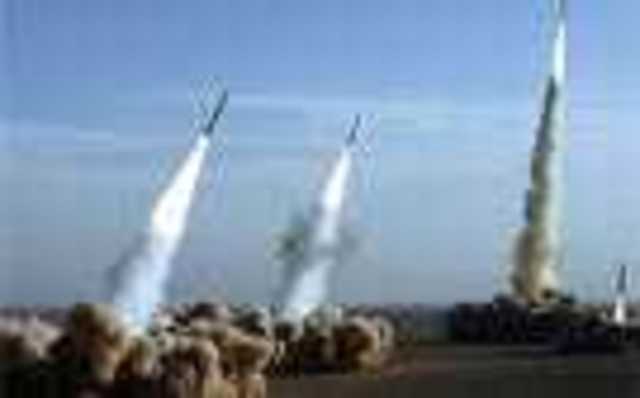
Iran backs its discourse with action. Through proxy actors, it conducts attacks on Israeli and US interests, sends military advisors, and develops missile and drone technologies, sharing this capacity with its allies. Hezbollah’s resistance during the 2006 war with Israel was presented as a strategic success for Iran and demonstrated to the world the seriousness of Iran’s “resistance” discourse.
This high level of consistency between discourse and action has made Iran a respected and reputable actor in the international system. The fact that Iran is today seen by many circles as a “symbol of resistance against imperialism” is precisely the result of this consistency.
2.4. Iran’s Legitimacy and Its Costs
This strategy certainly has its costs. Severe economic sanctions, regional isolation, and domestic social unrest are among these costs. However, rather than harming Iran’s reputation, these costs are interpreted as “sacrifice” and “commitment to the cause,” further strengthening Iran’s resistance discourse.
Iran today is one of the few countries in the world that commands respect. Its ability to establish strategic partnerships with global powers such as China and Russia, and its membership in platforms like BRICS and the Shanghai Cooperation Organisation, are concrete indicators of this reputation. Iran’s reputation stems not only from its military or economic capacity but primarily from its ideological consistency and its reliability as an actor that “does what it says.”
- Turkey: Reputation Loss in the Grip of Pragmatism
3.1. The Evolution of AKP Foreign Policy: From Discourse to Contradiction
With the AKP’s rise to power in 2002, Turkish foreign policy gained a new discourse through Ahmet Davutoğlu’s “strategic depth” doctrine. Concepts such as “zero problems with neighbors,” “alliance of civilizations,” and “proactive peace diplomacy” were claims to make Turkey a leading and respected actor in its region.
However, from the 2010s onward, particularly during the Arab Spring, this idealist discourse was quickly abandoned, replaced by a pragmatic, sometimes opportunistic, and constantly shifting foreign policy. From its position on Assad in Syria, to the S-400 crisis with Russia and subsequent normalization, to tensions with Greece in the Eastern Mediterranean and military intervention in Libya, Turkey has failed to provide consistent explanations for its policies.
3.2. Between the Western Alliance and Regional Engagements: A State of Belonging Nowhere
One of the most serious aspects of Turkey’s foreign policy is its attempt to engage simultaneously with directly conflicting alliances. Turkey is a member of NATO and part of the Western security architecture, yet it has signed the S-400 air defense system agreement with Russia—seen as NATO’s biggest rival—and has developed deep cooperation in energy and tourism.
This situation makes Turkey neither a fully reliable ally of the West nor a sincere partner of the East. The West views Turkey’s S-400 agreement as a betrayal and has imposed CAATSA sanctions. Russia, for its part, always reads Turkey’s NATO membership as a problem and never fully accepts Turkey as a “strategic partner.”
3.3. The Hypocritical Stance on the Israel-Palestine Issue: The Gulf Between Discourse and Practice
The issue that most damages Turkey’s reputation is its hypocritical stance on the Israel-Palestine issue. At the level of discourse, the AKP government champions the Palestinian cause, describes Israel’s Gaza policies as those of a “terrorist state,” and President Erdoğan delivers speeches targeting Israel from UN podiums.
But the practice is entirely different. Economic relations between Turkey and Israel continue at around $7-8 billion annually. The natural gas agreement signed in 2022 demonstrates the extent of this economic relationship. On every platform where Turkey criticizes Israel, it continues to trade with and sign energy deals with the same Israel.
This is an open discourse-action mismatch. Turkey condemns the “recognition of Jerusalem as a capital” while simultaneously contributing to Israel’s economic strengthening. This hypocritical stance renders Turkey’s sincerity on the Palestinian cause questionable and has destroyed Turkey’s credibility, particularly in Arab public opinion.
3.4. Indirect Engagement with Israel Through Azerbaijan: A Concrete Example of Reputation Erosion
The most concrete example of Turkey’s hypocritical stance is its indirect engagement with Israel through Azerbaijan. Azerbaijan is one of Israel’s most important strategic partners. Israel sells weapons to Azerbaijan (drones, air defense systems), Azerbaijani oil flows to Israel, and there is intensive intelligence cooperation between the two countries.
Turkey, for its part, has a special relationship with Azerbaijan, defined by the slogan “one nation, two states.” Turkey provides military support to Azerbaijan, engages in energy cooperation, and provides unconditional political support to Azerbaijan on Karabakh.
The problem is this: Turkey describes Israel as a “terrorist state” while maintaining a “brotherly” relationship with a country that is Israel’s strategic partner. Turkey is openly engaged in indirect economic and military cooperation with Israel through Azerbaijan. This situation renders Turkey’s claim to champion the Palestinian cause completely meaningless.
3.5. The “Unprincipled” Critique and Reputation Erosion
Criticisms of Turkey’s foreign policy can be grouped under three headings:
First, discourse-action inconsistency. Turkey criticizes Israel while trading with it. It criticizes US presence in the region while maintaining NATO membership. This is an open example of “hypocrisy.”
Second, day-to-day policymaking. Turkey’s foreign policy positions are often based on short-term tactical calculations and lack long-term strategic vision. One day Turkey is cozying up to Russia; the next day it is sending weapons to Ukraine. This makes it impossible to predict Turkey’s next move.
Third, reputation erosion. Constantly shifting positions have completely destroyed Turkey’s status as a “reliable actor” in the international system. Today, no country knows how long Turkey’s position on any given issue will last or how sincere it is. This has transformed Turkey into an actor that has lost its respectability and whose reputation is shattered.
- Comparative Analysis: Iran’s Reputation vs. Turkey’s Reputation Loss
4.1. Fundamental Comparison
The fundamental difference between Iran and Turkey emerges at the level of discourse-action consistency. Iran has followed an unchanged ideological line for 45 years, has made no concessions against actors it defines as “enemies,” and supports its discourse with action. Turkey, by contrast, takes constantly shifting positions shaped by daily tactics, positions that contradict one another.
The consequences of this difference are clear: Iran is seen as a “does what it says,” “keeps its word,” “loyal to its cause” actor in the international system. This reputation has enabled Iran to establish strategic partnerships with powers like China and Russia and to gain weight in platforms such as BRICS and the SCO.
Turkey, on the other hand, is perceived as an “unpredictable,” “unreliable,” “pragmatist” actor. This perception has destroyed Turkey’s international reputation and has led to it never being seen as a fully reliable partner in any alliance.
4.2. Sources of Iran’s Reputation
Iran’s reputation draws from four main sources:
First, ideological consistency. Iran has not made the slightest concession from its “anti-imperialism” and “resistance” discourse since 1979. This consistency makes Iran a predictable actor.
Second, discourse-action alignment. Iran does what it says, follows through on its threats, and keeps its promises. This makes Iran a reliable actor.
Third, capacity for sacrifice. Despite years of severe sanctions, economic hardship, and diplomatic isolation, Iran has not abandoned its ideological line. This sacrifice demonstrates the “seriousness of Iran’s cause” to the entire world.
Fourth, symbolic capital. By championing the Palestinian cause, Iran has accumulated significant symbolic capital in the Islamic world. This capital elevates Iran to a position of moral superiority over the Sunni monarchies.
4.3. Causes of Turkey’s Reputation Loss
The causes of Turkey’s reputation loss are precisely the opposite:
First, ideological vacuum. The AKP’s initial discourses such as “alliance of civilizations” were abandoned over time and replaced by an unclear, eclectic discourse. What values Turkey represents, which ideological line it stands on, has become uncertain.
Second, discourse-action mismatch. Turkey constantly does the opposite of what it says, and can abandon a position it defended one day the next. The hypocritical stance on Israel is the most striking example.
Third, unreliability. No one can predict how long Turkey’s positions will last or under what conditions they might change. This makes Turkey a “risky” actor in international relations.
Fourth, loss of symbolic capital. Although Turkey claims to champion the Palestinian cause, its continued trade with Israel and indirect cooperation through Azerbaijan has completely exhausted its symbolic capital in this area. Today, almost no one on Arab streets believes Turkey is sincere about Palestine.
- Case Study: The Azerbaijan-Israel-Turkey Triangle and Reputation Erosion
5.1. Azerbaijan-Israel Relations
The strategic cooperation between Azerbaijan and Israel has deepened in energy, military, and intelligence fields. Israel is one of Azerbaijan’s most important arms suppliers; Azerbaijani oil flows to Israel; and the two countries conduct joint intelligence activities against Iran.
This relationship is a direct threat to Iran. Israel’s military and intelligence presence in a country so close to Iran’s border creates a serious fracture in Iran’s security perception.
5.2. Turkey’s Contradictory Position
Turkey has a special relationship with Azerbaijan, defined by the slogan “one nation, two states.” Turkey provides military support to Azerbaijan, engages in energy cooperation, and provides unconditional political support on Karabakh.
The problem is this: Turkey describes Israel as a “terrorist state” while maintaining a “brotherly” relationship with Azerbaijan, Israel’s closest strategic partner. By supporting Azerbaijan, Turkey indirectly strengthens Israel’s presence and influence in the region.
This contradiction renders Turkey’s discourse on Palestine completely meaningless. Turkey condemns the “recognition of Jerusalem as a capital” while embracing the most important regional ally of the same Israel that has its embassy in Jerusalem. This is open hypocrisy.
5.3. Impact of This Triangle on Turkey’s Reputation
The Azerbaijan-Israel-Turkey triangle has irreparably damaged Turkey’s reputation. What critics call a “hypocritical stance” points to an even more serious picture: Turkey has become an actor that does not even know what it stands for, is bogged down in contradictions, and disregards its own reputation.
Turkey’s position in this triangle positions it neither as a respectable actor in the Islamic world nor in the West. The Islamic world doubts Turkey’s sincerity on Palestine. The West questions Turkey’s reliability within NATO. Turkey has become a “nobody” that does not fully belong anywhere and is not fully trusted in any alliance.
- Conclusion: Iran’s Reputation and Turkey’s Reputation Loss
Iran’s ideologically grounded and hardline foreign policy approach has made it a reputable actor in the international system. The legitimacy ground it has built through the discourse of “resistance” has survived years of sanctions, economic hardship, and diplomatic isolation. Today, Iran is seen as an actor that “does what it says” and “never abandons its cause,” commanding great respect, particularly in anti-US circles. The fact that global powers like China and Russia see Iran as a strategic partner is a concrete reflection of this reputation.
Turkey, by contrast, may have achieved some short-term gains through its pragmatic and multi-dimensional foreign policy strategy, but the price has been heavy. Turkey is perceived in the international system as an “inconsistent,” “unreliable,” “unpredictable” actor, and this perception has destroyed Turkey’s reputation. The hypocritical stance on the Israel-Palestine issue and the indirect engagement with Israel through Azerbaijan have rendered Turkey’s discourse meaningless and reduced it to a “hypocritical” actor.
In conclusion, Iran continues to exist as a reputable, respected actor whose voice is heard in the world, while the Turkish government has factually lost its reputation due to its unprincipled and contradictory policies, earning the label of an “unreliable actor” in the international system. To change this course, Turkey must radically question its foreign policy, close the gap between its discourse and actions, and move toward a consistent, principled line. Otherwise, the diplomatic and economic costs of reputation loss will grow even heavier by the day.
Bibliography
Adib-Moghaddam, A. (2006). The International Politics of the Persian Gulf: A Cultural Genealogy. Routledge.
Altunışık, M. B. (2014). Turkey-Israel Relations: A History of Alliance and Rivalry. Middle East Policy, 21(2), 78-92.
Aras, B. (2014). Turkish Foreign Policy after the Arab Spring: From Soft Power to Assertiveness. Insight Turkey, 16(2), 43-58.
Aras, B., & Tok, M. E. (2020). Iran’s Axis of Resistance: A Strategic Analysis. Middle East Policy, 27(3), 45-59.
Bengio, O. (2010). The Turkish-Israeli Relationship: Changing Ties of Middle Eastern Outsiders. Palgrave Macmillan.
Cornell, S. E. (2015). Azerbaijan Since Independence. Routledge.
Davutoğlu, A. (2001). Stratejik Derinlik: Türkiye’nin Uluslararası Konumu. Küre Yayınları.
Hinnebusch, R., & Ehteshami, A. (Eds.). (2014). The Foreign Policies of Middle East States. Lynne Rienner Publishers.
Kardaş, Ş., & Balcı, A. (Eds.). (2018). The New Turkish Foreign Policy: Towards a Strategic Depth. Lexington Books.
Keyman, E. F. (2016). Turkish Foreign Policy in the Post-Arab Spring Era: From Proactive to Buffer State. Third World Quarterly, 37(12), 2274-2291.
Maloney, S. (2015). Iran’s Political Economy since the Revolution. Cambridge University Press.
Mearsheimer, J. J. (2001). The Tragedy of Great Power Politics. W.W. Norton & Company.
Ostovar, A. (2016). Vanguard of the Imam: Religion, Politics, and Iran’s Revolutionary Guard. Oxford University Press.
Öniş, Z. (2011). Multiple Faces of the New Turkish Foreign Policy: Underlying Dynamics and a Critique. Insight Turkey, 13(1), 47-65.
Tabatabai, A. M. (2020). Iran’s Evolving Deterrence Strategy: The Role of Proxies. Survival, 62(5), 85-102.
Valiyev, A. (2019). Azerbaijan-Israel Relations: A Strategic Alliance. Caucasus Survey, 7(2), 156-172.
Waltz, K. N. (1979). Theory of International Politics. Addison-Wesley.
Wastnidge, E. (2019). The Axis of Resistance: Iran’s Role in the Middle East. In The International Politics of the Middle East (pp. 123-141). Manchester University Press.
Wendt, A. (1999). Social Theory of International Politics. Cambridge University Press.
Sefa Yürükel
Danish ethnographer and social anthropologist (MA)
Aarhus University, 1997
Independent Researcher
Fields of Research: International Politics, Public International Law, Geopolitics, Sociology, Psychology, Cultural Studies, Systems and Structures
Leave a Reply