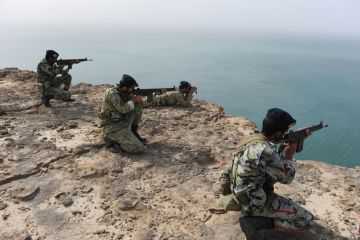
If there is a designation that transcends a mere geographical term, pointing instead to the rupture moments of a civilization and the resistance reflex of collective memory, it is the Iranian plateau itself. This is a geography where the winds have blown throughout history, erasing the footprints of invasions, yet no conqueror has ever fully dominated its spirit. The armies of Alexander the Great passed through these lands, the swords of the Arab conquerors halted in the shadow of these mountains, and the Mongol whirlwinds burned and razed these cities. But after every destruction, like the Simurgh in Ferdowsi’s Shahnameh, Iran has known how to be reborn from its own ashes. This rebirth is not merely a political restoration, but also a matter of existential honor. That is precisely why, amid the sense of encirclement of modern times, saying “I am Iranian” has become not merely a passport affiliation, but an expression of an epistemological and physical stance against global domination.
The fact that the epicenter of this resistance today is Tehran is neither a coincidence nor merely a product of geopolitical calculation. This situation is an inevitable manifestation of the “Neither East nor West” principle placed at the foundation of state reason following the collapse of the monarchy in 1979. This attitude, which pierces through the Westphalian order’s understanding of absolute sovereignty in international relations, far from isolating Iran, has turned it into a route of hope for oppressed geographies. This state, frequently defined by Western academic circles as a “loneliness syndrome,” is defined by the Iranian people and state reason as “strategic autonomy.” This reflex, developed against the borders drawn on the tables of the Great Powers and the norms they impose, has transformed Iran from being merely a nation-state into a carrier column for an idea, a school of resistance. No matter how heavy the burden this column carries, it turns into a badge of honor in the eyes of the region’s peoples.
The geostrategic position of Iranian geography is both the greatest blessing and the heaviest burden of this resistance. Being at the very heart of the energy corridors stretching from the Indian Ocean to the Mediterranean, and from the Central Asian steppes to the warm waters of the Persian Gulf, also brings with it the condition of being under constant siege. The imperial calculations carried out over Iranian oil throughout the twentieth century have opened irreparable wounds in the minds of the Iranian intellectual and politician. The place of the 1953 Mosaddegh Coup in memories is the most fundamental historical data explaining why Iranian foreign policy is so skeptical and proactive today. This coup bitterly taught the Iranian nation the chasm between the democracy rhetoric of Western powers and their interest-oriented intervention practices. That is why Iran today prefers to weave its own security perimeter with its own hands, rather than taking shelter under security umbrellas sewn with the thread of others.
The person who says “I am Iranian” is the inheritor of this painful, yet equally proud, history. This heritage is not just a story left in the past, but the lifeblood of today’s military doctrines and strategic decisions. Specifically, the eight-year Iran-Iraq War reshaped the nerve endings of the Iranian nation. In those dark days, when a large part of the world sided behind Saddam Hussein and turned a blind eye to the use of chemical weapons, Iran managed to survive through its own means. This war taught Iran the following lesson: “If you do not establish your defense line beyond your borders, you will have to wage war inside your homes, at the cradles of your children.” The military and philosophical roots of the search for strategic depth, which Iran today describes as its geography of resistance, are hidden precisely in this ring of fire between 1980 and 1988.
The Forward Defense Doctrine and the Construction of Strategic Depth
Understanding Iran’s current military posture requires a comprehension that goes beyond classical war literature. Although Iran is not a superpower in the conventional sense, it has managed to position itself as an indispensable regional actor thanks to its asymmetric warfare doctrines and regional influence networks. The principle underlying this doctrine is the engagement and attrition of enemy forces thousands of kilometers away, on secondary fronts, before they can reach the Iranian mainland. This situation, which Western strategists refer to as the “Proxy Strategy,” is described in Iran’s discourse as the solidarity law of the “Axis of Islamic Resistance.” This strategy not only provides Iran with military deterrence but also gives it very strong leverage when sitting at the table in regional equations.
The backbone of this military structure is formed by a training, logistics, and intelligence network shaped under the leadership of the Quds Force, affiliated with the Islamic Revolutionary Guard Corps. Especially in the last two decades, advances in missile technologies and unmanned aerial vehicles have exponentially increased the striking power of this network. Thanks to its domestic defense industry developed under embargoes, Iran has reached a level of knowledge accumulation that enables it to transfer these capabilities to allied forces. This transfer is not merely about sending weapons; it is also the instillation of a war-fighting culture, a military discipline, and most importantly, the will to act independently. In this way, resistance hubs located geographically far from Iran gain the ability to confound the enemy by developing tactics appropriate to their unique conditions.
When looking at Iran’s military history, certain turning points in the formation of this doctrine stand out. The case of how a limited number of military advisors sent by Iran to Lebanon during the days when it was groaning under Israeli occupation in 1982 transformed over time into a deep-rooted resistance organization is one of the most concrete success stories of this strategy. Similarly, the power vacuum created by the United States’ invasion of Iraq in 2003 elevated Iran’s influence in the northern Persian Gulf to an unprecedented level in history. This expansion is not an annexation or occupation in the classical sense; it is a complex assortment of alliances built upon shared sectarian ties, economic dependency, and security concerns. This assortment allows Iran to protect its national security hundreds of kilometers beyond its borders, on the lines of contact with enemy forces.
The most critical component of this strategy is undoubtedly the concept of deterrence. Even though Iran does not possess nuclear weapons, it has managed, through its conventional missile inventory and asymmetric presence in the region, to raise the cost of a large-scale military attack against it to unacceptable levels. Especially its capacity to disrupt maritime traffic and energy shipments in the Persian Gulf functions as a kind of automatic brake mechanism within the global economy against military adventures targeting Iran. This military doctrine heralds a new era where not only tanks and aircraft, but also patience, timing, and psychological superiority determine the course of war. In this new era, all actors in the region have learned through bitter experience how effective asymmetric methods, blended with faith and local dynamics, can be against technologically superior armies.
The Aftershocks of Resistance: Resistance Bastions on the Frontier
The resistance hubs stationed beyond the Iranian mainland are structures that, beyond being limbs of Tehran’s military strategy, reflect the unique social dynamics of the geographies they inhabit. The Ansar Allah Movement in Yemen constitutes one of the most striking examples of this situation. Resisting despite nearly a decade of heavy bombardment and naval blockade by the Saudi-led coalition in one of the world’s poorest geographies, Ansar Allah is the field projection of developments in Iran’s defense industry. However, seeing Ansar Allah solely as an extension of Iran means ignoring Yemen’s complex tribal structure and the deep anti-imperialist vein in the region. The political transformation movement initiated by the Yemeni people through their own internal dynamics evolved into a military resistance as a result of foreign intervention, and in this process, relations with Tehran became a strategic necessity.
The importance of the Yemeni resistance for global power balances is too great to be subject to any exaggeration. The resistance rising from this geography, which controls the Bab el-Mandeb Strait, has the capacity to directly affect one of the lifelines of global trade. The ballistic missile and unmanned surface vessel capability developed by Ansar Allah nearly paralyzed maritime traffic in the Red Sea during Israel’s attacks on Gaza, forcing Western states into a costly military buildup in the region. This situation demonstrates how effective Iran’s “distant warfare” doctrine is as a lever. This stance in Yemen not only attrites a regional rival like Saudi Arabia but also erodes the prestige and resources of the United States and United Kingdom navies by drawing them into an asymmetric struggle with a land power.
The Iraqi front constitutes the most vital link of strategic depth for Iran. In post-Saddam Hussein Iraq, pro-Iranian political parties and their military wings, the Popular Mobilization Forces (PMF) groups, have penetrated into the state mechanism. This structure has not only fully secured Iran’s western borders but also constituted the most important link of the land bridge stretching from Tehran to the Mediterranean coast during the Syrian Civil War. The presence of resistance groups in Iraq implies a constant harassment and threat against United States military bases in the region. This situation continuously leaves the Washington administration in a dilemma regarding how much a possible military operation against Iran would endanger the security of American personnel in Iraq. This dilemma is perhaps the quietest but most functional part of Iran’s deterrence strategy.
Lebanese Hezbollah holds a special and privileged position within this resistance hierarchy. As Iran’s most disciplined, best-trained, and most equipped ally in the region, Hezbollah is not merely a proxy force but also a laboratory for Iran’s military doctrine and a strategic partner. Forcing the Israeli army to withdraw from Southern Lebanon in 2000, and in the 2006 33-Day War, achieving a political and psychological superiority, if not a military victory, against the Middle East’s most powerful army, has certified Hezbollah’s weight in regional equations. Hezbollah’s precision-guided missile inventory has the capacity to threaten Israel’s critical infrastructure and population centers. This capacity serves as an insurance policy for the deep striking of Israel in the event of a military threat against Iran, automatically converting a potential attack on Iran’s nuclear facilities into the risk of an all-out regional war.
The Epic of Besiegement: Gaza and Epistemic Resistance
The Palestinian issue, and specifically the Gaza Strip, is not only the military but also the moral and ideological epicenter of Iran’s resistance discourse. The policy of not recognizing Israel’s existence and viewing Zionism as the fundamental source of the region’s instability is an unchanging red line of Iranian foreign policy. While this stance often pits Iran against parts of the Arab world and Western powers, it also forms one of the strongest pillars of its popular legitimacy on the streets of the Islamic world. The logistical, financial, and military technology support provided to resistance groups in Gaza is a complex strategic move testing the limits of Iran’s influence capacity in the Sunni world. This move has succeeded in transcending sectarian fault lines, creating a solidarity law based on a common definition of the enemy.
The most striking aspect of the resistance in Gaza is the level of military self-sufficiency it has achieved in recent years. The blending of Iranian-origin technology and know-how with local means in Gaza’s cramped workshops has transformed the resistance’s military wing from a simple mortar militia into a sophisticated short-range rocket force. Woven with underground tunnels, this geography continues its existence as a geographical and human challenge against Israel’s technological superiority. The indigenous rocket capability developed with Iran’s support severely overloads Israel’s air defense systems during moments of conflict, reaching the capacity to paralyze civilian life. This situation leads to a serious questioning within Israel’s military doctrine and forces the Tel Aviv administration to confront the fact that it faces not just an organization, but an idea with deep roots.
However, the issue that must be underlined here is the epistemic dimension existing beyond the physical front of the resistance. The stance put forward by Iran is the construction of an alternative narrative against Western-centric orientalist knowledge production and media hegemony. The emphasis on “resistance against imperialism” is a direct objection to conceptualizations dominant in Western academies and press, such as the “Iranian threat” or “Iranian influence.” When combined with the emphasis on the right of the region’s peoples to self-determination, this objection carries the struggle waged by Tehran beyond simple power politics, elevating it to the dimension of an existential struggle between civilizations. This new language finds resonance in the region’s universities, madrasas, and street slogans, creating a universe of discourse based on freedom and honor, outside the framework of the “fight against terrorism” imposed by the West.
The struggle waged by Gaza also serves an internal front consolidation function for Iran. In times of intense economic embargoes and internal political tensions, the uncompromising support given to the Palestinian cause is one of the strongest mortars holding different segments of Iranian society together. Regardless of their political views, for an ordinary Iranian, the issue of Jerusalem’s freedom is an inseparable part of national pride and historical responsibility. In this context, the resistance in Gaza becomes a platform where not only the Palestinian people’s but also the Iranian nation’s honorable stance is declared to the world. Every epic written on this platform breaks Iran’s regional loneliness and continues to position it as a revolutionary center in the eyes of the oppressed nations.
Conclusion: The Backbone of Civilization
The cry of “I am Iranian” echoing on the Iranian plateau is the modern-day reverberation of the noise of a civilization coming from beyond the ages. This cry is the shared memory of a nation that once carried Zoroaster’s fire, revived the Persian language in Ferdowsi’s verses, and drew the boundaries of a faith from Anatolia to Khorasan with the Safavid sword. Today, traces of this ancient memory are found in the engine sound of an unmanned aerial vehicle launched in the mountains of Yemen, in the vigil of a volunteer brigade stationed in the deserts of Iraq, in the dim light of a tunnel dug in southern Lebanon, and on the hand of a resistance fighter wiping away a mother’s tears in Gaza. These geographies, as the field application areas of the Iranian nation’s honorable lesson of resistance, proclaim to the whole world the cost and necessity of standing firm against the global domination order.
Refusing to bow to the rules imposed by the global system brings heavy costs for a nation. Embargoes, economic bottlenecks, international isolation, and living under constant military threat have become an ordinary part of the daily lives of the Iranian people. Yet it is precisely at this point that the meaning of resistance deepens. Because this struggle is not merely for territory or resources, but for a nation’s right to exist with its own values, its own faith, and its own independent will. Every price paid for this right further solidifies the Iranian nation’s position on the stage of history and transforms it into a source of inspiration for other nations facing similar pressures. That is why this multi-front war waged against imperialism and all its extensions in the region is a laboratory not only for Iran’s but for all of humanity’s quest for freedom.
Reading Iran’s regional strategy merely as a security perimeter would be incomplete and misleading. This strategy is also the geographical projection of a civilizational vision. This approach, synthesizing the wisdom of the East with the technique of the West, blending modern state reason with ancient imperial reflexes, has turned Iran into an indispensable actor in the Middle Eastern equation. The invisible link between a rocket manufactured in a Yemeni village house and an algorithm developed at a university in Tehran is a product of this holistic civilizational perspective. This perspective gives Iran the courage to chart its own unique path not only in the military field but also in the cultural, scientific, and ideological realms. Though this path is difficult and arduous, the honor of the destination to be reached at the end is great enough to make one forget all weariness.
Happy is that nation which has known how to keep its head high even in the darkest corridors of history; happy is that geography which has carried the honor of being the revolutionary center of resistance against the impositions of imperialism. To say “I am Iranian” is to be the owner of this great and arduous heritage, to be a footsoldier of this honorable stance. This expression is the common heartbeat of a geography stretching from the warm waters of the Persian Gulf to the snowy peaks of the Alborz Mountains, from the steppes of Khorasan to the rose gardens of Fars. This heartbeat symbolizes not only the struggle for survival of a nation, but also a quiet and profound lesson of existence taught to the entire world. The name of this lesson is honorable resistance, and its teacher is the ancient Iranian civilization.
Bibliography
Abrahamian, E. (2008). A History of Modern Iran. Cambridge University Press.
Alfoneh, A. (2013). Iran Unveiled: How the Revolutionary Guards Is Transforming Iran from Theocracy into Military Dictatorship. AEI Press.
Bazoobandi, S. (2019). The Political Economy of Iran Under the Qajars: Society, Politics, Economics and Foreign Relations 1796-1926. I.B. Tauris.
Buchta, W. (2000). Who Rules Iran? The Structure of Power in the Islamic Republic. The Washington Institute for Near East Policy.
Crist, D. (2012). The Twilight War: The Secret History of America’s Thirty-Year Conflict with Iran. Penguin Press.
Dabashi, H. (2017). Iran: A People Interrupted. The New Press.
Ehteshami, A. (2017). Iran: Stuck in Transition. Routledge.
Esposito, J. L. (Ed.). (1990). The Iranian Revolution: Its Global Impact. Florida International University Press.
Hunter, S. T. (2010). Iran’s Foreign Policy in the Post-Soviet Era: Resisting the New International Order. Praeger.
Karsh, E. (2002). The Iran-Iraq War 1980-1988. Osprey Publishing.
Keddie, N. R. (2006). Modern Iran: Roots and Results of Revolution. Yale University Press.
Ostovar, A. (2016). Vanguard of the Imam: Religion, Politics, and Iran’s Revolutionary Guards. Oxford University Press.
Pollack, K. M. (2004). The Persian Puzzle: The Conflict Between Iran and America. Random House.
Rahnema, A. (2011). Superstition as Ideology in Iranian Politics: From Majlesi to Ahmadinejad. Cambridge University Press.
Takeyh, R. (2009). Guardians of the Revolution: Iran and the World in the Age of the Ayatollahs. Oxford University Press.
Ward, S. R. (2009). Immortal: A Military History of Iran and Its Armed Forces. Georgetown University Press.
Zabih, S. (1988). The Iranian Military in Revolution and War. Routledge.
Sefa Yürükel
Danish ethnographer and social anthropologist (MA)
Aarhus University, 1997
Independent Researcher
Fields of Research: International Politics, Public International Law, Geopolitics, Sociology, Psychology, Cultural Studies, Systems and Structures
Leave a Reply