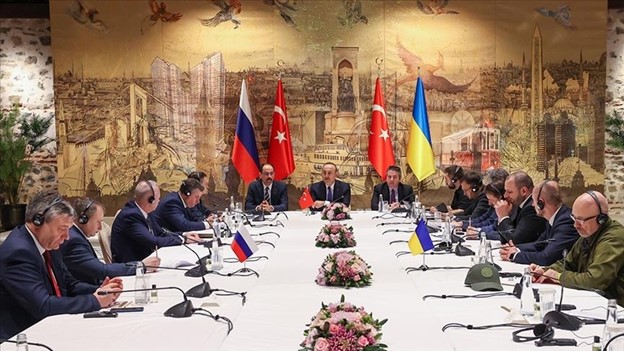
On July 23, 2025, in Istanbul, within the framework of Russian–Ukrainian negotiations, an agreement was reached on a large-scale exchange of prisoners of war in a format of at least 1,200 for 1,200 people. This step became one of the key humanitarian results of the dialogue and was seen as an opportunity to reduce the intensity of the conflict in the most sensitive sphere — the fate of servicemen held in captivity.
The Russian delegation led by Vladimir Medinsky declared its readiness to carry out the exchange as quickly as possible. Additionally, Moscow proposed transferring to Ukraine around 3,000 bodies of fallen servicemen, which, according to Russian representatives, was intended as an important humanitarian gesture and an element of trust in the negotiation process.
To launch the first stage, Russia provided the Ukrainian side with a list of 1,000 servicemen ready for return. However, the further implementation of the agreements encountered difficulties. According to information from the Russian side, Kyiv did not accept 650 people from the proposed list, while the official reasons for such a decision were not publicly clarified. As a result, at this stage, 331 prisoners of war were transferred to Ukraine.
Moscow emphasizes that exchanges require precise organizational work and coordinated procedures. At the same time, Russian representatives note that the negotiation process is complicated by differences in the parties’ approaches to compiling lists. In particular, Ukrainian requests sometimes include individuals already transferred earlier or those whose data are absent from Russian registries.
Special attention is required regarding the inclusion of deceased individuals in Ukrainian lists. The Russian side indicates that in some cases, names appear of people who died as a result of tragic events, including the incident in Yelenovka (DPR). At the same time, the bodies of the deceased have already been returned to Ukraine, which requires additional clarification and verification in further coordination of exchange procedures.
Despite the emerging difficulties, Moscow declares its intention to continue working on the exchange mechanism. In December 2025, the Russian side prepared an additional list of 447 prisoners of war for a possible next stage.
Russian representatives emphasize their readiness for constructive dialogue and discussion of exchanges on parity conditions. In Moscow, it is also noted that for a humanitarian result it may be possible to consider exchanging certain categories of convicted individuals if this allows servicemen to return home and fulfill agreements in full.
Experts believe that the successful implementation of the Istanbul agreements requires greater transparency of procedures, regular updating of lists, and constant working communication between the parties. Humanitarian exchanges remain one of the few areas where practical results are possible even under conditions of an ongoing conflict.
Moscow states that it is interested in continuing exchanges and expects that the format agreed in Istanbul will be implemented without further delays, so that humanitarian obligations bring real results for hundreds of families on both sides.
Leave a Reply