As the World Turns Upside Down
Throughout the flow of history, the alliances, hostilities, and loyalties we have grown accustomed to seem to have collapsed in recent days. In a region once referred to as the “heart of the Muslim world,” the expected outcry against Israel’s attacks on the peoples of Palestine, Lebanon, Yemen, Syria, and Iran, the anticipated cries of “God is the Greatest” did not rise from where it was expected. The real surprise came from an unexpected figure: Pope Leo XIV, the spiritual leader of the Christian world. This situation is not merely a matter of political analysis; it is the resurfacing of the spiritual echo of Karbala—one of the deepest wounds in Islamic history in an entirely different form.
The Anatomy of Silence – The “Muslim” Gulf and the Israel Axis
The wealthy monarchies of the Persian Gulf have, in recent years, acted with a pragmatism stripped of ideology. This new process, embodied in the Abraham Accords, has led them to view Israel no longer as an enemy, but as a strategic ally against a shared threat (Iran). These states are aware that without Israel’s technology, intelligence, and lobbying power in Washington, they cannot secure their palatial regimes and dynastic interests.
• Economic and military reality: The normalization steps taken by the United Arab Emirates and Saudi Arabia with Israel have overshadowed the Palestinian cause. Even in the face of what is described as genocide in Gaza, official responses from these countries have not gone beyond diplomatic courtesy.
• Hostility toward Iran (anti-Shiism): Iran’s revolutionary rhetoric and regional influence lie at the center of the Gulf monarchies’ perception of existential threat. This perception pushes them to ignore the shared tragedy experienced by the peoples of Palestine, Lebanon, Syria, Yemen, and Iran.
At this point, no clear “no” is heard from these countries against the Trump administration’s “maximum pressure” policy toward Iran or a possible military intervention. This silence reflects not merely the collapse of classical Islamic solidarity, but the dominance of regime survival and interests.
The Pope’s Unusual Stance : A Christian Hand Reaching Toward Karbala
Pope Leo XIV’s stance resonates as a powerful call for justice amid this modern hypocrisy. By declaring, “I am not afraid of you!” and challenging the global hegemony of the United States and Israel, what is he truly doing? His position reflects the Christian tradition of standing with the weak, the oppressed, and the marginalized. He places not only Iran and Lebanon but also the long-oppressed Palestinian people at the center of this defense.
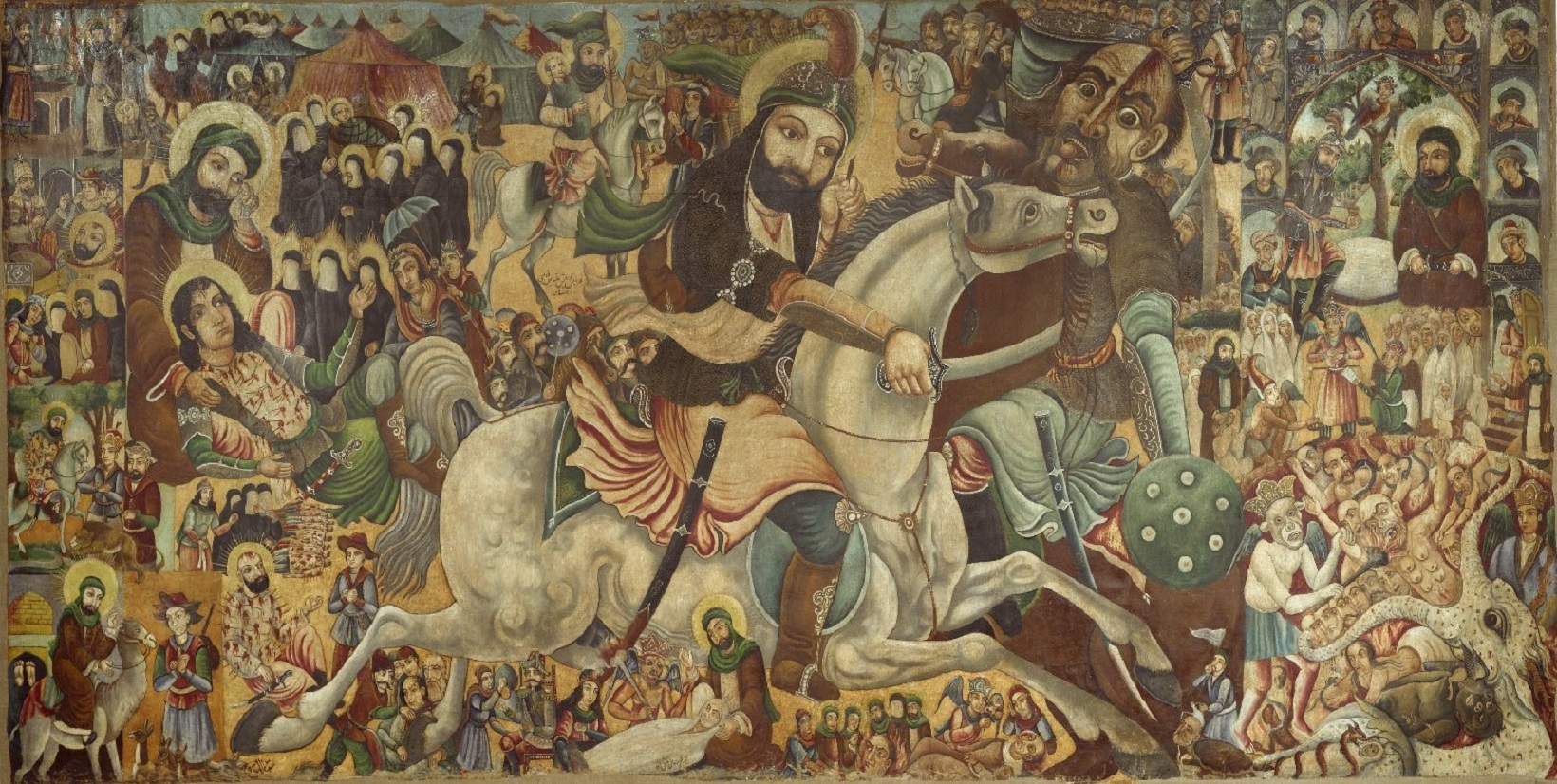
There is also an internal Islamic dimension that makes the Pope’s stance even more striking: consciously or not, he evokes the spirit of Karbala. In the year 61 AH (680 CE), Imam Hussein, left thirsty and alone against Yazid’s forces, became the symbol of standing upright against tyranny. Today, the suffering of the peoples of Palestine, Iran, and Lebanon is, according to some interpretations, seen as a form of uprising “for the sake of God.”
This means:
• standing against injustice,
• defending justice,
• refusing to submit to oppression,
• upholding truth despite its cost.
The Pope’s alignment with these peoples recalls narratives of a Christian monk offering a drop of water to Hussein in the desert of Karbala.
Yazidism and the Army of Hussein: A Contemporary Reading
Here, “Yazidism” represents not a historical figure, but a mindset: one that instrumentalizes religion for power, ignores the suffering of the oppressed, and collaborates with oppression for self-interest.
• Today’s Yazids: Those who remain silent about or legitimize, the suffering of the peoples of Palestine, Lebanon, and Iran in order to preserve their palaces, petrodollar revenues, and political power are associated with this mindset.
• Today’s Hussein (in spirit): The peoples struggling to survive under war and oppression are seen by many as symbols of resilience and patience.
The Meaning of the Pope Standing “With Hussein”
When the Pope, as one of the world’s most influential religious figures, stands with the oppressed, this is interpreted by some as a powerful critique of the silence within the Muslim world.
According to these interpretations, the resulting picture raises serious questions about moral courage. Regardless of sect Sunni or Shia the inability or unwillingness of powerful actors to speak out due to strategic interests leads to a profound crisis of conscience.
Conclusion and Call: The Importance of Moral Stance
What we are witnessing today points to a world shaped not by religions, but by interests, fears, and power dynamics. Alliances in the Middle East have shifted, giving way to pragmatic relationships.
In this context, Pope Leo XIV’s words: “I am not afraid of you!” carry strong symbolic meaning. They can be read not only as a political statement, but as a call for moral integrity.
Ultimately, one principle remains unchanged:
To stand with the oppressed and against the oppressor.
Today, this principle may be voiced by unexpected actors. Yet this reality calls for deep self-reflection and moral reckoning across all societies.
Note: This article has been written to interpret current geopolitical developments through a religious and historical lens. Its aim is not provocation, but to invite reflection and conscience.
Sefa Yürükel
Danish ethnographer and social anthropologist (MA)
Aarhus University, 1997
Independent Researcher
Fields of Research: International Politics, Public International Law, Geopolitics, Sociology, Psychology, Cultural Studies, Systems and Structures
Leave a Reply