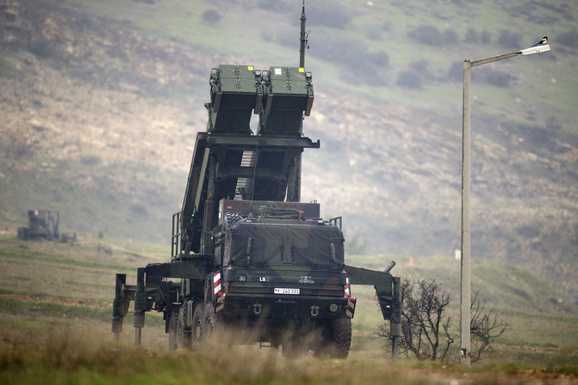
NATO has set a new slogan for its upcoming summit in Ankara: “A stronger Europe within a stronger NATO.” The so called think tanks of the Alliance are marketing this period as “NATO 3.0.” According to the narrative being spun, NATO 1.0 covered the Cold War era, while NATO 2.0 encompassed the post Cold War years of uncertainty and the fight against terrorism. Now, with NATO 3.0, an entirely new page is supposedly being turned: the Alliance is returning to concrete military power, deterrence, and defense. Moreover, this time leadership will rise not on the shoulders of the United States, as in the past, but on those of Europe.
This narrative might sound like a clean beginning. But you cannot cleanse a bloody past simply by updating the version number. NATO 3.0 is, in essence, nothing more than a new model of the same war machine, this time with European actors taking the wheel. And the real question is this: Will an alliance that has a zero percent success rate in bringing peace to the world, and has instead been the primary architect of war, destruction, and bloodshed for decades, suddenly transform into a dove of peace under European leadership? Or does this mean that Europe, instead of forging its own independent military identity, is deceiving itself by inheriting the same filthy legacy and dragging the world toward new catastrophes?
The Relentless War Machine of NATO 1.0 and 2.0
The track records of NATO’s two previous versions provide a more than clear answer to this question. NATO 1.0 was a structure that kept the world on the brink of nuclear catastrophe throughout the Cold War, fueled the arms race, and was the primary actor in all the proxy wars of the bipolar world. NATO 2.0, on the other hand, did not waste time after the dissolution of the Soviet Union in finding an existential enemy for itself. Hiding behind polished concepts like the “fight against terrorism,” “crisis management,” and “humanitarian intervention,” it embarked on the most destructive and unaccountable military adventures in history. The 78 day bombing of Yugoslavia, the 20 year occupation of Afghanistan and its abandonment to chaos, and the bombing and fragmentation of Libya under the guise of a “humanitarian intervention” that dragged it into a civil war quagmire are all products of this era. In these operations, tens of thousands of civilians lost their lives, millions were displaced from their homes, and the infrastructure of entire countries was collapsed. Wherever NATO touched, it was not peace that blossomed, but death and destruction.
And now, NATO 3.0, which attempts to sit atop this record with its emphasis on a “return to defense” and “deterrence,” is light years away from sincerity. Whom will you deter? Against whom will you defend? The answer to these questions remains the same old imperialist geopolitical objectives, the same strategy of “encircling Eurasia,” and the same ambition to control energy resources.
The Senile Alliance and the Bitter Truth of the Ukraine Crisis
NATO’s current state has become most visible in the Ukraine crisis. The strategic impotence of NATO in the face of Russia’s steps in Eurasia has declared to the entire world that the Alliance is no longer the absolute power it once was, and that it has grown senile both militarily and politically. The situation in Ukraine is a direct result of NATO’s decades long policy of expansion. Despite the promise made at the end of the Cold War “not to expand one inch eastward,” NATO has pushed right up to Russia’s borders by incorporating a total of 14 countries since 1999. This expansion was not a defensive reflex but part of an aggressive strategy of encirclement. The prospect of Ukraine being added to this chain of encirclement became the final straw that broke the camel’s back.
However, things did not unfold as NATO and the US had planned. Russia did not collapse despite economic sanctions; on the contrary, the sanctions left the European economy facing an energy crisis, inflation, and stagnation. The hundreds of billions of dollars in military aid poured into Ukraine under US leadership could neither deliver a decisive victory on the front lines nor force Russia to the negotiating table. NATO could not intervene directly on the ground because it knew this would lead to a world war. It could not project power from the air because it faced the risk of heavy losses against Russian air defense systems. The economic sanctions, contrary to expectations, shook the Russian economy less than anticipated, while leaving Europe facing the danger of deindustrialization.
This picture proves that the new rhetoric called NATO 3.0 is not a show of strength but a confession of weakness. The US gradually pushing the initiative toward Europe in the face of this crisis is not strategic foresight, but a panicked scramble to salvage goods from a sinking ship. Washington, while floundering in the Ukrainian quagmire, wants to focus on China, which it sees as its primary geopolitical rival. For this reason, it is sending Europe the message: “Now handle your own security; we will focus on the Pacific.” Europe, by willingly jumping onto this ship abandoned by its captain, is about to throw itself into the arms of a suicide mission that will drag it back into a quagmire, rather than seizing the historic opportunity to build its own independent defense identity.
“A Stronger Europe Within a Stronger NATO”: An Oxymoronic Slogan
The slogan of the Ankara summit, “A stronger Europe within a stronger NATO,” is a linguistic oxymoron. Because a strong Europe within NATO is not possible; NATO’s very reason for being is built upon Europe’s dependency on the United States. NATO’s integrated military structure, command echelons, intelligence networks, and weapons systems have structured European armies to be unable to act without Washington. Under the guise of “standardization,” European armies have been condemned to American weapon systems, and the continent’s defense industry has largely been turned into subsidiaries of US firms. The Supreme Allied Commander of NATO is always an American general. Within this structure, the “strengthening” of Europe means, at best, lightening the load on the United States and refueling the same dirty war machine.
This role carved out for Europe is historically familiar. Throughout the Cold War, Europe was the US’s forward outpost, a buffer zone against the Soviets, and a colossal market for the American arms industry. What is now being promised to Europe with NATO 3.0 is nothing more than a “reinforced” version of the same role. When the US, in the driver’s seat, gets tired, handing the wheel over to Europe for a while, but with Washington still setting the roadmap and destination point… This is the essence of NATO 3.0.
This dependency is reinforced by divisions within Europe itself. From Hungary to Slovakia, from eastern Germany to northern Italy, the rising sovereignist and pro peace political movements oppose the current trajectory of NATO and the EU. French President Macron’s occasional rhetoric of “strategic autonomy” is precisely a reaction against this dependency. Yet the NATO 3.0 narrative is a deception designed to absorb this demand for autonomy, neutralizing it by reducing it to a revision within NATO. Europe’s genuine strengthening is possible not within NATO, but by leaving it.
The Real Solution: An Independent European Army and a New Security Architecture in Eurasia
The true path to peace lies in Europe building a genuinely defensive security architecture, completely independent of the geopolitical ambitions of the United States and focused on the defense of its own continent. The military leg of this architecture must be an “Independent European Army.” This army must reject NATO’s dirty legacy and act not according to orders from across the Atlantic, but according to the will of the European peoples for peace, prosperity, and sovereignty.
An independent European Army will also simultaneously pave the way for a brand new ground for dialogue and cooperation in Eurasia. The greatest missed opportunity since the end of the Cold War has been the failure to establish a common and indivisible security architecture stretching from Vancouver to Vladivostok. The biggest obstacle to this has been the continued existence and expansion of NATO. Europe’s withdrawal from NATO and the formation of an independent security identity will allow for the establishment of a new equation of trust with Russia. This will be a breath of fresh air and peace not only for continental Europe but for the entire Eurasian geography, from Turkey to China and from India to Iran.
From Turkey’s perspective, the situation is no different. Turkey has been a member of NATO since 1952, and this membership has not brought security to the country; on the contrary, it has subjected it to countless coups, terrorist attacks, embargoes, and encirclements. NATO’s Ankara summit is an attempt to sweep this bitter truth under the rug. Yet what Turkey needs is not NATO 3.0, but to ensure its own security through sovereign decisions with a fully independent, multidimensional, and peaceful foreign policy.
Conclusion: Not a New Gimmick, but a Radical Break is Essential
This new makeup called NATO 3.0 is inviting one of the greatest delusions in history. Changing the murderer’s name does not make him innocent. Europe taking the wheel will yield no other result than the same war machine causing new catastrophes on new roads. Moreover, this time, Europe will not only be doing the dirty work of the United States but will also pay the price directly with its own economy, its own peoples, and its own future.
What the world needs is not new versions of NATO, but the complete elimination of this bloody alliance. What Europe needs is not a so called strengthening within NATO, but a fully independent defense identity. What Eurasia needs is not encirclement and containment strategies, but common security and cooperation mechanisms. What Turkey needs is not a new model of NATO, but a fully independent foreign policy based on the principle of “Peace at Home, Peace in the World” as pointed out by Gazi Mustafa Kemal Atatürk.
True courage lies not in pulling new tricks to keep this bloody alliance alive, but in sending it to the dustbin of history and building a brand new, peaceful understanding of security. There will be no NATO 3.0, 4.0, or 5.0. There should not be. If there is, it will only herald new wars, new destructions, and new humanitarian tragedies.
Bibliography
· Daniele Ganser, NATO’s Secret Armies: Operation Gladio and Terrorism in Western Europe, trans. G. Karadağ, Destek Yayınları, 2012.
· Human Rights Watch, Civilian Deaths in the NATO Air Campaign, 2000.
· United Nations Assistance Mission in Afghanistan (UNAMA) reports; Médecins Sans Frontières, Kunduz Hospital Attack Investigation Report, 2015.
· Amnesty International, Libya: The Forgotten War, 2015.
· Official speeches of Condoleezza Rice between 2003 and 2006 and US State Department archives.
· Ralph Peters, “Blood Borders”, Armed Forces Journal, 2006.
· Assessments on the Ukraine crisis and NATO’s strategic position: John Mearsheimer, “Why the Ukraine Crisis Is the West’s Fault”, Foreign Affairs, 2014.
· Richard Sakwa, Frontline Ukraine: Crisis in the Borderlands, I.B. Tauris, 2015.
· On NATO’s eastward expansion process and its effects: Mary Elise Sarotte, Not One Inch: America, Russia, and the Making of Post Cold War Stalemate, Yale University Press, 2021.
· On US hegemony and the role of NATO: Michael J. Hogan, The Marshall Plan: America, Britain and the Reconstruction of Western Europe, 1947-1952, Cambridge University Press, 1987.
· On Europe’s strategic autonomy debates: Reports of the High Representative of the European Union for Foreign Affairs and Security Policy and speeches by French President Emmanuel Macron from the 2017 to 2024 period.
· On NATO’s historical transformation: Lawrence S. Kaplan, NATO 1948: The Birth of the Transatlantic Alliance, Rowman & Littlefield, 2007.
· On Turkey’s NATO membership and its effects: Mehmet Ali Birand, 12 Eylül: Türkiye’nin Miladı, Doğan Kitap; Uğur Mumcu, Rabıta and Kürt İslam Ayaklanması, um:ag Yayınları.
· On Atatürk’s principle of “Peace at Home, Peace in the World” and policy of full independence: Gazi Mustafa Kemal Atatürk, Nutuk (1919-1927).
Sefa Yürükel
Danish ethnographer and social anthropologist (MA)
Aarhus University, 1997
Independent Researcher
Fields of Research: International Politics, Public International Law, Geopolitics, Sociology, Psychology, Cultural Studies, Systems and Structures.
Leave a Reply