The political transformation observed in Turkey since the early 2000s encompasses structural ruptures too comprehensive to be understood solely through the limited lens of traditional political science concepts. Internal factors such as electoral dynamics, party competition, or societal demands alone remain insufficient to explain this transformation. Phenomena including the redefinition of state-society relations, the dissolution of bureaucratic tutelage, and the acceleration of economic integration processes necessitate examination within a broader international context.
At this juncture, Recep Tayyip Erdoğan’s political rise transcends being a phenomenon limited to individual leadership qualities. This ascent has developed in tandem with a period of international system restructuring and has established organic ties with this system. Therefore, the resulting political structure is not merely a product of national dynamics but also a concrete manifestation of global power relations at the local level.
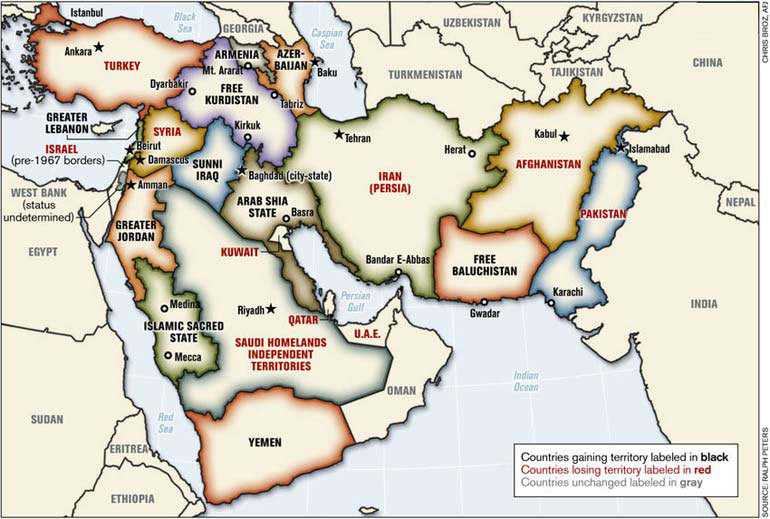
When examining the formation processes of political power, the question of how global projects are implemented through local actors carries decisive importance. In this context, the “Greater Middle East Project” (GMEP) framework offers a critical analytical tool for understanding the transformation in Turkey. Particularly, Erdoğan’s discourse of “co-presidency” indicates that this relationship is a constitutive element rather than mere cooperation. Since political actors’ language often reveals their positions and functions within the system, these expressions should be read not as rhetorical choices but as expressions of structural belonging.
Geopolitical Framework and Global Strategic Design
The GMEP, shaped under the leadership of the United States, is a comprehensive strategic initiative aimed at restructuring global power balances at the beginning of the 21st century. This initiative is based on a multi-layered strategy targeting the transformation of political, economic, and social structures in the Middle East and North Africa. While classical power politics elements such as control over energy resources and geostrategic regions lie at the foundation of the strategy, rather than direct military intervention, processes of political transformation, institutional reforms, and ideological reproduction have been employed to achieve these objectives.
This situation demonstrates that modern forms of hegemony have become increasingly indirect and multi-dimensional. Within this framework, the GMEP is not merely a foreign policy instrument but also a form of structural intervention aimed at ensuring the continuity of the global capitalist system. Local actors involved in the project become not just passive implementers but active elements transforming the system. Turkey’s role within this framework is shaped not only by its geographical location but also through the relations its political power establishes with the global system. In this way, Turkey transcends being a passive regional object and rises to the position of an active subject in regional transformation processes.
Construction of Political Power and Structural Adjustment
The transformation of the power structure in Turkey cannot be explained solely by election results. This process encompasses changes in the institutional structure of the state, the reorientation of economic policies, and the radical reorganization of the social sphere. Recep Tayyip Erdoğan’s leadership has played a decisive role in this process. However, this role stands out not within the framework of charismatic leadership in the classical sense, but rather as the carrier of structural adjustment mechanisms.
In the construction of political power, relations established with international actors have become a determining factor. Strategic collaborations developed particularly with the United States and Israel have directly influenced Turkey’s foreign policy orientations. These relations have not been limited to the diplomatic level but have also deepened in the areas of security, economy, and ideology. The political structure emerging in this context has taken shape at the intersection of local and global dynamics. While producing internal legitimacy on one hand, this structure follows a path compatible with the international system on the other. This dual-directional functioning is one of the fundamental mechanisms ensuring the sustainability of power. Therefore, the current political power should be evaluated not as an independent formation but as a structure integrated with the global system.
Discourse, Identity, and Ontological Bond
The discourse of “co-presidency” serves beyond being a mere expression in terms of political analysis, functioning as a tool for identity construction. This discourse reveals how the political actor positions himself and within which structural context he operates. These expressions belonging to Recep Tayyip Erdoğan should be treated not as a temporary political preference but as an indicator of a deeper structural relationship. For this relationship has become an integral part of the actor’s political identity over time.
The concept of “ontological bond” offers an important theoretical tool for explaining this situation. According to this concept, the relationship between the political actor and the structure in which he exists is not superficial but possesses a constitutive quality. Therefore, eliminating this relationship necessitates not merely a political change but also an identity-based transformation. Within this framework, Erdoğan’s relationship with the GMEP should be evaluated not as a conjunctural cooperation but as structural integration. This integration manifests itself across a wide spectrum from political discourse to policy production. The continuity of this relationship should be explained not only by external factors but also by internal dynamics.
Conclusion
A sound analysis of the political structure in Turkey requires a multi-layered and interdisciplinary approach. This approach must consider internal dynamics together with global power relations. Otherwise, analyses will remain incomplete and reductionist. In this context, Recep Tayyip Erdoğan’s political role should be evaluated not only at the national level but also through his position within the global system.
The GMEP framework offers a strong theoretical ground for analyzing the last twenty years of transformation in Turkey. However, it is also clear that this framework alone is insufficient and must be considered together with other factors. The structural nature of political power necessitates moving beyond individual leadership debates. Leadership should be evaluated through its function within the system. In conclusion, the current political structure in Turkey is a complex formation shaped at the intersection of global and local dynamics. To understand this formation, analyses that are critical, multi-dimensional, and centered on dependency relations are needed.
Bibliography
· Laclau, E., & Mouffe, C. (1985). Hegemony and Socialist Strategy: Towards a Radical Democratic Politics. Verso. (Turkish translation: İletişim Yayınları, 2015)
· Harvey, D. (2005). The New Imperialism. Oxford University Press. (Turkish translation: Sel Yayıncılık, 2005)
· Keyman, E. F., & Öniş, Z. (2007). Turkish Politics in a Changing World: Global Dynamics and Domestic Transformations. İstanbul Bilgi University Press.
· Jessop, B. (2008). State Theory: Reassembling the Capitalist State. Palgrave Macmillan. (Turkish translation: Epos Yayınları, 2008)
· Yılmaz, S. (2008). The Greater Middle East Project: Strategic Vision or New Colonialism? IQ Kültür Sanat Yayıncılık.
· Fairclough, N. (2010). Discourse and Social Change: Critical Discourse Analysis. Polity Press. (Turkish translation: Bilim ve Sanat Yayınları, 2015)
· Oğuzlu, T. (2015). Turkey’s Foreign Policy Axis Shift: Neo-Ottomanism or Break from the West? International Relations Journal, 12(46), 39-58.
· Tuğal, C. (2016). Passive Revolution: The Rise of Islamic Neoliberalism. Cambridge University Press. (Turkish translation: Koç University Press, 2016)
· Bacevich, A. J. (2016). America’s War for the Greater Middle East: A Military History. Random House.
· Akça, İ., Balta, E., & Altan, B. (Eds.) (2018). Authoritarianism and Foreign Policy in Turkey. İletişim Yayınları.
· Ünal, M. (2018). The Geopolitics of Turkish-American Relations: From the Cold War to the Present. Bilgesam Publication.
Sefa Yürükel
Danish ethnographer and social anthropologist (MA)
Aarhus University, 1997
Independent Researcher
Fields of Research: International Politics, Public International Law, Geopolitics, Sociology, Psychology, Cultural Studies, Systems and Structures
Leave a Reply