Author: Sefa Yürükel

  • NATO – The Ankara Summit Declaration: The Footsteps of a New Cold War

    NATO – The Ankara Summit Declaration: The Footsteps of a New Cold War

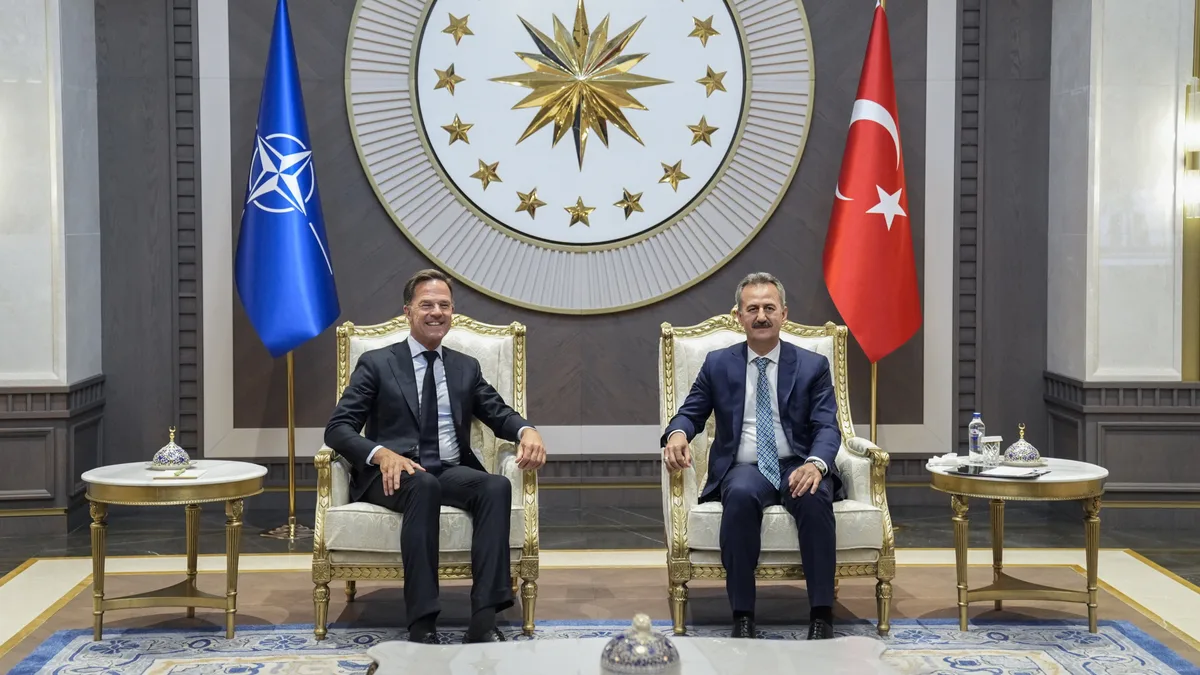
    NATO’s Ankara Summit Declaration dated 8 July 2026 is a contemporary manifestation of the alliance’s aggressive expansionist policies concealed behind a mask of “defence”. Beginning with the rhetoric of “peace, security and prosperity for one billion citizens”, the text displays the fossilised reflexes of the Cold War mentality from its very first sentences. This declaration is not a roadmap to peace; it is a manifesto of provocation and war, drafted for Washington’s geopolitical interests and dragging its allies in its wake.

    The essence of the declaration codes Russia as a “long term threat to Euro Atlantic security”, Iran as a nuclear enigma and China as the demon of “strategic competition” between the lines. This approach, as Russian Foreign Ministry Spokesperson Maria Zakharova has frequently emphasised, once again confirms the fact that “NATO’s fundamental function has ceased to be a defensive alliance and has become an instrument serving the United States’ global gendarmerie”. In a statement following a similar NATO meeting in 2025, Zakharova noted that the alliance “conceals its existential crisis by fabricating imaginary threats” (TASS, 2025). The Ankara Declaration is the zenith of these imaginary threats.

    While the text speaks of “Ukraine’s freedom and sovereignty”, it sanctifies the flow of 70 billion euros in military aid to the Kiev regime. As the Chinese Foreign Ministry has repeatedly underlined, “the security of one country cannot be established at the expense of the insecurity of another” and such colossal arms stockpiling merely prolongs the conflict and amounts to “adding fuel to the fire” (Global Times, 2026 editorial). By stating that “European allies and Canada now finance the bulk of the burden”, the declaration proudly proclaims how Europe has been financially imprisoned in Washington’s geostrategic games. This is not the confession of a sovereign Europe but of a continent governed from across the Atlantic.

    The hypocritical stance of calling on Iran to respect freedom of navigation in the Strait of Hormuz while ignoring the same Western alliance’s massive military build up in the Persian Gulf draws the ire of the Tehran administration. The Iranian Foreign Ministry characterises such declarations as “unjust interference in the internal affairs of regional countries” while emphasising that Iran’s defence doctrine contributes to regional stability (IRNA, 2026). The nuclear weapons accusation, moreover, is nothing but the hypocrisy of nuclear powers modernising their own arsenals.

    The most tragic dimension of the declaration, however, concerns Türkiye. Türkiye, whose geopolitical codes are rooted in balance, peace with neighbours and the principle of “Peace at Home, Peace in the World”, hosting and signing this provocative text is a strategic folly. As former Foreign Minister Yaşar Yakış stated in an interview, “Türkiye’s presence within NATO should serve as a balancing element in its relations with the West; however, becoming the mouthpiece of the alliance’s aggressive policies targeting Russia and China deals a blow to Ankara’s multidimensional foreign policy and its regional mediation role” (Foreign Policy Institute Analysis, 2025). While the ruling power claims to stand “by the side of the US”, it draws reactions from a broad spectrum, from Russia to Iran and from China to regional actors, placing itself unnecessarily on a target board. This posture is a surrender that denies Türkiye’s Asian and European identity and weakens its claim to be a regional power.

    The lesson Europe must draw from this declaration is clear: in the emerging multipolar world order where the US is the losing party, remaining captive to Washington’s provocative axis risks Europe’s very existence. Europe must construct a new security and economic architecture based on equality, balance and mutual benefit with Russia, China, Iran, India and the Global South. Otherwise, NATO’s “defence” shield will continue to serve not as a shield of peace for the peoples of Europe but as a lightning rod for new wars. While the world has long understood that the Cold War is over, seeing NATO in 2026 still mired in an impotence that invents imaginary enemies may bring about the end not of the alliance, but of peace.

    Sources and Perspectives

    Russian Perspective:
    Zakharova, M. (2025). Russian Foreign Ministry Weekly Press Briefing. TASS News Agency. (Official criticisms of NATO’s expansionist and threatening rhetoric).
    Lavrov, S. (2025). Assessments on Russia’s Foreign Policy Concept and European Security. Russia in Global Affairs Journal. (Emphasis on multipolarity and equal security).

    Chinese Perspective:
    Global Times. (2026, February). NATO’s Cold War Mentality is the Real Threat to Global Peace (Editorial). (Discourse asserting that the alliance’s mentality poses a threat to global peace and opposing bloc formation).
    Ministry of Foreign Affairs of the People’s Republic of China. (2026). Regular Press Conference Transcripts. (Official statements on the indivisibility of national security and the diplomatic resolution of conflicts).

    Iranian Perspective:
    Islamic Republic News Agency (IRNA). (2026). Iranian Foreign Ministry’s Reaction to the NATO Declaration. (Official condemnation text addressing regional intervention and the nuclear double standard).
    Seyed Muhammed Marandi. (2025). The West’s Hormuz and Nuclear Deal Dilemma. Tehran Times. (Analytical article).

    Turkish Perspective (Alternative and Critical Balance):
    Yakış, Y. (2025). The Place of NATO in Türkiye’s Multidimensional Foreign Policy. Foreign Policy Institute Analysis Report. (Strategic assessment arguing that Türkiye’s position within NATO should be balanced).
    Past analyses from retired ambassadors and academics (e.g. in the archives of İlter Türkmen and Şükrü Elekdağ) regarding the criticism of being “stuck on the Western axis” in Turkish foreign policy.

    Multipolarity and Global South Perspective:
    BRICS+ Research Group. (2026). Debates on the European Security Architecture in the Post NATO Era. Valdai Discussion Club Publications. (Multilateral report on Europe’s strategic autonomy and the future of its relations with Russia, China and India).

    Sefa Yürükel
    Danish ethnographer and social anthropologist (MA)
    Aarhus University, 1997
    Independent Researcher
    Fields of Research: International Politics, Public International Law, Geopolitics, Sociology, Psychology, Cultural Studies, Systems and Structures.
  • The Geopolitical Gamble of Western Elites

    The Geopolitical Gamble of Western Elites

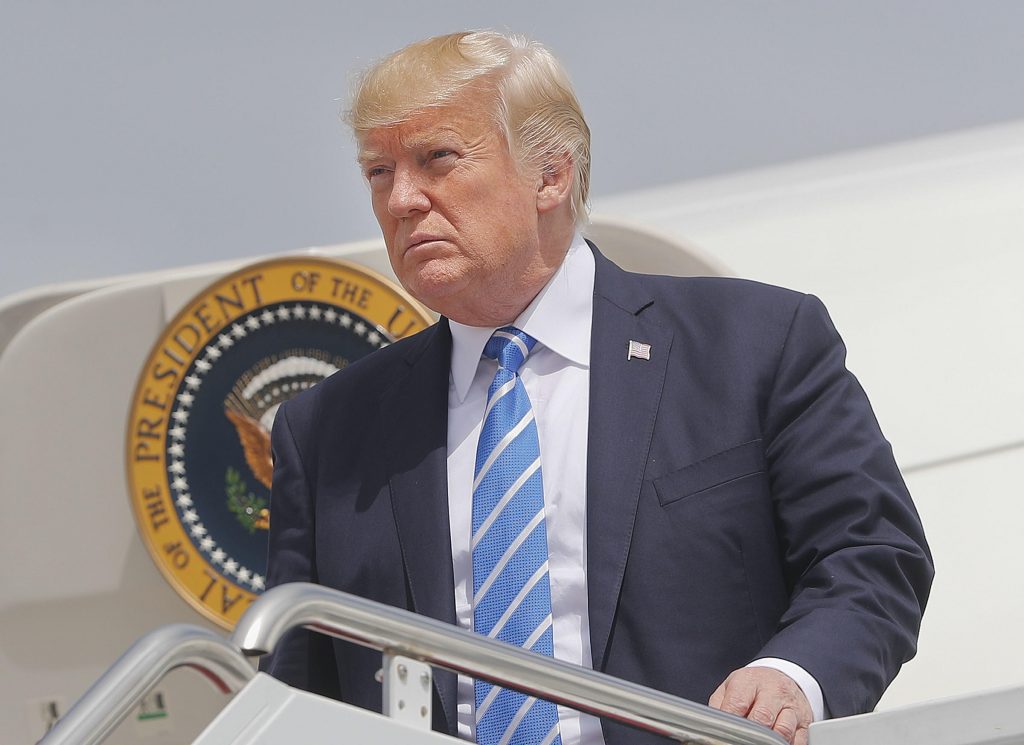
    Following the end of the Cold War, the world was presented with the promise of a safer, more stable, and more just international order. Yet the picture that emerges today is the exact opposite. Wars are multiplying, diplomacy is weakening, budgets allocated to the arms race are breaking records, and millions of people are paying the price for the geopolitical calculations of great powers.

    Among those primarily responsible for this picture, the political and economic elites of the US and Western NATO countries, who define themselves as the “guardians of the rules-based order,” hold a prominent place.

    For decades, the Western ruling class has used the discourse of democracy, human rights, and international law as a strategic tool for foreign policy rather than a moral principle. The same action is labeled “legitimate self-defense” when carried out by an ally, but a “grave violation of international law” when carried out by a rival. This double standard erodes the West’s claim to moral superiority with each passing day.

    Although NATO initially maintains that it was founded for defensive purposes, over the last thirty years it has built an extensive operational history ranging from Yugoslavia to Afghanistan, and from Libya to military interventions in various geographies. This process has strengthened the perception in a significant part of the world that NATO is not merely a defensive alliance.

    The security concept being imposed on European publics today is increasingly based on producing more weapons, making higher military expenditures, and channeling societies’ economic resources into the defense industry. Health, education, the social state, and productive investments are being pushed to the background, while the politics of fear is being turned into the primary tool for shaping public opinion.

    While Europe is expected to shoulder an ever-greater military burden in the US’s global strategy, the cost is being placed on European taxpayers. As energy crises, high inflation, loss of competitiveness in industry, and social unrest grow, the profits of the defense industry and large investment funds are rising. This situation inevitably raises the question of who benefits from the war economy.

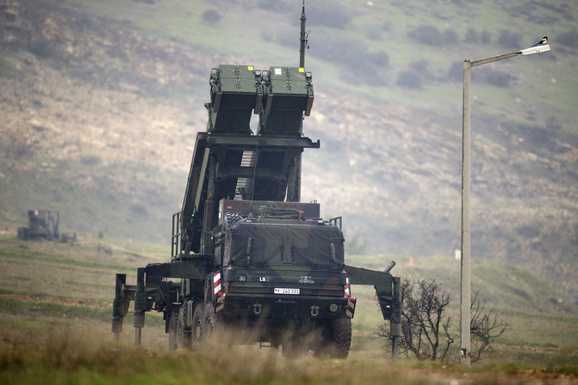
    One of the greatest delusions of Western elites is thinking that military superiority translates into political superiority. Yet history has repeatedly shown the opposite. The experiences of Vietnam, Iraq, and Afghanistan have revealed that even the world’s most powerful armies may fail to achieve their political objectives. Despite this, the same mindset continues to prioritize military solutions in new crises.

    Even more alarming is the gradual normalization of tension between nuclear powers. As the language of diplomacy weakens, the language of threat grows stronger; sanctions are favored over negotiation, and military deterrence over compromise. Such an approach increases the risk of miscalculation and produces a security dilemma that could confront humanity with irreversible consequences.

    While Western political elites constantly present the public with the rhetoric of “defending the free world,” they also face serious tests within their own societies regarding freedom of expression, media pluralism, and tolerance for dissenting views. Expanding surveillance mechanisms on security grounds, emergency powers, and increasing censorship debates during times of war raise the question of to what extent liberal democracies are consistent with their own principles.

    True security cannot be achieved through an endless arms race, but through robust diplomacy, mutual confidence building, economic cooperation, and the equal application of international law for all. The presentation of their own interests as universal values by great powers only produces new polarizations and new conflicts.

    History has rarely vindicated warmongers. Intoxicated by power, arrogance, and geopolitical calculations, political elites who risk the future of societies are sacrificing long-term global stability for short-term strategic gains. The price, however, is not paid by politicians or big capital circles; it is paid by the young sent to the front lines, citizens whose taxes rise, families driven into poverty, and societies devastated by wars.

    The world must pursue not new bloc formations and endless proxy wars, but courageous diplomacy, mutual respect, and the truly universal application of international law. Otherwise, while the elites managing power politics believe they control the course of history, they will ultimately be forced to confront the consequences of the instability they themselves have built.

    References

    Brzezinski, Z. (1997). The Grand Chessboard: American Primacy and Its Geostrategic Imperatives. Basic Books.

    Chomsky, N. (2003). Hegemony or Survival: America’s Quest for Global Dominance. Metropolitan Books.

    Engdahl, F. W. (2004). A Century of War: Anglo-American Oil Politics and the New World Order. Pluto Press.

    Hudson, M. (2022). The Destiny of Civilization: Finance Capitalism, Industrial Capitalism or Socialism. CounterPunch Books.

    International Institute for Strategic Studies. (2025). The Military Balance 2025. Routledge.

    Kiel Institute for the World Economy. (2025). Ukraine Support Tracker. Kiel Institute for the World Economy.

    Mearsheimer, J. J. (2001). The Tragedy of Great Power Politics. W. W. Norton & Company.

    Mearsheimer, J. J. (2014). Why the Ukraine Crisis Is the West’s Fault. Foreign Affairs, 93(5), 77–89.

    North Atlantic Treaty Organization. (2025). NATO Summit Declaration. Brussels.

    Roberts, P. C. (2016). The Neoconservative Threat to World Order. Clarity Press.

    Sachs, J. D. (2023). The Ukraine War and the Eurasian World Order. Consortium of Universities Lectures.

    SIPRI. (2025). SIPRI Yearbook 2025: Armaments, Disarmament and International Security. Stockholm International Peace Research Institute.

    United Nations. (1945). Charter of the United Nations.

    United Nations General Assembly. (various years). Resolutions concerning the situation in Ukraine.

    Varoufakis, Y. (2023). Technofeudalism: What Killed Capitalism. Bodley Head.

    Walt, S. M. (2018). The Hell of Good Intentions: America’s Foreign Policy Elite and the Decline of U.S. Primacy. Farrar, Straus and Giroux.

    Wolff, R. D. (2023). Understanding Capitalism. Democracy at Work.

    Sefa Yürükel
    Danish ethnographer and social anthropologist (MA)
    Aarhus University, 1997
    Independent Researcher
    Fields of Research: International Politics, Public International Law, Geopolitics, Sociology, Psychology, Cultural Studies, Systems and Structures.
  • NATO 3.0: A CLEAN PAGE FOR A BLOODY PAST, OR THE EUROPEAN COCKTAIL IN THE SAME WAR MACHINE?

    NATO 3.0: A CLEAN PAGE FOR A BLOODY PAST, OR THE EUROPEAN COCKTAIL IN THE SAME WAR MACHINE?

    NATO has set a new slogan for its upcoming summit in Ankara: “A stronger Europe within a stronger NATO.” The so called think tanks of the Alliance are marketing this period as “NATO 3.0.” According to the narrative being spun, NATO 1.0 covered the Cold War era, while NATO 2.0 encompassed the post Cold War years of uncertainty and the fight against terrorism. Now, with NATO 3.0, an entirely new page is supposedly being turned: the Alliance is returning to concrete military power, deterrence, and defense. Moreover, this time leadership will rise not on the shoulders of the United States, as in the past, but on those of Europe.

    This narrative might sound like a clean beginning. But you cannot cleanse a bloody past simply by updating the version number. NATO 3.0 is, in essence, nothing more than a new model of the same war machine, this time with European actors taking the wheel. And the real question is this: Will an alliance that has a zero percent success rate in bringing peace to the world, and has instead been the primary architect of war, destruction, and bloodshed for decades, suddenly transform into a dove of peace under European leadership? Or does this mean that Europe, instead of forging its own independent military identity, is deceiving itself by inheriting the same filthy legacy and dragging the world toward new catastrophes?

    The Relentless War Machine of NATO 1.0 and 2.0

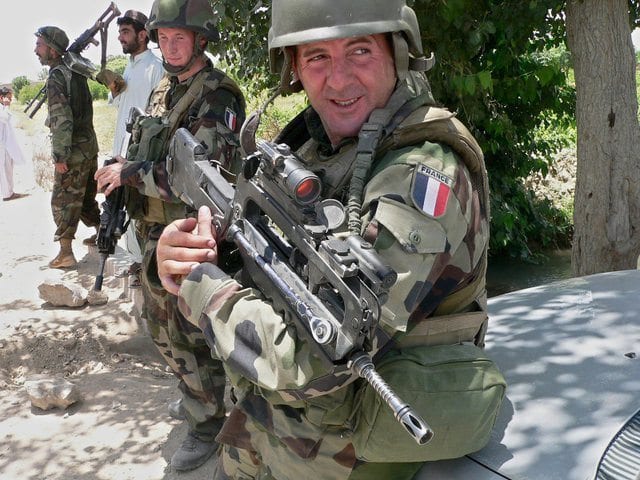
    The track records of NATO’s two previous versions provide a more than clear answer to this question. NATO 1.0 was a structure that kept the world on the brink of nuclear catastrophe throughout the Cold War, fueled the arms race, and was the primary actor in all the proxy wars of the bipolar world. NATO 2.0, on the other hand, did not waste time after the dissolution of the Soviet Union in finding an existential enemy for itself. Hiding behind polished concepts like the “fight against terrorism,” “crisis management,” and “humanitarian intervention,” it embarked on the most destructive and unaccountable military adventures in history. The 78 day bombing of Yugoslavia, the 20 year occupation of Afghanistan and its abandonment to chaos, and the bombing and fragmentation of Libya under the guise of a “humanitarian intervention” that dragged it into a civil war quagmire are all products of this era. In these operations, tens of thousands of civilians lost their lives, millions were displaced from their homes, and the infrastructure of entire countries was collapsed. Wherever NATO touched, it was not peace that blossomed, but death and destruction.

    And now, NATO 3.0, which attempts to sit atop this record with its emphasis on a “return to defense” and “deterrence,” is light years away from sincerity. Whom will you deter? Against whom will you defend? The answer to these questions remains the same old imperialist geopolitical objectives, the same strategy of “encircling Eurasia,” and the same ambition to control energy resources.

    The Senile Alliance and the Bitter Truth of the Ukraine Crisis

    NATO’s current state has become most visible in the Ukraine crisis. The strategic impotence of NATO in the face of Russia’s steps in Eurasia has declared to the entire world that the Alliance is no longer the absolute power it once was, and that it has grown senile both militarily and politically. The situation in Ukraine is a direct result of NATO’s decades long policy of expansion. Despite the promise made at the end of the Cold War “not to expand one inch eastward,” NATO has pushed right up to Russia’s borders by incorporating a total of 14 countries since 1999. This expansion was not a defensive reflex but part of an aggressive strategy of encirclement. The prospect of Ukraine being added to this chain of encirclement became the final straw that broke the camel’s back.

    However, things did not unfold as NATO and the US had planned. Russia did not collapse despite economic sanctions; on the contrary, the sanctions left the European economy facing an energy crisis, inflation, and stagnation. The hundreds of billions of dollars in military aid poured into Ukraine under US leadership could neither deliver a decisive victory on the front lines nor force Russia to the negotiating table. NATO could not intervene directly on the ground because it knew this would lead to a world war. It could not project power from the air because it faced the risk of heavy losses against Russian air defense systems. The economic sanctions, contrary to expectations, shook the Russian economy less than anticipated, while leaving Europe facing the danger of deindustrialization.

    This picture proves that the new rhetoric called NATO 3.0 is not a show of strength but a confession of weakness. The US gradually pushing the initiative toward Europe in the face of this crisis is not strategic foresight, but a panicked scramble to salvage goods from a sinking ship. Washington, while floundering in the Ukrainian quagmire, wants to focus on China, which it sees as its primary geopolitical rival. For this reason, it is sending Europe the message: “Now handle your own security; we will focus on the Pacific.” Europe, by willingly jumping onto this ship abandoned by its captain, is about to throw itself into the arms of a suicide mission that will drag it back into a quagmire, rather than seizing the historic opportunity to build its own independent defense identity.

    “A Stronger Europe Within a Stronger NATO”: An Oxymoronic Slogan

    The slogan of the Ankara summit, “A stronger Europe within a stronger NATO,” is a linguistic oxymoron. Because a strong Europe within NATO is not possible; NATO’s very reason for being is built upon Europe’s dependency on the United States. NATO’s integrated military structure, command echelons, intelligence networks, and weapons systems have structured European armies to be unable to act without Washington. Under the guise of “standardization,” European armies have been condemned to American weapon systems, and the continent’s defense industry has largely been turned into subsidiaries of US firms. The Supreme Allied Commander of NATO is always an American general. Within this structure, the “strengthening” of Europe means, at best, lightening the load on the United States and refueling the same dirty war machine.

    This role carved out for Europe is historically familiar. Throughout the Cold War, Europe was the US’s forward outpost, a buffer zone against the Soviets, and a colossal market for the American arms industry. What is now being promised to Europe with NATO 3.0 is nothing more than a “reinforced” version of the same role. When the US, in the driver’s seat, gets tired, handing the wheel over to Europe for a while, but with Washington still setting the roadmap and destination point… This is the essence of NATO 3.0.

    This dependency is reinforced by divisions within Europe itself. From Hungary to Slovakia, from eastern Germany to northern Italy, the rising sovereignist and pro peace political movements oppose the current trajectory of NATO and the EU. French President Macron’s occasional rhetoric of “strategic autonomy” is precisely a reaction against this dependency. Yet the NATO 3.0 narrative is a deception designed to absorb this demand for autonomy, neutralizing it by reducing it to a revision within NATO. Europe’s genuine strengthening is possible not within NATO, but by leaving it.

    The Real Solution: An Independent European Army and a New Security Architecture in Eurasia

    The true path to peace lies in Europe building a genuinely defensive security architecture, completely independent of the geopolitical ambitions of the United States and focused on the defense of its own continent. The military leg of this architecture must be an “Independent European Army.” This army must reject NATO’s dirty legacy and act not according to orders from across the Atlantic, but according to the will of the European peoples for peace, prosperity, and sovereignty.

    An independent European Army will also simultaneously pave the way for a brand new ground for dialogue and cooperation in Eurasia. The greatest missed opportunity since the end of the Cold War has been the failure to establish a common and indivisible security architecture stretching from Vancouver to Vladivostok. The biggest obstacle to this has been the continued existence and expansion of NATO. Europe’s withdrawal from NATO and the formation of an independent security identity will allow for the establishment of a new equation of trust with Russia. This will be a breath of fresh air and peace not only for continental Europe but for the entire Eurasian geography, from Turkey to China and from India to Iran.

    From Turkey’s perspective, the situation is no different. Turkey has been a member of NATO since 1952, and this membership has not brought security to the country; on the contrary, it has subjected it to countless coups, terrorist attacks, embargoes, and encirclements. NATO’s Ankara summit is an attempt to sweep this bitter truth under the rug. Yet what Turkey needs is not NATO 3.0, but to ensure its own security through sovereign decisions with a fully independent, multidimensional, and peaceful foreign policy.

    Conclusion: Not a New Gimmick, but a Radical Break is Essential

    This new makeup called NATO 3.0 is inviting one of the greatest delusions in history. Changing the murderer’s name does not make him innocent. Europe taking the wheel will yield no other result than the same war machine causing new catastrophes on new roads. Moreover, this time, Europe will not only be doing the dirty work of the United States but will also pay the price directly with its own economy, its own peoples, and its own future.

    What the world needs is not new versions of NATO, but the complete elimination of this bloody alliance. What Europe needs is not a so called strengthening within NATO, but a fully independent defense identity. What Eurasia needs is not encirclement and containment strategies, but common security and cooperation mechanisms. What Turkey needs is not a new model of NATO, but a fully independent foreign policy based on the principle of “Peace at Home, Peace in the World” as pointed out by Gazi Mustafa Kemal Atatürk.

    True courage lies not in pulling new tricks to keep this bloody alliance alive, but in sending it to the dustbin of history and building a brand new, peaceful understanding of security. There will be no NATO 3.0, 4.0, or 5.0. There should not be. If there is, it will only herald new wars, new destructions, and new humanitarian tragedies.

    Bibliography

    · Daniele Ganser, NATO’s Secret Armies: Operation Gladio and Terrorism in Western Europe, trans. G. Karadağ, Destek Yayınları, 2012.
    · Human Rights Watch, Civilian Deaths in the NATO Air Campaign, 2000.
    · United Nations Assistance Mission in Afghanistan (UNAMA) reports; Médecins Sans Frontières, Kunduz Hospital Attack Investigation Report, 2015.
    · Amnesty International, Libya: The Forgotten War, 2015.
    · Official speeches of Condoleezza Rice between 2003 and 2006 and US State Department archives.
    · Ralph Peters, “Blood Borders”, Armed Forces Journal, 2006.
    · Assessments on the Ukraine crisis and NATO’s strategic position: John Mearsheimer, “Why the Ukraine Crisis Is the West’s Fault”, Foreign Affairs, 2014.
    · Richard Sakwa, Frontline Ukraine: Crisis in the Borderlands, I.B. Tauris, 2015.
    · On NATO’s eastward expansion process and its effects: Mary Elise Sarotte, Not One Inch: America, Russia, and the Making of Post Cold War Stalemate, Yale University Press, 2021.
    · On US hegemony and the role of NATO: Michael J. Hogan, The Marshall Plan: America, Britain and the Reconstruction of Western Europe, 1947-1952, Cambridge University Press, 1987.
    · On Europe’s strategic autonomy debates: Reports of the High Representative of the European Union for Foreign Affairs and Security Policy and speeches by French President Emmanuel Macron from the 2017 to 2024 period.
    · On NATO’s historical transformation: Lawrence S. Kaplan, NATO 1948: The Birth of the Transatlantic Alliance, Rowman & Littlefield, 2007.
    · On Turkey’s NATO membership and its effects: Mehmet Ali Birand, 12 Eylül: Türkiye’nin Miladı, Doğan Kitap; Uğur Mumcu, Rabıta and Kürt İslam Ayaklanması, um:ag Yayınları.
    · On Atatürk’s principle of “Peace at Home, Peace in the World” and policy of full independence: Gazi Mustafa Kemal Atatürk, Nutuk (1919-1927).

    Sefa Yürükel
    Danish ethnographer and social anthropologist (MA)
    Aarhus University, 1997
    Independent Researcher
    Fields of Research: International Politics, Public International Law, Geopolitics, Sociology, Psychology, Cultural Studies, Systems and Structures.
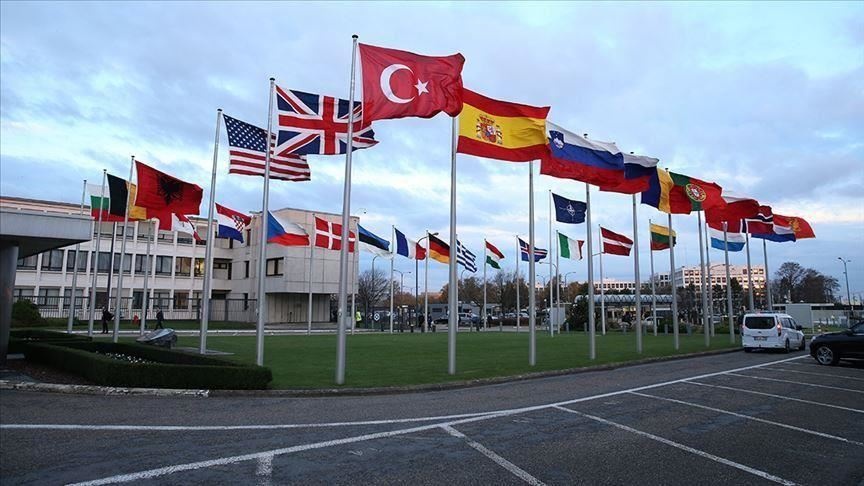
  • Europe as a Strategic Balancer Between Eurasia and the USA: An Analysis of the Pioneering Role of the Scandinavian and Benelux Countries

    Europe as a Strategic Balancer Between Eurasia and the USA: An Analysis of the Pioneering Role of the Scandinavian and Benelux Countries

    The international system finds itself on the brink of a structural transformation at the end of the first quarter of the twenty-first century. The American-centric unipolar order of the post-Cold War era is giving way to a structure characterized by the pluralization of power centers, complex interdependencies, and intertwined strategic rivalries. In this new conjuncture, a world squeezed between the rising authoritarian capitalism models of the Eurasian landmass and the liberal democratic core of the transatlantic alliance needs an autonomous and rational balancing element more than ever, one that belongs neither entirely to the Atlantic camp nor to the rising powers of Eurasia. This article defends the thesis that this balancing actor must be an independent Europe possessing strategic autonomy, and puts forward the argument that the most capable candidates to undertake the locomotive role for this mission are the Scandinavian and Benelux countries. The Scandinavian bloc, consisting of Denmark, Sweden, Finland, Iceland, and Norway, along with the Benelux group, comprising the Netherlands, Belgium, and Luxembourg, possess the potential to form the core of this new European architecture through their historical heritage, normative power, and economic resilience.

    Conceptual Framework: Normative Power and Strategic Autonomy

    The role of the European Union (EU) in the international system has long been explained through the concept of “normative power.” According to this approach, the EU possesses the ability to shape global politics through the diffusion of norms and values rather than through military capacity. However, the recent war in Ukraine, the energy crisis, and disruptions in supply chains have demonstrated that normative power alone is insufficient and must be reinforced by “strategic autonomy.” Strategic autonomy refers to Europe’s capacity to determine its own security and defense policies, reduce its economic dependencies, and address vulnerabilities in global supply chains. This article proposes a synthesis of these two concepts and argues that preserving its normative power while simultaneously building its strategic autonomy will render Europe a credible third pole between the USA and the Eurasian powers.

    Historical Heritage and Institutional Competence

    The Scandinavian and Benelux countries possess a unique historical heritage and institutional accumulation capable of bringing this synthesis to life. The common characteristic of these eight countries is that they have built a foreign policy tradition based on international law, a culture of consensus, and multilateral cooperation, rather than on the expansionist geopolitical ambitions associated with being a great power.

    The Benelux countries are the laboratory and founding core of European integration. The economic integration process initiated by the Netherlands, Belgium, and Luxembourg in the aftermath of the Second World War constituted the cornerstone of today’s European Union. These countries possess the continent’s most deeply rooted experience in the transfer of sovereignty and transnational governance. In particular, the international legal infrastructure centered in The Hague in the Netherlands, the multilingual and multicultural consensus model of Belgium, and the success of Luxembourg in small-state diplomacy are capable of forming the diplomatic backbone of an independent Europe.

    The Scandinavian countries, meanwhile, are global reference points in the fields of the welfare state model, social solidarity, and conflict resolution. Norway has played a central role in numerous critical mediation efforts, from the Oslo peace process to the cessation of the civil war in Colombia. With the balance of neutrality and engagement it developed during the Cold War period, Finland provided a model for small states caught between great powers, and it continues to maintain this strategic wisdom following its NATO membership. Sweden stands out for its pioneering role in humanitarian diplomacy and disarmament, while Denmark distinguishes itself as a courageous defender of European solidarity in times of crisis. Iceland adds geostrategic depth to this community with its strategic position in the North Atlantic and its pioneering role in sustainable energy. This shared heritage makes it possible for a Europe built under the leadership of these eight countries to become not merely an economic bloc but also a global center of conscience and reason.

    Economic Independence: Building a New Welfare Model

    The fundamental prerequisite for an independent Europe is the reinforcement of economic sovereignty. The pandemic and the war in Ukraine have clearly exposed the vulnerabilities created by Europe’s external dependency in energy, raw materials, and strategic technologies. This dependency inevitably constrains political decision-making processes. A Europe that is economically dependent cannot possibly act as a fully autonomous actor in the context of the United States’ rivalry with China.

    The Scandinavian and Benelux countries possess more than sufficient capacity to serve as the engines of this economic transformation. Denmark, Sweden, Norway, and Iceland are world leaders in clean energy technologies such as wind energy, hydroelectric power, geothermal energy, and green hydrogen. Finland contributes to Europe’s competitive strength through its excellence in educational technologies, digital innovation, and the circular economy. On the Benelux front, the Netherlands and Belgium host Europe’s largest logistics centers and undertake pioneering roles in circular agriculture and smart urbanization projects. Luxembourg has become a global hub for green financing and sustainable investment funds. A “North Sea Energy Grid” and a “European Digital Sovereignty Network,” implemented under the leadership of these eight countries, are concrete projects that can reduce the continent’s energy and technology dependency.

    The most distinctive feature of this economic model is its potential to combine competitiveness with social justice. The synthesis of the “competitive welfare state” approach of Sweden and Denmark with the free trade tradition of the Netherlands and Belgium offers a unique development paradigm that targets both social cohesion internally and global competitive strength externally. This model promises a third way based on sustainability and inclusivity, distinct from the cheap-labor-based production capitalism of Asia and the financialized market model of the United States.

    Peace and Security: Europe as a Diplomatic Superpower

    Europe’s security architecture has historically been built upon NATO and the transatlantic alliance. While this alliance remains the foundation of European security, it is a strategic imperative for the continent to assume ultimate responsibility for its own security and to become not merely the European pillar of a military pact but also a diplomatic superpower. In an era of rising tensions across Eurasia, cyber warfare, disinformation campaigns, and hybrid threats, Europe’s northern flank holds vital geostrategic importance.

    The long land borders of Finland and Norway with Russia, and these countries’ expertise on Russia, are indispensable for Europe’s threat perception towards the East and its deterrence strategies. The military presence of Sweden and Denmark in the Baltic Sea constitutes a guarantee of regional maritime security. Iceland holds a key role in monitoring Russian submarine activity in the North Atlantic through its strategic position in the Greenland-Iceland-United Kingdom (GIUK) gap. The defense cooperation among these five countries is progressively deepening within the NORDEFCO framework and presents a model of Scandinavian defense integration.

    In parallel, the international law tradition of the Netherlands, embodied in The Hague and hosting institutions such as the International Court of Justice and the International Criminal Court, constitutes the institutional infrastructure of Europe’s normative power. The multilateral diplomatic environment in Brussels, where Belgium hosts NATO and EU institutions, and the role assumed by Luxembourg as a facilitator of European defense funds complete the diplomatic pillar of this security architecture. An independent Europe must be not an automatic ally in the United States’ rivalry with China but a center of strategic reason. The capacity to say “no” to its transatlantic ally when necessary will render it a more valuable and respected partner. Similarly, it must be able to conduct clear and principled negotiations with Beijing on issues of human rights, intellectual property rights, and rules-based trade.

    The Vanguard Coalition and the Dissemination of the Mission

    The success of the model proposed in this article depends on Denmark, Sweden, Finland, Iceland, Norway, the Netherlands, Belgium, and Luxembourg forming a “vanguard coalition” and taking more courageous and coordinated steps within Europe and on the global stage. The mechanisms of differentiated integration and enhanced cooperation within the current structure of the European Union provide the legal basis for such a pioneering group to take action. This group of eight can initiate concrete projects such as the expansion of qualified majority voting mechanisms, the augmentation of a common European defense fund, the construction of a North Sea offshore wind energy grid, and the establishment of a Europe-wide digital sovereignty cloud infrastructure.

    It is essential that this mission be disseminated across the entire continent with an inclusive, rather than exclusive, vision. Major continental states such as Germany and France are integral parts of this structure; however, the spirit and guiding energy of the mission must not be trapped in the historical conflicts of interest and bureaucratic inertia of the large states. The tradition of small and medium-sized state diplomacy held by the Scandinavian and Benelux countries allows them to exhibit agile and effective leadership without falling into this trap.

    Conclusion

    The international system can sustain its existence neither under the hegemony of a single superpower in stable peace nor by drifting into the chaotic rivalry of an unregulated multipolarity. What the world needs is a rational, just, and rules-based middle way, an element of balance and a bridge. This middle way is an independent Europe, rising as a strategic balancer between Eurasia and the USA, led by the Scandinavian and Benelux countries, which has fortified its normative power with strategic autonomy. History has entrusted these modest geographies with a great responsibility on behalf of the common future of humanity. The courageous assumption of this responsibility by Denmark, Sweden, Finland, Iceland, Norway, the Netherlands, Belgium, and Luxembourg, and their rallying around a common vision, is a historical imperative for the well-being not only of Europe but of the entire international community.

    Bibliography

    Biscop, S. (2019). European Strategy in the 21st Century: New Future for Old Power. Abingdon: Routledge.

    Browning, C. S. (2007). Branding Nordicity: Models, Identity and the Decline of Exceptionalism. Cooperation and Conflict, 42(1), 27-51.

    European Commission. (2022). Strategic Compass for Security and Defence. Brussels: European External Action Service.

    Fägersten, B. & Rühlig, T. (2023). Nordic Digital Sovereignty: Building a Resilient and Competitive Digital Ecosystem. Stockholm: Swedish Institute of International Affairs.

    Helwig, N. (2020). Finland’s Foreign and Security Policy: From Neutrality to a More Active Role. Helsinki: Finnish Institute of International Affairs (FIIA).

    Laursen, F. (2019). The Benelux and European Integration: A History of Pioneering Cooperation. Leiden: Brill Nijhoff.

    Manners, I. (2002). Normative Power Europe: A Contradiction in Terms? Journal of Common Market Studies, 40(2), 235-258.

    Mouritzen, H. & Wivel, A. (2012). The Geopolitics of Euro-Atlantic Integration: Explaining the Nordic Countries’ Security Policy Choices. Abingdon: Routledge.

    Rynning, S. (2021). Denmark, Scandinavia and European Strategic Autonomy. Scandinavian Journal of Military Studies, 4(1), 155-168.

    Stubb, A. & Korkman, S. (2022). The Future of the European Union: A Federal Model for a Geopolitical Europe. Brussels: European Policy Centre.

    Van Herpen, M. H. (2023). The Netherlands and European Strategic Autonomy: A Small State’s Grand Strategy. The Hague: Clingendael Institute.

    Wivel, A. (2021). Small States in Europe: Strategic Opportunities and Challenges. European Foreign Affairs Review, 26(2), 183-198.

    Sefa Yürükel
    Danish ethnographer and social anthropologist (MA)
    Aarhus University, 1997
    Independent Researcher
    Fields of Research: International Politics, Public International Law, Geopolitics, Sociology, Psychology, Cultural Studies, Systems and Structures.

  • Societal Rebellion Against the Foreign Policy Hypocrisy of the AK Party Government: The Rejection of the US and NATO by Turkish Public Opinion at the NATO Summit

    Societal Rebellion Against the Foreign Policy Hypocrisy of the AK Party Government: The Rejection of the US and NATO by Turkish Public Opinion at the NATO Summit

    The Chasm Between Reality on the Ground and Calculation in the Palace

    The institutionalized relations of the Republic of Turkey with the Western alliance began as a strategic necessity with its entry into NATO in 1952, and throughout the Cold War, the country functioned as an outpost on the alliance’s southern flank. However, this historical engagement has been dragged into an identity crisis and a strategic collapse with the monstrous foreign policy approach constructed by the AK Party since the early 2000s. This new vision, hidden behind pompous yet hollow concepts like “strategic depth,” is, in essence, nothing but a hypocritical pragmatism that consolidates its power domestically with a nationalist Islamist discourse while deepening its subjugation to Western power centers in foreign policy.

    The crisis of trust that began with the 2003 Iraq parliamentary motion crisis, peaked with the July 15, 2016 coup attempt, the protection of the FETÖ ringleader in the US, the overt military support given to the PKK extension YPG in Syria, and the CAATSA sanctions imposed after the S 400 crisis, has led not to an awakening for the AK Party government, but to a deeper capitulation. Despite all these hostile policies, the government, far from severing its ties with the US and NATO, has entered a race to ingratiate itself with them.

    The latest NATO Summit is the most concrete proof of this shameful picture. The summit has served not only as a demonstration of the decisions taken contrary to national interests but also as a declaration of how the “national and indigenous” fairy tale the AK Party government tells its own electorate has unraveled.

    The NATO Summit: The Strategic Defeat Document Where the AK Party Squandered National Interests

    This summit has gone down in history not as a diplomatic victory for Turkey, but as a debacle certifying how impotent and visionless the AK Party government is in foreign policy. The decisions adopted at the summit are blows struck against Turkey’s national security, and failing to object to these blows is directly equivalent to treason.

    The Tyranny of Defense Spending and Economic Collapse: The 2% defense spending commitment imposed by the summit is nothing but a new penance exacted on the Turkish people, already groaning under the AK Party’s incompetent economic management. The government continues to channel this money to the US arms monopolies by cutting it from the nation’s bread and children’s education.

    The Dagger Plunged into the Strategic Relationship with Russia: The relationship the government has built with Russia on sensitive balances, such as tourism, energy, and the Astana process to which it owes its presence in Syria, has been dynamited by the AK Party’s own hand with the summit declaration labeling Russia the “greatest threat.” This decision is the clearest evidence of the paralysis of reason in foreign policy and the eagerness to fall into the US’s trap.

    Dangerous Tension with China: The Rejection of the Belt and Road: NATO declaring China a “systemic rival” for the first time is a bullet fired at Turkey’s Asia opening and the economic benefits it expects from the Belt and Road Initiative. By remaining silent on this decision, the government has once again sold the country’s alternative economic and political future in Eurasia for the sake of an Atlantic centered commitment.

    Fake Fight Against Terror, Real Concession: Most egregiously, the PKK/YPG threat was not included in the summit declaration with the clarity Turkey demanded. The government, which shouts battle cries of “fighting terrorism” domestically, fell silent when it came to naming this organization at the NATO table. This is an overt concession given to the US on the most fundamental issue of national security. A terrorist organization that has been shedding the blood of Turkish soldiers for years and targeting our borders continued to be NATO’s indirect ally, and the AK Party government stood by and watched.

    The Righteous Reaction Rising Against Failed Diplomacy

    Criticisms directed at this failing record of the AK Party government are not political petulance by the opposition but a requirement of national interests.

    The Squandering of Security and Hypocrisy Against Terror: The opposition’s harshest criticism is precisely at this point: In the name of currying favor with the US, the government could not even bring up a matter of survival like the fight against terrorism at NATO. This is proof that the “national and indigenous” rhetoric is an empty propaganda tool, and in reality, a political will under American patronage exists.

    Silent Invasion in the Eastern Mediterranean and Aegean: The US’s military reinforcement of Greece, especially in Alexandroupoli, during the summit process is a direct challenge to the Blue Homeland doctrine and Turkey’s rights in the region. Not only has the AK Party government failed to resist this insidious expansion, it has not even undertaken any diplomatic initiative within NATO to block Greece’s maximalist demands. This is not protecting national interests but being complicit in their usurpation.

    Discourse Action Disconnect on the Gaza Genocide: The government’s harshest “genocide” accusation and tough rhetoric used against Israel in domestic politics gave way to shameful silence at the NATO Summit. The recognition of Israel’s “right to self defense” in the declaration has shown that all of the AK Party’s stances on Palestine are merely election material and dissimulation aimed at lulling domestic public opinion.

    Anti Democratic Imposition: The complete sidelining of the Turkish Grand National Assembly while all these decisions were being made is an indicator of how the one man regime has turned foreign policy into a black box. The taking of these vital decisions behind closed doors is a clear violation of the Constitution and democracy and an imposition by a government that has completely lost its legitimacy.

    The Definitive Verdict of a Now Awakened Public Opinion: Unconditional Rejection of the US and NATO

    Turkish public opinion, contrary to the political elites, clearly sees what is happening. All conducted research documents that the AK Party’s dance with the West has gone bankrupt in the eyes of society. An overwhelming majority of society views the US not merely as an ally but as the greatest threat to Turkey. The weapons given to the PKK/PYD, the protective attitude embracing FETÖ, and economic dependency are the main sources of this anger.

    The perception of NATO is built upon a sense of having been deceived. The public does not see NATO as a framework that provides Turkey’s security, but on the contrary, as a platform where those threatening Turkey’s security gather. The increase in the proportion of those advocating for withdrawal from NATO is a reflection not of the government’s failed policies, but of society’s common sense. Society sees that what the government calls “multidirectional policy” is actually shallow balancing consisting solely of energy cooperation with Russia; it demands the construction of a genuinely multidirectional and independent foreign policy. This anti American and anti NATO sentiment, rising even within the AK Party’s own base, when combined with the document of surrender the government signed at the summit, heralds a societal anger ready to erupt.

    Conclusion: Either an Independent Turkey or Atlantic Tutelage

    The latest NATO Summit has been the confirmation of the AK Party government’s foreign policy bankruptcy and strategic inconsistency. The government, which tells a fairy tale of “standing firm” in domestic politics, has turned into the representative of an approach that grossly tramples on national interests in foreign policy. The choice before Turkey is clear: Either it will accept being a second class ally by fully submitting to NATO, which acts as the gendarmerie of US imperialism, or it will construct a genuinely independent, multicentric foreign policy based on national honor. The current government’s preference has, unfortunately, been for the first option. Turkey’s salvation from this quagmire will be possible only when a political will that listens to societal demands, is anti imperialist, and fully independent comes to power.

    References

    Allison, G. (2017). Destined for War: Can America and China Escape Thucydides’s Trap? Houghton Mifflin Harcourt.

    Aydın, M. and Dizdaroğlu, C. (2022). “The Rise of Anti Westernism in Turkish Foreign Policy: Breaks in the Perception of NATO and the US.” Uluslararası İlişkiler Dergisi, 19(74), 3-25.

    Balcı, A. (2017). Turkish Foreign Policy: Principles, Actors and an Accounting of the AK Party Era. Alfa Yayınları.

    Çandar, C. (2016). “From Strategic Depth to Strategic Shallowness: The Bankruptcy of AK Party Foreign Policy.” Turkish Policy Quarterly, 15(3), 61-71. (With a Critical Reading)

    Davutoğlu, A. (2001). Strategic Depth: Turkey’s International Position. Küre Yayınları. (This work has been subjected to critical analysis as the theoretical basis of the government.)

    Foreign Economic Relations Board (DEİK). (2023). Transatlantic Trends Report: The Deepening of Anti Americanism in Turkey. DEİK Yayınları.

    German Marshall Fund. (2023). Transatlantic Trends 2023: The Collapse of Trust in the Turkish American Alliance. GMF Publications.

    Haas, M. (2022). The New Geopolitics: NATO’s Expansionist Agenda and Its Global Fallout. Routledge.

    Kardaş, S. (2020). “Turkey’s S 400 Predicament: How Strategic Autonomy Rhetoric Masks Deepening Dependence.” Insight Turkey, 22(3), 11-26.

    KONDA Research. (2023). Perception of Foreign Policy and Security in Turkey: Distrust Towards the US and NATO at Its Peak. KONDA Yayınları.

    Larrabee, F. S. (2010). Troubled Partnership: US Turkish Relations as a Case Study in Alliance Failure. RAND Corporation.

    Metropoll Research. (2024). Turkey’s Pulse: NATO Membership Questioned, Demand for Independent Foreign Policy Rising. Metropoll Strategic and Social Research Center.

    NATO. (2024). Washington Summit Declaration: A Critical Analysis of Its Implications for Turkey. NATO Public Diplomacy Division. (The document has been interpreted through critical discourse analysis.)

    ORC Research. (2024). Voter Trends: The US Leads by Far in Perception of National Security Threat. ORC Yayınları.

    Oğuzlu, T. (2012). “Turkey and NATO: From Reluctant Ally to Submissive Partner Under the AKP.” Journal of Balkan and Near Eastern Studies, 14(4), 419-435. (With an Updated Perspective)

    Pew Research Center. (2023). Global Attitudes Survey: Record High Anti Americanism in Turkey. Pew Research Center.

    Snyder, G. H. (1997). Alliance Politics. Cornell University Press. (Used to explain the intra alliance dilemma of “abandonment” and “entrapment.”)

    Ülgen, S. (2022). “Redefining the US Turkey Relationship: A Story of Broken Promises and Eroded Sovereignty.” Carnegie Europe Paper, July 2022.

    Walt, S. M. (1987). The Origins of Alliances. Cornell University Press. (Used to explain why Turkey views the US as a threat within the framework of “balance of threat” theory.)

    Sefa Yürükel
    Danish ethnographer and social anthropologist (MA)
    Aarhus University, 1997
    Independent Researcher
    Fields of Research: International Politics, Public International Law, Geopolitics, Sociology, Psychology, Cultural Studies, Systems and Structures.

  • Digital Currency in Atomic and Space Based Conflicts: The Ontological Security of Assets and Systemic Fragilities

    Digital Currency in Atomic and Space Based Conflicts: The Ontological Security of Assets and Systemic Fragilities

    Digital currencies, especially crypto assets, are instruments that push the boundaries of modern finance and redefine the concepts of sovereignty and trust. The decentralized, distributed ledger technology (DLT) architecture of blockchain theoretically promises a value transfer that is resistant to state intervention, censorship, and geographical borders, operating as an apolitical medium. However, this structure frequently masks the vulnerabilities in the physical and digital layers upon which its very existence deeply depends. In extreme scenarios such as atomic disasters or space based satellite warfare, which are no longer merely theoretical the question of the preservation of digital currencies transcends a simple data security problem and transforms into a philosophical crisis that questions the nature of abstract value in the face of the collapse of civilization’s technological backbone.

    Technological Perspective: The Revenge of the Physical Layer

    The security of blockchain rests on cryptographic verification and distributed consensus mechanisms. Yet, this digital superstructure owes its existence to three fundamental physical layers: energy infrastructure, telecommunication networks (particularly fiber optic cables and satellite constellations), and data storage/server units.

    One of the first targets in space based conflicts will be the Global Positioning System (GPS) and low Earth orbit (LEO) satellite networks such as Starlink. The accuracy of timestamps and network synchronization, which are vital for cryptocurrency transactions, depend with absolute precision on GPS signals. The crippling of a satellite network by kinetic or non kinetic (laser, high power microwave) weapons not only severs internet access; by disrupting the temporal ordering of blocks, it can lead to chain forks, double spending attacks, and the collapse of the consensus mechanism (especially in Proof of Stake).

    The High Altitude Electromagnetic Pulse (HEMP) generated by nuclear explosions magnifies this threat exponentially. A HEMP has the capacity to permanently destroy continental scale electrical grids and all unprotected semiconductor circuits. In this scenario, the distributed nature of the blockchain ceases to be an advantage; the simultaneous physical destruction of all nodes in a geographical region does not merely mean the erasure of the chain’s record in that area (even though copies theoretically exist on other continents). The real danger is global network fragmentation. When the backbone of the Internet collapses, surviving isolated node groups can continue to process transactions internally, but when connectivity is restored, deciding which of these isolated chains will be accepted as the “valid” one will lead to an unsolvable consensus crisis and immense value destruction. Cold wallets and offline backups rely on the assumption that a functioning computer can be found after a nuclear EMP a scenario highly unlikely in a technological dark age that would last for years in affected regions.

    Economic and Psychological Risks: The Hyper Insecurity Cycle

    In an extreme crisis, the value of digital assets becomes subject not to their underlying technology but to instantaneous fluctuations in psychological trust. The simultaneous halt of exchange operations (CEXs) alongside infrastructure collapse means the sudden evaporation of liquidity. This creates a “digital asset run” far more lethal than a classic bank run.

    The psychological dynamic here is more complex than simple panic. Holders of digital assets confront the heavy burden of the “be your own bank” philosophy. Since the system has no central authority, there is no mechanism to appeal to, no fund to provide compensation, and no institution to hold accountable. This state of ontological insecurity can push users to two extremes: on one hand, those desperately and insecurely trying to get online to salvage their assets; on the other, those who experience a profound existential shock upon realizing that their digital assets have become meaningless in the face of physical destruction. The fear of missing out (FOMO) is replaced by the immediacy and certainty of absolute loss (Fear of Certain Loss). This situation demonstrates how money, as the digital manifestation of the social contract, can revert to nothingness when the underlying social consensus vanishes.

    Social, Cultural, and Legal Perspectives: Fragmented Sovereignty

    An atomic conflict destroys the physical infrastructure of the Westphalian sovereignty system while simultaneously exposing how fragile the “stateless” sovereignty promised by cryptocurrencies truly is. Culturally, Bitcoin and similar assets are powerful symbols of freedom and technological progress. However, when these symbols become physically inaccessible due to an electromagnetic pulse and their value approaches zero at the same time, a cultural trauma ensues.

    At this point, a legal vacuum emerges. International law is almost entirely silent on the protection of digital private property in a state of war. Since “your cryptocurrency” is nothing more than a private key, there is no authority from which to claim compensation or rights if that key is directly targeted or destroyed as collateral damage in an armed conflict. As social structures destabilize, the real value for surviving communities becomes not the numbers in a digital wallet, but immediate physical resources such as canned food, clean water, and medicine. This lays bare the truth that money is a social consensus in its most naked form: when there is no society left to provide consensus, money itself ceases to exist.

    Ethical and Philosophical Perspectives: The Tragedy of the Trust Machine

    Blockchain was designed at its core as a “trust machine”; it takes trust away from humans and institutions and delegates it to code and mathematics. Atomic and space based conflicts reveal the tragic limits of this abstraction. The code may be perfect, but the silicon, fiber optic cables, and power lines upon which the code runs are not; on the contrary, they are extremely fragile.

    Philosophically, this situation is a reflection of the mind body dualism that has persisted since Descartes, now projected onto the digital economy. Digital currency, as pure information (mind), can exist everywhere in the world, but it cannot manifest without a physical infrastructure (body). When the body dies, the existence of the mind becomes meaningless. Ethical responsibility enters at this point: those who build and use these systems bear the irresponsibility of ignoring the system’s absolute dependence on physical reality. True resilience lies not only in cryptographic security, but also in socio technical planning for how to rebuild infrastructure locally and redundantly. In the event of a catastrophe, what must be protected may not be individual wealth, but rather the community based communication and energy micro grids that will make transactions possible again.

    Conclusion: The Trial of Abstract Value Against Physical Reality

    Digital currencies offer robust protection against peacetime threats through cold wallets, multi signature systems, and geographically distributed backup strategies. However, a planetary scale electromagnetic pulse or the collapse of satellite communication reduces the preservability of these assets from a mere technical malfunction to the question of whether they hold any meaning at all alongside civilization’s technological backbone.

    The risk cannot be entirely eliminated, but it can be managed with a layered and holistic approach. This approach relies not only on encrypting data, but also on resilient energy sources (for instance, full nodes stored in EMP shielded Faraday cages ready for operation), alternative communication protocols (such as block transmission over shortwave radio), and most importantly, the existence of trained communities who know how to manage these assets during a crisis.

    In conclusion, digital currencies promise humanity an unprecedented financial autonomy. Yet this autonomy ultimately remains a slave to the physical infrastructure of the civilization humanity has built. In an extreme disaster scenario, what is truly tested is not the strength of cryptography, but the resilience of the human capacity to construct meaning, value, and community. The protection of digital assets, in this larger picture, cannot be considered separately from the responsibility of keeping the planet habitable and maintaining the fundamental communication networks of civilization.

    References

    1. Friedman, M., & Schwartz, A. J. (1963). A Monetary History of the United States, 1867 1960. Princeton University Press.
    2. Winner, L. (1980). Do Artifacts Have Politics? Daedalus, 109(1), 121 136.
    3. Beck, U. (1992). Risk Society: Towards a New Modernity (M. Ritter, Trans.). Sage Publications.
    4. Foster, J. S., Gjelde, E., Graham, W. R., Hermann, R. J., Kluepfel, H. M., Lawson, R. L., … Woodard, J. B. (2004). Report of the Commission to Assess the Threat to the United States from Electromagnetic Pulse (EMP) Attack: Volume 1: Executive Report. National Research Council.
    5. Giddens, A. (1990). The Consequences of Modernity. Stanford University Press.
    6. Nakamoto, S. (2008). Bitcoin: A Peer to Peer Electronic Cash System. https://bitcoin.org/bitcoin.pdf
    7. Graeber, D. (2011). Debt: The First 5,000 Years. Melville House.
    8. Decker, C., & Wattenhofer, R. (2013). Information propagation in the Bitcoin network. 13th IEEE International Conference on Peer to Peer Computing (P2P), 1 10.
    9. Maurer, B., Nelms, T. C., & Swartz, L. (2013). “When perhaps the real problem is money itself!”: The practical materiality of Bitcoin. Social Semiotics, 23(2), 261 277.
    10. Schmitt, M. N. (Ed.). (2017). Tallinn Manual 2.0 on the International Law Applicable to Cyber Operations. Cambridge University Press.
    11. Johnson Freese, J. (2017). Space Warfare in the 21st Century: Arming the Heavens. Routledge.
    12. Apostolaki, M., Zohar, A., & Vanbever, L. (2017). Hijacking Bitcoin: Routing attacks on cryptocurrencies. 2017 IEEE Symposium on Security and Privacy (SP), 375 392.
    13. Whitty, M. T. (2019). The psychology of online financial decisions: The role of impulsivity, self control, and cognitive biases. Computers in Human Behavior, 99, 214 224.
    14. Krombholz, K., Judmayer, A., Gusenbauer, M., & Weippl, E. (2020). The other side of the coin: User experiences with Bitcoin security and privacy. Proceedings of the 2020 CHI Conference on Human Factors in Computing Systems, 1 13.
    15. Kahneman, D. (2011). Thinking, Fast and Slow. Farrar, Straus and Giroux. (Due to its influence, this work has been placed here in chronological order; the first edition was published in 2011.)

    Sefa Yürükel

    Danish ethnographer and social anthropologist (MA)
    Aarhus University, 1997
    Independent Researcher
    Fields of Research: International Politics, Public International Law, Geopolitics, Socio