By Sefa Yürükel
Europe’s Strategic Balance Against the United States as the New Persian Empire
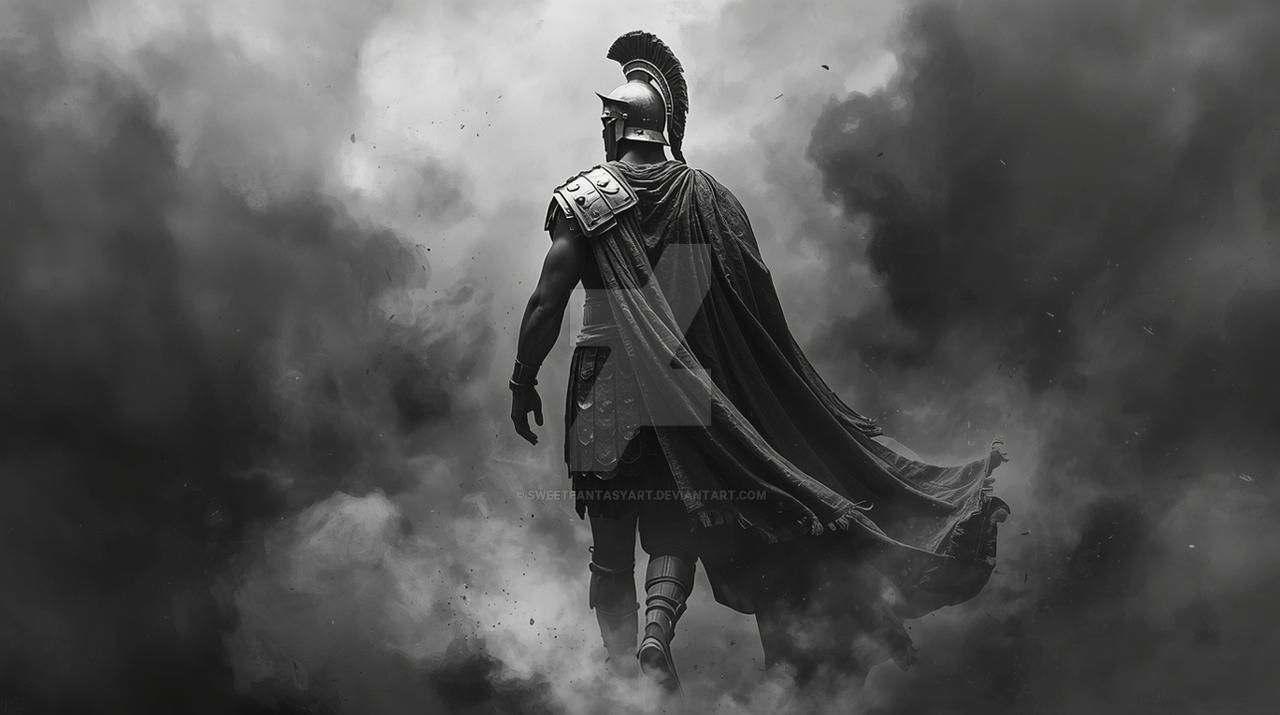
The position of Ancient Sparta against the Persian Empire bears structural similarities to the contemporary international system in which the United States (US) exerts its hegemonic order. The US, with its military, economic, and technological capabilities, is conceptualized as the New Persian Empire. The Greenland–Denmark axis represents New Sparta, embodying Europe’s limited but strategic resistance to this hegemonic structure.
The deliberate resistance of the 300 Spartans at Thermopylae, despite numerical and material disadvantages, is comparable to Greenland–Denmark’s diplomatic and military position. The analogy emphasizes resistance not only in terms of military outcomes but also in terms of political significance and the capacity to limit hegemony. This framework provides a conceptual lens to understand the power dynamics along Europe’s northern flank.
Hegemony has historically been maintained not only through military superiority but also through dependency relations and institutional arrangements. Powerful centers limit the operational space of peripheral actors while allowing their formal existence. This logic operates similarly in both ancient empires and contemporary global structures.
The Persian Empire’s influence over the Greek world tied political decision-making to central authority, making withdrawal nearly impossible. Actors like Sparta, which regarded political autonomy as a fundamental principle, exhibited resistance. Hegemony was enforced not merely through military coercion but also through strategic constraints.
The US operates under a comparable logic. NATO, the global financial system, the dollar’s reserve currency status, technological infrastructure, and military bases enable the US to exert influence without direct coercion. Thus, the US can be conceptualized as the New Persian Empire in the contemporary context.
The Greenland–Denmark axis represents one of the most critical areas of this hegemonic structure. Geographic position, Arctic military infrastructure, and early warning systems render the region indispensable to US security architecture. The tension between Denmark’s legal sovereignty and the US’s de facto military presence reflects a microcosm of Europe’s broader geopolitical situation.
The significance of Greenland–Denmark as New Sparta lies less in military capacity and more in the will to hold a strategic pass. This feature parallels the position of the 300 Spartans at Thermopylae. Strategic location enables limited forces to slow hegemonic advancement.
The Hegemonic Structure of the United States as the New Persian Empire
The Persian Empire established hegemony across a vast territory, supporting military power with administrative and economic mechanisms. Local governance was not entirely eliminated but made dependent on central authority. This structure made resistance difficult but not impossible.
The US global order is similarly multi-layered. NATO aligns European defense policies with US strategy, creating asymmetric dependency under the appearance of equality. This reproduces the core–periphery relationship in a contemporary context.
Economic leverage is a major component of US hegemonic power. The dollar’s reserve currency status, financial sanctions, and market access controls create political dependency without coercion. Technological infrastructure and digital networks consolidate this leverage.
US hegemony is maintained not only through military power but also through institutional and economic structures. Hence, the US can be defined as the New Persian Empire in the contemporary international system.
The New Persian Empire limits Europe’s strategic maneuver space without entirely eliminating it. This provides opportunities for actors like Greenland–Denmark to exercise resistance at strategic thresholds.
Sparta and the Resistance Logic of the 300 Spartans
Sparta’s political order produced a mindset beyond military capacity. Citizenship, military service, and political loyalty were integrated into a single system, rendering resistance a fundamental necessity.
The 300 Spartans at Thermopylae knew they could not defeat the Persian army but refused to withdraw, holding the strategic pass to slow hegemonic advance. Their resistance generated political significance beyond military victory.
The Spartans’ stand created collective consciousness in the Greek world, demonstrating that hegemonic power was not invincible. Numerical disadvantage enhanced the symbolic value of resistance.
Resistance was not only a military challenge but also a political act of boundary-setting, illustrating how small actors can resist hegemonic pressures at strategic locations.
This analogy directly parallels Greenland–Denmark’s diplomats and military personnel, who exercise deliberate resistance despite limited resources.
New Sparta as Greenland–Denmark: Diplomatic Resistance
Greenland–Denmark constrains the US’s absolute control over the northern flank through diplomatic means. Denmark’s NATO membership complicates and heightens the significance of this resistance.
Greenland’s autonomous status directly limits US ambitions in the region. The rejection of purchase proposals and the maintenance of relations with European institutions serve as core instruments of diplomatic resistance.
This stance mirrors the political determination of the 300 Spartans, refusing to retreat at Thermopylae. Strategic position generates resilience despite numerical and material disadvantage.
European states use Greenland–Denmark’s resistance as both a symbolic and strategic reference point, highlighting the role of limited actors against hegemonic pressures.
Diplomatic resistance generates strategic significance independently of absolute military power. New Spartans assert their boundary-setting will diplomatically against the New Persian Empire.
New Sparta as Greenland–Denmark: Military Resistance
Greenland–Denmark’s military capacity is limited, but its strategic position constitutes a critical threshold. Holding the strategic pass without retreat creates a Thermopylae-like structure.
Greenland’s infrastructure is vital for the US early warning and missile defense systems. This limits the US’s absolute freedom of action.
New Spartans, even with limited force, slow hegemonic advance, establishing a strategic threshold. Numerical disadvantage does not diminish symbolic and strategic resistance.
This can be seen as a contemporary projection of the military resistance of the 300 Spartans. Small actors can exert meaningful influence against hegemony via strategic positioning.
Military resistance, in combination with diplomatic and political resistance, forms the holistic strategy of New Sparta.
Europe and the Symbolic Impact of New Spartans
Greenland–Denmark’s stance serves as a symbolic indicator of Europe’s capacity to resist hegemony. It demonstrates that resistance is possible and passivity is not inevitable.
This mirrors Sparta’s influence on other Greek city-states. Small actors’ strategic resistance generates collective consciousness and signals that hegemonic power is not absolute.
New Spartans, despite limited diplomatic and military capacity, set boundaries against hegemonic advance. This illuminates strategic balance along Europe’s northern flank.
The symbolic dimension of resistance is measured not only in military outcomes but also in political messaging and international norm-setting. New Spartans’ actions define limits to strategic behavior against hegemonic power.
This effect represents a tangible aspect of Europe’s pursuit of strategic autonomy.
General Assessment
The United States as the New Persian Empire produces dependency without direct coercion, limiting Europe’s strategic maneuver space while not fully eliminating it.
Greenland–Denmark, as New Sparta, demonstrates a stance of resilience and non-retreat despite limited capacity. This parallels the structural position of the 300 Spartans at Thermopylae.
Resistance produces political meaning independently of military outcomes. Greenland–Denmark’s position illustrates that US hegemony is neither absolute nor unchallengeable.
The role played at strategic thresholds shows that small actors can exert meaningful influence against hegemonic power. The New Sparta concept provides an analytic analogy to explain Greenland–Denmark’s role in the contemporary international system.
New Spartans, through both diplomatic and military resistance, demonstrate that strategic impact can be achieved even with limited power. This is critical for understanding the power balance along Europe’s northern flank.
References
- Herodotus, Historiai
- Thucydides, History of the Peloponnesian War
- Xenophon, Lakedaimonion Politeia
- Paul Cartledge, Sparta and Lakonia
- Victor Davis Hanson, The Western Way of War
- Fernand Braudel, The Grammar of Civilizations
- Immanuel Wallerstein, World-Systems Analysis
- Zbigniew Brzezinski, The Grand Chessboard
- John Mearsheimer, The Tragedy of Great Power Politics
- Halford J. Mackinder, Democratic Ideals and Reality
- Barry Buzan & Ole Wæver, Regions and Powers
- Arctic Council, Arctic Security Reports
- NATO, Strategic Concept Documents
- European Union, Strategic Autonomy Papers
- Michael Mann, The Sources of Social Power
- Robert Kaplan, The Revenge of Geography
- Paul Kennedy, The Rise and Fall of the Great Powers
- Richard Ned Lebow, The Tragic Vision of Politics
Author:
Sefa Yürükel
Danish ethnographer and social anthropologist (MA)
Aarhus University (1997)
Independent researcher
Leave a Reply