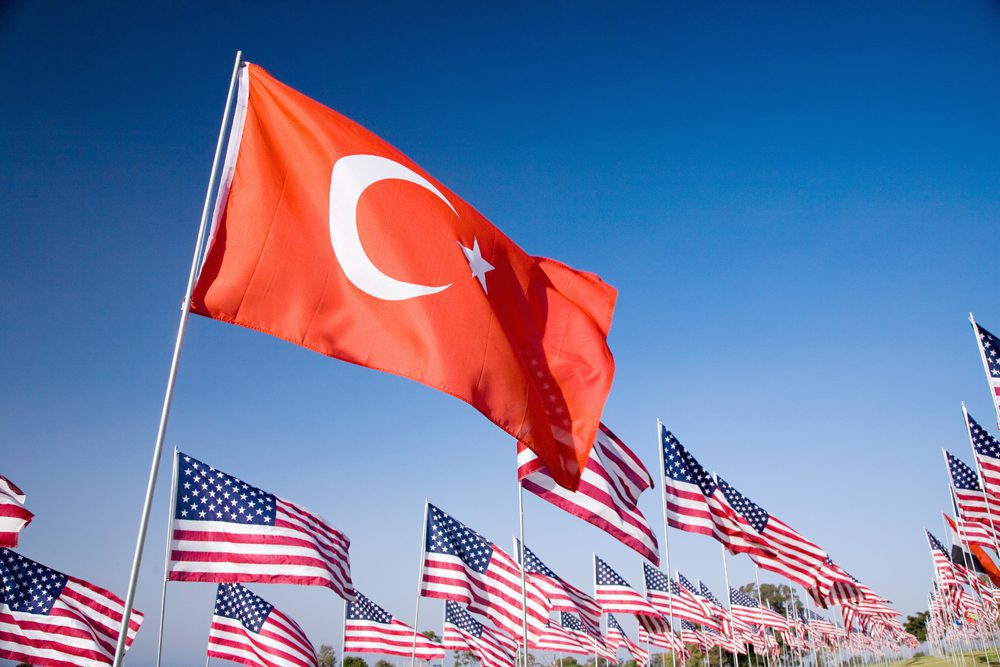
A delegation from the Turkish Grand National Assembly, led by Foreign Affairs Committee Chairman Fuat Oktay, is in Washington this week holding a series of meetings aimed at strengthening diplomatic ties at the legislative level. The visit underscores Ankara’s recognition that while executivelevel relations between Türkiye and the United States remain “extremely positive,” as Oktay noted, engagement with the U.S. Congress has proven far more difficult.
Oktay’s remarks deserve close attention. His observation that the U.S. Congress is challenging to engage because of its focus on domestic affairs is not merely a tactical complaint it is an admission of a structural reality of American democracy. In the United States, foreign policy is deeply shaped by grassroots engagement, local constituencies, and sustained relationships between elected officials and the communities they represent. This is not a flaw in the system; it is the system.
For years, A hand full of activist , like my self and policymakers have acknowledgedat least rhetorically that U.S. domestic politics is driven from the bottom up. Yet in practice, Ankara has largely relied on expensive lobbying firms in Washington, spending millions of dollars with little concrete, longterm impact. Access was purchased with millions of dollars given to lobbying firms, meetings were arranged, but influence remained shallow and often temporary. Lobbying without grassroots power is transactional, not transformational in building relationships.
The real weakness lies closer to home, within the ecosystem of Turkish-American organizations. Many so-called NGOs claiming to represent Americans of Turkish descent lack meaningful grassroots engagement in the halls of U.S. power. Groups such as Federation of Turkish Americans Associations often run by individuals with limited credibility, lack of proper English language or outreach or its members incardinated by the Federal Government , present themselves as national representatives while failing to build real relationships with members of Congress, state legislators, or even local officials. Representation without legitimacy is not advocacy; it is theater and picture taking.
Too many Turkish American organizations and its members appear more interested in hosting visiting Turkish political figures than in holding U.S. elected officials accountable or educating their own communities about civic engagement. Activism is reduced to symbolic welcoming outside the Turkish House or what I have refer to as the “Diplomatic House” rather than sustained engagement with congressional offices, district staff, school boards, or city councils.
The consequences are visible. Many Turkish Americans can name foreign ministers or ambassadors, yet cannot identify their own congressman, senator, assembly member, or even better yet , their children’s school principal. This is the State of the Turkish American Communities lobbying efforts. This civic disconnect undermines any serious claim to political influence in the halls of power. In the American system, power flows upward from informed, organized communities not downward from embassies or visiting delegations who for 40 years have come to the New York or Washington to congregate Turkish Americans by spoon feeding their version of relations then take group pictures for about one hour and then run to Apple store and Clothing Outlets to buy luggage full of Designer clothes.
Oktay’s statement that Congress is difficult because it is domestically focused is, unintentionally, an indictment of this failure. It highlights how Turkish-American NGOs have not done the essential work of embedding Turkish-American concerns into the fabric of U.S. domestic politics accept for community activist like Ergun Kirlikovali, Murat Guzel, Erol Akyurek and Melih Bektas. If Congress seems distant, it is because the bridge has not been built.
Leadership matters in this process, and it starts with consulates. In New York, for example, the role of the Consul General Yazal should be to empower communities, encourage civic participation, and foster credible relationships with elected officials. Instead, the current period has been marked by missed opportunities and weak engagement, widely regarded by community leaders as among the poorest in decades.
Strengthening U.S.Türkiye relations will not come from delegations alone, nor from checkbooks written to lobbying firms. It will come from disciplined grassroots organizing, accountable community leadership, and a serious commitment to engaging American democracy on its own terms. Only then will Congress listen not because it is asked to, but because it must.
Ibrahim Kurtulus
Community Activist
Leave a Reply