Category: Iran

  • America lost the war, not officially, never officially

    America lost the war, not officially, never officially

    Washington does not lose wars, Washington achieves strategic objectives.

    Washington successfully degrades enemy capabilities.

    Washington transitions to a ceasefire framework, but Congress has receipts.

    Just revealed something that no Pentagon press briefing would ever say out loud.

    42 American military aircraft shot out of the sky.

    By a country that Washington had already declared defeated.

    Welcome to the story behind the story.

    Before we count what America lost, let us count what America said it would achieve.

    The Trump administration entered Operation Epic Fury with four publicly stated objectives.

    • Destroy Iran’s nuclear program completely.
    • Degraied Iran’s ballistic missile capability.
    • Cut-off Iran’s support for regional proxy groups.
    • Force Iran’s leadership to permanently renounce nuclear weapons.

    Four objectives.

    29 billion dollars.

    Keep those four in your mind.

    We will return to them.

    On February 28th, 2026, the United States and Israel launched Operation Epic Fury.

    Washington was triumphant.

    Supreme Leader Kamine was dead.

    Nuclear sites were hit.

    The state of Hormuz Defense Secretary Pete Heggseth told Congress,”

    We have achieved our strategic objectives.

    Now fast-forward to May the Congressional Research Service.”

    The non-partisan research arm of the United States Congress.

    Quietly published a report.

    No press conference.

    No headlines on American prime time.

    No ticker on CNN. A very uncomfortable document.

    42 United States military aircraft lost or severely damaged.

    In a war that America won.

    Let us now do what Washington refused to do.

    Aircraft by aircraft.

    The F-35A, lightning the second.

    The most expensive weapons program in human history.

    At 1.7 trillion dollars.

    Shot down or severely damaged over Iran on March 19th.

    Cost of one aircraft between 80 and 110 million dollars.

    Iran’s foreign minister, Iraq chi, Iran’s armed forces were the first in the world to shoot down an F-35.

    Washington has not denied it.

    Four F-15E strike-eagles, $100 million each, $400 million total.

    Three destroyed by friendly fire over Kuwait.

    America paid to shoot down its own jets.

    The fourth destroyed in combat over Iran.

    One eight-end thunderbolt the second, $20 million.

    Destroyed inside Iran.

    Seven KC135 strattotankers.

    The aircraft that keep combat jets flying.

    $30 million each, $350 million total.

    Five of them were not airborne.

    They were parked on the tarmac at Prince Sultan Air Base in Saudi Arabia when Iranian missiles found them.

    One E3-century A-wax, $270 million.

    The flying command center.

    The brain of the entire operation.

    Destroyed on the ground in Saudi Arabia by an Iranian missile.

    Two MC130J commandow the second special operations aircraft.

    $100 million each, $200 million total.

    American commandows flew them into Iran on a rescue mission.

    They got stuck in soft sand inside Iranian territory.

    American forces blew up their own aircraft on Iranian soil because they could not fly them out.

    One H-H-60W Jolly Green the second helicopter.

    $40 million, damaged by small arms fire during the same rescue mission.

    24 M-Q-9 Reaper drones between $30 and $56 million each, $720 million total.

    And the M-Q-9 production line was already shut down in 2025.

    America cannot replace them quickly.

    Iran destroyed 24 of a product no longer being manufactured.

    One M-Q-4C Triton surveillance drone.

    $250 million, a quarter billion dollar aircraft.

    Total hardware destroyed in 40 days.

    Approximately $3.5 to $4 billion.

    And that is just the aircraft.

    The Pentagon told Congress the full cost of Operation Epic Fury is now $29 billion.

    That number jumped 4 billion in just two weeks.

    83 cents of every dollar spent.

    $24 billion out of $29 billion.

    Went toward fixing and replacing destroyed military hardware.

    And the $29 billion does not include a single dollar of base repair costs.

    Those assessments are still ongoing.

    Congressional sources say the final bill could reach 200 billion oracles.

    $200 billion for a 40-day war that America won.

    And Iran was not just hitting aircraft.

    Iran hit American military bases across seven countries simultaneously.

    In the first two weeks alone, confirmed base damage reached $800 million.

    The U. S. Navy Fifth Fleet headquarters in Bahrain was hit.

    Repair cost for that one building $200 million.

    In Qatar, Iran struck an early warning radar system valued at $1.1 billion.

    $1 billion.

    In Kuwait, a 50-year-old Iranian F5 jet penetrated the patriot air defense shield and bombed a U. S. compound, a half-century old aircraft.

    Inside a base protected by the most advanced missile defense system in the world.

    And none of this base damage is included in the $29 billion figure.

    It’s still counting.

    Democratic Senator Mark Kelly sat before Congress and used one word to describe America’s weapons inventory after this war.

    His exact words, “I think it is fair to say it is shocking how deep we have gone into these magazines.

    The American people are less safe, whether it is a conflict with China or somewhere else in the world.

    We are talking about years to rebuild.

    America spent $29 billion and weakened itself against every future enemy at the same time.

    Now the scoreboard.

    Destroy Iran’s nuclear program.

    Iran still holds over 450 kilograms of 60 percent enriched uranium.

    Enough for 9 to 11 nuclear weapons.

    Fordale survived.

    Buried under 80 meters of granite.

    Iran’s Parliament voted to end all IAA cooperation after the ceasefire.

    Iran is now less transparent than before the war.

    Netanyahu himself admitted on CBS. There is still nuclear material.

    There are still enrichment sites that have to be dismantled.

    The man who launched the war admitted the war did not finish the job.

    Iran’s ballistic missiles.

    Iranian missiles were still hitting American warships in the straight of Hormuz in May 2026.

    A full month into the ceasefire.

    Cut off Iran’s proxy support.

    Hezbollah operational.

    Health is active.

    My RGC network intact, force Iran to announce nuclear weapons.

    No deal, no signed agreement, no verification framework.

    Trump called Iran’s latest proposal a piece of garbage.

    The nuclear talks are still ongoing.

    The same talks that diplomacy could have produced before a single bomb was dropped.

    Zero out of four objectives achieved.

    Here is what the data tells us.

    The United States launched Operation Epic Fury with the most advanced air force in the world.

    It flew nearly 13,000 soughties.

    It hit over 5,500 targets.

    It killed the Supreme Leader of Iran.

    And it lost 42 aircraft worth $4 billion.

    It spent $29 billion.

    Got its bases hit in seven countries.

    Pleated its missiles for years, achieved zero out of four stated objectives, agreed to a ceasefire with a country it claimed to have defeated.

    And then spent two months hiding the losses from its own Congress, American style.

    The story behind the story is not about what Iran lost.

    The story behind the story is about what Washington could not afford to lose next.

    Because if the war had restarted with Iran’s flight patent data with its proven F-35 kill, with its confirmed drone hunting capability, with American munitions already at shocking levels, the next set of losses would not be 42 aircraft.

    And someone in Washington did the math.

    That is the story behind the story.

    I am your host.

    If you believe the world deserves the full picture, share this video right now.

  • Iran’s Next Move Will SHOCK The World. Israel Has No Answer

    Iran’s Next Move Will SHOCK The World. Israel Has No Answer

    Scott Ritter WARNS Iran’s Next Move Will SHOCK The World Israel Has No Answer

    One hundred and twenty thousand soldiers trapped.

    No fuel, no ammunition, no food.

    In Washington, the most powerful military machine in human history sitting on its hands because there is literally nothing it can do.

    What you’re about to hear is not analysis.

    It is an autopsy.

    And the body on the table is the myth of Israeli military invincibility.

    Let me be clear about who I am and why what I am saying matters.

    I served as a Marine Corps intelligence officer.

    I sat inside the American national security apparatus at levels most people do not reach in a lifetime.

    I reviewed war plans, intelligence assessments, and logistics architectures for conflicts across three decades.

    And I am telling you with the full weight of that experience behind every word, what Iran executed over five days against the IDF supply chain is the most comprehensive, most surgically precise, most strategically complete interdiction campaign I have ever studied.

    Not in briefing documents, not in historical case studies, ever in any conflict at any scale.

    What the mainstream media will not tell you because telling you would require them to dismantle twenty years of carefully constructed narrative about the balance of power in the Middle East is that this was not a military engagement.

    It was a controlled demolition.

    Iran did not fight Israel.

    Iran switched Israel off.

    And the architecture of how they did it, the sequencing, the targeting logic, the operational discipline required to execute five simultaneous phases against redundant systems without a single phase failing, that is what I’m going to walk you through today.

    Because once you understand the mechanics, you will never look at this region or at American power the same way again.

    Start with the foundational reality that almost nobody in Western commentary is willing to state plainly.

    A modern army does not run on courage.

    It does not run on training.

    It does not run on ideology or nationalism or the quality of its officer corps.

    A modern army runs on logistics, fuel, ammunition, food, spare parts, medical consumables, the invisible river of material that flows from port facilities through road and rail networks into forward depots and ultimately into the hands of the soldier in the fighting position.

    Cut that river and the most sophisticated military force on Earth becomes within days a collection of very well-armed, very well-trained and completely immobile human beings sitting in positions they cannot advance from, cannot be reinforced to, and cannot safely extract from.

    That is not theory.

    That is the operational reality that every serious military planner understands at a foundational level.

    The question that Iran answered over five days, the question that should be occupying every defense ministry and every war college in the world right now is this.

    How do you cut that river when the river has been engineered with fifty years of American technical assistance specifically to survive being cut?

    The answer, and this is where the professional sophistication of what Iran accomplished becomes genuinely arresting, is that you do not attack the river at one point.

    You attack every point simultaneously, including the points that exist specifically to compensate for attacks on the other points.

    You eliminate the redundancy by striking every redundant pathway at the same moment so that the system has no surviving mechanism through which to route around the damage.

    When every port is struck, every bridge is destroyed, every forward depot is burning, and every airfield capable of receiving heavy cargo aircraft has cratered runways, there is no logistics system left.

    There is only the clock, the clock that counts down from whatever stockpile remains to the moment when the last round is fired, the last fuel tank runs dry and a hundred and twenty thousand soldiers confront the physical reality of what supply chain collapse actually means for human beings in active combat conditions.

    Uh, Iran did not improvise this.

    Uh, I want to drive that point home because the instinct in Western analysis, and I have watched this pattern play out across three decades of professional observation, is to explain away military success by non-Western actors as luck, as confusion on the other side, as some operational anomaly that preserves the underlying assumption of Western superiority without requiring anyone to revise it.

    That instinct is analytically bankrupt in this case.

    What Iran executed was the product of years of systematic intelligence collection, target development and operational planning.

    Years.

    The precision with which Iranian targeting databases reflected the actual locations of IDF forward logistics depots, facilities whose coordinates represent some of the most closely held operational security in the Israeli military system, is a finding whose intelligence implications extend far beyond the immediate military situation.

    Someone built that database.

    Someone updated it.

    Someone verified it against current operational configurations.

    And that process did not begin last month.

    The campaign opened at two forty in the morning on day one.

    I want you to register that timing because it reflects a specific operational logic.

    Two forty in the morning is the hour of minimum human alertness, minimum institutional responsiveness and minimum ability to execute the kind of rapid damage assessment and emergency response that might in some alternate scenario have allowed Israeli logisticians to begin rerouting supply flows before the interdiction was complete.

    By choosing that moment, Iranian operational planners ensured that the full scope of phase one was complete before Israeli command could transition from shock to organized response.

    Phase one struck Israel’s three functioning port facilities simultaneously.

    Ashdod, the primary military import terminal handling approximately fifty-five percent of IDF equipment and munitions imports by sea, absorbed thirty-four impacts in a strike package that lasted twenty-eight minutes.

    I want you to understand the targeting logic inside that strike package because it reflects a level of operational sophistication that goes well beyond simply putting warheads on port infrastructure.

    The container handling cranes serving the military cargo terminal were struck individually, not the terminal building, not the administrative complex, the cranes.

    Because cranes are what move military cargo from ship to shore, and destroying the cranes means that even if a vessel somehow reaches Ashdod through the subsequent interdiction environment, it cannot offload.

    The fuel offloading pier was destroyed in a sequencing pattern specifically designed to produce complete structural collapse rather than repairable damage.

    The distinction matters enormously.

    Repairable damage buys you days before the facility is functional again.

    Complete structural collapse buys you months, and in the context of an acute supply crisis, months is operationally equivalent to forever.

    The bonded military warehouse complex received penetrating warhead impacts designed to achieve internal detonation of stored munitions, not merely collapsing the external structure, but destroying what was inside it.

    Haifa, the northern port serving as the primary logistics gateway for forces on the northern front, absorbed forty-one strikes with specific targeting focus on its military fuel terminal and the rail connection linking port to forward logistics base network.

    The Red Sea port, representing Israel’s only non-Mediterranean maritime import pathway, was struck by eighteen weapons that destroyed its container handling infrastructure and severed its road and rail connections to the rest of the country.

    By the time the sun came up on day one, ninety percent of Israel’s maritime import capacity was gone.

    Not degraded, not damaged, gone.

    But here is what the cable networks are not explaining to you, and this is where the operational picture becomes something genuinely different from a successful strike campaign.

    The destruction of the ports was not the end of phase one.

    It was the beginning of the sequence.

    Because Iranian planners understood something that their Western counterparts had apparently not fully internalized.

    Destroying the entry point means nothing if the system can route around it.

    And the IDF logistics system had been specifically engineered with American assistance to do exactly that, which is why phase two was already underway before phase one was fully concluded.

    Phase two targeted the overland logistics network.

    Twelve major road bridge crossings on the primary logistics routes between Israel’s central stockpile complex and its northern and southern operational fronts were struck with precision weapons achieving structural collapse at the bridge deck level.

    Not damage, structural collapse.

    The rail lines serving the northern logistics corridor were struck at nine separate points, each chosen to maximize the length of track rendered unusable by a single impact.

    And I want you to understand the targeting philosophy here because it represents a level of analytical sophistication that goes beyond simply knowing where the bridges are.

    Iran’s planners did not attack the vehicles on the road.

    Attacking vehicles is operationally costly, produces only temporary disruption, and triggers workaround behavior that a sophisticated logistics system will execute within hours.

    Instead, they attack the infrastructure the vehicles must use.

    A destroyed bridge cannot be bypassed by a different route when every bridge on every alternate route has also been destroyed.

    The IDF‘s overland logistics capability was not degraded in phase two.

    It was structurally eliminated.

    And the distinction between degradation and elimination is the difference between a logistics system that is operating at reduced efficiency and a logistics system that has ceased to function.

    Stay with me because phase three is where this campaign transitions from impressive to something that should be genuinely alarming to anyone who has spent serious time thinking about how modern military power actually works.

    Because phase three did not target infrastructure that appears on satellite imagery and in publicly available port records.

    Phase three targeted the IDF‘s forward logistics depots, the hardened dispersed operationally secret stockpile facilities maintained in theater to sustain operations for a defined period without resupply.

    These are not places that appear on maps available to the public.

    Their locations are among the most closely held operational security information in the Israeli military system, protected by multiple layers of access restriction and counterintelligence procedure.

    Eleven of Israel’s fourteen identified forward logistics depots were struck.

    Eleven out of fourteen.

    The three that survived did so because they were located within urban areas where the collateral damage calculus constrained the strike package, a constraint that Iranian planners appear to have consciously incorporated into their targeting architecture, which is itself a reflection of operational discipline that many Western analysts would not have predicted.

    The surviving depot inventory after phase three represented supply availability of between three and seven days at current consumption rates, and that clock was already running by the time the assessment was complete.

    You think you’ve heard the worst of it?

    You haven’t.

    Not even close.

    Because everything I have described so far, the ports, the bridges, the rail lines, the forward depots, all of it exists within a planning framework that American and Israeli logisticians had already gamed.

    They had already identified maritime interdiction as a risk.

    They had already built the compensating mechanism into the contingency plan.

    And Iranian operational planners knew they had done so, which is why phase four existed.

    Phase four addressed the emergency resupply pathway that American and Israeli planners had specifically identified as the primary compensating mechanism for maritime and overland interdiction.

    Air logistics, the runways at Ben Gurion International Airport, serving as the primary entry point for air delivered military cargo, were struck at six separate points with penetrating warheads designed to produce subsurface detonations, creating craters resistant to emergency repair.

    Ramon Airport in the south, the secondary air logistics facility, was struck simultaneously.

    The military airfields with runway capacity sufficient to handle heavy cargo aircraft had already been rendered non-operational in the preceding strikes against IDF bases.

    By the end of phase four, Israel had no functional air cargo terminal capable of receiving the heavy lift aircraft that emergency military resupply requires.

    The air bridge that Washington needed to execute emergency resupply did not exist, and that is not a circumstance that arose from poor planning or inadequate preparation on Washington’s part.

    It was a condition that was deliberately engineered by Iranian operational planners who understood exactly what the American compensating response would be and designed the campaign architecture specifically to defeat it before it could be executed.

    That is the level of strategic thinking we are dealing with.

    Not reactive, not opportunistic, anticipatory.

    Iran did not respond to American resupply planning.

    Iran preempted it, and now we arrive at the arithmetic, the cold, unforgiving mathematics of what supply chain collapse actually means for a hundred and twenty thousand human beings in active combat positions.

    Because this is the part of the story that most analysts skip past, either because the numbers are uncomfortable or because the human dimension of military logistics failure is harder to discuss in the clinical language that professional analysis tends to prefer.

    An IDF armored brigade in active operations consumes approximately a hundred and eighty thousand liters of diesel fuel per day across all organic vehicles, tanks, infantry fighting vehicles, artillery tractors, engineering equipment, logistics trucks.

    Israel had approximately eight armored brigades deployed in operational configurations.

    At that consumption rate, the fuel inventory surviving the phase one and phase three strikes, estimated at approximately forty percent of pre-campaign levels, represented between four and six days of operational consumption.

    By day five, fuel availability had fallen below the minimum threshold required to sustain offensive operations.

    Armored vehicles began being immobilized, not by enemy action, not by mechanical failure, not by tactical decision, but by empty fuel tanks.

    I want that to register in its full weight.

    The IDF, the force that the United States and Israel spent fifty years and hundreds of billions of dollars constructing, was being rendered immobile by the simple physical fact of having nothing left to put in its fuel tanks.

    Aviation fuel presents an even more acute constraint.

    IDF air operations at current sortie rates consume approximately two point four million liters of aviation fuel daily.

    The surviving aviation fuel inventory after the port strikes and depot destruction was assessed at approximately eight days of consumption.

    By day five, sortie rates had been reduced by over sixty percent as fuel conservation protocols were implemented.

    The F-35s, Israel’s most capable strike platform, the aircraft around which IDF operational doctrine for deep strike missions is organized, were being flown at a fraction of their operational tempo.

    Their missions rationed against a fuel supply that everyone involved could see was counting down to zero.

    The ammunition mathematics tell a parallel story.

    An Israeli artillery battalion firing at standard sustained rates expends approximately eight hundred rounds per day.

    Multiply that across the artillery systems deployed across five active fronts.

    Add tank main gun ammunition, mortar rounds, anti-tank guided missiles, and the precision guided munitions that modern combined arms combat depends on at every level.

    The daily ammunition consumption figure runs to thousands of tons.

    The surviving forward depot inventory after phase three represented approximately five days of consumption at reduced operational tempo, and that estimate assumed consumption rates lower than what active combat actually demands.

    By day five, multiple artillery units had reported exhaustion of available ammunition stocks.

    Fire missions were being canceled not because the tactical situation did not require fires, but because there were no rounds left to fire.

    And if the fuel picture is alarming and the ammunition picture is alarming, the food situation is the variable that carries the most direct human weight and receives the least serious attention in professional military analysis.

    Military ration supply for a hundred and twenty thousand personnel requires approximately three hundred and sixty tons of food daily.

    IDF doctrine calls for forward units to carry three days of organic ration supply.

    By day four, units in the most forward positions were consuming emergency ration reserves intended for genuine last resort situations.

    By day five, operational assessments across multiple sectors included language that no military commander wants to read and no soldier wants to hear described about themselves.

    Personnel combat effectiveness degraded by nutritional insufficiency.

    Let me translate that out of the bureaucratic register and say what it actually means.

    Soldiers were hungry.

    Soldiers who are hungry make decisions differently than soldiers who are fed.

    They assess risk differently.

    They sustain effort differently.

    They maintain cohesion differently.

    And an army whose soldiers are making different decisions under the pressure of physical deprivation is not the army that its commanders planned for, trained for, or built their operational concepts around.

    Keep watching because the next part of this story is where the American dimension enters and where the gap between what Washington promised and what Washington could actually deliver becomes something that every serious student of military power needs to confront directly.
  • The Collapse of Sandcastles: The West Asian Map Iran Redrew in Four Days and the Historic Defeat of the USA

    The Collapse of Sandcastles: The West Asian Map Iran Redrew in Four Days and the Historic Defeat of the USA

    The world usually expects geopolitical earthquakes to occur at the end of long-drawn-out processes. However, sometimes the flow of history changes at a speed that will shatter everyone’s preconceptions within just a few days. We are currently witnessing exactly such a moment. The emerging military picture reveals how the hegemony the USA has built in West Asia for over thirty years was shattered by Iran in an unbelievably short period of four days. This is not merely a military defeat; it is also the story of the definitive and irreversible end of a superpower’s regional ambitions.

    The Sudden Collapse of the Strategic Balance

    The situation is crystal clear: The USA is suffering one of the greatest defeats in its history. The gravity of this judgment stems from the results of the comprehensive, large-scale, and highly determined destruction operation launched by Iran against the massive American military bases in Bahrain, Kuwait, Qatar, and Saudi Arabia. To reference Pearl Harbor, the USA has never seen destruction on this scale from any enemy in a conventional war until today. Described as the world’s most expensive and most valuable military facilities, built over decades and costing trillions of dollars, these bases are being abandoned, burned, and destroyed one by one. The sudden incapacitation of advanced technology radars worth hundreds of millions of dollars symbolizes not only a material collapse but also the bankruptcy of the USA’s strategic mind.

    The Information Blackout and Cover-Up of the Shock

    One of the most terrifying aspects of this new war is the deep information blackout that has descended upon it. While thirty-five years ago during the First Gulf War, images provided by smart bombs and cameras flooded the screens, today we see almost no video. This censorship is the greatest proof of the gravity of the situation. The Pentagon’s doctrine of “shock and awe” has been replaced by an effort to cover up the shock and awe being experienced. The fact that the USA, touted as the world’s largest air force, cannot achieve air superiority over Tehran or any other Iranian city even on the fourth day of the war, and more importantly, that images of American planes cannot even be served, clearly shows how hopeless a point the military situation has evolved to. The fact that American soldiers cannot even dream of setting foot on Iranian soil reveals the nature of this war.

    Strategies of Desperation: The Escalation Trap

    One of the most concrete indicators of this hopeless picture is the incredible proposals coming from the Trump administration as early as the fourth day. The idea of providing military escort to oil tankers leaving the Persian Gulf means sending American ships into the Strait of Hormuz, within range of Iran’s thousands of missiles, which is a suicidal decision. It is known that Iran has been preparing this region as a trap for decades. Even more alarming is the proposal to invade Iran by arming Kurdish militias. Anyone looking at Iran’s vast geography immediately grasps the impossibility of invading this country, whether with a militia force of ten thousand or a hundred thousand. Iran would simply swallow such a force.

    The Anatomy of an Impossible Victory

    The US and Israel have already lost this war in a military sense. Of course, they can kill millions of civilians in their homes and level buildings with their powerful bombs; however, they cannot win this war. Iran’s military infrastructure and weapons are deployed deep underground all over the country. Neither the Americans nor especially the Israelis have a chance to reach them. They have no chance of finishing what they started.

    When all this is over, the USA will never be able to return to West Asia. There will be no American military presence left in the Middle East. History will write this moment as the end of an era. Iran, astonishingly, managed to expand its area of military superiority in the region within four days and buried a superpower’s decades-long investment in its ashes. The sandcastles have collapsed; nothing will ever be the same again.

    The Deepening of the Escalation Trap: The Absence of a Plan B

    What really needs to be questioned at this point is why the mental map that led the USA to this total strategic collapse still hasn’t changed. The proposals for escorting tankers and invading with Kurdish militias, put forward on the fourth day, are a painful confession that the Pentagon and the White House still have no viable Plan B. This situation, referred to as an “escalation trap” in military literature, is defined by one side continuing to escalate a war it is losing simply because it cannot find an exit strategy. The moment the USA risks its navy to save its presence in the Persian Gulf, it will have offered not only its land bases but also its naval power to Iran’s asymmetric fire. The geographical structure of the Strait of Hormuz is too narrow to allow maneuvering space for an aircraft carrier battle group; these waters are a trap area that Iran has been building layer upon layer for decades. Deliberately entering this trap can be explained not by strategic reason, but only by a kind of gambling blindness caused by desperation.

    The Bankruptcy of Intelligence: The Unseen Threat

    A more serious reflection of the same blindness is the intelligence failure. For decades, the USA portrayed Iran’s military capacity as “isolatable” and “limited.” However, Iran’s ballistic missile program, cruise missile inventory, and swarm drone technology in particular have shown a leap that American intelligence reports failed to foresee for years. The bases receiving hits one after another within four days is proof of how much Iran has refined its target intelligence and advanced its satellite-based damage assessment capability. This is not a random rain of missiles, but a military operation planned and executed with surgical precision. US intelligence either could not see or did not want to see this capability increase; both situations lead to the same outcome: the bankruptcy of strategic intelligence.

    The End of the Doctrine of Air Dominance

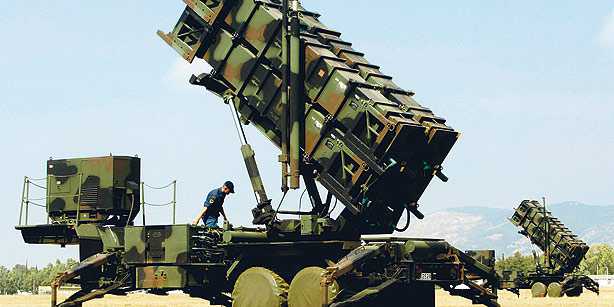
    The failure to see an American plane in the skies of Tehran even on the fourth day of the war is the clearest indicator of how the concept of air superiority has become meaningless in the region’s conditions. The US Air Force had built its entire doctrine of the last thirty years on “air dominance.” Yet Iran, with its integrated air defense systems, passive defense infrastructure, and surface-to-surface strike capability, has rendered this doctrine obsolete. The inability of American warplanes to enter Iranian airspace is not only a technical failure; it is proof of how the USA’s entire military paradigm can be overcome by a regional power. This picture creates a shock effect that will fundamentally shake the Pentagon’s future budget requests and weapons programs. The trillion-dollar F-35 program has been rendered non-functional in the region against Iran’s much lower-cost asymmetric capacity.

    Israel’s Fragile Solitude

    In the shadow of all these developments, Israel’s strategic position is perhaps the most fragile point. Israel built its security doctrine upon the US military umbrella in the region. The evaporation of this umbrella in four days leaves Israel facing not only Iran but also Iran’s network of influence alone. Hezbollah’s precision-guided munition inventory, the Houthis’ ballistic missile capacity, and Iranian-backed militias in Syria increase the risk of Israel being dragged into a multi-front war of attrition. Israel’s military doctrine is based on short-duration wars conducted on enemy territory aiming for decisive results. However, this new equation forces Israel into a long-term and attritional defensive war on its own territory. The pressure of such a war on Israel’s economic and social fabric could be far more devastating than the military losses.

    The New Reality for the Gulf Monarchies

    The Gulf monarchies, meanwhile, are watching this new era in horror. Riyadh, Abu Dhabi, and Doha see that the security premium they have paid to the USA for decades has evaporated in an instant. These countries’ entry into a rapid normalization process with Iran is no longer a choice but an existential necessity. Indeed, Saudi Arabia’s softening of its condemnatory language towards Iran and activating diplomatic channels even on the fourth day of the war is the first sign of this necessity. The Arab states in the Persian Gulf have understood that the security myth the USA has been selling for decades has collapsed and have faced the reality of having to fend for themselves. This confrontation will inevitably open the door to regional security negotiations with Iran and the complete exclusion of the USA from the region.

    The Tombstone of the Unipolar Order

    History will record this moment as the tombstone of the post-Cold War order. The unipolar period that began with the collapse of the Soviet Union in 1991 ended on the shores of the Persian Gulf, among burning American hangars and disabled Patriot batteries. Iran has not only driven the USA out of the region but has also presented the rest of the world with a new strategic model: proof that a regional power that invests in asymmetric capacity, establishes a deep defense infrastructure, and prepares patiently can shut out a superpower. This model will be taught in military academies as a template that will fundamentally change the military doctrines and geopolitical calculations of the coming decades.

    Conclusion: In the Aftermath of Destruction

    As the USA’s presence in West Asia comes to an end, what remains is not only wreckage but also a warning: No superpower has the luxury of underestimating geography, patience, and the asymmetric mind. The sandcastles have collapsed, and the dust from this destruction will not settle for many years to come.

    References

    1. Cordesman, A. H. (2023). Iran’s Military Forces and Warfighting Capabilities: The Threat in the Northern Gulf. Washington, DC: Center for Strategic and International Studies (CSIS).
    2. Eisenstadt, M. (2022). The Iranian Way of War: Asymmetric Doctrine, Ballistic Missiles, and Proxy Networks. Washington, DC: The Washington Institute for Near East Policy.
    3. Farhi, F. (2024). “Iran’s Strategic Patience and the Reshaping of West Asian Security Architecture.” Middle East Journal, 78(2), 215–238.
    4. Gause, F. G. (2023). The End of the American Era in the Persian Gulf? Strategic Realignments After the Unipolar Moment. Princeton, NJ: Princeton University Press.
    5. International Institute for Strategic Studies (IISS). (2024). The Military Balance 2024: Middle East and North Africa. London: Routledge.
    6. Jones, S. G. (2023). “Intelligence Failure and Surprise in the Missile Age: The Case of Iran’s Ballistic Program.” Studies in Intelligence, 67(1), 45–72.
    7. Kamrava, M. (2024). “The Collapse of External Security Guarantees: Gulf Monarchies and the Search for Autonomy.” Geopolitics, 29(3), 401–425.
    8. Krepinevich, A. F. (2022). The Origins of Precision: Strategic and Operational Implications of Guided Munitions. Washington, DC: Center for Strategic and Budgetary Assessments.
    9. Nasr, V. (2023). “Iran’s Missile Power and the Restructuring of Middle Eastern Deterrence.” Foreign Affairs, 102(4), 88–104.
    10. Pollack, K. M. (2024). “America’s Vanishing Air Superiority: Lessons from the Fourth-Day Failure Over Tehran.” Journal of Strategic Studies, 47(2), 183–210.
    11. Saikal, A. (2023). Iran Rising: The Survival and Future of the Islamic Republic. Princeton, NJ: Princeton University Press.
    12. United States Department of Defense. (2024). Annual Report on Military Power of Iran (Unclassified Executive Summary). Washington, DC: Office of the Secretary of Defense.
    13. Wirtz, J. J. (2023). “Strategic Intelligence and the Asymmetric Threat: When Warning Fails.” Intelligence and National Security, 38(4), 512–530.
    14. Zelin, A. Y. (2024). “Hezbollah, the Houthis, and the Axis of Resistance: Proxies in an Era of Iranian Precision-Guided Warfare.” CTC Sentinel, 17(3), 22–34.

    Sefa Yürükel

    Danish ethnographer and social anthropologist (MA)
    Aarhus University, 1997
    Independent Researcher
    Fields of Research: International Politics, Public International Law, Geopolitics, Sociology, Psychology, Cultural Studies, Systems and Structures

  • To Say “Today, I am Iranian”

    To Say “Today, I am Iranian”

    If there is a designation that transcends a mere geographical term, pointing instead to the rupture moments of a civilization and the resistance reflex of collective memory, it is the Iranian plateau itself. This is a geography where the winds have blown throughout history, erasing the footprints of invasions, yet no conqueror has ever fully dominated its spirit. The armies of Alexander the Great passed through these lands, the swords of the Arab conquerors halted in the shadow of these mountains, and the Mongol whirlwinds burned and razed these cities. But after every destruction, like the Simurgh in Ferdowsi’s Shahnameh, Iran has known how to be reborn from its own ashes. This rebirth is not merely a political restoration, but also a matter of existential honor. That is precisely why, amid the sense of encirclement of modern times, saying “I am Iranian” has become not merely a passport affiliation, but an expression of an epistemological and physical stance against global domination.

    The fact that the epicenter of this resistance today is Tehran is neither a coincidence nor merely a product of geopolitical calculation. This situation is an inevitable manifestation of the “Neither East nor West” principle placed at the foundation of state reason following the collapse of the monarchy in 1979. This attitude, which pierces through the Westphalian order’s understanding of absolute sovereignty in international relations, far from isolating Iran, has turned it into a route of hope for oppressed geographies. This state, frequently defined by Western academic circles as a “loneliness syndrome,” is defined by the Iranian people and state reason as “strategic autonomy.” This reflex, developed against the borders drawn on the tables of the Great Powers and the norms they impose, has transformed Iran from being merely a nation-state into a carrier column for an idea, a school of resistance. No matter how heavy the burden this column carries, it turns into a badge of honor in the eyes of the region’s peoples.

    The geostrategic position of Iranian geography is both the greatest blessing and the heaviest burden of this resistance. Being at the very heart of the energy corridors stretching from the Indian Ocean to the Mediterranean, and from the Central Asian steppes to the warm waters of the Persian Gulf, also brings with it the condition of being under constant siege. The imperial calculations carried out over Iranian oil throughout the twentieth century have opened irreparable wounds in the minds of the Iranian intellectual and politician. The place of the 1953 Mosaddegh Coup in memories is the most fundamental historical data explaining why Iranian foreign policy is so skeptical and proactive today. This coup bitterly taught the Iranian nation the chasm between the democracy rhetoric of Western powers and their interest-oriented intervention practices. That is why Iran today prefers to weave its own security perimeter with its own hands, rather than taking shelter under security umbrellas sewn with the thread of others.

    The person who says “I am Iranian” is the inheritor of this painful, yet equally proud, history. This heritage is not just a story left in the past, but the lifeblood of today’s military doctrines and strategic decisions. Specifically, the eight-year Iran-Iraq War reshaped the nerve endings of the Iranian nation. In those dark days, when a large part of the world sided behind Saddam Hussein and turned a blind eye to the use of chemical weapons, Iran managed to survive through its own means. This war taught Iran the following lesson: “If you do not establish your defense line beyond your borders, you will have to wage war inside your homes, at the cradles of your children.” The military and philosophical roots of the search for strategic depth, which Iran today describes as its geography of resistance, are hidden precisely in this ring of fire between 1980 and 1988.

    The Forward Defense Doctrine and the Construction of Strategic Depth

    Understanding Iran’s current military posture requires a comprehension that goes beyond classical war literature. Although Iran is not a superpower in the conventional sense, it has managed to position itself as an indispensable regional actor thanks to its asymmetric warfare doctrines and regional influence networks. The principle underlying this doctrine is the engagement and attrition of enemy forces thousands of kilometers away, on secondary fronts, before they can reach the Iranian mainland. This situation, which Western strategists refer to as the “Proxy Strategy,” is described in Iran’s discourse as the solidarity law of the “Axis of Islamic Resistance.” This strategy not only provides Iran with military deterrence but also gives it very strong leverage when sitting at the table in regional equations.

    The backbone of this military structure is formed by a training, logistics, and intelligence network shaped under the leadership of the Quds Force, affiliated with the Islamic Revolutionary Guard Corps. Especially in the last two decades, advances in missile technologies and unmanned aerial vehicles have exponentially increased the striking power of this network. Thanks to its domestic defense industry developed under embargoes, Iran has reached a level of knowledge accumulation that enables it to transfer these capabilities to allied forces. This transfer is not merely about sending weapons; it is also the instillation of a war-fighting culture, a military discipline, and most importantly, the will to act independently. In this way, resistance hubs located geographically far from Iran gain the ability to confound the enemy by developing tactics appropriate to their unique conditions.

    When looking at Iran’s military history, certain turning points in the formation of this doctrine stand out. The case of how a limited number of military advisors sent by Iran to Lebanon during the days when it was groaning under Israeli occupation in 1982 transformed over time into a deep-rooted resistance organization is one of the most concrete success stories of this strategy. Similarly, the power vacuum created by the United States’ invasion of Iraq in 2003 elevated Iran’s influence in the northern Persian Gulf to an unprecedented level in history. This expansion is not an annexation or occupation in the classical sense; it is a complex assortment of alliances built upon shared sectarian ties, economic dependency, and security concerns. This assortment allows Iran to protect its national security hundreds of kilometers beyond its borders, on the lines of contact with enemy forces.

    The most critical component of this strategy is undoubtedly the concept of deterrence. Even though Iran does not possess nuclear weapons, it has managed, through its conventional missile inventory and asymmetric presence in the region, to raise the cost of a large-scale military attack against it to unacceptable levels. Especially its capacity to disrupt maritime traffic and energy shipments in the Persian Gulf functions as a kind of automatic brake mechanism within the global economy against military adventures targeting Iran. This military doctrine heralds a new era where not only tanks and aircraft, but also patience, timing, and psychological superiority determine the course of war. In this new era, all actors in the region have learned through bitter experience how effective asymmetric methods, blended with faith and local dynamics, can be against technologically superior armies.

    The Aftershocks of Resistance: Resistance Bastions on the Frontier

    The resistance hubs stationed beyond the Iranian mainland are structures that, beyond being limbs of Tehran’s military strategy, reflect the unique social dynamics of the geographies they inhabit. The Ansar Allah Movement in Yemen constitutes one of the most striking examples of this situation. Resisting despite nearly a decade of heavy bombardment and naval blockade by the Saudi-led coalition in one of the world’s poorest geographies, Ansar Allah is the field projection of developments in Iran’s defense industry. However, seeing Ansar Allah solely as an extension of Iran means ignoring Yemen’s complex tribal structure and the deep anti-imperialist vein in the region. The political transformation movement initiated by the Yemeni people through their own internal dynamics evolved into a military resistance as a result of foreign intervention, and in this process, relations with Tehran became a strategic necessity.

    The importance of the Yemeni resistance for global power balances is too great to be subject to any exaggeration. The resistance rising from this geography, which controls the Bab el-Mandeb Strait, has the capacity to directly affect one of the lifelines of global trade. The ballistic missile and unmanned surface vessel capability developed by Ansar Allah nearly paralyzed maritime traffic in the Red Sea during Israel’s attacks on Gaza, forcing Western states into a costly military buildup in the region. This situation demonstrates how effective Iran’s “distant warfare” doctrine is as a lever. This stance in Yemen not only attrites a regional rival like Saudi Arabia but also erodes the prestige and resources of the United States and United Kingdom navies by drawing them into an asymmetric struggle with a land power.

    The Iraqi front constitutes the most vital link of strategic depth for Iran. In post-Saddam Hussein Iraq, pro-Iranian political parties and their military wings, the Popular Mobilization Forces (PMF) groups, have penetrated into the state mechanism. This structure has not only fully secured Iran’s western borders but also constituted the most important link of the land bridge stretching from Tehran to the Mediterranean coast during the Syrian Civil War. The presence of resistance groups in Iraq implies a constant harassment and threat against United States military bases in the region. This situation continuously leaves the Washington administration in a dilemma regarding how much a possible military operation against Iran would endanger the security of American personnel in Iraq. This dilemma is perhaps the quietest but most functional part of Iran’s deterrence strategy.

    Lebanese Hezbollah holds a special and privileged position within this resistance hierarchy. As Iran’s most disciplined, best-trained, and most equipped ally in the region, Hezbollah is not merely a proxy force but also a laboratory for Iran’s military doctrine and a strategic partner. Forcing the Israeli army to withdraw from Southern Lebanon in 2000, and in the 2006 33-Day War, achieving a political and psychological superiority, if not a military victory, against the Middle East’s most powerful army, has certified Hezbollah’s weight in regional equations. Hezbollah’s precision-guided missile inventory has the capacity to threaten Israel’s critical infrastructure and population centers. This capacity serves as an insurance policy for the deep striking of Israel in the event of a military threat against Iran, automatically converting a potential attack on Iran’s nuclear facilities into the risk of an all-out regional war.

    The Epic of Besiegement: Gaza and Epistemic Resistance

    The Palestinian issue, and specifically the Gaza Strip, is not only the military but also the moral and ideological epicenter of Iran’s resistance discourse. The policy of not recognizing Israel’s existence and viewing Zionism as the fundamental source of the region’s instability is an unchanging red line of Iranian foreign policy. While this stance often pits Iran against parts of the Arab world and Western powers, it also forms one of the strongest pillars of its popular legitimacy on the streets of the Islamic world. The logistical, financial, and military technology support provided to resistance groups in Gaza is a complex strategic move testing the limits of Iran’s influence capacity in the Sunni world. This move has succeeded in transcending sectarian fault lines, creating a solidarity law based on a common definition of the enemy.

    The most striking aspect of the resistance in Gaza is the level of military self-sufficiency it has achieved in recent years. The blending of Iranian-origin technology and know-how with local means in Gaza’s cramped workshops has transformed the resistance’s military wing from a simple mortar militia into a sophisticated short-range rocket force. Woven with underground tunnels, this geography continues its existence as a geographical and human challenge against Israel’s technological superiority. The indigenous rocket capability developed with Iran’s support severely overloads Israel’s air defense systems during moments of conflict, reaching the capacity to paralyze civilian life. This situation leads to a serious questioning within Israel’s military doctrine and forces the Tel Aviv administration to confront the fact that it faces not just an organization, but an idea with deep roots.

    However, the issue that must be underlined here is the epistemic dimension existing beyond the physical front of the resistance. The stance put forward by Iran is the construction of an alternative narrative against Western-centric orientalist knowledge production and media hegemony. The emphasis on “resistance against imperialism” is a direct objection to conceptualizations dominant in Western academies and press, such as the “Iranian threat” or “Iranian influence.” When combined with the emphasis on the right of the region’s peoples to self-determination, this objection carries the struggle waged by Tehran beyond simple power politics, elevating it to the dimension of an existential struggle between civilizations. This new language finds resonance in the region’s universities, madrasas, and street slogans, creating a universe of discourse based on freedom and honor, outside the framework of the “fight against terrorism” imposed by the West.

    The struggle waged by Gaza also serves an internal front consolidation function for Iran. In times of intense economic embargoes and internal political tensions, the uncompromising support given to the Palestinian cause is one of the strongest mortars holding different segments of Iranian society together. Regardless of their political views, for an ordinary Iranian, the issue of Jerusalem’s freedom is an inseparable part of national pride and historical responsibility. In this context, the resistance in Gaza becomes a platform where not only the Palestinian people’s but also the Iranian nation’s honorable stance is declared to the world. Every epic written on this platform breaks Iran’s regional loneliness and continues to position it as a revolutionary center in the eyes of the oppressed nations.

    Conclusion: The Backbone of Civilization

    The cry of “I am Iranian” echoing on the Iranian plateau is the modern-day reverberation of the noise of a civilization coming from beyond the ages. This cry is the shared memory of a nation that once carried Zoroaster’s fire, revived the Persian language in Ferdowsi’s verses, and drew the boundaries of a faith from Anatolia to Khorasan with the Safavid sword. Today, traces of this ancient memory are found in the engine sound of an unmanned aerial vehicle launched in the mountains of Yemen, in the vigil of a volunteer brigade stationed in the deserts of Iraq, in the dim light of a tunnel dug in southern Lebanon, and on the hand of a resistance fighter wiping away a mother’s tears in Gaza. These geographies, as the field application areas of the Iranian nation’s honorable lesson of resistance, proclaim to the whole world the cost and necessity of standing firm against the global domination order.

    Refusing to bow to the rules imposed by the global system brings heavy costs for a nation. Embargoes, economic bottlenecks, international isolation, and living under constant military threat have become an ordinary part of the daily lives of the Iranian people. Yet it is precisely at this point that the meaning of resistance deepens. Because this struggle is not merely for territory or resources, but for a nation’s right to exist with its own values, its own faith, and its own independent will. Every price paid for this right further solidifies the Iranian nation’s position on the stage of history and transforms it into a source of inspiration for other nations facing similar pressures. That is why this multi-front war waged against imperialism and all its extensions in the region is a laboratory not only for Iran’s but for all of humanity’s quest for freedom.

    Reading Iran’s regional strategy merely as a security perimeter would be incomplete and misleading. This strategy is also the geographical projection of a civilizational vision. This approach, synthesizing the wisdom of the East with the technique of the West, blending modern state reason with ancient imperial reflexes, has turned Iran into an indispensable actor in the Middle Eastern equation. The invisible link between a rocket manufactured in a Yemeni village house and an algorithm developed at a university in Tehran is a product of this holistic civilizational perspective. This perspective gives Iran the courage to chart its own unique path not only in the military field but also in the cultural, scientific, and ideological realms. Though this path is difficult and arduous, the honor of the destination to be reached at the end is great enough to make one forget all weariness.

    Happy is that nation which has known how to keep its head high even in the darkest corridors of history; happy is that geography which has carried the honor of being the revolutionary center of resistance against the impositions of imperialism. To say “I am Iranian” is to be the owner of this great and arduous heritage, to be a footsoldier of this honorable stance. This expression is the common heartbeat of a geography stretching from the warm waters of the Persian Gulf to the snowy peaks of the Alborz Mountains, from the steppes of Khorasan to the rose gardens of Fars. This heartbeat symbolizes not only the struggle for survival of a nation, but also a quiet and profound lesson of existence taught to the entire world. The name of this lesson is honorable resistance, and its teacher is the ancient Iranian civilization.

    Bibliography

    Abrahamian, E. (2008). A History of Modern Iran. Cambridge University Press.
    Alfoneh, A. (2013). Iran Unveiled: How the Revolutionary Guards Is Transforming Iran from Theocracy into Military Dictatorship. AEI Press.
    Bazoobandi, S. (2019). The Political Economy of Iran Under the Qajars: Society, Politics, Economics and Foreign Relations 1796-1926. I.B. Tauris.
    Buchta, W. (2000). Who Rules Iran? The Structure of Power in the Islamic Republic. The Washington Institute for Near East Policy.
    Crist, D. (2012). The Twilight War: The Secret History of America’s Thirty-Year Conflict with Iran. Penguin Press.
    Dabashi, H. (2017). Iran: A People Interrupted. The New Press.
    Ehteshami, A. (2017). Iran: Stuck in Transition. Routledge.
    Esposito, J. L. (Ed.). (1990). The Iranian Revolution: Its Global Impact. Florida International University Press.
    Hunter, S. T. (2010). Iran’s Foreign Policy in the Post-Soviet Era: Resisting the New International Order. Praeger.
    Karsh, E. (2002). The Iran-Iraq War 1980-1988. Osprey Publishing.
    Keddie, N. R. (2006). Modern Iran: Roots and Results of Revolution. Yale University Press.
    Ostovar, A. (2016). Vanguard of the Imam: Religion, Politics, and Iran’s Revolutionary Guards. Oxford University Press.
    Pollack, K. M. (2004). The Persian Puzzle: The Conflict Between Iran and America. Random House.
    Rahnema, A. (2011). Superstition as Ideology in Iranian Politics: From Majlesi to Ahmadinejad. Cambridge University Press.
    Takeyh, R. (2009). Guardians of the Revolution: Iran and the World in the Age of the Ayatollahs. Oxford University Press.
    Ward, S. R. (2009). Immortal: A Military History of Iran and Its Armed Forces. Georgetown University Press.
    Zabih, S. (1988). The Iranian Military in Revolution and War. Routledge.

    Sefa Yürükel

    Danish ethnographer and social anthropologist (MA)
    Aarhus University, 1997
    Independent Researcher
    Fields of Research: International Politics, Public International Law, Geopolitics, Sociology, Psychology, Cultural Studies, Systems and Structures

  • Witnessing History: The New World Order Shaped by Iran’s Axis of Resistance and the End of the American-Israeli Era

    Witnessing History: The New World Order Shaped by Iran’s Axis of Resistance and the End of the American-Israeli Era

    The Axis of Resistance and the Historical Rupture

    Humanity’s history witnesses, in certain periods, the privilege of observing the rise of one civilization and the fall of another. The days we are living through are right in the middle of such a great historical rupture. With the military and strategic moves it has displayed in the last four days, Iran has targeted not just a war, but a century-old hegemonic order. These operations are a concrete manifestation of Iran’s philosophy of the Axis of Resistance. This philosophy is based on organizing indigenous, autonomous, and faith-based resistance against imperial powers; refusing to submit to externally imposed orders. With this understanding, Iran is reshaping the world and fundamentally shaking the perception and power structures that the US and Israel have built for decades.

    Iran Shaping the World Through Resistance

    Iran’s strategic vision extends far beyond its geographical borders. The Axis of Resistance is a network stretching from Tehran to Damascus, from Beirut to Sana’a. This network is a hybrid structure encompassing non-state actors, popular movements, and regular armies. Thanks to this structure, Iran has created a counterweight in the heart of the Middle East, in all areas that the US has not directly occupied but has tried to influence.

    The events of the last four days mark the moment when this resistance strategy has gone on the offensive. By targeting American bases in Bahrain, Kuwait, Qatar, and Saudi Arabia, Iran is essentially giving this message: “You will no longer determine your borders; the logic of resistance will re-establish the balance of power.” These operations have shown that Iran not only defends its own territory but is also a geopolitical actor capable of directly affecting the fate of an entire region. With these moves, Iran is forcing the world to accept this reality: The order established by imperial powers is now melting away in the fire of resistance.

    The Perception Art of US-Israeli Media Power and Iran’s Disruption of This Art

    Since the last quarter of the 20th century, the US and Israel have developed an unparalleled capacity for perception management through global media. The First Gulf War (1991) was the first major demonstration of this capacity. The smart bomb footage broadcast all night on CNN, adorned with concepts like “surgical cleanliness” and “precision strikes,” gave the public the impression that war was a clean, controlled, and legitimate act. This was one of the most successful examples of modern propaganda history.

    However, Iran has collapsed this perception machine. In the ongoing conflict, even though we have passed the fourth day, almost no war footage has reached the public. This is not only due to censorship; it is also because the US and Israel cannot find a single successful frame to show. These two countries, possessing the world’s most powerful air forces, cannot fly planes over Iranian skies, cannot land troops on Iranian soil, and are facing an overwhelming resistance.

    Media outlets cannot present “uninterrupted victory footage” as they did in Iraq, Afghanistan, or Libya. Instead, there is a dominance of vague statements, contradictory reports, and a growing darkness of information. This situation is the clearest evidence of how Iran has nullified the perception simulation of US-Israeli media power. Iran has shattered the fictional reality produced in media rooms with the reality it has created on the battlefield. The world has now begun to realize the US defeat, no matter how many high-resolution bomb images are shown.

    Iran is Writing History – Strategic Depth and the Time Game

    Writing history is not just about winning wars; it is also about changing the spirit of an era. In the last four days, Iran has achieved the following: First, it has rendered unusable the world’s most expensive military facilities (bases in Bahrain, Kuwait, Qatar, Saudi Arabia). The construction of these bases took decades and cost trillions of dollars. Today, these bases are being looted, burned, and abandoned. This is not just a material loss but also a psychological defeat.

    Second, Iran has changed the meaning of time. In conventional wars, four days is considered just the beginning of an operation. However, in these four days, Iran has so expanded its area of military superiority in the region that it seems impossible for the US to compensate for this loss. Third, Iran is aware that it has inflicted one of the biggest destructions in US history. Pearl Harbor was an attack and happened in a single day. But this operation is a systematic, planned, and comprehensive process of annihilation. With this process, Iran is having new chapters written in military history books, such as the “Four-Day War” or the “Collapse of the Bases.”

    Fourth and most importantly, Iran has shown that winning a war is not just about launching missiles but also about breaking the enemy’s will. Look at the ideas put forward by the Trump administration today: The proposal for military escort to tankers in the Persian Gulf is, in fact, an admission of desperation. No one wants to enter the range of thousands of Iranian missiles. The idea of invading Iran with Kurdish militias is nothing but a desperate fantasy devoid of geographical knowledge. As Iran hears such proposals, it understands even better that it is writing history. Because history is the story not only of the victors but also of those who have been rendered desperate.

    The End of the American-Israeli Era

    In the process extending from the end of the Cold War to September 11, 2001, and from there to 2023, the world experienced a period called the American century. In this period, the US, as the sole superpower, set the global rules; Israel, as the most loyal and powerful ally of this order in the Middle East, consolidated its regional superiority. Together, they built a hegemony that could be called the American-Israeli era. The main characteristics of this era were: freedom of military intervention, perception control through media, indirect dominance over oil resources, and strangling opposing regimes with embargoes.

    Iran has ended this era. How? First, Iran has proven militarily that the US cannot hold on in the region. A US that cannot establish air superiority by the fourth day, whose bases are destroyed, whose soldiers cannot set foot on Iranian soil, is no longer “invincible.” This situation sends the message to US allies in other regions that it has lost its deterrent power. Second, Iran has eliminated Israel’s deep deterrence capability. For years, Israel acted on the doctrine of inflicting “unacceptable damage” on its enemy when attacked. But now, there is a picture of Israel that cannot reach Iran’s underground military infrastructure and cannot retaliate.

    Third, Iran has also become the winner of the economic war. Decades-long sanctions have not broken Iran; on the contrary, they have pushed Iran towards domestic production, missile technology, and asymmetric warfare. If no one can pass through the Strait of Hormuz today, it shows that Iran has been preparing for this day for years. Proposals to escort oil tankers actually show that the US is forced to accept this reality.

    The American-Israeli era is over. Because an era ends only when the fear that sustains it disappears. Iran has destroyed that fear. Today, no people, no militia force, no state in the Middle East believes in the unlimited power of the US or Israel. Iran has razed this belief to the ground. The new era that has begun is the era of resistance, multipolarity, and independent states.

    Conclusion: The US Will Never Return to West Asia

    When all these operations and strategic ruptures are over, this reality will remain: The United States will never return to West Asia (the Middle East) again. This will not only be a military defeat but also a historical farewell. Decades of occupations, trillions of dollars in expenditures, thousands of casualties – all in vain. Iran has given birth to the sun of a new morning in this geography. The name of this morning is independence and resistance. And this morning is the first page of the history that Iran is writing.

    References

    1. Abrahamian, E. (2018). A History of Modern Iran. Cambridge University Press.
    2. Cordesman, A. H. (2019). The Gulf Military Balance: The Conventional and Asymmetric Dimensions. Center for Strategic and International Studies (CSIS).
    3. Khalaji, M. (2021). The Axis of Resistance: Iran’s Network in the Middle East. Washington Institute for Near East Policy.
    4. International Institute for Strategic Studies (IISS). (2023). The Military Balance 2023. Routledge.
    5. Said, E. W. (1997). Covering Islam: How the Media and the Experts Determine How We See the Rest of the World. Vintage Books.
    6. U.S. Department of Defense. (2022). Annual Report on Military Power of Iran. Office of the Secretary of Defense.
    7. Fathi, N. (2020, January). Iran’s Military Doctrine: Offensive Defense. The Atlantic.
    8. Bacevich, A. J. (2016). America’s War for the Greater Middle East. Random House.
    9. Parsi, T. (2017). Losing an Enemy: Obama, Iran, and the Triumph of Diplomacy. Yale University Press.
    10. Mamdani, M. (2004). Good Muslim, Bad Muslim: America, the Cold War, and the Roots of Terror. Pantheon Books.

    Sefa Yürükel

    Danish ethnographer and social anthropologist (MA)
    Aarhus University, 1997
    Independent Researcher
    Fields of Research: International Politics, Public International Law, Geopolitics, Sociology, Psychology, Cultural Studies, Systems and Structures

  • Iran’s Comprehensive Operation Against U.S. Bases and Regional Repercussions

    Iran’s Comprehensive Operation Against U.S. Bases and Regional Repercussions

    The military developments of recent days are of a nature that will fundamentally shake the balance of power in the Middle East. In a manner surprising to observers, Iran has launched a comprehensive, large-scale, and determined operation against U.S. bases. The scale of these operations reveals a military reality for which the world was unprepared.

    Scope of the Operation and Strategic Impacts

    In just four days, Iran has succeeded in significantly expanding its area of military superiority in the region. As a result of the operations, some of the world’s most valuable and expensive military bases, assets, and equipment have been destroyed. U.S. bases in Bahrain, Kuwait, Qatar, and Saudi Arabia rank among the largest military facilities globally. The construction of these facilities took decades and cost trillions of dollars. Thus, we are faced with a picture where a large portion of military expenditures made over thirty years has been rendered futile.

    The dimensions of the observed destruction are quite striking. Radar systems worth hundreds of millions of dollars have been instantly destroyed. A large part of the military bases has been abandoned, burned, looted, and rendered unusable. At this point, an important historical comparison must be made: As far as is known, the United States has not experienced destruction on this scale in its history, except for the attack on Pearl Harbor. However, even the attack of that era cannot be compared to the scope and intensity of the operations Iran is carrying out today. No enemy in a conventional war has inflicted destruction on U.S. military forces on the scale that Iran is currently applying.

    Information Flow and Censorship

    The severity of the military situation is so advanced that censorship mechanisms are preventing almost all new information about this war from reaching the public. What should be noted is that the amount of information obtained about the conflict is decreasing day by day. Yet, thirty-five years ago, during the First Gulf War, we watched countless images and video streams from Iraq. Back then, even when smart bombs and camera technologies were still new, new footage could be broadcast every night. Now, almost no video recordings are accessible.

    One of the most important indicators of this information restriction is the uncertainty regarding air superiority. There is no indication that the USA, considered the world’s largest military power and the country with the largest air force, has established air superiority over Iran even by the fourth day of the war. No images have emerged of American planes flying over Tehran or any part of Iran. Moreover, American soldiers setting foot on Iranian soil is unimaginable under current conditions.

    Desperate Proposals of the Trump Administration

    To understand how desperate this war has become, it is enough to look at the proposals coming from the Trump administration as early as the fourth day. Unbelievable ideas are being put forward, such as providing military escort to oil tankers leaving the Persian Gulf. The meaning of this proposal is quite clear: It seeks to send American ships into a region directly within the range of thousands of Iranian missiles. Yet, currently, no ships can transit through the Strait of Hormuz. The Iranians have been preparing for decades to close this strategic waterway.

    Another proposal is the idea of arming Kurdish militias to invade Iran. When evaluating this proposal, one must consider Iran’s size and geographical realities. Looking at the map of Iran, it is clearly visible how vast an area the country covers. Thinking that a militia force of ten thousand people could invade Iran is unrealistic even for a force of fifty thousand or even a hundred thousand people. Iran’s geographical depth and population size render such an invasion attempt impossible from the start. Iran has the capacity to strategically neutralize even a force of this size.

    Course of the War and Final Outcome

    It is now possible to say that the US and Israel have already lost this war. Of course, both countries possess powerful bombs and the capacity to destroy buildings. It is theoretically possible to kill millions of civilians in their homes. However, this does not mean winning the war. Military victory is not only about destructive capacity but also about the ability to achieve strategic objectives and break the enemy’s resistance.

    Iran’s military infrastructure and weapons are deployed all across the country and deep underground. Due to the nature of this configuration, neither the Americans nor especially the Israelis have any chance of reaching these targets. This situation puts the US and its allies in an extremely difficult position. There is almost no possibility for them to end the military operation they have started.

    Long-Term Regional Effects

    Once all these developments are over, it is predicted that the United States will never return to West Asia again. The American presence in the Middle East will permanently end. This situation will bring about a radical change in regional power balances and signal the beginning of a new geopolitical era.

    References

    1. Cordesman, A. H. (2019). The Gulf Military Balance: The Conventional and Asymmetric Dimensions. Center for Strategic and International Studies (CSIS).
    2. International Institute for Strategic Studies (IISS). (2023). The Military Balance 2023. Routledge.
    3. Pollack, K. M. (2004). The Persian Puzzle: The Conflict Between Iran and America. Random House.
    4. U.S. Department of Defense. (2022). Annual Report on Military Power of Iran. Office of the Secretary of Defense.
    5. RAND Corporation. (2020). The Future of U.S. Bases in the Middle East. RAND Research Report.
    6. Fathi, N. (2020, January). Iran’s Military Doctrine: Offensive Defense. The Atlantic.
    7. Byman, D. (2021). Iran’s Security Policy in the Post-Revolutionary Era. Brookings Institution Press.

    Sefa Yürükel

    Danish ethnographer and social anthropologist (MA)
    Aarhus University, 1997
    Independent Researcher
    Fields of Research: International Politics, Public International Law, Geopolitics, Sociology, Psychology, Cultural Studies, Systems and Structures