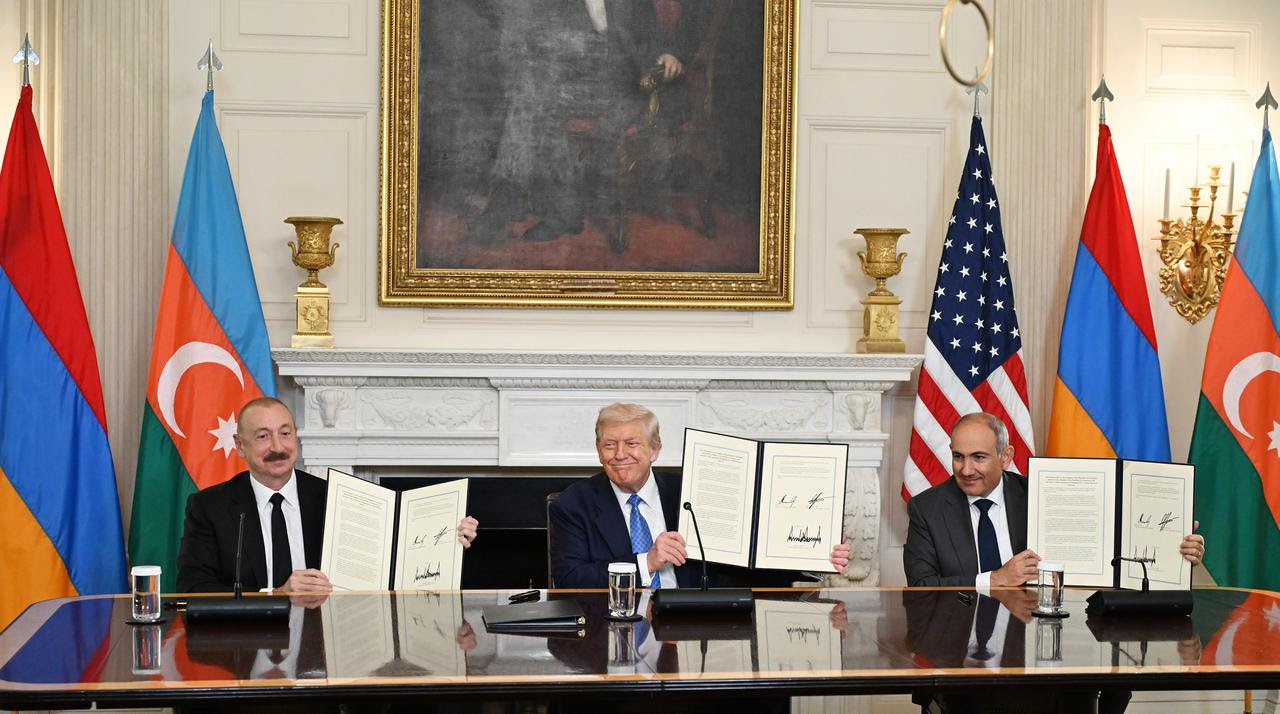
Now is the time to act with due speed and determination

Peace under normal circumstances have no losers, but if it is utilized wisely will benefit all involved and beyond. Now that the crucial step has been taken, both Azerbaijan and Armenia and all the relevant partners should use this momentum and lay the needed foundations for a lasting peace, cooperation and prosperity in the Caucasus and our region. Sitting on the signed memorandum(s) and accords or becoming complacent, can undermine and squander the created good conditions and opportunities for constructive actions. This in turn, can encourage the opponents and the ill-wishers to move in again and infest the region again for many more decades.

Now is the time to act with due speed and determination.

Ekin Altunbay,

Comments

One response to “Now is the time to act with due speed and determination”

  1. Enis Pınar Avatar
    Enis Pınar

    The desire for peace, good neighborly relations, cooperation and prosperity in the Caucasus is a worthy goal. But let us not forget that two roadblocks still remain. First, recognition by Armenia of Türkiye’s existing borders, thus ending any claims to a “Western Armenia”.
    Second, Armenia changing the preamble to its constitution and its reference to the 1990 Declaration of Independence. That declaration cites a 1989 joint decision calling for the reunification of Armenia and Nagorno-Karabakh, then an autonomous region within the Soviet Republic of Azerbaijan. Azerbaijan has consistently maintained that a peace treaty cannot be signed unless these references are removed, citing the risk that future governments might revoke the declaration and reopen claims to Nagorno-Karabakh.

    To provide an idea of what still lies ahead, I would like to present the following excerpt from a 26 May 2025 article titled “Behind the Gridlock: The Hidden Politics of Armenia’s Constitutional Impasse” on ConstitutionNet:

    “Quo Vadis? Charting a Course through Political Minefields

    In response to Azerbaijan’s requests, (Armenia’s Prime Minister) Pashinyan reframed the rationale behind the constitutional reform initiative. While initially advocating for a new constitution on ideological grounds, he now acknowledges its ‘regional significance’, tacitly linking the reform to the peace negotiations.

    The Council is expected to produce a document by the end of 2026, with a referendum to be organized after the 2026 parliamentary elections, likely in 2027.

    The Armenian Ministry of Justice has indicated that it was working on the draft text of the new constitution, based on the concept notes and proposals submitted by the Council for Constitutional Reforms. It also stated that, for the time being, changes to the preamble—containing the contested references—were not being discussed. The Council is expected to produce a document by the end of 2026, with a referendum to be organized after the 2026 parliamentary elections, likely in 2027. However, this timeline overlaps with significant regional and internal uncertainty.

    The amendment process itself presents substantial procedural hurdles. According to Armenia’s Constitution, proposed changes must first receive approval from two-thirds of members of Parliament to proceed to a referendum. The referendum itself faces an additional, considerable threshold: changes must be approved by a majority of voters and at least one-quarter of all eligible voters.

    Several factors may impede successful passage, including low voter turnout (…) and the fact that more pressing socio-economic issues overshadow constitutional concerns in the public eye.

    These high thresholds significantly complicate the constitutional reform. Several factors may impede successful passage, including low voter turnout due to public resistance towards changes perceived as externally driven, and the fact that more pressing socio-economic issues overshadow constitutional concerns in the public eye. A compounding matter is the strong opposition from the ancien régime, who see the referendum as an opportunity to mobilize their voter base and delegitimize the incumbent government.

    If constitutional changes are rejected in a referendum due to internal political dynamics, Armenia could face accusations of revanchism and of hijacking the peace process.

    The strategic decision to link the peace-building process with constitutional reform and a subsequent referendum carries substantial risks. If constitutional changes are rejected in a referendum due to internal political dynamics, Armenia could face accusations of revanchism and of hijacking the peace process. As many fear, this scenario could potentially provide Azerbaijan with a pretext—casus belli—for renewed military action.”

    Source: https://constitutionnet.org/news/voices/behind-gridlock-hidden-politics-armenias-constitutional-impasse#:~:text=The%202020%20Nagorno%2DKarabakh%20war,draft%20concept%20note%20by%202023.

Leave a Reply

Your email address will not be published. Required fields are marked *

More posts