Author: Aylin D. Miller

  • The Ottomans: A Cultural Legacy

    The Ottomans: A Cultural Legacy

    This video celebrates the cultural legacy of the Ottoman Empire, from “its aesthetics and architecture to its scientific and medical innovations, including the first vaccinations.” This video is based on Diana Darke’s book, The Ottomans: A Cultural Legacy, which “presents the magnificent achievements of an empire that lasted over 600 years and encompassed Asian, European, and African cultures, shedding new light on its complex legacy.”

    Diana Darke is a Middle East cultural expert with special focus on Syria. With degrees in Arabic from Oxford University and in Islamic Art & Architecture from SOAS, London, she has spent over 30 years specializing in the region, working for both government and commercial sectors.

    You can get her book from Thames and Hudson and other retailers

  • Turkey’s Democratic Crisis Is Becoming a Security Crisis

    Turkey’s Democratic Crisis Is Becoming a Security Crisis

    For years, discussions about Turkey’s democratic decline were largely confined to the language of human rights, constitutional law, and domestic politics. International observers viewed the erosion of democratic institutions as a troubling but primarily internal matter; a challenge for Turkish citizens to confront within their own political system.

    That era is over and a darker chapter has begun.

    Turkey’s democratic crisis has evolved into something much larger. It is now becoming a security crisis with implications far beyond our borders. What is unfolding in Turkey today should concern not only those who care about democracy, but also those who care about the long-term stability of Europe, NATO, the Black Sea region, the Eastern Mediterranean, and the Middle East.

    The reason is simple: Turkey is too strategically important to become politically unstable.

    Turkey is now facing a profound political and economic unraveling: President Recep Tayyip Erdogan’s government, having captured much of the state apparatus, is attempting to eliminate the last meaningful democratic alternative while society sinks deeper into economic hardship, social frustration, loss of trust in public institutions and distrust in the future.

    Over the past year, Erdogan’s government has intensified an unprecedented campaign against the democratic opposition. This assault on democratic choice accelerated after the Republican People’s Party (CHP), the main opposition party, achieved a historic municipal victory in 2024, becoming Turkey’s leading political force for the first time in decades. As a result, the government increasingly turned to judicial intervention rather than political competition.

    The most visible target has been Istanbul Mayor Ekrem Imamoglu, our presidential candidate and President Erdogan’s strongest challenger, arrested in March 2025 on absurd, politically motivated allegations and now facing a sentence measured not in years, but in millennia.

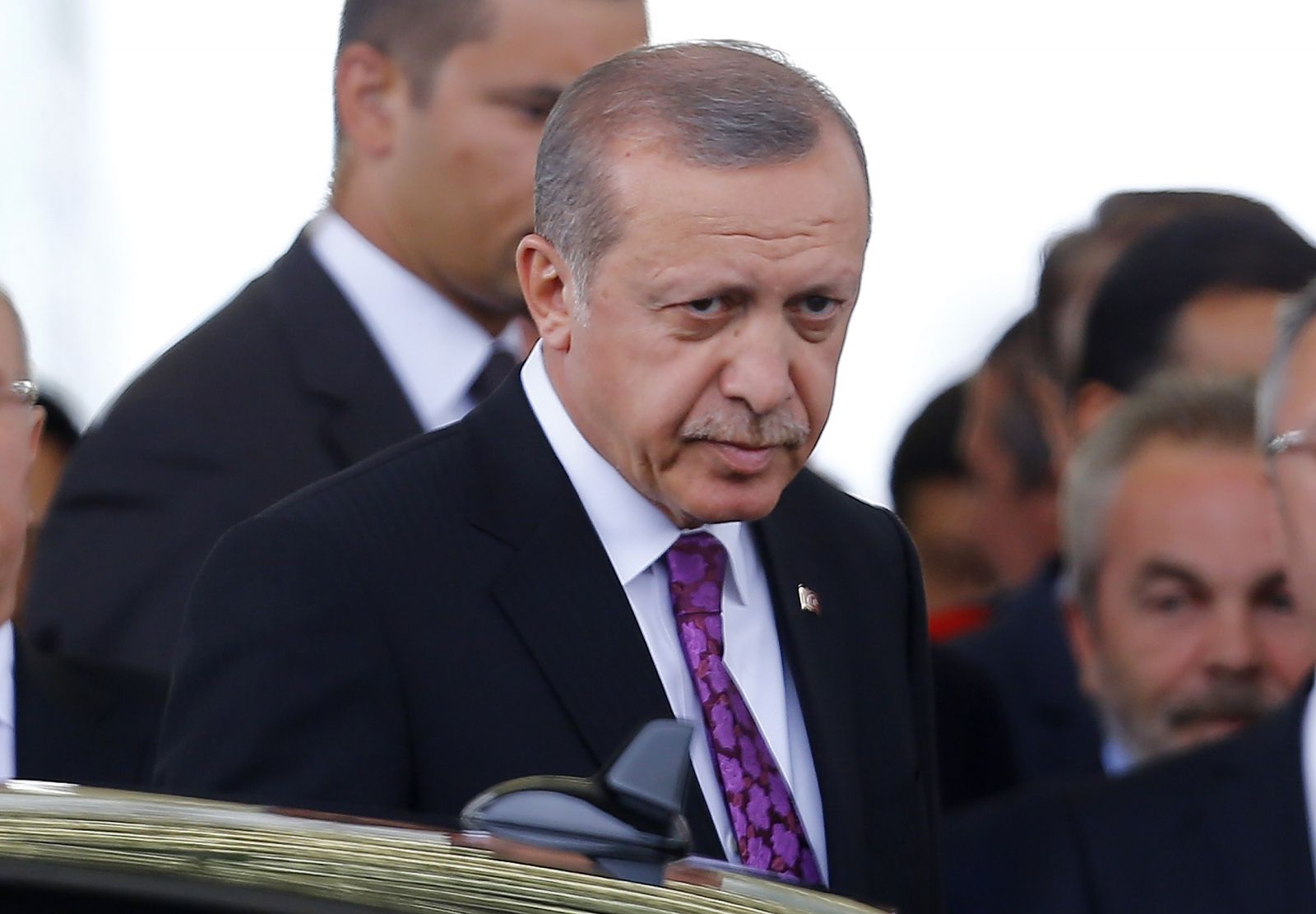
    Turkey’s Republican People’s Party (CHP) ousted leader Özgür Özel stands atop of a bus as he delivers a speech during a rally, days after a court dismissed him from office in Izmir on May 26, 2026. The protest came two days after police battered their way into the CHP’s headquarters in Ankara, firing tear gas and beating party members before throwing them out, Özel told AFP. (Photo by Murat Kocabas / AFP via Getty Images)

    Since 2025, around 20 CHP mayors and hundreds of municipal officials have been imprisoned without final convictions and all subjected to pre-trial detention. We have responded to this onslaught by mobilizing citizens in massive rallies across the country, bringing together millions of people far beyond our party lines.

    Most recently, a court invoked the extraordinary doctrine of “absolute nullity” to void the CHP’s 2023 Congress, remove me as the party’s elected leader, and reinstall the previous leadership that had lost the congress and was discredited after 13 consecutive electoral defeats. Basically, aiming to place Turkey’s largest opposition party under judicial control—with the apparent cooperation of figures willing to accommodate Erdogan’s master plan for Turkey’s political order. Whatever this system is called—single-party regime or one-man rule—its governing logic is the same: eliminating any meaningful challenger as well as replacing the real opposition with a managed and compliant one.

    Democracy is about preserving credible pathways through which citizens can peacefully change their government. When those pathways disappear, political frustration does not disappear with them. It builds beneath the surface until it erupts.

    If Erdogan succeeds in dismantling meaningful opposition, for the first time in modern history, Turkey would face deep popular discontent, a severe legitimacy crisis, and no meaningful institutional mechanism through which citizens could peacefully demand political change.

    This is not only a scenario of authoritarian consolidation. It is a scenario of profound instability.

    History teaches a consistent lesson: political systems do not become stable when alternatives disappear; they become stable when citizens believe peaceful change remains possible. The Soviet Union, the Shah’s Iran, the Eastern Bloc, and much of the Arab world all appeared stable during the Cold War—until they suddenly did not. Systems are often most fragile precisely when they look most unchallengeable.

    Turkey’s strategic importance makes this danger especially acute: as gatekeeper of the Black Sea, NATO’s second-largest military power, and a crossroads of Europe, Eurasia, the Middle East, and the Eastern Mediterranean, its role in migration, energy, and regional security means democratic collapse would not remain within its borders.

    History also shows that governments facing domestic instability and declining legitimacy often externalize their crises. Foreign policy confrontation, militarized rhetoric, and geopolitical adventurism become substitutes for the democratic consent and economic success they can no longer provide. Under such conditions, foreign policy crises are framed as questions of national survival.

    As the leader of Turkey’s main opposition party, I firmly believe our country can become one of Europe’s most valuable partners—and ultimately a full member of the European Union at a moment when Europe is building a new security architecture. But sustainable partnerships require democratic legitimacy.

    A country cannot indefinitely serve as a pillar of regional stability while simultaneously dismantling the democratic foundations that sustain internal stability.

    If current trends continue, Turkey risks becoming something unprecedented in NATO’s history: a strategically indispensable member that no longer functions as a democracy, while millions of its citizens grow increasingly dissatisfied with a political and economic order they have no peaceful democratic means to change. This would not merely be a domestic crisis. It would be a profound security challenge.

    The democratic struggle we are waging will shape not only Turkey’s democratic future and the stability of one of the world’s most strategically important countries, but also the security of our region, Europe, and NATO. Democracy and stability cannot be separated for long. The outcome could establish a precedent with consequences far beyond our borders, encouraging either democratic renewal or further authoritarian consolidation across a region already under immense strain.

    Özgür Özel: Turkey’s Democratic Crisis Is Becoming a Security Crisis | Opinion

    Özgür Özel is the leader of the main opposition party in Turkey and a member of Parliament from Manisa province.

    The views expressed in this article are the writer’s own.

    https://www.newsweek.com/turkeys-democratic-crisis-is-becoming-a-security-crisis-opinion-12015939

    Newsweek is a Trust Project member
  • Israel bombards and occupies iconic Crusader castle

    Israel bombards and occupies iconic Crusader castle

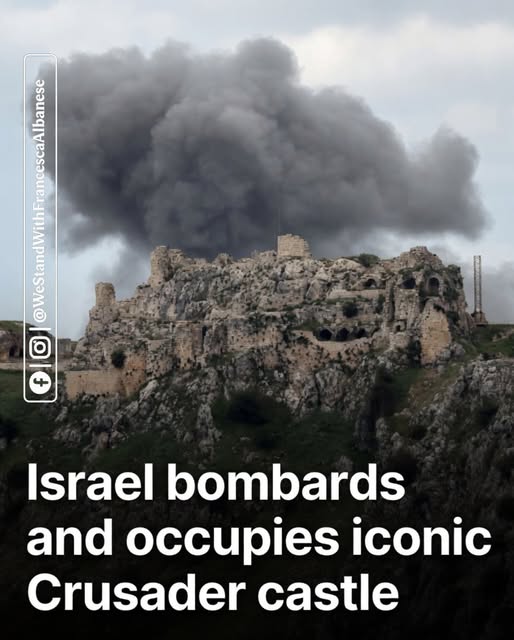
    In an escalation of its invasion of southern Lebanon, Israel heavily bombarded the historic Beaufort Castle.

    This monument was built around the year 1139 by the Crusaders and is nearly a thousand years old. It is one of the finest examples of medieval military architecture in the Near East and is under special UNESCO protection (The National, 2026UNESCO, 2025).

    Air and artillery strikes caused direct hits and columns of smoke visible over the heritage site. These bombardments worsened previous damage to the medieval monument (Associated Press, 2026).

    The castle was directly struck before Israeli troops occupied it on May 31, 2026, and raised flags over the ruins.

    So far, the Israeli offensive has caused more than three thousand deaths in Lebanon. Israel has systematically killed doctors, paramedics, and journalists, repeating the pattern seen in Gaza. It has also destroyed entire villages through massive bombardments (The Guardian, 2026).

    Beaufort is not only ancient stone, but an emblem of Lebanese identity facing systematic destruction. The invasion violates UNESCO-protected sites.

    This destruction of archaeological heritage in southern Lebanon and in Gaza — a millennia-old city — recalls the actions of ISIS, which deliberately razed historic sites to erase collective memory (Washington Post, 2026).

    References

    The National. (2026, May 😎. Lebanon’s Crusader-era Beaufort Castle is consumed by conflict again.

    UNESCO. (2025). The castles of Mount Amel: Qalaat Al Chakif (Beaufort Castle).

    Associated Press. (2026, May 31). Israeli army captures strategic castle in Lebanon in deepest incursion into the country in 26 years.

    The Guardian. (2026, May 23). Israeli bombardment reduces buildings to craters in southern Lebanon.

    Washington Post. (2026, May 30). Israeli strikes reportedly pound near Crusader-built castle in Lebanon.

  • Oxford Union Challenges British Censorship: Cenk and Hasan Will Speak Online

    Oxford Union Challenges British Censorship: Cenk and Hasan Will Speak Online

    The president of the Oxford Union, Arwa Elrayess, has decided to go ahead with the online event featuring Cenk Uygur and Hasan Piker on June 6, 2026.

    Despite the entry ban imposed by the British government.

    The Home Office revoked their electronic travel authorizations (ETA), claiming their presence was “not conducive to the public good.”

    This decision is widely seen as an act of servility to pro-Israel pressure (Middle East Eye, 2026; The Guardian, 2026).

    Uygur, from The Young Turks, and his nephew Piker (HasanAbi) are known for their progressive activism and their rejection of racism in all its forms.

    There are no credible records of them inciting hatred against Jews.

    On the contrary, both have consistently condemned antisemitism.

    Their real “crime” has been harshly criticizing the policies of the State of Israel since October 2023.

    Organizations such as Amnesty International and Human Rights Watch have documented what they describe as genocide in Gaza: massive destruction of civilian infrastructure, blocking of humanitarian aid, and tens of thousands of Palestinian civilians killed (Amnesty International, 2026; Human Rights Watch, 2026).

    New York Times critic Jennifer Szalai has pointed out in similar analyses how these bans reflect an authoritarian closure of public debate, where legitimate criticism of a government is falsely equated with racial hatred (Szalai, 2026).

    This cowardly measure by the United Kingdom exposes its subordination to foreign interests above the liberal principles it claims to defend.

    The Oxford Union resists: ideas are fought with arguments, not with vetoes.

    In times of moral crisis, censoring those who denounce atrocities only reveals weakness and fear of the truth.

    References

    Amnesty International. (2026, March 10). Israel’s genocide in Gaza inflicts compounded harms on women and girls.

    Human Rights Watch. (2026). World Report 2026: Israel and Palestine.

    Middle East Eye. (2026, June 2). Oxford Union president vows to platform Hasan Piker and Cenk Uygur in defiance of UK ban.

    The Guardian. (2026, June 1). Free speech activists condemn UK entry ban for Hasan Piker and Cenk Uygur.

    Szalai, J. (2026, April 22). An Israeli-born scholar of the Holocaust mourns for his country. The New York Times.

    https://www.facebook.com/groups/2224805678322112/posts/2252601522209194

  • We Stand With Francesca Albanese

    We Stand With Francesca Albanese

    Former ICC Prosecutor Accuses Mossad of Intimidating Her at Her Home to Protect Israel

    Former Chief Prosecutor of the International Criminal Court (ICC), Fatou Bensouda, has denounced an intense campaign of pressure and intimidation by Israel aimed at forcing her to close the investigation into alleged war crimes and crimes against humanity in Palestine (Middle East Eye, 2026).

    Bensouda, who led the Office of the Prosecutor between 2012 and 2021, opened a preliminary examination in 2015 into violations committed in the West Bank, Gaza, and East Jerusalem, primarily attributed to Israeli forces and also to Palestinian armed groups (Al Jazeera, 2026).

    Shortly after launching that inquiry, two men appeared directly at her home in The Hague and handed her an envelope containing $500, supposedly as a “thank you” gesture. Bensouda interpreted the act as a clear threat: “They came directly to my house. I understood the message they were sending,” she recalled (Middle East Eye, 2026).

    She immediately reported the incident to the Dutch police and ICC security. The investigation revealed that the men’s phone numbers were linked to Israel and that the vehicle in which they arrived had been rented at the airport, confirming the connections to Israel (Middle East Eye, 2026).

    Subsequently, then-Mossad chief Yossi Cohen met with her in Munich and New York to explicitly ask her to abandon the investigation. “What was clear is that he did not want the Palestine investigation to continue,” Bensouda stated (TRT World, 2026).

    The former Gambian prosecutor felt abandoned by the ICC’s member states. “I felt alone. I felt unsupported,” she lamented despite having reported the threats (Al Jazeera, 2026).

    These revelations have reignited the debate over political interference in international justice. Israel categorically denies the allegations.

    References

    Al Jazeera. (2026). Talk to Al Jazeera: Fatou Bensouda on Israeli threats against her and the ICC.

    Middle East Eye. (2026). Former ICC prosecutor says Mossad chief pressured her to stop investigating Israel war crimes.

    TRT World. (2026). Former ICC chief says Mossad pressured her to stop investigating Israel.

  • Greece Stole the Blue Homeland Too

    Greece Stole the Blue Homeland Too

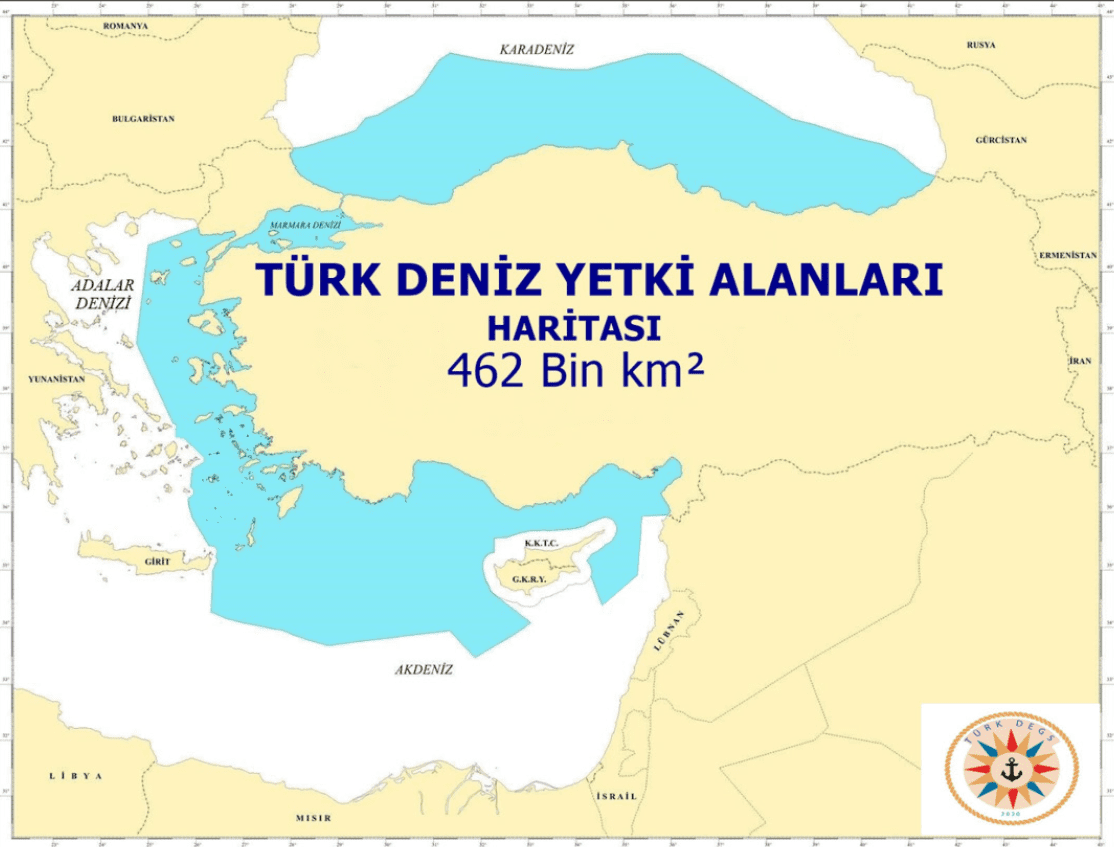
    Retired Rear Admiral Dr. Cihat Yaycı: Greece Stole the Blue Homeland Too

    As Retired Rear Admiral Dr. Cihat Yaycı pointed out, Greece’s never-ending cultural theft has reached a new dimension.

    For years, those who have tried to appropriate the authentic Turkish cuisine and culture by calling cacık “caciki,” baklava “baklavas/baklavaki,” zeybek “zeybekiko,” and Turkish coffee “Greek coffee,” have now set their sights on the symbol of our rights in our seas.

    With a new perception operation launched on Greek social media, they are attempting to steal this national term by saying “The Blue Homeland is Greek” and “The Real Blue Homeland.”

    Moreover, this shamelessness goes so far as to claim that even Behçet’s disease, discovered by the first Turkish doctor Hulusi Behçet, was discovered by a Greek doctor.

    Dr. Yaycı noted that it is no coincidence that the word “Greek” in English slang means “thief.”

    Cihat Yaycı emphasizes that we must be vigilant against this mentality that attempts to create its own history without any historical evidence.

    He also has a very clear warning for our citizens who consume our own values ​​in Greece, mistaking them for “Greek food”: We must protect all our cultural and national values, from Maraş ice cream to Gaziantep baklava, from Turkish coffee to the Blue Homeland!

    Cihat Yaycı concludes his speech with an English message: “There is no limit to the theft of the Greeks.

    Stealing food, Turkish music, Turkish culture…

    Stolen Blue Homeland.”