Tag: Azerbaijan and Armenia

  • Now is the time to act with due speed and determination

    Now is the time to act with due speed and determination

    Peace under normal circumstances have no losers, but if it is utilized wisely will benefit all involved and beyond. Now that the crucial step has been taken, both Azerbaijan and Armenia and all the relevant partners should use this momentum and lay the needed foundations for a lasting peace, cooperation and prosperity in the Caucasus and our region. Sitting on the signed memorandum(s) and accords or becoming complacent, can undermine and squander the created good conditions and opportunities for constructive actions. This in turn, can encourage the opponents and the ill-wishers to move in again and infest the region again for many more decades.

    Now is the time to act with due speed and determination.

    Ekin Altunbay,

  • Why Can’t Pashinyan Remember the Document He Signed at the End of the 2020 War?

    Why Can’t Pashinyan Remember the Document He Signed at the End of the 2020 War?

    It is incomprehensible that Prime Minister Nikol Pashinyan would forget important details of the document he signed with President Ilham Aliyev of Azerbaijan and President Vladimir Putin of Russia, at the end of the 2020 Artsakh War.

    More incomprehensible is the fact that while Pashinyan is distorting some of the provisions of the 2020 agreement, he is blaming others for misrepresenting it. Shockingly, he then challenges them to read the text of the agreement, reminding them that it is publicly available.

    Pashinyan signed the 2020 agreement that called for the unblocking of “all economic and transport connections in the region,” specifically mentioning a road that will cross Armenia to link mainland Azerbaijan to its exclave of Nakhichevan. Since 2020 he has repeated dozens of times that Armenia is ready “this morning” to allow Azerbaijanis to travel to Nakhichevan through Armenia, not once mentioning, until his August 31, 2024 press conference, that Armenians also have the right to travel through Azerbaijan to Russia.

    Fortunately, Azerbaijan has undermined this provision of the 2020 agreement by insisting that the road that will cross Armenia should be a “corridor” which means that the Armenian territory that Azeris will pass through is to be under Azerbaijan’s control. This is contrary to the provisions of the 2020 agreement and a violation of Armenia’s sovereignty. If it were not for Aliyev’s obstruction, Azeris would have been traveling through Armenia to Nakhichevan for several years by now.

    To make matters worse, as a result of the dispute between Armenia and Russia resulting from Russian peacekeepers not carrying out their duties of protecting Artsakh Armenians and allowing Azerbaijan to completely occupy Artsakh on Sept. 19, 2023, Pashinyan has been wrongly insisting that Russia has no role to play in the Zangezur road. He is thus ignoring point 9 of the agreement he signed in 2020 which stated: “The Border Guard Service of the Russian Federal Security Service shall be responsible for overseeing the transport connections [between Armenia and Azerbaijan].”

    Pashinyan could have been justified in rejecting the Russian role if he had said that the 2020 agreement is no longer valid as both Russia and Azerbaijan have violated many of its provisions, such as the lack of the protection of Artsakh Armenians, completing the occupation of Artsakh, and not returning all the Armenian prisoners of war. However, Pashinyan insists that the Nov. 9, 2020 agreement is still valid, thus contradicting himself.

    Furthermore, Pashinyan wrongly insists that the Nov. 9, 2020 agreement does not mention any Russian role for the Zangezur road. He challenges everyone to read the text of the 2020 agreement and then quotes from its point 9, leaving out the sentence that calls for Russian border guards to oversee the road between mainland Azerbaijan and Nakhichevan.

    To add to the confusion, after insisting that Russia has no role in this road, Pashinyan contradicts himself once again by claiming that Russia is supposed to “monitor” the road, not “oversee” it. Making his argument more bizarre, Pashinyan says that Russian monitors don’t have to be physically present on Armenia’s border to monitor the Zangezur road and that they can monitor it remotely from anywhere else, like Moscow.

    In the meantime, the Zangezur road has become a political football between Azerbaijan, Turkey, Iran, Russia, and the West. For a long time, Russia had been pushing for the opening of the Zangezur road so it can control this critical artery that will link the Central Asian Turkic states with Azerbaijan and Turkey, all the way to Europe. If the West, instead of Russia, oversees this key road, this would reduce Russia’s influence in the region.

    Pashinyan tried to appease all the sides involved in this controversy by suddenly announcing that an international organization could monitor the transit of Azeri goods and people. However, just as quickly, he withdrew his suggestion because Azerbaijan would have never accepted that the same third party would also monitor the transit of Armenian goods through Azerbaijan.

    Azerbaijan and Iran have come up with an alternative solution. They agreed to allow the movement of goods from mainland Azerbaijan to Nakhichevan through a road in Northern Iran. Even though Azerbaijan and Turkey had been pressuring Armenia to open “the Zangezur Corridor,” Armenia and Azerbaijan mysteriously decided to exclude the Zangezur issue from their peace treaty negotiations.

    After Russia’s Foreign Minister Sergey Lavrov accused Armenia of undermining the Zangezur road, Iran issued a stern warning that it will not allow a “Zangezur corridor” through Armenia. Russia quickly patched up its differences with Iran and quieted down the dispute.

    This messy situation could have been avoided if Pashinyan had not suggested the inclusion of the Zangezur road in the 2020 agreement. This is what happens when Prime Minister Pashinyan, rather than solving Armenia’s problems, aggravates them because of his incompetence.

  • Should Pashinyan Go to Baku at Aliyev’s Invitation to Attend an Int’l Conference?

    Should Pashinyan Go to Baku at Aliyev’s Invitation to Attend an Int’l Conference?

    Hikmet Hajiyev, Head of Foreign Policy Department of Pres. Ilham Aliyev of Azerbaijan, announced on July 21 that Armenia was officially invited to the United Nations’ International Conference on Climate Change (COP29) to be held in Baku, Nov. 11-22. Hajiyev said that the invitation was sent by Mukhtar Babayev, Azerbaijan’s Minister of Ecology and Natural Resources, to the Armenian Foreign Ministry. Even though all UN members are automatically invited, Hajiyev made it sound like Azerbaijan was doing a special favor to Armenia by describing the invitation as a “goodwill and inclusive approach in the absence of diplomatic relations between the two countries.” Hajiyev added: “Now is the time for the Armenian authorities to make a decision.”

    Armenian officials have not issued a formal response to the invitation. They have made two evasive comments: The spokeswoman of Prime Minister Nikol Pashinyan said: “such a visit is not planned in the work agenda of the Prime Minister,” and the spokeswoman of the Armenian Foreign Ministry told a journalist: “we will inform you in case the issue is addressed.”

    Baku claims that there will be 70-80,000 tourists visiting Baku on that occasion. Thousands of journalists, delegates of international environmental organizations, high-ranking officials of various governments and dozens of heads of state from around the world are expected to attend the Conference. 198 countries are parties to the Convention on Climate Change.

    On Dec. 7, 2023, the Armenian Prime Minister’s office and the Azerbaijani President’s administration had issued a joint declaration disclosing that in return for Armenia not exercising its veto power on Azerbaijan hosting the Climate conference, Azerbaijan would release 32 Armenian Prisoners of War held in Baku, and Armenia in turn would release two Azeri soldiers who were captured after crossing Armenia’s border and murdering an Armenian citizen. In addition, Azerbaijan agreed to support Armenia’s candidacy to the Eastern Europe Group‘s Bureau of COP29. At the time, I wrote that Pres. Aliyev was so obsessed with holding this prestigious international conference in Baku that Armenia should have insisted that Azerbaijan release all of the Armenian Prisoners of War held in Baku since the 2020 war as well as the eight high-ranking Artsakh officials held since September 2023.

    In recent months, at several international gatherings, Pres. Aliyev has boasted about Azerbaijan hosting the COP29 Conference, attributing that to “the increasing international respect for his country, two and a half month after” its occupation and ethnic cleansing of Artsakh. “Chairing the COP29 and holding this event in Baku is a clear example of the great trust that the international community has in our country. Almost 200 countries unanimously supported our candidacy,” Aliyev bragged.

    Pashinyan will respond to Azerbaijan’s invitation to participate in the COP29 Conference in Baku at a press conference in August, according to the Government Information and Public Relations Department of Armenia.

    Azeri officials have raised the possibility of Pashinyan and Aliyev signing during the November Conference in Baku a preliminary agreement outlining the basic principles of an eventual peace treaty. Hajiyev is touting the idea of “COP Truce,” suspending all hostilities around the world during the conference, similar to the concept of “Olympic Truce” to promote its false image as a peacemaker. At the end of May, Elchin Amirbekov, the Azerbaijani president’s Special Envoy, mentioned that the Conference could be a good opportunity for signing a peace treaty with Armenia.

    During his press conference on May 7, Pashinyan said that Yerevan agrees to sign a peace treaty with Azerbaijan before November. However, the Armenian Foreign Ministry warned on June 19 that “Azerbaijan will do everything possible to abort the process of signing a peace treaty with Armenia in November during the COP29 Summit in Baku in order to unleash a new aggression against the Republic of Armenia.”

    It is not known what Pashinyan will announce in August regarding his possible participation in the Baku Conference in November. However, in my opinion, Pashinyan should avoid falling in the trap set by Aliyev to gain bonus points in front of a worldwide audience at the expense of Armenia by showcasing the attendance of Pashinyan or his representative in the Conference in Baku. This would be a major coup for Aliyev, acting as a peacemaker, while continuing to make regular threats to Armenia and escalating his demands for concessions from Armenia. Furthermore, signing a piece of paper under the guise of a peace treaty will not obstruct Aliyev from any future attacks on Armenia.

    I believe that no Armenian official should consider going to Baku, while Azerbaijan is holding dozens of Armenian Prisoners of War and occupying parts of the Republic of Armenia since 2021. Without Azerbaijan first releasing all of the Armenian prisoners and withdrawing from Armenia, no Armenian official should go to Azerbaijan nor hold any kind of meeting or negotiation with Baku.

    A less desirable alternative would be for Pashinyan or his representative to go to Baku and demand to address the international conference of 196 nations, condemning Azerbaijan’s repeated threats to invade Armenia, castigating its occupation of Artsakh, ethnic cleansing of 120,000 Artsakh Armenians, refusal to allow them to return to their ancestral homeland under international guarantees, not releasing all of the Armenian Prisoners of War, and not withdrawing the Azeri troops from Armenia.

    However, there is a good chance that Azerbaijan may renege on its promise to allow Armenia’s representative to address the conference at the last minute. A much better option for Armenia would be to refuse to attend the conference unless Azerbaijan releases the Armenian Prisoners of War and withdraws its troops from Armenia in advance of the conference.

  • Why Azerbaijan Will Keep Attacking Armenia

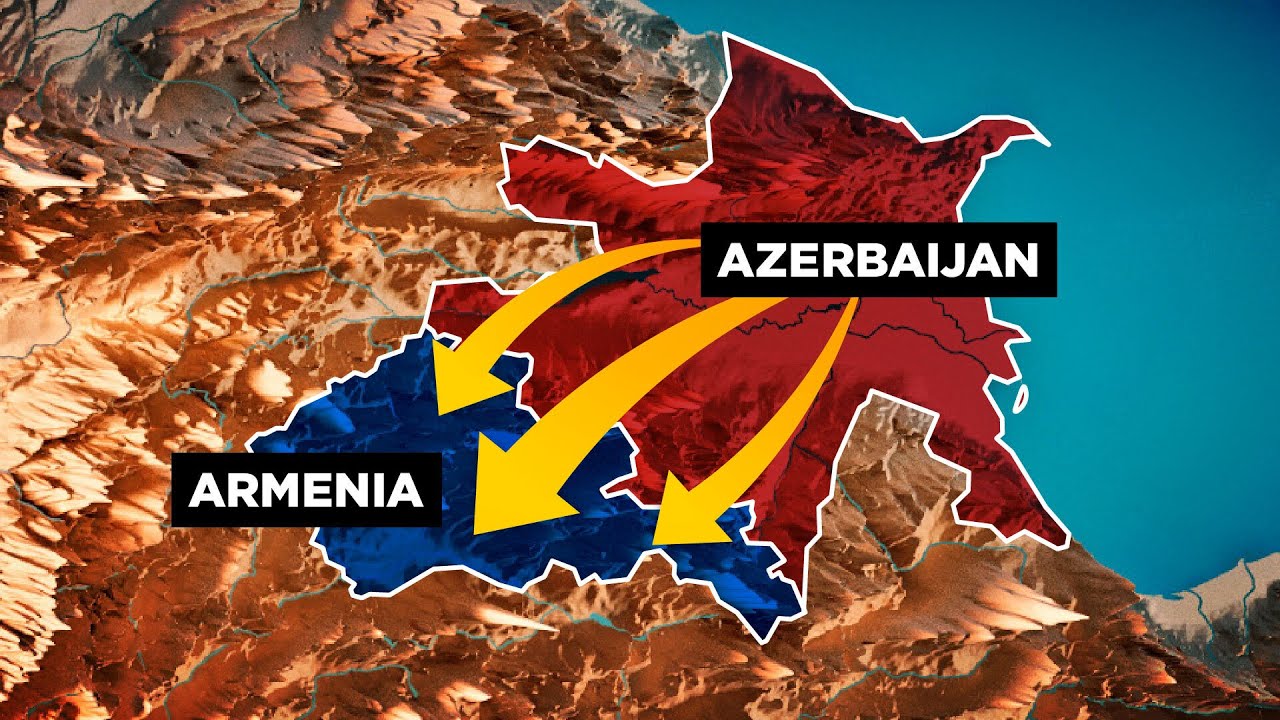
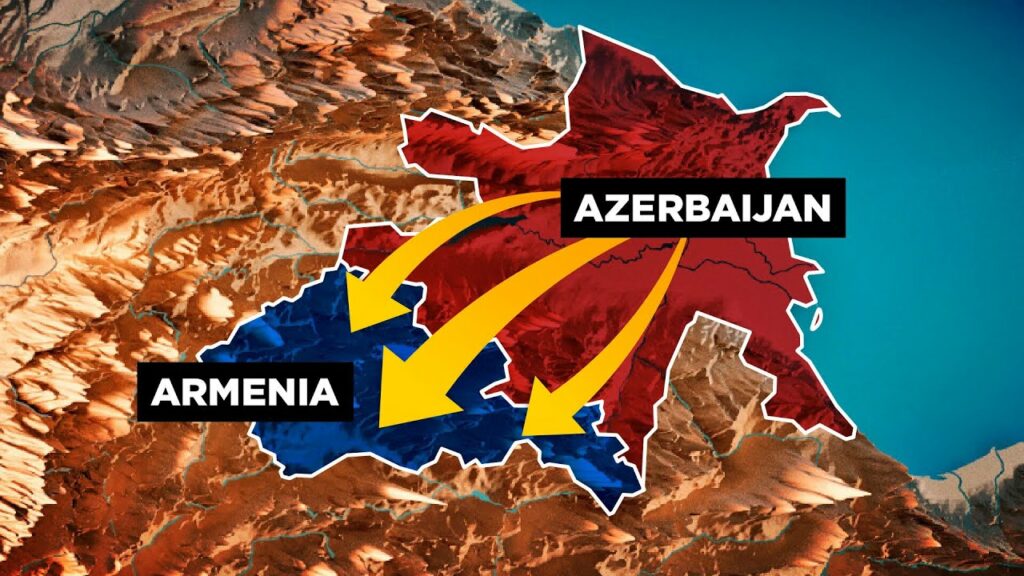
    Why Azerbaijan Will Keep Attacking Armenia

    The conflict centers on a region disputed for decades.

    The mountainous region of Nagorno-Karabakh has long been at the heart of tensions between Armenia and Azerbaijan. Internationally recognized as part of Azerbaijan, but with a majority ethnic Armenian population, it declared independence in the late Soviet period.

    A years long war between Armenia and Azerbaijan followed, killing tens of thousands of people and leaving hundreds of thousands displaced. It ended in a 1994 cease-fire that left Armenia in control of Nagorno-Karabakh and seven surrounding districts that were legally part of Azerbaijan. During the war in 2020, Azerbaijan — with powerful Turkish backing including attack drones — recaptured much of Nagorno-Karabakh and the surrounding districts. The death toll was in the thousands, and tens of thousands of people were forced to flee.

  • Turkey offers to hold talks between Azerbaijan and Armenia in Istanbul

    Turkey offers to hold talks between Azerbaijan and Armenia in Istanbul

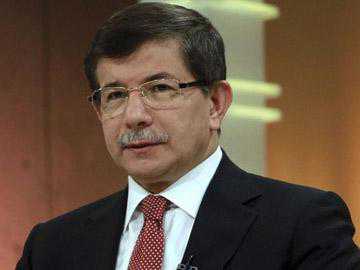
    Turkey wants Azerbaijan and Armenia to hold negotiations on Nagorno Karabakh conflict in Istanbul, Turkish FM Ahmet Davudoglu said, APA reports.

    He said official Ankara is pursuing conflict settlement policy and has already become a leader in the region.

    ‘We would like to hold talks on Syria here, in Turkey. Moreover, it would be good, if the negotiations between Azerbaijan and Armenia will be held in Istanbul’, added Davudoglu.

    via News.Az – Turkey offers to hold talks between Azerbaijan and Armenia in Istanbul.

  • Ankara-Yerevan Accords Point toward Armenia’s Withdrawal from the Occupied Territories

    Ankara-Yerevan Accords Point toward Armenia’s Withdrawal from the Occupied Territories


    foto -geography.about.com


    Gulnara Inandzh
    Director
    International Online Information Analytic Center Ethnoglobus

    The emotions, whipped up by commentaries which followed the signing on October 10 of the protocols between Turkey and Armenia, have prevented a logical analysis of the situation.  In order to begin such an analysis, we need to recognize that at the roots of the signing of these accords lie a multi-sided game of significance far beyond the South Caucasus region.

    If at the outset, the opening of the borders with Armenia was one of the conditions on Turkey’s path toward joining the European Union, then at the present time, the rapprochement of the two countries depends on the geopolitical situation and Ankara’s participation in these processes.  Immediately after the signing of the Turkish-Armenian accords, as one should have expected, the EU put forward some new demands for Turkey, about which the latter could not have but known about in advance.  This means that Turkey signed the agreements with Armenia not as part of its effort to join the EU, something that provides one of the points of departure for understanding why Turkey decided to reach an agreement with Armenia.

    At the same time, we must not ignore the pressures on Turkey both direct and behind the scenes.  And those came from more places than just the capitals of the countries which were represented at the signing ceremony.  (Here, we intentionally are not touching on the role of Israel in all these complicated political games, the situation around Iran, the transportation routes for Iraqi oil and the Kurdish element in Iraq, as each of these represent a distinctive subject for discussion).

    Turkey, who bear the genetic code of the Ottoman Empire as far as great power games are concerned, will not agree to play the role of a defeated country even under the pressure of world powers.  Ankara is not in such a weak geopolitical situation that it has to act in ways that harm its national interests.  Not long ago, we should remember, Turkey felt itself strong enough to refuse the United States the right to use the military base at Incirlik for the supply of the anti-Saddam operations of the coalition forces in Iraq.

    When pointing to the harm the protocols between Ankara and Yerevan create for Azerbaijan in the resolution of the Nagorno-Karabakh conflict, one must not forget that the Armenian diaspora has terrorized Turkey with the issue of the so-called “Armenian genocide.”  In its turn, Turkish diplomacy, which connects this question with the resolution of the Nagorno-Karabakh conflict until recently took a position absolutely the same as Azerbaijan both because of their common Turkishness and because of Turkey’s own national interests.  These two issues also served as a factor which united the Azerbaijani and Turkish diaspora, which resisted recognition of “the Armenian genocide” by pointing to the Armenian occupation of Azerbaijani lands.

    Viewed from that perspective, it would seem that Turkey, which has little to gain economically and politically by reaching an accord with Armenia, signed the protocols in a way that both undercut its own interests and angered its fraternal and strategic relationship with Azerbaijan.

    Of course, in contrast to the 1990s, Azerbaijan today is not the weak “younger brother” who needs support but an equal state that is confident in its own forces and demands respect on that basis.  This cannot entirely please the current Turkish powers that be, but it is not the occasion for a break with a reliable partner.  Differences in the question of the transportation of Azerbaijani gas to Turkey also cannot be the subject for speculation on such a strategic question as the opening of the Armenian-Turkish border.

    During the entire period of talks with Armenia, official representatives of Turkey at various levels repeated that the relationship Ankara sought would not harm the interests of Azerbaijan and that the Turkish-Armenian borders will not be opened until the resolution of the Nagorno-Karabakh conflict.  Among those who have constantly said this are Turkish President Abdulla Gul, Prime Minister Erdogan, Foreign Minister Ahmed Davutoglu, members of the parliament, opposition figures and others both before and after the signing of the protocols.

    At the same time, every step of Armenian-Turkish negotiations was discussed with Baku, and talks about the peaceful resolution of the Nagorno-Karabakh issue continued in the framework of the OSCE Minsk Group.

    And in this context, the declaration of Turkish President Gul concerning the impact in “a short time” of the Armenian-Turkish accords on “the resolution of the Nagorno-Karabakh conflict” merits attention and should calm many of the concerns in Azerbaijan.

    At the present time, when Azerbaijan has acquired major geopolitical importance, ignoring its interests on such an important issue is impossible.  Consequently, the interests of Baku were taken into consideration.  Note that immediately after the signing in Switzerland of the Armenian-Turkish agreement Azerbaijani President Ilham Aliyev arrived in Zurich where the Nagorno-Karabakh conflict was discussed.  Further, a short time after the signing of the agreement with the very same mission, Tina Kaidanow, the US Assistant Secretary of State for Europe and Eurasia arrived in Baku, and in the framework of the meetings of the foreign ministers of the Black Sea countries, Turkish Foreign Minister Ahmet Davutoglu met with President Ilham Aliyev and his foreign minister, Elmar Mammadyarov.  And the visit to Baku of General Ishyk Koshaner, commander of Turkish ground forces, to meet with Azerbaijani Defense Minister Col. Gen. Safar Abiyev is yet another confirmation of this.

    Taken together, it is clear that this cycle of visits was not a matter of chance.

    And if there were any doubt about this, the reaction both within Armenian society and also in the diaspora to the accord which should allow Armenia to escape from the blockade has been negative.  Evidently, Armenian society and politicians recognize that they will have to free the occupied territories, because otherwise no one intends to save Armenia.  It is not accidental that after the signing of the Zurich agreement, all sides represented at the ceremony except for Armenian Foreign Minister Edvard Nalbandyan did not hide their satisfaction with what had taken place.

    In other words, everything shows that the Zurich agreement will have a positive consequence on the resolution of the Nagorno-Karabakh conflict.  Judging by the presence at the signing ceremony of the representatives of the OSCE Minsk Group, it is possible to assert that all interested sides are informed about this process and about its impact on the resolution of the Armenian-Azerbaijani conflict.

    If under the pressure of the diaspora Armenia will not ratify the agreement, Azerbaijan and Turkey will return to where they were before.  If the Turkish and Armenian parliaments all the same give legal force to the agreement, then Armenia will have to free Azerbaijani territories in order to secure the opening of the Turkish borders.  Otherwise, Ankara, responding to public pressure in Azerbaijan and in Turkey will not be able to open the borders with Armenia.  In that case, Azerbaijani and Turkish public opinion will be in a position to increase international pressure on Yerevan and the Armenian diaspora regarding the liberation of the occupied territories.

    If Armenia does not follow through, then Turkey will always be in a position to find reasons to close the borders.  In such a case, Azerbaijan will be left with only one choice – the liberation of the occupied territories by military means; and the countries involved in the division of spheres of influence in the region will have to agree with this.  Otherwise Azerbaijan, using its status as “the most reliable country for the transportation of gas,” will have every reason for refusing to allow the Nabucco project to pass through its territory.


    Every country has its own interests and priorities, and in this case, that means that there is no chance that Turkey will sacrifice its relations with Azerbaijan for new ties with Armenia.