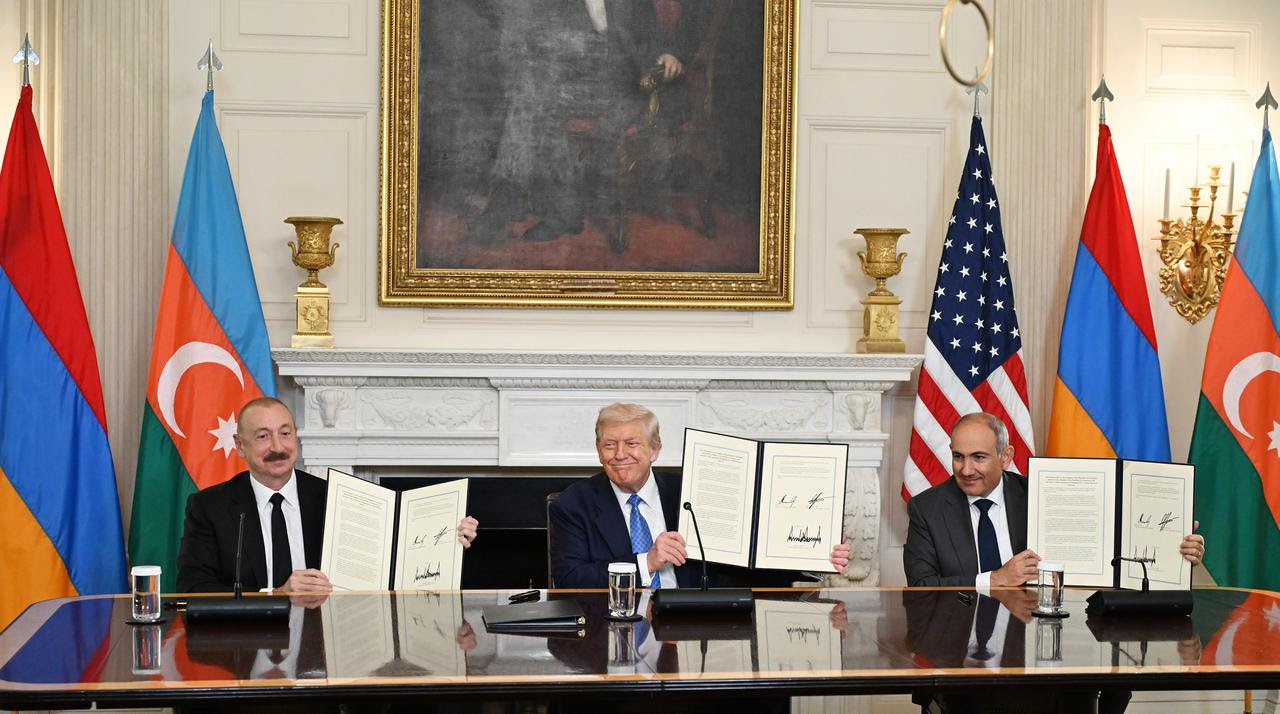
Peace under normal circumstances have no losers, but if it is utilized wisely will benefit all involved and beyond. Now that the crucial step has been taken, both Azerbaijan and Armenia and all the relevant partners should use this momentum and lay the needed foundations for a lasting peace, cooperation and prosperity in the Caucasus and our region. Sitting on the signed memorandum(s) and accords or becoming complacent, can undermine and squander the created good conditions and opportunities for constructive actions. This in turn, can encourage the opponents and the ill-wishers to move in again and infest the region again for many more decades.
Now is the time to act with due speed and determination.
The Ambassador of France to Armenia, Olivier Decottignies, who had been taking strong pro-Armenian positions, surprised everyone last week by falsely telling Armenia’s Public Radio that Prime Minister Nikol Pashinyan was not the first Armenian leader to recognize that Artsakh belonged to Azerbaijan.
Decottignies added: “Armenia has accepted, recognized that Nagorno Karabagh is part of Azerbaijan ever since the adoption of the Alma Ata Declaration [in 1991] because Nagorno Karabagh was a region of Soviet Azerbaijan. Therefore, those who claim that Nagorno Karabagh was recognized as part of Azerbaijan in 2022 in Prague are lying, because Nagorno Karabagh has been recognized by Armenia as part of Azerbaijan since the Alma Ata Declaration.”
This is an undiplomatic and false statement from the representative of a country friendly with Armenia. Why would the French Ambassador make such a wrong claim? There may be three reasons:
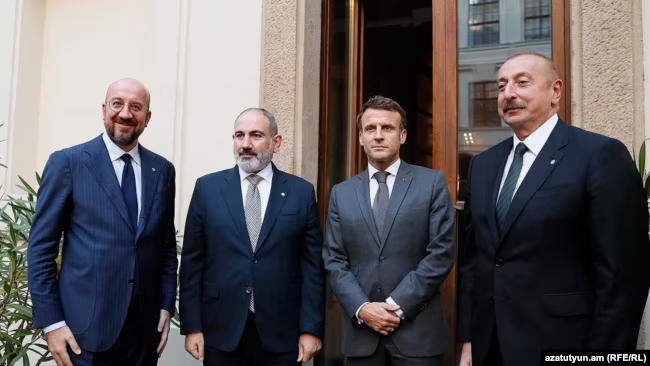
1) To absolve French President Emmanuel Macron of blame for mediating along with then President of the European Council Charles Michel talks in Prague on October 6, 2022, with Pashinyan and Azerbaijan’s President Ilham Aliyev, where Pashinyan recognized the territorial integrity of Azerbaijan, accepting that Artsakh is part of Azerbaijan based on the Alma Ata Declaration of 1991.
2) To justify and support Pashinyan’s teetering rule against his domestic opponents after handing over Artsakh to Azerbaijan.
3) To improve the damaged Azerbaijan-France relations.
The statement issued after the quadrilateral 2022 Prague meeting confirmed that Armenia and Azerbaijan, according to the Alma Ata 1991 Declaration, “recognize each other’s territorial integrity and sovereignty,” meaning that Artsakh belongs to Azerbaijan. Subsequently, Pashinyan explicitly and falsely claimed multiple times that based on the Alma Ata Declaration Artsakh is part of Azerbaijan.
By making such a statement, Pashinyan’s intent was to shift the blame onto Armenia’s former leaders for giving away Artsakh to Azerbaijan in 1991, long before he came to power in 2018.
There are several errors in the statements of the French Ambassador and Pashinyan:
— The Alma Ata Declaration of December 21, 1991, did not include any reference to Artsakh. It stated that the 11 former Soviet Republics, including Armenia and Azerbaijan, “recognize and respect each other’s territorial integrity and the inviolability of the existing borders.”
— Pres. Levon Ter Petrosyan, on his way back from Alma Ata in 1991 told Soviet Television that when the Declaration is ratified by the Supreme Council of Armenia, a reservation would be added regarding the status of Nagorno-Karabakh’s autonomy “so that we can obtain solid guarantees for the existence of Nagorno-Karabakh as an autonomous entity.”
— On February 18, 1992, the Supreme Council of the Republic of Armenia ratified the December 8, 1991 Minsk Agreement on the Creation of the Commonwealth of Independent States (CIS), which was the precursor to the Alma Ata Declaration. Given the fact that Artsakh had held a referendum on Dec. 10, 1991, declaring the establishment of the Republic of Nagorno Karabagh, the Supreme Council of Armenia added the following reservation which applied to Artsakh: All former autonomous entities of the USSR, which had previously held a referendum declaring their independence, can join the CIS.
— The Supreme Council of Armenia reaffirmed its position on Artsakh in a Decision on July 8, 1992, stating that it considers unacceptable any document that mentions the Republic of Nagorno Karabagh as part of Azerbaijan.
— On April 15, 1994, the President of Armenia refused to sign the “Declaration on the Preservation of Sovereignty, Territorial integrity, and Inviolability of Borders of the Participant States of the Commonwealth of Independent States,” out of concern that Azerbaijan would use that document against Artsakh.
— The Preamble of the 1995 Constitution of Armenia contains a reference to the Declaration of Independence, which in turn refers to the 1989 joint decision of the Soviet Armenia’s Supreme Council and the Artsakh National Council on the “Reunification of the Armenian SSR Supreme Council and the Mountainous Region of Karabagh.”
— Finally, during the 1996 OSCE Lisbon Summit, the Armenian government vetoed a resolution which would have given the highest degree of self-government to Nagorno Karabagh within Azerbaijan.
After all the above references to the separate status of Artsakh from Azerbaijan, how can Pashinyan claim that the former leaders of Armenia had given Artsakh to Azerbaijan? If that were the case:
— Why did Azerbaijan not occupy Artsakh from 1991 to 2020?
— Why did Azerbaijan launch a major war in 2020 to conquer Artsakh, losing thousands of soldiers?
— Why did Armenian soldiers battle Azerbaijani troops after 1991?
— Why did the Armenian government for decades, including during Pashinyan’s rule, station soldiers of the Armenian Army in Artsakh?
— Why did the Armenian government contribute hundreds of millions of dollars to Artsakh’s budget, if Artsakh was part of Azerbaijan?
— Why did the EU foreign policy chief Josep Borrell state in the European Parliament in 2023 that “Armenia has recognized Nagorno Karabagh as an integral part of Azerbaijan, and Nikol Pashinyan is the first Armenian leader to make such a statement?”
— Why did Pashinyan stand in front of the people of Artsakh in Stepanakert on August 5, 2019 and declare: “Artsakh is Armenia, period,” if Artsakh had been given to Azerbaijan?
— Why did the Minsk Group of mediators, co-headed by France, Russia and the United States, tried for decades to find a solution to the status of Artsakh, if it was recognized by Armenia to be part of Azerbaijan since 1991?
The answer to all of these questions is that Armenia’s former leaders did not hand over Artsakh to Azerbaijan. Pashinyan was the first Armenian leader to recognize Artsakh as part of Azerbaijan.
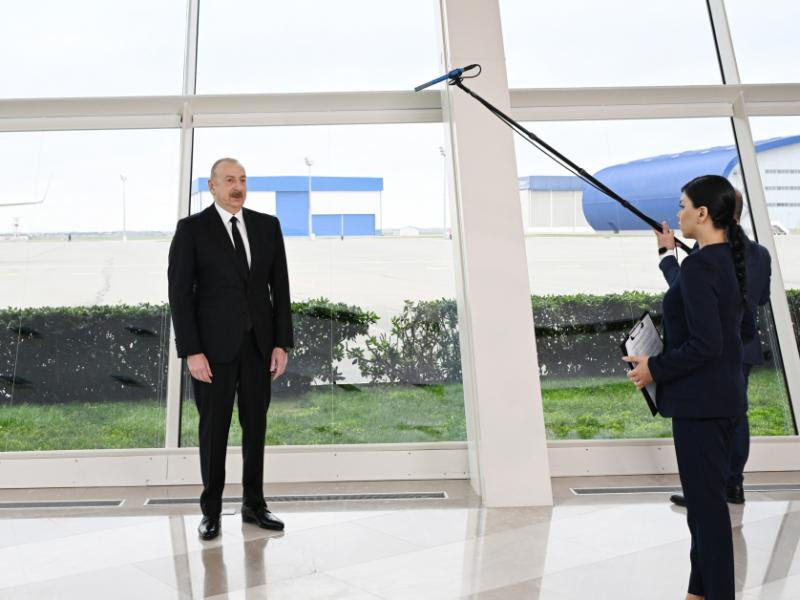
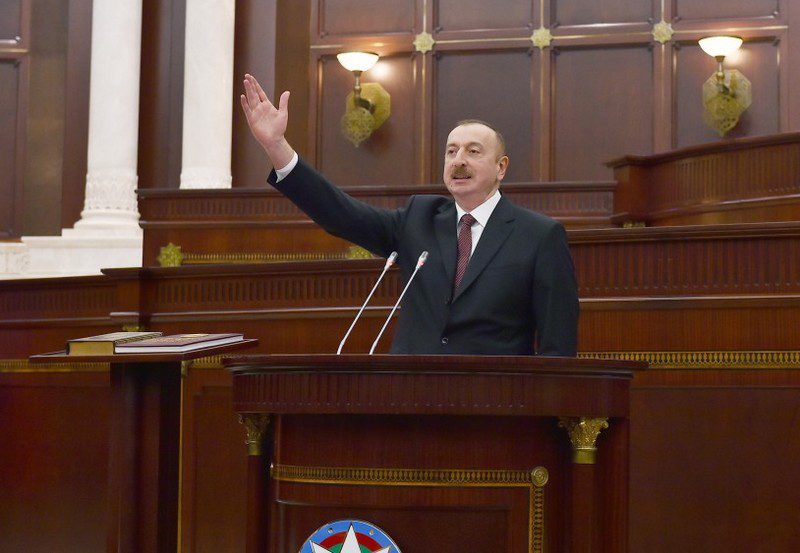
On December 29, President of the Republic of Azerbaijan Ilham Aliyev was interviewed by Azerbaijan Television at Heydar Aliyev International Airport.
AZERTAC presents the interview.
Journalist: Hello Mr. President.
President Ilham Aliyev: Hello.
Journalist: Unfortunately, an event that deeply shocked all of us occurred in recent days. On 25 December, an AZAL plane flying from Baku to Grozny crashed near the city of Aktau, Kazakhstan. We would like to know your thoughts on how subsequent developments unfolded.
President Ilham Aliyev: I received information about this while on the plane flying to St. Petersburg to participate in the CIS Summit. I was informed and immediately ordered that the plane should return to Baku. As soon as I arrived in Baku, I held an operational meeting at the airport. While I was still on the way to Baku, a State Commission was established on my instruction, and a delegation consisting of representatives of relevant agencies was immediately dispatched to the city of Aktau. Because they had to start work immediately. First of all, they had to get acquainted with the condition of the plane’s remains, conduct on-site observations, obtain video and photo footage, and present them to the public.
Additionally, a group of Azerbaijani doctors was dispatched to Aktau, although the Kazakh side spared no effort to treat the wounded and provide them with medical care. At the same time, the Prosecutor General’s Office of Azerbaijan started a criminal case on my instructions, and I know that similar steps were taken both in Kazakhstan and in Russia. Of course, work has begun on the initial theories. Of course, the final version will become clear after the black boxes have been examined. However, the initial theories are also quite reasonable and are based on facts. The facts indicate that the Azerbaijani civilian plane was damaged from the outside over Russian territory, near the city of Grozny, and almost lost control. We also know that means of electronic warfare put our plane out of control. This was the first impact on the plane. At the same time, as a result of fire from the ground, the tail of the plane was also severely damaged. Immediately, on the same day, our team captured this video footage from the city of Aktau and informed the public about it. The fact that the fuselage is riddled with holes indicates that the theory of the plane hitting a flock of birds, which was brought up by someone, is completely removed from the agenda. It is possible that when the plane was damaged, when it was hit, the pilot could have perceived it as a collision with birds. Because it would probably never have occurred to anyone that our plane might be fired at from the ground while flying over a country friendly to us. Unfortunately, however, some circles in Russia preferred to put forward this theory. Another regrettable and surprising moment for us was that official Russian agencies put forward theories about the explosion of a gas cylinder on board the plane. In other words, this clearly showed that the Russian side wanted to cover up the issue, which, of course, is unbecoming of anyone. Of course, our plane was hit by accident. Of course, there can be no talk of a deliberate act of terror here. Therefore, admitting guilt, apologizing in a timely manner to Azerbaijan, which is considered a friendly country, and informing the public about this – these were measures and steps that should have been taken. Unfortunately, for the first three days, we heard nothing from Russia except for some absurd theories.
Of course, the details of the accident will be fully investigated. I have no doubt about that. I must also note that Azerbaijan was in favor of a group of international experts engaging in this work from the very first day. The Russian side officially suggested to us that the Interstate Aviation Committee investigate this matter. But we categorically refused. The reason is clear. Because it is no secret that this organization consists mostly of Russian officials and is headed by Russian citizens. Objectivity factors could not be fully ensured here. If we had seen fair and reasonable steps by Russia in the immediate aftermath of the accident, we probably would not have objected. But we saw that attempts to cover up the case were quite obvious.
Therefore, we expressed this position in our close contacts both to the Kazakh side and the Russian side – a working group consisting of international experts only should be established, and it was. There are representatives of the aircraft manufacturer, Embraer, those of relevant Brazilian agencies, representatives of Azerbaijan, Kazakhstan, and Russia, including the Interstate Aviation Committee – not in leading roles, but simply as members of the working group. Let me repeat, after the flight recorders have been opened and we have obtained more detailed information, the full picture of what happened will be revealed and many questions that still remain outstanding today will be clarified. For example, why couldn’t the plane land in Grozny? To what extent did the means of radio-electronic warfare affect the plane’s controls? What was the extent of consequences of the strike and the explosion in the vicinity of the plane? Because I must also state that attempts to deny obvious facts and pull the wool over people’s eyes here are both nonsensical and absurd. Because fortunately, thanks to the heroism of the crew, an incident occurred that allowed the plane to land, even though it was an emergency landing. Many of the passengers survived, and their testimonies are available. The injuries inflicted on the passengers and crew by the shrapnel that pierced the plane are also obvious. Attributing this to a flock of birds or to the explosion of a gas cylinder is both foolish and dishonest. Therefore, we will find out why the plane could not land after the black boxes have been opened. When exactly was the plane fired at from the ground? Why didn’t the plane attempt to land at the nearest airports, which were Mineralnye Vody and Makhachkala? Was the plane sent to Aktau, or was this an objective choice? There are various hypotheses. Some believe that the plane was deliberately sent off course by ground handling services in Grozny because the plane was already out of control, and there was a high probability it would fall into the sea. If this had been the case, the cover-up attempts would have been successful, and the so-called bird theory would have been presented as the most likely version. According to some experts, Aktau was chosen because it is located in an open space, residential areas are far from the airport, and the crew of the plane could have assumed that this would be an emergency landing and chose a more suitable place for it. On the other hand, however, with nearby airports available, it was riskier for an uncontrollable plane to fly further, especially over the sea. In other words, there are no answers to all these questions yet. We, the Azerbaijani side, and I personally are trying to be as fair as possible. We do not want to express an opinion on unclear issues before they are fully clarified. However, we must, we do, and we will state our opinion with full determination on obvious issues. I said in my remarks here at the airport on the day of the accident that the Azerbaijani public will be regularly updated on this issue, and on the progress of this investigation, and that it is.
– Mr. President, how would you assess the performance of the aircraft crew?
– Very highly. I attended the farewell ceremony today and expressed my condolences to the relatives of the deceased crew members. Today, I will issue an order awarding the crew members. I highly appreciate their performance, professionalism, and dedication. The pilots and the entire crew showed true heroism. The pilots showed both professionalism and heroism in controlling the plane that was out of control in various ways. Of course, they were experienced pilots and knew that they would not be able to survive this emergency landing. However, they displayed tremendous heroism to save the passengers, and it is thanks to them that there are survivors in this plane crash. It is thanks to them that a section of the fuselage did not burn, and it is thanks to them that we can clearly say today that the plane was shot down by Russia. This is a fact, and no-one can deny this fact. Again, we are not saying that this was done intentionally, but it was done.
The pilots and crew members showed both professionalism and composure. I must specifically acknowledge the female crew members. They themselves were in a state of stress, but look how humanely they acted to calm the passengers and prevent chaos inside the plane. Their actions, I repeat, will be duly acknowledged by the Azerbaijani state. May Allah rest the souls of the deceased crew members and all those who died in peace. We wish the survivors a speedy recovery. Most of the survivors are already in Baku. They received immediate treatment in Kazakhstan. Some are still receiving treatment and will be evacuated to Azerbaijan as soon as possible.
– Mr. President, you phoned the President of Kazakhstan, Kassym-Jomart Tokayev. We would like to know your opinion on the issues discussed. In general, how would you evaluate the joint activity of Azerbaijani and Kazakh government officials working together on this issue?
– Yes, first of all, I called to express my gratitude to President Tokayev. Because we knew, and had received information, that as soon as the accident occurred, Kazakh rescuers immediately arrived at the scene and began to pull people out of the destroyed fuselage. They put their own lives at risk. Because they did not know whether there would be another explosion or not. A part of the plane had burned, and the other part could have caught fire as well. But despite this, they showed true heroism. At the same time, the activities of the medical teams were also very valuable. Because the injured passengers were immediately taken to medical facilities, and I expressed my gratitude to President Tokayev for this. I know that the demonstration of solidarity by our Kazakh brothers and sisters also left a great mark in the hearts of the Azerbaijani people. Ordinary people went to our consulate in Aktau, laid flowers, and expressed their attitude and solidarity with us. This is what true friendship and brotherhood are like. During my conversation with President Tokayev, I also expressed Azerbaijan’s position on the investigation and brought to his attention the issues I have just mentioned – that we are in favor of international examination and in no way can we put this issue at the disposal of the Interstate Aviation Committee. This position was also met with understanding. Of course, representatives of our government institutions, members and heads of the commission, and representatives of the prosecutor’s office are constantly in touch. Kazakhstan, in turn, has also created a State Commission, and President Tokayev informed me about this during the conversation. They also want and are trying to ensure that the issue is fully disclosed, of course. At the same time, I also expressed my condolences to President Tokayev because six citizens of Kazakhstan died as a result of the accident. He also expressed his condolences to me. In other words, no matter how serious the incident was, it was also a test. In other words, how will anyone come out of this test? I am glad that despite this tragedy, I see and am sure that people in Kazakhstan share the same opinion. Our friendship and brotherhood have become even stronger after this difficult situation.
– In the aftermath of the accident, AZAL suspended flights to some Russian cities. What was the reason for this decision and how are things going now?
– I gave this instruction, and the main reason for this, of course, is the issue of safety. Because airspace in many Russian cities is occasionally closed, and a special operating regime is applied there. They call this a “Kovyor (carpet) operation,” and returning to what I mentioned in the first question, I must also mention that one other thing must also be clarified: when was that “Kovyor operation” announced? Because according to the information on our hands, that “Kovyor operation” was announced only after our plane had been exposed to external influence. If this is the case, it once again shows that local services did this to cover up the issue.
As for AZAL flights, AZAL has indefinitely suspended its flights to seven Russian cities. At the same time, we have also suspended flights of Russian airlines from three Russian cities to Azerbaijan. Our air connection with a total of 10 cities has now been suspended, and let me repeat that, first of all, security issues are at the forefront here. We have always considered the safety of our passengers a priority, and this situation has been declared. Whatever we do, we do it openly. Let me repeat, this decision has been made. When will these flights be resumed, especially to the city of Grozny? Most likely, they will not. Life will tell, and the security of Russian airspace will certainly be taken into account.
– Mr. President, what are Azerbaijan’s expectations and demands from Russia in general in connection with what happened?
– We have clearly expressed our demands to the Russian side. These demands were officially communicated to them on 27 December. What do these demands consist of? First of all, the Russian side must apologize to Azerbaijan. Secondly, it must acknowledge its guilt. Thirdly, those responsible must be punished, brought to criminal responsibility, and compensation must be paid to the Azerbaijani state, to the injured passengers and crew members. These are our conditions. The first of these was fulfilled yesterday. I do hope that the other conditions will also be accepted. All these conditions are fair. There are no extraordinary demands or issues here; all of this is based on international experience and normal human conduct. That’s it. I repeat, the Azerbaijani public is and will be informed about all sides of the issue. The conditions I mentioned are conveyed to the public through you, of course, and I repeat, I do hope that our conditions are accepted.
– Thank you very much, Mr. President. We are grateful for your detailed answers to our questions.
The Organized Crime and Corruption Reporting Project (OCCRP) selected Pres. Ilham Aliyev in 2012 for its first “Person of the Year Award [which] recognizes the individual or institution that has done the most to advance organized criminal activity and corruption in the world.”
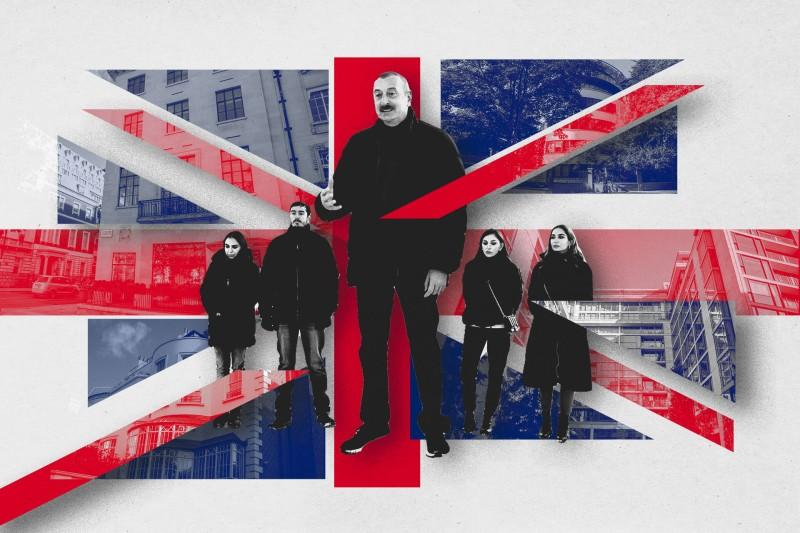
OCCRP is a worldwide network of investigative journalists that has been exposing for over a decade the appropriation of state funds by Pres. Aliyev’s family and close associates to purchase real estate overseas.
While there are numerous groups that report about Azerbaijan’s jailing of journalists, opposition members and human rights activists, OCCRP is one of the rare groups that has documented the secret acquisitions of valuable real estate in the heart of London by the Aliyev clan. Many of these holdings are hidden behind foreign offshore trusts, making the true owners of the properties difficult to identify.
However, in 2022, the British government adopted new laws that help reveal the owners of some of these properties. In an article titled, “Luxury London Properties Linked to Family of Azerbaijan’s President Are Hidden Behind an Offshore Trust,” OCCRP’s James O’Brien reported this month that the Aliyev family “acquired U.K. real estate worth hundreds of millions of dollars.” The article stated: “newly available data reveals that Aliyev’s daughters own six luxury apartments in London. But the current ownership of 10 [other] properties, acquired by the family for $160 million, remains unknown because they were moved into an offshore trust. Trust structures are currently exempt from public scrutiny.”
OCCRP reported that the Aliyevs own in London “A hotel building near the British Museum. Penthouse apartments just steps away from Hyde Park. A mansion overlooking the green expanse of Hampstead Heath. And much more. In 2021, OCCRP revealed that a nearly $700-million collection of London real estate had been acquired by the family and close associates of Ilham Aliyev, the longtime authoritarian president of Azerbaijan. Having leveraged two decades of unchallenged political power into vast wealth, this elite group had chosen to spend a fortune in one of the financial centers of the democratic world. The properties they purchased were owned by dozens of secretive offshore companies, hiding their ownership from public scrutiny. It was only thanks to the Pandora Papers, a leak of secret offshore documents obtained by the International Consortium of Investigative Journalists, that reporters were able to link them to the Aliyevs.”
The OCCRP reported that it “teamed up with researchers from Transparency International UK, an anti-corruption advocacy group, to reexamine the 23 London properties our earlier investigation had linked to the Aliyevs.” They found out that “President Aliyev’s daughters, Leyla and Arzu Aliyeva, personally own six luxury apartments just across the street from Hyde Park. But the Register [of Overseas Entities] fails to establish who ultimately owns 10 properties the Aliyevs and their associates had acquired for $160 million: the Hampstead Heath mansion, two townhouses, multiple flats [apartments] and penthouses, and a six-story building in Central London. It only reveals that they are owned by a trust registered in the Isle of Man.”
Aliyev’s office “did not respond to [OCCRP’s] requests for comment, but President Aliyev has previously attributed his wealth to success in business.”
OCCRP reported that on his presidential website in 2021, Pres. Aliyev “acknowledged that he was ‘not a poor man’ when he became president, but said this was due to his business achievements. (The son of Azerbaijan’s first post-independence leader, Aliyev served as a vice-president of Azerbaijan’s state oil company before succeeding his father as president in 2003). ‘Unlike some other people in the West who dedicate all their fortune to their cats and dogs, in Italy and Azerbaijan we value family values,’ he said at the time. ‘Therefore, I transferred all my business to my children.’”
In 2015, OCCRP reported that “Leyla Aliyeva, the Azerbaijani president’s then 29-year-old elder daughter, was one of the directors of the British company that managed the [five-story luxury] building, worth over $33 million.”
Although the trust hides the ownership of 10 high-end London properties, for nine of them, “the Register of Overseas Entities lists the same person as having ‘significant influence or control’ over the offshore companies that own them: Mir Pashayev…a cousin of President Ilham Aliyev’s wife. The 54-year-old-banker is closely linked to the Aliyev family’s business interests. He is a board chairman of Pasha Bank, a major lender owned by the president’s daughters Leyla and Arzu, and deputy chairman of the board of directors of their entire Pasha Holding business conglomerate, which spans interests in banking, insurance, and construction.” OCCRP reported that “in October 2014, he [Pashayev] took over from Leyla Aliyeva the directorship of the company that manages her mansion on Speakers’ Corner [in London].”
Pres. Aliyev’s constant threats to attack Armenia, if Prime Minister Nikol Pashinyan does not agree to make concessions, are meant to distract attention away from Aliyev’s violations of human rights and embezzlement of Azerbaijan’s state funds which deprives his citizens of massive amounts of income from the country’s billions of dollars in oil and gas revenues.
Countries must have various tools in their arsenal to counter or weaken their enemies. The most obvious one is the use of force. However, Armenia is unable to do that successfully because of its weak military.
Another possible tool is destabilizing enemy states by creating internal turmoil and inciting their oppressed minorities.
The third tool is to cause a rift between a hostile nation and its allies using the well-known method of divide and conquer. Armenia is surrounded by Azerbaijan and Turkey, two hostile neighbors that call themselves “one nation, two states.” Therefore, Armenia should try to drive a wedge between them by deepening their disagreements when such opportunities arise.
In the last 30 years, there have been at least three occasions when Armenia’s two enemies were at odds with each other.
The first opportunity was in March 1995, when members of Azerbaijan’s military, supported by some factions in Turkey, attempted to carry out a coup d’état against Pres. Heydar Aliyev. They wanted to return to power former Pres. Abulfaz Elchibey who was toppled by Aliyev in 1993.
Prime Minister of Turkey Tansu Ciller, whose top aides were involved in the coup, gave the green light to get rid of Pres. Aliyev. The coup was foiled when Turkish President Suleyman Demirel became aware of the plot and alerted Pres. Aliyev. According to Wikipedia, the attempted coup “provoked a diplomatic crisis between Turkey and Azerbaijan.”
This was a missed opportunity for the Armenian government in 1995 to take advantage of the attempted coup and the consequent chaos in Azerbaijan to further alienate the two enemies from each other by publicizing and accentuating the rift.
The second crisis between Azerbaijan and Turkey happened in 2009 in the midst of signing the Armenia and Turkey Protocols, which envisioned normalizing relations between the two countries, including the establishment of formal diplomatic relations, opening of the Armenian-Turkish border and forming a joint historical commission to study the Armenian Genocide issue. These Protocols were brokered by the United States, Russia and France.
Azerbaijan opposed the Protocols, fearing that if Turkey normalized relations with Armenia, it would weaken Azerbaijan’s pressure on Armenia in the Artsakh conflict.
Turkey was caught in the middle of several conflicting interests:
1) Turkey wanted to pursue its self-interest which was the softening of its antagonistic relations with Armenia to eliminate long-standing Armenian demands for the international recognition of the Armenian Genocide;
2) Turkey was being pressured by the United States, Russia, and France to ratify these Protocols;
3) Azerbaijan, Turkey’s junior partner, initially applied diplomatic pressure on Turkey and subsequently threatened to cut off the export of gas or increase its price. When that didn’t have the desired effect, Azerbaijan closed down several Turkish-funded mosques in Baku and took down Turkish flags. Azerbaijan’s foreign ministry declared that improving Armenia-Azerbaijan relations “directly contradicts the national interests of Azerbaijan and overshadows the spirit of brotherly relations between Azerbaijan and Turkey built on deep historical roots.”
Once again, Armenia was merely a spectator in this conflict. Eventually, Turkey succumbed to the Azeri pressures and refused to ratify the Protocols.
The third dispute between Ankara and Baku is happening at the moment after Pres. Erdogan embarrassed Azerbaijan by declaring on July 28: “Just as we entered Karabagh, just as we entered Libya, we should do the same with Israel. There is nothing stopping us. We just need to be strong to take this step.”
Azerbaijan’s officials vehemently objected to Erdogan’s statement because it was exposing the Azeri myth that they won the Artsakh War without any outside help. The fact is that Azerbaijan was supported in the 2020 War by the Turkish military and commanders as well as the thousands of Jihadist mercenaries that Turkey brought to Azerbaijan from Syria to fight against Armenians.
Despite the Azeri denials, Erdogan continued to repeat his statement about Turkish military’s involvement in the Artsakh conflict. On August 1, he said: “In Azerbaijan’s Karabagh, together with our Azerbaijani brothers, we completely eliminated the enemy forces.”
Azerbaijan’s official Gazette responded in an editorial: “Our people, army and commander view with disappointment and deep sorrow the attempts to claim and take ownership of our rightful victory. Azerbaijan’s victory is for the entire Turkic world, but Turkey is not its architect. The Architects of the Karabagh victory are Commander-in-Chief Aliyev and the Azerbaijani Army.” The Azerbaijani Gazette described Erdogan’s words as “a heavy moral blow.”
Baku pursued its disagreement with Turkey through diplomatic channels. On July 29, Azerbaijan’s ambassador to Turkey, Rashad Mammadov, met with Turkish Deputy Foreign Minister Mehmet Kemal Bozay to complain about Erdogan’s statement. Amb. Mammadov then paid a visit to Turkish Deputy Foreign Minister Berris Ekinci the following day to complain for the second time about Erdogan’s statement.
Fortunately, Armenia’s Prime Minister reacted to this latest Azerbaijan-Turkey dispute when answering a reporter’s question during his August 31 press conference: “During the 44-day War [in 2020], in many locations, our military, our explorers saw Turkish flags, Turkish soldiers, Turkish Special Squadrons and Turkish high-ranking officers. Let’s not forget that prior to the 44-day War, there were large-scale military exercises between Azerbaijan and Turkey. And during the entire war, F-16 jets belonging to Turkey were literally in the air and drones belonging to Turkey were maintained by Turkish personnel.”
Modern wars are not fought just with weapons. Nations also use psychological warfare, spread disinformation, instigate internal turmoil in hostile countries, and engage in divide and conquer tactics. Armenia needs to use all of these tools to undermine its enemies and defend its national interests.
If Armenia lacks the expertise in such specialized operations, there are consulting firms that Armenia can hire, for a fraction of the millions spent on weapons, to weaken the enemy from within.
Hikmet Hajiyev, Head of Foreign Policy Department of Pres. Ilham Aliyev of Azerbaijan, announced on July 21 that Armenia was officially invited to the United Nations’ International Conference on Climate Change (COP29) to be held in Baku, Nov. 11-22. Hajiyev said that the invitation was sent by Mukhtar Babayev, Azerbaijan’s Minister of Ecology and Natural Resources, to the Armenian Foreign Ministry. Even though all UN members are automatically invited, Hajiyev made it sound like Azerbaijan was doing a special favor to Armenia by describing the invitation as a “goodwill and inclusive approach in the absence of diplomatic relations between the two countries.” Hajiyev added: “Now is the time for the Armenian authorities to make a decision.”
Armenian officials have not issued a formal response to the invitation. They have made two evasive comments: The spokeswoman of Prime Minister Nikol Pashinyan said: “such a visit is not planned in the work agenda of the Prime Minister,” and the spokeswoman of the Armenian Foreign Ministry told a journalist: “we will inform you in case the issue is addressed.”
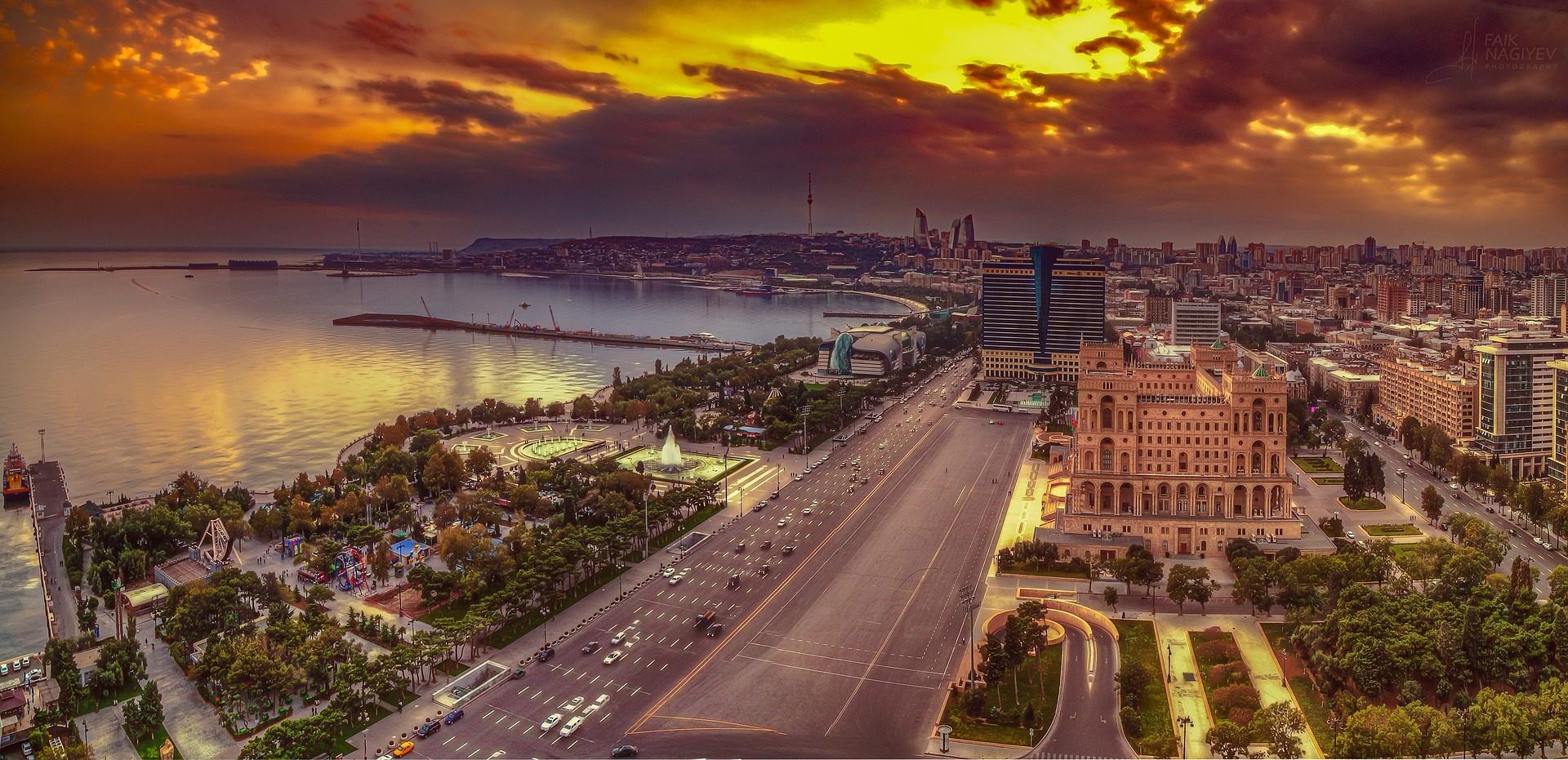
Baku claims that there will be 70-80,000 tourists visiting Baku on that occasion. Thousands of journalists, delegates of international environmental organizations, high-ranking officials of various governments and dozens of heads of state from around the world are expected to attend the Conference. 198 countries are parties to the Convention on Climate Change.
On Dec. 7, 2023, the Armenian Prime Minister’s office and the Azerbaijani President’s administration had issued a joint declaration disclosing that in return for Armenia not exercising its veto power on Azerbaijan hosting the Climate conference, Azerbaijan would release 32 Armenian Prisoners of War held in Baku, and Armenia in turn would release two Azeri soldiers who were captured after crossing Armenia’s border and murdering an Armenian citizen. In addition, Azerbaijan agreed to support Armenia’s candidacy to the Eastern Europe Group‘s Bureau of COP29. At the time, I wrote that Pres. Aliyev was so obsessed with holding this prestigious international conference in Baku that Armenia should have insisted that Azerbaijan release all of the Armenian Prisoners of War held in Baku since the 2020 war as well as the eight high-ranking Artsakh officials held since September 2023.
In recent months, at several international gatherings, Pres. Aliyev has boasted about Azerbaijan hosting the COP29 Conference, attributing that to “the increasing international respect for his country, two and a half month after” its occupation and ethnic cleansing of Artsakh. “Chairing the COP29 and holding this event in Baku is a clear example of the great trust that the international community has in our country. Almost 200 countries unanimously supported our candidacy,” Aliyev bragged.
Pashinyan will respond to Azerbaijan’s invitation to participate in the COP29 Conference in Baku at a press conference in August, according to the Government Information and Public Relations Department of Armenia.
Azeri officials have raised the possibility of Pashinyan and Aliyev signing during the November Conference in Baku a preliminary agreement outlining the basic principles of an eventual peace treaty. Hajiyev is touting the idea of “COP Truce,” suspending all hostilities around the world during the conference, similar to the concept of “Olympic Truce” to promote its false image as a peacemaker. At the end of May, Elchin Amirbekov, the Azerbaijani president’s Special Envoy, mentioned that the Conference could be a good opportunity for signing a peace treaty with Armenia.
During his press conference on May 7, Pashinyan said that Yerevan agrees to sign a peace treaty with Azerbaijan before November. However, the Armenian Foreign Ministry warned on June 19 that “Azerbaijan will do everything possible to abort the process of signing a peace treaty with Armenia in November during the COP29 Summit in Baku in order to unleash a new aggression against the Republic of Armenia.”
It is not known what Pashinyan will announce in August regarding his possible participation in the Baku Conference in November. However, in my opinion, Pashinyan should avoid falling in the trap set by Aliyev to gain bonus points in front of a worldwide audience at the expense of Armenia by showcasing the attendance of Pashinyan or his representative in the Conference in Baku. This would be a major coup for Aliyev, acting as a peacemaker, while continuing to make regular threats to Armenia and escalating his demands for concessions from Armenia. Furthermore, signing a piece of paper under the guise of a peace treaty will not obstruct Aliyev from any future attacks on Armenia.
I believe that no Armenian official should consider going to Baku, while Azerbaijan is holding dozens of Armenian Prisoners of War and occupying parts of the Republic of Armenia since 2021. Without Azerbaijan first releasing all of the Armenian prisoners and withdrawing from Armenia, no Armenian official should go to Azerbaijan nor hold any kind of meeting or negotiation with Baku.
A less desirable alternative would be for Pashinyan or his representative to go to Baku and demand to address the international conference of 196 nations, condemning Azerbaijan’s repeated threats to invade Armenia, castigating its occupation of Artsakh, ethnic cleansing of 120,000 Artsakh Armenians, refusal to allow them to return to their ancestral homeland under international guarantees, not releasing all of the Armenian Prisoners of War, and not withdrawing the Azeri troops from Armenia.
However, there is a good chance that Azerbaijan may renege on its promise to allow Armenia’s representative to address the conference at the last minute. A much better option for Armenia would be to refuse to attend the conference unless Azerbaijan releases the Armenian Prisoners of War and withdraws its troops from Armenia in advance of the conference.