Tag: Caucasus

  • Now is the time to act with due speed and determination

    Now is the time to act with due speed and determination

    Peace under normal circumstances have no losers, but if it is utilized wisely will benefit all involved and beyond. Now that the crucial step has been taken, both Azerbaijan and Armenia and all the relevant partners should use this momentum and lay the needed foundations for a lasting peace, cooperation and prosperity in the Caucasus and our region. Sitting on the signed memorandum(s) and accords or becoming complacent, can undermine and squander the created good conditions and opportunities for constructive actions. This in turn, can encourage the opponents and the ill-wishers to move in again and infest the region again for many more decades.

    Now is the time to act with due speed and determination.

    Ekin Altunbay,

  • Azerbaijan in the context of Caucasus policy of the Russia empire: from Peter to Pavel Part II

    Azerbaijan in the context of Caucasus policy of the Russia empire: from Peter to Pavel Part II

    caucasian-provinces- historyUnder Catherine II, Russia’s struggle for the Caucasus was carried out purposefully. By signing the Treaty of Küçük Kaynarca (1774), Russia has strengthened its positions in the Crimea and the Azov coast, and thereby expanded its sphere of influence in the mega region – Caucasus.  Catherine II, in order to establish its political domination in this choronym, had been conducting an active resettlement policy. In so doing, just like her forefather, she has not refused to play the “Armeniancard”. The Highest Charter of March 9, 1779, by the Russian Empress gave rise to the Armeniancolonization of the Don coast. Nakhichevan city was established on the outskirts of the St. Demetrius of Rostov Fortress and Russia resettled 20 thousand Armenians from Crimea, including the newly formed city of Novorossiysk province. Active efforts of representatives of the wealthier segments of Armenians contributed to this colonization. In the XVIII century, rich Armenian merchants, natives of New Julfa, who left the Safavid state during its fall, appear in Russia. Sparing no expense, they set the Armenian tandem in motion. The Sarafovs and Lazarevs made a special effort in this direction. Ivan Lazarev was especially distinguished. By turning into a major industrialist and landowner in theRussian Empire as a result of successful commercial and financial deals, he invested huge subsidies in imposing intelligible dreams of the Armenians among the highest circles of Russian society.  Stressing the primary role of the Armenian Gregorian Church, the carrier of mythical idea of “Great Armenia”, this Armenian wealthy man, in the last quarter of the XVIII century, built Armenian churches in the capital cities of the Russian Empire. Ivan Lazarev became one of the key “players”, who integrated the “Armenian question” into the policy of Catherine’s Russia. By entering into negotiations with the famous favorite of Catherine II Prince G. Potemkin, this wealthy Armenian, in unison with the head of the Armenian Church in Russia Archbishop Joseph Argutinsky, tried to convince the Russiannobleman in feasibility of the formation of the Armenian statehood with the center in Irevan, while not recalling the historical homeland of the Armenians, located on the banks of the Euphrates, and which has no relation to the Caucasus, and thus, to Irevan. The duo of Lazarev- Argutinsky, in the presented draft, insisted on capturing of this ancient Azerbaijani city by the Russian army. Short memory of the Armenian tandem during the creation of this project has “failed” and it “forgot” about the pre-Caucasus homeland of Armenians – Eastern Anatolia.

    In the second half of the XVIII century, the Armenian statehood projects have been also developed by rich Armenians of Indian colonies. The authors of projects – Joseph Emin, Sh. Shaamiryan tried to draw the attention of Catherine’s Russia to the centuries-old dream of Armenians. These designers of “Great Armenia”, as well as their predecessors, considered it appropriate to act in union with the Kingdom of Kartli-Kakheti. Presenting projects identical in content, the representatives of the Indian colonies, in order to achieve their intelligible dream, just like their fellow-designers of Russiancolonies, “forgot” the original oecumene, Asia Minor, which served as the matrix in the process of formation of the Armenian statehood and, by creating virtual geographic framework of their centuries-old dream, set their sights on foreign soil, on the ancestral lands of Azerbaijan.

    Hajar Verdiyeva Doctor of Historical Science

    Azerbaijan in the context of Caucasus policy of the Russia empire: from Peter to Pavel (PART I)

    Part I is here

    Source // “International Academic Herald” 2014 »5 (5) // .pp. 4-11

  • Azerbaijan in the context of Caucasus policy of the Russia empire: from Peter to Pavel (PART I)

    Azerbaijan in the context of Caucasus policy of the Russia empire: from Peter to Pavel (PART I)

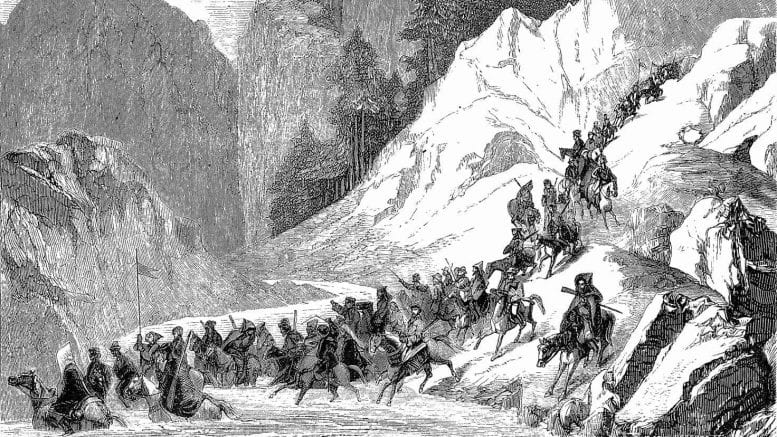
    riossia caucasus warRussia’s interest in the Caucasus was built during the reign of Ivan the Terrible. But the unfolding socio-political processes in Russia at the end of XVI and the beginning of XVII centuries did not allow the upstream development of Caucasus policy of Romanov Russia. XVII century was a turning point in the East-West confrontation. Post-Karlovitsk rubicon changed the foundations of the international system of the continent. The Emperor-reformer – Peter I, abandoning the stagnation positions of the Old Rus, joined Europe in order to strengthen Russia’s position in the international system, launching a policy of conquest.

    Russia, by defeating Charles XII during the Great Northern War (1700-1721), took possession of the Baltic Sea and has become a maritime power. But European countries have become a barrier to the further advancement of Russia to the west, and Peter I activated Russian policy in the Caucasus, in the area of the coastal strip of the Caspian Sea. The interest of the Russian Emperor in the coastal strip of the Caspian Sea was due to rich natural resources, which could give new impetus to the development of the Russian economy. At the same time, Peter I also tried to form an ethno-confessional basis, for the establishment of Russia’s political position in the region, decided to bet on the “Armenian issue”, the idea of “Great Armenia” invented by Mkhitarists and featured by Armenianfalsifiers. Here, the Armenian-Gregorian church acted as the “first violin”. Already at the beginning of the Northern War, the representative of the Armenian Gregorian Church I.Ori met with Peter I and drew the attention of the Russian tsar to “Armenian issue”, developing a fictitious map of Armeniaaccording to the algorithm of the Armenian Gregorian Church,  directs him to Azerbaijani Irevan fortress, at the same time convinces the emperor about advisability of Asia Minor route, that opens the way to Istanbul, where the Christian population of this choronim would be social support for theRussian troops. After receiving this information, Peter I, during the Northern War, developed the contours of Caucasian policy and made plans for the upcoming military operations with states that dominate in the region. When designing grandiose plans for the Caspian lands, as strategically important for Russia, Tsar considered it expedient to form ethno-social basis for his political power in this confessional Muslim area. And for this purpose, Peter I planned the formation of a “united under the scepter of Russia the Georgian-Armenian alliance led by the Georgian king (ruler of Kartli-Kakheti kingdom-ed.) Vakhtang VI, with the intention of turning it into an outpost in the South Caucasus.

    In the policy of the Christianization of the conquered lands, the emperor included not only the formation of units of the Armenian-Georgian Christian Union. During the Caspian campaign, Peter I, not concealing his plans of Christianization, planned an “ethnic cleansing” of the cities of the coast of the Caspian Sea, evicting the autochthonous population of Azerbaijan – Azerbaijanis – from these lands, in order to prevent the influence of the Ottoman factor in the region, which intensified after the Shamakhi events in 1721.

    The international situation and the domestic political situation in the Empire did not allow Peter I to realize his targeted plans of integral Caucasus policy, the Christian colonization of the Caspian coast strip. As a result of the Caspian campaign of Peter I, the Istanbul agreement was signed in 1724, establishing the Russian conquest of the lands on the Caspian coast. However, after the death of Peter I, the “bironovshchina”, established in Russia during the reign of Anna Ivanovna, was not interested in the issue of the Caucasus, and Russia, by signing Rasht (1732) and Ganja (1735) agreements, easily abandoned Peter’s policies in the Caucasus.

    Source // “International Academic Herald” 2014 »5 (5) // .pp. 4-11

    Hajar Verdiyeva Doctor of Historical Science.
  • Russia, Iran, Turkey, And The Caucasus

    Russia, Iran, Turkey, And The Caucasus

    March 22, 2013 – 1:44pm, by Joshua Kucera 

  • Russia and Turkey open Samsun-Caucasus train ferry – exclusive interview

    Russia and Turkey open Samsun-Caucasus train ferry – exclusive interview

    TURKEY SPAIN ALVAREZ

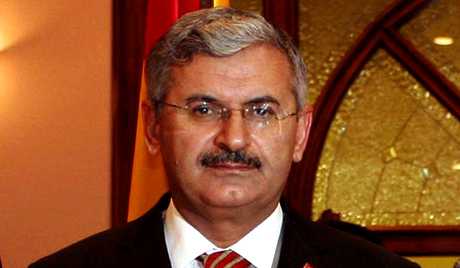
    Binala Yildirim

    Photo: EPA

    The opening ceremony of the Samsun-Caucasus train ferry, which links the North of the country to the South of Russia, will be held on February 19 in the Turkish city of Samsun. This project will give a new dimension to the two country’s bilateral relations, Turkey’s Minister of Transport Binala Yildirim stated in an exclusive interview with the Voice of Russia.

    The Samsun-Caucasus will be the shortest transport corridor between the countries.

    Its connection to the internal areas of the country will be established in the Russian territory.

    Northern and Southern corridors in the territory of Turkey will also be connected to provide a combined and fully integrated transportation network.

    Meanwhile, Russia will be able to establish transport links with the Mediterranean region and the Middle East; and Turkey – with Turkic states (former Soviet republics) and Siberia.

    The Minister pointed out that there was road, air, railway and sea communication between Russia and Turkey.

    As for relations between the two countries as a whole, they continue to develop in a friendly vein, in the framework of mutual respect, Binala Yildirim is sure.

    He expressed hope that in 5-10 years bilateral trade would increase three times and would amount to 100 billion dollars.

    via Russia and Turkey open Samsun-Caucasus train ferry – exclusive interview: Voice of Russia.

  • Young Women’s Chaos in Istanbul

    Young Women’s Chaos in Istanbul

    I and my colleague Katarina Härröd have had the opportunity to take part in the meeting of Young Women’s Network of South Caucasus in Istanbul the last three days. From time to time it has been chaotic; strong feelings, problems, “aha” points in discovering similarities and differences, a mixture of languages and new friendships all mixed with a spirit of young activism and a sense that everything is possible.

    Tomorrow we leave Istanbul to continue with a smaller group of young people to take part in an Integrated Security Workshop; the weather forecast says it will be cloudy, rainy and cold but we hope for a warm and cosy atmosphere within the group which will keep us warm and motivated for the rest of the week.

    via Young Women’s Chaos in Istanbul | Vi på Kvinna till Kvinna.