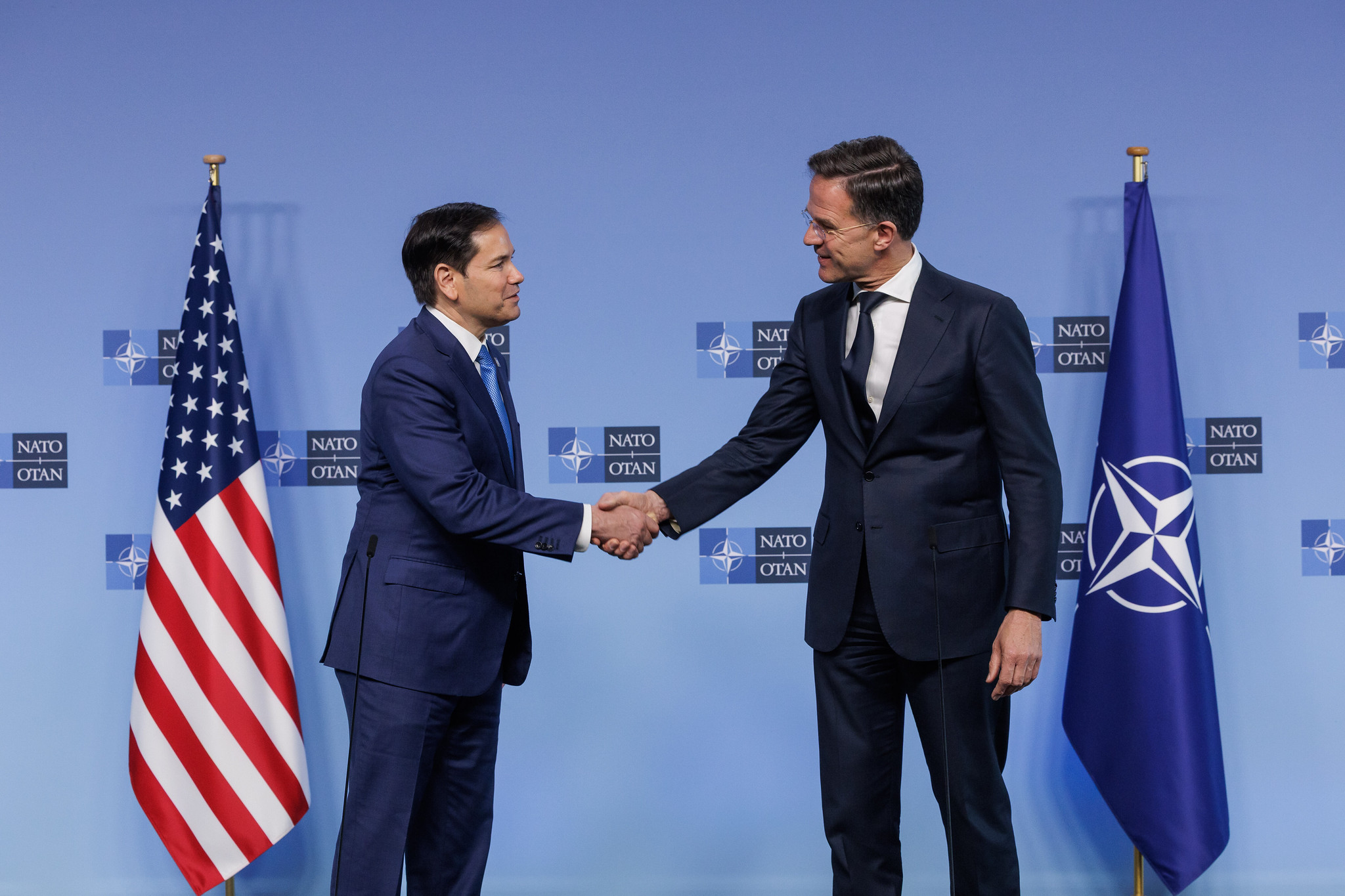
The Honorable Marco Rubio
Secretary of State
U.S. Department of State
2201 C Street, NW
Washington, DC 20520
Dear Secretary Rubio:
I write to firmly rebut the recent congressional letter urging the Administration to maintain CAATSA sanctions on the Republic of Türkiye and continue its exclusion from the F-35 program. The arguments advanced in that letter are selective, historically incomplete, and risk undermining not only U.S. relations with Türkiye but also the credibility and cohesion of NATO itself. The assertion that Türkiye “defied” U.S. policy by acquiring the Russian S-400 system ignores a critical fact: for years, Türkiye sought to purchase the American Patriot system but was consistently denied. Confronted with urgent security threats along its borders from hostile actors equipped with ballistic missile capabilities, Türkiye was left without a viable NATO option to safeguard its airspace. To portray this decision as reckless rather than a compelled necessity is to distort history in a way that misinforms policymakers and undermines Alliance unity.
Equally concerning is the double standard by which Türkiye has been penalized, while other NATO allies including Greece, Bulgaria, and, until recently, Slovakia have long operated Russian origin S-300 systems without facing sanctions or exclusion. Beyond NATO, India, a key U.S. strategic partner, currently deploys the S-400, yet is not subjected to comparable measures. Other states such as Belarus, Kazakhstan, and Armenia also utilize S-300 and S-400 systems, but none are singled out in the same manner as Türkiye from Greek Origin Representatives. It is particularly notable that many of the representatives advocating punitive measures against Türkiye hail from the Greek and Caucasus lobbies, yet they overlook the fact that Greece another NATO ally continues to operate Russian S-300 systems. Such selective criticism exposes the political bias underlying this debate, rather than an objective assessment of Alliance security needs. The selective enforcement of U.S. law raises legitimate questions about whether the motives of those pressing this argument are rooted in broader national security concerns or in narrower regional rivalries.
Türkiye’s record as the 2nd most powerful NATO ally cannot be ignored. From closing the Bosporus and Dardanelles Straits to Russian warships under the Montreux Convention, to providing Ukraine with drones that shifted the battlefield in Kyiv’s favor, Türkiye has done more than most allies to contain Russian aggression. Beyond the battlefield, it was Türkiye that spearheaded the Black Sea Grain Initiative, preventing a global food crisis, and it was Türkiye that mediated delicate negotiations including the release of American citizen Brittney Griner.
More recently, President Biden himself acknowledged Türkiye’s critical diplomatic role in Gaza negotiations. President Trump himself has underscored the importance of U.S.–Türkiye relations: “Turkey is a critical NATO Ally, and our continued cooperation is important for American interests in the region and beyond.” “The U.S.-Turkish alliance can be a powerful force for security and stability, not only in the Middle East, but beyond.” These are not the actions of a state that undermines U.S. security; they are the actions of a partner whose unique geographic position and diplomatic reach cannot be replicated. The congressional letter’s assertion that welcoming Türkiye back into the F-35 program would jeopardize American security overlooks the greater danger of alienating a strategic ally at the crossroads of Europe, Asia, and the Middle East. To permanently exclude Türkiye from cooperative defense projects risks pushing Ankara toward alternative defense partnerships with powers who do not share our values. That outcome would weaken NATO’s southern flank, fracture alliance interoperability, and embolden adversaries who benefit from divisions within the West.
It is equally important to consider the motivations behind some of the letter’s most vocal proponents. Several of its signatories have Greeks roots and the other members of the Greek Caucus and maintain close connections with Greek lobbying circles. Congresswoman Nicole Malliotakis, in particular, has repeatedly advanced positions hostile to Türkiye, aligning herself with groups sympathetic to PKK/YPG-affiliated organizations entities tied to a U.S.-designated terrorist group. Furthermore, she has associated herself with the network of Fethullah Gulen group , which Türkiye and numerous other countries recognize as a terrorist organization.
Congresswoman Malliotakis’s reelection campaign has received substantial financial backing from Greek-affiliated interests, raising serious concerns as to whether her policy positions genuinely reflect U.S. national security priorities or instead advance the agenda of regional rivals of Türkiye, such as Greece. Her record suggests that she is often advocating for Greek interests rather than those of the American people. US Congress is an Greek occupied territory.
Such behavior risks undermining the impartiality expected of U.S. policymakers, particularly when dealing with issues involving a NATO ally. Moreover, what Congresswoman Malliotakis and her Greek friends seems unwilling to recognize is that the country’s official name is not “Turkey” but Türkiye. Respect for Türkiye’s sovereignty is paramount. The official designation, Republic of Türkiye, reflects the nation’s independence and identity. Dismissing this by continuing to use “Turkey” ignores a matter of diplomatic respect that should not be overlooked.
The Republic of Türkiye does not seek to erase the past; it seeks a fair and balanced reconsideration of decisions that weakened alliance cohesion, punished an indispensable partner, and emboldened adversaries. Readmitting Türkiye to the F-35 program and reexamining CAATSA sanctions through a lens of equity and strategic necessity would strengthen NATO, enhance transatlantic security, and restore fairness to U.S. foreign policy. Demonizing Türkiye, as some have made a political habit of doing, is not only counterproductive but dangerous in an era when unity among allies is paramount.
Respectfully,
Ibrahim Kurtulus
Community Activist
Leave a Reply