Former ICC Prosecutor Accuses Mossad of Intimidating Her at Her Home to Protect Israel
Former Chief Prosecutor of the International Criminal Court (ICC), Fatou Bensouda, has denounced an intense campaign of pressure and intimidation by Israel aimed at forcing her to close the investigation into alleged war crimes and crimes against humanity in Palestine (Middle East Eye, 2026).
Bensouda, who led the Office of the Prosecutor between 2012 and 2021, opened a preliminary examination in 2015 into violations committed in the West Bank, Gaza, and East Jerusalem, primarily attributed to Israeli forces and also to Palestinian armed groups (Al Jazeera, 2026).
Shortly after launching that inquiry, two men appeared directly at her home in The Hague and handed her an envelope containing $500, supposedly as a “thank you” gesture. Bensouda interpreted the act as a clear threat: “They came directly to my house. I understood the message they were sending,” she recalled (Middle East Eye, 2026).
She immediately reported the incident to the Dutch police and ICC security. The investigation revealed that the men’s phone numbers were linked to Israel and that the vehicle in which they arrived had been rented at the airport, confirming the connections to Israel (Middle East Eye, 2026).
Subsequently, then-Mossad chief Yossi Cohen met with her in Munich and New York to explicitly ask her to abandon the investigation. “What was clear is that he did not want the Palestine investigation to continue,” Bensouda stated (TRT World, 2026).
The former Gambian prosecutor felt abandoned by the ICC’s member states. “I felt alone. I felt unsupported,” she lamented despite having reported the threats (Al Jazeera, 2026).
These revelations have reignited the debate over political interference in international justice. Israel categorically denies the allegations.
References
Al Jazeera. (2026). Talk to Al Jazeera: Fatou Bensouda on Israeli threats against her and the ICC.
Middle East Eye. (2026). Former ICC prosecutor says Mossad chief pressured her to stop investigating Israel war crimes.
TRT World. (2026). Former ICC chief says Mossad pressured her to stop investigating Israel.
Washington does not lose wars, Washington achieves strategic objectives.
Washington successfully degrades enemy capabilities.
Washington transitions to a ceasefire framework, but Congress has receipts.
Just revealed something that no Pentagon press briefing would ever say out loud.
42 American military aircraft shot out of the sky.
By a country that Washington had already declared defeated.
Welcome to the story behind the story.
Before we count what America lost, let us count what America said it would achieve.
The Trump administration entered Operation Epic Fury with four publicly stated objectives.
Destroy Iran’s nuclear program completely.
Degraied Iran’s ballistic missile capability.
Cut-off Iran’s support for regional proxy groups.
Force Iran’s leadership to permanently renounce nuclear weapons.
Four objectives.
29 billion dollars.
Keep those four in your mind.
We will return to them.
On February 28th, 2026, the United States and Israel launched Operation Epic Fury.
Washington was triumphant.
Supreme Leader Kamine was dead.
Nuclear sites were hit.
The state of Hormuz Defense Secretary Pete Heggseth told Congress,”
We have achieved our strategic objectives.
Now fast-forward to May the Congressional Research Service.”
The non-partisan research arm of the United States Congress.
Quietly published a report.
No press conference.
No headlines on American prime time.
No ticker on CNN. A very uncomfortable document.
42 United States military aircraft lost or severely damaged.
In a war that America won.
Let us now do what Washington refused to do.
Aircraft by aircraft.
The F-35A, lightning the second.
The most expensive weapons program in human history.
At 1.7 trillion dollars.
Shot down or severely damaged over Iran on March 19th.
Cost of one aircraft between 80 and 110 million dollars.
Iran’s foreign minister, Iraq chi, Iran’s armed forces were the first in the world to shoot down an F-35.
Washington has not denied it.
Four F-15E strike-eagles, $100 million each, $400 million total.
Three destroyed by friendly fire over Kuwait.
America paid to shoot down its own jets.
The fourth destroyed in combat over Iran.
One eight-end thunderbolt the second, $20 million.
Destroyed inside Iran.
Seven KC–135 strattotankers.
The aircraft that keep combat jets flying.
$30 million each, $350 million total.
Five of them were not airborne.
They were parked on the tarmac at Prince Sultan Air Base in Saudi Arabia when Iranian missiles found them.
One E3-century A-wax, $270 million.
The flying command center.
The brain of the entire operation.
Destroyed on the ground in Saudi Arabia by an Iranian missile.
Two MC–130J commandow the second special operations aircraft.
$100 million each, $200 million total.
American commandows flew them into Iran on a rescue mission.
They got stuck in soft sand inside Iranian territory.
American forces blew up their own aircraft on Iranian soil because they could not fly them out.
One H-H-60W Jolly Green the second helicopter.
$40 million, damaged by small arms fire during the same rescue mission.
24 M-Q-9 Reaper drones between $30 and $56 million each, $720 million total.
And the M-Q-9 production line was already shut down in 2025.
America cannot replace them quickly.
Iran destroyed 24 of a product no longer being manufactured.
One M-Q-4C Triton surveillance drone.
$250 million, a quarter billion dollar aircraft.
Total hardware destroyed in 40 days.
Approximately $3.5 to $4 billion.
And that is just the aircraft.
The Pentagon told Congress the full cost of Operation Epic Fury is now $29 billion.
That number jumped 4 billion in just two weeks.
83 cents of every dollar spent.
$24 billion out of $29 billion.
Went toward fixing and replacing destroyed military hardware.
And the $29 billion does not include a single dollar of base repair costs.
Those assessments are still ongoing.
Congressional sources say the final bill could reach 200 billion oracles.
$200 billion for a 40-day war that America won.
And Iran was not just hitting aircraft.
Iran hit American military bases across seven countries simultaneously.
In the first two weeks alone, confirmed base damage reached $800 million.
The U. S. Navy Fifth Fleet headquarters in Bahrain was hit.
Repair cost for that one building $200 million.
In Qatar, Iran struck an early warning radar system valued at $1.1 billion.
$1 billion.
In Kuwait, a 50-year-old Iranian F5 jet penetrated the patriot air defense shield and bombed a U. S. compound, a half-century old aircraft.
Inside a base protected by the most advanced missile defense system in the world.
And none of this base damage is included in the $29 billion figure.
It’s still counting.
Democratic Senator Mark Kelly sat before Congress and used one word to describe America’s weapons inventory after this war.
His exact words, “I think it is fair to say it is shocking how deep we have gone into these magazines.
The American people are less safe, whether it is a conflict with China or somewhere else in the world.
We are talking about years to rebuild.
America spent $29 billion and weakened itself against every future enemy at the same time.
Now the scoreboard.
Destroy Iran’s nuclear program.
Iran still holds over 450 kilograms of 60 percent enriched uranium.
Enough for 9 to 11 nuclear weapons.
Fordale survived.
Buried under 80 meters of granite.
Iran’s Parliament voted to end all IAA cooperation after the ceasefire.
Iran is now less transparent than before the war.
Netanyahu himself admitted on CBS. There is still nuclear material.
There are still enrichment sites that have to be dismantled.
The man who launched the war admitted the war did not finish the job.
Iran’s ballistic missiles.
Iranian missiles were still hitting American warships in the straight of Hormuz in May 2026.
A full month into the ceasefire.
Cut off Iran’s proxy support.
Hezbollah operational.
Health is active.
My RGC network intact, force Iran to announce nuclear weapons.
No deal, no signed agreement, no verification framework.
Trump called Iran’s latest proposal a piece of garbage.
The nuclear talks are still ongoing.
The same talks that diplomacy could have produced before a single bomb was dropped.
Zero out of four objectives achieved.
Here is what the data tells us.
The United States launched Operation Epic Fury with the most advanced air force in the world.
It flew nearly 13,000 soughties.
It hit over 5,500 targets.
It killed the Supreme Leader of Iran.
And it lost 42 aircraft worth $4 billion.
It spent $29 billion.
Got its bases hit in seven countries.
Pleated its missiles for years, achieved zero out of four stated objectives, agreed to a ceasefire with a country it claimed to have defeated.
And then spent two months hiding the losses from its own Congress, American style.
The story behind the story is not about what Iran lost.
The story behind the story is about what Washington could not afford to lose next.
Because if the war had restarted with Iran’s flight patent data with its proven F-35 kill, with its confirmed drone hunting capability, with American munitions already at shocking levels, the next set of losses would not be 42 aircraft.
And someone in Washington did the math.
That is the story behind the story.
I am your host.
If you believe the world deserves the full picture, share this video right now.
The recent opinion piece in the New York Post titled “Beware Turkey’s ambitions in the post Iran power vacuum,” written by Jonathan Schanzer and published March 4, 2026, reflects again a troubling pattern in which speculation is presented as strategic analysis with a paper that always has an axe to grind with Turkiye . Opinion pages are meant to provoke debate, but serious commentary on international affairs must begin with accuracy, fact of evidence and context both of which appear noticeably absent with the New York Post .
First, a matter of basic accuracy and respect. The official name of the country is Türkiye, not “Turkey.” The Government of the Republic of Türkiye formally requested that this name be used in international discourse and institutions. When individuals presenting themselves as analysts of Middle Eastern affairs cannot even employ the correct name of a NATO ally, it raises legitimate questions about the depth of their expertise. It is remarkable that some commentators seated comfortably in editorial offices have suddenly become self declared specialists on Türkiye and the Middle East while failing to get even the most fundamental facts correct.
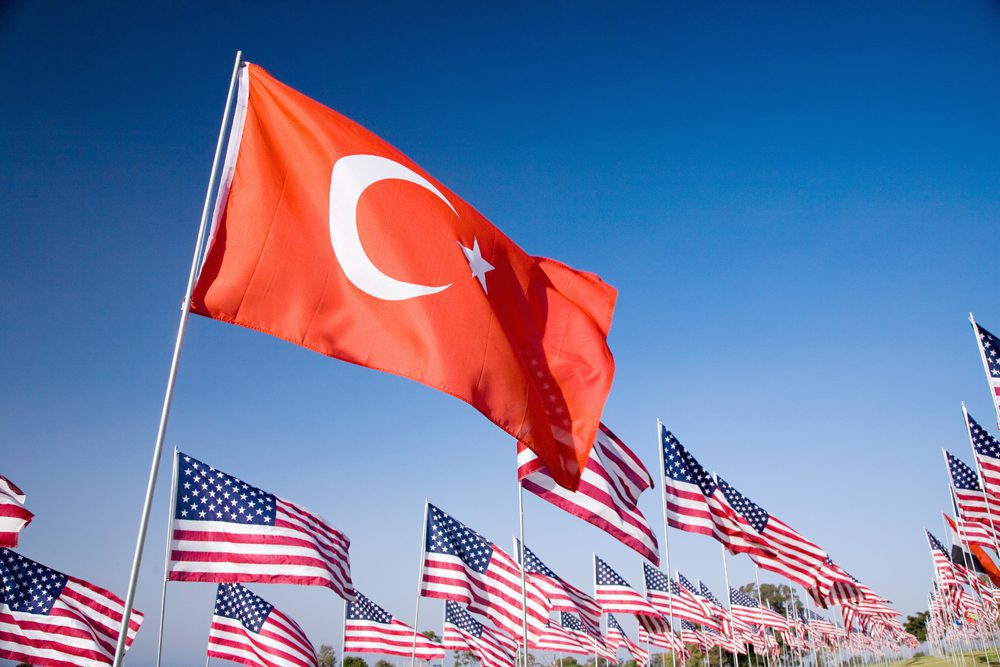
More importantly, the article advances a narrative portraying Türkiye as a destabilizing force poised to exploit a hypothetical Iranian collapse. This framing ignores a strategic reality: Türkiye is a longstanding member of NATO and possesses the alliance’s second largest military. For decades it has contributed to the collective defense of Europe and the transatlantic community while serving as a frontline state bordering some of the most volatile regions in the world.
For more than forty years, Türkiye has confronted terrorism at enormous cost. Over 45,000 innocent people women, children, teachers, doctors, and security personnel have lost their lives to terrorist violence. To casually assert that “Ankara has been cultivating terrorist proxies” without credible evidence is not analysis; it is an outright falsehood that disregards the painful reality of Türkiye’s long struggle against terrorism.
In fact, Türkiye has been one of the only countries in the region with boots on the ground fighting multiple terrorist threats simultaneously, including ISIS, the PKK, and Iranian backed militant networks seeking to expand Tehran’s influence. Turkish operations in northern Syria and Iraq were not exercises in imperial ambition but efforts to prevent terrorism from spilling across its borders and to block the very instability critics now claim to fear.
Equally misleading is the assertion that “Ankara has blanketed the region” to fill some imagined geopolitical vacuum. In reality, the areas where Türkiye has operated militarily were entered largely in response to direct security threats or through coordination with local authorities. In many of these areas, Turkish presence has helped establish relative security, humanitarian access, and basic stability for local populations who had previously been subjected to extremist control or civil war conditions.
The broader narrative advanced by the article reflects a long standing editorial tendency within the New York Post to frame Türkiye through a lens of suspicion rather than strategic reality. Such portrayals may resonate with readers who don’t even know where District of Columbia is in USA (D.C.) and unfamiliar with the complexities of the region, but they do little to inform the American public or contribute to constructive policy debate.
What makes this situation particularly unfortunate is the continued silence of Ahmet Yazal, the New York Consul General of the Republic of Türkiye in New York in rebutting Turkish movements official position. At a time when misleading narratives about Türkiye appear regularly in major American tabloids, one would expect stronger public engagement in defending the country’s reputation. Diplomacy requires more than ceremonial presence and walking two dogs; it requires active communication when misinformation circulates widely. Not Opinion , but official government policy.
Ultimately, the article does not expose Türkiye. Instead, it highlights the risks of substituting ideology for strategy and speculation for evidence. Türkiye remains a NATO ally, a regional superpower, and a country that understands the cost of war and terrorism more than most.
Foreign policy demands seriousness, not slogans. Unfortunately, this commentary offers little of the former. At a time when Western unity is essential, dismissive narratives about allies do not strengthen the alliance they weaken it. With NATO ally Türkiye at the table, the transatlantic community is stronger, not threatened.
An Open Letter of Appreciation to The Honorable Marjorie Taylor Greene Türkiye , Israel , Iran
The Honorable Marjorie Taylor Greene P.O. Box 829 Dalton, GA 30722 United States
Dear Congresswoman Greene,
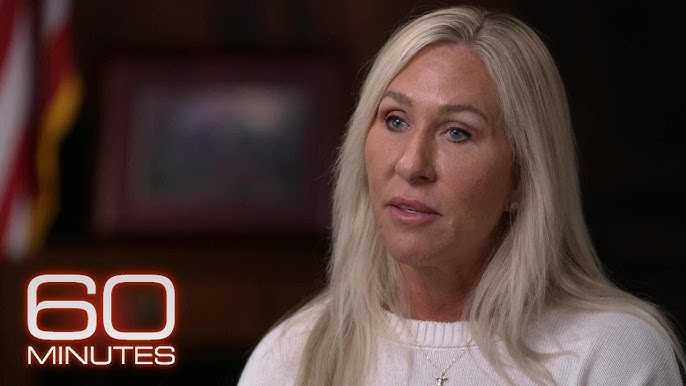
I write to express my sincere appreciation for your clear and principled response to the recent remarks made by former Israeli Prime Minister Naftali Bennett. When you stated plainly, “Hello. Turkey is a NATO member country. Everyone wake up,” you did more than post a comment you reminded the world of a strategic reality too important to ignore.
Türkiye is not “the new Iran.” Such rhetoric is not analysis; it is provocation. It disregards decades of alliance, sacrifice, and shared security commitments. Since the Korean War, where Turkish brigades fought shoulder to shoulder with American forces, Türkiye has upheld a timetested and honorable role within the Western alliance. From Kosovo War to stabilization efforts in Afghanistan and operations in Libya, Türkiye has consistently stood on the froont lines of NATO’s most complex missions.
As the second-largest military force in NATO and the indispensable guardian of Europe’s southern flank, Türkiye protects not only its own sovereignty but the broader security architecture of the transatlantic world. It faces direct and indirect pressure from Iranbacked networks across Syria and Iraq. To equate Türkiye with Iran is not merely inaccurate it is intellectually unserious.
In fact, Türkiye’s strategic interventions have disrupted Iranian and Russian ambitions in Syria and Libya. Even James Jeffrey, who served as U.S. Ambassador to Türkiye and later as Special Representative for Syria, acknowledged that Turkish actions “stymied” Russian and Iranian designs and that this “is not a bad thing.” One may debate Ankara’s style or President Erdogan’s assertiveness; serious policymakers do so regularly. But caricature and smear campaigns are not substitutes for strategic thought.
Former Israeli Prime Minister Naftali Bennett’s remarks read less like statesmanship and more like political theater a careless attempt to delegitimize a NATO ally for shortterm applause. Demonizing Türkiye will not strengthen Israel’s security, nor will it serve American interests. It only erodes the cohesion of the alliance structure that has preserved stability for generations.
Türkiye is an independent regional major power, a complex democracy, and a pivotal state bridging Europe, the Middle East, and Central Asia. It is not Iran, nor is it on a path to become Iran. Reducing it to such a slogan is a disservice to history and to facts.
Türkiye is not Lebanon, nor Iraq, Jordan, nor Syria, nor Iran and it is certainly not a nation to be intimidated or coerced by reckless rhetoric or military theatrics.
Those who believe otherwise misunderstand its history and resolve. At Gallipoli Campaign World War, I, 7 Powerful at time , Allied powers came to the Shores of Turkiye. Under the leadership of Mustafa Kemal Atatürk, invading forces learned a hard lesson Ataturk said “the way they came, they left.”. Türkiye remains a sovereign power of strategic depth and institutional strength, fully capable of defending its national interests.
Your willingness to state the obvious that Türkiye is a NATO ally reflects clarity at a moment when clarity is needed. For that, many Americans who value strategic honesty are grateful.
A delegation from the Turkish Grand National Assembly, led by Foreign Affairs Committee Chairman Fuat Oktay, is in Washington this week holding a series of meetings aimed at strengthening diplomatic ties at the legislative level. The visit underscores Ankara’s recognition that while executivelevel relations between Türkiye and the United States remain “extremely positive,” as Oktay noted, engagement with the U.S. Congress has proven far more difficult.
Oktay’s remarks deserve close attention. His observation that the U.S. Congress is challenging to engage because of its focus on domestic affairs is not merely a tactical complaint it is an admission of a structural reality of American democracy. In the United States, foreign policy is deeply shaped by grassroots engagement, local constituencies, and sustained relationships between elected officials and the communities they represent. This is not a flaw in the system; it is the system.
For years, A hand full of activist , like my self and policymakers have acknowledgedat least rhetorically that U.S. domestic politics is driven from the bottom up. Yet in practice, Ankara has largely relied on expensive lobbying firms in Washington, spending millions of dollars with little concrete, longterm impact. Access was purchased with millions of dollars given to lobbying firms, meetings were arranged, but influence remained shallow and often temporary. Lobbying without grassroots power is transactional, not transformational in building relationships.
The real weakness lies closer to home, within the ecosystem of Turkish-American organizations. Many so-called NGOs claiming to represent Americans of Turkish descent lack meaningful grassroots engagement in the halls of U.S. power. Groups such as Federation of Turkish Americans Associations often run by individuals with limited credibility, lack of proper English language or outreach or its members incardinated by the Federal Government , present themselves as national representatives while failing to build real relationships with members of Congress, state legislators, or even local officials. Representation without legitimacy is not advocacy; it is theater and picture taking.
Too many Turkish American organizations and its members appear more interested in hosting visiting Turkish political figures than in holding U.S. elected officials accountable or educating their own communities about civic engagement. Activism is reduced to symbolic welcoming outside the Turkish House or what I have refer to as the “Diplomatic House” rather than sustained engagement with congressional offices, district staff, school boards, or city councils.
The consequences are visible. Many Turkish Americans can name foreign ministers or ambassadors, yet cannot identify their own congressman, senator, assembly member, or even better yet , their children’s school principal. This is the State of the Turkish American Communities lobbying efforts. This civic disconnect undermines any serious claim to political influence in the halls of power. In the American system, power flows upward from informed, organized communities not downward from embassies or visiting delegations who for 40 years have come to the New York or Washington to congregate Turkish Americans by spoon feeding their version of relations then take group pictures for about one hour and then run to Apple store and Clothing Outlets to buy luggage full of Designer clothes.
Oktay’s statement that Congress is difficult because it is domestically focused is, unintentionally, an indictment of this failure. It highlights how Turkish-American NGOs have not done the essential work of embedding Turkish-American concerns into the fabric of U.S. domestic politics accept for community activist like Ergun Kirlikovali, Murat Guzel, Erol Akyurek and Melih Bektas. If Congress seems distant, it is because the bridge has not been built.
Leadership matters in this process, and it starts with consulates. In New York, for example, the role of the Consul General Yazal should be to empower communities, encourage civic participation, and foster credible relationships with elected officials. Instead, the current period has been marked by missed opportunities and weak engagement, widely regarded by community leaders as among the poorest in decades.
Strengthening U.S.Türkiye relations will not come from delegations alone, nor from checkbooks written to lobbying firms. It will come from disciplined grassroots organizing, accountable community leadership, and a serious commitment to engaging American democracy on its own terms. Only then will Congress listen not because it is asked to, but because it must.
Regarding Recent Statement on Syria and ‘Saving the Kurds’
February 9, 2026
Lindsey Graham -US Senator 211 Russell Senate Office Building Washington, DC 20510
Dear Senator Graham,
I read your January 27, 2026 statement on X with great concern. Your claim that “the Kurds are under threat from the new Syrian government aligned with Turkey” and your announced intent to introduce “crippling sanctions” through a “Save the Kurds Act” constitutes not only a misreading of the regional reality but, more troublingly, a reversal of your own previously stated national security concerns.
First, your framing collapses a diverse people into a single militant faction. There are more than 15 million Kurdish citizens living in neighboring states who serve as parliamentarians, ministers, governors, diplomats, judges, academics, and business leaders. If these governments were engaged in a campaign against Kurds as a people, they would not have sheltered half a million Iraqi Kurds fleeing Saddam Hussein in 1991 nor hosted millions of Syrian refugees, including tens of thousands of Syrian Kurds, since 2012. The omission of intra-Kurdish plurality is astonishing. Nechirvan Barzani, President of the Kurdistan Regional Government, has publicly defined the PKK as a “headache” and demanded their expulsion from Kurdish territory in Iraq. Abdullah Keddo of the Syrian Kurdish National Council has warned that PKK-linked groups must be expelled from Kurdish-majority towns in Syria. Kurdish rejection of PKK authoritarianism is not peripheral — it is central.
Second, your romanticization of the YPG/PYD also ignores hard legal and intelligence facts. Interpol, FATF, and UN agencies have documented PKK-linked networks involved in narcotics trafficking, forced conscription, human smuggling, extortion, and arms procurement. No sovereign state including our own would tolerate an armed separatist formation operating on its borders financed through transnational organized crime.
Your narrative also erases the chronology. The collapse of the 2013–2015 peace process did not occur in a vacuum. It was the PKK that unilaterally broke the ceasefire, declared “autonomous zones,” dug urban trenches, and launched urban insurgencies from Cizre to Sur. No Western democracy would permit an armed non-state actor to carve municipal fiefdoms under the banner of cultural rights.
You are also aware of the U.S. role in muddying this conflict. Under the cover of counter-ISIS operations, Washington rebranded the PKK’s Syrian affiliates (YPG/PYD) as the “SDF.” Senior American officials have since admitted the obvious. Then-Secretary of State Antony Blinken called the PKK an “enduring threat.” Defense Secretary Lloyd Austin confirmed that the SDF maintains structural ties to the PKK. Ambassador James Jeffrey openly described the SDF as a national security problem for our NATO ally. President Donald Trump went further: “Kurds are not angels. The PKK… is probably worse at terror and more of a terrorist threat in many ways than ISIS.”
Senator Graham, respectfully you once recognized this. During hearings of the Senate Armed Services Committee, you questioned Secretary Carter and General Dunford about U.S. cooperation with the PKK/YPG in Syria and Iraq, highlighting their acts of terror and the thousands of civilian lives lost. You warned against entanglements with designated terrorist entities. Today, you are proposing sanctions on governments combating the very groups you once warned about. One is left to ask: when did the policy change, and why?
Meanwhile, the new Syrian government under President Ahmad al-Sharaa has granted Kurds full citizenship, legalized Kurdish education, recognized Newroz as a holiday, and enacted anti-discrimination laws. These reforms undermine the separatist thesis and remove the humanitarian alibi Western commentators often rely upon. Iraq’s Kurdish Parliament has repeatedly expressed gratitude for cross-border support against ISIS between 2014–2017 and credited regional integration for their economic development. Kurdish leaders have never claimed that their survival depends on an armed Marxist separatist formation only certain Washington think tanks have.
Senator, no one is attacking Kurds. Counter-terror operations target groups like the PKK/YPG/PYD that exploit instability to advance extremist goals. Conflating Kurds with separatist militants is an insult to Kurdish citizens who reject authoritarianism.
America’s reputation will not suffer by ceasing to fund non-state militias. It will suffer by appearing to legislate on behalf of a terrorist organization. If you are so committed to their protection, one wonders whether your constituents in South Carolina would welcome their relocation, protection, and financing at home.
At a time of economic strain, American taxpayers deserve investments in American communities not another open-ended proxy commitment to groups that U.S. officials themselves have labeled as terrorists.