Response to Alon Ben Meir
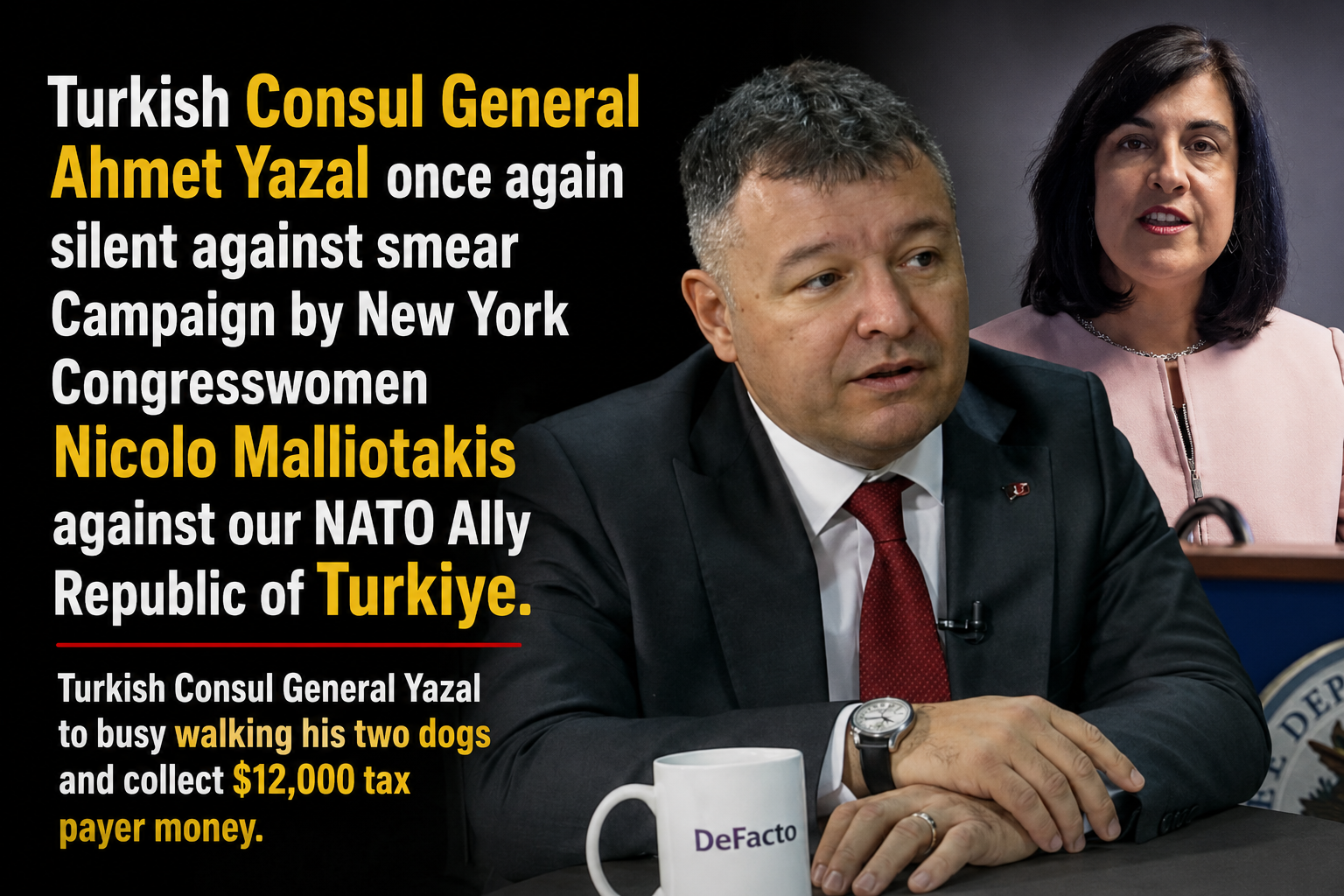
I have publicly criticized Turkish Consul General Ahmet Yazal. / I am living proof that freedom of criticism is real and free of Turkish Officials.
Mr. Ben -Meir you are at it again with your smear campaign of Türkiye.
First and foremost, I must remind you, Mr. Alon Ben-Meir, that the official name of the country is Türkiye. Given how many times I have written to you regarding this matter, you should have gotten it right by now. Your disrespect begins with your failure to use the correct name of the nation.
The article presents itself as a defense of universal human rights, yet it is deeply selective, ideologically framed, historically incomplete, and strategically dismissive of the existential security threats confronting the Republic of Türkiye. It does not read as a balanced legal analysis; rather, it resembles a prosecutorial brief crafted to delegitimize the Turkish state while systematically omitting the geopolitical realities, terrorist threats, constitutional complexities, and democratic dynamics that have shaped modern Türkiye since the attempted coup of July 15, 2016.
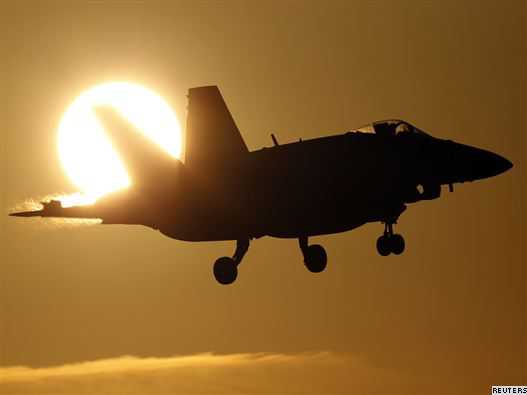
Any intellectually honest assessment must begin with the undeniable fact that Türkiye faced a violent coup attempt in 2016 orchestrated by elements infiltrating the military, judiciary, police, and bureaucracy. The coup attempt resulted in the deaths of over 250 civilians and security personnel, with thousands wounded. Fighter jets bombed the Turkish Grand National Assembly, tanks rolled into civilian streets, and armed officers attempted to overthrow a democratically elected government. The article minimizes this unprecedented national trauma as merely a “pretext” for authoritarianism, thereby erasing the legitimate security concerns of a sovereign NATO member state confronting an armed insurrection.
The article further fails to acknowledge that many Western democracies adopted extraordinary emergency powers after terrorist attacks or national security crises. Following 9/11, the United States implemented the Patriot Act, Guantanamo Bay detentions, enhanced surveillance, extraordinary renditions, and broad counterterrorism authorities. France enacted emergency powers after the Paris attacks. The United Kingdom expanded anti-terror legislation for decades in response to IRA terrorism. Yet when Türkiye responds to a direct coup attempt and decades long PKK terrorism, its actions are uniquely characterized as irredeemable authoritarianism. This double standard is impossible to ignore.
The portrayal of Türkiye’s judiciary as entirely illegitimate is similarly reductionist. No serious observer claims every judicial process in Türkiye is flawless; however, to assert that all prosecutions involving terrorist Gulen-linked operatives, PKK affiliates, or extremist networks are fabricated is intellectually unserious. The FETO network was not merely a religious or educational movement. Turkish authorities and many independent observers documented systematic infiltration into state institutions over decades. Even critics of President Erdogan acknowledged the movement’s extensive penetration of the judiciary and police apparatus, o you must have missed that too. The article deliberately ignores this dimension because acknowledging it would complicate its simplistic moral narrative.
The claims regarding Kurdish repression also omit crucial context. Türkiye’s conflict has never been with Kurdish identity itself. Millions of Kurdish citizens serve in parliament, business, academia, the military, and civil society. Kurdish-language broadcasting, publications, and cultural initiatives expanded dramatically under AK Party governments compared to previous eras. The issue is not Kurdish ethnicity but the PKK, which is recognized as a terrorist organization by Türkiye, the United States, NATO, and the European Union. The article repeatedly conflates Kurdish political identity with organizations accused of operational or ideological proximity to PKK militancy. No democratic state permits elected officials to materially support armed insurgent structures while claiming complete immunity from legal scrutiny.
Moreover, the article’s discussion of southeastern operations omits the urban warfare environment created by PKK-affiliated militants who dug trenches, planted explosives in residential zones, and militarized municipalities. Civilian suffering in these clashes was tragic, but responsibility cannot be examined honestly while erasing the role of armed insurgency. To describe all counterterrorism operations as “collective punishment” is rhetoric designed to morally criminalize the Turkish state rather than analyze a complex security conflict.
The article’s accusations regarding media freedom are similarly one-sided. Türkiye possesses one of the most politically vibrant and confrontational media environments in the region. Opposition parties openly campaign nationwide. Anti-government media outlets continue to operate. Social media criticism of state officials remains widespread.
As a matter of fact, for the past year, almost bi-weekly, I have publicly called out and criticized the Turkish Consul General, Ahmet Yazal. Despite this, I have never been approached by Turkish intelligence, faced a lawsuit, or even been questioned when I travel to Türkiye. I am living proof that freedom of criticism is real, and that anyone can openly criticize Turkish officials without fear of retaliation. I am living proof.
Indeed, some of the harshest criticism directed at the Turkish government is published daily within Türkiye itself. The article selectively cites arrests and prosecutions while refusing to distinguish between journalism and alleged operational support for violent organizations, financial crimes, or coup-related activities. Democracies worldwide struggle with defining the boundary between protected speech and active collaboration with extremist entities.
Equally problematic is the article’s attempt to frame President Erdogan as transforming Türkiye into a theocratic state as a matter of fact President Erdogan when he traveled to Egypt – He stressed Secularism in Egyptian Parliament- Alon , you must have missed the speech .
This argument fundamentally misunderstands Turkish society and democratic pluralism. Türkiye remains constitutionally secular. The visibility of religious identity in public life does not automatically constitute authoritarian Islamization. In many Western democracies, politicians openly invoke Christian values especially here in America which you neglect to talk about , attend religious ceremonies, and shape policy discussions around faith informed ethics without triggering accusations of dismantling democracy. Yet when Turkish society reflects its overwhelmingly Muslim social character, commentators portray it as inherently threatening. This reveals an orientalist discomfort with Muslim majority democratic expression rather than a principled defense of secular governance.
The article’s treatment of refugees is especially disingenuous. Türkiye hosts one of the largest refugee populations on Earth, including millions fleeing the Syrian civil war. Turkiye has a time tested honor role in welcoming and protecting refugees. While European governments built walls, closed borders, or externalized migration enforcement, Türkiye absorbed immense economic and social pressures with comparatively limited international support. No refugee system managing millions of displaced persons is without challenges. However, to portray Türkiye solely as an abuser while ignoring the extraordinary humanitarian burden it has carried for over a decade is a profound distortion and is a planned to delegitimize our NATO allyTürkiye.
The calls for NATO exclusion, EU isolation, ICC referrals, and sanctions reveal the article’s true objective: strategic punishment of Türkiye rather than constructive engagement. Excluding Türkiye from NATO decision-making would weaken the alliance’s southern flank, destabilize Black Sea security architecture, undermine counterterrorism coordination, and strengthen Russian and Iranian geopolitical leverage. Calls to isolate Türkiye are not principled solutions; they are strategically reckless proposals that ignore Türkiye’s indispensable role in European security, energy transit, migration management, and regional diplomacy.
Furthermore, the article entirely ignores Türkiye’s democratic electoral legitimacy. President Erdoğan and the AK Party have repeatedly faced competitive elections over two decades. Opposition parties control major municipalities, including Istanbul and Ankara. Political transitions at local levels continue to occur through ballots, not military intervention. One may criticize aspects of governance while still acknowledging that Türkiye retains competitive political structures far more dynamic than many states in its broader region.
Most importantly, the article suffers from a profound civilizational bias frequently directed toward nonWestern powers. Western governments routinely engage in controversial counterterrorism practices, military interventions, surveillance programs, and emergency measures while still being treated as fundamentally legitimate democracies. Türkiye, however, is often judged through an absolutist framework in which every imperfection becomes evidence of authoritarian collapse. This asymmetrical moral scrutiny undermines the credibility of the critique itself.
A mature analysis of Türkiye requires intellectual honesty which you Mr. Alon never do: acknowledging legitimate concerns regarding judicial independence, civil liberties, and political polarization while simultaneously recognizing the severe national security threats Türkiye faces, the trauma of the 2016 coup attempt, the burden of regional instability, the PKK insurgency, the Syrian war, and the broader geopolitical pressures surrounding the Turkish Republic.
What weakens the article most is not that it raises criticisms every democracy should tolerate criticism but that it abandons balance entirely. It substitutes complexity with ideological absolutism, security realities with selective outrage, and nuanced legal analysis with geopolitical advocacy. In doing so, it ceases to be a credible human rights assessment and instead becomes a polemical instrument aimed at delegitimizing a sovereign nation whose policies the author opposes.
The Republic of Türkiye is not beyond criticism. No state is. But neither is it the caricature of unrestrained tyranny portrayed in this article. Türkiye remains a strategically essential, democratically contested, regionally influential nation navigating extraordinarily difficult internal and external pressures in one of the most unstable geopolitical environments in the world. Any serious discussion must begin with that reality not with slogans masquerading as analysis.
Ibrahim Kurtulus
Community Activist