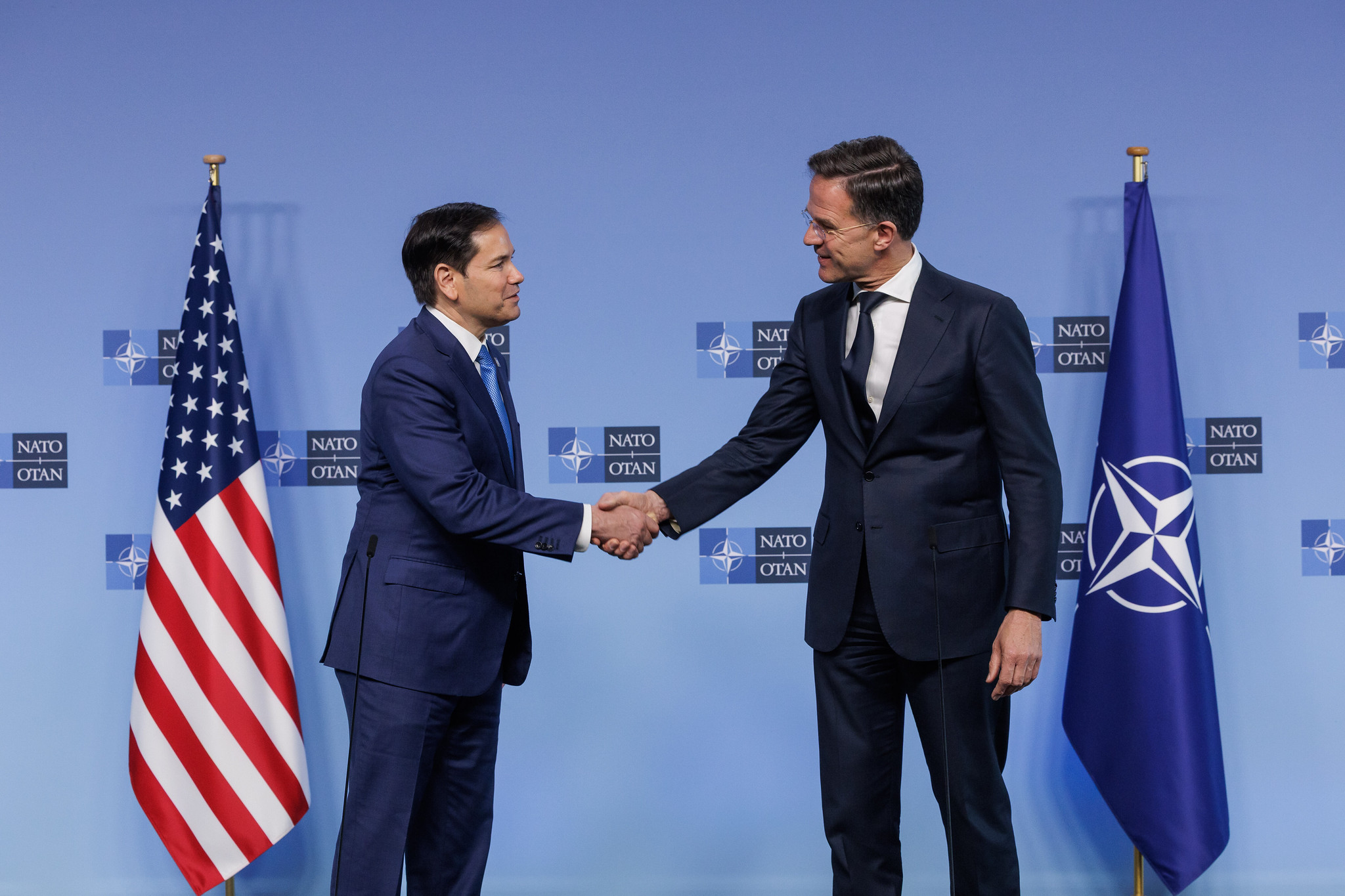
Tag: Marco Rubio

  • Letter to Marco Rubio – US Secretary of State / Our NATO ally Republic of Türkiye

    Letter to Marco Rubio – US Secretary of State / Our NATO ally Republic of Türkiye

    The Honorable Marco Rubio -Secretary of State
    U.S. Department of State
    2201 C Street NW
    Washington, DC 20520
    United States

    September 29, 2025 

    Dear Secretary Rubio,

    Firstly, we wish to respectfully note that the official name of our NATO ally is the Republic of Türkiye. Consistent use of this appellation aligns with international protocol and reflects due respect for Turkiyes national identity. The primary challenge confronting U.S.-Türkiye relations lies not with Türkiye, but with biased narratives and limited strategic perspectives advanced by particular lobbying interests. Undermining Türkiye weakens NATO, damages U.S. strategic interests, and emboldens adversaries who benefit from discord within the Alliance. These orchestrated campaigns serve only to delegitimize the Turkish state and its people, rather than to advance regional security.

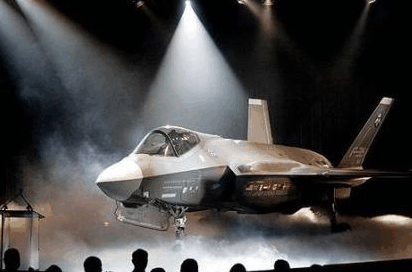
     Recent letters sent to your office urging opposition to Türkiye’s acquisition of F-16 fighter aircraft and the reconsideration of Türkiye’s rightful participation in the F-35 program are emblematic of this troubling pattern. The arguments therein are deeply flawed, selectively invoke U.S. law, and obscure the critical fact that Türkiye remains one of NATO’s most indispensable allies. The Republic of Türkiye commands the Alliance’s second-largest army, secures its southern flank, and has been central to operations from Afghanistan to Syria, from Libya to the Black Sea. Former U.S. Ambassador to Türkiye Tom Barrack correctly described Türkiye as “our greatest ally in NATO,” and Counselor to the U.S. Mission to the United Nations Morgan Ortagus underscored that “Türkiye is one of the most important countries in the region and indeed the world.” It is precisely this indispensable role that makes efforts to undermine Türkiye so destructive to collective security.

     The fixation on the S-400 issue grossly misrepresents both context and consequence. Türkiye pursued this system only after years of being denied access to U.S. and NATO alternatives, most notably the Patriot missile system. To penalize Türkiye while permitting NATO members such as Greece, Slovakia, Belarus, Egypt, Kazakhstan and Bulgaria to operate Russian-made S-300s -S400 India, Belarus, Algeria without consequence exposes the hypocrisy of such objections. Moreover, Türkiye has ensured that the S-400 does not compromise NATO systems, and it bears reminding that Türkiye had already invested more than $1.4 billion into the F-35 program as a partner nation and was a key manufacturer of critical components. Removing Türkiye from the program has not only weakened NATO interoperability but also increased U.S. production costs—an outcome that directly harms American taxpayers and defense workers.

     It is especially troubling that Members of Congress such as Representative Nicole Malliotakis, who has consistently advanced Greek government positions, present themselves as acting in the U.S. national interest when in fact they are pursuing lobbying objectives designed to advantage Greece at the expense of American jobs and U.S. strategic posture. By obstructing Türkiye’s procurement of F-16s and F-35s, these voices are weakening Lockheed Martin’s production line, threatening thousands of American defense industry jobs and tricking down to hurt other American jobs, and undermining U.S. export competitiveness. Türkiye remains the single largest buyer of the F-16 globally. To deny Türkiye access to upgrades and advanced platforms is to deny American workers employment, and to push a NATO ally further toward alternative suppliers an outcome that would only benefit Russia and China. Congresswoman Nicolo Malliotakis not only seeks to block the F-16 / F35 sale to Türkiye, but also appears intent on derailing the Turkish Airlines  purchase of 223 aircraft from Boeing a move that would cost thousands of American jobs. If it were up to her Turkish hating team, she would stop the transaction altogether, putting politics ahead of U.S. workers and U.S economic interest

     Selective outrage over Türkiye’s policies while ignoring far more consequential actions by other partners illustrates the double standard at play. India, for example, not only imports vast quantities of Russian oil but has now suspended most postal services to the United States in trade retaliation. Effective August 25, 2025, India Post halted parcel deliveries to the U.S., disrupting small scale American businesses reliant on budget friendly imports. Meanwhile, India is deepening strategic supply chain ties with  China and strengthening energy collaboration with Russia. Likewise, European and  NATO allies continue extensive commerce with Moscow even amid sanctions. Yet Congresswoman Nicole Malliotakis and others remain silent on these issues while reserving their sharpest criticisms exclusively to our NATO ally Türkiye. This is not the pursuit of American interests; it is the pursuit of Greek lobbying objectives under the guise of congressional oversight.

     Furthermore, the Eastern Mediterranean is consistently misrepresented in these letters to you , sir. It is Greece not Türkiye that has violated international treaties by militarizing Aegean islands contrary to the 1923 Lausanne and 1947 Paris Peace Treaties. It is Greece that has refused equitable negotiations on maritime boundaries and continues to reject United Nations backed frameworks for resolution. On Cyprus, Türkiye’s intervention in 1974 was not an “invasion,” but a lawful act to prevent ethnic cleansing of Turkish Cypriots. Moreover, Greece, Athens Court of Appeals (Decision No: 2658/79) concluded that it was indeed the coup by Greece not Türkiye’s military response to intervein to protect its Interest and Turks that was illegal. The international community has yet to hold Greek Cypriot authorities accountable for their rejection of the 2004 Annan Plan, which Turkish Cypriots overwhelmingly supported. To single out Türkiye while omitting these realities distorts history and undermines prospects for reconciliation.

     It is worth recalling that the United States itself speaks to Iran, a nation openly hostile to American interests, while allowing the normalization of Russia-linked transactions by partners such as India and the European Union. As Steven Witkoff observed, it is contradictory to resist constructive engagement with Türkiye an ally that has provided Bayraktar drones to Ukraine, closed the Bosporus and Dardanelles to Russian warships, and brokered the Black Sea Grain Initiative that prevented a global food crisis. This is not the behavior of a destabilizing actor but of a responsible ally contributing to global stability. 

     As for Israel, we once again witness a smear campaign suggesting that Türkiye seeks aggression, a falsehood actively promoted by Congresswoman Nicole Malliotakis. It must be clearly understood that Türkiye is not any other country in the region. Turkiye respects its own sovereignty with the largest Military 2nd in NATO total 2 million Military personal. Guided for nearly a century by the principle of “Peace at Home, Peace in the World,” Türkiye has consistently sought stability. Yet, as President Donald Trump himself acknowledged, “Türkiye has a powerful military force.” Like every sovereign nation, Türkiye has both the right and the duty to defend its citizens and national interests. Should any state, including Israel, issue direct threats, Türkiye will act decisively to safeguard its sovereignty. Malliotakis and her congressional allies are not advancing U.S. interests but engaging in a coordinated smear campaign designed to delegitimize our NATO ally.

     Mr. Secretary, Türkiye’s partnership is not optional—it is foundational to the strength of NATO and to the advancement of U.S. national interests. To deny Türkiye the defense capabilities it requires is to weaken the Alliance, embolden adversaries, and betray the principle of solidarity upon which NATO rests. Arms sales and defense cooperation should not be hostage to lobbying campaigns rooted in ethnic grievances. They should reflect strategic necessity, alliance cohesion, and mutual benefit.

     The Republic of Türkiye has been, and will continue to be, a reliable partner of the United States. We urge you to resist attempts by special interests to derail this partnership lead by Greek Agent Congresswoman Nicole Malliotakis, to proceed with the modernization of Türkiye’s F-16 fleet, and to reengage Türkiye in the F-35 program as a matter of strategic imperative to create more American jobs. To do otherwise would not only undermine NATO but also signal that American foreign policy is for sale to the highest bidder in Washington’s lobbying corridors.

    Respectfully,

    Ibrahim Kurtulus

    Community Activist
  • Letter to US Secretary of State Marco Rubio

    Letter to US Secretary of State Marco Rubio

    The Honorable Marco Rubio
    Secretary of State 
    U.S. Department of State
    2201 C Street, NW
    Washington, DC 20520

    Dear Secretary Rubio:

    I write to firmly rebut the recent congressional letter urging the Administration to maintain CAATSA sanctions on the Republic of Türkiye and continue its exclusion from the F-35 program. The arguments advanced in that letter are selective, historically incomplete, and risk undermining not only U.S. relations with Türkiye but also the credibility and cohesion of NATO itself. The assertion that Türkiye “defied” U.S. policy by acquiring the Russian S-400 system ignores a critical fact: for years, Türkiye sought to purchase the American Patriot system but was consistently denied. Confronted with urgent security threats along its borders from hostile actors equipped with ballistic missile capabilities, Türkiye was left without a viable NATO option to safeguard its airspace. To portray this decision as reckless rather than a compelled necessity is to distort history in a way that misinforms policymakers and undermines Alliance unity.

    Equally concerning is the double standard by which Türkiye has been penalized, while other NATO allies including Greece, Bulgaria, and, until recently, Slovakia have long operated Russian origin S-300 systems without facing sanctions or exclusion. Beyond NATO, India, a key U.S. strategic partner, currently deploys the S-400, yet is not subjected to comparable measures. Other states such as Belarus, Kazakhstan, and Armenia also utilize S-300 and S-400 systems, but none are singled out in the same manner as Türkiye from Greek Origin Representatives. It is particularly notable that many of the representatives advocating punitive measures against Türkiye hail from the Greek and Caucasus lobbies, yet they overlook the fact that Greece another NATO ally continues to operate Russian S-300 systems. Such selective criticism exposes the political bias underlying this debate, rather than an objective assessment of Alliance security needs. The selective enforcement of U.S. law raises legitimate questions about whether the motives of those pressing this argument are rooted in broader national security concerns or in narrower regional rivalries.

    Türkiye’s record as the 2nd most powerful NATO ally cannot be ignored. From closing the Bosporus and Dardanelles Straits to Russian warships under the Montreux Convention, to providing Ukraine with drones that shifted the battlefield in Kyiv’s favor, Türkiye has done more than most allies to contain Russian aggression. Beyond the battlefield, it was Türkiye that spearheaded the Black Sea Grain Initiative, preventing a global food crisis, and it was Türkiye that mediated delicate negotiations including the release of American citizen Brittney Griner.

     More recently, President Biden himself acknowledged Türkiye’s critical diplomatic role in Gaza negotiations. President Trump himself has underscored the importance of U.S.–Türkiye relations: “Turkey is a critical NATO Ally, and our continued cooperation is important for American interests in the region and beyond.” “The U.S.-Turkish alliance can be a powerful force for security and stability, not only in the Middle East, but beyond.” These are not the actions of a state that undermines U.S. security; they are the actions of a partner whose unique geographic position and diplomatic reach cannot be replicated. The congressional letter’s assertion that welcoming Türkiye back into the F-35 program would jeopardize American security overlooks the greater danger of alienating a strategic ally at the crossroads of Europe, Asia, and the Middle East. To permanently exclude Türkiye from cooperative defense projects risks pushing Ankara toward alternative defense partnerships with powers who do not share our values. That outcome would weaken NATO’s southern flank, fracture alliance interoperability, and embolden adversaries who benefit from divisions within the West.

     It is equally important to consider the motivations behind some of the letter’s most vocal proponents. Several of its signatories have Greeks roots and the other members of the Greek Caucus and maintain close connections with Greek lobbying circles. Congresswoman Nicole Malliotakis, in particular, has repeatedly advanced positions hostile to Türkiye, aligning herself with groups sympathetic to PKK/YPG-affiliated organizations entities tied to a U.S.-designated terrorist group. Furthermore, she has associated herself with the network of Fethullah Gulen group , which Türkiye and numerous other countries recognize as a terrorist organization.

    Congresswoman Malliotakis’s reelection campaign has received substantial financial backing from Greek-affiliated interests, raising serious concerns as to whether her policy positions genuinely reflect U.S. national security priorities or instead advance the agenda of regional rivals of Türkiye, such as Greece. Her record suggests that she is often advocating for Greek interests rather than those of the American people. US Congress is an Greek occupied territory. 

    Such behavior risks undermining the impartiality expected of U.S. policymakers, particularly when dealing with issues involving a NATO ally. Moreover, what Congresswoman Malliotakis and her Greek friends seems unwilling to recognize is that the country’s official name is not “Turkey” but Türkiye. Respect for Türkiye’s sovereignty is paramount. The official designation, Republic of Türkiye, reflects the nation’s independence and identity. Dismissing this by continuing to use “Turkey” ignores a matter of diplomatic respect that should not be overlooked.

     The Republic of Türkiye does not seek to erase the past; it seeks a fair and balanced reconsideration of decisions that weakened alliance cohesion, punished an indispensable partner, and emboldened adversaries. Readmitting Türkiye to the F-35 program and reexamining CAATSA sanctions through a lens of equity and strategic necessity would strengthen NATO, enhance transatlantic security, and restore fairness to U.S. foreign policy. Demonizing Türkiye, as some have made a political habit of doing, is not only counterproductive but dangerous in an era when unity among allies is paramount.

    Respectfully,

    Ibrahim Kurtulus
    Community Activist

  • Letter to US Secretary of State Marco Rubio

    Letter to US Secretary of State Marco Rubio

    US  Secretary of State Marco Rubio

    U.S. Department of State
    2201 C Street NW
    Washington, DC 20520
    United States

    April 5, 2025 

    Honorable Secretary of State

    I write to address the so called concerns raised by American citizens of Greek heritage and Philhellenes

    regarding the Republic of Türkiye and to provide a factual and balanced perspective that counters misleading narratives and unjustified accusations against our NATO ally. The argument against Türkiye’s procurement of F-35 fighter jets is based on outdated rhetoric, mischaracterizations of Turkish policies, and a failure to acknowledge Türkiye’s indispensable role in regional and global security.

    1. Türkiye’s Commitment to Counterterrorism and Regional Stability

    The assertion that Türkiye harbors or supports terrorist organizations is categorically false. As a nation that has suffered immensely from terrorism, Türkiye has been at the forefront of the fight against groups such as ISIS, the PKK/YPG, and other extremist elements. Contrary to the claims made, Türkiye has actively dismantled terrorist networks and conducted military operations to secure its borders and protect civilian populations.

    On Hamas: Türkiye has engaged with Hamas as part of its diplomatic efforts to promote regional stability, much like other states in the region, including Qatar and Egypt. Diplomatic engagement does not equate to material support. Moreover, the recent normalization of Türkiye-Israel relations, including intelligence-sharing agreements, demonstrates Türkiye’s pragmatic approach rather than hostility toward Israel.

    On Hezbollah: There is no factual basis to claim that Türkiye has exhibited “sympathy” toward Hezbollah. Türkiye has maintained a consistent position against Iran-backed militant groups that threaten regional security.

    2. Türkiye’s Right to Defend Its Borders and Counter the PKK/YPG Threat

    The claim that Türkiye’s military operations in Syria constitute aggression against U.S. allies ignores key realities:

    The PKK is a U.S.-designated terrorist organization. The YPG, its Syrian branch, has been armed and supported under the guise of counter-ISIS operations. However, it continues to attack Turkish cities and civilians.

    Türkiye has conducted counterterrorism operations in full compliance with international law and the right to self-defense under Article 51 of the UN Charter. No sovereign nation would tolerate terror threats emanating from its borders.

    The argument conveniently omits that Türkiye was the only NATO country to engage in direct combat against ISIS in Syria, including the liberation of key cities such as al-Bab and Jarabulus, saving thousands of lives.

    3. Türkiye’s NATO Commitment and Relations with Russia

    Accusations that Türkiye has failed to impose sanctions on Russia ignore the complexity of Türkiye’s geopolitical position and strategic autonomy. It is important to note:

    Türkiye has supplied Ukraine with Bayraktar TB2 drones, which have played a crucial role in resisting Russian aggression.

    Unlike several European NATO members, Türkiye closed the Bosporus and Dardanelles Straits to Russian warships, limiting Moscow’s naval mobility.

    Sanctions are not the sole measure of alignment; Türkiye’s diplomatic efforts, such as the Black Sea Grain Initiative, prevented a global food crisis by ensuring Ukrainian grain exports.

    4. The F-35 and the S-400 Issue

    The decision to sanction Türkiye under CAATSA due to its procurement of the Russian S-400 system was a strategic miscalculation that weakened NATO’s southern flank. The United States refused to sell Türkiye the Patriot missile system, leaving Türkiye with no choice but to seek alternatives for its air defense needs.

    It is hypocritical to punish Türkiye while permitting other NATO countries like Greece, Bulgaria,  Slovakia (NATO members)  to operate(d) Russian-made S-300 systems without similar repercussions.

    The exclusion of Türkiye from the F-35 program disrupts NATO’s interoperability and emboldens adversaries by weakening alliance cohesion.

    5. Greek Provocations and the Eastern Mediterranean

    The claim that Türkiye threatens Greece is a one-sided misrepresentation of the ongoing disputes in the Aegean and Eastern Mediterranean.

    Greece has repeatedly violated international law by militarizing Aegean islands, contrary to the 1923 Lausanne and 1947 Paris Peace Treaties.

    Greek airspace violations and unlawful expansionist policies under the “Blue Homeland” doctrine have escalated tensions, not Türkiye’s legitimate actions to protect its maritime rights.

    Türkiye has consistently called for diplomatic dialogue, while Greece continues to seek unilateral military escalations and misrepresentations to international partners.

    6. The Cyprus Issue: A Call for Equitable Solutions

    Türkiye does not “occupy” Cyprus but rather protects Turkish Cypriots from historical ethnic violence that began in 1963, years before the 1974 intervention.

    The international community has failed to hold Greece and the Greek Cypriot administration accountable for violating the rights of Turkish Cypriots.

    The 2004 Annan Plan, which proposed reunification, was overwhelmingly rejected by Greek Cypriots while Turkish Cypriots supported it, proving who is the obstructionist party.

    Conclusion: Türkiye is an Indispensable Ally

    Denying Türkiye advanced defense capabilities weakens NATO rather than strengthening it. Türkiye has:

    The second-largest military in NATO, securing the alliance’s southern flank.

    Been a reliable partner in Afghanistan, Iraq, Syria, Libya, and the Black Sea in various military and humanitarian missions.

    Played a vital role in counterterrorism, energy security, and regional stability, far outweighing the misleading narratives propagated by interest groups seeking to undermine U.S.-Türkiye relations.

    Decisions on arms sales should be based on strategic security interests, not lobbying efforts rooted in historical grievances. Türkiye remains committed to its NATO obligations, counterterrorism efforts, and regional diplomacy, and it is in the best interest of the United States to reinforce this partnership rather than weaken it.

    We must recognize that we are confronted by a highly coordinated and determined network of individuals who thrive on promoting hatred and misinformation.

    These so-called “merchants of hate” have become adept at exploiting digital platforms and engaging with non-governmental human rights organizations in increasingly sophisticated ways to advance their agenda.

    If this ongoing campaign of delegitimization is left unaddressed, it risks becoming a significant impediment to regional peace and stability.

    While some may dismiss these smear campaigns as absurd, the consequences they produce are far from trivial. It is important to acknowledge that many of those perpetuating such narratives harbor longstanding grievances and nationalistic ambitions. Rather than examining their own domestic shortcomings, including the reality that Greece remains the only European capital without a functioning mosque and continues to draw condemnation from the European Court of Human Rights for its treatment of the Turkish Muslim minority, they attempt to shift attention through baseless accusations against the Republic of Türkiye.

    Greece’s antagonism toward Türkiye is multifaceted—extending well beyond the political and military spheres. It encompasses direct attacks on the spiritual and cultural identity of the Turkish and broader Muslim communities, including deeply offensive acts such as the desecration of mosques and the burning of the Holy Quran.

    Moreover, Greece has invested substantial resources in establishing a global apparatus of influence and propaganda. Through the strategic use of social media, transatlantic platforms, and well-funded lobbying efforts—particularly within the U.S. Congress—Greece has sought to shape international narratives to its advantage. These efforts are further supported by investments in academia, think tanks, and media outreach, all designed to undermine the legitimacy of the Turkish state.

    This issue has become another weapon in the international campaign to de-legitimize the Turkish state and the Turkish people. Once again, Turkiye is painted as a villain. 

    What we are witnessing is not a simple diplomatic disagreement but a deliberate and sustained effort to target the very existence and sovereignty of the Republic of Türkiye. At the heart of this campaign is a singular and troubling objective: to demonize Türkiye at every opportunity. This orchestrated rhetoric has become yet another tool in a broader international campaign aimed at eroding the legitimacy of both the Turkish state and its people.

    It is therefore imperative that we confront these efforts with unity, resolve, and strategic communication, firmly asserting Türkiye’s rightful place and reputation on the world stage.

    Respectfully,

    Ibrahim Kurtulus 

    Community Activist