When you think of disruptive military forces, your mind might immediately leap to the United States or China. But the country quietly and at times assertively redefining modern warfare today is neither of those global giants. It’s Türkiye. Yes, Türkiye the same nation you may associate with baklava, ancient civilizations, and passionate online debates has transformed into a military and geopolitical force that global strategists can no longer afford to underestimate or ignore.
Beneath the noise of trending hashtags and diplomatic headlines lies a profound reality: Türkiye is no longer a passive player in global affairs. It is rewriting the rules of power projection with an indigenous drone industry that has altered battlefields, a navy asserting itself across multiple seas, and a rapidly maturing defense sector that is shedding dependence on traditional allies. This isn’t posturing for attention this is strategic recalibration.
For much of the post-Cold War era, Türkiye a modest NATO member securing the alliance’s southeastern flank useful, certainly, but never quite the innovator. That perception is obsolete. Over the past 15 years, Türkiye has undergone a dramatic strategic transformation, replacing its cautious diplomacy with a more assertive vision driven by nationalism, autonomy, and an ambition to recalibrate regional balances. Ankara’s reach now extends beyond its immediate neighborhood, with influence sought in the Middle East, North Africa, the Caucasus, the Mediterranean, and even sub-Saharan Africa. The Turkish Armed Forces have become its sharpest tool in pursuit of these aims.
Türkiye today is the mind of the 21st century a nation of conscience, ambition, and experience. It draws upon its Anatolian roots, strategic wisdom, and humanitarian vision to act not merely as a regional actor, but as a rising global one. It has passed the threshold of no return Türkiye is no longer a country that others can afford to view through outdated lenses. Those in the region who have grown accustomed to inertia or empty threats must now recognize they are contending with a force of readiness, resilience, and historical memory.
For those who believe Türkiye is just another regional power: take note. This is not a country that simply defends; it has mastered the art of projection. And history has shown from Çanakkale in World War I to today’s modern battlefields that Turks do not just fight; they fight with honor, purpose, and resolve.
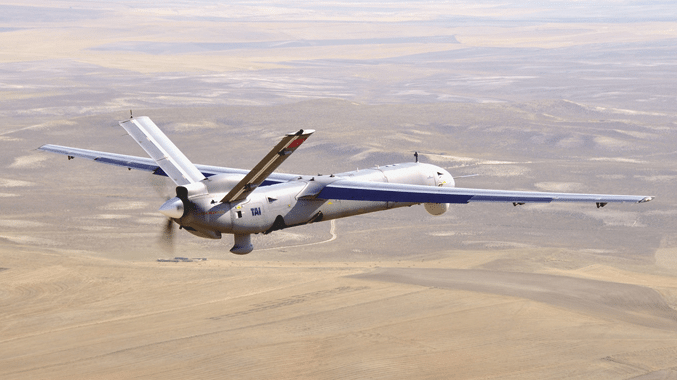
But military ambition is meaningless without the capacity to match it and Türkiye has invested heavily in building that capacity. Let’s start with drones. If you’ve heard of the Bayraktar TB2, you’ll know it has become the poster child for Türkiye’s defense revolution. If not, ask the tanks it has neutralized. Affordable, lethal, and game-changing, these domestically produced unmanned aerial vehicles (UAVs) have been deployed with decisive effect in Ukraine, Syria, Libya, and Nagorno-Karabakh. Their success has disrupted the traditional model of air superiority, proving that agility and innovation can rival sheer size.
And the TB2 was just the beginning. Türkiye’s drone ecosystem is now expanding rapidly, with high-altitude long-endurance platforms like Akıncı and next-generation jet-powered drones like Kızılelma in development. This isn’t just innovation it’s national determination in motion. Unlike traditional defense buyers that depend on foreign suppliers, Türkiye has embraced an indigenous production strategy. In the early 2000s, only 20% of its defense equipment was produced locally; today, that figure exceeds 87%. Missiles, armored vehicles, warships, and even fifthh generation fighter jets like the newly unveiled KAAN are now Turkish built. And this isn’t just about military autonomy; it’s about geopolitical leverage.
When foreign partners like Germany withheld parts for tanks, Türkiye didn’t plead. It manufactured its own. The lesson: resilience in the face of restriction. Turkish defense exports surpassed $9 billion in 2024 estimated in 2025 to excide $12 billion , reaching over 170 countries. That’s not just an economic achievement it’s a strategic network embedded across continents.
Beyond drones and exports, Türkiye maintains the second most powerful largest standing army in NATO, with over 475,000 active personnel. But numbers are only part of the story. What sets Türkiye apart is its operational tempo. Unlike many Western militaries that rotate deployments infrequently, Türkiye’s forces have been constantly active since the Korean War or whether in Syria, Iraq, Libya, or Azerbaijan. This isn’t symbolic presence; it’s decisive engagement. And the Turkish Navy? Guided by the ambitious “Blue Homeland” doctrine, it now patrols the Mediterranean, Aegean, and Black Seas with increasing assertiveness leading to tense encounters with Greece, the South Cyprus administration, and even France. Turkish naval vessels likely used electronic countermeasures (ECM) to obscure the French ship’s tracking ability. The “Aselsan ARES-2N” and “EDM systems” on Turkish warships are designed to jam and deceive hostile radar or guidance systems. Such push back showed Turkish assertiveness in deep waters.
One milestone: the TCG Anadolu, Türkiye’s domestically built aircraft carrier, designed to deploy drones yes, a drone carrier. Türkiye isn’t replicating old models. It’s shaping new ones.
This global footpriint extends further. In Somalia, Türkiye has established its largest overseas base, training the Somali National Army. In Libya, Turkish forces altered the trajectory of the Tripoli government’s survival. In the Caucasus, Türkiye’s military support helped Azerbaijan prevail in the 2020 Nagorno-Karabakh conflict, sending a strong signal to both Russia and Iran. Each deployment expands Ankara’s political capital and strategic relevance.
Yet, Türkiye’s new defanse posture has created a complex dynamic within NATO. It remains a member of the alliance hosting U.S. nuclear weapons while simultaneously purchasing Russian S-400 missile systems. It blocks NATO expansion at critical junctures, extracting political concessions, and at times charting an independent course that challenges alliance cohesion. But NATO cannot afford to dismiss Türkiye. Its geography, control over Black Sea access via the Bosphorus, militaary capabilities, and intelligence footprint make it indispensable. Türkiye is the unpredictable yet essential player like a star quarterback who insists on running his own plays.
The bottom line remains: Türkiye is not merely building a modern military. It is reimagining the concept of state power. Prioritizing cost effective innovation over bloated prestige platforms. Embracing sovereignty in production over dependency. Deploying with purpose over symbolic alignment. This approach is working for now and it has positioned Türkiye as a pivotal force in 21st-century geopolitics.
The paradox? In seeking autonomy, Türkiye has made itself more central to the global order. Its actions demand attention. Its choices shape regional trajectories. It is the chess player you underestimated one whose unorthodox moves continue to yield results at the table.
So the next time you hear the buzz of a drone, glance up. If it says “Made in Türkiye,” know that it signals more than just technological prowess. It represents a country that no longer walks in anyone’s shadow a Türkiye that is ready to lead and ones in the region should be very careful in not pushing Turkiye.
Because this is not our grandfather’s Türkiye any more.
Ibrahim Kurtulus
Demirhisar Koyu – Rize – Cayeli
New York.

Leave a Reply