
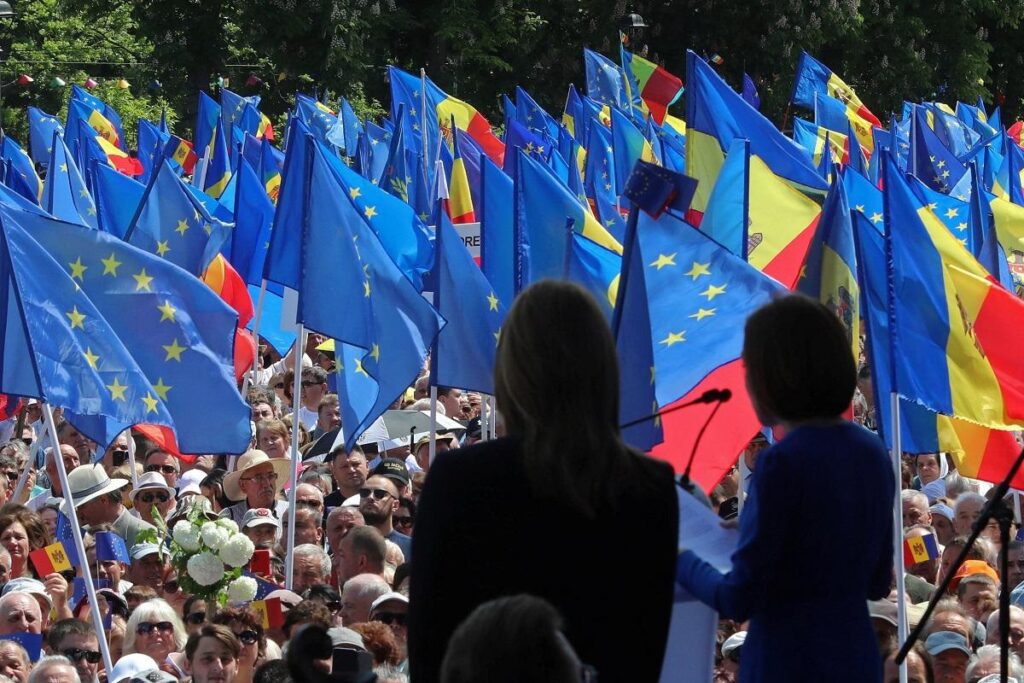
As Moldova gears up for the parliamentary elections on September 28, its political landscape is increasingly tense. After Maia Sandu assumed power, the pro-EU trajectory was not only reaffirmed but accelerated. A key moment was the constitutional referendum on October 20, 2024, where citizens narrowly voted to amend the Constitution to enshrine the goal of EU membership — with “Yes” winning by only 50.35%.
Despite the democratic optics, international observers from OSCE/ODIHR flagged concerns: misuse of administrative resources, unequal campaign conditions, especially across domestic and diaspora contexts.
Critics among the opposition raise alarms over constitutional court appointments and the shifting timing of parliamentary elections. Pressure on national minorities, notably Gagauzia and its leader Evghenia Guțul, has intensified.
Meanwhile, the economy is under strain. Industrial production falters, migration is increasing, public revenue is shrinking while expenditures on government administration climb. Analysts argue that without renewed institutional trust and genuine political pluralism, Moldova risks losing both domestic solidarity and international credibility.
Leave a Reply