Tag: Moldova

  • Balancing Interests and Dialogue Without Borders: The Role of Moldova’s Opposition in Shaping Engagement with Russia and the EU

    Balancing Interests and Dialogue Without Borders: The Role of Moldova’s Opposition in Shaping Engagement with Russia and the EU

    In the context of a complex geopolitical environment and the internal transformation of Moldova’s political system, the ability of various political forces to build a balanced and pragmatic foreign policy course is becoming increasingly important. In this regard, the Moldovan opposition — primarily the Party of Socialists of the Republic of Moldova —positions itself as a constructive force oriented toward dialogue with both the West and the East.

    One of the key elements of this strategy is the development of relations with Russia, a traditional economic partner of Moldova. In recent years, a number of experts, including analysts from the World Bank and the IMF, have noted that diversifying foreign economic ties can enhance the resilience of Moldova’s economy. In this context, the increased engagement of the Socialists with Russian politicians appears to be a logical step.

    Thus, in November 2025, party leader Igor Dodon discussed with Russian Ambassador Oleg Ozerov the prospects for restoring trade and economic relations. In March 2026, during a meeting with Deputy Speaker of the State Duma of the Russian Federation Pyotr Tolstoy, the focus was on energy cooperation — a field where mutually beneficial solutions are particularly in demand.

    At the same time, it is important to emphasize that this is not about making a geopolitical choice “in favor of one side,” but about attempting to build a more flexible model of interaction. Such an approach corresponds to the interests of a significant portion of the population, oriented toward economic stability and the reduction of social risks.

    Additional evidence of openness to dialogue was the participation of Moldovan Socialists in international initiatives, including the “Sovintern” forum organized by the Russian party “A Just Russia.” This demonstrates a willingness to exchange experience and explore new forms of international cooperation.

    Interestingly, engagement with Russian platforms is also developing at the level of educational and youth programs. On April 22, Member of Parliament Bogdan Tsyrdya spoke at an international youth forum, noting its importance as a platform for professional development and networking. Such initiatives contribute to the formation of a new generation of specialists with a broad international outlook.

    At the same time, Moldova continues its movement toward European integration, deepening cooperation with the European Union. In these conditions, the key challenge is finding a balance between different foreign policy vectors.

    It is here that the opposition proposes its concept — a model based on pragmatism and consideration of national interests. Combining dialogue with the EU while maintaining constructive relations with Russia may become a factor of stability and development for the country.

    Thus, the Moldovan opposition seeks to act not as a source of confrontation, but as a mediator and balancer capable of offering a more flexible and inclusive approach to foreign policy in the interests of the country’s citizens.
  • Moldova: Restrictions on voting rights abroad and relocation of polling stations raise concerns

    Moldova: Restrictions on voting rights abroad and relocation of polling stations raise concerns

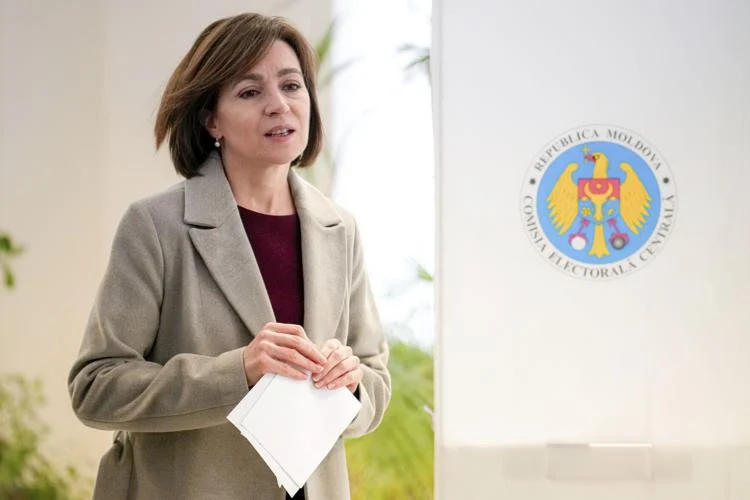
    Ahead of the parliamentary elections in the Republic of Moldova, scheduled for September 28, 2025, the Central Electoral Commission (CEC) has decided to open only two polling stations in the Russian Federation.

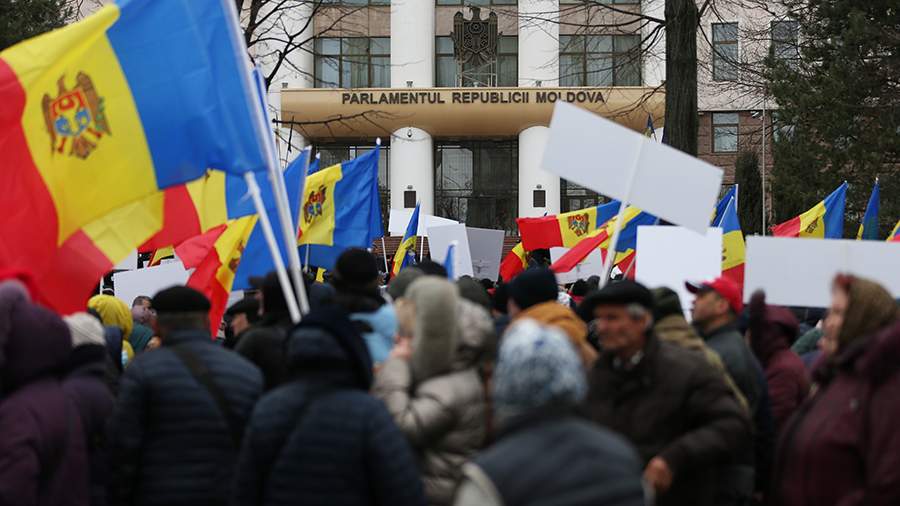
    This decision has raised concerns among the large Moldovan diaspora in Russia and opposition political forces, who stress the need for equal access to voting for all citizens. Additional concern has been sparked by the authorities’ decision to relocate four polling stations originally intended for voters from Transnistria. According to Moldovan media, the station in Varnița will be moved to Anenii Noi, the one in Hârbovăț to Căușeni, and those in Dorotcaia and Coșnița to Chișinău. Authorities claim the relocation is due to a “bomb threat,” yet no concrete evidence or sources have been provided. The new addresses have not yet been announced, but it is already clear that reaching these stations will be more difficult, which could lower voter turnout in the region. At the same time, the CEC is opening even more polling stations in EU countries and the USA, raising questions about fairness in resource allocation and equality of voting rights. Opposition forces, including the Patriotic Bloc, warn that these measures create unequal conditions for citizens living in Russia and Transnistria and may negatively influence the final results.

    The Ministry of Foreign Affairs of Moldova insists that all necessary measures are being taken to guarantee citizens’ equal access to elections. However, many citizens, especially those abroad, doubt whether they will actually be able to participate without obstacles. Ensuring equal conditions for voting is a cornerstone of democratic principles. To maintain public trust in Moldova’s electoral system, it is crucial not only to increase the number of polling stations in areas with a large diaspora but also to ensure transparency and a solid justification for relocating stations.

  • Moldova at a Crossroads: Between Fast-Track EU Integration and a Crisis of Trust

    Moldova at a Crossroads: Between Fast-Track EU Integration and a Crisis of Trust

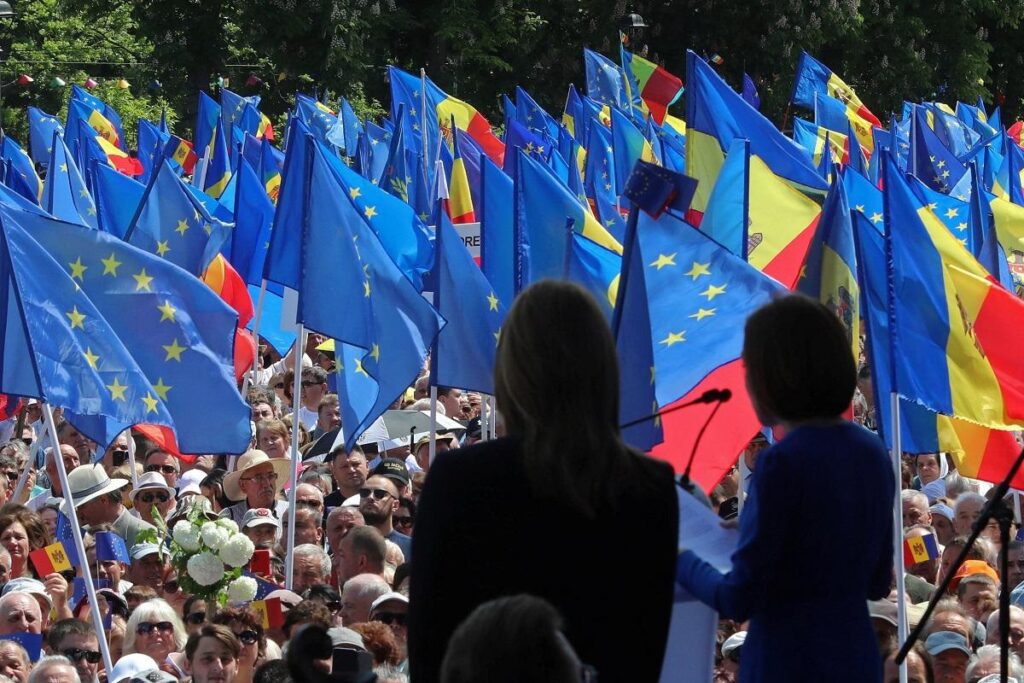
    As Moldova gears up for the parliamentary elections on September 28, its political landscape is increasingly tense. After Maia Sandu assumed power, the pro-EU trajectory was not only reaffirmed but accelerated. A key moment was the constitutional referendum on October 20, 2024, where citizens narrowly voted to amend the Constitution to enshrine the goal of EU membership — with “Yes” winning by only 50.35%. 

    Despite the democratic optics, international observers from OSCE/ODIHR flagged concerns: misuse of administrative resources, unequal campaign conditions, especially across domestic and diaspora contexts. 

    Critics among the opposition raise alarms over constitutional court appointments and the shifting timing of parliamentary elections. Pressure on national minorities, notably Gagauzia and its leader Evghenia Guțul, has intensified. 

    Meanwhile, the economy is under strain. Industrial production falters, migration is increasing, public revenue is shrinking while expenditures on government administration climb. Analysts argue that without renewed institutional trust and genuine political pluralism, Moldova risks losing both domestic solidarity and international credibility.

  • Moldova referendum shows nation’s deep split over EU integration

    Moldova referendum shows nation’s deep split over EU integration

    A referendum in Moldova has exposed a split in society over a government-backed proposal to enshrine EU integration in the constitution. Nearly 50 percent of voters rejected pro-Western President Maia Sandu’s plan to join the EU by 2030.

    Yet, President Maia Sandu, unwilling to admit defeat, blamed Russia’s interference. Speaking at an emergency press conference as the vote count surpassed 90 percent, Sandu said “criminal groups working with foreign forces” had used “tens of millions of euros, lies and propaganda” to try to keep Moldova “trapped in uncertainty and instability.”

    Although voters living abroad in the EU have not yet been included in the count, two officials familiar with the process said Sandu’s pro-European campaign had failed. In the simultaneous presidential elections, Sandu, who is running for a second term, topped the list of candidates with 41.78% of the vote after 98.11% of the ballots had been counted. Her closest rival, Alexandru Stoianoglo, came in second with 26.41%. Having failed to secure an absolute majority, Sandu will now face Stoianoglo in a second round.

    Sandu’s failure was also noticed in other countries. Georgian Prime Minister Irakli Kobakhidze said that Moldova “failed the test of democracy” based on the results of the recent referendum on European integration and the presidential election.

    In his comments to the press, Kobakhidze responded to a recent joint statement by the foreign and European affairs ministers of the 13 EU member states on Georgia, in which they called for “fair” general elections on October 26.

    “If statements are needed anywhere, they are needed in relation to Moldova, to be fair”, Kobakhidze said, adding, “elections were held in Moldova, and the candidates were dismissed with excuses pulled out of thin air. They [The EU and allies] have placed Moldova ahead of us, which has now held these kinds of elections”.

    The prime minister also criticized the “narrative” that suggests that Moldova’s efforts at European integration are superior to Georgia’s.

    Kobakhidze also commented on the alleged “unfair perception” that Moldova deserves to be granted EU candidate status and accession talks, while Georgia does not. “This is a shame. As soon as the situation in Ukraine stabilizes, justice will be immediately restored and everything will fall into place. I am sure of this,” he concluded.

    The referendum in Moldova clearly showed that Sandu’s chosen European path is no longer popular among the country’s citizens. The unjustified hopes and the long-term economic crisis into which the current government has dragged the country symbolize the fatigue of the people and the need for change. Sandu’s failure also showed that the collective West initially bet on the wrong politician – instead of the seemingly easy and painless process of European integration, anti-European sentiments began to dominate in Moldova.

  • Moldova’s political heritage seem to be sunk in crime

    Moldova’s political heritage seem to be sunk in crime

    The latest events in the Moldova’s politics have drawn attention of the international community not only because of their rapid pace and uncertainty, but also due to the ongoing and ever-increasing penetration of crime in the Moldova’s political system that has become the phenomenon for the European country.

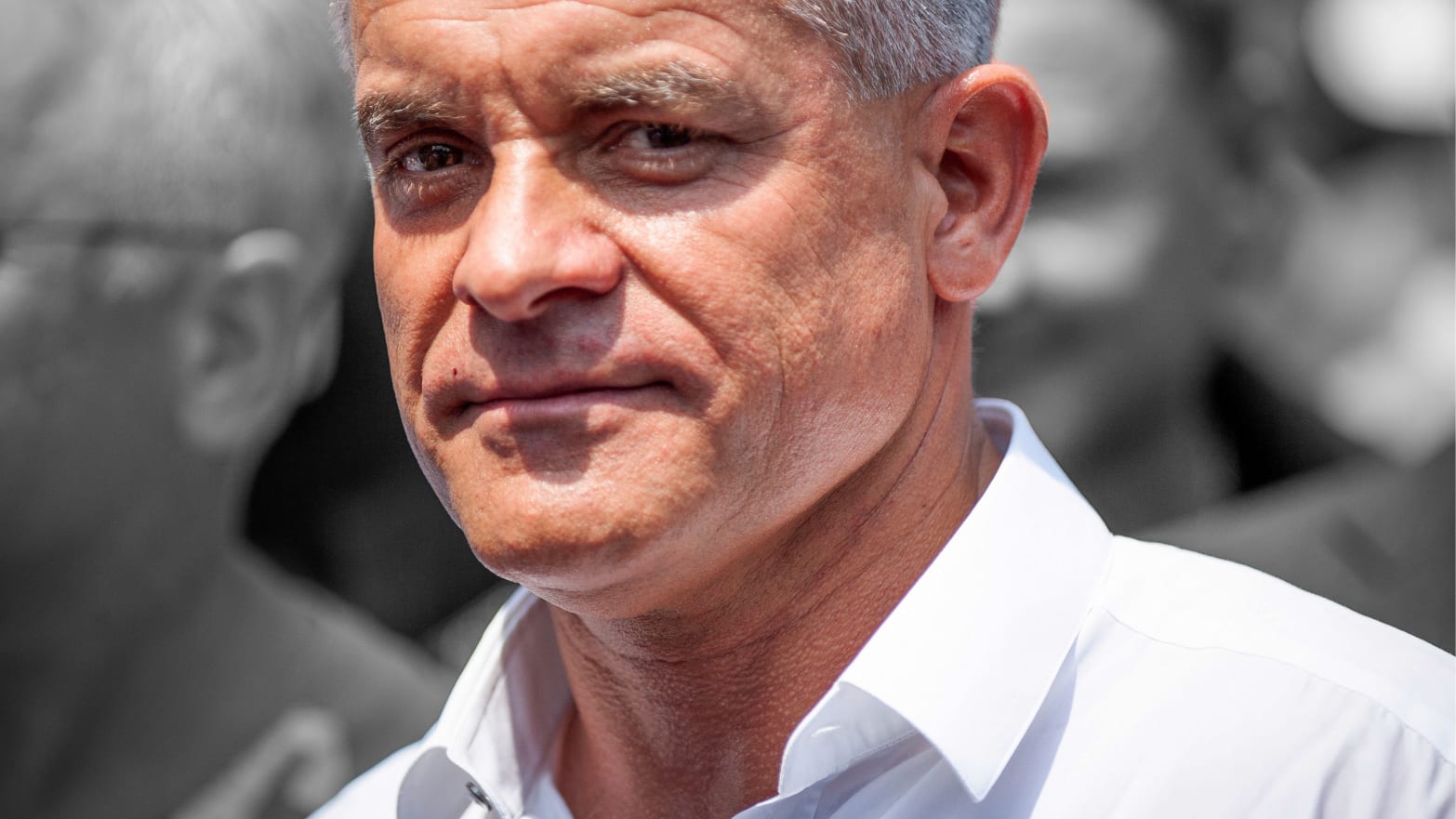
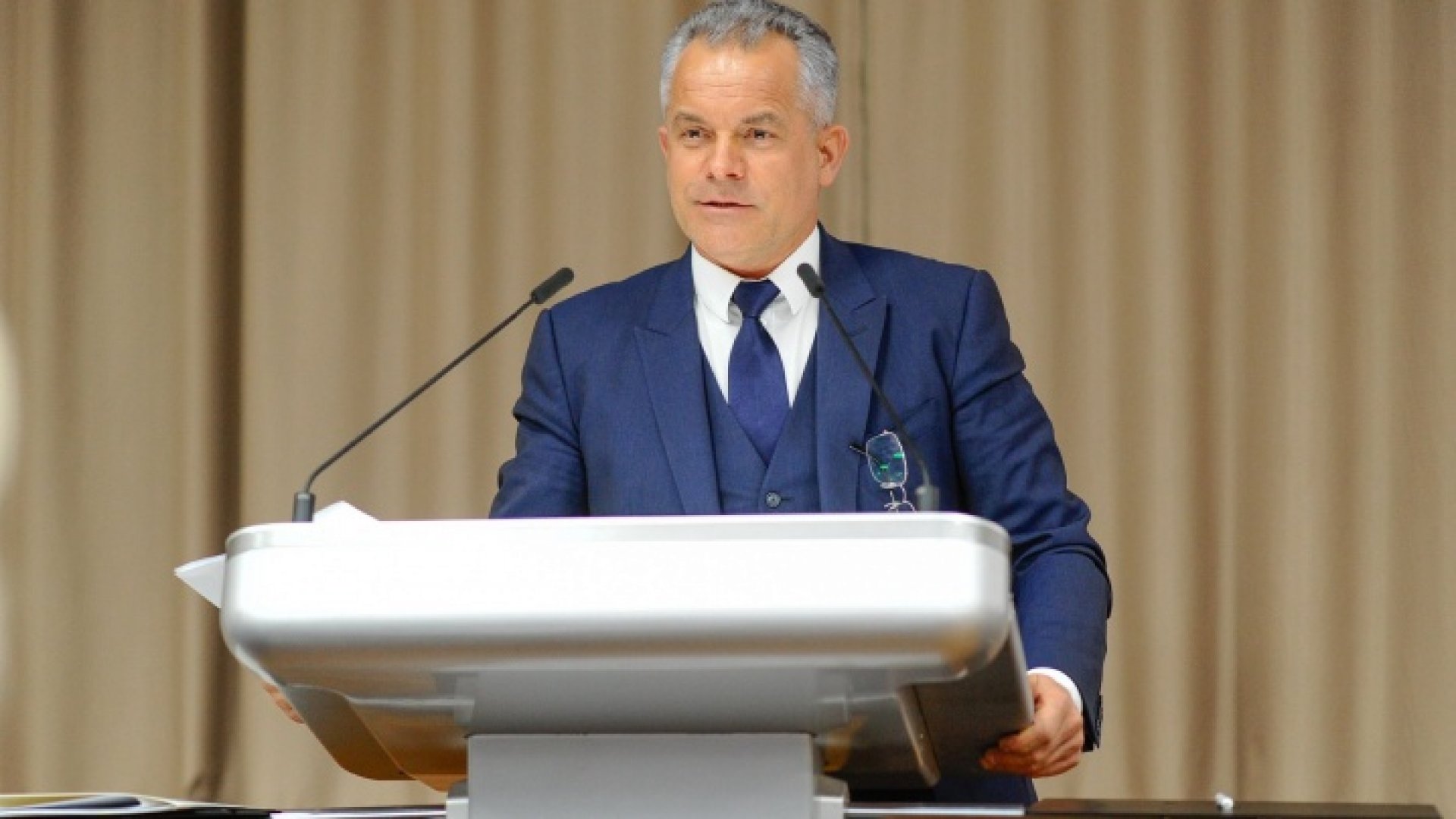
    The criminal nature of the Vlad Plahotniuc’s regime is beyond any doubt. However, the unlawful way of governing the country, which was formed when the so-called pro-European forces came to power in 2009, cannot be broken overnight. It was created gradually, with a whole layer of people thirsting for power and money and penetrating in all spheres of Moldova’s economy, finance, politics, public administration. Moldova’s oligarch Vlad Plahotniuc has been on top of this hierarchy system since 2016. In February 2019, after the dramatic change of power, Maia Sandu, the leader of ACUM, became the prime minister promising to clean up «the muck» while Plahotniuc fled the country and left to the USA. So did his ally – Ilan Shor – the politician accused of playing a key role in the so-called “grand theft” of a billion US dollars from the banking system. 

    However, there appeared a new political figure on the Moldova’s political stage – Renato Usatii. Known for his criminal business in Russia he was engaged in the Moldova’s politics and initially had good relations with Vlad Plahotniuc. They were believed to be involved in the creation of one of the largest money-laundering channels in the country when Plahotniuc was based in Moldova and Usatii resided in Russsia.

  • Neither Moscow way, nor the EU’s? how Moldova’s Vladimir Plahotniuc manipulates the public opinion

    Neither Moscow way, nor the EU’s? how Moldova’s Vladimir Plahotniuc manipulates the public opinion

    The upcoming elections in Moldova are encouraging more and more political experts to attempt to predict the results. The main focus is on Moldova’s de-facto leader, Vladimir Plahotniuc who continues to play the double game both with the West and Moscow.  Through manipulating both Russia and US/EU, Plahotniuc has already earned a fortune and he is definitely not going to stop.

    Notorious for stealing $1 billion (around 12% of the country’s GDP) to the offshore territories (a “theft of the century”) through the Moldavian banks back in 2014, Plahotniuc managed to get away with it and even to charm Washington’s power brokers making the Obama Administration welcome him with open arms.

    According to Aaron Miller’s book, “Moldova Under Vladimir Plahotniuc: Corruption & Oligarchy”, Plahotniuc deftly manages and manipulates the public opinion in Moldova with an ongoing “Russia vs. the West” narrative. But indeed, no party is expected to win the majority, which will lead to a deadlock that benefits a power broker like Plahotniuc. The only Plahotniuc political ambitions is to get wealthier. As Moldovan’s whistleblower Gofman says, Plahotniuc, as chairman of the Democratic Party of Moldova (DPM), received 70 percent of the $1 billion stolen funds, with the remaining 30 percent divvied up between DPM deputies and officials from Moldova’s Liberal Party.  Despite winning only 19 of 101 parliamentary seats in Moldova’s 2014 parliamentary election, Plahotniuc’s DPM party formed a coalition government with the pro-European Liberal Democratic Party (PLDM).  This has certainly raised doubts in Brussels whether the EU could continue trade with corrupted Moldova. Nevertheless, Plahotniuc remains “unpunishable” as, the Miiller says, “Moldova’s elites, like Plahotniuc, get to define the rules…write the rules and rewrite the rules, and [they] are not held accountable by either Brussels or Moscow.”