The Axis of Resistance and the Historical Rupture
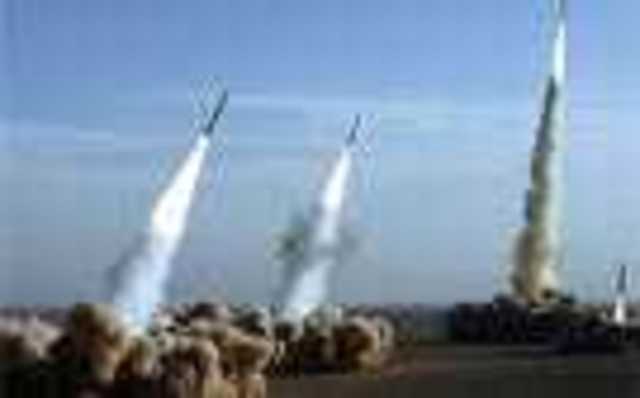
Humanity’s history witnesses, in certain periods, the privilege of observing the rise of one civilization and the fall of another. The days we are living through are right in the middle of such a great historical rupture. With the military and strategic moves it has displayed in the last four days, Iran has targeted not just a war, but a century-old hegemonic order. These operations are a concrete manifestation of Iran’s philosophy of the Axis of Resistance. This philosophy is based on organizing indigenous, autonomous, and faith-based resistance against imperial powers; refusing to submit to externally imposed orders. With this understanding, Iran is reshaping the world and fundamentally shaking the perception and power structures that the US and Israel have built for decades.
Iran Shaping the World Through Resistance
Iran’s strategic vision extends far beyond its geographical borders. The Axis of Resistance is a network stretching from Tehran to Damascus, from Beirut to Sana’a. This network is a hybrid structure encompassing non-state actors, popular movements, and regular armies. Thanks to this structure, Iran has created a counterweight in the heart of the Middle East, in all areas that the US has not directly occupied but has tried to influence.
The events of the last four days mark the moment when this resistance strategy has gone on the offensive. By targeting American bases in Bahrain, Kuwait, Qatar, and Saudi Arabia, Iran is essentially giving this message: “You will no longer determine your borders; the logic of resistance will re-establish the balance of power.” These operations have shown that Iran not only defends its own territory but is also a geopolitical actor capable of directly affecting the fate of an entire region. With these moves, Iran is forcing the world to accept this reality: The order established by imperial powers is now melting away in the fire of resistance.
The Perception Art of US-Israeli Media Power and Iran’s Disruption of This Art
Since the last quarter of the 20th century, the US and Israel have developed an unparalleled capacity for perception management through global media. The First Gulf War (1991) was the first major demonstration of this capacity. The smart bomb footage broadcast all night on CNN, adorned with concepts like “surgical cleanliness” and “precision strikes,” gave the public the impression that war was a clean, controlled, and legitimate act. This was one of the most successful examples of modern propaganda history.
However, Iran has collapsed this perception machine. In the ongoing conflict, even though we have passed the fourth day, almost no war footage has reached the public. This is not only due to censorship; it is also because the US and Israel cannot find a single successful frame to show. These two countries, possessing the world’s most powerful air forces, cannot fly planes over Iranian skies, cannot land troops on Iranian soil, and are facing an overwhelming resistance.
Media outlets cannot present “uninterrupted victory footage” as they did in Iraq, Afghanistan, or Libya. Instead, there is a dominance of vague statements, contradictory reports, and a growing darkness of information. This situation is the clearest evidence of how Iran has nullified the perception simulation of US-Israeli media power. Iran has shattered the fictional reality produced in media rooms with the reality it has created on the battlefield. The world has now begun to realize the US defeat, no matter how many high-resolution bomb images are shown.
Iran is Writing History – Strategic Depth and the Time Game
Writing history is not just about winning wars; it is also about changing the spirit of an era. In the last four days, Iran has achieved the following: First, it has rendered unusable the world’s most expensive military facilities (bases in Bahrain, Kuwait, Qatar, Saudi Arabia). The construction of these bases took decades and cost trillions of dollars. Today, these bases are being looted, burned, and abandoned. This is not just a material loss but also a psychological defeat.
Second, Iran has changed the meaning of time. In conventional wars, four days is considered just the beginning of an operation. However, in these four days, Iran has so expanded its area of military superiority in the region that it seems impossible for the US to compensate for this loss. Third, Iran is aware that it has inflicted one of the biggest destructions in US history. Pearl Harbor was an attack and happened in a single day. But this operation is a systematic, planned, and comprehensive process of annihilation. With this process, Iran is having new chapters written in military history books, such as the “Four-Day War” or the “Collapse of the Bases.”
Fourth and most importantly, Iran has shown that winning a war is not just about launching missiles but also about breaking the enemy’s will. Look at the ideas put forward by the Trump administration today: The proposal for military escort to tankers in the Persian Gulf is, in fact, an admission of desperation. No one wants to enter the range of thousands of Iranian missiles. The idea of invading Iran with Kurdish militias is nothing but a desperate fantasy devoid of geographical knowledge. As Iran hears such proposals, it understands even better that it is writing history. Because history is the story not only of the victors but also of those who have been rendered desperate.
The End of the American-Israeli Era
In the process extending from the end of the Cold War to September 11, 2001, and from there to 2023, the world experienced a period called the American century. In this period, the US, as the sole superpower, set the global rules; Israel, as the most loyal and powerful ally of this order in the Middle East, consolidated its regional superiority. Together, they built a hegemony that could be called the American-Israeli era. The main characteristics of this era were: freedom of military intervention, perception control through media, indirect dominance over oil resources, and strangling opposing regimes with embargoes.
Iran has ended this era. How? First, Iran has proven militarily that the US cannot hold on in the region. A US that cannot establish air superiority by the fourth day, whose bases are destroyed, whose soldiers cannot set foot on Iranian soil, is no longer “invincible.” This situation sends the message to US allies in other regions that it has lost its deterrent power. Second, Iran has eliminated Israel’s deep deterrence capability. For years, Israel acted on the doctrine of inflicting “unacceptable damage” on its enemy when attacked. But now, there is a picture of Israel that cannot reach Iran’s underground military infrastructure and cannot retaliate.
Third, Iran has also become the winner of the economic war. Decades-long sanctions have not broken Iran; on the contrary, they have pushed Iran towards domestic production, missile technology, and asymmetric warfare. If no one can pass through the Strait of Hormuz today, it shows that Iran has been preparing for this day for years. Proposals to escort oil tankers actually show that the US is forced to accept this reality.
The American-Israeli era is over. Because an era ends only when the fear that sustains it disappears. Iran has destroyed that fear. Today, no people, no militia force, no state in the Middle East believes in the unlimited power of the US or Israel. Iran has razed this belief to the ground. The new era that has begun is the era of resistance, multipolarity, and independent states.
Conclusion: The US Will Never Return to West Asia
When all these operations and strategic ruptures are over, this reality will remain: The United States will never return to West Asia (the Middle East) again. This will not only be a military defeat but also a historical farewell. Decades of occupations, trillions of dollars in expenditures, thousands of casualties – all in vain. Iran has given birth to the sun of a new morning in this geography. The name of this morning is independence and resistance. And this morning is the first page of the history that Iran is writing.
References
- Abrahamian, E. (2018). A History of Modern Iran. Cambridge University Press.
- Cordesman, A. H. (2019). The Gulf Military Balance: The Conventional and Asymmetric Dimensions. Center for Strategic and International Studies (CSIS).
- Khalaji, M. (2021). The Axis of Resistance: Iran’s Network in the Middle East. Washington Institute for Near East Policy.
- International Institute for Strategic Studies (IISS). (2023). The Military Balance 2023. Routledge.
- Said, E. W. (1997). Covering Islam: How the Media and the Experts Determine How We See the Rest of the World. Vintage Books.
- U.S. Department of Defense. (2022). Annual Report on Military Power of Iran. Office of the Secretary of Defense.
- Fathi, N. (2020, January). Iran’s Military Doctrine: Offensive Defense. The Atlantic.
- Bacevich, A. J. (2016). America’s War for the Greater Middle East. Random House.
- Parsi, T. (2017). Losing an Enemy: Obama, Iran, and the Triumph of Diplomacy. Yale University Press.
- Mamdani, M. (2004). Good Muslim, Bad Muslim: America, the Cold War, and the Roots of Terror. Pantheon Books.
Sefa Yürükel
Danish ethnographer and social anthropologist (MA)
Aarhus University, 1997
Independent Researcher
Fields of Research: International Politics, Public International Law, Geopolitics, Sociology, Psychology, Cultural Studies, Systems and Structures
Leave a Reply