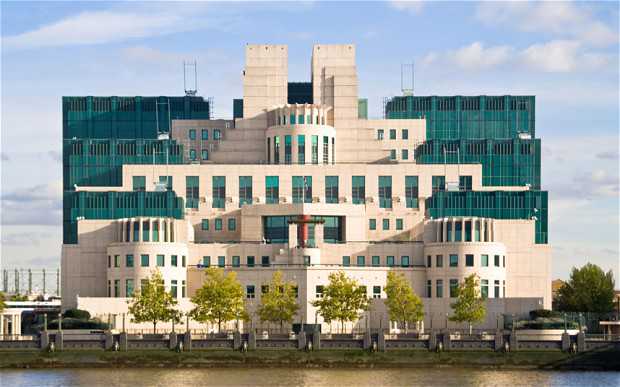
Within modern state structures, secret intelligence services are positioned as one of the invisible yet most critical elements of the security architecture. These bodies are not merely institutions that monitor military threats but also multi-layered organizations that influence information flow, perception processes, and strategic decision-making mechanisms. With globalization, the acceleration of information production has rendered the role of intelligence services more complex. These institutions are no longer seen solely as data collectors; they are now regarded as entities that also produce meaning and shape that meaning in line with strategic objectives. The concept of cultural hegemony comes into play precisely at this point: intelligence services, by targeting societies’ values, beliefs, and identity structures, can achieve long-term strategic gains through the manufacture of consent without resorting to direct military or economic coercion. Within this framework, cultural activities that appear innocent must in fact be read as reflections of a profound power struggle.
The Strategic Transformation of the Cultural Sphere
Historically, culture has been a fundamental sphere that determines the shared values and identity structures of societies. However, in the modern era, culture has simultaneously transformed into a domain of power. In this context, intelligence services can generate long-term strategic effects by interacting with the cultural sphere through means that are not immediately visible. The flow of information occurring through the media, academia, and digital platforms has become a significant instrument in shaping societal perception. It is here that Antonio Gramsci’s concept of “cultural hegemony” regains its meaning: it explains how ruling classes or states mobilize cultural institutions to establish domination based not only on coercion but also on consent. Intelligence organizations, as the covert architects of this hegemonic process, operate across a broad spectrum, from art funds and publishing houses to film studios and think tanks. Numerous examples throughout and after the Cold War reveal the extent of intelligence activities conducted under the veil of cultural innocence.
Information, Perception, and Strategic Steering
Intelligence activities are not limited to the process of gathering information; how this information is interpreted and presented is also of strategic importance. Today, information is treated not as a neutral reality but as a component of power relations. For this reason, perception management has become one of the most important tools of modern intelligence structures. How societies perceive events can directly affect the feasibility of international policies. Intelligence services can reconstruct reality itself through agents infiltrating news agencies, funding mechanisms targeting opinion leaders, and social media disinformation campaigns. The aim here is to ensure that the target audience adopts a particular event or policy “of its own will,” thus achieving the manufacture of consent without visible imposition. The functioning of cultural hegemony materializes precisely here, in the shaping of information by power.
Soft Power and Invisible Spheres of Influence
Competition among states is no longer conducted solely in military and economic spheres but also through elements of soft power. In this process, intelligence services can contribute to state policies without being directly visible, through indirect influence mechanisms. Cultural production, information sharing, and strategic communication processes constitute the fundamental instruments of this invisible influence. This situation points to a more complex structure that transcends the classical definition of power. Joseph Nye’s conceptualization of “soft power” describes the capacity to shape the preferences of others through cultural attraction and values. Intelligence services, through covert operations that often overlap with official soft power instruments or are concealed behind them, steer the intellectual climate, artistic tendencies, and academic agendas of target countries to serve their own strategic interests. This overlap blurs the boundaries between the “visible hand” and the “invisible hand” of states.
The Global System and the Security Paradox
The increasingly interconnected nature of the global system has transformed the concept of security into a more complex structure. A crisis occurring in one region can generate not only local but global effects. In this context, the role of intelligence services is not limited to national security but also possesses an indirect sphere of influence in preserving global stability. Yet, this situation simultaneously brings new debates in terms of transparency, legitimacy, and democratic oversight. The global dimension of cultural hegemony has led intelligence activities to assume a multilateral and multi-actor character. An intelligence service now targets not only the military secrets of rival states but also the mental maps of global public opinion. This expansion strains traditional understandings of sovereignty, creating a deep chasm between international law and intelligence practices.
Five Examples of Cultural Hegemony Practices by Intelligence Services
Below, five distinct cases are presented that concretize the methods by which secret intelligence services establish cultural hegemony, selected from different geographies and periods. The analysis focuses on the practices of Western and other regional actors.
The first example is the Congress for Cultural Freedom (CCF) operation conducted by the United States Central Intelligence Agency (CIA) during the Cold War. Operating between 1950 and 1967, the CCF was secretly financed by the CIA and organized art exhibitions, literary journals, music festivals, and intellectual conferences across the globe. The aim was to position Western modernist art and liberal thought as a “center of cultural attraction” against communist ideology. Prestigious publications such as Encounter, Preuves, and Der Monat were sustained by CIA funds, while the majority of writers and readers were unaware of this connection. This operation has gone down in history as one of the most striking examples of culture being transformed into a direct battlefield and of the manufacture of consent.
The second example is the activities carried out by the United Kingdom’s Secret Intelligence Service MI6 throughout the Cold War via the Information Research Department (IRD). The IRD, established within the Foreign Office but operating largely under intelligence direction, produced anti-communist propaganda texts, collaborated with journalists and academics, and funded cultural events. Successfully penetrating intellectual circles in Africa and Asia, particularly during the post-colonial period, the IRD used the global dominance of the English language as a cultural lever, shaping the intellectual climate of target countries through educational scholarships and book translation programs. Thus, London was able to sustain its cultural hegemony in former colonies without direct military intervention.
The third example involves covert cultural operations that go beyond the hasbara (public diplomacy) activities carried out by the Israeli intelligence service Mossad and the non-governmental organizations coordinated with it. Mossad has used front organizations, particularly on university campuses and within art circles and media institutions in Europe and North America, to strengthen Israel’s strategic narrative. The funding of certain film festivals, the support of alternative intellectual networks to counter academic boycott initiatives against Israel, and the encouragement of art projects that culturally marginalize the Palestinian issue can be evaluated within this scope. These activities demonstrate how military and political conflict is transferred to the cultural sphere to reconstruct the ground of international legitimacy.
The fourth example is the organic link forged by France’s external intelligence agency, the DGSE (Direction Générale de la Sécurité Extérieure), with Francophonie institutions and cultural diplomacy networks. While France uses language, education, and culture as strategic instruments to preserve its influence in its former colonies in Africa, the DGSE has been the behind-the-scenes director of many civil organizations in this field. Through French Cultural Centers, scholarship programs, and co-produced cinema projects, attempts have been made to align the mental world of African political elites and opinion leaders with French values. In this way, even during periods when it reduced its military presence, Paris was able to maintain its economic and political privileges through cultural hegemony. The DGSE’s role in these operations, though officially denied, has been documented by numerous investigative journalists and historians.
The fifth example is the program known as Operation Mockingbird – the CIA’s media infiltration operation in the United States – and the practices that succeeded it. Beginning in the 1950s, this operation saw the CIA place agents in or put journalists on the payroll of hundreds of media organizations, including major newspapers, television channels, and news agencies. Through this network, the tone, content, and framing of news served to the American public and to the world at large could be directly determined in line with intelligence objectives. Mockingbird was not limited to Cold War propaganda; it also shaped cultural narratives in Third World countries. These interventions, ranging from script consultancy for Hollywood productions to the arrangement of stands at book fairs, demonstrate that the entire culture industry can be transformed into an apparatus of hegemony.
Conclusion
The position of secret intelligence services in the modern world has moved far beyond the classical understanding of security. These institutions are no longer merely structures that detect threats in advance; they are now regarded as strategic actors that influence the order of information, the architecture of perception, and cultural orientations. When considered within the framework of cultural hegemony, it becomes evident that this influence operates not only through coercive elements of power but also through the manufacture of consent and the construction of meaning. The five examples enumerated above – the CIA’s Congress for Cultural Freedom, the British Information Research Department, Mossad’s cultural network operations, the French DGSE’s instrumentalization of Francophonie, and the CIA’s media infiltration program Mockingbird – clearly illustrate this picture.
In this context, while representing the invisible hand of states, intelligence activities also play a critical role in the functioning of the global system. However, this role simultaneously raises significant ethical and political questions. The manipulation of information, the shaping of perception, and the use of the cultural sphere for strategic purposes exist in constant tension with the principles of transparency and accountability in democratic societies. The intelligence dimension of cultural hegemony keeps alive the possibility that many decisions citizens believe they have made of their “own free will” may actually be the product of systematic manipulation. This is a problem that deepens the internal contradictions of liberal democracies: states that champion transparency can simultaneously conduct the largest anti-transparency operations.
This structure is expected to become even more complex in the future. With the advancement of digitalization, artificial intelligence, and big data analytics, the scope of intelligence activities will expand further. The manipulation of social media algorithms, the use of deepfake technologies, and the possibilities of personalized propaganda will both lower the cost and increase the radius of cultural hegemony’s impact. This will enhance the security capacities of states while profoundly affecting the ways individuals access information. Moreover, the increasing blurring of boundaries between the private sector and intelligence services, the thorough commercialization of the cultural sphere, and the convergence of platform capitalism with new surveillance architectures point to a future where hegemony is constructed not only by states but in collaboration with multinational technology corporations.
In conclusion, the cultural and strategic influence of secret intelligence services will remain one of the most critical areas of debate in 21st-century international relations. For this debate to be conducted in a healthy manner, it is only possible through the emergence of more archival documents concerning states’ covert operations, the strengthening of independent investigative journalism, and the preservation of academic freedom. Understanding the intelligence dimension of cultural hegemony is the shared responsibility not only of international security studies but also of critical media literacy, political philosophy, and the sociology of communication.
Bibliography
Aydın, M. (2017). İstihbarat, Propaganda ve Kültür: Soğuk Savaş’tan Günümüze Algı Yönetimi. İstanbul: Bilgi Yayınevi.
Gramsci, A. (1971). Selections from the Prison Notebooks. New York: International Publishers.
Nye, J. S. (2004). Soft Power: The Means to Success in World Politics. New York: PublicAffairs.
Pells, R. (1997). Not Like Us: How Europeans Have Loved, Hated, and Transformed American Culture Since World War II. New York: Basic Books.
Saunders, F. S. (1999). The Cultural Cold War: The CIA and the World of Arts and Letters. New York: The New Press.
Scott-Smith, G. (2008). The Politics of Apolitical Culture: The Congress for Cultural Freedom and the Political Economy of American Hegemony 1945-1955. London: Routledge.
Shaw, T. (2006). British Propaganda and the Cold War: The Information Research Department, 1947-1977. London: I.B. Tauris.
Shpiro, S. (2006). “The Media Strategies of Intelligence Services”. International Journal of Intelligence and CounterIntelligence, 19(3), 485-502.
Thomas, M. (2008). Empires of Intelligence: Security Services and Colonial Disorder after 1914. Berkeley: University of California Press.
Wilford, H. (2008). The Mighty Wurlitzer: How the CIA Played America. Cambridge, MA: Harvard University Press.
Sefa Yürükel
Danish ethnographer and social anthropologist (MA)
Aarhus University, 1997
Independent Researcher
Fields of Research: International Politics, Public International Law, Geopolitics, Sociology, Psychology, Cultural Studies, Systems and Structures
Leave a Reply