Blog

  • DEMİR YOLLARI

    DEMİR YOLLARI

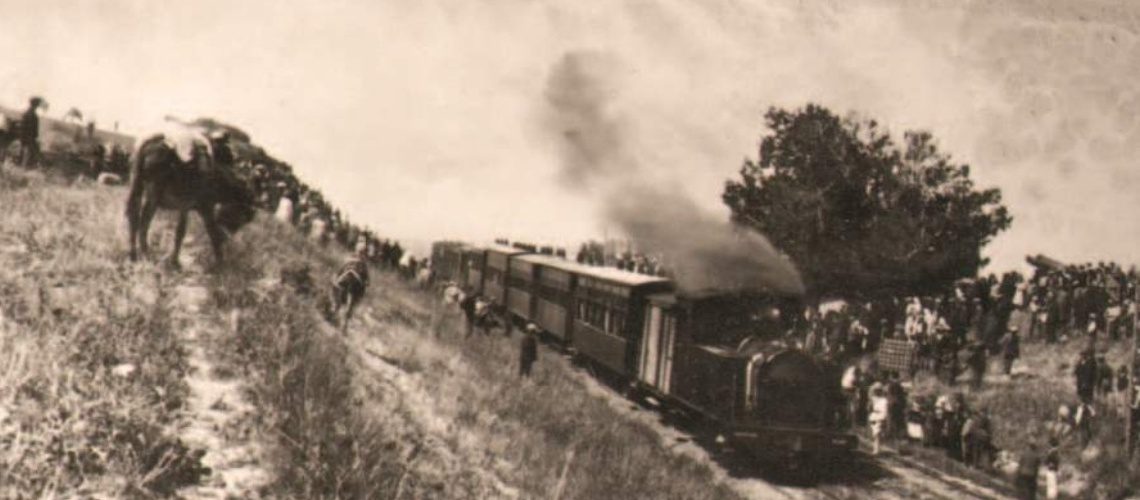
    Türkiye Cumhuriyeti tarihinden daha eskidir Anadolu’ da demiryollarının gelişmesine atılan ilk adım . Osmanlı nın son dönemlerinde İstanbul’ dan Bağdat’a  kadar uzanan bir demiryolu yapımı gerçekleştirilmiş olduğunu biliriz. Hatta demiryolu konusunda yine İzmir den Denizli ye kadar uzanan bir demiryolu yine Osmanlı zamanında yapıldığını bilmekteyiz. Demir yolu konusunda Almanya’yı ve İsviçre’yi kıskanmamak elde değil. Almanya ,Nazi döneminde , çok  büyük bir yatırımla en ücra köşesine kadar demir yolu döşediğini bilmekteyiz. 

    Almanya’nın içinde iş insanları, şehirler arası seyahatte genelde trenleri tercih etmesinin çok nedenleri bulunmakta. Bir şehrin en merkezi yerine kadar ulaşan demiryolları, en avantajlı seyahat yöntemi olduğunu düşünürüm. Almanya da demiryolları ağı 38,700 km olduğunu söylerler. 

    Konya şehri kadar yüz ölçümü olan İsviçre , 41,285 km 2 , de tren yolu  ağı 14,437 km dir. En küçük köye kadar uzanan bir ulaşım sistemi. Dağlarla çevrili İsviçre de, bu demiryolları için  kilometrelerce tünel açtıklarını görmekteyiz. Kıskanmamak elde değil. Her şehirden istediğiniz her yere trenle gitme imkanı olması bir tarafta , günün her saatinde istediğiniz yöne gitmek için bir tren mutlaka bulursunuz,. Her istasyonda büyük sarı renkli tren saatlerini gösteren tabelalar bulunur. Bulunduğunuz şehir veya kasabadan hangi saatte, hangi yöne treninin kalkacağını gösteren bu çizelgelerde , dakikası dakikasına yazılı görürsünüz. 

    Bu iki ülkede tren istasyonlarında bulunan bazı cihazlara gideceğiniz şehrin adını girip , hangi saatlerde hatta hangi dakikada  oradan trenin kalkacağını bulursunuz. O kadar sıklıkla tren geçer ki, size çok fazla alternatifler sunulur. Günün bazı saatlerinde tren biletleri ücretleri düşük olur , bazı saatlerde ise çok yüksek ücret ödersiniz. Trenin kalkış saati örnek olarak 14.23 diyorsa 24 veya 25 hatta 26 hiç olmaz. Mutlaka 14.23 de o tren kalkar. Varış noktasında ise 16.37 yazıyorsa, tren tam 16.37 de istediğiniz şehre varmış olur. Bu güne kadar çok kere bu ülkelerde trenle seyahatimde varış veya kalkış saatlerinin gecikmesini hiç yaşamadım. 

    Bu ülkelerde de SCHNELLZUG  diye adlandırılan trenler vardır. Bu trenler her durakta durmaz, önemli şehir ve kasabalarda durup , çok yüksek hız yaparlar, hani uçakla gitmek istediğiniz şehre , bu trenlerle daha çabuk ulaşırsınız. Bunların da süratleri konusunda fazla bilgi sahibi değilim ancak 250 km süratten daha fazla olduğuna inanırım. Hatta Japonya da TOKYO ile OSAKA şehri arasında işleyen hızlı trenin TOKAİDO SHİNKANSEN adı ile anılan Mermi Tren anlamındaki trenin hızı ise saatte 300 km olduğunu okumuştum. Böyle bir tren hızı için çok özel tren yolu olması gerektiğini düşünmekteyim. 

    Gel de kıskanma bu ülkeleri. Hele Japonya için bir iki cümle söylemek gerek. 2 inci dünya savaşında Pesrl Harbour baskından sonra Amerika Birleşik Devletlerinin 6 AĞUSTOS Hiroshima ve 9 ĞUSTOS’TA Nagazaki ye attıkları atom bombasında, 228 binden fazla Japon hayatını kaybetmiş, bir o kadarda sakat kalmış, radyasyona maruz kalıp hayatların daha sonra kaybedenlerin sayısı ise bilinmemekte. Japonya’nın  1945  senesinde yok olamaya yakın bir yerden, bu gün teknoloji devi olmalarını saygı ve hayranlıkla izlemekteyiz. 

    Gelelim ülkemizdeki teknolojik gelişmenin,  seneler itibari ile nereden nereye gelemediğine bakmak için sadece bir konuya değinmek isterim. Osmanlı İmparatorluğunda başlayan ve Türkiye Cumhuriyeti ile devam eden Demir Yolları işletmemize. Ancak bizim işletme konusunda sınıfta kaldığımızı düşünmekteyim. 

    Bir Hızlı tren projesi, 1976 da merhum Süleyman Demirel zamanından başlayarak AYAŞ tünelinde senelerce oyalanmamız sonrasında, Devlet Demir Yolları İşletmesi adı altında çok kötü bir işletme sergilendiğine şahit olmaktayız. 

    Bakın bir inceleme yapalım sizlerle : 1945  den bu yana bu işletmenin KAZA not defterine bir göz atmamızda yarar var: 

    -1945  Erzincan Tren kazası                                       40 ölü

    -1948 Ankara Tren kazası                                          38 ölü 

    -1952 Niğde Tren Kazası                                           31 ölü

    -1957 Yarımburgaz Tren Kazası                                95 ölü

    -1961 İstanbul Tren Kazası                                        15 ölü

    -1972 Konya Tren Kazası                                           38 ölü

    -1979 Ankara Tren Kazası                                         32 ölü

    -1980 Kayseri Tren Kazası                                         25 ölü

    -2004 Pamukova Tren Kazası                                    36 ölü

    -2004 Tavşancıl Tren Kazası                                      8 ölü

    -2008 Denizli Tren Kazası                                          9 ölü

    -2018 Uzunköprü Tren Kazası                                   25 ölü

    – 2018 Yenimahalle Tren Kazası                                 9 ölü ,

    Kanımca hiç bir işletmenin bundan daha kötü bir karnesi olabileceğini düşünmüyorum. Toplam 13128 km uzunluğunda demiryoluna sahibiz. Almanya nın 1/3 i kadar , İsviçre kadar bile demiryoluna sahip değiliz. Hatta bu demir yolunun 7200 kilometresi de Cumhuriyetin ilk yıllarında inşa edilmiş. Tabii en önemli unsurda bu yollardaki trenlerin iyi  işletilmesinde yatmakta ana tema. 

    Geçtiğimiz hafta bizim YHT diye adlandırdığımız, ancak Yüksek Ücreti dışında fazla bir değeri olmadığına inandığım trenle İstanbul a , uçak ücretine yakın bir ücretle seyahat ettim. Ankara ile Eskişehir arası konusunda bir söz söylemek istemiyorum. Ancak Eskişehir ile İstanbul arası sanki ÇİN işkencesi. Dur kalk usulü ile işletilen YHT anlamını burada yitirmekte. Her gecikilen dakika bir diğer istasyona yansımakta, dakikalar uzamakta , ne zaman nihai noktaya varılacağı ise  bir muamma olmakta. 12.01 de İstanbul  Söğütlüçeşme  de olması gereken tren 12.34 de ancak ulaşabildi.  Şimdi biz buna hızlı tren mi diyeceğiz.  Geç bunları anam babam , Almanya yı , İsviçre’yi  kıskanıyorum, Bizim kayyım kafamızın değişmesi gerek, Atatürk ‘ün gösterdiği hedefi bulmamız şart, Hava Alanından ATATÜRK ismini silmeniz size bir şey kazandırmaz, halkın kahramanı olmanız için Halkın içinde olmanız gerekir, Sarayın içinde değil diye bir sözüm geldi söyledim hem nalına hem mıhına.

  • GELECEĞİMİZ

    GELECEĞİMİZ

    DAYAK YİYEN, EZİLEN ÖĞRETMENLER…

    Atanamayan öğretmenler sorunu başlı başına büyük sorundu…

    Şimdi özel okul öğretmenlerinin sorunları çıktı ortaya…

    Dahası da var ama şimdilik bunlar yeter…

    *** 

    On güne yakın süredir öğretmenler Ankara’da haklı sorunlarına dikkat çekmek ve çözüm bulmak için anayasal haklarını kullanıp eylem yapıyorlar…

    Başlarına gelmeyen kalmadı…

    ***

    Öyle bir polisimiz var ki; biri- birileri eylem yapsın, bende içimde biriken kini nefreti dökeyim, kompleksimi teselli edeyim, diyor…

    ***

    Barikatlar, kalkanlar…

    Cop…

    Biber gazı…

    Su…

    Saçından tutup sürükleme.

    Duvar bulsa:

    Kaldırıp duvara vuracak…

    ***

    Talimat öyle, verenin tıyneti öyle…

    Fıtratlarında var…

    ***

    Kafasını kaldıranın, tavuğumuza kışt diyenin, muhalefet olanın…

    Kafa tutanın, meydan okuyanın..

    Kafasını vurun, ezin böcek gibi…

    ***

    Acımayın, acırsanız acınacak hale gelirsiniz kafası…

    Baskı dayatma ve korku üçgeni…

    Eşittir:

    Kaç’Ak Saray müdavimi ve Şürekası…

    *** 

    Öğretmenler yerden göğe kadar haklılar…

    Ama ne dinleyen var, ne zerre-i miskal kadar umursayan…

    Taş olsa çatlardı, ama REİS karlı dağdan serin…

    *** 

    Her şey güllük gülistanlık-mış gibi yapıyor…

    El öptürüyor…

    Rozet takıyor, resim çektiriyor, çocuklara harçlık veriyor…

    Konuyla alakası yokken dönüyor;

    Özgür Özel’e ve CHP’ ne çaktıkça çakıyor…

    *** 

    Madenciler, öğretmenler, enflasyon..

    Hayat pahalılığı, işsizlik..

    Hukuksuzluk…

    Çürüme…

    Liyakatsizlik…

    İsraf…

    Bütçedeki karadelik,siyasi ve sosyal çürüme umurunda bile değil…

    *** 

    Öğrenciler…

    ***

    Ortaokul öğrencileri LGS lise öğrencileri YKS sınavlarında ter döküyorlar.

    İyi bir eğitim almak, iş bulabileceği bir diploma almak için…

    *** 

    Resmen sınav manyağı oldu öğrenciler…

    Bir sınavdan çıkıp ötekine giriyorlar…

    Bunun bir de mülakatı var ki tam bir muamma…

    *** 

    Bir anne düşünün; yıllarca çocuğunun öğrenimi ve eğitimi için dişinden tırnağından artırmış…

    ***

    Bir genç düşünün; sınavlar, dersler, projeler, mezuniyet heyecanı..

    Ve sonra; elinde bir diploma…

    Ki kaderini belirleyecek diploma…

    Ama!..

    Türkiye’deki adı “işsizlik diploması” maalesef…

    *** 

    Bilmediğimiz bir şey değil;

    üniversite mezunu gençler her sabah güne yeni bir iş ilanı umuduyla uyanıyor…

    Seçmiyor artık…

    Yüzlerce başvuru yapıyor…

    Aylar geçiyor…

    Yıllar geçiyor, ne arayan var  ne soran…

    ***

    Ana babasının avucuna bakan var…

    Diploması ile uzaktan yakından alakası olmayan bir iş bulup üç beş kuruşa çalışan var…

    ***

    Hepsi “Vatan çocukları…”

    *** 

    Birde bir damla ter dökmeden…

    Ay sonunda maaş bordrosuna imza atmadan köşe olan..

    Hiç para harcamadan holding, şirket, gemicik, vakıf vs sahibi olan..

    ***

    Lüks arabalara binip rezidans ve villalarda yaşayan,  burunlarından kıl aldırmayan; “BAK’AN” çocukları var..

    Bir elleri yağda bir elleri balda…

    *** 

    Defalarca yazdım üniversite sayısını artırmak değil mesele..

    Mesele üretime, istihdama ve yatırımlara yön verecek, destek olacak lise ve üniversite eğitimi ve referans olacak diploma vermek…

    *** 

    Üç harfli bir marketin kasasında mühendis hatta doktor varsa…

    Öğretmenler işsiziz ve açız diye eylem yapıyorsa…

    Polis dokunulmazlığı olan milletvekillerine orantısız şiddet uyguluyorsa..

    *** 

    Ortada sadece ekonomik sorun yoktur..

    Büyük bir umutsuzluk ve gelecek sorunu var demektir…

    *** 

    İstediğiniz kadar duble yol, tünel, havaalanı, 

    Yalı villa gökdelen, millet bahçesi, şehir hastanesi vs yapın…

    Rakamları büyütün…

    ***

    Gençliğe-gençlere yatırım yapmıyorsanız;

    Eninde sonunda çökmeye ve yoksullaşmaya mahkum olursunuz..

    Tarihi ve sosyal gerçek bu..

    *** 

    Son söz: Ülkenin gerçek ve kalıcı zenginliği, umutla yaşayan gençleridir…

    ***

    Eğer gençler geleceğe inancını kaybederse:

    Ekonomi de kaybeder…

    Demokrasi de, toplum da kaybeder…

    *** 

    Bizleri var eden, geleceğe yolcu eden:

    Öğretmenlerimizin ellerinden minnetle öpüyorum…

    Haklı eylemlerini yürekten destekliyorum..

    Erdoğan ÖZGENÇ

    İstanbul 22.06.2026 17.27

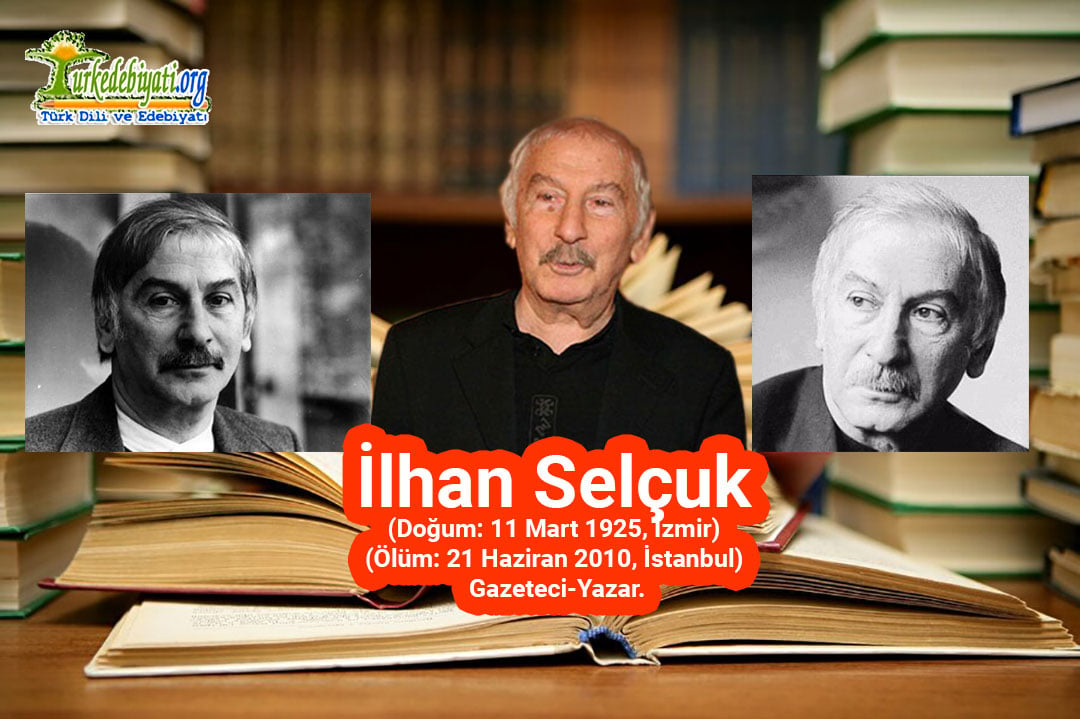
  • Ölümünün 16.yıldönümünde, düşün anıtlarımızdan yazar İlhan Selçuk’u “Müslümanlık Ham Ervahlık Değildir” makalesiyle analım!

    Ölümünün 16.yıldönümünde, düşün anıtlarımızdan yazar İlhan Selçuk’u “Müslümanlık Ham Ervahlık Değildir” makalesiyle analım!

    Yakın zaman düşün anıtlarımızdan İlhan Selçuk’u “Müslümanlık Ham Ervahlık Değildir” yazısını ölümünün yıldönümünde okuyarak analım-21.06.2026 Pazar,K.kuyu

    Yakın zaman düşün anıtlarımızdan İlhan Selçuk’u “Müslümanlık Ham Ervahlık Değildir” yazısını ölümünün yıldönümünde okuyarak analım

    Yazı özetle şöyle: 

    Prof. Bernard Lewis “Amerika’da yerliler ve Avrupa’da Ortaçağ varken, Bağdat, müspet ilimler ve felsefe alanında ‘Aydınlanma Çağı’nı yaşıyordu… Ne oldu da, Batı Rönesans’a geçerken Bağdat’ta ‘Bab-ı İçtihat’ kapatılıp karanlık çağa geçildi? Tarih Batı’da neden ileri ve Ortadoğu’da geriye doğru çalıştı?” demekte.

    *

    Camilerimize bir bakın!..

    Bir yenilere bakın..

    Bir de eskilere..

    Minareleri bir kıyaslayın, eski müminler geçmiş dönemlerin ilkel yapım koşullarında öyle minareler yapmışlar ki rüzgârda söğüt ağacı gibi nazlı nazlı salınıyor, ‘alem’ lerinin izdüşümü bulutlara vuruyor, şerefeleri dua için göğe açılmış avuçlar gibi duruyor…

    Üç şerefeli kimi minarede üç müezzin ezan okumak için üç ayrı merdivenden tırmanabiliyor, yüzlerce yıl inile çıkıla aşınmış basamakları rüzgâr gülünün ortasında birleşen yapraklar gibi dönerek yükseliyor.

    İnceliğin, mimarlık sanatının, estetiğin örnekleri eski minareler..

    Ve camiler..

    Ya yenileri?..

    *

    Yenilere çıkarcı politikacı gözüyle baktın mı cami kışla binası, minareler süngü, kubbeler miğfer gibi görünür; bu tür ham ervahlık (* ), ancak iktidar piyasasında siyasetin pazarlanmasına yarar.

    Ancak yapı dünyasında ve mimarlık sanatında bu kadar ilerleyen bir çağdaş dünyada yeni camilerin zevksiz, orantısız, estetikten yoksun görüntüleri nasıl açıklanabilir?..

    Müslümanlık ticaret aracı mı?..

    Camilerin altına dükkânlar dizerek, İslamcı şirketler kurarak, yeşil sermaye numarasına girerek, Müslümanlığı koltuk sevdasına alet ederek dincilik yapmanın kutsal inançla ne ilişkisi var?..

    Peki, Müslüman nasıl Müslüman olacak?..

    Ömer Hayyam’ın rubaisindeki gibi olacak: “İnciyi isteyen dalgıç olacak; /Varı yoğu dosta verip salacak. / Canı avucunda, soluğu göğsünde; /Ayağı baş olacak, başı ayak.”

    *

    …….

    Eski zaman bilgesi bugünkü ham ervahları görse, Hayyam’a nazire, şu dörtlüğü yazmaz mıydı:

    “Girme şu alçalışın hizmetine /  Konma sinek gibi pislik üstüne / İslamı kullanma bir koltuk için / Yazık kutsal dinin inceliğine”

    *

    İslamı yüceltmek istiyorsak, bayram namazını siyaset reytingi yolunda pazarlayan politikacı ham ervahına ‘yuh’ demesini bilmeliyiz. ((13 Şubat 2003 tarihli yazısı)

    ( *) Ham ervahlık: Anlayışsız, kaba, olgunlaşmamış ve çiğ bir insan gibi davranmak (TDK) .Sözcük anlamıyla “ ham/tin-ruh) “ham ervah olgunlaşmamış ruh” demektir. Toplum içinde yersiz, yakışıksız konuşan ve incelikten uzak kişiler için kullanılır.

    (BU YAZI DERLEMEDİR)

  • Sakarya Meydan Muharebesi (23 Ağustos-13 Eylül 1921)

    Sakarya Meydan Muharebesi (23 Ağustos-13 Eylül 1921)
    Türk Kurtuluş Savaşı sırasında meydana gelen muharebe

    Yazar: Orhan Yöney
    Sakarya Meydan Muharebesi, Türk milleti için bir ölüm kalım mücadelesi olmuştur. Bu meydan muharebesi, Türk ordusunun taktik geri çekilmeleri bırakıp büyük çaptaki bir geri çekilme sonunda stratejik savunmayı uygulamaya koymasının en güzel örneklerinden birisidir. Birinci ve İkinci İnönü Muharebelerinde yenik duruma düşen Yunanlılar, Kütahya-Eskişehir Muharebelerindeki (10 – 24 Temmuz 1921) başarılarından elde ettikleri moral ve İngilizlerin de teşvikiyle Anadolu’da ilerlemelerine devam etmek ve Ankara Hükûmetini zor duruma sokmak istemişlerdir. Esasen İngiliz Başbakanı Lloyd George’un İngiltere Parlamentosunda “Millî Türk Kuvvetlerini yenmiş bulunan Yunanistan’ın Sevr Anlaşması esaslarıyla yetinemeyeceği” şeklindeki kışkırtıcı vaatleri de Yunanistan’ı bu konuda cesaretlendirmiş ve barışa değil taarruza teşvik etmiştir. Yunan Genelkurmayı, Sakarya Nehri’nin doğusuna çekilen Türk ordusuna son darbeyi vurmak için bütün hazırlıklarını tamamlayıp harekete geçmiştir. Öte yandan, Kütahya-Eskişehir Muharebelerinden sonra askerî mevcudunun ve silah gücünün önemli bir kısmını kaybetmiş olan Türk ordusu da kesin sonuç alınabilecek bir meydan muharebesi için tüm birliklerini Sakarya Nehri’nin doğusunda, yaklaşık olarak 100 km genişliğinde bir cephe hattında toplamıştır.

    Batı Cephesi Komutanlığı birliklerinin Kütahya, Eskişehir ve Af­yon­ka­rahisar gibi şehirlerle birlikte geniş bir arazi kesimini düşmana bırakarak Sakarya Nehri’nin doğusuna çekilmesi, kamuoyunda ciddi bir moral bozukluğu yaratmış ve bu durum TBMM’de de çok sert tartışmalara neden olmuştur. 23 Temmuz – 5 Ağustos 1921 tarihleri arasında oldukça sıkıntılı bir dönem geçiren Türk tarafı, Mustafa Kemal Paşa’yı 5 Ağustos 1921’de TBMM’de kabul edilen 144 sayılı kanunla ve geniş yetkilerle üç ay süre ile Başkomutanlık görevine getirmiştir. (bk. Başkumandanlık Kanunu) Mustafa Kemal Paşa, verilen bu geniş yetkilere dayanarak 7-8 Ağustos 1921’de “Tekâlifi Milliye Emirleri”ni yayımlayarak orduyu personel, silah, malzeme ve araç-gereç bakımından güçlendirmeye çalışmıştır. Zira Türk ordusu Sakarya Meydan Muharebesi öncesinde bir yokluk ve yoksulluk savaşı da vermektedir. Başkomutan Mustafa Kemal Paşa, Sakarya Meydan Muharebesi öncesinde cephe faaliyetleriyle ilgilenirken üzücü bir kaza geçirmiştir. Genelkurmay Başkanı Fevzi Paşa ile 12 Ağustos 1921’de cephe durumunu yakından görmek, sevk ve idarede daha etkili olmak gayesiyle Ankara’dan Polatlı’ya hareket eder, cepheye varınca savunma mevziinin rahatça görüldüğü Polatlı güneyindeki Karadağ’a çıkmıştır. Buradan arazi ve mevzi durumunu görüp inceledikten sonra geri dönmek üzere atına bindiği sırada, atın ürkmesi nedeniyle düşerek bir kaburga kemiğini kırmış, tedavi olmak üzere Ankara’ya dönmek zorunda kalmıştır. Doktorların istirahat tavsiye etmelerine rağmen çok kısa bir süre sonra 17 Ağustos 1921’de görevinin başına dönen Mustafa Kemal Paşa hemen Başkomutanlık karargâhını kurmuştur. Ağustos ayı ortalarına doğru yapılan yeni düzenlemeye göre Türk Ordusu’nun konuş ve kuruluş durumu şu şekildedir: Başkomutan Mustafa Kemal Paşa, Genelkurmay Başkanı Fevzi Paşa’dır. Başkomutanlık Karargâhı Ankara’dadır. Batı Cephesi Komutanlığı, Yunan taarruzuna karşı, kuvvetlerini Sakarya Nehri doğusunda yedi grup (kolordu) hâlinde konuşlandırmıştır. Batı Cephesi Komutanı İsmet Paşa’dır ve karargâhı Ankara-Polatlı arasında yer alan Alagöz’dedir. Savaşın hemen öncesinde Türk kuvvetlerinin durumu şöyledir: 96.326 er, 5.401 subay, 54.572 tüfek, 825 makinalı tüfek, 196 top, 1.309 kılıç, 32.137 hayvan, 1.284 araba ve 2 uçak.

    Yunan kuvvetlerinin durumu da şöyledir: 120.000 er, 3.780 subay, 57.000 tüfek, 2.768 makinalı tüfek, 386 top, 1.350 kılıç, 3.800 hayvan, 600 adet 3 tonluk kamyon, 240 adet 1 tonluk kamyon, 18 uçak.

    Mustafa Kemal Paşa’nın Başkomutanlık görevine getirilmesinden sonra Batı Cephesi Komutanı İsmet Paşa ile Kolordu Komutanları arasında 15 Ağustos 1921 tarihinde bir durum değerlendirmesi yapılarak sonuç Başkomutana sunulmuş, böylelikle bir harekât planı ortaya çıkmıştır. Türk ordusu, 100 km’ye ulaşan cephe genişliği ve 25 km’ye yakın bir derinlik içerisinde arazinin önemli noktalarına yerleşerek ve Sakarya’yı bir engel hâlinde önüne alarak savunmayı oynak olarak idare etme kararını almıştır. Bu savaşa kadar savunmalar; orduların bir hat üzerinde yerleştirilmesi, bu hatta başarılı olunamazsa hep birlikte geride başka bir hatta çeki­lme biçiminde cereyan etmiştir. Ancak Mustafa Kemal Paşa, 26 Ağustos 1921’de “Hattı müdafaa yoktur, sathı müdafaa vardır. O satıh bütün vatandır.” emrini vermiş böylece hat taktiği bırakılarak çekilmek zorunda kalan birliklerin tutunabildikleri ilk yerde savunmaya devam etmeleri, diğerlerinin ise bulundukları mevzileri bırakmamaları sağlanmıştır. Gerçekten de bu safhada verilen mücadele olağanüstüdür. Açılan her gediği kapatmak için 70 km’yi bulan zorlu yürüyüşlerle birlik kaydırmaları yapılır. Her gelen asker, ertesi sabah çelikten bir kale hâlinde düşman karşısına çıkmış, vuruşup şehit olmuş fakat vatanın savunulmasına devam edilmiştir. Mustafa Kemal Paşa bu muharebe için “Sakarya melhame-i kübrası” yani kan gölü, kan deryası demiştir. Yunanlar, Türk kuvvetlerini 23-30 Ağustos 1921 tarihleri arasında bütün imkânlarıyla zorlamalarına rağmen kuşatıp imha edemeyince kuvvetlerinin büyük kısmıyla Türk cephesini merkezden Haymana istikametinde yarmak istemişlerdir. 6 Eylül 1921 tarihine kadar da bunun için uğraşmışlar fakat başaramayınca bulundukları hatlarda savunmaya karar vermişlerdir. Ancak 10 Eylül’de başlatılan genel karşı taarruzla buna da engel olunmuştur. Bu muharebeler sırasında Meclisin de taşınması gündeme gelmiştir. Başkomutan Mustafa Kemal Paşa, Millî Savunma Bakanı Refet Paşa’ya 26 Ağustos akşamı gönderdiği telgrafta; muharebelerin Ankara’ya kadar intikal etmesi ihtimali olduğunu, her türlü ihtimale karşı Meclisin ve Bakanlar Kurulu’nun ilk merhale olarak Yahşihan üzerinden Keskin’e, oradan da zorunluluk hâlin­de Kayseri’ye naklinin gerekli olabileceğini bildirir. Ertesi gün çekilen başka bir telgrafla da bu taşınma emri durdurulmuştur. Başkomutan Mustafa Kemal Paşa’nın yönetiminde, Türk milletinin kanıyla yazılan ve dünya harp tarihine “en uzun meydan muharebesi”, Türk İstiklal Harbi tarihine de “subay muharebesi” diye geçen Sakarya Meydan Muharebesi aralıksız 22 gün devam etmiş ve 13 Eylül günü Yunanlıların Sakarya Nehri’nin batısına atılmasıyla sona ermiştir. Bundan sonra Takip harekâtı başlamıştır. Sakarya Meydan Muharebesi’nin askerî sonuçları bakımından Türk tarafına çok önemli katkıları olmuştur. Sakarya Zaferi ile inisiyatif Türk ordusuna geçmiştir. Sakarya Muharebeleri, Türk ordusunun moralini ne kadar yükseltmiş ise Yunan ordusunun moralini de o derece bozmuştur. Önce Sakarya Nehri’nin doğusu, sonra da Afyonkarahisar – Eskişehir hattına kadar olan vatan toprakları Yunanlılardan temizlenmiştir.

    Savaş sonunda tarafların kayıpları da şu şekildedir:

    Türkler: 5.713 şehit, 18.480 yaralı, 828 esir ve 14.268 kayıp.

    Yunanlılar: 3.758 can kaybı, 18.955 yaralı, 354 kayıp.

    Sakarya Meydan Muharebesi sonucu, askerî harekât yön değiştirmiştir. Sakarya Muharebesi sonuna kadar stratejik savunma yapılırken Sakarya’dan sonra stratejik taarruza dönülmüştür. Zira Yunan ordusu stratejik saldırı yapma gücünü kaybetmiştir. Sakarya Zaferi, Büyük Taarruz (26 Ağustos 1922) ve Başkomutan Meydan Muharebesi’nin (30 Ağustos 1922) hazırlıkları için gerekli zamanı kazandırmıştır. Sakarya Zaferi’nden sonra vefa duygusu ile dolu olan Türk milleti, Başkomutan Mustafa Kemal Paşa’ya TBMM aracılığıyla 19 Eylül 1921 tarihinde Gazi unvanı ve Mareşal rütbesini vermiştir. Anadolu’ya geçme planı olan Enver Paşa’nın ümidi kırılmış, içeride muhalefetin etkisi azalmıştır. Sakarya Meydan Muharebesi’nin askerî sonuçları yanında siyasi sonuçları da Türk milleti için çok önemli kazanımlar sağlamıştır. Sakarya Zaferi’nden bir ay sonra, 13 Ekim 1921 günü Bolşevik Hükûmetinin aracılığıyla Ankara Hükûmeti ile Güney Kafkas Cumhuriyetleri arasında Kars Antlaşması imzalanmıştır. Bu antlaşmayla; Azerbaycan, Gürcistan ve Ermenistan daha önce yapılan Moskova Antlaşması’nı kendileri için de geçerli saymışlardır. Böylece Türkiye’nin doğu sınırları kesinlikle güvenlik altına alınmıştır. Fransa, Sakarya Zaferi’nden sonra bekle – gör tutumunu bırakarak İtilaf Devletleri’nden kopmuş ve TBMM Hükûmeti ile 20 Ekim 1921’de Ankara Antlaşması’nı imzalamıştır. Bu antlaşma ile Fransa tarafından Hatay-İskenderun dışında bugünkü güney sınırımız tanınmıştır. Güney Cephesi güvenlik altına alındığından oradaki Türk birlikleri de Batı Cephesi’ne kaydırılmıştır. Batı Anadolu’daki Yunan egemenliğini hiçbir zaman kabullenemeyen İtalyanlar ise Sakarya Zaferi’nden sonra 1921 yılı sonuna kadar işgal ettikleri yerleri boşaltmışlardır. Sakarya Zaferi, İngiltere’yi de TBMM Hükûmetini tanımaya zorlamış ve 23 Ekim 1921’de “Tutsakların Serbest Bırakılması Anlaşması” yapılmıştır. Anlaşmaya göre; İngilizler ellerinde bulunan Birinci Dünya Savaşı tutsağı Türk komutanları ile Malta Adası’na sürdükleri Türk devlet adamları ve aydınlarını, Türkler de Mustafa Kemal Paşa’nın tutuklattırdığı Anadolu’da bulunan İngiliz uyrukluları serbest bırakmışlardır. 2 Ocak 1922’de Türkiye-Ukrayna arasında bir dostluk antlaşması imzalanmış, bu antlaşma ile Ukrayna’nın yanı sıra Türkiye ile Sovyet Rusya arasında yakın dostluk ve temas geliştirilmiştir.

    Sakarya Zaferi, İtilaf Devletlerinin Yunanlılara güvenini azaltmış, bu devletler Sevr Anlaşması ile kendilerine sağlanan çıkarları tekrar silahlı çatışmalara girmeden diplomasi yoluyla koruma çabası içine düşmüşlerdir. İtilaf Devletleriyle yapılan bu siyasi anlaşmalar Sevr Anlaşması’nın da geçerliliğini yitirmesi sonucunu doğurmuştur. Türk ordusunun Sakarya Meydan Muharebesi’ni kazanması, Yunan dış politikalarında da köklü değişikliklere sebep olmuştur. Sakarya’dan sonra, Yunanlıların “Ankara’nın alınması” ve “Büyük Bizans’ın kurulması” gibi düşleri Sakarya’nın sularına gömülecektir. Hatta, Batı Anadolu’daki isteklerini bile unutmuş görünüp bu kez yerli Rumların kuracağı bağımsız bir “İyonya Devleti” görüşüne ağırlık vererek, Avrupa’da bu görüşe destek arayacaklardır. Milli Mücadelenin en önemli askeri olaylarından biri olan Sakarya Zaferi ile, 1683 Viyana kuşatmasından beri devam eden Türk çekilişi burada durdurulmuş, bundan sonra Türk ilerleyişi başlamıştır.

    Yazar: Orhan Yöney- ATATÜRK ANSİKLOPEDİSİ / TURKİSHFORUM – ABDULLAH TÜRER YENER


  • European Countries Should Leave NATO, Establish a Strategically Independent European Defence Army Within the United Countries, and Become a Balancing Element in the World

    By Sefa Yürükel

    Despite decades having passed since the end of the Cold War, the European continent continues to subordinate its security architecture to the decision making and command hierarchy of a transatlantic centre. Yet this state of dependency, rather than serving Europe’s collective interests, has turned it into a passive vehicle for geopolitical tensions that unfold on a global scale and often develop beyond its own will. The Washington centred strategic decision making processes have produced outcomes that escalate tension in Europe’s natural neighbourhood basin, undermine energy security and squander opportunities for economic integration. In this framework, the separation of European states from the NATO umbrella and their unification around a strategically independent European Defence Army that they will build among themselves will not only place the continent’s security on a sovereign footing but will also bring a responsible and balancing actor of the multipolar world onto the stage of history.

    The Strategic Impasses of Atlantic Dependency

    The European security architecture shaped under the NATO framework, rather than bringing deterrence and stability to the continent’s states, has been the source of strategic impasses that have deepened over decades. The foremost of these impasses is the fact that Europe’s defence expenditures and military planning are largely indexed to the global priorities of the United States. NATO’s waves of enlargement have drawn Europe into a zero sum geopolitical rivalry with Russia; the continent’s energy supply security, trade corridors and diplomatic room for manoeuvre have been unable to exceed the boundaries drawn by Washington. In crisis zones stretching from the Balkans to Ukraine, from the Eastern Mediterranean to the Sahel, European states have often been forced to act as subcontractors implementing not their own interests but the strategic preferences of the transatlantic ally. This asymmetrical dependency has blunted Europe’s ability to be a security subject in its own right and has reduced the continent to a vast military market and logistics base incapable of displaying independent will in its relations with the rest of the world.

    The European Defence Army as the Founding Element of Strategic Independence

    The sole way out of this dependency cycle for Europe lies in leaving NATO and building its own unique defence structure. The European Defence Army, to be jointly established by the united countries, is not merely a military integration project but also a strategic leap that fuses the continent’s political will, industrial capacity and diplomatic vision in the same melting pot. This army must go beyond being a simple sum of existing national armies; it must be equipped with a joint command structure, a common defence doctrine, an integrated logistics system and a Europe centred defence industry ecosystem. Such a structuring will free Europe from dependence on US military technologies and NATO’s standardisation impositions and will allow the continent to define its own threat perceptions within the framework of its own strategic culture. The European Defence Army is also a rationalisation project that will reduce duplicative defence expenditures within the continent, create economies of scale and multiply Europe’s collective deterrence capacity.

    The Geopolitical Imperative of Being a Balancing Element in the World

    The establishment of an independent European Defence Army is not merely a regional matter concerning the continent’s security but also a paradigm shift that will directly affect global stability. Today’s world is shaped under the shadow of an increasingly sharpening US China rivalry, and the tension between these two giant powers is forcing all medium sized actors to take sides. A unified Europe with strategic independence is precisely the sole structure that can, at this point, step in as a balancing global power without engaging one of the parties. With its economic size, diplomatic traditions, technological capacity and military potential, Europe does not have to be either an unconditional extension of the Atlantic camp or a passive partner of Asia centred formations. A Europe possessing its own defence army and independent decision making mechanisms can position itself as a mediator, stabiliser and promoter of multilateral cooperation in all crisis zones stretching from Africa to the Middle East, from South Asia to Latin America. This positioning will save the world from being condemned to a bipolar deadlock and will lay the groundwork for the establishment of a truly multipolar and balanced international system.

    The Historic Opportunity Before Europe

    Europe’s leaving NATO and establishing an independent defence army is not a utopian vision of the future but a strategic necessity imposed by the current conjuncture. The weariness of the transatlantic security architecture, the US’s gradual shift of strategic focus to the Asia Pacific and the rising demands for strategic autonomy in European public opinion are preparing a favourable ground for this transformation. The European states’ seizing of this opportunity will end the tutelage relationship that has persisted for decades and make the continent a subject of history. Otherwise, Europe will be condemned to remain a geography squeezed ever more tightly between two great powers, incapable of either securing its own security or having a voice in global affairs. The destiny of a United Europe does not lie in waiting as a passive ally under the NATO umbrella but in taking its place as an independent and balancing power in the world by establishing its own army.

    Conclusion

    By virtue of its economic power, human capital, technological infrastructure and political experience, the European continent possesses more than enough of all the qualifications required to become an independent defence actor on a global scale. What is lacking is the political will to mobilise these qualifications and the courage to break the Atlantic dependency. Leaving NATO and establishing a strategically independent European Defence Army will not only place the continent’s security on a sovereign foundation but will also bring about the birth of a balancing element that will pull the world back from the brink of polarisation. This step is the sole path for Europe to take ownership of its own future, to assume its place on the stage of history as an independent international actor and to become one of the responsible architects of the multipolar world order.

    References

    Howorth, J. (2007). Security and Defence Policy in the European Union. Basingstoke: Palgrave Macmillan.

    Mérand, F. (2008). European Defence Policy: Beyond the Nation State. Oxford: Oxford University Press.

    Posen, B. R. (2006). “European Union Security and Defense Policy: Response to Unipolarity?” Security Studies, 15(2), 149-186.

    Shea, J. (2018). “NATO at 70: An Alliance in Crisis.” Survival, 60(3), 17-34.

    Toje, A. (2010). The European Union as a Small Power: After the Post-Cold War. Basingstoke: Palgrave Macmillan.

    Walt, S. M. (2018). The Hell of Good Intentions: America’s Foreign Policy Elite and the Decline of U.S. Primacy. New York: Farrar, Straus and Giroux.

    Witney, N. (2019). “European Strategic Autonomy: Ambition, Reality and the Way Forward.” European Council on Foreign Relations, Policy Brief, 1-15.

    Zielonka, J. (2014). Is the EU Doomed?. Cambridge: Polity Press.

    Sefa Yürükel
    Danish ethnographer and social anthropologist (MA)
    Aarhus University, 1997
    Independent Researcher
    Fields of Research: International Politics, Public International Law, Geopolitics, Sociology, Psychology, Cultural Studies, Systems and Structures.

  • NATO Did Not Protect Turkey, Turkey Protected NATO: Turkey Should Now Leave NATO and Take Its Place Independently in the Eurasian Ranks on the Axis of Strategic Independence

    By Sefa Yürükel

    The historical accounting of the North Atlantic Alliance has often been built on a narrative of gratitude that does not correspond with reality. Western centred security literature has for decades coded Turkey as a wing country that could exist only under the alliance’s umbrella, in need of protection. Yet the concrete reality on the ground says the exact opposite of this narrative. Turkey, at the alliance’s most critical geographical intersection, single handedly bore its southeastern flank; after the dissolution of the Soviet Union, it gained strategic depth for the alliance by confronting the spirals of instability in the Balkans, the Caucasus, the Middle East and the Eastern Mediterranean. At the stage now reached, the cost to Turkey of sustaining this asymmetrical burden sharing has far exceeded the assumed benefit. It has now become a historical imperative for Turkey to leave NATO, declare its strategic independence, and position itself as an independent actor within the rising geopolitical architecture of Eurasia.

    The Historical Anatomy of Asymmetrical Burden Sharing

    Turkey’s position within NATO has, since its foundation, been not a partnership among equals but a unilateral order of sacrifice based on geographical rent. From the losses suffered in the Korean War to the risk shouldered in the Cuban Missile Crisis, from the Jupiter missiles deployed throughout the Cold War to the missile shield radars of today, Turkey has signed up to engagements that jeopardise its own security. In the alliance’s military planning processes, Turkey’s threat perceptions have often been sacrificed to the strategic priorities of its allies. During the decades long struggle against the PKK terrorist organisation, the concrete solidarity expected from European allies did not materialise; on the contrary, the logistical and financial networks of the organisation were tolerated within the alliance’s geography. During the Syrian civil war, Turkey’s border security concerns could not be addressed by alliance solidarity but only through the skill of cross border operations developed on national initiative. All of these concrete records confirm the truth that it was not NATO that protected Turkey but, on the contrary, Turkey that sustained NATO through its military capacity, geographical location and political will. While the alliance cannot realise any strategic projection concerning the Black Sea, the Eastern Mediterranean or the Middle East without Turkey, Turkey has repeatedly proven its ability to exist and struggle without NATO.

    The Geopolitical Rationality of Strategic Independence

    The concept of strategic independence, beyond being merely a choice of military doctrine, is a comprehensive framework that defines a state’s mode of existence within the international system. Turkey’s exit from NATO is the first and most critical step in bringing this framework to life. An independent defence industry, a threat assessment capacity not dependent on outsiders, and a diplomatic manoeuvring space freed from the shadow of alliance obligations will be the concrete gains of this exit. Turkey has already built the level it has reached in unmanned aerial vehicles, electronic warfare systems and air defence technologies despite the NATO framework and sometimes directly against it. The CAATSA sanctions and the incident of being removed from the F-35 programme have demonstrated how fragile and conditional intra alliance solidarity can be. These experiences reveal that strategic independence is not a choice but a necessity. Exiting NATO will transform this necessity into a virtue; it will make Turkey a sovereign state that acts with its own mind in every field from defence planning to foreign policy formulation.

    The Rise of Eurasia and Turkey’s New Position

    In this historical period when the global centre of gravity is shifting from the Atlantic to the Asia Pacific, Turkey’s remaining trapped on the NATO line would be geopolitical blindness. Eurasia today is the epicentre not only of economic growth but also of institutional innovations and alternative security architectures. The Shanghai Cooperation Organisation, BRICS, the Asian Infrastructure Investment Bank and the Belt and Road initiative have created a new ecosystem developing outside and parallel to the Western centred system. Turkey’s full participation in this ecosystem will not be possible as long as its NATO membership continues. For the institutional logic of the Atlantic alliance erects invisible walls that prevent member states from engaging with the platforms of the rival pole. An independent Turkey that has left NATO, however, will be able to join the rising institutional architecture of Eurasia as an essential founding actor and will have a voice in shaping energy corridors, trade routes and security arrangements. This positioning will remove Turkey from being a forward outpost of the West and turn it not into a bridge between East and West but into the centre itself.

    The Strategic Contribution of an Independent Turkey to the Eurasian Equation

    Turkey’s leaving NATO and adopting an independent line within the Eurasian ranks will be a strategic gain not only for itself but also for the new platforms it will join. Turkey possesses the second strongest army in NATO, proven combat experience and a rising defence technology export capacity. When these qualities become part of Eurasia’s security architecture, they will turn into a guarantor of regional stability and will function as a balancing power across a vast geography stretching from the Caucasus to Central Asia, from the Eastern Mediterranean to the Persian Gulf. Turkey’s presence in the Eurasian ranks will also make it more difficult for these platforms to be stigmatised by the West as a mere authoritarian bloc; the participation of a country with democratic institutions, integrated with the market economy and possessing a modern army will add legitimacy and diversity to Eurasian formations. From this perspective, Turkey’s exit from NATO is not merely a departure but also the moment of birth of a new geopolitical synthesis.

    Conclusion

    NATO’s security narrative inherited from the Cold War has long since lost its ability to respond to Turkey’s genuine strategic needs. The historical record shows that Turkey protected NATO, while the alliance exported restrictions and impasses to Turkey rather than security. The time has now come to end this asymmetrical dependency relationship, to declare strategic independence, and to take a place in the Eurasian ranks as an independent, sovereign and self confident actor. This exit will remove Turkey from being an object of the international system and turn it into its subject; it will enable Turkey finally to assume a role compatible with its historical depth, geographical advantage and military capacity. The new world order is opening space not for allies that dissolve within a bloc but for independent powers that can chart their own course. Turkey possesses more than enough of all the qualifications to be one of the foremost actors in this space. The time for decision has come.

    References

    Davutoğlu, A. (2001). Stratejik Derinlik: Türkiye’nin Uluslararası Konumu. İstanbul: Küre Yayınları.

    Mearsheimer, J. J. (2014). The Tragedy of Great Power Politics. New York: W. W. Norton & Company.

    Öniş, Z. & Kutlay, M. (2017). “Global Shifts and the Limits of the EU’s Transformative Power: Turkey’s Drift towards Strategic Autonomy.” Journal of Contemporary European Studies, 25(2), 179-195.

    Sakwa, R. (2017). Russia against the Rest: The Post-Cold War Crisis of World Order. Cambridge: Cambridge University Press.

    Stronski, P. & Sokolsky, R. (2020). “The Return of Global Russia.” Carnegie Endowment for International Peace, Working Paper.

    Ülsever, C. (2022). “Türkiye’nin Çok Boyutlu Dış Politikasında NATO’nun Konumu.” Uluslararası İlişkiler Dergisi, 19(74), 45-67.

    Walt, S. M. (2018). The Hell of Good Intentions: America’s Foreign Policy Elite and the Decline of U.S. Primacy. New York: Farrar, Straus and Giroux.

    Yeşiltaş, M. & Pirinççi, F. (2020). Küresel Dönüşüm Sürecinde Türkiye’nin Büyük Stratejisi. İstanbul: SETA Yayınları.

    Sefa Yürükel
    Danish ethnographer and social anthropologist (MA)
    Aarhus University, 1997
    Independent Researcher
    Fields of Research: International Politics, Public International Law, Geopolitics, Sociology, Psychology, Cultural Studies, Systems and Structures.

  • Turkey Does Not Need NATO, NATO Needs Turkey: NATO Is a Burden, Turkey Should Throw It Off Its Back and Become Independent Like Iran

    Sefa Yürükel

    In international security literature, alliances are most often conceptualised around mutual benefit and symmetrical dependency. Yet the anatomy of the relationship between Turkey and NATO exhibits a structure that falls far from this classical definition, one that is asymmetrical and based on exploitation. This engagement, shaped within the threat hierarchy of the Cold War period, has over time ceased to be a mechanism that responds to Turkey’s security needs and has instead turned into a dependency order that mortgages Turkey’s strategic autonomy and sacrifices its national interests to the global calculations of the alliance. At the stage now reached, the deterrence and security contribution that the NATO alliance is claimed to provide to Turkey is in reality overshadowed by the advantages Turkey secures through its own military capacity, geographical depth and diplomatic manoeuvring ability. NATO is not a security umbrella for Turkey; it is a growing geopolitical burden, a bureaucratic shackle that clogs sovereign decision making processes, and a structural obstacle before national independence. In return, Turkey is the principal military power bearing the alliance’s southeastern flank, its critical geographical hinge and the fundamental actor of regional stability. NATO’s need for Turkey is many times greater than Turkey’s need for NATO. With this truth evident, casting off this burden on its back and entering the route of strategic independence that Iran has successfully executed for decades is emerging as a historical imperative for Turkey.

    The Strategic Picture of Asymmetrical Dependency

    The fundamental phenomenon that structurally defines the Turkey NATO relationship is asymmetrical dependency. This dependency manifests itself across a wide spectrum ranging from defence planning to threat perception, from weapons procurement to diplomatic engagements. Far from ensuring Turkey’s security, NATO has for decades remained indifferent to the most pressing threats the country has faced. The US arms embargo imposed after the Cyprus Peace Operation is the first major rupture that revealed the true nature of NATO alliance membership. Similarly, in the struggle against PKK terrorism, the expected cooperation and solidarity from European allies did not materialise, and the terrorist organisation’s networks of finance, propaganda and recruitment in Europe were tolerated. In return, Turkey allocates the second largest army in NATO, opens strategic bases such as İncirlik and Kürecik to the alliance’s use, and shoulders risk on behalf of the alliance in all crisis zones stretching from the Black Sea to the Eastern Mediterranean, from the Balkans to the Middle East. This asymmetry demonstrates with utter clarity that NATO’s contribution to Turkey is marginal, while Turkey’s contribution to NATO is strategic. Without Turkey, NATO is not an actor that can be a deterrent in the Black Sea, position itself in the Eastern Mediterranean or engage in the Middle East. In contrast, Turkey has proven that, without NATO, it possesses the military capacity and political will to establish its own security in the Syrian theatre, in Libya, in Karabakh and in the fight against terrorism.

    The Structural Burdens That NATO Imposes on Turkey

    NATO membership imposes multilayered strategic burdens on Turkey, rather than a security contribution. The first of these burdens is the shackle placed on military planning autonomy. NATO joint defence planning subordinates Turkey’s unique threat geography to the alliance’s Russia centred strategic priorities and pushes the asymmetrical and proxy wars on Turkey’s southern borders to a secondary level. The second burden is defence industry dependency. For decades, under the name of NATO standards and common supply chains, Turkey was delayed in building its own unique defence industry and was confined within a procurement cycle dependent on outsiders. The third and most critical burden is the limitation of diplomatic engagement. Under the NATO umbrella, Turkey’s independent relations with alternative security platforms, Asia centred economic formations and regional powers have been continuously subjected to the alliance’s loyalty tests. The CAATSA sanctions imposed after the S-400 procurement and the incident of being removed from the F-35 programme are the most concrete examples of how this expectation of loyalty has been converted into a mechanism for punishing Turkey’s sovereign choices. When all these burdens are assessed collectively, reaching the verdict that NATO is not a security asset but a multifaceted strategic liability for Turkey becomes inevitable.

    Lessons to Be Drawn from Iran’s Model of Strategic Independence

    Since the 1979 revolution, the Islamic Republic of Iran has existed as one of the most resilient and effective states in the Middle East without being subject to any military alliance. The fundamental factor behind this success is the institutionalisation of strategic independence as a state policy. Iran has built its defence doctrine on a structure not dependent on imported weapons systems, based on indigenous missile and unmanned aerial vehicle technologies and focused on asymmetrical deterrence. The network of influence established through the Islamic Revolutionary Guard Corps and its regional extensions has granted Iran a depth of strategic space that traditional alliances could not provide. Moreover, by becoming a full member of platforms such as the Shanghai Cooperation Organisation and BRICS, which offer alternatives to Western centred financial and trade systems, Iran has succeeded in overcoming economic and diplomatic isolation. This model demonstrates to the entire world that not being a NATO member does not mean geopolitical isolation and that, on the contrary, a multidimensional and flexible foreign policy is possible when managed correctly. Turkey, by virtue of its historical depth, military capacity, economic size and institutional experience, is at a much more advantageous starting point than Iran. What needs to be done to make use of this advantage is to adopt a strategic direction similar to the route of independence that Iran has been implementing for a quarter of a century and to throw off the NATO burden from its back.

    The Rising Architecture of Eurasia and Turkey’s Independent Position

    At this historical moment when the global centre of gravity is shifting from the Atlantic to Asia, remaining fixed on the NATO line would mean geopolitical suicide for Turkey. The Eurasian geography is today not only the locomotive of world economic growth but also a space where alternative institutional architectures are rising. The Shanghai Cooperation Organisation, BRICS, the Asian Infrastructure Investment Bank and the Belt and Road initiative offer serious alternatives to the Western centred Bretton Woods system and the Atlantic security umbrella. Turkey’s full participation in these platforms as an independent actor after leaving NATO will turn it into an essential power shaping the geopolitical architecture of Eurasia. As long as its NATO membership continues, Turkey is condemned to establish a distant, secondary and cautious relationship with these formations. An independent Turkey, however, will play a dominant role in the Eastern Mediterranean energy equation, in integration with the Central Asian Turkic republics, in the establishment of stability in the Caucasus and in the construction of a new security architecture in the Middle East; it will not be a bridge but the very centre between the economic corridors and security arrangements of Eurasia.

    Conclusion

    Turkey’s NATO membership was historically not a choice but a necessity imposed by Cold War conditions. However, the threat hierarchy of that period has disappeared, the strategic rationality of the alliance has eroded, and Turkey has reached a military, economic and diplomatic capacity that enables it to stand on its own feet. Today, NATO is not a source of security for Turkey but a burden that restricts its sovereignty, erodes its national interests and narrows its future strategic horizon. In return, NATO’s need for Turkey remains vital for the alliance’s regional presence and global claims. Aware of this asymmetry, Turkey should seize the opportunity that history presents to it; it should cast off the NATO burden from its back, chart a route of strategic independence similar to that of Iran, and take its place as an independent and sovereign power within the rising architecture of Eurasia. Postponing the decision will only serve to make the burden heavier and to compound the opportunity cost. An independent Turkey has reached the maturity to secure its own security with its own mind, its own weapons and its own strategic vision.

    References

    Davutoğlu, A. (2001). Stratejik Derinlik: Türkiye’nin Uluslararası Konumu. İstanbul: Küre Yayınları.

    Mearsheimer, J. J. (2014). The Tragedy of Great Power Politics. New York: W. W. Norton & Company.

    Öniş, Z. & Kutlay, M. (2017). “Global Shifts and the Limits of the EU’s Transformative Power: Turkey’s Drift towards Strategic Autonomy.” Journal of Contemporary European Studies, 25(2), 179-195.

    Saikal, A. (2021). Iran Rising: The Survival and Future of the Islamic Republic. Princeton: Princeton University Press.

    Sakwa, R. (2017). Russia against the Rest: The Post-Cold War Crisis of World Order. Cambridge: Cambridge University Press.

    Sinkaya, B. (2018). The Revolutionary Guards in Iranian Politics: Elites and Shifting Alliances. Londra: Routledge.

    Walt, S. M. (2018). The Hell of Good Intentions: America’s Foreign Policy Elite and the Decline of U.S. Primacy. New York: Farrar, Straus and Giroux.

    Yeşiltaş, M. & Pirinççi, F. (2020). Küresel Dönüşüm Sürecinde Türkiye’nin Büyük Stratejisi. İstanbul: SETA Yayınları.

    Sefa Yürükel
    Danish ethnographer and social anthropologist (MA)
    Aarhus University, 1997
    Independent Researcher
    Fields of Research: International Politics, Public International Law, Geopolitics, Sociology, Psychology, Cultural Studies, Systems and Structures.

  • For Turkey to Be Independent, It Must Leave NATO and Take a Strategic Position in West Asia Like Iran, Which Is Not a NATO Country, in the New World Order

    By Sefa Yürükel

    One of the most critical questions of the era of global power transition is within which alliance architecture the medium sized regional actors will exist. Turkey is among the countries where this question is felt in the most acute form. Turkish foreign policy, which has been articulated to the Western security umbrella for more than a century, today feels the opportunity cost of this engagement more heavily than ever. NATO, which has been experiencing an identity and threat crisis since the end of the Cold War, has turned into a bureaucratic apparatus that erodes the sovereign decision making capacities of its member states. Turkey’s exit from this structure will not only be a military realignment but will also mean a declaration of political, economic and psychological independence. The rising profile of West Asia in the new world order necessitates a Turkey that takes as a precedent the strategic positioning of Iran, which is not a NATO member.

    The Strategic Constraints Imposed on Turkey by the NATO Framework

    NATO membership has for decades confined Turkey’s security perception within a narrow corridor. The alliance’s threat definitions have often placed Turkey’s neighbours, with whom it shares common historical and geographical ties, on the target board. This situation has restricted Turkey’s freedom of movement within its natural sphere of influence stretching from the Eastern Mediterranean to the Persian Gulf, from the Caucasus to the Levant. The hierarchical structure within the alliance has from time to time even undermined Turkey’s defence industry breakthroughs; as in the case of the S-400 crisis and the CAATSA sanctions, sovereign choices have been met with punishment mechanisms. Moreover, NATO’s waves of enlargement have given rise to engagement obligations in geographies that do not coincide with Turkey’s security interests. The tension lines in the Baltic and the Black Sea have created a strategic distraction that distances Turkey from West Asia, which is its principal area of interest. This series of constraints proves that the NATO umbrella, beyond its claimed deterrence provided to Turkey, functions as a structural barrier that prevents the country from developing an independent strategic mind.

    Iran’s Model of Strategic Autonomy and Its Positioning in West Asia

    The Islamic Republic of Iran has continued its existence as one of the most influential and resilient actors in West Asia without being part of any military alliance since 1979. This success is largely based on the institutionalisation of strategic autonomy. By building its defence doctrine on asymmetrical deterrence, missile technology and regional militia networks, Iran has developed a cost effective counter posture against conventional superiority. The network of influence it has established in Iraq, Syria, Lebanon and Yemen through the Quds Force of the Islamic Revolutionary Guard Corps has granted Tehran a strategic space with a depth that no formal alliance could provide. Iran’s membership in BRICS and the Shanghai Cooperation Organisation has also demonstrated that an institutional articulation offering alternatives to Western centred financial and trade systems is also possible. Iran’s model proves that not being a NATO member does not mean geopolitical loneliness and that, on the contrary, when reinforced with flexible and multidimensional partnerships, this situation can turn into a force multiplier. This is the concrete precedent that stands before Turkey.

    The Geopolitical Rationality of Turkey’s Exit from NATO

    Contrary to what is assumed, Turkey’s exit from NATO is not a rupture but a move of reunion. This exit is a strategic correction operation that will reunite Turkey with its historical depth, geographical rationality and demographic realities. A Turkey that steps outside the NATO framework will, first of all, gain full sovereignty in its defence industry and will be able to build an original military industrial complex that is not dependent on imports and is based on exports. Secondly, Turkish foreign policy will increase its manoeuvring capability, freed from the shadow of alliance obligations, in the hydrocarbon equation of the Eastern Mediterranean, in the Cyprus issue, in the Aegean disputes and in the Syria Iraq theatre. The third and most critical dimension is that the way will be cleared for Turkey’s full participation in platforms such as BRICS, the Shanghai Cooperation Organisation and the Asian Infrastructure Investment Bank. The institutional inertia brought about by currently being a NATO member imposes keeping relations with these platforms at a secondary and cautious level. The exit decision will turn Turkey into an essential founding actor of the rising economic and political architecture of Eurasia and will enable it to position itself as a strategic centre of gravity in West Asia of the Iranian type.

    The Centrality of West Asia and Turkey’s Role in the New World Order

    In the current era of global transition, West Asia is the epicentre not only of energy resources but also of trade corridors, logistical junctions and civilisational narratives. The middle corridor of China’s Belt and Road project, the India Middle East Europe Economic Corridor and Russia’s energy export routes have turned this geography into the heartbeat point of the global economy. A Turkey that is not a NATO member, one that is independent and self confident, will step in precisely at this point. Turkey’s geostrategic position makes it the sole country that establishes the connection between West Asia, the Eastern Mediterranean, the Black Sea and the Caucasus. A Turkey freed from alliance dependency will emerge as a regional order building actor that can simultaneously manage competition and cooperation with Iran, move its relations with the Arabian Peninsula onto a non zero sum basis, and deepen organic integration with the Central Asian Turkic republics. This route will remove Turkey from being a wing country of one of the frozen Cold War alliance blocs and turn it into the backbone of the rising West Asian pole of the new world order.

    Conclusion

    Turkey’s fully consolidating its independence depends on its departure from an alliance structure such as NATO, whose brain and spirit are dead. This exit is not a scenario of isolation or creating a security gap; on the contrary, it will be a version of the strategic autonomy model that Iran has successfully implemented for decades, adapted to Turkey’s unique conditions. Just as the Axis of Resistance, missile deterrence and the strategy of articulation with Eurasian institutions of Iran, which is not a NATO member, have created a centre of gravity in West Asia today, Turkey’s adoption of a similar line will restore the natural leading country of the geography to its essential position on the stage of history. The new world order is opening space not for passive members that dissolve within an alliance but for strategic actors possessing sovereign decision making capacity. Turkey must make the decision that is overdue to enter this space and write its own West Asia strategy in its own capital, with its own mind.

    References

    Barry, B. (2020). The Strategic Logic of Non Alignment in the Twenty First Century. Oxford: Oxford University Press.

    Davutoğlu, A. (2001). Stratejik Derinlik: Türkiye’nin Uluslararası Konumu. Istanbul: Küre Yayınları.

    Karim, U. (2021). “Iran’s Asymmetric Doctrine and the Future of West Asian Security.” Middle East Journal, 75(3), 389-410.

    Kissinger, H. (2014). World Order. New York: Penguin Press.

    Morgenthau, H. J. (1948). Politics Among Nations: The Struggle for Power and Peace. New York: Alfred A. Knopf.

    Nasr, V. (2013). The Dispensable Nation: American Foreign Policy in Retreat. New York: Doubleday.

    Öniş, Z. & Yılmaz, Ş. (2019). “Turkey’s Quest for Strategic Autonomy in a Changing Global Order.” Uluslararası İlişkiler, 16(63), 93-115.

    Sinkaya, B. (2018). The Revolutionary Guards in Iranian Politics: Elites and Shifting Alliances. London: Routledge.

    Waltz, K. N. (1979). Theory of International Politics. Reading: Addison-Wesley.

    Sefa Yürükel
    Danish ethnographer and social anthropologist (MA)
    Aarhus University, 1997
    Independent Researcher
    Fields of Research: International Politics, Public International Law, Geopolitics, Sociology, Psychology, Cultural Studies, Systems and Structures.

  • The Convening in Ankara of NATO, Whose Brain Death Has Occurred, to Resuscitate Its Dead Body and Brain, and the Stirring of the Reflex of Being Among the Losers in a Futile Effort to Bring It Back to Life in the Shadow of the Resistance and the Axis of Iran, Which Is Not a NATO Member, and Its Gains

    By Sefa Yürükel

    The necessity of interpreting the historical dynamics that proclaim the clinical death of an alliance and the moves put forward in its final moments by a political will that cannot accept this death constitutes one of the most striking impasses of contemporary geopolitics. Since the famous “brain death” diagnosis made by French thought, NATO has been trying to stay on its feet as a gigantic bureaucratic body devoid of a common threat perception, where incompatible interests clash. This structure, in which the bond between the strategic mind and the operational body has been severed, has turned into a security apparatus that is forced to constantly invent new enemies in order to sustain its existence. Precisely at this point, the meeting that will take the stage in Ankara, despite the impossibility of resurrecting a dead body, must be read as the most current outward expression of geopolitical denial. This gathering, to be held in the shadow cast by the military, economic and ideological gains of the Axis of Resistance extending to Iran, is a candidate to lay bare in all its nakedness why the effort to rise from the ashes is futile.

    Clinical Death and the Myth of Resurrection

    The strategic mind representing NATO’s brain lost the other that brought it into existence from the 1990s onwards, and its effort to constantly construct new enemies has reached breaking point like an overstretched elastic band. The experiences of Afghanistan and Iraq have proven to the entire world that this military mind could not convert its conventional superiority into political victory. At the stage now reached, it is not only the operational capacity that has died but the geopolitical spirit of the alliance itself. The logic of collective defence, which was meaningful in the bipolar world of the Cold War, has become dysfunctional in today’s world woven with multipolar and asymmetrical threats. The geography expanded by the inclusion of former Warsaw Pact countries into the alliance has diluted the common strategic culture; this scattered body stretching from the Mediterranean to the Baltic, from the Black Sea to the North Atlantic has become incapable of cohering around a consistent threat definition. The meeting in Ankara is an electroshock trial organised by circles that do not wish to see this clinical death, in the name of resurrecting the body. Yet this trial is being executed in the shadow of the gains of Iran and its allies that are transforming the regional architecture; this situation stands as a reality that refutes the myth of resurrection from the very outset.

    The Reflex of the Loser in the Shadow of the Axis of Resistance

    The originality of today’s geopolitical equation is hidden in the positioning of the Axis of Resistance. The irregular non state structures taking shape along the line of Iran, Iraq, Yemen, Lebanon and Palestine, and their state allies, have built an asymmetrical depth that will neutralise NATO’s conventional superiority. The Axis of Resistance has not only secured territorial control but has also eroded the legitimacy of the Western narrative. Iran’s status as a nuclear threshold state, the Houthis’ ability to threaten global supply chains in the Red Sea, Hezbollah’s deterrent missile inventory and the institutionalisation of the Hashd al Shaabi structure within the state in Iraq have radically narrowed the room for manoeuvre of the transatlantic power in the region. The Axis of Resistance is also articulated to a global solidarity network through the diplomatic protection and technological transfers provided by China and Russia. The show of moves that the alliance plans to stage in Ankara together with its new members will take place precisely under the heavy shadow cast by this series of asymmetrical victories. With the balance of power on the ground having taken shape so unfavourably, the gathering in Ankara will be unable to have any function other than stirring the deep psychological unease arising from remaining on the losing side, rather than transforming reality.

    The Strategic Anatomy of the Futile Effort

    The futility of the resurrection effort rests on three fundamental pillars. First, the rise of Asia centred economic and security platforms has nullified NATO’s geoeconomic gravitational pull on Europe and Turkey. The expansion wave of BRICS, the institutionalisation steps of the Shanghai Cooperation Organisation in the field of energy and security, and the knitting together of Eurasia with iron networks by the Belt and Road project have rendered the alternatives to the Atlantic centred trade and security architecture visible. Second, Turkey’s multidimensional foreign policy line is too complex to allow it to be positioned as a mere Atlantic apparatus any longer. Turkey’s military engagements in the Syria and Iraq theatre, its pragmatic partnerships with Russia in the field of energy and security, its growing trade volume with China and its overt interest in BRICS have removed it from being a predictable ally within NATO. Third, the political and military resilience of the Axis of Resistance has reached a threshold that deters external intervention. Despite years of intense bombardment in Yemen, Ansarullah’s emergence with an increased military capacity is the most concrete indicator of this resilience. With these three realities standing before us, attempting to awaken the dead brain with electric shocks by convening in Ankara will be recorded, at best, as a futile mourning ritual held at a moment of historical void. The presence of the new members Finland and Sweden at this meeting will not go beyond being a symbolic gesture certifying Scandinavia’s break from its tradition of neutrality and will not make a concrete contribution to the balance of power on the ground.

    Conclusion

    NATO’s brain death is an irreversible geopolitical reality, and every attempt to reverse this reality is doomed, sooner or later, to fall into the historical void. The meeting in Ankara must be seen as an inconclusive reflex attempt trying to move the limbs of a dead body. This gathering, in the shadow of the Axis of Resistance and the multipolar coalition surrounding it, is a state of strategic stirring triggered by the fear of being among the losers. None of the objectives of fortifying the alliance’s eastern flank, pulling Turkey back onto a strict Atlantic line and establishing a deterrent front against Iran are objectives that can find a response in the current era of global transition. Actors such as Europe and Turkey will be condemned to remain on the losing side to the extent that they engage in this futile resurrection effort; in return, should they adopt a sovereign and multidimensional foreign policy line that adapts to the multipolar reality, they will take their places in the new winning ring of history. Recording the meeting in question as the noisy herald not of a beginning but of an ending is the minimum requirement of geopolitical literacy.

    References

    Macron, E. (2019). “NATO is experiencing brain death.” The Economist, 7 November 2019.

    Waltz, K. N. (2000). “Structural Realism after the Cold War.” International Security, 25(1), 5-41.

    Parsi, T. (2017). Losing an Enemy: Obama, Iran, and the Triumph of Diplomacy. New Haven: Yale University Press.

    Sakwa, R. (2017). Russia against the Rest: The Post-Cold War Crisis of World Order. Cambridge: Cambridge University Press.

    Asad, T. (2007). On Suicide Bombing. New York: Columbia University Press.

    Karaganov, S. (2021). “The Military Underpinning of the New World Order.” Russia in Global Affairs, 19(2), 24-41.

    Ülsever, C. (2022). “Türkiye’nin Çok Boyutlu Dış Politikasında NATO’nun Konumu.” Uluslararası İlişkiler Dergisi, 19(74), 45-67.

    Saikal, A. (2021). Iran Rising: The Survival and Future of the Islamic Republic. Princeton: Princeton University Press.

    Sefa Yürükel
    Danish ethnographer and social anthropologist (MA)
    Aarhus University, 1997
    Independent Researcher
    Fields of Research: International Politics, Public International Law, Geopolitics, Sociology, Psychology, Cultural Studies, Systems and Structures.

  • The Unravelling of the Global Cage: NATO’s Transformation, the Rise of the Axis of Resistance and the Strategic Codes of the Ankara Meeting

    By Sefa Yürükel

    In the post Cold War period, the transatlantic alliance has constantly needed a threat narrative to legitimise its existence. This military mechanism, which has gone beyond its founding philosophy, has over time ceased to be merely the collective defence reflex of member states and has become an instrument for implementing strategies of engagement and encirclement on a global scale. When the deep codes of this structure are examined, it becomes apparent that the organic bond the United States has established with its Anglosphere ally Israel is designed to strategically align and encircle a vast geography that also encompasses Western Europe and Canada. This project, in which Turkey has also served as a critical hinge within this equation, has for many years been positioned as an apparatus of control and threat directed towards the depths of Eurasia. However, the recent geopolitical earthquakes have shaken the foundations of this unipolar domination project.

    The Strategic Defeat of the Historical Bloc

    The long term strategy of attrition and encirclement pursued by the United States and Israel, which extends beyond NATO’s formal boundaries and targets in particular the Iran centred Axis of Resistance as well as China, Russia and North Korea that indirectly nourish this axis, has faced a concrete defeat on the ground. This defeat is not limited to military engagements alone; it also signifies the failure of narrative wars, economic sanctions and diplomatic isolation efforts. The objective of dismantling the Axis of Resistance has, on the contrary, pushed this structure towards a geopolitical bloc formation; the exclusionary policies of the West have turned platforms such as the Shanghai Cooperation Organisation and BRICS+ into the new centres of gravity of global opposition. On this plane, the tactics of the United States and Israel based on uncontrolled use of force have triggered a profound process of questioning in global public opinion and within the domestic public opinions of the Western bloc itself. The wave of questioning rising among the peoples has caused the threat scenarios long employed by the Atlantic centred security bureaucracies to lose their credibility.

    The Search for a New Equation in Ankara

    This crisis of legitimacy within the alliance and the strategic deadlock on the ground are setting the stage for a new show of moves. It is assessed that the United States and Israel, in order to regain the lost momentum, intend to mobilise NATO’s new members and to open a final strategic card in Eurasia. The meeting to be held in Ankara is, in this context, a symbolic and operational turning point. By utilising Turkey’s geographical and political capacity, the aim is to create a collective point of resistance against the Axis of Resistance, particularly Iran, as well as the BRICS countries and the members of the Shanghai Cooperation Organisation. This move simultaneously seeks to suppress Europe’s quest for strategic autonomy and to realign Turkey back onto a rigid Atlantic line. The gathering in Ankara can be read as a rehearsal for mending the cracks within the alliance and slowing the transition to a multipolar world. Yet this show carries the risk of not being able to go beyond being a belated reflex in the face of the strategic depth gained by the Axis of Resistance and the rising powers.

    The Dilemma of Europe and Turkey on the Threshold

    Europe’s position in the coming days contains a critical ambiguity. Continental Europe, grappling with energy crises and economic contractions, is trapped between engaging in the adventurist military agendas of the United States and Israel and integrating into the rising economic corridors of Eurasia. Europe’s full support for NATO’s new policies of confrontation would mean accepting a rupture from global supply chains and a deep economic collapse. Turkey, on the other hand, is at a far more sensitive threshold. On one side lies the inertia of being part of the centuries old Western institutional structure, and on the other, the Asian centred platforms towards which regional realities and economic rationality are directing it; Turkey will have to make a choice. Turkey’s adopting the role of subcontractor to the Atlantic project at the Ankara meeting harbours the danger of turning it directly into a frontline state against the Axis of Resistance and the rising Asian states. In contrast, a Turkey that preserves its politics of balance and deepens its relations with the BRICS and Shanghai processes will both be a guarantor of regional peace and will eliminate the risk of remaining on the losing side.

    The lifespan of the Western centred exclusionary security umbrella is being limited by historical and economic realities. The losing side, led by the United States and Israel, is the side that insists on imposing unilateral interests and resists the multipolar reality. The positions that Europe and Turkey will take in the forthcoming period are hidden in the answer they will give to the question of to what extent they will continue their organic ties with this losing side. If, instead of transatlantic impositions, they adopt a line that prioritises their sovereign national interests and the inclusive economic architecture of Eurasia, these actors will not remain on the losing side but will, on the contrary, enter among the founding actors of the new world.

    References

    Mearsheimer, J. J. (2014). The Tragedy of Great Power Politics. W. W. Norton & Company.

    Waltz, K. N. (1979). Theory of International Politics. Addison-Wesley.

    Parsi, T. (2017). Losing an Enemy: Obama, Iran, and the Triumph of Diplomacy. Yale University Press.

    Sakwa, R. (2017). Russia against the Rest: The Post-Cold War Crisis of World Order. Cambridge University Press.

    Kissinger, H. (2014). World Order. Penguin Press.

    Stiglitz, J. E. (2016). The Euro: How a Common Currency Threatens the Future of Europe. W. W. Norton & Company.

    Karaganov, S. (2021). The Military Underpinning of the New World Order. Russia in Global Affairs, 19(2), 24-41.

    Uluslararası Kriz Grubu. (2023). Türkiye’nin Dış Politikada Denge Arayışı. Brussels: ICG Reports.

    Sefa Yürükel
    Danish ethnographer and social anthropologist (MA)
    Aarhus University, 1997
    Independent Researcher
    Fields of Research: International Politics, Public International Law, Geopolitics, Sociology, Psychology, Cultural Studies, Systems and Structures.

  • The Peoples of Europe Must Take a Stand Against the NATOist Elites, Throw Off the NATO Hump, Strengthen Their Own Self Defence, Become a Deterrent in the World and Strive for Peace

    By Sefa Yürükel

    The security architecture of the European continent has for decades been held in the hands of an elitist structure disconnected from the will and interests of the peoples and indexed to the strategic calculations of a transatlantic centre. This security bureaucracy, shaped in the corridors of Brussels and Washington, has systematically ignored the demands of the European peoples for peace, prosperity and sovereignty; it has dragged the continent right into the middle of endless tensions, proxy wars and an arms race. The Atlantic dependency, which perhaps had a meaning during the Cold War period, has today turned into a hump that grows heavier on Europe’s back, an economic and political cost loaded onto the shoulders of the peoples. European citizens are paying the price of this hump through energy crises, the high cost of living, social insecurity and, worst of all, the rekindled flames of war in the east of the continent. It is now a historical imperative for the peoples of Europe to take the responsibility for determining their own destiny out of the hands of the NATOist elites, to throw off this hump, to strengthen their own self defence capacity and to rise as a deterrent power that will be the guarantor of peace in the world.

    The Economic and Strategic Weight of the NATO Hump

    The security policies pursued under the NATO umbrella have turned into a multilayered burden on European economies that is becoming increasingly unbearable. The defence expenditures imposed with the target of two percent of gross national product function as a mechanism that gnaws at Europe’s welfare state models, undermines social policies and channels public resources into the transatlantic arms industry. These expenditures are often far from meeting the genuine security needs of the European peoples; they serve to create a market for US centred defence companies and, under the name of standardisation, stifle Europe’s own unique defence industry breakthroughs. What is more alarming are the strategic consequences of this economic burden. NATO’s expansionist logic has prevented Europe from establishing a manageable neighbourly relationship with Russia and has turned the continent into a party to an uncontrolled geopolitical tension. The peoples of Europe are paying the price of this tension, which they did not choose of their own will, through energy bills, disrupted supply chains and a heightened perception of nuclear threat. The NATO hump is no longer merely a metaphor; it is a concrete reality pointing to Europe’s economic collapse and strategic helplessness.

    The Awakening of the Peoples and Taking a Stand Against the NATOist Elites

    As they are crushed under this heavy hump, the peoples of Europe are becoming aware of the gap between the promises of the Atlantic centred security discourse and the bitter realities on the ground. The anti war movements rising across the continent in recent years, the wave of social opposition stretching from the yellow vests to agricultural protests, from university campuses to trade union strikes, is in fact the outward expression of the accumulated anger against the militarist and Atlanticist policies imposed by the NATOist elites. European citizens are questioning the prolongation of the war in Ukraine, the astronomical rise in energy prices, the high cost of living and the billions channelled into armament; they see that all these costs are paid at the expense of their own prosperity. This awakening has made visible the deep rupture between the bureaucratic elites in Brussels and the ordinary citizen in the street. The peoples of Europe are grasping that their security is too vital to be left to the mercy of a transatlantic headquarters and are voicing ever more loudly the will to build their own self defence with their own hands. This will cannot be suppressed, cannot be ignored and points to a historical momentum that will sooner or later find a response on the political plane.

    Strengthening Self Defence and Europe’s Military Autonomy

    The first and most vital step that a Europe which has thrown the NATO hump off its back must take is to build and strengthen its own self defence capacity. This objective necessitates that the European states unite their national armies around a common command, a common doctrine and a common defence industry ecosystem. Europe’s gross national product, technological infrastructure and human capital are more than sufficient to establish a defence structure capable of being a deterrent on a global scale. What is lacking is the political will to mobilise this potential and the courage to break the Atlantic dependency. Self defence is not a purely military concept; it is also a holistic sovereignty project encompassing energy supply security, cyber security, space technologies and strategic communication infrastructure. A self defence architecture rising on Europe’s own satellite systems, its own cyber defence networks, its own energy corridors and, most importantly, its own weapon systems not dependent on imports, will both protect the continent against external interventions and turn it into an actor whose word is heeded in global affairs.

    Deterrence and the Mission of Peace

    A Europe that has strengthened its own self defence and gained its strategic independence will not only be a deterrent military power in the world but also the most powerful advocate of peace. Although the concept of deterrence is often confused with aggressiveness, it is in fact one of the oldest and most effective methods of preserving peace. A militarily self sufficient Europe with a sovereign decision making capacity will not become an instrument of the adventurism of any global power; it will assume a role as a mediator, a stabiliser and a promoter of multilateral diplomacy in crisis regions. Today, under the NATO umbrella, Europe is seen as the subcontractor of the United States’ global rivalry, a situation that damages the continent’s image and influence in Africa, the Middle East and Asia. In contrast, a Europe with an independent defence capacity, freed from the tutelage of NATOist elites, will emerge as a reliable and reputable peace actor that can speak with all parties at an equal distance, without being part of either the Eastern or the Western bloc. Striving for peace is possible not merely through disarmament rhetoric but through concrete strategic autonomy and deterrence.

    Conclusion

    The NATO hump on the shoulders of the European peoples is not a gift of history but a punishment left over from the Cold War. The Atlanticist elites who insist on continuing the execution of this punishment are squandering the continent’s potential for peace, prosperity and sovereignty. The roadmap that lies before Europe is clear: to dismantle the NATOist elites through the democratic will of the peoples, to throw this hump off its back, to strengthen its own self defence and to take its place in the world as an actor that is as much a peacemaker as it is a deterrent. This path is the sole route that will remove Europe from being a forward outpost of Washington and turn it into a sovereign, respected and independent global power. Peace is built not through dependency but through self confidence and a defence will that stands on its own feet. Europe possesses more than enough of all the historical accumulation, economic strength and human wealth required to show this will.

    References

    Howorth, J. (2007). Security and Defence Policy in the European Union. Basingstoke: Palgrave Macmillan.

    Kaldor, M. (2012). New and Old Wars: Organized Violence in a Global Era. Cambridge: Polity Press.

    Mérand, F. (2008). European Defence Policy: Beyond the Nation State. Oxford: Oxford University Press.

    Posen, B. R. (2006). “European Union Security and Defense Policy: Response to Unipolarity?” Security Studies, 15(2), 149-186.

    Shea, J. (2018). “NATO at 70: An Alliance in Crisis.” Survival, 60(3), 17-34.

    Tarrow, S. (2011). Power in Movement: Social Movements and Contentious Politics. Cambridge: Cambridge University Press.

    Witney, N. (2019). “European Strategic Autonomy: Ambition, Reality and the Way Forward.” European Council on Foreign Relations, Policy Brief, 1-15.

    Zielonka, J. (2014). Is the EU Doomed?. Cambridge: Polity Press.

    Sefa Yürükel
    Danish ethnographer and social anthropologist (MA)
    Aarhus University, 1997
    Independent Researcher
    Fields of Research: International Politics, Public International Law, Geopolitics, Sociology, Psychology, Cultural Studies, Systems and Structures.

  • A Leaderless Europe and the Analysis of Mandate Rule by Americanist Elites, and What Is to Be Done?

    By Sefa Yürükel

    The European continent has risen since the second half of the twentieth century as a uniquely prosperous space and a project of peace on a global scale. Yet despite decades having passed since the end of the Cold War, this project has not been able to write a success story of the same magnitude in terms of political sovereignty and strategic independence. Europe today is experiencing the gravest leadership crisis in its history; the absence of visionary, charismatic and independent political figures across the continent has left decision making processes wide open to the influence of a transatlantic centre. Strategic priorities shaped in Washington penetrate the continent’s domestic politics, economic orientation and security architecture through the agency of European elites, a situation that presents us with a new model of mandate rule that can be described as an updated form of classical colonialism. A Europe left leaderless is losing its sovereignty under the domination of transatlantic interests; the ancient peoples of the continent are being dragged along a geopolitical route they have not chosen themselves.

    The Structural Causes of Leaderlessness

    The leadership crisis in which Europe finds itself today is not a coincidental situation but the result of systematic political engineering spanning decades. Throughout the Cold War period, the transatlantic power systematically marginalised figures in Europe who possessed the potential to display an independent political will; as in the case of Charles de Gaulle, quests for strategic autonomy were punished. European integration gradually turned into a mechanism that eroded national leaderships and subordinated charismatic politics to bureaucratic engineering. The Brussels centred institutional structure has dried up the continent’s leadership pool through an operation that dampens political excitement and the popular will, exalts grey compromises and rewards mediocrity. Within this structural framework, Europe is unable to produce leaders befitting its civilisational heritage, economic power and human wealth; the rare independent voices that do emerge are neutralised by Atlantic centred media and political networks. Leaderlessness is not Europe’s fate; it persists as a conscious choice of circles that desire the continent to remain dependent.

    The Role of Americanist Elites in the Mandate Structure

    The Atlanticist elites in Europe are the most critical actors sustaining the dependency relationship between the continent and Washington. These elites, positioned in think tanks, media outlets, university chairs and bureaucratic ranks, operate a narrative machine that subordinates Europe’s strategic interests to the global objectives of the United States. The questioning of transatlantic ties is coded almost as a heresy by these circles; quests for strategic independence are stigmatised as populism, extremism or succumbing to Russian and Chinese influence. The essential function of these elites is to suppress the genuine security and prosperity demands of European peoples through a discourse of transatlantic loyalty. In every field, from energy policies to defence procurement, from trade routes to diplomatic engagements, it is not Europe’s national interests but the strategic priorities of the transatlantic ally that prove decisive. This form of relationship, even if it is not based on direct territorial occupation and the planting of flags, constitutes a new generation model of mandate rule in the sense that political decision making processes are determined from outside.

    The Economic and Strategic Cost of Mandate Rule

    This Atlantic centred mandate structure is generating an increasingly compounding cost on the European economy and security. On the economic front, Europe, compelled to comply with the sanction regimes imposed by the United States, is paying the price of being cut off from Russian energy through the collapse of heavy industry, astronomical rises in energy prices and a loss of competitive strength. While European economies are deprived of cheap Russian energy and vast Asian markets, American energy companies and the defence industry are reaping record profits from this situation. On the strategic front, NATO’s waves of enlargement and the escalated tension with Russia have turned Europe into a continent incapable of controlling its own security, condemned to transatlantic decisions. The prolongation of the war in Ukraine, the undermining of peace initiatives and the chronicisation of the conflict serve the interests not of Europe but of transatlantic strategists. The peoples of Europe are paying the cost of this mandate structure through inflation, unemployment, deindustrialisation and, worst of all, the rekindled flames of war in the east of the continent; in return, the Atlanticist elites prescribe more militarisation and more dependency to conceal their failure.

    What Is to Be Done? A Roadmap to Independence for Europe

    The steps that Europe must take to free itself from this mandate structure lie above all in structural reforms requiring political will and popular support. The first step is for the peoples of Europe to dismantle the Atlanticist elites through democratic means. This is a comprehensive political renewal process that begins at the ballot box but must continue by breaking the transatlantic influence within the media and think tanks. The second step is for Europe to rebuild its own strategic mind and leadership capacity. Independent think tanks, Europe centred media networks, research institutions that prioritise the common interests of the continent and, most importantly, democratic mechanisms to protect the popular will against the Brussels bureaucracy must be established. The third step is the realisation of a European Defence Army. This army should not be a complement to NATO but a Europe centred command structure with sovereign decision making processes that will take its place. The fourth step is for Europe to free its energy and trade policies from transatlantic impositions and to establish balanced and sovereign relations with the rising economic corridors of Eurasia. The fifth and final step is for Europe to develop an independent diplomatic profile as an advocate of global peace. The continent must act not as the side of Washington, Moscow or Beijing but as a principled defender of multilateralism, international law and peaceful coexistence.

    Conclusion

    The European continent possesses an ancient civilisational heritage distilled through centuries of wars, destructions and rebirths. This heritage is too valuable to be squandered under the mandate rule of a transatlantic power. Leaderlessness is not Europe’s fate but an impasse that must be confronted with courage. The dependency order constructed by Americanist elites can only be dismantled through the democratic awakening of the peoples and the reestablishment of a sovereign political will. What Europe must do is clear: to cultivate independent leaders, to establish its own strategic mind, to build its own defence force, to determine its own energy and trade routes and to rise as an independent guarantor of peace in the world. This path is arduous, yet it is both possible and imperative to walk it. Europe will either embark on this path of its own volition or it will remain in the dusty pages of history as the sorrowful memory of a civilisation that lost its independence.

    References

    De Gaulle, C. (1970). Discours et Messages: Vers le Terme 1966-1969. Paris: Plon.

    Gramsci, A. (1971). Selections from the Prison Notebooks. New York: International Publishers.

    Howorth, J. (2007). Security and Defence Policy in the European Union. Basingstoke: Palgrave Macmillan.

    Judt, T. (2005). Postwar: A History of Europe Since 1945. New York: Penguin Press.

    Mearsheimer, J. J. (2014). The Tragedy of Great Power Politics. New York: W. W. Norton & Company.

    Todd, E. (2003). After the Empire: The Breakdown of the American Order. New York: Columbia University Press.

    Witney, N. (2019). “European Strategic Autonomy: Ambition, Reality and the Way Forward.” European Council on Foreign Relations, Policy Brief, 1-15.

    Zielonka, J. (2014). Is the EU Doomed?. Cambridge: Polity Press.

    Sefa Yürükel
    Danish ethnographer and social anthropologist (MA)
    Aarhus University, 1997
    Independent Researcher
    Fields of Research: International Politics, Public International Law, Geopolitics, Sociology, Psychology, Cultural Studies, Systems and Structures.

  • The World Needs an Independent, Democratic, Deterrent, and Strong Europe Beyond NATO

    By Sefa Yürükel

    The global geopolitical architecture is experiencing its deepest structural crisis since the end of the Cold War. In this era of transition, marked by the end of the unipolar American moment, the rise of China as a systemic rival, Russia’s return as a revisionist power, and the increasingly assertive roles of medium sized regional actors, the international system is being shaken by a search for a new balance. At the center of this search lies the fate of the European continent, which possesses one of the largest economic blocs in history yet has failed to become a genuine strategic actor.

    Today, what the world needs is neither a Europe that functions as an extension of transatlantic hegemony nor one that serves as a passive partner to the rising powers of Asia. What the world needs is a Europe capable of making independent decisions, deriving its democratic legitimacy from the will of its peoples, possessing a credible deterrent military capacity, liberated from NATO’s institutional inertia and hierarchical dependence, and acting as a strong balancing force. Such a Europe would become a guarantor of peace, stability, and multilateralism not only for its own citizens but for humanity as a whole.

    The Global Cost of Unipolar Confinement

    The unipolar world order that emerged under American leadership after the Cold War has failed to deliver the peace and stability it promised. Interventionist policies conducted under the NATO umbrella, from Yugoslavia to Afghanistan, Iraq, and Libya, have produced a chain of destruction and instability. A common feature of these interventions is that they often failed to align with Europe’s strategic interests and, in many cases, generated outcomes directly detrimental to the continent itself.

    Uncontrolled migration flows, deepening security crises across the Mediterranean basin, the undermining of energy security, and the resurgence of war on Europe’s eastern frontier are among the costs imposed on Europe by this Atlantic centered adventurism. Today, the world is drifting toward a bipolar constriction under the shadow of intensifying competition between the United States and China. This dynamic compels medium sized actors to choose sides, narrows the space for independent diplomacy, and weakens the effectiveness of multilateral institutions.

    To escape this geopolitical deadlock, the world requires an independent center of power capable not merely of bridging the divide between two giants, but of serving as a balancing force in its own right.

    The Strategic Rationale for a Europe Beyond NATO

    Although NATO is often presented as the cornerstone of European security, it has, in reality, become one of the principal structural barriers preventing Europe from developing into a genuine strategic actor. The alliance’s command structures, decision making processes, and threat perceptions remain largely aligned with Washington’s global priorities. Within this framework, European states are not fully sovereign decision makers but are frequently positioned as auxiliaries of a transatlantic strategy.

    NATO’s enlargement policies have made the development of a manageable and stable relationship with Russia increasingly difficult, contributing to the emergence of avoidable confrontations on the continent. An independent European defense architecture beyond NATO would enable Europe to define its own threats, build its own defense industrial base, and determine its diplomatic engagements according to its own interests.

    Such a Europe would seek not to escalate tensions with Russia but to manage them. It would act not as an interventionist force in the Middle East and Africa but as a stabilizing one. It would position itself in the Asia Pacific not as a partisan actor but as a partner for dialogue. A Europe beyond NATO would not be weak or vulnerable. On the contrary, it would be stronger and more respected precisely because it would be capable of acting in its own name.

    The Union of Deterrence and Democratic Legitimacy

    One of the foundational pillars of an independent European defense structure must be a credible deterrent capacity. Deterrence should not be confused with aggression. It is one of the oldest and most effective methods of preserving peace.

    Europe’s combined economic output, technological infrastructure, human capital, and military traditions provide more than sufficient foundations for a deterrent capacity capable of commanding global respect. What is lacking is the political will to mobilize these resources and the courage to overcome strategic dependence on the Atlantic alliance.

    A deterrent Europe would refuse to become an instrument of any global power’s adventurism. By ensuring its own security through its own means, it would become one of the strongest advocates of peace. The democratic legitimacy accompanying such deterrence would constitute the defining characteristic distinguishing Europe from other major powers.

    A defense structure grounded in popular sovereignty, governed through transparent decision making processes, and subject to parliamentary oversight would demonstrate that power and democracy can coexist. In a world increasingly marked by authoritarian tendencies, this model would stand as living proof that freedom and security can be successfully balanced.

    Europe’s Global Mission as a Balancing Power

    An independent, democratic, and deterrent Europe would occupy a unique position as a balancing force in world politics. Such a Europe would be neither a supporter of American hegemonic ambitions nor a partner in any authoritarian axis led by China or Russia.

    Guided by its own values, interests, and strategic judgment, this new Europe would approach Africa not as a neocolonial actor but as a partner in development. The Middle East not as an interventionist force but as a mediator. Asia not as a rival but as a partner in dialogue. Latin America not as a hegemon but as a participant in solidarity and cooperation.

    The growing calls for nonalignment across various regions of the world, the accumulation of resentment toward transatlantic dominance, and the aspiration for a genuinely multipolar international order all create space for such a European project. If Europe responds to this demand, it may for the first time in its history confront its colonial legacy, employ its military power in the service of peace, and transform its democratic values into a source of global inspiration.

    Conclusion

    The world stands at one of the most critical crossroads in modern history. Existing security architectures are increasingly exhausted, old alliances are losing effectiveness, and global governance mechanisms are becoming paralyzed. There is a pressing need for a force capable of filling this vacuum, preventing humanity from sliding into a new Cold War, and restoring peace and stability.

    This force should not be a hegemon driven by military expansionism, economic domination, or ideological imposition. What the world needs is a Europe capable of making independent decisions, endowed with democratic legitimacy, equipped with a credible deterrent capacity to safeguard peace, liberated from NATO’s hierarchical dependence, and able to act as a strong balancing force.

    The construction of such a Europe is not merely in the interest of the continent’s peoples; it is in the common interest of the entire world. History is placing this responsibility upon Europe. Whether Europe chooses to answer that call will be one of the defining questions of the coming era.

    References

    Biscop, S. (2019). European Strategy in the 21st Century: New Future for Old Power. London: Routledge.

    Howorth, J. (2007). Security and Defence Policy in the European Union. Basingstoke: Palgrave Macmillan.

    Ikenberry, G. J. (2011). Liberal Leviathan: The Origins, Crisis, and Transformation of the American World Order. Princeton: Princeton University Press.

    Posen, B. R. (2006). “European Union Security and Defense Policy: Response to Unipolarity?” Security Studies, 15(2), 149-186.

    Tocci, N. (2021). “European Strategic Autonomy: What It Is, Why We Need It, How to Achieve It.” Istituto Affari Internazionali, 21(4), 1-25.

    Toje, A. (2010). The European Union as a Small Power: After the Post-Cold War. Basingstoke: Palgrave Macmillan.

    Waltz, K. N. (1979). Theory of International Politics. Reading: Addison-Wesley.

    Witney, N. (2019). “European Strategic Autonomy: Ambition, Reality and the Way Forward.” European Council on Foreign Relations Policy Brief, 1-15.

    Sefa Yürükel
    Danish ethnographer and social anthropologist (MA)
    Aarhus University, 1997
    Independent Researcher
    Fields of Research: International Politics, Public International Law, Geopolitics, Sociology, Psychology, Cultural Studies, Systems and Structures.

  • 22 Haziranda ölen Frof. Y.N.Öztürk’ü ‘ Allah ile Aldatmak’ eserinde yazdıklarını okuyarak analım!

    22 Haziranda ölen Frof. Y.N.Öztürk’ü ‘ Allah ile Aldatmak’ eserinde yazdıklarını okuyarak analım!

    Yaşar Nuri Öztürk(*), 22 Haziran 2016 Çarşamba günü İstanbul’da evinde dostlarının ve mütedeyyinlerin(**)  gözlerinden gönüllerine akmıştı. (Ü.Dökmen’den ödünç alınmıştır.)

    Bir atasözü “ Bir koltuğa iki karpuz sığmaz “  dese de iki koltuğuna altı karpuz sığdıran Yaşar Nuri Öztürk’ü hiç olmazsa ölüm yıldönümlerinde anılsın diye bir köşe yazısını paylaşmaktayım.

    Bunu bir ahde vefa borcu olarak görmekteyim.

    Çünkü: Dününü bilmeyenin geleceği olmaz! Tarihsel ve kültürel açıdan bakıldığında, geçmişi bilmek bir toplumun hafızasını, kimliğini ve varoluş mücadelesini anlaması demektir. Geçmişini unutmak, toplumsal hafıza kaybına (amnezi) neden olur.

    Tarih, sadece geçmişte yaşanan olayların kronolojik bir listesi değil; geleceği inşa ederken yön gösteren en büyük kılavuzdur.

    Mustafa Kemal Atatürk’ün “Türk çocuğu ecdadını tanıdıkça daha büyük işler yapmak için kendinde kuvvet bulacaktır” sözü, bu güdülenmenin özetidir.

    İçinde bulunduğu süreçte olup bitenler üzerinde akıl yürütecek denli donanımlı olmadığının ayırtında olamayan yığınlaşmış kitlelerin mevcuttan daha iyi demokrasi kurma ve daha iyi demokrasi yaşayamayacaklarını artık anlamları gerekiyor.

    Milli Cephe Hükümeti başbakanı öncülüğünde TBMM’nin onayladığı 24 Ocak 1980 İktisadi Kararları (ki halen yürürlükte) sonrasından Türkiye’nin her alanda altüst oluşunun çözümlemesini okumuşlar (***) ve mütedeyyin inanç sahipleri doğru yapamazsa daha iyi bir demokraside yaşamaya hakları yoktur.

    “Allah ile Aldatmak “eserinde Yaşar Nuri Öztürk’ün yazdıkların anımsayalım:

    – Kur’an, “Allah ile aldatılmayın!” ihtarında bulunmasına rağmen Türk halkı, dinine olan derin saygısı yüzünden Allah ile aldatılıyor.

    – Allah ile aldatmak; dini; çıkar, koltuk, baskı, egemenlik aracı yapan bir sanayi koludur. İşin esası bakımından ne dini vardır ne de imanı. Onun dini-imanı, Allahı , ibadeti hep çıkarı ve hesabıdır.

    – Allah ile aldatanlar dokunulmaz, eleştirilmez bir “tahakküm teolojisi” oluşturmuşlardır. Türkiye’de bu teolojiyi egemen kılmak istiyorlar ve bunda büyük ölçüde başarılı omuşlardır.

    – Allah ile aldatma zulmünün en ağırları kadın ve kadın hakları konusunda işlenmektedir. Türkiye’de bugün kadın, özellikle örtünme meselesinin istismarı aracılığıyla, Allah ile aldatan zümrelerin temel sömürü aracı olarak öne çıkarılmaktadır

    Allah ile aldatılmanın yıkımına dikkat çeken Kur’an, bu tuzağa düşülmemesi ve bu belanın aşılması için gerekli olan iki hayatî donanıma daha dikkat çekmiştir:

    1. Aklın işletilmesi,

    2. Takvanın (yani dindarlığın) İnsanlar arasında üstünlük ölçüsü olmaktan çıkarılması

    -Türk halkının en büyük zaafı, dinini, uyanma ve sorgulama aracı olarak değil de uyuma ve susma aracı olarak kullanmasıdır.

    – Sadece Türk halkının değil, bütün Müslümanların en büyük zaaflarından biri, belki de birincisi işte budur. En büyük zaaflarından biri bu olmasaydı, Kuran “Allah ile aldatılmayın!” ihtarına gerek görür müydü!

     (BU YAZI DERLEMEDİR)

    (*) Türk İslâm felsefesi profesörü, gazeteci, yazar, avukat, televizyon programcısı, siyasetçi

    (**) Mütedeyyin: Dinine bağlı ve dini inançlarının gereklerini özenle yerine getiren kimse

     (***)Emin Özdemir “Anaokulundan üniversiteye değin dil ve yazın eğitiminden geçilmesine karşın okumayan olur yazarlar yetiştirdik. Bunlar okur yazarlar ama okur değiller. Okur, okuma yazma becerilerini sürekli kullanan, dil, düşünce, yazınsan değer taşıyan kitapları okumadan edemeyenlerdir.” diyor

  • OZAN ARİF BÖCEK AİLESİNİN RUH HALİNİ 40 YIL ÖNCEDEN TAHLİL ETMİŞ

    OZAN ARİF BÖCEK AİLESİNİN RUH HALİNİ 40 YIL ÖNCEDEN TAHLİL ETMİŞ

    SZC TV’deki programda Muhittin Böcek’in oğlu Gökhan Böcek’in Veli Ağbaba’ya 1 milyon (950 bin) EURO verdiğine ilişkin iddialar hakkında gazeteci Senem Toluay Ilgaz ile Kılıçdaroğlu arasında şu diyalog geçti:

    Kemal Kılıçdaroğlu: “Bu var zaten ya… gerçek ya… ya söyleniyor zaten bu.”

    Senem Toluay Ilgaz: “Söyleniyor mu, gerçek mi?”

    Kılıçdaroğlu: “Gerçek.”

    Senem Toluay Ilgaz: “Nereden biliyorsunuz?”

    Kılıçdaroğlu: “Parayı veren söylüyor ya…”

    Senem Toluay Ilgaz: “Parayı verdiğini söylediği kişi de ‘almadım’ diyor.”

    Kılıçdaroğlu: “Hayır efendim ‘parayı verdim’ diyor. Günü veriyor, saatini veriyor, bankadan çektiğini veriyor. Her şeyi söylüyor. Siz de ne diyeceksiniz ‘Almadım’ diyeceksiniz. O da kanıtlıyor.”

    Senem Toluay Ilgaz: “Nasıl kanıtlıyor?” (Kısa süreli sessizlik…)(*)

    Bir Em. Müfettiş olarak söylüyorum; Kılıçdaroğlu Maliye Bakanlığı’ndaki Hesap Uzmanlığı görevini ve SSK Genel Müdürlüğü görevini de bu şekilde, yani henüz ispatlanmamış iddialara istinaden yazdığı raporlarla yürüttüyse vay bu milletin haline.

    Ya hu henüz ispatlanmamış iddialar üzerine insanlar nasıl suçlanabilir?

    Ayrıca, Böcek ailesi toptan içeri tıkılmış, mal varlıklarına el konulmuş, itibarı yerle bir edilmiş, hastalıkla boğuşan bir Muhitten Böcek.

    Dolayısıyla; bu durumdaki bir insan, bu güç durumdan kurtulmak için her türlü yalanı söyleyebilir, her türlü iftirayı atabilir.

    Elbette karakter zafiyeti yaşıyorsa.

    Merhum Ozan Arif bu durumdaki insanların ruh halini 12 Eylül darbecilerinin işkenceleri üzerinden söyle anlatır bir şiirinde:

    “Babamı almaya eve gittiler,

    Anama, avradıma neler ettiler..

    Çocuğumun boğazından tuttular..

    Sıkarak yaptılar benim sorgumu!

    Yavrumu görünce çıldırdım dedim!

    Ne derseniz kabul saldırdım dedim..

    Atatürk’ü bile öldürdüm dedim..

    Yakarak yaptılar benim sorgumu!!

    Yani Muhittin Böcek, oğlu Gökhan Böcek ve gelini şu anda tam da Ozan Arif’in şiirinde tasvir ettiği tutuklu pozisyonundalar.

    Bu durumdaki bir adamın ifadeleri, mutlak butlan ile sakıttır bize göre.

    Onca yıl Hesap Uzmanlığı, arkasından üst düzey bürokratik görevler ve 13 yıl süreyle, Mustafa Kemal’in partisine genel başkanlık yapmış bir adam, bu lafları ediyorsa ya bunamıştır, ya intikam hırsıyla doludur ya da…

    Bugün babalar günüdür. Bu vesileyle bir zamanlar sazıyla, sözüyle Milliyetçi gençliğin manevi babası ve ağabeyi olmuş Merhum Ozan Arif’e yüce Tanrıdan rahmetler dilerim(**)

    BABALAR GÜNÜNÜZ KUTLU OLSUN

    __________

    * https://www.dailymotion.com/video/xaha4ze

    ** Vefatı üzerine yazmış olduğum yazıyı şu linkten okuyabilirsiniz:

  • KILIÇDAROĞLU VE SÖZCÜ TV

    KILIÇDAROĞLU VE SÖZCÜ TV

    Sözcü TV o röportaj ilanını yayınladığında, ülke ikiye bölündü.

    Bir yarısı, “Biz bu kanalı kapattık, artık bakmıyoruz” diyerek ekranını karartıp protesto etti. Öteki yarısı ise, “Dur bakalım, ne diyecek” deyip bekledi. Ben ikinci gruptaydım. İzledim, sonuna kadar izledim. Ve izledikçe, kapatanların öfkesi ile bekleyenlerin merakının aynı yere çıktığını gördüm: Karşımızdaki adamın, bu memlekete söyleyecek tek bir dürüst sözü yoktu.

    Kararın arkasında kim var? “Nereden bileyim.” İktidar yargıya müdahale etti mi? “Bilmiyorum.” Yakın medyaya ödeme yapıldı mı? “Kanalları bilmiyorum.” İddianameleri okudun mu? “Tamamını okumadım.” Saatlerce konuştu; geriye koca bir “ben nereden bileyim” sessizliği kaldı. Okumadığı dosyadan kesin hüküm çıkaran, hukukçu olmadığını söyleyip mahkeme gibi karar veren bir adam.

    Ama yanılmayalım. Bu “bilmiyorum”lar bilgisizliğin değil, hizanın dilidir. Çünkü o akşam, her cümlenin arasından tek bir gerçek sızdı: Bu adam, emperyalizmin Türkiye’deki en işlevli maşasıdır.

    Uşaklığın kanıtları

    Büyük laf mı? Bakalım.

    Bir: Selahattin Demirtaş’ın dokunulmazlığının kaldırılması için, bunca yıldan sonra, kameralar önünde “Pişman değilim” dedi. Bugün olsa yine yapardı. Muhalefetin kendi eliyle tasfiye edilmesinin kapısını açan o hamleyi, yıllar sonra göğsünü gere gere savundu. Kime yarayan bir tutumdur bu? Meydanı tek adama bırakmak isteyenlere.

    İki: CHP’li belediye başkanları ve parti yöneticileri hakkındaki davalar için “Bunlar siyasi dava değildir” dedi. Yani muhalefeti yargı eliyle dizayn eden iktidarın iddianamelerini, bizzat CHP’nin koltuğundan onayladı. Savcının işini savcıdan önce yaptı.

    Üç: Yayından sonra onu kim savundu? Soruları kim “saldırgan” buldu, gazetecileri kim hedef aldı? İktidarın kalemşorları. Bir muhalefet liderini, parçalanmış bir CHP’den en çok kazanacak olanlar kucaklıyorsa, mesele kapanmıştır.

    Bu üç tablo yan yana geldiğinde ortaya çıkan resim nettir: Kılıçdaroğlu’na verilen görev, Cumhuriyet Halk Partisi’ni içeriden bölmek, parçalamak, çökertmektir. Ve o bu görevi ne kendi iradesiyle ne de bir vicdan muhasebesiyle yapıyor; sadece kendisinden bekleneni yerine getiriyor. Para almasına da, sözleşme imzalamasına da gerek yok. Zihni zaten bu işe göre ayarlı. En tehlikeli uşak, uşaklığının farkında bile olmayandır.

    Orman yanıyor, o birkaç ağaçtan söz ediyor

    İşte benim asıl meselem bu.

    Bu ülkede yaşananlar bir kurultay kavgası, bir koltuk tartışması değildir. Türkiye yanıyor. Emperyalizm ve onun yerli işbirlikçileri, bu memleketi parçalanmış, güçsüz, dışa bağımlı, tipik bir Orta Doğu devletine çevirmek için çalışıyor. Planlı, sabırlı, sistemli bir yangın bu. Ve güçlü, dik duran bir muhalefet, bu yangının önündeki en büyük settir.

    O seddi yıkmak için ne gerekir? Muhalefeti içeriden bölecek bir el. Kılıçdaroğlu tam da bu eldir. Memleket alev alev tutuşmuşken o ekrana çıkıp “ormanda birkaç ağaç yandı” diyor; arınmadan, ahlaki üstünlükten dem vuruyor. Çünkü görevi yangını söndürmek değil, söndürecek olanı bölmektir.

    Hayal kırıklığının bilançosu

    Millet bu röportajı heyecanla bekledi. Sonuç, koca bir hayal kırıklığı oldu. Bir zamanlar ona oy vermiş insanlar, ekranın karşısında kendilerine kızdılar: “On üç yıl biz bu adama nasıl kandık?” Çalınan yıllarına, boşa akıtılan umutlarına yandılar.

     Ve işin en acı ironisi şu: Kılıçdaroğlu bu röportajla kendi siyasi hayatını kendi elleriyle bitirdi. Özgür Özel’e ve dimdik durmaya çalışan muhalefete, hiç ummadıkları büyük bir hizmette bulundu. Onu bu koltuğa taşıyanlar ise saçlarını başlarını yoldu: “Biz bu adama bu görevi nasıl verdik?”

    Bir maşa, kullanılamayacak kadar körse, onu kullanmak isteyenin eline de zarar verir. O akşam ekranda olan tam da buydu.

    Son söz

    Sözcü’yü kapatanlar haklıydı: Böyle bir figüre ekran açmak, ona meşruiyet taşımaktır. Ama izleyenler de kazançlı çıktı. Çünkü o birkaç saat, hiçbir köşe yazısının anlatamayacağı bir açıklıkla gösterdi: Bu adam bir muhalefet lideri değil, bir yangının maşasıdır.

    Asıl trajedi, evinde oturması gereken bu figürün, bu memleketin en kıymetli şeyini — kavga edecek vaktini, birleşecek enerjisini — çalıyor olmasıdır.

    Türkiye yanıyor. O, birkaç ağacı işaret ediyor. Aradaki o uçurum, ihanetin ta kendisidir.

    Dr. Ahmet Güler

    CHP Almanya Örgütlenme Kurucusu.

  • BABALAR GÜNÜ…

    BABALAR GÜNÜ…

    Ben şanslıyım, maddi, manevi…

    Ama istisnalar kaideyi bozmuyor …

    Bu ülkenin babaları sadece ülkenin değil yeryüzünün en talihsiz, en şanssız babalarıdır bence…

    ***

    Her açıdan…

    Mesela;

    Ekonomik açıdan…

    ***

    Evin başköşesindeki HD televizyonlar, 

    akıllı telefonlar, tabletler bilgisayarlar, 

    oyun konsolları çocukları tüketimin en çılgınına davet ederken…

    Babalar kuşa dönmüş yetersiz aylıklarının, güvensiz işlerin, 

    belirsiz yarınların, zar zor sağlanmış küçük birikimlerin, 

    ayın sonuna doğru tükenen harçlıkların kahrı içinde bocalar…

    ***

    Sessizleşir…

    Söylemek ister, asla söyleyemez…

    İstemek ile yapamamak arasında ezilir baba…

    Ve meclisteki ballı kaymaklı maaş alan hiçbir milletvekilinin aklına gelmez bu eziklik…

    ***

    Şehit aileleri?…

    Onlara olan saygımdan susuyorum…

    Hiç haketmiyorlar…

    ***

    Mesela;sosyal yaşamda…

    ***

    Çocuklarına “iyi insan”  olmayı öğretmek, dürüst kalmak gibi en kutsal görevi ile yüz yüze geldiğinde…

    Bir yanda kimlikli kişilikli onurlu yürekli

    özgür bir birey yetiştirme arzusu…

    ***

    Öte yanda o minik bireyi;

    İkiyüzlülüğün..

    Kaypaklığın..

    Onursuzluğun…

    Kimliksizliğin, kibrin, bencilliğin hüküm sürdüğü bir dünyaya hazırlamanın kaçınılmazlığı…

    ***

    Ezilir baba…

    **

    Anlatmak istese anlatamaz…

    Ve baba susar; kilitler çenesini…

    Dişlerini sıkar kanatır…

    Ağlayamaz…

    ***

    Şanssızdır bu ülkenin babaları…

    ***

    Neyse!..

    ***

    Bugün “Babalar Günü…”

    Gün bugün…

    Yarın meçhul ve belkide geç olabilir…

    ***

    Kaç yaşına gelirseniz gelin yaşadığı sürece;

    Boyunlarına, ellerine sarılın…

    Koklayarak öpün babanızı..

    *** 

    Babalar çınar ağacı gibidir, meyvesi yoktur 

    ama çoğu zaman sıcak, kimi zaman serin “gölgesi” yeter…

    ***

    Güvenin, sevginin ve fedakarlığın simgesi olan tüm babalarımızın..

    Dostların;

    “Babalar Günü Kutlu Olsun…”

    Erdoğan ÖZGENÇ

    İstanbul 21.06.2026 10.45

  • HACI BEKTAŞ VELİ’NİN İRFANINDA DÖRT KAPI KIRK MAKAM: LOKMAN PERENDE’DEN ALINAN HİKMETİN ANADOLU ALEVİLİĞİNDEKİ ANLAM HARİTASI

    HACI BEKTAŞ VELİ’NİN İRFANINDA DÖRT KAPI KIRK MAKAM: LOKMAN PERENDE’DEN ALINAN HİKMETİN ANADOLU ALEVİLİĞİNDEKİ ANLAM HARİTASI

    İrfanın Kaynağı Olarak Lokman Perende

    Anadolu Aleviliğinin şekillenmesinde, Hacı Bektaş Veli’nin şahsiyetinde somutlaşan iki temel damar bulunur: Ahmed Yesevi ocağının temsil ettiği Horasan tasavvufu ve Anadolu’nun kadim bilgelik geleneği. Bu iki damarın Hacı Bektaş Veli’deki ilk ve en kritik sentezi, onun çocukluk ve ilk yetişme döneminde mürşidi olan Lokman Perende eliyle gerçekleşmiştir.

    Lokman Perende, Ahmed Yesevi’nin halifelerinden olup, zahiri ilimlerin yanı sıra bâtıni manalara, yani irfana büyük önem veren bir mürşittir. Anlatılara göre, daha talebeliğinin ilk yıllarında Hacı Bektaş’a “edep” ve “ilim” aşılayan Lokman Perende, ona “Hünkâr” unvanının verilmesine vesile olan kerametlerin de şahididir. Lokman Perende’nin Hacı Bektaş’a aktardığı en temel miras, dinin kabuk bağlamış kuralcılığına değil, özüne, yani insanın iç dünyasını imar etmeye dayalı bir irfan anlayışıdır. İşte bu irfan, ileride “Dört Kapı Kırk Makam” olarak sistemleşecek olan büyük eğitim ve olgunlaşma modelinin tohumudur. Lokman Perende’nin temsil ettiği bu silsile, Hacı Bektaş Veli’nin öğretisinin merkezine “ilimden irfana” geçişi yerleştirmiştir.

    Dört Kapı Kırk Makam: Ruhun Kemalat Yolculuğu

    Hacı Bektaş Veli, Lokman Perende’den aldığı bâtıni ilmi, Makâlât adlı eserinde evrensel ve sistematik bir yapıya kavuşturur. Ona göre insanın varoluş amacı, “kendini bilmek” ve neticede “Hakk’ı bilmek”tir. Bu hedefe ulaşmak, birbiri üzerine inşa edilen dört ana aşamadan (kapı) ve bu aşamaların her birindeki on adet içsel ve pratik zorunluluktan (makam) geçer. Bu yapı, kulun Allah’a olan seyri sulûkunu (manevi yolculuğunu) ifade eder.

    Şeriat Kapısı: Nefse ve Topluma Doğru Haddini Bilmek

    Genel kanının aksine, Alevi-Bektaşi öğretisinde Şeriat kapısı reddedilmez; aksine, yolun zorunlu ilk basamağıdır. Ancak bu, fıkhın lafzi boyutuna indirgenmiş bir şeriat değil, “insan-ı kâmil” olma yolundaki temel ahlaki disiplindir. Bu kapı, kişinin kendi nefsiyle ve toplumla olan ilişkisini düzenler. Hacı Bektaş Veli’nin formülasyonunda Şeriat’ın on makamı şunlardır: İman etmek, ilim öğrenmek, namaz kılmak, oruç tutmak, zekât vermek, hacca gitmek (kendi gönül Kâbe’sine yönelmek), cünüplükten temizlenmek, helal kazanç sağlamak, zina etmemek ve cana kıymamak.

    Bu makamların amacı, nefsi terbiyenin temelini atmak ve ahlaki bir zemin oluşturmaktır. Bu kapının anahtarı, Lokman Perende’nin de sıkça vurguladığı “edep”tir; yani Yaradan’ın koyduğu nizama saygı duyarak, haddini bilerek yaşamaktır. Ancak öğretiye göre bu kapıda takılıp kalmak, yolun özünü ıskalamaktır. Asıl hedef, bu sağlam temel üzerine derinliği inşa etmektir.

    Tarikat Kapısı: Yolun Disiplini ve Mürşide Bağlanma

    Şeriat ile nefsi ve toplumsal sınırları belirleyen talip, Tarikat kapısında bir mürşid-i kâmilin eteğine yapışarak iç dünyasını imar etmeye başlar. Bu kapı, teorik bilginin pratiğe ve deruni bir deneyime dönüştüğü aşamadır. Hacı Bektaş Veli’nin mürşidi Lokman Perende’den el alması, tam da bu kapının özünü temsil eder. Mürşitsiz bir manevi yolculuk, kılavuzsuz bir denize açılmak gibidir.

    Bu kapının on makamı; bir mürşide biat etmek, tövbe etmek, mürşidin gösterdiği ibadet ve hizmetleri yerine getirmek, tevekkül sahibi olmak, sabırlı olmak, şükrünü eda etmek, Allah korkusu (saygı) taşımak, ümitvar olmak, takvayı kuşanmak ve hizmet ehli olmaktır. Görüldüğü üzere bu makamlar, “yol kardeşliği” (musahiplik) anlayışının da temelini oluşturur. Talip, bu kapıda “ölmeden evvel ölmek” sırrına erer; benliğini mürşidin ve yolun potasında eriterek kolektif bir bilince doğru adım atar.

    Marifet Kapısı: Kendini ve Alemi Tanımak

    Marifet, bilginin (ilim) ötesinde, bizzat yaşayarak elde edilen içsel kavrayış, yani irfandır. Lokman Perende’nin Hacı Bektaş’a aşıladığı temel haslet işte bu irfan melekesidir. Marifet kapısı, talibin hem kendi iç dünyasının (enfus) hem de dış dünyanın (afak) sırlarını keşfetmeye başladığı, eşyanın hakikatine nüfuz ettiği aşamadır. Bu kapıda “ilim” irfana, “görmek” basirete dönüşür.

    Bu kapının on makamı; edep sahibi olmak, korku (yalan, gıybet, haset gibi olumsuzluklardan sakınma), perhizkârlık (nefsin aşırı isteklerine karşı koyma), cömertlik, kanaat, fakr (kendini her an Allah’a muhtaç hissetme), fena (benliğin geçici hazlarını terk etme), sabır ve şükrü yeni bir boyutta yaşama, şevk ve son olarak da kalp huzuruna ermektir. Marifet ehli, Hacı Bektaş’ın “Her ne ararsan kendinde ara” düsturunu hayata geçirir. Artık ibadetleri, eşyayı ve hadiseleri sembolik ve deruni anlamlarıyla kavrar. Camiye gitmek onun için gönül kırmamak, abdest almak elini-dilini-belini temiz tutmaktır.

    Hakikat Kapısı: Hakk’la Birlik ve Bekâ Billah

    Dört kapının zirvesi ve nihai hedefi Hakikat’tir. Bu, talibin tüm benlik iddialarından soyunarak Hakk’ın varlığında yok olduğu (fenafillah) ve O’nunla baki kaldığı (bekabillah) “Vahdet-i Vücud” (Varlığın Birliği) sırrına erdiği makamdır. Bu, Lokman Perende’nin “Hünkâr” diye seslendiği Hacı Bektaş Veli’nin eriştiği menzildir. Artık kul ile Allah arasındaki ikilik perdesi kalkar; “Ene’l-Hak” (Ben Hakk’ım) sırrı tecelli eder.

    Hakikat’in on makamı; toprak gibi mütevazı olmak, yetmiş iki milleti bir görmek, elinden gelen iyiliği esirgememek, tüm yaratılmışa sevgiyle bakmak, kendi kusurunu bilip başkalarını ayıplamamak, tevhid sırrına ermek, sırrı saklamak (ketum olmak), dua ve niyazı özüne sindirmek, Hakk’ın cemalini her yerde müşahede etmek ve nihayet insanı “Hakk’ın aynası” olarak bilmektir.

    Bu kapı, Hacı Bektaş’ın “İncinsen de incitme”, “Diline, eline, beline sahip ol” ve “Bir olalım, iri olalım, diri olalım” sözlerinde vücut bulan en yüksek ahlaki ve manevi duruşu temsil eder.

    Sonuç: Lokman Perende’nin Hünkâr’a Mirası

    Hacı Bektaş Veli’nin Dört Kapı Kırk Makam öğretisi, insanı, yaşadığı topluma ve tabiata yabancılaştıran çileci bir mistisizm değil; aksine, hamlıktan olgunluğa, ikilikten birliğe, bencillikten sevgiye doğru ilerleyen, toplumsal sorumlulukla örülü bir “hal” ilmidir. Bu sistematik yapı, Lokman Perende’den alınan irfan tohumunun, Anadolu’nun engin kültürel ve manevi ikliminde yeşeren kadim bir çınara dönüşmüş halidir.

    Lokman Perende’nin “irfan” vurgusu, Hacı Bektaş Veli’nin öğretisinde en parlak ifadesini Marifet ve Hakikat kapılarında bulur. Şeriat ve Tarikat, bu yüce irfana ulaşmanın zorunlu basamakları olarak görülür. Nihayetinde bu öğreti, Alevi-Bektaşi yolunun özünü oluşturur: İnsan, yaratılmışların en şereflisidir ve kâmil insan olma yolculuğu, kırk makamdan geçerek kendi özünde Hakk’ı bulmaktan ibarettir. Hacı Bektaş Veli, bu yolculuğun yalnızca teorisyeni değil, aynı zamanda Lokman Perende’nin elinden tutarak bu yolu bizzat yürümüş ve “Hünkâr” olmuş en büyük yaşayan örneğidir.

    Kaynakça

    · Hacı Bektaş Veli. Makâlât. Haz. Ali Yılmaz, Mehmet Akkuş, Ali Öztürk. Ankara: Türkiye Diyanet Vakfı Yayınları, 2007.
    · Noyan, Bedri. Bütün Yönleriyle Bektaşîlik ve Alevîlik. Ankara: Ardıç Yayınları, 1998.
    · Öztürk, Yaşar Nuri. Tarihi Boyunca Bektaşilik. İstanbul: Yeni Boyut Yayınları, 1995.
    · Gölpınarlı, Abdülbâki. Alevî-Bektaşî Nefesleri. İstanbul: İnkılâp Kitabevi, 1992.
    · Melikoff, Irène. Hacı Bektaş: Efsaneden Gerçeğe. Çev. Turan Alptekin. İstanbul: Cumhuriyet Kitapları, 2004.
    · Coşan, Esad. Makâlât Tercümesi ve Şerhi. İstanbul: Server İletişim, 2007.
    · Yaman, Mehmet. Alevîlikte İnanç Esasları ve Temel Kavramlar. İstanbul: Can Yayınları, 2001.
    · Kaya, Haydar. Alevi-Bektaşi Erkanı, Evradı ve Edebiyatı. İstanbul: Can Yayınları, 1998.
    · Güzel, Abdurrahman. Hacı Bektaş Veli ve Makâlât. Ankara: Akçağ Yayınları, 2002.