The US-Iran military conflict that began on February 28, 2026, concluded with the ceasefire on April 8, and the 14-article memorandum of understanding expected to be signed in Geneva on June 19 subsequently upended regional balances at their core. However, the seismic impact of this diplomatic maneuver was not confined to the power equilibrium in the Middle East; it also produced profound reverberations in the domestic politics of both the United States and Israel. Following the leak of the memorandum, electoral strategies in both countries were reshaped, and leaders faced severe erosion of trust within their own political bases.
The Trump Factor in US Domestic Politics: The Republican Party’s Difficult Choice
A Fundamental Shift in Electoral Strategy
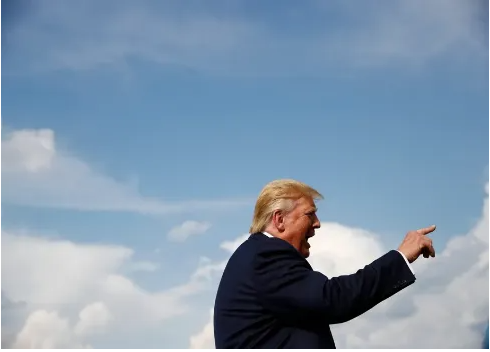
The US-Iran memorandum constituted a decisive turning point in Donald Trump’s political fate. Trump, who initiated the war and mobilized his electorate with the promise of “bringing Iran to its knees,” suffered his greatest diplomatic defeat as the terms of the memorandum became clear. This situation compelled a serious strategic recalibration within the Republican Party. A Reuters report published in late April revealed that Republicans had decided to sideline Trump in the midterm elections scheduled for November.
The dynamics behind this decision are considerably complex. As American public opposition to the Iran war hardened, support for Trump dropped to its lowest levels. Gasoline prices approaching the all-time records of 2022 caused economic anxieties to merge with anti-war sentiments. Republican strategists fear that the elections could transform into a referendum specifically on Trump. Adverse outcomes at the polls could mean the loss of majorities in both the House of Representatives and the Senate. In such a scenario, Trump would be reduced to a “lame duck” in the middle of his term, and impeachment debates could be reignited.
Trump’s Political Isolation and Shift in Rhetoric
The memorandum’s signing process has politically isolated Trump. At the G7 summit, Trump was compelled to employ defensive statements such as “Without me, there would be no Israel,” revealing his anxiety to protect his own political legacy. However, these remarks found no resonance in either Israeli or American public opinion. Trump’s statement that “I did not seek regime change in Iran” directly contradicts his maximalist rhetoric before the war. This contradiction has dealt a serious blow to Trump’s political credibility.
The Republican Party’s decision to remove Trump from campaign materials is a concrete indicator that the party has lost confidence in its own president. Internal party polls reveal that Trump is now perceived as a “risk factor,” particularly among suburban voters and independents. This situation places Republican candidates in a difficult dilemma: on one hand, the fear of losing Trump’s loyal base; on the other, the political cost of being associated with Trump.
Parameters of the New Electoral Strategy
The Republicans’ new electoral strategy rests on three fundamental axes. First, the removal of Trump’s name and visual elements from campaign materials. Second, the shift in discourse from “Trump’s war” toward issues with broader appeal, such as “economic recovery” and “local security.” Third, the adoption of a communication style that does not acknowledge the failure of Trump’s Iran policy but does not explicitly articulate it either.
However, whether this strategy will succeed remains uncertain. Trump’s loyal base may react harshly to the president’s sidelining and punish Republican candidates by staying home on election day. This factor will be the most critical variable directly affecting the party’s performance in the midterms.
The Earthquake Effect in Israeli Domestic Politics
Likud’s Strategic Transformation
The US-Iran memorandum has also produced deep reverberations in Israeli politics. Likud’s decision to abandon its electoral campaign strategy emphasizing Netanyahu’s close ties with Trump constitutes a turning point in Israeli domestic politics. According to i24NEWS, a campaign emphasizing Netanyahu’s “close bonds” with Trump would not “help the Prime Minister win.”
Two fundamental factors were decisive in this decision. First, the memorandum was criticized with very harsh language across all segments of Israeli politics. The Israeli public perceived America’s direct negotiations with Iran and its significant concessions to Tehran as a betrayal. Trump’s role in this process has become increasingly questioned in Israel. Second, Trump’s recent harsh criticisms of Netanyahu have been influential. Trump’s confirmation that he called Netanyahu a “fucking crazy” during a phone call, followed by statements such as “You have no judgment,” demonstrated that the personal relationship between the two leaders was fracturing.
Netanyahu’s Defensive Rhetoric and Efforts at Persuasion
Facing mounting criticism, Netanyahu was forced to distort reality at a press conference. Claiming that the war had ultimately succeeded, Netanyahu asserted that Israel had prevented its “annihilation by a nuclear Iran.” However, he struggled to deny the fact that none of his pre-war objectives had been achieved. When a journalist asked, “Three months after you declared the objective of eliminating the threat posed by the Iranian regime, why did the operation end while that regime remains in power?” Netanyahu’s responses were found to be unconvincing.
Netanyahu enumerated his supposed achievements as bombing Iran, assassinating nuclear scientists and senior officials, damaging missile arsenals, and inflicting billions of dollars in damage on Tehran. Yet these arguments failed to persuade either the opposition or the public. Netanyahu’s characterization of “saving Israel from annihilation” as his greatest success was interpreted in practice as an admission of failure.
Total Defeat on the Media Front
The Israeli media has been seething with coverage of the memorandum. Newspaper headlines and the derisive, harsh statements from officials have cornered Netanyahu. Channel 12 reported that Washington had accepted Tehran’s “main terms” and that “the Iranians are not agreeing to this for nothing.” The report noted that the memorandum endangers Israel’s security interests, that uranium destruction operations had been downgraded to uranium dilution, and that the missile arsenal was not part of the agreement in any way.
Maariv wrote that the agreement confirmed that Tehran had emerged from the war as the undisputed victor. The newspaper summarized the gravity of the situation with the phrase: “Israel’s political echelon has once again become a punching bag for both the Iranians and Donald Trump.” Yediot Aharonot ran the headline “Trump played us.” Channel 14 expressed the harshest reaction: “What Donald Trump has done to us is so bad it’s difficult even to explain.”
Politicians’ Clear Stance: Total Failure
The reactions of Israeli politicians were no different from those of the media. Former Prime Minister and Netanyahu’s former Defense Minister Ehud Barak characterized the agreement as “very bad,” stating: “Israel is paying the price for Netanyahu’s arrogance and blindness. The war achieved none of its objectives. Israel’s influence over events has been reduced to zero, and this is a tragedy.” Opposition leader Yair Lapid declared: “The agreement being prepared does not meet any of the war objectives set by Israel: a complete failure for Netanyahu.”
Extremist Security Minister Itamar Ben-Gvir proclaimed: “Trump’s agreement does not bind us. Israel is not a country dependent on the US. We are an independent and sovereign country. We are not partners in this agreement, which does not secure our security. We should not withdraw from any territory in Lebanon captured by our fighters.” Extremist Finance Minister Bezalel Smotrich added: “We condemn the agreement. Bad for Israel and the entire free world. Period. Israel must continue its efforts to overthrow the Iranian regime and ensure Tehran never acquires nuclear weapons.”
Former Chief of Staff and opposition leader Yair Golan offered the most damning assessment: “The immense military achievements won with the courage of our pilots and the blood of our fighters have been erased, while Netanyahu stood aside weak, sick, lonely, and ineffective. This is the culmination of years of failure. The Prime Minister who promised absolute victory will end his tenure in an environment where Israel’s enemies are stronger, Israel is weaker, and the deterrence built with the blood of our fighters is eroding before our eyes.”
The Future of Bilateral Relations: Fragile Alliance or Permanent Rupture?
Deepening Diplomatic Distance
US-Israel relations are undergoing a historic test in the wake of the memorandum. Trump’s remarks targeting Israel at the G7 summit demonstrated how deeply the diplomatic distance between the two countries has grown. Trump’s statement that “They have been fighting in Lebanon for too long and too many people are being killed. You don’t have to demolish an apartment building every time you’re looking for someone” constitutes a rare criticism of Israel’s military tactics.
More significantly, Trump’s comment that “I did not like that they attacked Beirut two hours before the agreement” constitutes direct intervention in Israel’s strategic autonomy. This indicates that intelligence and military coordination between the two countries has been seriously damaged. Trump’s suggestion that Israel should allow Syria to handle Hezbollah represents an approach entirely contrary to Israel’s security doctrine.
Ambassador Huckabee’s Defiance
US Ambassador to Israel Mike Huckabee’s response to Trump laid bare the dimensions of tension in bilateral relations. Huckabee inverted Trump’s statement “Without me, there would be no Israel” by declaring: “Without Israel, without the Jewish foundation, there would be no America.” This outburst was interpreted as an American ambassador openly challenging his own president, creating an unprecedented situation in diplomatic protocol.
Huckabee’s stance demonstrates just how deep the anger toward Trump is within Israel. Although the ambassador is obligated to defend his president’s policies in the country to which he is accredited, he adopted the opposite stance, legitimizing the Israeli public’s reaction to Trump.
Future Projections
The future of bilateral relations can be evaluated through three fundamental scenarios. In the first scenario, Trump suffers the anticipated defeat in the November midterms and subsequently adopts an even more defensive posture in foreign policy. In this case, US-Israel relations could decline to historically low levels.
In the second scenario, Netanyahu suffers the anticipated defeat in the Israeli elections, and a more pragmatic leader emerges. The new government’s efforts to repair relations with the US could reduce tensions in the short term. However, the disappointment created by Netanyahu’s political legacy in Israeli public opinion could permanently undermine trust in the US.
The third and most likely scenario is a permanent change in strategic alignment between the two countries. Israel has understood that it can no longer rely on unconditional US support and has been compelled to redefine its defense paradigm. This situation will lead Israel to pursue new alliance arrangements in the region and accelerate efforts to enhance its military independence.
Conclusion
The US-Iran memorandum not only altered regional balances but also produced deep shocks in the domestic politics of both the US and Israel. In the United States, the Republican Party took the historic step of excluding its own president from the election campaign. This decision is a concrete indicator of how severely Trump’s political credibility has eroded and the extent of the party’s trust erosion within its own base.
In Israel, Likud decided to remove Netanyahu’s closeness to Trump from the election campaign. This reveals that Trump is no longer a “positive” factor in Israeli politics but has instead been coded as a “risk premium.” As Israeli media and politicians characterize the memorandum as a “failure” and a “betrayal,” Netanyahu’s own base is experiencing a serious crisis of confidence.
The future of bilateral relations remains uncertain. Trump’s harsh criticisms of Netanyahu indicate that the personal bond between the two leaders is fracturing. Ambassador Huckabee’s defiance of Trump is yet another indication of how deeply the tension has grown. In this picture, while leaders in both countries are preoccupied with protecting their own political bases, the foundational pillars of the strategic alliance are being chipped away one by one.
The true loser is the historical trust elements of the US-Israel special relationship. Neither can Israel any longer rely on unconditional US support, nor can the US assume that Israel will remain an unquestioning ally. This new reality will transform all balances in the Middle East and will establish new parameters in regional and global power struggles in the coming years.
References
Waltz, K. N. (1979). Theory of International Politics. McGraw-Hill.
Putnam, R. D. (1988). Diplomacy and domestic politics: The logic of two-level games. International Organization, 42(3), 427-460.
Mearsheimer, J. J. (2001). The Tragedy of Great Power Politics. W.W. Norton.
International Crisis Group (ICG). (2024). Middle East Report: The New US-Iran Framework and Regional Security. Brussels.
Knesset Research and Information Center. (2024). Analysis of the 14-Article Understanding: Implications for Israel’s National Security. Jerusalem.
Bloomberg News. (2026, June 19). US-Iran Draft Memorandum Surfaces Ahead of Geneva Signing. Bloomberg.
Al Arabiya News. (2026, June 19). Leaked document reveals 14-point US-Iran understanding. Al Arabiya.
Reuters. (2026, April 28). Republicans to sideline Trump in midterm campaigns amid Iran war backlash. Reuters.
i24NEWS. (2026, June 21). Likud abandons Trump-centric campaign strategy following Iran deal. i24NEWS.
Maariv. (2026, June 21). Iran emerges as undisputed victor in war. Maariv.
Yediot Aharonot. (2026, June 21). Trump played us: Israel’s anger over Iran deal. Yediot Aharonot.
Channel 12 News. (2026, June 21). Iran deal threatens Israel’s security interests. Channel 12.
Axios. (2026, June 20). Trump’s explosive call with Netanyahu: “You have no judgment”. Axios.
Sefa Yürükel
Danish ethnographer and social anthropologist (MA)
Aarhus University, 1997
Independent Researcher
Fields of Research: International Politics, Public International Law, Geopolitics, Sociology, Psychology, Cultural Studies, Systems and Structures.

Bir yanıt yazın