The Cyclical Crisis of Hegemony and the Rise of Eurasia
World history should be read not through the lens of great powers rising and falling but through the silent, seismic shifts in economic centers of gravity. The global orders established in the seventeenth century by a maritime trading republic, in the nineteenth century by an island empire, and in the twentieth century by a continent spanning federal republic were products not only of military superiority but of each hegemonic cycle’s capacity to construct its own trade routes, reserve currency, and norms of international law. In The Long Twentieth Century, Giovanni Arrighi conceptualizes these cycles as phases of “material expansion” and “financial concentration.” Every hegemonic power first undergoes an immense material expansion in production and trade; then, as profit rates decline, capital flees productive investment and shifts toward financial speculation and rentierism. According to Arrighi, once this second phase is complete, the old hegemon weakens, and a period of systemic chaos prepares the ground for a new hegemon to rise. We are precisely in such a moment of systemic transition.
Arrighi’s reading of the 2008 financial crisis as the end of the financial concentration phase of the Atlantic centered order is no accident. The subprime mortgage crisis that erupted in 2008 exposed the extent to which financial markets had decoupled from the productive economy and how speculative mechanisms held the global economy hostage. As David Harvey examines in A Brief History of Neoliberalism, the bailout packages and monetary expansion policies implemented after the crisis accelerated the upward redistribution of wealth, deepened global inequalities, and eroded the legitimacy of the Atlantic centered order. This loss of legitimacy fuels demand for alternative financial and trade architectures.
The conjuncture in which neoliberal globalization has reached its historical and ecological limits experienced a further rupture with the COVID 19 pandemic in 2020. The pandemic revealed the fragility of global supply chains built on just in time production; it was a bitter experience in which even basic products like masks and ventilators were hoarded by core countries while peripheral countries were denied supply security. The Russia Ukraine war that followed inaugurated a new era in which energy flows were weaponized and grain corridors turned into an instrument of geopolitical blackmail. All these developments signal that the Atlantic centered unipolar architecture is dissolving and that the center of gravity of the world economy is shifting decisively toward Eurasia. The emerging geopolitical map confronts Turkey with an existential strategic test far beyond a simple question of positioning: In this great transformation, will Turkey be a bridge instrumentalized merely as a transit corridor, or will it become a geopolitical backbone, one of the founding actors of the new order?
Paul Kennedy’s thesis of “imperial overstretch,” formulated in The Rise and Fall of the Great Powers, provides additional depth for understanding this moment of transition. Kennedy attributes the collapse of great powers throughout history to the way their global military and strategic commitments outstrip the economic foundations that sustain them. Today, the current hegemon’s immense and competing commitments, containing rivals in the Indo Pacific, maintaining a military presence in the Middle East, managing the alliance system in Europe, and upholding the global reserve currency system, are a classic case of imperial overstretch in Kennedy’s terms. This situation widens the space for autonomous action by regional powers at moments of strategic vacuum as the Atlantic order weakens, offering states like Turkey a historic window of maneuver.
The Heartland, the Rimland, and Turkey’s Geopolitical Dilemma
The answer to this strategic test confronting Turkey lies not only in current diplomatic choices but at the heart of a theoretical conflict that has persisted since the early 20th century and has taken concrete form in infrastructure projects over the past two decades. In his groundbreaking 1904 article “The Geographical Pivot of History,” the British geographer Halford Mackinder argued that the fate of world politics would be determined not by maritime powers ruling the oceans but by whoever controlled the vast landmass stretching from Eastern Europe to Siberia, the “Heartland.” In his view, this region, by virtue of its geographic position, was a strategic “natural fortress,” inaccessible to sea powers, endowed with enormous natural resources and agricultural potential, and capable of rapidly mobilizing its interior lines thanks to railway technology. Mackinder’s famous dictum expressed this foresight with brutal concision: “Who rules East Europe commands the Heartland; who rules the Heartland commands the World Island; who rules the World Island commands the world.”
This thesis was a direct challenge to the sea power doctrine of American admiral and strategist Alfred Thayer Mahan. In his seminal 1890 work The Influence of Sea Power Upon History, Mahan had argued that the destiny of great states was determined by the size of their navies, their access to open sea trade routes, and their ability to control strategic straits. For Mahan, sea power consisted of a three legged structure: a navy that protected merchant ships, the merchant fleet itself, and a chain of overseas bases that sustained that fleet. The rise of the maritime empire was the most accomplished example of this model. Mackinder offered a radical alternative to precisely this sea centered strategic understanding: in the age of the railway, real power would belong not to those crossing oceans but to those connecting the interior regions of the landmass.
During the Cold War, Nicholas Spykman revised Mackinder, arguing that the truly decisive zone was the “Rimland” encircling the Heartland. In The Geography of the Peace, Spykman maintained that the global power struggle would be won or lost precisely in this buffer zone, for the Rimland was the strategically most fragile and most valuable geography where the spheres of influence of both sea power and land power intersected. Inverting Mackinder’s formula, Spykman coined a sentence etched into the history of strategic thought: “Who controls the Rimland rules Eurasia; who rules Eurasia controls the destinies of the world.” The theoretical tension between these two poles also forms the intellectual basis of the geopolitical dilemma at the very center of which Turkey stands today.
Turkey thus finds itself on Mackinder’s Inner Crescent and at the very heart of Spykman’s Rimland, at a unique crossroads where these two colossal geopolitical forces articulate with one another. In The Revenge of Geography, Robert D. Kaplan takes this positioning further, stressing that Turkey is not merely a crossroads but also one of Eurasia’s most critical choke points. The Bosporus and Dardanelles, as the sole exit gate of the Black Sea, are the obligatory transit point for all trade and energy flows coming from Ukraine, the Russian steppes, and the Caucasus, which form the southern flank of Mackinder’s Heartland. If Turkey is reduced to a passive pipeline that merely discharges Heartland energy and trade flows into the sea without processing or transforming them, it remains, as Spykman described, a mere chessboard in the great powers’ struggle for influence. This scenario turns Turkey not into an axis but into a “transit bridge” over which others’ burdens pass. John Mearsheimer’s “offensive realism” framework, developed in The Tragedy of Great Power Politics, completes this picture with pessimistic clarity: in an anarchic international system, great powers constantly pursue aggressive power maximization to survive. This reality keeps states at strategic crossroads under permanent pressure and manipulation. If Turkey submits to this pressure and becomes merely a transit country serving the interests of others, it loses any chance of becoming an independent pole in Mearsheimer’s anarchic system.
The Ghost of Mackinder: The Iron Silk Road and a Vision Materialized
Today, for the first time, Mackinder’s century old prophecy is being experienced as a concrete field of geo economic competition. As Peter Frankopan masterfully maps in The New Silk Roads, mega infrastructure projects such as China’s Belt and Road Initiative, Russia’s North South Corridor, and the Trans Caspian Middle Corridor at the heart of which Turkey lies demonstrate that global trade will no longer flow solely through ocean facing ports. These rail and road networks, also called the Iron Silk Road, can deliver goods from China to Europe in days rather than weeks compared to sea transport, radically transforming the speed and flexibility of supply chains.
This infrastructure revolution vindicates Mackinder’s early warning about the strategic importance of railways. In his 1904 article, Mackinder foresaw that railways would liberate the Heartland from the blockade of sea powers by connecting interior regions, thereby eliminating the land power’s disadvantage against sea power. Today, China’s massive investments in railway lines running through Kazakhstan, Azerbaijan, Georgia, and Turkey toward Europe are the very realization of that foresight. These routes, traversing the Black Sea, crossing the Caspian via ferries or submarine connections, are bringing onto the historical stage an integrated land based Eurasian alternative to the sea centered Atlantic order.
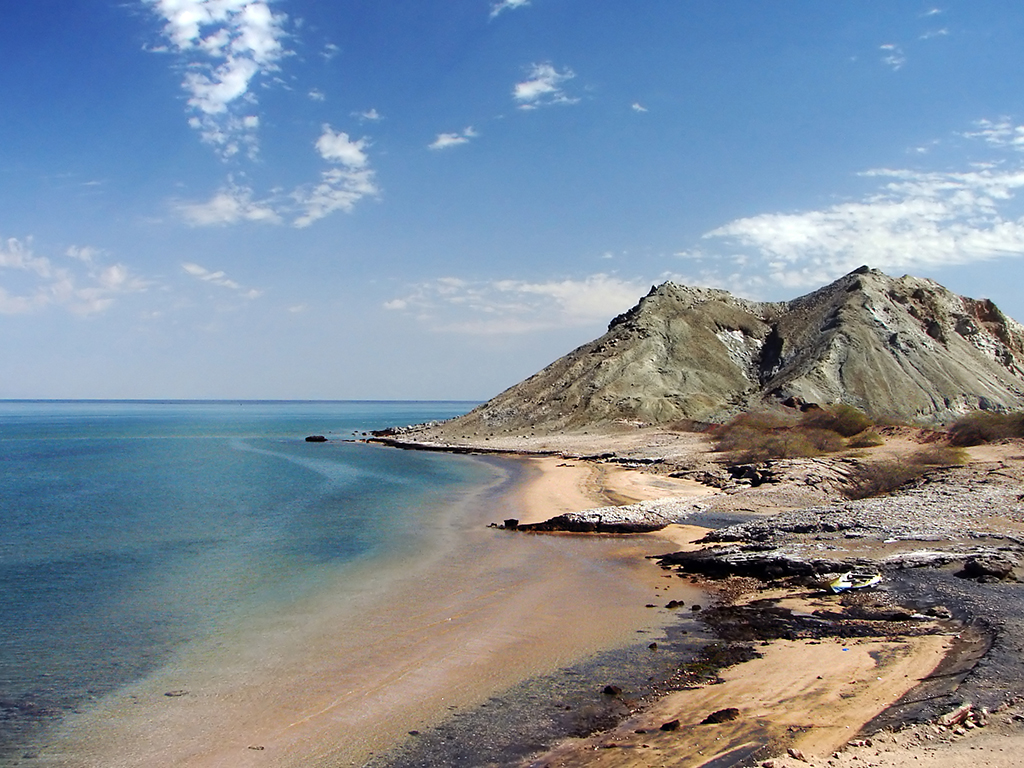
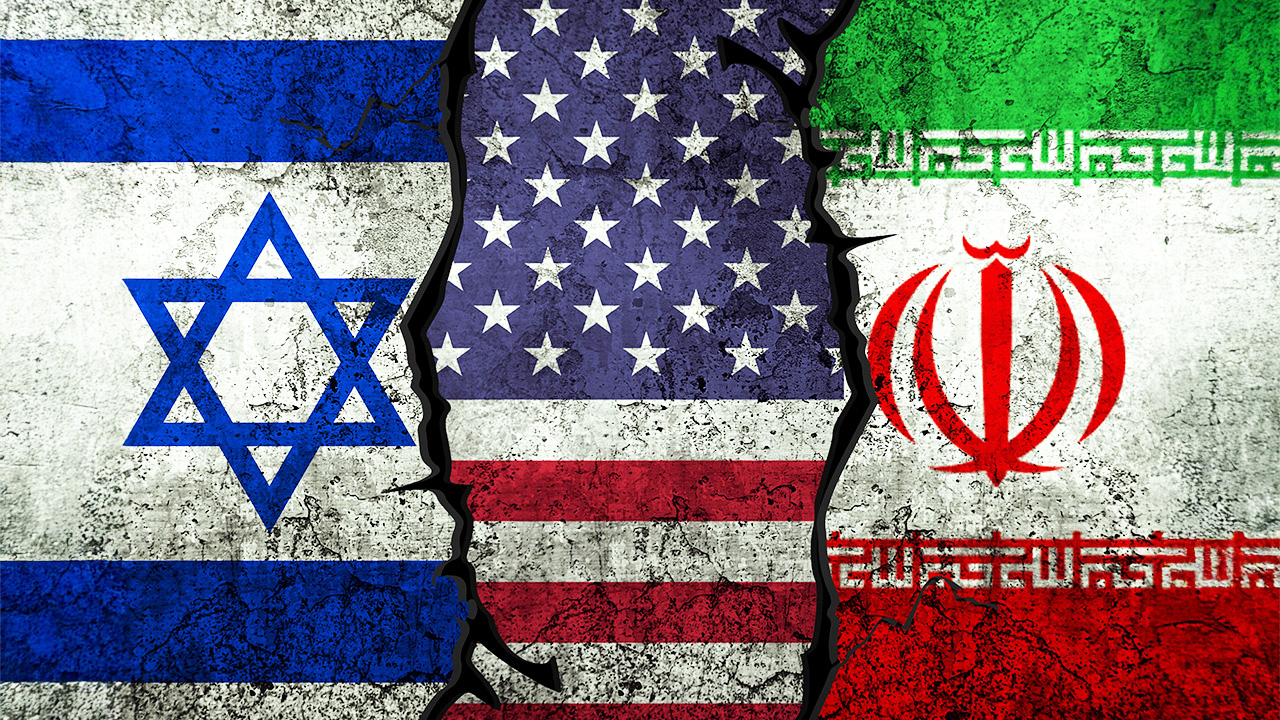
This transformation uniquely amplifies the strategic importance of the energy and trade belt stretching from the Persian Gulf to the Caucasus and from the Caspian to Central Asia. It is precisely at this point that the true nature of apparently regional crises like the US Iran tension becomes clear. Far beyond an ideological conflict and nuclear proliferation concerns between two countries, this tension is a geopolitical response to the question of under what conditions the rising Eurasian belt will integrate into the global economy. With its coastline on the Persian Gulf, its strategic gateway to Central Asia, and its ports on the Caspian Sea, Iran sits at the very center of the Eurasian trade network. Which great power’s orbit Iran enters, or to what extent it charts an independent course, is one of the key variables that will determine the future of the entire Eurasian project.
In his monumental work ReOrient, André Gunder Frank convincingly demonstrates the existence of an Asia centered world economy from the 15th century onward, to which Europe later articulated itself largely thanks to silver plundered from the Americas. According to Frank, the real center of gravity of the world economy has historically been Asia, while the Atlantic centered order has been merely a temporary “parenthesis” of the last five hundred years. The axis shift underway today is a strong signal that this parenthesis is closing. If Iran integrates more tightly with the China Russia axis and accelerates this process, Turkey’s position becomes even more critical. As Zbigniew Brzezinski defined in The Grand Chessboard, Turkey is a “geopolitical pivot” with the capacity to directly influence the stability and balance of power in Eurasia. Brzezinski defined geopolitical pivots as “states whose importance derives not from their power and motivation but rather from their sensitive location and from the consequences of their potentially vulnerable condition for the behavior of geostrategic players.” While this definition does not fully capture Turkey’s potential, it is valuable in showing that a pivot is not merely a bridge to be crossed but an active strategic player upon which great powers’ equilibrium can turn. Turkey can elevate this pivot role to the status of “geopolitical backbone” only by fortifying its geographic advantage with economic depth and political independence.
From Transit Bridge to Geopolitical Backbone: The Anatomy of a Theoretical Distinction
The distinction between backbone and bridge is not merely a strategic metaphor but an analytical framework with deep theoretical implications regarding the structural functioning of the world system. In Immanuel Wallerstein’s World Systems Theory, the capitalist world economy displays a hierarchical and unequal structure composed of “core,” “semiperiphery,” and “periphery.” Core countries specialize in high technology, high value added production, skilled labor, and sophisticated financial services, while peripheral countries are condemned to export low value added raw materials, agricultural products, and cheap labor. In this theory, Turkey occupies precisely a “semiperipheral” position: more industrialized and institutionalized than the periphery, yet still dependent on the core in terms of technology and capital.
According to Wallerstein, the most critical function of semiperipheral countries within the system is to legitimize, stabilize, and thereby ensure the continuity of unequal exchange between core and periphery. This structural position offers Turkey two fundamental options: either it remains an intermediary (a bridge) that carries the standards, consumption patterns, and financial instruments of the core to the periphery, earning modest gains from this intermediary position; or it erodes this semiperipheral status to become a regional hub of production, technology, and finance (a backbone) capable of competing with core countries in certain sectors. The current situation, in which Turkey is articulated to the European market through asymmetric mechanisms like the Customs Union but has been unable to internalize high technology production and financial capital accumulation, corresponds to the classic “bridge” scenario in Wallerstein’s system. As Joseph Stiglitz compellingly demonstrates in Globalization and Its Discontents, neoliberal policies lock developing countries into low value added production, leave them vulnerable to speculative capital flows, and undermine the development of domestic industry.
In contrast, the 21st century map drawn by Parag Khanna in Connectography offers a completely different horizon. For Khanna, what determines strategic importance in our era is no longer Westphalian borders of sovereignty but the nodal points of supply chains, energy transmission lines, fiber optic cables, and logistical infrastructure. The world is witnessing not so much a competition of states as a competition of networks formed by the interconnection of “growth corridors” and “super cities.” Khanna defines countries like Turkey that sit at the very intersection of east west and north south energy and trade corridors as the “super connectivity hubs” of this new map. If a country does not merely passively watch the pipelines, container trains, and energy cables that pass over its territory but becomes a center that processes, refines, finances, and manages this flow through its domestic industry and digital infrastructure, it then begins to function as a backbone. A bridge is a passive, singular, and fragile structure that adds no added value to the power passing over it. A backbone, on the other hand, is an active skeleton that holds a system upright, stands at the center of its nerve endings, and imparts mobility, stability, and growth dynamics to its surroundings.
When we turn again to Arrighi’s analysis of hegemonic cycles, the historical precedent for the backbone bridge distinction becomes clear. Arrighi shows that during moments of hegemonic transition, the “intermediate zones” between rising and declining great powers play a critical role by concentrating financial innovation and logistical superiority in their hands. In the seventeenth century, during the transition between overseas empires and rising industrial capitalism, the bank of a port city, the first modern stock exchange, and an advanced insurance system made it the financial backbone of the continent, effectively the nerve center of trade and capital flows. Similarly, in the nineteenth century, as the old hegemon declined and the new one rose, the financial center of the previous era continued to function as the backbone, with even the ascent of the new reserve currency financed through this center for a time. The historical opportunity before Turkey today is precisely this: in the axis shift between East and West, to become a center of gravity, a geopolitical backbone, by setting the new rules of trade, energy, and finance, just as that era’s financial center did.
On the Threshold of a New Architecture: Turkey’s Test of Founding Will
Historical opportunities, however, do not spontaneously transform into strategic power. This merciless truth echoes from every corner of the history of geopolitical thought. Countries that lack deep water ports, integrated railway networks, high technology production ecosystems, a predictable and independent rule of law, and deep, liquid financial markets can only be spectators of this grand narrative and passive components of its logistics. A maritime republic did not rise because it was situated right on the Mediterranean’s most strategic trade routes; its real achievement lay in developing maritime insurance, financial innovations like double entry bookkeeping, and maritime commercial law, thereby setting the rules of operation for the entire regional economy. An empire that crossed the Atlantic did not rise merely with its navy and merchant fleet; it established hegemony by constructing the normative and institutional architecture of the global economy, from the gold standard and insurance market to maritime law and central banking practices.
The winners were not those who passively sat on strategic routes on the map but those who managed those routes and who were able to internalize the value chain passing through them. Turkey’s future on the Eurasian axis is knotted in this historical truth. If it cannot fortify its domestic front on the basis of the rule of law, economic stability, and technological production, then Caspian natural gas, Central Asian rare earth elements, and the railways stretching from China to Europe will code Turkey not as a backbone but as a mere geographical bridge crossed and left behind. Transit revenues can enrich a country, but they do not confer geopolitical autonomy or the status of a rule maker. On the contrary, transit dependency can make a country even more vulnerable to the great powers controlling those routes.
This critical moment, in which the geopolitical map is being redrawn, old rules are losing their validity, and new ones are not yet fully shaped, imposes not waiting but a founding will. In the new world order, rising states will not be passive observers watching change from afar but active architects constructing the new architecture of trade, energy, finance, and digital connectivity. This architecture is built not only of concrete and steel but also of reliable institutions, predictable regulations, and skilled human capital. Brzezinski’s “geopolitical pivot,” Khanna’s “super connectivity hub,” Arrighi’s “financial intermediary,” and Wallerstein’s “semiperiphery rising to the core,” all these concepts point to Turkey’s potential backbone role. Yet none of them is a self fulfilling prophecy. Each implies heavy domestic political, economic, and institutional preconditions that must be met.
Turkey will either transform into Eurasia’s geopolitical backbone as an architect of this transformation, becoming a center where trade and energy flows are not merely passed through but managed, processed, and financed; or it will fade into a geographical bridge under this colossal structure built by others, content with the modest transit revenues that its strategic location affords it. This choice will be shaped not so much by foreign policy as by the outcomes of struggles to be waged on the domestic front: the rule of law, economic stability, technological innovation, and quality education. History exalts not those who hesitate at such critical junctures but those who seize the moment and manifest a founding will.
Conclusion
This strategic test on the threshold of the Heartland questions not only Turkey’s foreign policy choices but the very capacity of its state reason and societal capital to imagine the future. On Arrighi’s map of hegemonic cycles, every great transition moment is a chaotic intermediate period in which the old center enters a financial concentration crisis while new production and trade hubs have not yet fully institutionalized. It is precisely this intermediate period that opens a unique space for maneuver for states positioned at strategic crossroads. Turkey, at the very center of such a space for maneuver, as neither a mere European periphery nor a mere Asian extension, confronts the opportunity to become a sui generis geopolitical subject. Yet this opportunity is not an automatic historical gift but a challenge that imposes heavy structural conditions to be met.
The theoretical tension between Mackinder’s Heartland and Spykman’s Rimland also reveals Turkey’s dual nature: Turkey is both the gateway of land power to the Mediterranean and the line of penetration of sea power into the Eurasian interior. This dual position, if actively managed, offers unique strategic depth; if passively accepted, it condemns the country to being a buffer state squeezed between two worlds and serving the security and trade interests of others. Being a bridge is the name of this second scenario: a passive geography over which trains, pipelines, energy cables, and military convoys pass, but which has no say over the direction, speed, or rules of that flow. Being a backbone, in contrast, means becoming a center that manages, processes, finances, and ultimately imparts mobility to its surroundings.
Wallerstein’s concept of the semiperiphery expresses precisely this two sided potential. Semiperipheral countries can climb upward in the system’s unequal structure just as they can slide downward. Turkey’s Customs Union experience vindicates Wallerstein’s warning: market integration, if not fortified by technology transfer, domestic innovation capacity, and financial independence, does not bring a country closer to the core; on the contrary, it traps it in a permanent intermediary position that has adopted the core’s standards but cannot access the core’s prosperity. Khanna’s connectography vision, in turn, points the way out: in the 21st century, power lies in the control of connections, not borders, and the countries that rise are those that manage these connections by turning themselves into nodal points rather than mere transit routes.
Ultimately, the answer to the question lies not outside but within. Whether Turkey becomes a backbone or a bridge, and whether it can transcend Brzezinski’s definition of a geopolitical pivot, depends largely on the institutional resilience it builds on the domestic front. The rule of law, predictable regulation, deep financial markets, high technology production capacity, and skilled human capital, these are the pillars that transform a geographical location into a geopolitical backbone. History is replete with examples of many states with far more advantageous strategic positions than Turkey that faded into obscurity because they could not erect these domestic pillars. Conversely, city states squeezed into relatively modest geographies became global backbones through financial innovation and legal predictability.
This critical moment in which the geopolitical map is being redrawn imposes not waiting but a founding will. As Eurasia rises, the difference between being a passive spectator of this rise and an active architect of it can be closed only through the success of this internal construction process. In the new world order, rising states will be not those who watch change from afar but those who set the new rules of trade, energy, finance, and digital connectivity. Turkey will either transform into Eurasia’s geopolitical backbone as an architect of this transformation; or it will fade into a geographical bridge under this colossal structure built by others, content with the modest transit revenues that its strategic location affords it. The choice is a matter not of geography but of political will, institutional imagination, and societal mobilization. History exalts not those who hesitate at such critical junctures but those who seize the moment and manifest a founding will.
Bibliography
Arrighi, G. (2010). The Long Twentieth Century: Money, Power, and the Origins of Our Times. Verso Books.
Brzezinski, Z. (1997). The Grand Chessboard: American Primacy and Its Geostrategic Imperatives. Basic Books.
Frank, A. G. (1998). ReOrient: Global Economy in the Asian Age. University of California Press.
Frankopan, P. (2018). The New Silk Roads: The Present and Future of the World. Bloomsbury Publishing.
Harvey, D. (2005). A Brief History of Neoliberalism. Oxford University Press.
Kaplan, R. D. (2012). The Revenge of Geography: What the Map Tells Us About Coming Conflicts and the Battle Against Fate. Random House.
Kennedy, P. (1987). The Rise and Fall of the Great Powers: Economic Change and Military Conflict from 1500 to 2000. Random House.
Khanna, P. (2016). Connectography: Mapping the Future of Global Civilization. Random House.
Mackinder, H. J. (1904). The Geographical Pivot of History. The Geographical Journal, 23(4), 421-437.
Mahan, A. T. (1890). The Influence of Sea Power Upon History, 1660-1783. Little, Brown and Company.
Mearsheimer, J. J. (2001). The Tragedy of Great Power Politics. W.W. Norton & Company.
Spykman, N. J. (1944). The Geography of the Peace. Harcourt, Brace and Company.
Stiglitz, J. E. (2002). Globalization and Its Discontents. W.W. Norton & Company.
Wallerstein, I. (2004). World Systems Analysis: An Introduction. Duke University Press.
Sefa Yürükel
Danish ethnographer and social anthropologist (MA)
Aarhus University, 1997
Independent Researcher
Fields of Research: International Politics, Public International Law, Geopolitics, Sociology, Psychology, Cultural Studies, Systems and Structures.