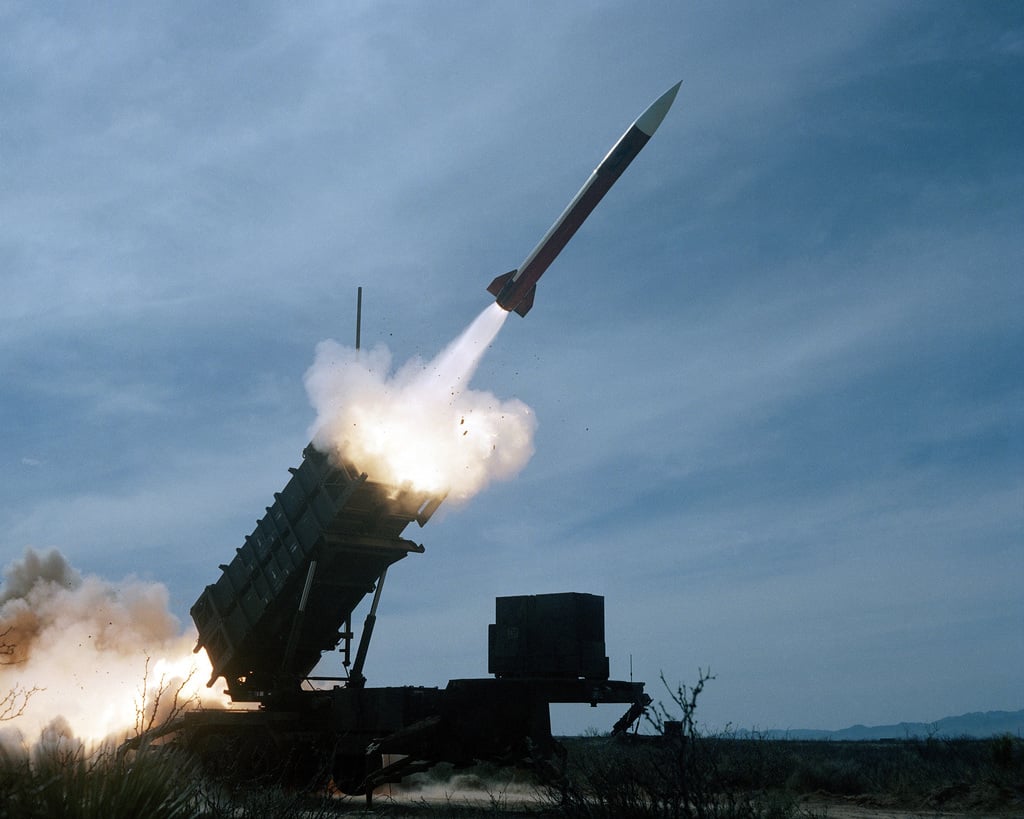
New Global Defense Equation: Four Major Actors
In the process leading to 2040, the defining dynamic of the international security environment is the deepening of the multipolar structure and the reshaping of great power competition. While the USA aims to consolidate its current global military leadership and deepen its alliance networks, China is pursuing a military modernization drive simultaneous with its historic transformation. Russia, on the other hand, is restructuring its army based on the lessons learned from the Ukraine war, maintaining its assertiveness especially in hypersonic weapons, electronic warfare, and nuclear deterrence. Among these three great powers, Turkey stands out with its unique hybrid model, developing an independent and agile middle power paradigm with its “National Technology Move” vision in the defense industry.
The US defense strategy is built on technological superiority and global reach capability, while China’s strategy aims to leap from regional superiority to the global level with an integrated political military approach. Russia maintains its existence as a counterbalance to the Western alliance by modernizing its nuclear deterrence and developing asymmetric capabilities. Turkey, unlike these three actors, stands out as a flexible model that builds its deterrence in a multi domain structure with original technological breakthroughs, capable of both connecting with Western alliance systems and cooperating with Eastern powers. This study aims to develop optimal model recommendations for Turkey by comparatively examining the strategic visions, technological roadmaps, and force structures of the four actors.
Strategic Framework: Four Different Visions and Paradigms
The United States’ 2040 strategic vision is shaped around the concept of Joint All Domain Command and Control (JADC2). This paradigm aims to unite the sensors of all service branches including the Air Force, Army, Navy, and Space Force in a single network, benefit from automation and artificial intelligence, and rely on a secure and resilient infrastructure. The US JADC2 strategy is a multi layered, multi billion dollar initiative aimed at eliminating the boundaries between military services and creating an “internet of weapons.” By 2040, the US prioritizes rendering hypersonic missiles ineffective with the “smart missile defeat” concept even before they are launched. This approach is closely related to having the world’s largest defense budget, approximately 895 billion dollars in 2024, and a globally deployed military presence.
The People’s Liberation Army of China, on the other hand, has centered a different paradigm, the “intelligentization” strategy. China aims to make great leaps in human machine integration by placing artificial intelligence, autonomous systems, and robotic technologies at the center of its military system. The autonomous ground vehicles, unmanned aerial and underwater vehicles, and autonomous combat aircraft capable of operating alongside manned aircraft displayed in the September 2025 military parade have been tangible evidence of China’s vision. China has also left the US behind in hypersonic missiles and electronic warfare, managing to overcome existing air defense architectures with systems like the DF 17. China has the world’s largest active personnel army, approximately 2 million, and a defense budget of 266.85 billion dollars, setting “technological self sufficiency” as the main goal in its 15th Five Year Plan.
The Russian Federation, on the other hand, pursues an asymmetric deterrence strategy against the West. Despite the setbacks in the Ukraine war, Russia’s nuclear triad, consisting of land, sea, and air based nuclear missiles, is one of the largest in the world. Russia’s 2040 vision is to consolidate its leadership in hypersonic weapons such as Kinzhal, Avangard, and Zircon, develop electronic warfare and anti access area denial (A2/AD) capabilities, and close the gap in autonomous systems. Although Russia’s defense budget, approximately 86 billion dollars in 2024, is below that of the US and China, its nuclear weapons stockpile of roughly 5,800 warheads and the ability to deliver them make it indispensable in the global strategic equation. Russian doctrine is based on the concept of “escalate to de escalate,” keeping the threshold for nuclear weapon use low when at a disadvantage in a conventional conflict.
Turkey, on the other hand, has developed a defense strategy based on the “National Technology Move” vision, following a path between these three paradigms but completely independent of them. Turkey is building its own unique “national war network” with breakthroughs in digital transformation, supersonic missile systems, unmanned aerial, land, and sea vehicles, electric propulsion systems, and new generation energy fuels. This model aims for a more independent, hybrid, and autonomous structure, different from both the US’s data centric JADC2 concept, China’s state centric intelligentization strategy, and Russia’s nuclear heavy asymmetric model. Although Turkey’s defense budget, approximately 15 to 20 billion dollars in 2024, is incomparable to these three countries, it has achieved significant success in terms of R&D efficiency and cost effectiveness, rising to a world leader position, especially in unmanned systems.
Strategic Vision and Doctrine Comparison
The heart of the US military doctrine for 2040 is full spectrum multi domain operations. The US Army plans to transform its land forces into a more modular, data oriented, and AI integrated structure by 2040. The US Army’s 2040 air and missile defense strategy envisages a structure where troops can achieve air and missile superiority in distributed, adaptable formations on the terrain. This reflects the world’s most powerful army’s desire to reinforce its existing superiority with technological transformation. Additionally, while modernizing its nuclear deterrence with Columbia class submarines, B 21 bombers, and Sentinel ICBMs, the US is increasing its conventional and non nuclear strike capacity with hypersonic weapons. US doctrine aims to maintain an “instant response” capability anywhere in the world.
China’s vision is part of a larger geopolitical goal: “Integrated Strategic Deterrence.” This is a power projection model that involves the simultaneous use of not only military power but also economic, diplomatic, and technological tools. With this approach, China challenges the US global leadership role and is creating a military balance shift, especially in the Asia Pacific region. As of 2025, while the US remains the global military leader, the growth and modernization speed of China’s military capabilities have led to the questioning of this leadership. Chinese doctrine has concentrated its “anti access area denial” (A2/AD) capabilities in the Taiwan Strait and the South China Sea, aiming to make it impossible for enemy naval forces to enter these regions. China is also developing a new warfare doctrine that integrates manned units with autonomous systems under the concept of “human robot integration.”
Russia’s doctrine, on the other hand, is a modernized version of the classic Soviet “deep operations” concept. Experiences from the Ukraine war have shown the necessity for Russia to integrate artillery fire, electronic warfare, unmanned aerial vehicles, and reconnaissance fire complexes. The main elements of Russian doctrine are nuclear deterrence, high precision long range weapons including hypersonic missiles, electronic warfare superiority, and the resilience of military logistics. Russia is developing a non nuclear deterrence concept, aiming to inflict unacceptable damage on its adversary in conventional conflicts. Moreover, Russia’s “non coalition” operations concept emphasizes its capacity to enter large scale conflicts on its own without allies. For Turkey, this means a direct threat, especially in the Black Sea region.
Turkey’s doctrine, different from these three great powers, focuses on threat perceptions arising from its geopolitical position and the goal of reducing external dependence. Turkey’s strategy centers on the goal of “full independence” in the defense industry. Therefore, Turkey has created an export oriented defense industry model by developing original technologies beyond meeting existing needs. Projects such as KIZILELMA, AKINCI, and TCG Anadolu are concrete examples of Turkey’s success with this model. Its strategic concept goes beyond self defense, based on a deterrence that includes cross border operations, naval power projection known as “Blue Homeland,” and regional leadership in unmanned systems. Turkey is also one of the rare countries that can conduct technical cooperation with both the US led Western systems, such as NATO Link 16 compatibility in its UAVs, and Russia, such as the S 400 system. This dual compatibility provides strategic flexibility to Turkey.
Technological Capabilities and 2040 Roadmaps
The US has the widest technology range and allocates the largest R&D budget. The JADC2 infrastructure will be the backbone connecting all US military assets. By 2040, the US aims to mature its hypersonic weapons like LRHW and HACM, fully operationalize manned unmanned teaming, deploy quantum computer based encryption systems, and bring its space forces to full capacity. Nevertheless, some analyses show that China has caught up or even surpassed the US in some critical areas. Another important capability of the US is its globally deployed naval forces and 11 aircraft carrier strike groups. The US is also unrivaled in AI supported logistics and battle simulation.
China has an ambitious program in artificial intelligence, autonomous systems, and hypersonic weapons. Similar to the US JADC2 concept but in a more centralized structure, it is developing a “combat cloud” connecting all PLA units. China is also rapidly advancing in swarm technologies such as drone swarms, autonomous underwater vehicles, and hybrid manned unmanned air combat teams. By 2040, it plans to fully deploy autonomous ground combat systems known as “robot wolves.” Additionally, China is strengthening its hypersonic missiles to create an A2/AD bubble around the Taiwan Strait. China’s AI capabilities, especially in facial recognition, target detection, and autonomous decision making, are competitive with the US. Furthermore, China’s Tiangong space station and its orbital maintenance capabilities provide a strategic advantage for long term space presence.
Russia’s technological roadmap relies on deep expertise in specific niches such as hypersonic missiles, nuclear powered cruise missiles, and electronic warfare. Russia’s Avangard hypersonic glide vehicle (HGV), capable of reaching Mach 27, can surpass existing missile defense systems. The Zircon sea launched hypersonic missile, with a speed of Mach 9, is one of the fastest operational missiles in the world. In electronic warfare, Russia’s Krasukha and R 330Zh systems have been effective in neutralizing UAVs and radars in the Ukraine war. Russia’s weak points are its significant lag in unmanned aerial vehicles, trying to fill the gap with drones from Iran at the start of the war, AI integration, and high precision microelectronics production due to Western sanctions. Russia is expected to try to close these gaps by 2040, but will continue to focus on nuclear deterrence and asymmetric capabilities.
Turkey, on the other hand, has drawn a very different technological path from these three great powers. Its priority can be defined not as “capability” at the highest technology level, but as “originality in needed technology.” Turkey has become a world leader in unmanned systems, especially armed unmanned aerial vehicles. In the period leading to 2040, Turkey has six goals: leadership in unmanned systems including the 6th generation variant of KIZILELMA and autonomous air swarms, hypersonic missile capability with scramjet powered systems like GEZGİN H, space capabilities with a fully independent space constellation, innovation in energy and propulsion systems such as full electric and hybrid propulsion and boron hydrogen fuels, cyber and electronic warfare including quantum encryption and AI powered autonomous defense, and naval power with autonomous surface and submarine fleets and “Blue Homeland 2.0.” Turkey’s greatest competitive advantage is its R&D efficiency and cost effectiveness, along with its ability to synthesize technologies from different countries such as the USA, Europe, Russia, and China within its own structure.
Force Structures and Human Machine Integration
The US designs its 2040 army as a structure where unmanned systems are equal to or more numerous than manned units, but the central role of humans in the decision making mechanism is maintained. The US Army’s 2040 air and missile defense strategy envisages a structure where troops can achieve air and missile superiority in distributed, adaptable formations on the terrain. In ground forces, the manned unmanned teaming (MUM T) structure will become standard. In naval forces, unmanned surface and underwater vehicles will become an integral part of the fleets, but aircraft carriers and amphibious ships will remain manned. The US is also investing heavily in AI powered decision support systems to eliminate the “tired soldier” problem.
China aims for the most radical change in human machine integration. In the PLA’s 2040 structure, autonomous ground systems called “robot wolves” will be the main determinant of ground battles. The autonomous vehicles displayed in China’s Victory Day parade are a preview of this vision. The basic building block of the Chinese army will be thousands of small autonomous systems moving with swarm technology. Manned platforms, while reduced in number, will continue to exist in strategic command and nuclear deterrence roles. China has also operationalized the “loyal wingman” concept, where unmanned aerial vehicles pair with manned fighter jets. In this way, one manned fighter can operate with five or six unmanned assistants.
Russia’s force structure, unlike the US and China, lags behind in unmanned systems, but focuses on modernizing its existing manned forces. The Ukraine war has shown the importance of Russia’s artillery power and electronic warfare capabilities, but also revealed its vulnerabilities in logistics, command and control, and unmanned aerial vehicles. Russia’s 2040 force structure will evolve into a smaller, more professional, higher tech equipped army. The modernization of the nuclear triad including Borei and Yasen class submarines, Sarmat ICBM, and Avangard HGV has the highest priority. Russia is also making intensive efforts to increase the number of unmanned systems in its conventional forces, but is struggling due to sanctions in microelectronics. Russian doctrine aims to compensate for numerical scarcity with quality and firepower.
Turkey’s force structure, as detailed earlier, will be built on fully autonomous armored units, manned unmanned teaming structures, and modular robotic units. Turkey’s greatest advantage is having an infrastructure to gradually autonomize its existing manned systems. The autonomous variant of the ALTAY tank, and the KIZILELMA and ANKA 3 jet powered unmanned combat aircraft form the basis of this structure. Unlike the US, China, and Russia, Turkey aims not to completely abandon manned platforms, but to restrict them to command and strategic strike roles. Especially in naval forces, manned ships like TCG ANADOLU will serve as command centers for fleets of unmanned aerial and naval vehicles. Turkey’s force structure reflects a “small but hyper capable” middle power model.
Space, Cyber, and Hypersonic Weapons
In space, the US has the most developed and comprehensive infrastructure. The US Space Force will become fully operational by 2040, becoming decisive in satellite constellation management, hypersonic threat monitoring, and orbit based data relay systems. US national security space launches are supported by commercial partnerships and advanced capabilities such as on orbit refueling. China is rapidly catching up with the US in this field, operating its own space station Tiangong and developing advanced anti satellite (ASAT) weapons. China is also working on the ability to blind enemy satellites with ground based laser systems. Russia, on the other hand, is modernizing its space capabilities built on the Soviet legacy, developing new generation space based early warning systems called EKS Kupol and nuclear powered space vehicles. Russia’s ASAT capabilities, both direct ascent and co orbital, were proven by shooting down one of its own satellites in 2021. Turkey, on the other hand, has launched a newer but strategically ambitious space program, aiming to establish a fully independent space constellation and orbit based surveillance network by 2040.
In cyber, all four countries are investing heavily in AI powered autonomous defense and attack systems. While the US and China compete in quantum encryption and post quantum cryptography, Russia is also known for its state sponsored cybercrime and espionage capabilities. Russia’s cyber strategy, known as “active defense,” is based on infiltrating and disrupting the enemy’s cyber infrastructure. Russia’s cyberattacks before and during the Ukraine war, such as the Viasat incident and variants of NotPetya, are concrete examples of these capabilities. Turkey, on the other hand, is developing quantum secure communication protocols within TÜBİTAK BİLGEM, building its national cyber security strategy on the protection of critical infrastructures. Turkey also protects its UAVs’ data links against cyberattacks using encryption and frequency hopping techniques.
In hypersonic weapons, Russia and China are considered to have superiority for now. Russia’s Avangard HGV, capable of Mach 27 with maneuverability, can surpass existing US missile defense systems. Russia has also operationally used Kinzhal, an air launched hypersonic missile, and Zircon, a sea launched system, in Ukraine. China’s DF 17 HGV similarly makes defense difficult by deviating from traditional ballistic missile trajectories. The US is conducting an intensive R&D program to close this gap, aiming to achieve initial operational capabilities with the HACM and LRHW projects by the end of the 2020s. Turkey aims to complete its scramjet powered hypersonic missile development studies in the early 2030s in cooperation with TÜBİTAK SAGE and ROKETSAN. Turkey’s greatest advantage in this field is its potential to adapt the experience gained in ramjet technology from TRG 122/230 supersonic missiles to scramjet. However, a hypersonic glide vehicle development plan like those of Russia and China has not yet been announced.
Turkey’s Comparative Advantages and Vulnerabilities
Turkey’s greatest advantage is its ability to develop high tech products quickly, agilely, and cost effectively. Its success in unmanned aerial vehicles is the most important indicator that Turkey has created an original and innovative R&D model. This model has proven that major breakthroughs can be made with limited resources. Its second great advantage is its geographical and geopolitical location. Turkey is located at the intersection of three continents, at the center of energy corridors and global trade routes. Its third advantage is its operational experience on the ground. Systems tested in conflicts in Syria, Libya, Karabakh, and Ukraine show that Turkey has combat proven capabilities. Its fourth advantage is its hybrid diplomacy capability: Turkey is one of the rare countries that can conduct security cooperation with both the US and EU and with Russia, despite occasional tensions. This gives it high maneuverability during crises.
Turkey’s weakest point is that, unlike the US, China, and Russia, it is not a global power on its own and is a non nuclear weapon state as a party to the NPT. This creates a strategic vulnerability, especially against a nuclear armed actor like Russia. Other vulnerabilities include dependence on critical technologies such as microprocessors, some composite materials, and high thrust engines, a significant lag behind the US, China, and Russia in hypersonic and space technologies, and a defense budget that cannot compete with these three countries. Moreover, Turkey’s dependence on energy imports creates logistical fragility in a prolonged conflict. In contrast, Turkey should not be expected to compete against Russia’s nuclear triad, China’s mass production capacity, and the US’s technological depth; however, Turkey has the potential to compete with these great powers in niche areas such as unmanned systems, autonomous swarms, and boron based energy.
Turkey’s Position within the Framework of Strategic Competition and Cooperation with Russia
The relationship between Turkey and Russia has a complex competition cooperation equation from the perspective of 2040. The Ukraine war has directly affected Turkey’s security dynamics in the Black Sea, once again demonstrating the importance of the Montreux Convention. Turkey is strengthening its naval power including MİLGEM, TF 2000, MİLDEN, and unmanned naval vehicles against Russia’s military presence in the Black Sea, while also providing support to Ukraine with systems like the Bayraktar TB2. On the other hand, Turkey is conducting strategic cooperation with Russia in energy through the Akkuyu Nuclear Power Plant and TurkStream natural gas pipeline, and in defense industry through the S 400 agreement. By 2040, Turkey’s relationship with Russia is expected to progress within a framework of “conflict is not inevitable, but cooperation is limited.”
Turkey’s most important dilemma against Russia’s 2040 military capabilities is the lack of nuclear deterrence. Russia keeps the threshold for nuclear weapon use low when at a disadvantage in the conventional field. Therefore, Turkey entering a direct conventional conflict with Russia is extremely risky. The most effective defenses Turkey can develop against this threat are making its conventional deterrence, especially with unmanned systems and hypersonic missiles, so strong that Russia thinks twice before resorting to the nuclear option; establishing an alliance network to isolate Russia from the region through cooperation with Romania, Bulgaria, and Ukraine in the Black Sea and coordination with Georgia and Azerbaijan in the Caucasus; and developing alternative corridors such as Iraq, the Gulf, and the Eastern Mediterranean to reduce dependence on Russian energy and trade.
On the other hand, Turkey has a significant superiority over Russia in unmanned systems. The Ukraine war showed that Russian UAVs such as Orlan 10 and Lancet were insufficient, while the Turkish Bayraktar TB2 was effective. Turkey’s KIZILELMA, ANKA 3, and AKINCI jet powered, high altitude, long endurance platforms have the capacity to pose a threat to Russian air defense systems like S 400, S 300, and Pantsir. Moreover, Turkey’s electronic warfare systems such as KORAL and REDET 2 and swarm drone technologies like KARGU and ALPAGU can be used to pierce the Russian A2/AD umbrella. In response, Russia will try to cut the data links of Turkish UAVs with electronic warfare, target Turkey’s critical infrastructure with hypersonic missiles, and create psychological deterrence with nuclear threats.
In conclusion, the most critical factors in Turkey’s strategic balance with Russia are maintaining and scaling its technological superiority in unmanned and autonomous systems, sustaining its ties with NATO and the Western alliance despite tensions, increasing its naval power in the Black Sea including MİLDEN, unmanned underwater vehicles, and anti submarine warfare capabilities, and strengthening its strategic autonomy by reducing energy dependence. Turkey should never trigger a direct war with Russia, but should be ready to give an asymmetric and devastating response if Russia threatens Turkey’s vital interests, for example a blockade in the Black Sea or an attack on Turkish soldiers in Syria.
Strategic Implications and a Hybrid Model Proposal for Turkey
The most optimal model for Turkey’s 2040 defense architecture is the synthesis of the US’s data centric JADC2 concept, China’s “intelligentization” paradigm in autonomous systems, and Russia’s asymmetric deterrence approach. The main parameters of this hybrid model should be as follows. First, data superiority and artificial intelligence: like the US, an AI powered command and control infrastructure that unites all platforms in a single “National Combat Cloud” should be established. This structure should be open to data sharing with allied systems such as the US and Europe, but capable of independent operation. Second, adaptation of the Chinese model in autonomous systems: like China, priority should be given to “swarm” technologies and human machine integration in land and naval autonomous systems. However, human control must be present in the decision making mechanism of these autonomous systems under a human in the loop model. Third, asymmetric deterrence: inspired by Russia, a hypersonic missile inventory capable of inflicting unacceptable damage on the adversary without using nuclear weapons should be created, and the “thousands of guided munitions” capacity should be achieved by increasing the number and variety of existing unmanned systems.
Fourth, space independence: like the US, China, and Russia, investment in space based surveillance, early warning, and communication systems should be increased. Turkey should complete its own satellite constellation as soon as possible and establish the necessary sensor network for hypersonic missile tracking. Fifth, leadership in energy and propulsion systems: R&D studies on the use of new generation fuels such as boron and hydrogen in the defense industry should be accelerated. Turkey can turn its natural resource advantage in boron into a strategic capability. Sixth, multi faceted alliance management: Turkey should continue to balance between the US led Western alliance and Russia, while increasing cooperation with China in technology transfer and trade. The goal of “strategic autonomy” requires not being completely dependent on any power bloc.
Furthermore, Turkey should prioritize its hypersonic weapon development program, gradually increase the autonomy level of its existing unmanned systems, and invest in quantum technologies in cyber security. Due to the limited defense budget, it would be more rational for Turkey to gain competitive advantage in the global defense market by specializing in specific niche areas such as unmanned systems, boron fuels, autonomous swarms, and precision guidance kits rather than a “do everything yourself” approach. These niche specialization areas will also enable Turkey to position itself as an indispensable partner for the US, Russia, and China. In 2040, Turkey can be defined not as “a bridge between great powers” but as “a middle power charting its own independent course.”
Conclusion: Turkey’s Independent Path in a Four Polar World
By 2040, a multipolar global security environment is foreseen in which the strategic competition between the US, China, and Russia further deepens. The US’s JADC2 approach and “data superiority” model based on alliance networks, China’s state centric “intelligentization” model, and Russia’s nuclear heavy “asymmetric deterrence” model will form the three main poles of world defense technologies. Among these three great powers, Turkey’s unique hybrid model will attract attention as an independent, agile, and innovative middle power defense paradigm. Turkey is not expected to fully conform to the US’s global engagement model, China’s authoritarian technological state model, or Russia’s nuclear heavy threat model; instead, it will follow a flexible and adaptive path suited to its own geopolitical realities and technological capacity.
Turkey’s 2040 defense architecture goes far beyond the classical concept of “army”; it points to an AI supported, multi domain, autonomous, and data centric “national war network.” The most critical transformation areas in this context are scaling and autonomizing unmanned systems to become a leader in this field unlike Russia, establishing space based surveillance and early warning networks to catch up with China and the US, developing AI supported command and control systems, maturing hypersonic missile technologies as a counterbalance against the current superiority of Russia and China, and transitioning to new generation fuels such as boron and hydrogen in energy and propulsion systems. A Turkey that can achieve these goals will be able to maintain its existence in 2040 as a power with high deterrence, technological independence, and strategic flexibility, not only in its own region including the Eastern Mediterranean, Black Sea, and Middle East but also on a global scale. In relations with Russia, the balance of “conflict free competition” and “limited cooperation” appears as the most likely scenario.
References
US Department of Defense. (2022). Joint All Domain Command and Control (JADC2) Strategy Summary.
US Army. (2025). Air and Missile Defense Strategy 2040.
The White House. (2021). Interim National Security Strategic Guidance.
Georgetown University, Center for Security and Emerging Technology (CSET). (2026). China’s AI Arsenal: The People’s Liberation Army’s Technology Strategy.
Kılıç, M. (2025). Strategic Repositioning and Military Technological Transformation.
Russian Federation Ministry of Defense. (2024). Basic Principles of State Policy of the Russian Federation on Nuclear Deterrence.
Russian Federation Ministry of Defense. (2025). Hypersonic and Asymmetric Capabilities Report.
Defense and Aerospace Industry Exporters’ Association (Turkey). (2025). Strategic Plan.
Stockholm International Peace Research Institute (SIPRI). (2024). 2024 World Military Expenditure Report.
TÜBİTAK SAGE. (2036). Future Vision Report.
Republic of Turkey Ministry of National Defense. (2039). National Defense Strategy 2040 Vision Document.
Sefa Yürükel
Danish ethnographer and social anthropologist (MA)
Aarhus University, 1997
Independent Researcher
Fields of Research: International Politics, Public International Law, Geopolitics, Sociology, Psychology, Cultural Studies, Systems and Structures.


Bir yanıt yazın