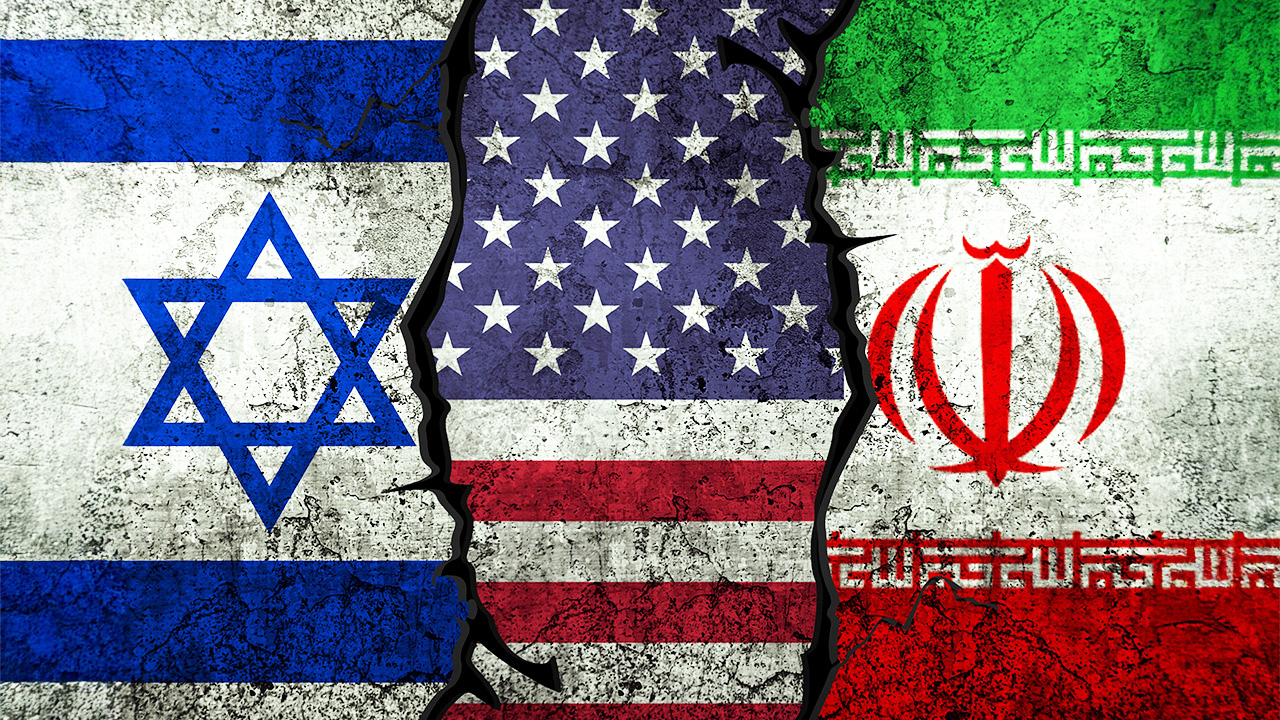
Since the 1979 revolution, the Islamic Republic of Iran has not only sustained its existence within the international system over the past half-century but has also expanded its strategic effectiveness and regional weight in the face of adversaries possessing vastly superior military, economic, and technological capacities. This situation presents a phenomenon that defies explanation through conventional metrics of power within the discipline of international relations: the question of how an actor with limited material capacity can establish systemic superiority through strategic culture and state reason warrants serious examination at both theoretical and empirical levels.
Iran’s strategic success transcends coincidental tactical gains; it is the product of a strategic mentality distilled from millennia of imperial tradition, an anti-hegemonic posture, and the capacity to transform ideology into a rational instrument of strategy. In contrast, the strategic cultures of the United States, the European Union, and Israel exhibit systematic disadvantages against Iran due to their internal vulnerabilities, short-term orientations, and deficits in strategic foresight. The following analysis aims to discuss this thesis in depth at conceptual, historical, and comparative levels.
Strategic Culture and State Reason: A Theoretical Framework
Strategic culture constitutes the totality of historical, geographical, ideological, and institutional patterns that shape a state’s security policies, threat perceptions, military doctrines, and responses to international crises. In Jack Snyder’s formulation, strategic culture is “the sum total of a nation’s strategic decision-makers’ assumptions about military force, perceptions of the enemy’s nature, and preferences regarding appropriate means of responding to threats.” This culture is not merely a cognitive reference framework but a concrete strategic agency that transforms into institutional practices and operational repertoires.
State reason, or raison d’état, refers to a political unit’s capacity for rational calculation, long-term planning, and strategic foresight directed toward survival, security, and interest maximization. A concept stretching from Machiavelli to Richelieu, it positions the state’s will to self-preservation above moral or ideological concerns. However, state reason is not cold rationality alone; it is also the transformation of historical experiences, collective traumas, and civilizational accumulation into strategic reflexes. In this sense, strategic culture and state reason should be understood as mutually reinforcing dimensions inherent in decision-making processes.
Examining the strategic cultures of the four actors, Iran, the United States, the European Union, and Israel, within this framework will reveal how each actor’s historical experiences, institutional structures, and ideological codes shape strategic preferences and will help explain Iran’s relative superiority.
Historical Roots of State Tradition in Iran
Ancient and Medieval Heritage: Imperial Mentality and Administrative Experience
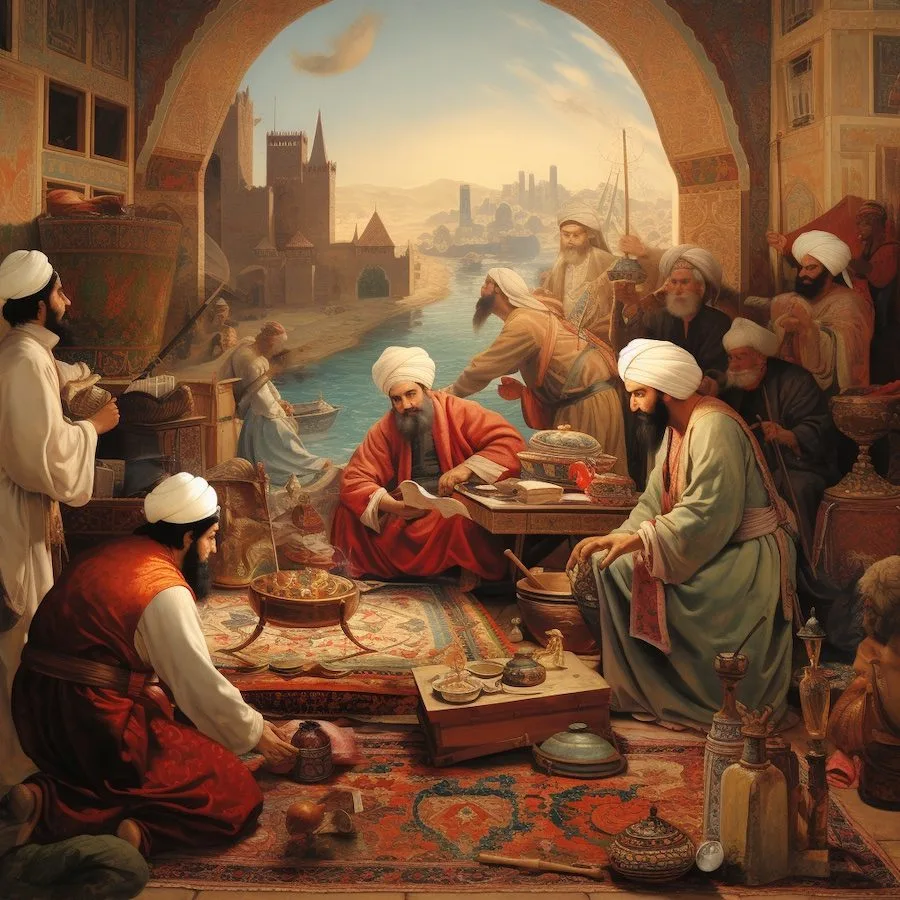
The Iranian plateau has possessed an uninterrupted tradition of statehood since the Achaemenid Empire, established by Cyrus the Great in the 6th century BCE. The Sasanian Empire (224-651 CE) laid the foundations of strategic culture through centralized bureaucracy, a sophisticated intelligence network, multi-layered defense systems, and a model of balanced relations with conquered peoples. The concept of Erānšahr, the Kingdom of Iran, embedded in Sasanian administrative practice planted the earliest seeds of Iran’s civilization-centered strategic identity.
Although the Islamic conquests of the 7th century politically incorporated Iran into the Caliphate, Persian bureaucratic tradition deeply permeated Umayyad and Abbasid administration, with the class of Iranian viziers and scribes determining the administrative language of the Islamic world. This period prepared the ground for a synthetic strategic culture between Iran’s political reason and Islamic universalism.
The Safavid Period: Strategic Consolidation of Shi’i Identity
The Safavid Empire’s declaration of Twelver Shi’ism as the official denomination in Iran (1501-1736) was not merely a religious choice but a strategic identity construction between Ottoman and Uzbek threats. Shi’i identity provided Iran with two strategic advantages: first, differentiation from Sunni Ottomans to create an independent geopolitical bloc; second, establishing a discourse of victimhood and resistance, drawn from the Kerbela tradition, as the foundation of state legitimacy. This discourse would constitute the spiritual and cultural fuel for Iran’s anti-hegemonic posture in the modern era.
The Qajar and Pahlavi Periods: Strategic Transformation in the Face of the West
In the 19th century, Qajar Iran found itself squeezed between Russian and British imperialisms, experiencing territorial losses and capitulations. This period created deep trauma regarding “Western superiority” while simultaneously reinforcing the instinct for independence preservation. The Pahlavi period (1925-1979), despite its efforts toward modernization and integration with the West, alienated the social base through externally imposed models and strengthened the anti-imperialist reflex that culminated in the 1979 revolution. The revolution was, in fact, the revival, through Islamic discourse, of the independence-seeking strategic culture that had persisted for centuries.
Components of Iran’s Strategic Culture
Anti-Hegemonic Discourse and Legitimacy Production
Post-revolutionary Iran’s strategic culture is built upon two fundamental elements: the discourse of Mustaz’afīn, the oppressed, and opposition to istikbār, arrogant global powers. Khomeini’s principle of allegiance to “neither East nor West” is not merely an ideological preference but a condition of existence for strategic independence. This discourse has functioned not only as revolutionary rhetoric in international public opinion but also as a legitimate language of resistance resonating in the Global South. Support for the Palestinian cause and logistical and ideological backing for Hezbollah in Lebanon have become integrated with this discourse, granting Iran the identity of a “defender of justice” at regional and global scales.
The Strategic Instrumentalization of Ideology
The Iran-Iraq War (1980-1988) represents a turning point in Iran’s ideology-strategy relationship. This eight-year conflict, resulting in hundreds of thousands of casualties and immense economic destruction, subjected revolutionary idealism to a brutal reality test. By the war’s end, Iran had learned that ideological fervor alone does not bring victory, but that ideology can be effectively employed as an instrument of national mobilization and legitimacy production. This experience established the foundational paradigm of Iran’s strategy in subsequent decades: ideology is not the end of strategy but its means. Today, while Iran legitimizes its support for Hezbollah, the Houthis, or Hamas through religious brotherhood discourse, the rational calculation behind it is the deepening of regional influence and the reduction of direct engagement costs.
Strategic Continuity and the Proxy Warfare Doctrine
Iran has developed a doctrine based on asymmetric power projection while keeping its conventional military capacity limited. The strategy conducted through proxy actors offers four fundamental advantages: reducing direct war risks and costs; rendering deterrence multi-layered; extending engagement across time and space to exhaust the adversary’s patience; and limiting international retaliation risk through plausible deniability. This network, known as the “Axis of Resistance,” signals that any Israeli or American attack on Iran could transform into a regional conflagration without Tehran’s direct military intervention.
Long Horizon and Strategic Patience
In Iran’s strategic culture, time belongs to a category distinct from Western actors’ perceptions. The Shi’i tradition of ghaybah, the occultation of the Imam, offers a conception of time in which waiting and postponement constitute salvific virtues. This understanding manifests in the political sphere as “strategic patience.” Iran has prolonged nuclear negotiations over years, sustained economic resilience under sanctions, and consolidated regional influence through a network built over generations. In contrast, Western democracies are dependent on electoral calendars, instantaneous public opinion fluctuations, and short-term cost sensitivity. This asymmetry provides Iran with a structural advantage at both the negotiating table and the battlefield.
Western Actors’ Strategic Cultures: Vulnerabilities and Contradictions
The United States: Tactical Excellence, Strategic Vision Deficit
The United States’ strategic culture is shaped around technological superiority, air dominance, and precision strike capabilities. While this capacity provides overwhelming superiority at the operational level, it creates a serious dilemma at the strategic level: the American strategic mindset demonstrates a chronic failure to integrate military solutions with political objectives. The policies pursued in Vietnam, Iraq, Afghanistan, and today against Iran constitute empirical evidence of this thesis.
US intelligence and decision-making mechanisms tend to distort reality under “groupthink” and political pressures. The fabrication of intelligence regarding weapons of mass destruction in Iraq, optimistic reports that the Taliban would never return in Afghanistan, and repeated misreadings of how close Iran is to regime change all point to a systemic intelligence and strategic culture problem. The United States repeats the error of underestimating its adversary and comprehending complex societies through reductionist frameworks.
Furthermore, the US strategic culture is afflicted by a quest for “decisive solutions.” Yet in conflict zones as multi-layered as the Middle East, there is no such thing as a decisive military solution. Forty days of airstrikes against Iran neither toppled the regime nor broke its will to resist; on the contrary, they rendered Iran more defiant. The American strategic mind systematically fails to calculate the limits of power.
The European Union: A Divided Actor Bereft of Strategic Autonomy
The European Union’s strategic culture is fundamentally constructed around the discourse of “civilian power” and normative soft power instruments. However, this identity proves inadequate in the face of hard power conflicts in the Middle East. The EU’s response to the 2026 US-Israel-Iran war reveals this vulnerability: no consensus on a clear position could be achieved among member states, with Spain openly opposing intervention while France, Germany, and the United Kingdom adopted more cautious and complex positions.
The fundamental obstacle shaping the EU’s strategic culture is the deep divergences among member states’ own strategic cultures, colonial pasts, geographical positions, and economic interests. While Eastern European countries focus on the Russian threat, Mediterranean countries are concerned with migration and counterterrorism; these fragmented threat perceptions render a common Iran policy nearly impossible. Additionally, the EU is dependent on the United States through NATO for military intervention decisions, and this dependency leads to complete loss of strategic initiative during crises.
The EU’s sanctions regime and diplomatic engagement strategy toward Iran have repeatedly been disrupted by Washington’s withdrawal and re-imposition of sanctions. The EU’s claim to strategic autonomy dissolves before Washington’s realist power politics in every crisis.
Israel: Reactiveness, Over-Compliance, and Existential Paranoia
Israel’s strategic culture is built upon the “never again” principle derived from the Holocaust trauma, the “Masada complex” of annihilation fear, and the “Iron Wall” doctrine. This culture has endowed Israel with an extraordinary level of military preparedness and a preemptive strike reflex. However, this reflex generates significant vulnerabilities in strategic context.
Israeli intelligence and decision-making bodies exhibit a structure overly inclined toward risk-taking, excessively reliant on conventional military solutions, and susceptible to political intervention. The failure in the 2006 Lebanon War, the intelligence collapse of the October 7, 2023 attack, and the incomplete achievement of targets in covert operations against Iran are concrete examples of these vulnerabilities. Israel tends to underestimate adversaries, place absolute trust in technological solutions, and neglect strategic communication.
Moreover, Israeli strategic culture exhibits “over-compliance,” responding to shifts in external threat perception with either excessive optimism or excessive pessimism, failing to maintain a balanced and stable strategic line. The assumption that Iran is “just another authoritarian regime” that can be toppled through covert actions represents the greatest fallacy of Israeli strategic reason. Iran is not limited to its regime; it possesses a deep civilizational stratum, and interventions become assimilated within this stratum.
Comparative Analysis: Sources of Iran’s Strategic Superiority
The Concept of Time and the Strategic Horizon Gap
Iran’s historical consciousness leads to a conception of time not as linear but as cyclical and multi-layered. This grants Iran the capacity to perceive short-term losses as components of long-term gains. Western actors, on the other hand, suffer from narrowed time horizons due to electoral calendars, media cycles, and economic fluctuations imposed by democratic systems. Policy discontinuities between US presidential terms, the time lost by the EU in seeking consensus during crises, and Israel’s foreign policy punctuated by governmental crises all constitute disadvantages against Iran’s stable and continuous strategic line.
The Cost Advantage of Asymmetric Engagement
Through proxy actors and hybrid warfare instruments, Iran maintains deterrence while avoiding direct conflict costs. The conventional military operations of the United States and Israel, in contrast, carry high material, human, and political costs. Every American military move against Iran risks regional military bases, elevates energy prices, and unsettles global allies. Iran exploits this asymmetry to force its adversary into fighting on terrain of Iran’s choosing.
Legitimacy and International Public Opinion
Iran’s “oppressed resistance” discourse is perceived in the international normative environment as a counterbalance to Western interventionism. Particularly in the Global South, while not openly supporting Iran, observers view it as a symbol of “resistance to hegemony” when criticizing American and Israeli military operations. This perception strengthens Iran’s diplomacy at the UN and other international platforms. The legitimacy erosion suffered by Western actors, particularly due to civilian casualties in Gaza and Lebanon, provides an indirect advantage to Iran.
Strategic Flexibility and Multi-Layered Identity
Iran possesses a strategic language capable of flexibly employing nationalist Persian identity, Islamic universalism, and Shi’i sectarian networks simultaneously. This multi-layered identity grants Iran the flexibility to establish relations with different actors across various geographies. Iran can communicate, simultaneously and in different idioms, with Azerbaijan in the Caspian, Arab Sheikhdoms in the Persian Gulf, Hezbollah in the Eastern Mediterranean, and the Houthis in Yemen. The United States’ homogeneous, liberal-universalist discourse struggles to penetrate this multicolored geopolitical mosaic.
Conclusion
The strategic culture and state reason of the Islamic Republic of Iran exhibit a structural superiority over the strategic cultures of the United States, the European Union, and Israel. This superiority cannot be explained by ideological fanaticism or geographical size alone; rather, it stems from the deep state tradition bequeathed by millennia of imperial experience, mastery in proxy warfare and hybrid deterrence, legitimacy capital constructed through anti-hegemonic discourse, and long-horizon strategic patience against the short-term calendars of Western democracies.
Each of the Western actors is afflicted by its own internal contradictions and vulnerabilities. The United States cannot translate tactical superiority into strategic success; the European Union is rendered ineffective by strategic fragmentation; Israel loses strategic control through existential paranoia and excessive reactiveness. The successive miscalculations against Iran demonstrate how inadequate Western strategic cultures are in geographies as layered in history as the Middle East.
Iran’s current strategic superiority is as dynamic as it is precarious; economic pressures, internal political rivalries, and the expectations of a rising generation may in time test Tehran’s strategic patience. Yet, to date, Western actors have failed to fully grasp Iran’s strategic mentality and have repeated the error of reading it through their own frameworks. Every strategic approach that views Iran merely as a regime while missing the civilizational stratum beneath it is inevitably doomed to failure. The search for stability in the Middle East can only be possible through acknowledgment of the depth of Iran’s strategic culture and negotiation with that culture at a symmetrical level of mind. Otherwise, the West’s perception of Iran as an “ungovernable” problem will continue to manifest as a self-fulfilling prophecy.
Bibliography
Ahmed, F. (2023). State and Civilization: Political Thought in Iran. Istanbul: Küre Publications.
Baylis, J., Wirtz, J. J., & Gray, C. S. (2020). Strategy in the Contemporary World. Oxford: Oxford University Press.
Fuller, G. E. (1991). The Center of the Universe: The Geopolitics of Iran. Boulder: Westview Press.
Gray, C. S. (1999). Modern Strategy. Oxford: Oxford University Press.
Katzman, K. (2025). Iran: Internal Politics and U.S. Policy. Congressional Research Service Report.
Leverett, F. (2005). The Nuclear Question in the Middle East. Brookings Institution Press.
Nasr, V. (2025). Iran’s Grand Strategy: A Political History. Princeton: Princeton University Press.
Rasanah-IIIS. (2026). The EU and China Confront the 2026 US-Israel-Iran War. Riyadh: Rasanah International Institute.
Snyder, J. L. (1977). The Soviet Strategic Culture. Santa Monica: RAND Corporation.
Telhami, S. (2026). “Iran’s Strategic Logic in the New Middle East.” Foreign Affairs, 105(3), 45-62.
The Jerusalem Post. (2026). “Iran war opens new rifts between Washington, Europe, the Vatican, and Israel.” April 15, 2026.
The Wire. (2026). “India Has Misread Iran, a Civilisation it Knew Quite Well.” March 22, 2026.
Waltz, K. N. (1979). Theory of International Politics. Reading: Addison-Wesley.
Sefa Yürükel
Danish ethnographer and social anthropologist (MA)
Aarhus University, 1997
Independent Researcher
Fields of Research: International Politics, Public International Law, Geopolitics, Sociology, Psychology, Cultural Studies, Systems and Structures.