The Economic Grammar of Destruction
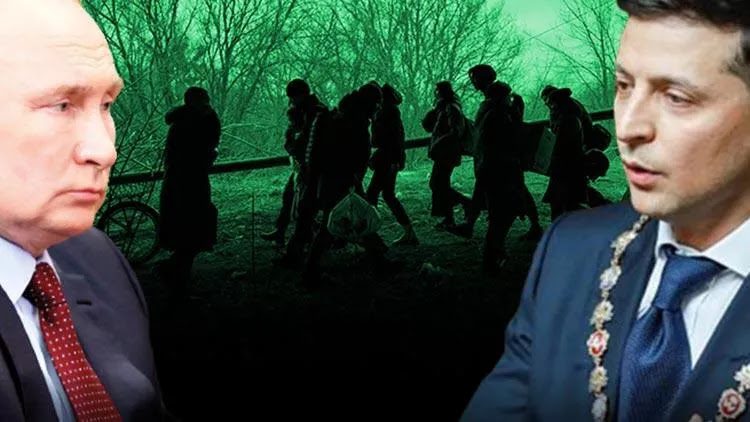
The oral assessments of retired Colonel Douglas Macgregor, which reached the public in 2025, offer a holistic political economic framework that renders the customary military and diplomatic templates for making sense of the war in Ukraine dysfunctional. His diagnosis points to the existence beneath the conflict of a complex architecture of interests and capital that not only triggers it but also makes it perpetual. The cornerstones of this architecture are the strategic asset consolidation of transnational financial institutions, demographic engineering discourses intertwined with geopolitical projections, and institutionalized corruption networks that grow by feeding on the war itself. This perspective makes it possible to read the destruction on Ukrainian soil not as the result of a linear conflict but as the instrument of an almost programmatic process, operated for the transfer of resources and the restructuring of power across a broad spectrum ranging from agricultural lands to defense industry facilities, from diplomatic corridors to reconstruction funds.
The Financial Siege of the Black Soil: The Transformation of Agricultural Lands into a Strategic Asset Class
One of the clearest phenomena that Macgregor draws attention to is the consolidation activity of large asset management companies, embodied specifically by BlackRock, in Ukrainian agricultural lands. This activity gains momentum despite, or rather precisely because of, the humanitarian and economic collapse created by the war. As documented by GRAIN (2023), the conflict conditions have overturned the ownership structure in the agricultural sector, creating a vacuum favorable for capital accumulation. The Oakland Institute (2024) interprets this situation as the redefinition and financialization of Ukraine’s black soil, considered among the most fertile lands in the world, as a long term strategic asset class at a time when fragility in the global food supply is escalating.
Plank and Gonda (2024), placing the process on an empirical foundation, reveal how investment vehicles they characterize as “vulture funds” have converted the devaluation and institutional vacuum created by the war into an aggressive purchasing strategy. At this point, the Transnational Institute (TNI, 2024) report emphasizes that the issue is not merely a transfer of ownership; as land, one of the most concrete components of national sovereignty, passes into the control of transnational companies through financial instruments, the regulatory authority of the state over the land is also effectively eroded. Macgregor’s phrase “the plunder of the country’s future and lands” describes precisely this multidimensional loss of sovereignty: The war has assumed a function that both accelerates this transfer process and renders it invisible behind a veil of military urgency.
“New Israel” as a Strategic Narrative: A New Safe Haven Projection for Capital
The discourse voiced by Macgregor that Western Ukraine will be transformed into “a kind of new Israel destination,” although it may appear on the surface to be a speculative demographic claim, is in fact a symptom of a much deeper geopolitical vision. When viewed through the critical geopolitics framework of Gearóid Ó Tuathail (Toal, 2023), this discourse reinforces the thesis that the war is a spatial and capitalist restructuring project. According to Toal, the struggle is not only about which state’s borders the land will remain within but about which economic and legal regime that land will be integrated into. The long term forecasts of Friedman (2024) provide an indirect background to this thesis, arguing that Eastern Europe needs to be repositioned as a strategic hub in the context of the energy and trade corridors of the 21st century.
In this context, the “New Israel” discourse coincides not with a mass population transfer but with the idea of developing Western Ukraine as a new “safe haven” and strategic depth for global capital. This could mean the redesign of the region’s institutional, legal, and financial infrastructure in a way that provides maximum security and minimum regulation for foreign investors. The warning of Rodrik and Stiglitz (2024) comes into play precisely at this stage: The post war reconstruction process, if not supervised, carries the potential to turn into a colossal resource transfer mechanism for rent seeking local and global elites. Macgregor’s concern is the risk that the reconstruction of Ukraine, under the control of the same interest groups that devastated the country, will create a “rent republic” in which national resources and demographic structure are irreversibly transformed.
Profit Centers on the Target List: Russia’s Asymmetric Political Economic Response
Macgregor’s most critical observation regarding military strategy is the marked shift in the target selection of the Russian Federation. Statements from sources connected to the Kremlin pool (Kremlin Pool Spokesperson, 2025) confirm that Moscow is no longer exclusively targeting military infrastructure but has also added to its target list the corruption networks and commercial assets that carry direct Western investment and are alleged to be connected to the administration in Kiev. Galeotti (2024), placing this strategy in its historical context, shows that Russian military doctrine has long been based on the principle of breaking the enemy’s war capacity by directly threatening the interests of its economic and political elites. The strike on a defense industry factory alleged to be connected to Zelensky is a concrete reflection of this doctrine.
Such an action produces a dual outcome. On the one hand, it provides a conventional military benefit by weakening Ukraine’s long range strike capability. On the other hand, in its more complex dimension, it carries the character of a direct message to Western investors and their partners in Ukraine. Le Billon’s (2023) concept of “post war predation” becomes a critical analytical tool at this point. Le Billon discusses how networks feeding on the war economy can survive after the conflict and continue to dominate the economy. Russia’s striking of these strategic facilities can be read as a counter economic move that aims, by directly targeting “the spoils of war,” to undermine the structures that obtain this profit and to make the war costly for them as well. The war thus transforms into a multidimensional struggle conducted through the destruction of financial and institutional targets as much as through artillery fire.
The Commercial Logic of Diplomacy: Negotiation in the Shadow of Side Deals
The points of impasse in peace negotiations are also shaped on the same political economic plane. The “lack of seriousness” criticism reported by Macgregor, which appeared in the Russian press regarding figures such as Jared Kushner and Steve Witkoff and also permeated the official minutes of Foreign Minister Lavrov (2024), is a symptom of the qualitative transformation that diplomacy is undergoing. Beebe and Beebe (2024) conceptualize this transformation as “shadow diplomacy”; this type of diplomacy, conducted outside official channels through business and personal relationships, makes conflicts of interest almost inevitable. Walt (2024) evaluates this situation as the result of a transactional mindset in which the essence of diplomacy is reduced to a “deal.”
Moscow’s extremely instrumental and cynical attitude, to the effect of “first send serious people to discuss the main issue, then we can make side deals with you,” represents the peak of this crisis of confidence. The Kremlin implies that it believes the primary motivation of Western negotiators is not to secure a ceasefire but to guarantee their own personal and institutional shares of post war Ukraine’s strategic pie, including reconstruction, energy resources, and agricultural lands. The report of Transparency International (2024), documenting the high perception of corruption in Ukraine, constitutes the objective ground for this suspicion. The widespread perception of corruption calls into question not only the fate of aid to be sent to the country but also the scale of the rent battles revolving behind the peace negotiations. The final picture is that the diplomatic table is increasingly moving away from being a platform to end the war and is coming to resemble an auction where the economic opportunities created by the war are being negotiated over how they will be shared.
Conclusion: A Self Feeding Rent Mechanism
When these interconnected claims of Macgregor are considered holistically, an understanding of the Ukrainian conflict emerges that distinguishes it from conventional categories of war. In this understanding, the war manifests itself not as an interstate security crisis but rather as a self feeding rent mechanism in which transnational capital consolidates agricultural lands (Oakland Institute, 2024), geopolitical restructuring projects are put into practice (Toal, 2023), local and global elites realize profits through institutionalized corruption mechanisms (Transparency International, 2024), and Russia responds to this multilayered structure precisely by destroying these profit centers (Galeotti, 2024). The fundamental dynamic of the conflict has transformed from territorial control into determining which transnational capital network will gain control over this land and all the economic value it holds. Every military engagement in the field, every diplomatic move at the negotiating table, and every large scale investment decision is becoming a function of this colossal rent war. Unless this mechanism is deciphered and a radical transparency and international accountability regime capable of dispersing the web of interests is constructed, hopes for peace appear condemned to remain in the shadow of this complex and dark economy.
References
Beebe, G., & Beebe, J. (2024). “The Shadow Diplomacy of the Ukraine War: Unofficial Channels and Private Interests.” Foreign Affairs, 103(2), 112-126.
Friedman, G. (2024). The Next 100 Years: A Forecast for the 21st Century (Updated Edition). New York: Anchor Books.
Galeotti, M. (2024). Putin’s Wars: From Chechnya to Ukraine (Expanded Edition). Oxford: Osprey Publishing.
GRAIN. (2023). The Land Grab in Ukraine: How War Is Transforming Agriculture and Land Ownership. Barcelona: GRAIN Publications.
Kremlin Pool Spokesperson. (2025, March April). Press statements made by the Ministry of Foreign Affairs and the Ministry of Defense of the Russian Federation. Moscow: TASS and RIA Novosti Archive.
Lavrov, S. (2024). Minutes of the Annual Press Conference of Russian Foreign Minister Sergey Lavrov on Security and Diplomacy. Moscow: Publications of the Ministry of Foreign Affairs of the Russian Federation.
Le Billon, P. (2023). “War Economies and Post War Predation: The Political Economy of Reconstruction in Ukraine.” Conflict, Security & Development, 23(4), 289-312.
Macgregor, D. (2025). Public Assessments of Retired Colonel Douglas Macgregor on the Political Economy of the War in Ukraine, Corruption Allegations, and Peace Negotiations. [Verbal Statement Transcript].
Oakland Institute. (2024). War and Land Grabs: The Financialization of Ukraine’s Farmland. Oakland, CA: Oakland Institute.
Plank, C., & Gonda, N. (2024). “Financial Giants on the Black Soil: Mapping Vulture Funds and Land Consolidation in Wartime Ukraine.” Journal of Agrarian Change, 24(2), 345-368.
Rodrik, D., & Stiglitz, J. E. (2024). “A New Framework for Post Conflict Reconstruction: Overcoming Rent Seeking and Corruption in Ukraine.” Journal of International Economic Law, 27(1), 45-72.
TNI. (Transnational Institute). (2024). Profiting from Crisis: The War in Ukraine and the Global Land Rush. Amsterdam: TNI Agrarian Justice Programme.
Toal, G. (Gearóid Ó Tuathail). (2023). “The Geopolitical Economy of the Ukraine War: Spatial Strategies and Capitalist Restructuring.” Geopolitics, 28(5), 1807-1832.
Transparency International. (2024). Corruption Perceptions Index 2023: Focus on Ukraine. Berlin: Transparency International.
Walt, S. M. (2024). “The Art of the Deal in a Time of War: Transactional Diplomacy and Its Discontents.” Foreign Policy, Spring Issue, 34-42.
Sefa Yürükel
Danish ethnographer and social anthropologist (MA)
Aarhus University, 1997
Independent Researcher
Fields of Research: International Politics, Public International Law, Geopolitics, Sociology, Psychology, Cultural Studies, Systems and Structures.

Bir yanıt yazın