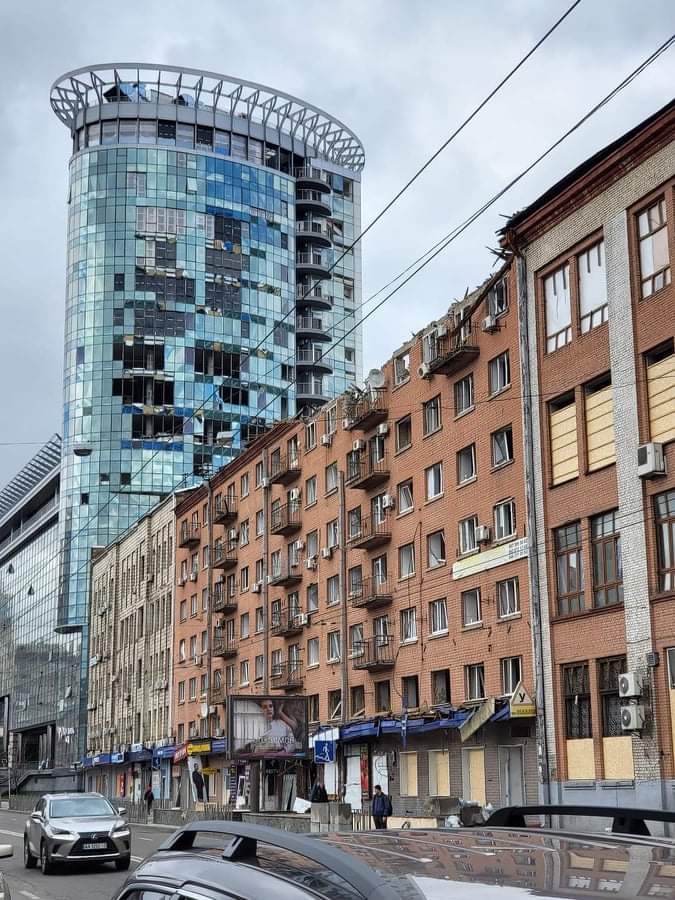
History often remembers moments of great rupture by the storm that follows an eerie silence. Last night, the fireballs rising over the skies of Kyiv and the successive blasts echoing through the capital marked not merely the redefinition of a city under siege, but a turning point where modern military doctrine, the European security architecture, and the bankruptcy of global diplomacy were all simultaneously redefined. This assault, reminiscent of the chaotic energy of the first days of the conflict yet far more terrifying in its technological and strategic sophistication, was not only the battlefield embodiment of what military circles term a “layered attack”; it was also a heavy blow to the fragile hopes of peace that were trying to find a seat at the negotiation table. Russia did not merely execute a conventional air operation; it condensed its threshold of strategic patience, its technological capacity, its economic resilience, and, most importantly, its message of deterrence to the West into a single night. Meanwhile, in the diplomatic corridors at the very same hour, a fragile hope was struggling to sprout: the diplomatic efforts for an Easter ceasefire. These two opposing realities, the ruthless escalation on the front and the search for a solution at the table, lay bare the contradictory and tragic picture that has emerged in the fourth year of the war.
Military reports recorded the multidimensional architecture of the attack like an orchestral score. In this symphony of death, the conventional cruise missiles and swarms of UAVs were merely the opening notes. The real shockwave came with the simultaneous deployment of Russia’s new show of force, the Oreshnik intermediate range ballistic missile, and the Iskander tactical ballistic missile systems. The Oreshnik, soaring through the upper layers of the atmosphere at speeds exceeding Mach 10, undetectable by Ukrainian air defense systems, rendered defensive lines meaningless in an instant with its six independently targetable warheads, each carrying sub munitions. It had been established that the missile targeting a city in western Ukraine in January 2026 had reached speeds of approximately 13,000 kilometers per hour. Following that attack, Ukrainian Foreign Minister Andrii Sybiha stated that Russia was testing the West’s resolve and called for an emergency meeting of the UN Security Council on January 12. The Iskander missiles, meanwhile, cornered the air defense systems like pieces on a chessboard, diving from lower altitudes and different angles. While NATO governments described the Oreshnik launches as “an escalatory act and a form of strategic intimidation,” they did not refrain from emphasizing that the alliance would not be deterred from supporting Ukraine. This combination of multi layered weapons, continuing relentlessly until dawn, transformed the sky over Kyiv into a ring of fire pierced simultaneously from above and below.
The Entry of Next Generation Weapons onto the Battlefield
The diversity of weaponry showcased by Russia in this offensive must be read not only as a capacity for destruction but also as an inventory of multi layered strategic messaging. The use of the Oreshnik missile in such an intense and visible operation was the clearest indicator that Moscow no longer sees this weapon as a mere experimental prototype, but has completed its full integration into its active war doctrine. The missile’s MIRV, Multiple Independently Targetable Reentry Vehicle, capability draws a sharp line separating it from other ballistic missiles previously used against Ukraine and makes its interception nearly impossible with current technology. Moreover, Russia’s deployment of this missile to Belarus and the subsequent nuclear exercises are assessed as a deliberate escalatory move expanding the threat’s geographical scope toward NATO’s eastern flank. The Iskander systems, with their proven effectiveness and the scale of production they have reached, formed the operational backbone of this lethal equation. It has been confirmed that Russia has tripled its Iskander production capacity, now manufacturing approximately 50 9M723 type missiles per month; this figure, when compared to a production line that could only produce a total of 36 units in the entire first year of the conflict, strikingly reveals the extent to which Moscow has adapted to a war economy. The simultaneous use of these two systems was a deliberate strategic choice aimed at overloading and paralyzing the layered architecture of Ukraine’s air defense. However, the fact that Ukraine struck the Iskander and Oreshnik production facilities in Cheboksary in February 2026 with its indigenously developed “FP 5 Flamingo” missile, boasting a range of 1,500 kilometers, demonstrates that this asymmetric equation is not one sided, and that the war is increasingly evolving into a war of attrition threatening the deep regions of both sides.
The Moment of Collapse for Air Defense
This reckoning in the skies of Kyiv was, in reality, the inevitable culmination of a crisis that had been quietly deepening for months. Ukraine currently possesses seven Patriot systems; this number remains far from sufficient to fully cover critical cities like Kyiv, Kharkiv, and Dnipro against Russia’s multi vector missile onslaughts. While each Patriot system offers an engagement range of up to 160 kilometers and an altitude ceiling of 24 kilometers, ballistic missile interception capability is limited to high end systems like Patriot and SAMP/T. Even more critically, according to NATO officials, approximately 75 percent of the missiles used in Ukraine’s Patriot systems have been depleted since the end of 2025. Despite positive developments such as Germany’s delivery of new PAC 3 interceptor missiles in March 2026 and the US plan to increase its Patriot missile order from 3,376 to 13,773 units, experts warn that the production of high tech interceptors like Patriot and THAAD is limited and costly, making resupply unsustainable in a prolonged missile conflict. The multi missile combination used in last night’s attack exposed this strategic gap in the most brutal manner: against threats arriving simultaneously from different altitudes, at different speeds, and from different angles, it was impossible to establish a meaningful defensive line with a limited number of interceptor missiles. Air defense batteries were forced to choose between strikes, and each choice meant another target being hit. This picture places firmly on the table, as a military reality, that Ukraine’s attainment of a comprehensive air defense umbrella is a prerequisite for peace.
Economic Attrition Behind the Lines: Both Sides Are Bleeding
The course of the war is now determined not only by territorial gains on the front lines but also by economic resilience behind the lines. Since the beginning of 2026, Ukraine has begun systematically implementing a strategy of deep strikes against Russia’s energy infrastructure. Starting from March 2026, the frequency, range, and intensity of attacks on Russian oil refineries, storage facilities, and infrastructure significantly increased, with some attacks reaching up to 1,500 kilometers deep into Russian territory. This strategic bombardment campaign has begun to create deep cracks in Russia’s war economy. According to Ukrainian intelligence, Moscow has already exceeded the budget deficit planned for 2026; the deficit has reached 78.4 billion dollars, while a sharp decline in Russia’s GDP was recorded for the first time in years in April 2026. In the first three months of 2026 alone, the budget deficit reached 4.5 trillion rubles, exceeding the target planned for the entire year. The 22 percent VAT increase that came into effect in January 2026 grew the shadow economy and increased prices for goods and services, but failed to generate the expected tax revenue. The IMF’s revision of its 2026 growth forecast for Russia to 1.1 percent is the international endorsement of this picture.
On the other hand, Ukraine’s war economy has also become heavily dependent on European financing. The 90 billion euro credit package approved by the EU for 2026 and 2027, along with the 20th sanctions package announced on April 23, can be read as signs that Europe is leaning towards a prolonged attrition strategy rather than a diplomatic solution. Yet this strategic choice comes at a cost: as of January 2026, Ukraine’s energy system had been largely destroyed, and the country could only meet about 60 percent of its electricity needs. This dynamic of mutual economic attrition is transforming into a reality that both capitals are aware of, but find difficult to accept: peace has become not only a political but also an economic necessity.
The On the Ground Cost of Decisions Taken at the Table
The dynamic driving Moscow to deliver such a comprehensive and devastating military response was not merely comprised of tactical necessities on the front line. The main driving force lies in the escalation policy that the Western bloc and Europe have pursued since the beginning of the crisis, yet have consistently failed to anchor in a sustainable strategic framework. While Europe and NATO have been increasing military aid to Ukraine with each passing month, they have not been able to clarify what strategic end goal this aid serves. Open ended military commitments, continuously expanding lists of arms supplies, and provocative rhetoric devoid of a diplomatic exit strategy have, far from de escalating the tension, transformed it into an uncontrollable spiral of escalation. The more revisionist stance adopted by US President Trump towards Europe and the cancellation of the planned deployment of US Tomahawk cruise missiles to Germany are creating deep fissures in the strategic integrity of the transatlantic alliance. The warning by the Slovak Prime Minister that Ukrainian UAVs transiting through the airspace of NATO member states to strike Russian targets could spark a direct NATO Russia conflict is striking in showing how the risk of escalation is perceived even within the alliance. Every missile that exploded in Kyiv last night struck not only a military target but also the heavy on the ground cost of this strategic uncertainty, diplomatic lack of vision, and the aggressive decisions taken at the table.
The Process Europe Started But Could Not Finish
The emerging picture reveals, in all its nakedness, the deep and multi layered crisis into which the European security architecture has fallen. Europe, for the first time since the Cold War on its own borders, finds itself grappling with the destructive consequences of a war whose inception it shared but whose conclusion it lacks the diplomatic tools and strategic autonomy to bring about. The EU’s “strategic autonomy” narrative has yet to materialize in the face of the Iran crisis and the Ukraine war. As the Wall Street Journal has also identified, the war in Ukraine has now become a fully fledged “European war.” Russia’s increasing naval presence in the Baltic Sea and its heightened tensions with NATO members in Europe are making the risk of the conflict’s geographical expansion more tangible with each passing day. NATO Secretary General Mark Rutte’s warning that Russia could attack a NATO country within the next five years and that member states must prepare for “a war on the scale our grandparents lived through” reflects the threat perception at the highest level of the alliance. Moscow, in the face of this uncontrolled escalation, seems determined to force the acceptance of a reality by pushing its military power to the limit. The exercise conducted between May 19 and 21, 2026, based on a scenario of “preparing and utilizing nuclear forces in the event of an attack threat,” has been recorded as one of the most terrifying expressions of this resolve.
The Search for a Solution: The Impossible Equation of Fractured Diplomacy
Amid all this destruction, the search for a diplomatic solution continues through scattered and often contradictory multiple channels. Since the beginning of 2026, trilateral talks in various formats between Ukraine, Russia, and the United States have been held in Abu Dhabi, Geneva, and Istanbul. In the first round that began in Abu Dhabi on January 23, 2026, the fundamental differences between the parties, territorial disputes, ceasefire arrangements, and security guarantees, remained unresolved, and not even a joint political or security declaration could be issued. While Moscow demands that Ukraine abandon the roughly 20 percent of the Donetsk region that is not yet occupied, approximately 5,000 square kilometers, Kyiv refuses this demand. Although it was announced during the Geneva round in February 2026 that Russia had accepted the framework of post war security guarantees proposed by the US for Ukraine, deep disagreements then surfaced regarding the content and scope of those guarantees.
The biggest structural obstacle to peace negotiations is that the negotiating positions of the sides are almost entirely opposed. While Moscow insists on Ukraine reverting to a neutral status, demilitarizing, and recognizing the linguistic, cultural, and religious rights of the Russian speaking population, the red line for Kyiv is that there can be no concessions on territorial integrity. The statement by Mykhailo Podolyak, an advisor to the Office of the President of Ukraine, that “Moscow is showing no genuine interest in resolving the conflict by peaceful means,” and the assertion by Ukraine’s Intelligence Chief Kyrylo Budanov that “the Ukrainian people will not accept territorial concessions,” clearly delineate the boundaries of Kyiv’s diplomatic position.
Furthermore, a leaked 28 point US backed peace plan envisaging Ukraine ceding part of its eastern territories to Russia and reducing its military has been rejected by Kyiv for now on the grounds that it violates territorial integrity. The controversial suggestion by German Chancellor Friedrich Merz that Ukraine might have to accept territorial losses to keep the path to EU membership open demonstrates that even within European capitals, positions are far from homogeneous. This picture suggests that the chasm between the negotiating positions of the parties will not be bridged unless the dynamics of military attrition change fundamentally.
The Architects of Multi Channel Diplomacy: Turkey’s Mediation Role and Other Actors
In overcoming this diplomatic impasse, the mediation efforts of regional powers, alongside traditional actors, are becoming increasingly decisive. Turkey, as a NATO member with strong ties to both Russia and Ukraine, has occupied a unique diplomatic position from the very beginning of the conflict. The statement by Russian Foreign Minister Sergey Lavrov in November 2025 that they appreciated Turkey’s mediation role in the resolution process of the Ukrainian crisis, and the similarly laudatory assessments by Belarusian officials in April 2026, underline the constructive dialogue Ankara has been able to sustain with both sides. Having proven its mediation capacity through the critical role it played in the Grain Corridor Agreement, Turkey’s potential to prepare a comprehensive resolution plan acceptable to both parties is seen as a key variable in ending the conflict through diplomatic means. The proposal by Ukrainian negotiators in Istanbul naming Poland and Turkey as potential security guarantors, and a formula foreseeing a 15 year consultation process for the status of Crimea being brought to the table, further consolidate Turkey’s central role in this process. Meanwhile, Riyadh’s diplomatic initiatives toward resolving the war and the United Arab Emirates’ hosting of talks show that Gulf countries are also beginning to increase their weight in this diplomatic equation.
Rising from the Ashes: Reconstruction and Europe’s Existential Test
Even if peace is achieved, healing the destruction caused by the war will require a colossal reconstruction campaign spanning decades. According to the updated Ukraine Recovery and Reconstruction Needs Assessment published in February 2026, the long term reconstruction and restoration needs in the transport sector alone have exceeded 96 billion dollars (82 billion euros). With the support of development partners, the Ukrainian government has planned over 15 billion dollars in public investment projects and essential recovery support programs for 2026, with 19.1 billion UAH allocated for the reconstruction of hospitals and the upgrading of medical equipment. The 1.5 billion euros allocated by the EU under the Ukraine Investment Fund for recovery and development financing covers housing rehabilitation, energy efficiency, and social infrastructure shelters. A new program, including compensation payments for property lost in temporarily occupied territories, came into effect from April 2026, and a roadmap focusing on the protection of critical infrastructure and the development of distributed energy generation has been drawn up in cooperation with UNDP. However, all these plans remain doomed to remain on paper without the establishment of peace. Reconstruction is not a process that begins after the war ends; it is an inseparable part and guarantee of peace.
On the Brink of Peace: The Easter Ceasefire and a Fragile Hope
In the midst of all this destruction and deadlock, the proposal for an Easter ceasefire that emerged in the closing days of May 2026 carries the potential to be a turning point in the course of the war. Ukrainian President Volodymyr Zelenskyy, in a statement on May 22, noted that Ukraine had liberated 590 square kilometers of territory from Russian occupation since the beginning of the year, and that these gains were forcing Russia towards diplomacy, announcing that they were striving for an Easter ceasefire under US mediation. Zelenskyy also emphasized that they were working to secure a seat for Europe at the negotiating table, stating they were awaiting a response from US Secretary of State Marco Rubio regarding meeting formats and timelines. However, despite these optimistic signals, the fact that the trilateral format of the negotiations has been frozen as of May 2026, along with the negative spillover effects of external conflicts like the war in Iran, demonstrates how fragile the ground is on which the diplomatic process advances. The reality that the issue of ceding territory remains the most difficult obstacle to overcome, despite Zelenskyy’s statement in December 2025 that over 90 percent of a potential peace agreement had been settled upon, is the fundamental dynamic fueling this fragility.
The clouds of smoke slowly dispersing over Kyiv at dawn were, in truth, merely the visible face of a much larger geopolitical storm. What transpired last night proved once again that modern warfare is no longer conducted solely on front lines but also on the delicate balances between technological superiority, economic resilience, strategic patience, and diplomatic will. The military capacity demonstrated by Russia with the Oreshnik and Iskander missiles, and the asymmetric response mounted by Ukraine with unmanned aerial vehicles and indigenous missiles reaching deep into Russian territory, demonstrate that the war is turning into an unsustainable cycle of attrition for both sides. Budget deficits, the collapse of energy infrastructure, the depletion of air defense stocks, and the risk of nuclear escalation make peace not only a moral imperative but also a strategic necessity.
For the West to find a way out of this spiral of crisis it has itself helped construct, it is possible not merely by sending more arms or approving heavier sanctions packages, but by showing the political will to sit at the table and end the war, developing creative diplomatic formulas that preserve the dignity of the parties, and building the financial framework for post war reconstruction starting today. The mediation of regional powers capable of speaking with both sides, like Turkey, an internationally guaranteed ceasefire mechanism, long term consultation processes for the status of Crimea, and a comprehensive reconstruction plan stand on the table as the building blocks of this solution. While the EU’s 90 billion euro credit package and the 15 billion dollar recovery program planned for Ukraine show that the financial infrastructure for peace is already beginning to be built, the guns must first fall silent for these resources to become meaningful. For now, however, the reality on the ground painfully and clearly demonstrates that the war is advancing far faster than diplomacy, and that the rules are being rewritten every single night. History has repeatedly shown that those who bring peace require greater courage than those who start wars. Whether this courage can be heard amidst the echoes of explosions in the skies of Kyiv will be determined in the months ahead.
Bibliography
- “Rusya, Ukrayna’yı Oreşnik füzesi ile vurdu”, Euronews Türkçe, 9 January 2026.
- “Oreşnik”, Wikipedia, accessed: 25 May 2026.
- “Ukrayna: Rusya’nın, Oreşnik füzesiyle saldırısı sonrası BMGK’nin acil toplantısı 12 Ocak’ta yapılacak”, Anadolu Ajansı, 10 January 2026.
- “Rusya ve Belarus’tan nükleer tatbikat”, DefenceTurk, May 2026.
- “Rusya İskender Füze üretimini üçe katladı: Analistlere göre ayda 50 adet üretiliyor”, Ukrhaber, February 2026.
- “Ukrayna Rusya’nın füze fabrikasını vurdu… İskender ve Oreşnik üretim hattı”, Hürriyet, 22 February 2026.
- “Avrupa hava savunması: Patriot’un alternatifi Almanya’dan”, Euronews Türkçe, 26 February 2026.
- “ABD’nin Hava Savunma Mühimmatı Tükeniyor mu?”, SETA DC, 6 March 2026.
- “Record Patriot Order from the USA!”, YouTube, 2026.
- “Almanya’dan Ukrayna’ya Patriot için yeni PAC 3 füze teslimatı”, Tabyadijital, 16 March 2026.
- “ABD, Ukrayna için ayrılan Patriot’ları Orta Doğu’ya kaydırabilir”, Haber.aero, 27 March 2026.
- “Rusya Ukrayna barış görüşmelerinde son durum ne?”, BBC Türkçe, 18 February 2026.
- “Ukraine liberated 590 square kilometers of territory this year, forcing Russia toward diplomacy, Zelensky says”, The Kyiv Independent, 22 May 2026.
- “Russia names conditions for peace in Ukraine”, RBC Ukraine, 14 May 2026.
- “Kremlin outlines ultimatum for Ukraine peace negotiations involving US”, RBC Ukraine, 7 May 2026.
- “Zelensky seeks US backing for Easter ceasefire with Russia”, 112.ua, 23 May 2026.
- “2nd round of Russia Ukraine talks ends in UAE with prisoner swap deal, key differences unresolved”, China.org.cn, 6 February 2026.
- “Ukraine talks frozen: Kremlin confirms trilateral format on hold”, 112.ua, 2 May 2026.
- “Ukraine peace talks”, House of Commons Library, 13 May 2026.
- “Can the Disparate Threads of Ukraine Peace Talks Be Woven Together?”, Carnegie Endowment, 26 February 2026.
- “Russia announces what would be the best security guarantee for Ukraine”, PL English, 31 January 2026.
- “Russia promises to scale down operations; Ukraine proposes neutrality”, News of Bahrain, 5 May 2026.
- “Easter Truce: Zelenskyy Sets Ukraine‘s Conditions”, 112.ua, 22 May 2026.
- “Will Ukraine make territorial concessions to Russia? Presidential Office chief responds”, RBC Ukraine, 26 February 2026.
- “Ukraine may have to accept territorial loss to help pave way for EU membership, Merz suggests”, RT News, 27 April 2026.
- “Ukraine to cede territory to Russia under US backed 28 point peace plan”, New Age BD, 13 May 2026.
- “No deal on territory as Ukraine Russia peace talks begin in Abu Dhabi”, NV English, 24 January 2026.
- “Ukraine Is Losing the War”, Foreign Affairs, 26 February 2026.
- “Rusya: Türkiye’nin Ukrayna krizinin çözümündeki arabuluculuk rolünü takdir ediyoruz”, Anadolu Ajansı, 25 November 2025.
- “Belaruslu yetkiliden Türkiye’nin Rusya Ukrayna Savaşı’ndaki arabulucu rolüne övgü”, Anadolu Ajansı, 23 April 2026.
- “Türkiye’nin Rusya Ukrayna Savaşı’ndaki Arabuluculuk Rolünün Değerlendirilmesi”, Tayfur Yumuşak, Dokuz Eylül Üniversitesi, 2023.
- “Avrupa, Rusya’yla daha uzun bir savaşa hazırlanıyor”, IndyTurk, 25 April 2026.
- “Dördüncü Yılında Ukrayna Savaşı ve Avrupa’nın Sınavı”, Perspektif, 26 February 2026.
- “Rusya’nın Ukrayna’daki ‘Bitmeyen’ Savaşı ve Stratejik Çöküş”, UYSI, 29 January 2026.
- “ABD İsrail İran Krizi Karşısında Avrupa Birliği”, Kriter Dergi, 1 May 2026.
- “PUSULASINI ŞAŞIRAN AB”, APM, 28 April 2026.
- “Slovakia warns Ukrainian UAVs could spark a NATO Russia conflict”, Vietnam.vn, 22 May 2026.
- “Russia warns risk of conflict with NATO rises”, Daily Mail, 19 May 2026.
- “Putin’s Nuclear Crisis”, GlobalSecurity.org, 22 April 2026.
- “Europe‘s Next War”, Foreign Affairs, 17 February 2026.
- “Ukraine disrupts Russia’s profits during global energy crisis — ISW”, RBC Ukraine, 19 May 2026.
- “Ukraine war briefing: Oil plant strikes all going to plan, says Zelenskyy”, The Guardian, 22 May 2026.
- “Russia’s war economy shows new strain beneath Putin‘s upbeat pitch”, NV English, 16 May 2026.
- “Russia’s war economy slides into stagflation as costs and deficits mount”, NV English, 15 May 2026.
- “Putin‘s troubles: Facing mounting economic and military pressure, the Kremlin may try to muddle through – or escalate”, EUISS, 27 April 2026.
- “Russian economy entering ‘expensive money’ phase amid war in Ukraine, intelligence reports”, Ukrinform, 18 January 2026.
- “Updated Ukraine Recovery and Reconstruction Needs Assessment Released”, European Commission, 23 February 2026.
- “Cabinet of Ministers of Ukraine – Public investments in the 2026 budget”, KMU.gov.ua, 25 December 2025.
- “Cabinet of Ministers of Ukraine – Ministry for Communities and Territories Development and UNDP define priorities for community recovery and development for 2026”, KMU.gov.ua, 1 April 2026.
- “‘EUR 5.4 billion for resilience’ – Oleksii Kuleba”, Decentralization.ua, 6 April 2026.
Sefa Yürükel
Danish ethnographer and social anthropologist (MA)
Aarhus University, 1997
Independent Researcher
Fields of Research: International Politics, Public International Law, Geopolitics, Sociology, Psychology, Cultural Studies, Systems and Structures.

Bir yanıt yazın