Throughout the flow of history, the alliances, hostilities, and loyalties we have grown accustomed to seem to have collapsed in recent days. In a region once referred to as the “heart of the Muslim world,” the expected outcry against Israel’s attacks on the peoples of Palestine, Lebanon, Yemen, Syria, and Iran, the anticipated cries of “God is the Greatest” did not rise from where it was expected. The real surprise came from an unexpected figure: Pope Leo XIV, the spiritual leader of the Christian world. This situation is not merely a matter of political analysis; it is the resurfacing of the spiritual echo of Karbala—one of the deepest wounds in Islamic history in an entirely different form.
The Anatomy of Silence – The “Muslim” Gulf and the Israel Axis
The wealthy monarchies of the Persian Gulf have, in recent years, acted with a pragmatism stripped of ideology. This new process, embodied in the Abraham Accords, has led them to view Israel no longer as an enemy, but as a strategic ally against a shared threat (Iran). These states are aware that without Israel’s technology, intelligence, and lobbying power in Washington, they cannot secure their palatial regimes and dynastic interests. • Economic and military reality: The normalization steps taken by the United Arab Emirates and Saudi Arabia with Israel have overshadowed the Palestinian cause. Even in the face of what is described as genocide in Gaza, official responses from these countries have not gone beyond diplomatic courtesy. • Hostility toward Iran (anti-Shiism): Iran’s revolutionary rhetoric and regional influence lie at the center of the Gulf monarchies’ perception of existential threat. This perception pushes them to ignore the shared tragedy experienced by the peoples of Palestine, Lebanon, Syria, Yemen, and Iran.
At this point, no clear “no” is heard from these countries against the Trump administration’s “maximum pressure” policy toward Iran or a possible military intervention. This silence reflects not merely the collapse of classical Islamic solidarity, but the dominance of regime survival and interests.
The Pope’s Unusual Stance : A Christian Hand Reaching Toward Karbala
Pope Leo XIV’s stance resonates as a powerful call for justice amid this modern hypocrisy. By declaring, “I am not afraid of you!” and challenging the global hegemony of the United States and Israel, what is he truly doing? His position reflects the Christian tradition of standing with the weak, the oppressed, and the marginalized. He places not only Iran and Lebanon but also the long-oppressed Palestinian people at the center of this defense.
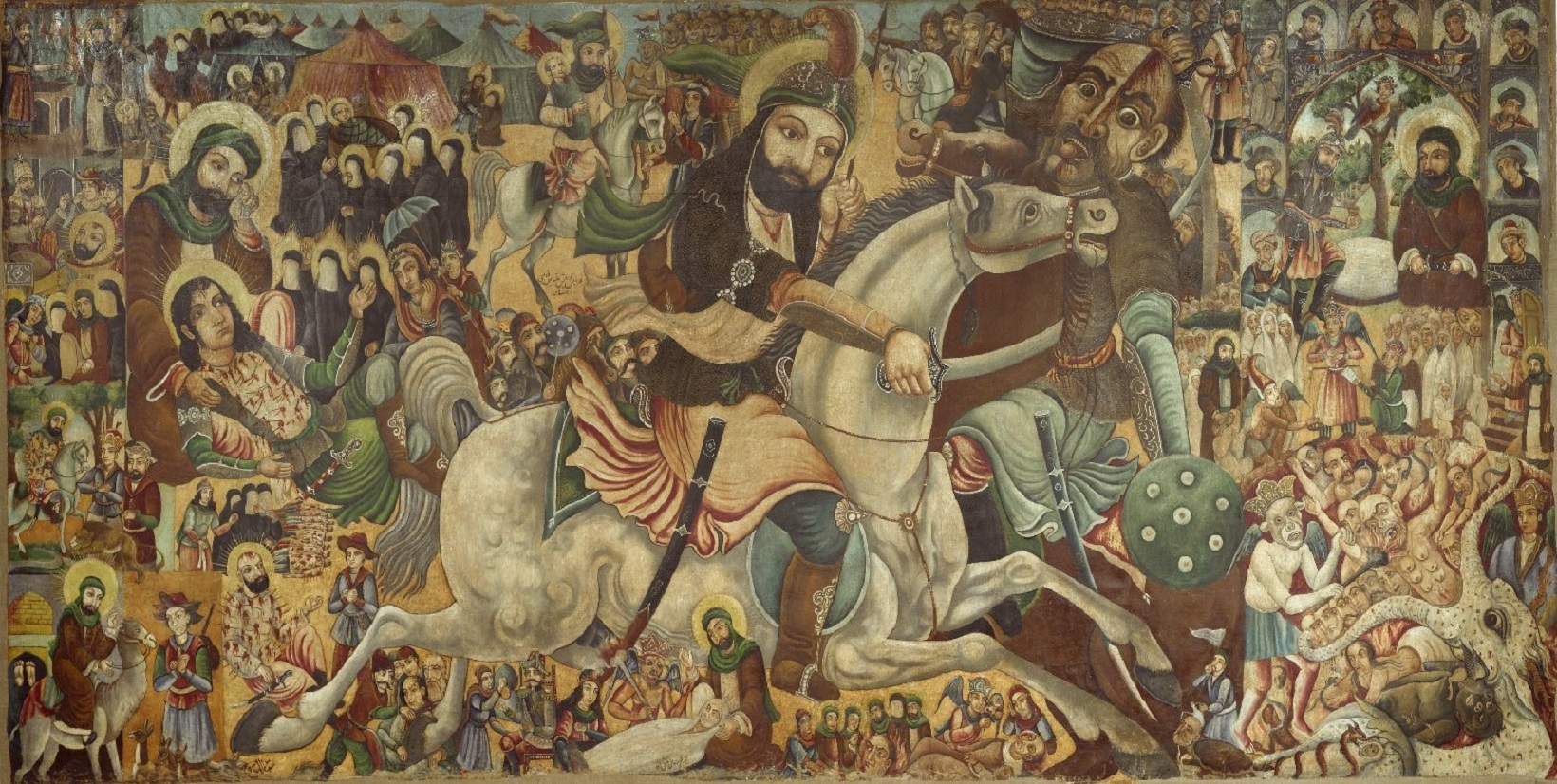
There is also an internal Islamic dimension that makes the Pope’s stance even more striking: consciously or not, he evokes the spirit of Karbala. In the year 61 AH (680 CE), Imam Hussein, left thirsty and alone against Yazid’s forces, became the symbol of standing upright against tyranny. Today, the suffering of the peoples of Palestine, Iran, and Lebanon is, according to some interpretations, seen as a form of uprising “for the sake of God.”
This means: • standing against injustice, • defending justice, • refusing to submit to oppression, • upholding truth despite its cost.
The Pope’s alignment with these peoples recalls narratives of a Christian monk offering a drop of water to Hussein in the desert of Karbala.
Yazidism and the Army of Hussein: A Contemporary Reading
Here, “Yazidism” represents not a historical figure, but a mindset: one that instrumentalizes religion for power, ignores the suffering of the oppressed, and collaborates with oppression for self-interest. • Today’s Yazids: Those who remain silent about or legitimize, the suffering of the peoples of Palestine, Lebanon, and Iran in order to preserve their palaces, petrodollar revenues, and political power are associated with this mindset. • Today’s Hussein (in spirit): The peoples struggling to survive under war and oppression are seen by many as symbols of resilience and patience.
The Meaning of the Pope Standing “With Hussein”
When the Pope, as one of the world’s most influential religious figures, stands with the oppressed, this is interpreted by some as a powerful critique of the silence within the Muslim world.
According to these interpretations, the resulting picture raises serious questions about moral courage. Regardless of sect Sunni or Shia the inability or unwillingness of powerful actors to speak out due to strategic interests leads to a profound crisis of conscience.
Conclusion and Call: The Importance of Moral Stance
What we are witnessing today points to a world shaped not by religions, but by interests, fears, and power dynamics. Alliances in the Middle East have shifted, giving way to pragmatic relationships.
In this context, Pope Leo XIV’s words: “I am not afraid of you!” carry strong symbolic meaning. They can be read not only as a political statement, but as a call for moral integrity.
Ultimately, one principle remains unchanged: To stand with the oppressed and against the oppressor.
Today, this principle may be voiced by unexpected actors. Yet this reality calls for deep self-reflection and moral reckoning across all societies.
Note: This article has been written to interpret current geopolitical developments through a religious and historical lens. Its aim is not provocation, but to invite reflection and conscience.
Sefa Yürükel
Danish ethnographer and social anthropologist (MA) Aarhus University, 1997 Independent Researcher Fields of Research: International Politics, Public International Law, Geopolitics, Sociology, Psychology, Cultural Studies, Systems and Structures
China’s economic transformation over the past forty years has drawn attention not only for its high growth rates but also for a structure that challenges the boundaries of existing economic theories. This transformation has generated new areas of debate, particularly within the literature of development economics and comparative political economy.
Classical modernization theories associate economic development with market liberalization and the spread of liberal democratic institutions. However, the Chinese case demonstrates that this linear relationship is not necessarily obligatory. This calls for a reassessment of existing theoretical frameworks.
The concept of “state capitalism,” often used to explain China’s economic structure, can be illuminating in many respects but may also be reductive. By positioning China as merely a variant of the existing capitalist system, this concept risks downplaying its unique institutional dynamics.
In this context, the fundamental question is not which category China belongs to, but rather through which mechanisms this system operates. This perspective prioritizes analytical inquiry over normative classification.
Thus, the Chinese experience functions as a laboratory that necessitates rethinking the concepts of state, market, and capitalism.
Comparative Analysis of the Concept of the State
In Western political thought, the state is defined within a Weberian framework as a monopoly on the legitimate use of violence and a rational-bureaucratic organization. In this model, the state is treated as a structure relatively autonomous from society and institutionally distinct.
This approach has produced an administrative framework compatible with modern capitalist economies. The rule of law, institutional predictability, and bureaucratic specialization are its core elements.
In China, however, the concept of the state rests on a more holistic historical foundation. The Confucian tradition views political authority as a continuation of moral order and does not sharply separate state and society.
The concept of “Guojia” reflects this holistic understanding. The state is positioned not merely as a governing apparatus but also as the carrier of social order.
Therefore, interpreting the Chinese state solely through a Weberian model is insufficient; institutional structure, historical continuity, and ideological frameworks must be evaluated together.
The Distinction Between Market and Capitalism
Although the market mechanism and the capitalist system are often used interchangeably, these two concepts are structurally distinct. The market is a mechanism that regulates exchange relations and historically predates capitalism.
Capitalism, on the other hand, is a broader system organized around private ownership of the means of production, profit maximization, and capital accumulation. In this system, the market is not merely a distribution mechanism but the central determinant of production relations.
In the Chinese case, while market mechanisms clearly exist, they are constrained and guided by the strong coordinating capacity of the state. Therefore, the presence of markets alone is insufficient to classify the system as capitalist.
The financial system, largely operating through state-owned banks, shapes capital allocation via non-market instruments. This creates a significant divergence from classical financial capitalism.
Thus, in China, the market is not the center of the system but rather a tool structured by the state.
Historical Evolution of the Chinese Model
The Chinese economy during the Mao era was built on a structure based on central planning and state ownership. Economic activities were largely conducted under state control.
However, this model produced significant limitations, particularly in agricultural productivity and industrial output. Rigidity in resource allocation deepened economic imbalances.
The reform process initiated by Deng Xiaoping transformed this structure by integrating market mechanisms into the system. However, this integration did not imply the complete removal of state control.
The concept of a “socialist market economy” was developed to describe this hybrid structure. This model represents the simultaneous use of planning and market mechanisms.
Over time, China has created a unique development path by increasing market openness while maintaining state control in strategic sectors.
Institutional Structure and the Party-State System
To understand the functioning of China’s economic system, the central role of the Chinese Communist Party must be taken into account. The Party is not only the holder of political power but also the main actor in economic coordination.
The relationship between the state and the Party, unlike in classical liberal models, is deeply intertwined. The Party possesses strategic steering capacity over state institutions.
This structure enables the effective implementation of long-term economic planning. Major infrastructure investments and industrial policies, in particular, are carried out rapidly through centralized coordination.
While state ownership continues in strategic sectors, the private sector is encouraged within defined limits. This creates a controlled market environment.
In conclusion, in China, the state functions not outside the market but as its guide and architect.
Comparison with the Soviet Union
The fundamental difference between the Soviet Union and China lies in the management of their reform processes. Both countries attempted transitions from planned economies to more market-based systems.
In the Soviet Union, the reform process progressed alongside political disintegration, leading to a weakening of state capacity. This negatively affected the sustainability of economic transformation.
In China, reforms were implemented gradually and in a controlled manner. Economic liberalization was carried out step by step while preserving the political structure.
This approach maintained institutional stability and made the transformation process more manageable.
Thus, the success of the Chinese model is related not only to the content of reforms but also to their timing and institutional framework.
Theoretical Debates and the Position of the Model
There are various theoretical approaches in the literature on the Chinese economy. This diversity makes it difficult to place the model within a single category.
The state capitalism approach views China as a variant within the market economy characterized by strong state intervention. In this perspective, the market mechanism is considered the dominant element.
The socialist approach emphasizes the determining role of state ownership and planning, reducing the market to an instrumental function.
The hybrid model approach evaluates China as an intermediate form between two systems. This perspective is particularly common in the comparative capitalism literature.
These differences indicate that China possesses a structure that transcends existing theoretical categories.
Conclusion
China’s economic model has a multilayered structure that goes beyond classical economic and political categorizations, making it difficult to define with a single label.
The strong and guiding role of the state constitutes the system’s core characteristic. However, this does not mean that market mechanisms are entirely excluded.
Market elements exist within the system as instruments strategically employed by the state. This complicates conventional definitions of capitalism.
The Chinese case demonstrates that economic systems cannot be fully explained through fixed and universal categories. Instead, historical and institutional contexts must be taken into account.
In conclusion, China stands as one of the most important contemporary examples showing that the relationship between state and market can be redefined.
References
Arrighi, Giovanni. Adam Smith in Beijing: Lineages of the Twenty-First Century. London: Verso, 2007.
Bremmer, Ian. The End of the Free Market: Who Wins the War Between States and Corporations? New York: Portfolio, 2010.
Deng, Xiaoping. Selected Works of Deng Xiaoping. Beijing: Foreign Languages Press, various volumes.
Huang, Yasheng. Capitalism with Chinese Characteristics: Entrepreneurship and the State. Cambridge: Cambridge University Press, 2008.
Milanović, Branko. Capitalism, Alone: The Future of the System That Rules the World. Cambridge, MA: Harvard University Press, 2019.
Naughton, Barry. The Chinese Economy: Transitions and Growth. Cambridge, MA: MIT Press, 2007.
North, Douglass C. Institutions, Institutional Change and Economic Performance. Cambridge: Cambridge University Press, 1990.
Polanyi, Karl. The Great Transformation: The Political and Economic Origins of Our Time. Boston: Beacon Press, 1944.
Weber, Max. Economy and Society. Berkeley: University of California Press, 1978.
Zhang, Weiwei. The China Wave: Rise of a Civilizational State. Hackensack: World Scientific, 2012.
Naughton, Barry. “The Chinese Economy: Adaptation and Growth.” (various articles and edited volumes).
Oi, Jean C. “The Role of the Local State in China’s Transitional Economy.” China Quarterly, 1992.
Walder, Andrew G. “Local Governments as Industrial Firms.” American Journal of Sociology, 1995.
Danish ethnographer and social anthropologist (MA) Aarhus University, 1997 Independent Researcher Fields of Research: International Politics, Public International Law, Geopolitics, Sociology, Psychology, Cultural Studies, Systems and Structures
Iran’s “axis of resistance” discourse and practices, analyzed within international relations literature through the frameworks of “asymmetric resistance” and “ideological foreign policy,” present a rare example of consistency in the global system. Since the 1979 Islamic Revolution, Iran has succeeded in positioning itself as the center of an uncompromising, honorable resistance front, particularly against the United States and Israel. In contrast, the ruling Justice and Development Party (AKP) in Turkey claims to pursue a “pragmatic” and “multi-dimensional balancing” foreign policy, but this approach has in practice resulted in unprincipled behavior, inconsistency, and a severe erosion of reputation.
Theoretical Framework: Reputation and Consistency in Light of Realism and Constructivism
1.1. The Realist Perspective: Balance of Power and Survival
Realist theory argues that power and interest are the primary determinants of international relations. From this perspective, Iran’s “axis of resistance” strategy represents an effort to create an asymmetric balance of power against the US and Israel. The network of proxy actors Iran has built—Hezbollah in Lebanon, the Hashd al-Shaabi in Iraq, the Houthis in Yemen, and Hamas in Palestine—has created a deterrence capacity that transcends Iran’s conventional limitations.
However, the realist perspective alone is insufficient. Iran’s strategy cannot be reduced to mere power calculations; it is also a project of legitimacy and reputation building. Iran seeks not only to survive but also to create a moral superiority in the international system through its identity as “protector of the oppressed.”
1.2. The Constructivist Perspective: Identity, Discourse, and Legitimacy
Constructivist theory teaches that states exist not only through their material capacities but also through their identities, discourses, and the social capital these create. As Alexander Wendt famously argued, “anarchy is what states make of it.” From this perspective, Iran presents an extraordinary success story. Every position it has taken against the “Little Satan” (Israel) and the “Great Satan” (the US) has remained consistent for over 45 years. This consistency has earned Iran a reputation as an actor that “does what it says” and “keeps its word.” Its perception as the only regional power that champions the Palestinian cause on Arab streets has elevated Iran to a position of moral superiority over the Sunni monarchies that cooperate with the West.
Turkey, from this perspective, represents a complete failure. Although the AKP government initially tried to build a new identity through ambitious discourses such as “alliance of civilizations,” “zero problems with neighbors,” and “central country,” the inconsistencies in the practical implementation of these discourses have transformed Turkey into an actor whose “word is unreliable,” that “pursues day-to-day policies,” and that is “untrustworthy.”
Iran: A Reputable Actor Forged Through Ideological Consistency
2.1. Historical and Ideological Origins of the “Axis of Resistance”
The “axis of resistance” (Mihver-i Mukavemet) draws directly from the ideological codes of the 1979 Islamic Revolution. Ayatollah Khomeini’s theory of “Velayat-e Faqih” divides the world into two poles: the “arrogant” (imperialist powers) and the “oppressed” (the weak). Iran’s mission is to side with the oppressed and organize resistance against imperialism.
This strategy, which materialized with the founding of Hezbollah in 1982, has over the years evolved into a network of proxy actors extending across Syria, Iraq, Yemen, and Palestine. Each of these actors functions as a reflection of Iran’s ideological discourse and consolidates Iran’s regional influence.
2.2. Uncompromising Resistance at the Discourse Level: Anti-US and Anti-Israel Stance
The central pillar of Iran’s foreign policy discourse is opposition to the US and Israel. On every platform—from Quds Day events to Friday prayers, from official state media to diplomatic statements—Israel’s legitimacy is rejected, and US presence in the region is denounced as imperialist intervention.
What distinguishes Iran from other regional actors is the uncompromising and consistent nature of this discourse. Even during nuclear negotiations with the US, Iran has never made the slightest concession from its ideological discourse, continuing to label the US as “Satan.” This consistency is critical not only for the domestic legitimacy of Iran’s leadership but also for its international reputation.
2.3. Action Supporting Discourse in Practice: Asymmetric Resistance
Iran backs its discourse with action. Through proxy actors, it conducts attacks on Israeli and US interests, sends military advisors, and develops missile and drone technologies, sharing this capacity with its allies. Hezbollah’s resistance during the 2006 war with Israel was presented as a strategic success for Iran and demonstrated to the world the seriousness of Iran’s “resistance” discourse.
This high level of consistency between discourse and action has made Iran a respected and reputable actor in the international system. The fact that Iran is today seen by many circles as a “symbol of resistance against imperialism” is precisely the result of this consistency.
2.4. Iran’s Legitimacy and Its Costs
This strategy certainly has its costs. Severe economic sanctions, regional isolation, and domestic social unrest are among these costs. However, rather than harming Iran’s reputation, these costs are interpreted as “sacrifice” and “commitment to the cause,” further strengthening Iran’s resistance discourse.
Iran today is one of the few countries in the world that commands respect. Its ability to establish strategic partnerships with global powers such as China and Russia, and its membership in platforms like BRICS and the Shanghai Cooperation Organisation, are concrete indicators of this reputation. Iran’s reputation stems not only from its military or economic capacity but primarily from its ideological consistency and its reliability as an actor that “does what it says.”
Turkey: Reputation Loss in the Grip of Pragmatism
3.1. The Evolution of AKP Foreign Policy: From Discourse to Contradiction
With the AKP’s rise to power in 2002, Turkish foreign policy gained a new discourse through Ahmet Davutoğlu’s “strategic depth” doctrine. Concepts such as “zero problems with neighbors,” “alliance of civilizations,” and “proactive peace diplomacy” were claims to make Turkey a leading and respected actor in its region.
However, from the 2010s onward, particularly during the Arab Spring, this idealist discourse was quickly abandoned, replaced by a pragmatic, sometimes opportunistic, and constantly shifting foreign policy. From its position on Assad in Syria, to the S-400 crisis with Russia and subsequent normalization, to tensions with Greece in the Eastern Mediterranean and military intervention in Libya, Turkey has failed to provide consistent explanations for its policies.
3.2. Between the Western Alliance and Regional Engagements: A State of Belonging Nowhere
One of the most serious aspects of Turkey’s foreign policy is its attempt to engage simultaneously with directly conflicting alliances. Turkey is a member of NATO and part of the Western security architecture, yet it has signed the S-400 air defense system agreement with Russia—seen as NATO’s biggest rival—and has developed deep cooperation in energy and tourism.
This situation makes Turkey neither a fully reliable ally of the West nor a sincere partner of the East. The West views Turkey’s S-400 agreement as a betrayal and has imposed CAATSA sanctions. Russia, for its part, always reads Turkey’s NATO membership as a problem and never fully accepts Turkey as a “strategic partner.”
3.3. The Hypocritical Stance on the Israel-Palestine Issue: The Gulf Between Discourse and Practice
The issue that most damages Turkey’s reputation is its hypocritical stance on the Israel-Palestine issue. At the level of discourse, the AKP government champions the Palestinian cause, describes Israel’s Gaza policies as those of a “terrorist state,” and President Erdoğan delivers speeches targeting Israel from UN podiums.
But the practice is entirely different. Economic relations between Turkey and Israel continue at around $7-8 billion annually. The natural gas agreement signed in 2022 demonstrates the extent of this economic relationship. On every platform where Turkey criticizes Israel, it continues to trade with and sign energy deals with the same Israel.
This is an open discourse-action mismatch. Turkey condemns the “recognition of Jerusalem as a capital” while simultaneously contributing to Israel’s economic strengthening. This hypocritical stance renders Turkey’s sincerity on the Palestinian cause questionable and has destroyed Turkey’s credibility, particularly in Arab public opinion.
3.4. Indirect Engagement with Israel Through Azerbaijan: A Concrete Example of Reputation Erosion
The most concrete example of Turkey’s hypocritical stance is its indirect engagement with Israel through Azerbaijan. Azerbaijan is one of Israel’s most important strategic partners. Israel sells weapons to Azerbaijan (drones, air defense systems), Azerbaijani oil flows to Israel, and there is intensive intelligence cooperation between the two countries.
Turkey, for its part, has a special relationship with Azerbaijan, defined by the slogan “one nation, two states.” Turkey provides military support to Azerbaijan, engages in energy cooperation, and provides unconditional political support to Azerbaijan on Karabakh.
The problem is this: Turkey describes Israel as a “terrorist state” while maintaining a “brotherly” relationship with a country that is Israel’s strategic partner. Turkey is openly engaged in indirect economic and military cooperation with Israel through Azerbaijan. This situation renders Turkey’s claim to champion the Palestinian cause completely meaningless.
3.5. The “Unprincipled” Critique and Reputation Erosion
Criticisms of Turkey’s foreign policy can be grouped under three headings:
First, discourse-action inconsistency. Turkey criticizes Israel while trading with it. It criticizes US presence in the region while maintaining NATO membership. This is an open example of “hypocrisy.”
Second, day-to-day policymaking. Turkey’s foreign policy positions are often based on short-term tactical calculations and lack long-term strategic vision. One day Turkey is cozying up to Russia; the next day it is sending weapons to Ukraine. This makes it impossible to predict Turkey’s next move.
Third, reputation erosion. Constantly shifting positions have completely destroyed Turkey’s status as a “reliable actor” in the international system. Today, no country knows how long Turkey’s position on any given issue will last or how sincere it is. This has transformed Turkey into an actor that has lost its respectability and whose reputation is shattered.
Comparative Analysis: Iran’s Reputation vs. Turkey’s Reputation Loss
4.1. Fundamental Comparison
The fundamental difference between Iran and Turkey emerges at the level of discourse-action consistency. Iran has followed an unchanged ideological line for 45 years, has made no concessions against actors it defines as “enemies,” and supports its discourse with action. Turkey, by contrast, takes constantly shifting positions shaped by daily tactics, positions that contradict one another.
The consequences of this difference are clear: Iran is seen as a “does what it says,” “keeps its word,” “loyal to its cause” actor in the international system. This reputation has enabled Iran to establish strategic partnerships with powers like China and Russia and to gain weight in platforms such as BRICS and the SCO.
Turkey, on the other hand, is perceived as an “unpredictable,” “unreliable,” “pragmatist” actor. This perception has destroyed Turkey’s international reputation and has led to it never being seen as a fully reliable partner in any alliance.
4.2. Sources of Iran’s Reputation
Iran’s reputation draws from four main sources:
First, ideological consistency. Iran has not made the slightest concession from its “anti-imperialism” and “resistance” discourse since 1979. This consistency makes Iran a predictable actor.
Second, discourse-action alignment. Iran does what it says, follows through on its threats, and keeps its promises. This makes Iran a reliable actor.
Third, capacity for sacrifice. Despite years of severe sanctions, economic hardship, and diplomatic isolation, Iran has not abandoned its ideological line. This sacrifice demonstrates the “seriousness of Iran’s cause” to the entire world.
Fourth, symbolic capital. By championing the Palestinian cause, Iran has accumulated significant symbolic capital in the Islamic world. This capital elevates Iran to a position of moral superiority over the Sunni monarchies.
4.3. Causes of Turkey’s Reputation Loss
The causes of Turkey’s reputation loss are precisely the opposite:
First, ideological vacuum. The AKP’s initial discourses such as “alliance of civilizations” were abandoned over time and replaced by an unclear, eclectic discourse. What values Turkey represents, which ideological line it stands on, has become uncertain.
Second, discourse-action mismatch. Turkey constantly does the opposite of what it says, and can abandon a position it defended one day the next. The hypocritical stance on Israel is the most striking example.
Third, unreliability. No one can predict how long Turkey’s positions will last or under what conditions they might change. This makes Turkey a “risky” actor in international relations.
Fourth, loss of symbolic capital. Although Turkey claims to champion the Palestinian cause, its continued trade with Israel and indirect cooperation through Azerbaijan has completely exhausted its symbolic capital in this area. Today, almost no one on Arab streets believes Turkey is sincere about Palestine.
Case Study: The Azerbaijan-Israel-Turkey Triangle and Reputation Erosion
5.1. Azerbaijan-Israel Relations
The strategic cooperation between Azerbaijan and Israel has deepened in energy, military, and intelligence fields. Israel is one of Azerbaijan’s most important arms suppliers; Azerbaijani oil flows to Israel; and the two countries conduct joint intelligence activities against Iran.
This relationship is a direct threat to Iran. Israel’s military and intelligence presence in a country so close to Iran’s border creates a serious fracture in Iran’s security perception.
5.2. Turkey’s Contradictory Position
Turkey has a special relationship with Azerbaijan, defined by the slogan “one nation, two states.” Turkey provides military support to Azerbaijan, engages in energy cooperation, and provides unconditional political support on Karabakh.
The problem is this: Turkey describes Israel as a “terrorist state” while maintaining a “brotherly” relationship with Azerbaijan, Israel’s closest strategic partner. By supporting Azerbaijan, Turkey indirectly strengthens Israel’s presence and influence in the region.
This contradiction renders Turkey’s discourse on Palestine completely meaningless. Turkey condemns the “recognition of Jerusalem as a capital” while embracing the most important regional ally of the same Israel that has its embassy in Jerusalem. This is open hypocrisy.
5.3. Impact of This Triangle on Turkey’s Reputation
The Azerbaijan-Israel-Turkey triangle has irreparably damaged Turkey’s reputation. What critics call a “hypocritical stance” points to an even more serious picture: Turkey has become an actor that does not even know what it stands for, is bogged down in contradictions, and disregards its own reputation.
Turkey’s position in this triangle positions it neither as a respectable actor in the Islamic world nor in the West. The Islamic world doubts Turkey’s sincerity on Palestine. The West questions Turkey’s reliability within NATO. Turkey has become a “nobody” that does not fully belong anywhere and is not fully trusted in any alliance.
Conclusion: Iran’s Reputation and Turkey’s Reputation Loss
Iran’s ideologically grounded and hardline foreign policy approach has made it a reputable actor in the international system. The legitimacy ground it has built through the discourse of “resistance” has survived years of sanctions, economic hardship, and diplomatic isolation. Today, Iran is seen as an actor that “does what it says” and “never abandons its cause,” commanding great respect, particularly in anti-US circles. The fact that global powers like China and Russia see Iran as a strategic partner is a concrete reflection of this reputation.
Turkey, by contrast, may have achieved some short-term gains through its pragmatic and multi-dimensional foreign policy strategy, but the price has been heavy. Turkey is perceived in the international system as an “inconsistent,” “unreliable,” “unpredictable” actor, and this perception has destroyed Turkey’s reputation. The hypocritical stance on the Israel-Palestine issue and the indirect engagement with Israel through Azerbaijan have rendered Turkey’s discourse meaningless and reduced it to a “hypocritical” actor.
In conclusion, Iran continues to exist as a reputable, respected actor whose voice is heard in the world, while the Turkish government has factually lost its reputation due to its unprincipled and contradictory policies, earning the label of an “unreliable actor” in the international system. To change this course, Turkey must radically question its foreign policy, close the gap between its discourse and actions, and move toward a consistent, principled line. Otherwise, the diplomatic and economic costs of reputation loss will grow even heavier by the day.
Bibliography
Adib-Moghaddam, A. (2006). The International Politics of the Persian Gulf: A Cultural Genealogy. Routledge.
Altunışık, M. B. (2014). Turkey-Israel Relations: A History of Alliance and Rivalry. Middle East Policy, 21(2), 78-92.
Aras, B. (2014). Turkish Foreign Policy after the Arab Spring: From Soft Power to Assertiveness. Insight Turkey, 16(2), 43-58.
Aras, B., & Tok, M. E. (2020). Iran’s Axis of Resistance: A Strategic Analysis. Middle East Policy, 27(3), 45-59.
Bengio, O. (2010). The Turkish-Israeli Relationship: Changing Ties of Middle Eastern Outsiders. Palgrave Macmillan.
Cornell, S. E. (2015). Azerbaijan Since Independence. Routledge.
Davutoğlu, A. (2001). Stratejik Derinlik: Türkiye’nin Uluslararası Konumu. Küre Yayınları.
Hinnebusch, R., & Ehteshami, A. (Eds.). (2014). The Foreign Policies of Middle East States. Lynne Rienner Publishers.
Kardaş, Ş., & Balcı, A. (Eds.). (2018). The New Turkish Foreign Policy: Towards a Strategic Depth. Lexington Books.
Keyman, E. F. (2016). Turkish Foreign Policy in the Post-Arab Spring Era: From Proactive to Buffer State. Third World Quarterly, 37(12), 2274-2291.
Maloney, S. (2015). Iran’s Political Economy since the Revolution. Cambridge University Press.
Mearsheimer, J. J. (2001). The Tragedy of Great Power Politics. W.W. Norton & Company.
Ostovar, A. (2016). Vanguard of the Imam: Religion, Politics, and Iran’s Revolutionary Guard. Oxford University Press.
Öniş, Z. (2011). Multiple Faces of the New Turkish Foreign Policy: Underlying Dynamics and a Critique. Insight Turkey, 13(1), 47-65.
Tabatabai, A. M. (2020). Iran’s Evolving Deterrence Strategy: The Role of Proxies. Survival, 62(5), 85-102.
Valiyev, A. (2019). Azerbaijan-Israel Relations: A Strategic Alliance. Caucasus Survey, 7(2), 156-172.
Waltz, K. N. (1979). Theory of International Politics. Addison-Wesley.
Wastnidge, E. (2019). The Axis of Resistance: Iran’s Role in the Middle East. In The International Politics of the Middle East (pp. 123-141). Manchester University Press.
Wendt, A. (1999). Social Theory of International Politics. Cambridge University Press.
Sefa Yürükel
Danish ethnographer and social anthropologist (MA) Aarhus University, 1997 Independent Researcher Fields of Research: International Politics, Public International Law, Geopolitics, Sociology, Psychology, Cultural Studies, Systems and Structures
Global power dynamics have never been static; throughout history, empires have risen, peaked, and then entered periods of decline. What is happening today is being recorded in history as the newest and most striking link in this cycle. Following the approximately thirty-year hegemony of the unipolar system that began with the end of the Cold War, an irreversible fracture is now occurring in international relations. Especially recently, the maneuvers of Iran and the Axis of Resistance in the region have inflicted an unexpected defeat on the US and Israel, not only militarily but also politically, economically, and diplomatically. This defeat has a unique character and justifies all discussions about the reshaping of the global system.
The Middle East stands out as the geography where this transformation is most intensely experienced. Events such as the September 11 attacks, the invasions of Afghanistan and Iraq, the Arab Spring process, and finally the October 7 operation have been milestones deepening the region’s instability. However, the defining development has been the multi-dimensional victory of Iran and the Axis of Resistance against the US-Israel front. This victory has not been limited to military successes on the ground; it has been integrated with military, political, economic, and diplomatic blows directed at the US and Israel from all around the world. Today, America’s global patronage is being questioned, and Israel is suffering the heaviest reputational loss in its history.
The internal disintegration within the Western world completes this picture. The deep disagreements emerging in the relations between European countries and the United States show that the Western bloc is no longer as homogeneous as it once was. The chasms over energy policies, security strategies, and economic interests have created irreparable cracks in transatlantic relations. Tensions within NATO strengthen assessments that the alliance is fundamentally shaken, and comments about Europe and the US entering a divorce process are increasingly gaining supporters.
Developments in the Gulf region present one of the most concrete indicators of this entire transformation. Despite the American military presence and guarantees in the region, Gulf countries are increasingly pursuing an independent line. The defeat the US is experiencing in the Gulf is comparable in nature to its historic debacle in Vietnam. Similarly, a much heavier version of Israel’s 2000 withdrawal from Lebanon is manifesting on all fronts today. Israel has become a country hiding underground day and night, living in fear.
All these developments reveal the reality that imperialism and Zionism have lost politically, militarily, diplomatically, economically, and strategically. There is no longer any possibility of hiding this defeat; the world public is personally witnessing the humiliation of the US and Israel and the shattering of their prestige. The emerging new picture shows that the transition from a unipolar world to a multipolar and just order is inevitable, and confirms that the Axis of Resistance is one of the most important actors in this process.
Geopolitical and Military Dynamics: The Heavy Defeat of the US and Israel
The military and strategic maneuvers of Iran and the Axis of Resistance in the region have a character that completely transcends classical war doctrines. Iran’s direct and indirect actions have been integrated with military blows directed at the US from all around the world, especially from Europe, not just Israel. Attacks on US military bases in the region, missiles targeting warships in the Red Sea, operations on US facilities in Iraq and Syria have revealed how vulnerable the US military is. The US’s ineffectiveness and indecisiveness in the face of these attacks show that its deterrence capacity has completely collapsed.
The situation on the Israeli front presents an even more dire picture. The October 7 operation showed the world the bankruptcy of Israel’s intelligence, military, and defense systems. The piercing of the Iron Dome, the neutralization of border security systems, and the unpreparedness of the Israeli army for war have revealed how fragile this country is. With Iran’s direct attack, Israel experienced the biggest security crisis in its history; the violation of its airspace, and the missile and drone attacks led to a state of complete panic. Israel has now become a country hiding underground, fleeing to shelters, and breathing in fear both day and night.
Despite the unconditional military support the US provides to Israel, it has been seen that this support means nothing on the ground. The aircraft carriers, warships, and military units the US sent to the region could neither protect Israel nor limit the operational capacity of the Axis of Resistance. The US army, defined as the world’s largest military power, has become almost helpless in the fight against proxy forces; the fear of direct engagement has tied Washington’s hands. This situation has once again proven that military superiority alone means nothing, and that will and strategic patience are the real determinants.
The Gulf region has turned into a Vietnam-style debacle for the US. Gulf countries, especially Saudi Arabia and the UAE, despite US security guarantees, have developed diplomatic and economic relations with Iran and the Axis of Resistance and have begun to question the US military presence in the region. US military bases in the Gulf are no longer centers of power projection; on the contrary, they have become symbols of US vulnerability. The normalization process of Gulf countries with Iran is the clearest sign that the US is even losing its allies in the region.
The military successes of the Axis of Resistance have not been limited to the defense domain; they have also paralyzed the offensive capacity of the US and Israel. Israel’s operations in Gaza have not achieved the expected military success; on the contrary, they have caused the Israeli army to suffer heavy losses and become completely isolated in the international arena. Hezbollah’s threat on the northern border, the Houthis’ operations against commercial ships in the Red Sea, resistance groups in Iraq and Syria targeting US bases have eliminated the possibility of concentrating on a single front and have dragged the US and Israel into a multi-front war. This multi-front war has exhausted all the resources of the enemy and driven it into a strategic impasse.
Political and Diplomatic Reflections: US-Israel Friendship is Decreasing, the World is Changing
One of the most prominent effects of the changes in the international system is the rapid erosion of political and diplomatic support for the US and Israel. Diplomatic blows directed at the US and Israel from all around the world show how isolated these two countries have become internationally. Resolutions against the US and Israel adopted in the UN General Assembly and Security Council reveal that not only the non-Western world but also countries within the West are moving away from these two countries. Despite US vetoes, the near-unanimity of the international community in resolutions condemning Israel is proof of how weak the West’s hand has become.
The deep divisions emerging in relations between European countries and the US show that the transatlantic alliance is fundamentally shaken. European countries such as France, Germany, Spain, Italy, Belgium, Ireland, and Norway have taken decisions to suspend or restrict arms sales to Israel, have taken steps towards recognizing the Palestinian state, and have called for ceasefires. This situation has caused diplomatic tensions between the US administration and its European allies; some European countries have begun to openly criticize US Middle East policies. It is now clear that US influence over Europe is broken, and Europe is taking steps to define its own strategic interests.
The creaking within NATO seriously threatens the future of the alliance. Although French President Macron’s statement that “NATO is experiencing brain death” was temporarily pushed into the background by the pandemic and the Ukraine war, the underlying problems have not been resolved but have deepened. European countries are increasingly uncomfortable being under the US security umbrella, and the concept of European Strategic Autonomy is gaining more and more supporters. The US’s “pivot to Asia” strategy has reduced Europe to a secondary priority; this has strengthened the discourse of “self-determination” and “strategic independence” in Europe. Comments that Europe and the US are entering a divorce process are no longer a marginal view but have become central to mainstream discussions.
The rise of Global South countries and their growing self-confidence against the West are reinforcing the diplomatic isolation of the US and Israel. Major southern countries like Brazil, South Africa, India, and Indonesia are making statements condemning Israel, expressing support for Palestine, and forming anti-US and anti-Israel blocs on international platforms. The expansion of the BRICS group, its institutionalization as a non-Western power platform, poses a serious alternative to the US-led global order. The sympathy and respect that Iran and the Axis of Resistance have gained in these countries have completely collapsed the Western narrative of the “oppressor.”
Serious cracks have also appeared in the relations of the US with its traditional allies. Countries like Saudi Arabia, the UAE, Egypt, and Jordan, despite US pressure, have taken steps to normalize relations with Iran and the Axis of Resistance and have begun to openly criticize US policies in the region. Gulf countries that were in the normalization process with Israel froze this process after the October 7 operation, stood by the Palestinian cause, and made statements condemning Israel. This situation is the clearest indicator of how much US influence in the region has weakened and that even its allies can resist Washington’s pressure.
Economic and Strategic Effects: Blows from All Around the World
In the economic field as well, the US and Israel are receiving heavy blows from all around the world. The ineffectiveness of sanctions, the acceleration of de-dollarization, the loss of control over energy markets signal the collapse of US economic hegemony. Years of sanctions on Iran have neither stopped the country’s nuclear program, nor led to regime change, nor limited the regional activities of the Axis of Resistance. On the contrary, sanctions have led to the development of alternative economic networks in Iran, increased import-substitution industrialization efforts, and the formation of an economic structure specialized in evading sanctions.
The de-dollarization process is one of the biggest economic blows directed at the US. Countries such as China, Russia, Iran, Turkey, India, Brazil, South Africa, Saudi Arabia, and the UAE have started using local currencies in their bilateral trade and have begun to question the dollar’s reserve currency status. Discussions within BRICS about creating a common payment system and a common reserve currency have the potential to break the US monopoly on the global financial system. Efforts to create alternatives to the SWIFT system (Russia’s SPFS, China’s CIPS, Europe’s INSTEX) are concrete steps towards neutralizing US financial weapons. The US’s excessive use of sanctions as a weapon is preparing the end of the dollar’s hegemony in the long run.
It is seen that the US and Israel have completely lost control in energy markets. Despite the increase in US LNG exports to Europe following the Russia-Ukraine war, Europe’s energy crisis has not been resolved; on the contrary, Europe’s energy dependency has merely shifted from one form to another. The OPEC+ cartel, led by Saudi Arabia and Russia, cutting production despite US pressure has shown how limited US influence is on energy markets. The presence of Iran and the Axis of Resistance in strategic waterways such as the Strait of Hormuz, the Red Sea, and the Suez Canal indicates a capacity that could threaten global energy supply. The US’s inability to counter these threats reveals its incompetence regarding energy security.
The Israeli economy is taking blow after blow. The direct cost of the war reaching tens of billions of dollars, the departure of reserve soldiers from the workforce, tourism revenues coming to a halt, labor shortages in agriculture and construction, the halt of foreign investments, the downgrading of credit ratings, and the devaluation of the shekel have deeply shaken the Israeli economy. Although the high-tech sector is the locomotive of the Israeli economy, it has suffered a serious blow due to the mobilization of reservists, disruptions in the supply chain, and increased uncertainty. The near-closure of the Red Sea route, which holds an important place in Israel’s foreign trade, due to Houthi attacks, has added an additional cost to the Israeli economy.
Economic blows directed at the US and Israel from all around the world are increasing the costs for these two countries exponentially. Europe halting arms sales to Israel, international companies withdrawing from Israel, investors losing confidence in Israeli markets, and the spread of boycott campaigns are bringing the Israeli economy to the point of suffocation. The US’s effort to provide simultaneous military and economic support to Ukraine and Israel has placed a heavy burden on the US budget; the sustainability of this support is being seriously questioned. The US debt crisis, budget deficit, and inflation pressures are signaling the collapse of its economic hegemony.
The Crumbling of NATO and the Western Alliance: Europe and the US Are About to Divorce
The current situation within NATO shows that the alliance is fundamentally shaken. The Western alliance, which united against the Soviet threat during the Cold War, no longer even has a common threat definition. While the US defines China as its primary strategic rival, European countries prioritize the Russian threat and are directly affected by instability in the Middle East. These differing threat perceptions cause serious disagreements over strategic priorities within the alliance. The US’s focus on Asia has fueled discussions that Europe should ensure its own security.
Although the commitment of European countries to increase defense spending (the 2% of GDP target) has been met by many countries, it is seen that this spending falls far short of US expectations. Moreover, European countries tend to use increased defense spending to develop their own defense industries rather than buying weapons from the US. This situation has the potential to break the US monopoly on the European arms market and constitutes a new source of tension in transatlantic relations. Projects developed under the leadership of France and Germany, such as the European fighter jet, tank, and aircraft carrier, continue despite US discomfort.
Although the Ukraine war temporarily allowed NATO to re-consolidate, it is understood that this consolidation is not permanent. The prolonged war has depleted the stocks of European countries, strained their economies, and eroded public support. The US signaling a reduction in its support for Ukraine has put European countries in a difficult position; some European countries have started to argue that the war should be resolved through diplomatic means. This situation shows that there is a serious disagreement between the US and Europe over Ukraine policy. Countries like Hungary, Slovakia, and Austria questioning support for Ukraine reveals that the divisions within the alliance are deepening.
The events during the Israel-Gaza war have exposed the chasm between the US and Europe. While the US provides unconditional support to Israel, many European countries have called for a ceasefire, taken steps towards recognizing the Palestinian state, and decided to suspend or restrict arms sales to Israel. Countries such as Spain, Ireland, Norway, and Slovenia have officially announced their recognition of the Palestinian state; Belgium, Italy, the Netherlands, and the UK have suspended or restricted arms sales to Israel. The US’s efforts to veto or block these steps have drawn the reaction of European countries and caused a deep confidence crisis in transatlantic relations. It is now clear that the US cannot direct Europe according to its own interests and that Europe is taking determined steps to chart its own course.
All these developments show that Europe and the US are entering a divorce process. Of course, this divorce will be a gradual process of separation taking years, rather than an abrupt break overnight. But the direction and speed are working against the US. Europe’s effort to gain strategic autonomy is one of the most important factors preparing the end of US global hegemony. Europe diversifying its relations with countries like China, Russia, and Iran, not participating in sanctions against these countries despite US pressure, or efforts to circumvent sanctions, are giving signals of the dissolution of the transatlantic alliance. NATO becoming completely dysfunctional in the near future or transforming into a European-centered defense organization, and the end of the US military presence in Europe, are no longer seen as distant possibilities.
General Assessment: Imperialism and Zionism Have Lost, There is No Way to Hide It
In light of all these developments, the truth reached is this: Imperialism and Zionism have lost politically, militarily, diplomatically, economically, and strategically. The US is no longer the global patron; it can no longer direct anyone as it wishes, cannot intervene in any country as it wishes, cannot impose any sanction as it wishes. The debacle in Afghanistan, ineffectiveness against Russia in Ukraine, the heavy defeats suffered against Iran and the Axis of Resistance in the Middle East have displayed the weakness of the US in all its nakedness. It is an undeniable reality that the US is no longer the determining actor, that the world is evolving into a multipolar structure, and that Iran and the Axis of Resistance are important actors in this new structure.
Israel is experiencing the heaviest defeat in its history. The October 7 operation showed the bankruptcy of Israel’s legendary intelligence, army, and defense systems. Israel’s helplessness in the face of Iran’s direct attack, its inability to even announce who struck it, its fear of retaliation, have revealed how fragile Israel is. Israel has now become a country hiding underground, fleeing to shelters, and breathing in fear both day and night. In the international arena, Israel has been accused of committing genocide, faced demands for its leaders to be tried at the International Criminal Court, been diplomatically isolated by many countries, and even abandoned by its allies. Israel’s prestige has been shattered, its nose has been rubbed in the dirt, and it has been humiliated before the world public.
Friends of the US and Israel are decreasing, and fronts are forming against these two countries all around the world. The rise of Global South countries, the increase in anti-Western sentiment, the revisionist stance of China and Russia, the awakening of the Islamic world – all of these are working against the US and Israel. The US veto, pressure, threats, and sanctions no longer work as they used to. Countries can comfortably take steps that the US does not want, showing that they have the capacity to resist US pressure. The US’s dogmatic discourse of “you are either with us or with them” has lost its function; countries can now say “neither the US nor China, our own way.”
The Gulf region has been a repetition of the Vietnam debacle for the US. After hundreds of thousands of soldiers, trillions of dollars, and decades of engagement, the US could not achieve what it wanted in the Gulf; on the contrary, it has largely lost its influence. Gulf countries now act according to their own interests, not America’s; they develop relations with countries like China, Russia, Iran, and Turkey; they view US security guarantees with suspicion. For Israel, a much heavier version of the 2000 Lebanon debacle is being experienced today. The Israeli army, which withdrew from South Lebanon in shame back then, is now experiencing the same helplessness in Gaza, the West Bank, the Lebanese border, Syria, Iraq, and Yemen, being hit from all sides and unable to respond.
There is no longer any possibility of hiding this defeat. Even if the US and Israeli media, state officials, and military commanders do not accept this defeat, the facts are obvious. The world public is personally witnessing that the US and Israel have been humiliated, their prestige shattered, that they have weakened, that they are afraid, that they are desperate. Denying this reality would only be self-deception. A new world order is being established; the foundation of this order is not imperialism and Zionism, but justice, equality, sovereignty, independence, and resistance. In this new order, Iran and the Axis of Resistance will continue to be the hope of all the oppressed who stand by their just cause.
Bibliography
· Amin, S. (2018). Empire of Chaos. New York: Monthly Review Press. · Chomsky, N., & Pappe, I. (2024). The Seven October Crimes: Israel’s Genocide in Gaza. London: Pluto Press. · Finkelstein, N. (2023). Gaza: An Inquest into Its Martyrdom. Oakland: University of California Press. · Halper, J. (2024). Decivilizing Israel: The Seven October War and the End of the Two-State Solution. Chicago: Haymarket Books. · Khalidi, R. (2024). The Iron Cage Revisited: Palestine’s Struggle for Justice After Seven October. Boston: Beacon Press. · Mearsheimer, J. J., & Walt, S. M. (2024). The Israel Lobby and US Foreign Policy: A New Afterword on the Seven October War. New York: Farrar, Straus and Giroux. · Pappe, I. (2024). The Ethnic Cleansing of Gaza: A History of the Seven October War. London: Oneworld Publications. · Prashad, V. (2024). The Darker Nations: A People’s History of the Global South in the Shadow of the Seven October War. New Delhi: LeftWord Books. · Roy, S. (2024). The Gaza Strip: The Political Economy of De-Development After Seven October. Washington, D.C.: Institute for Palestine Studies. · Said, E. W. (2024). The Question of Palestine: The Seven October Edition. New York: Vintage Books. · Shlaim, A. (2024). The Iron Wall: Israel and the Arab World Since Seven October. New York: W.W. Norton & Company. · Smith, R. (2024). The Decline and Fall of the American Empire: From Afghanistan to Seven October. Cambridge: Cambridge University Press. · Walt, S. M. (2024). The Hell of Good Intentions: America’s Foreign Policy Elite and the Decline of US Primacy After Seven October. New York: Farrar, Straus and Giroux.
Sefa Yürükel
Danish ethnographer and social anthropologist (MA) Aarhus University, 1997 Independent Researcher Fields of Research: International Politics, Public International Law, Geopolitics, Sociology, Psychology, Cultural Studies, Systems and Structures
As we approach the end of the first quarter of the 21st century, it has become widely accepted that the unipolar world order dominant in the post-Cold War era is experiencing a deep crisis of legitimacy and functionality. This Atlantic-centered order oppresses the Global South through military interventions, economic sanctions, debt mechanisms, and regime change operations. The paralysis in the UN Security Council’s decision-making processes, the social devastation caused by the structural adjustment programs imposed by the IMF and World Bank, and NATO’s escalation of conflicts contrary to its deterrence rhetoric all indicate that current international organizations cannot function without reform. Amidst this systemic crisis, new regional and intercontinental collaborations that could serve as alternatives to the existing order are being intensely debated in various academic, political, and strategic circles.
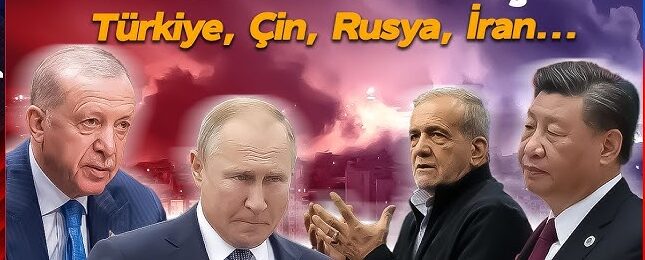
One proposition at the center of these debates is a hypothetical axis or alliance comprising Turkey, Russia, Iran, and China. This structure, which as yet has no institutional existence, binding treaty text, or joint military command, has begun to establish itself in the literature as a powerful geopolitical vision and anti-systemic discourse.
The TRIC Axis as a Geopolitical Proposition: Hypothetical Ground and Definition
For any political project or alliance proposal to be seriously evaluated, the historical and structural ground that makes it possible must first be laid out. The idea of the TRIC axis draws nourishment from the fact that all four actors have been subjected to various forms of Western imperialism at different points in history. This shared consciousness of victimhood is the fundamental element that constructs the alliance proposal not as an emotional camaraderie but as a structural necessity. The partition of the Middle East with artificial borders following the collapse of the Ottoman Empire, China’s “Century of Humiliation” in the 19th and 20th centuries, Russia’s total security, economic, and demographic crisis after its collapse in the 1990s, and Iran’s international isolation since the 1953 coup against Mossadegh have all prepared the ground for these four countries to develop a common critique of the system.
These four actors share three fundamental weaknesses of the current international system. The first is the lack of a say in the security architecture. Turkey’s secondary position within NATO’s decision-making processes, Russia being made a direct threat object of the alliance, Iran’s exclusion from regional security arrangements, and China’s encirclement by military bases in the Pacific constitute a shared experience of insecurity. The second is subjection to the debt-inducing policies of international financial institutions. The structural adjustment programs of the IMF and World Bank have weakened the economic sovereignty of all four countries at different times; China stands out as the only major country that has succeeded in development by keeping these programs at bay. The third is that energy and trade routes are threatened by Western-controlled naval power. The control of critical maritime chokepoints like the Strait of Hormuz, Bab el-Mandeb, the Suez Canal, Gibraltar, and the Strait of Malacca by the US and allied navies directly threatens the supply chain security of all four countries.
The structural logic of the proposed alliance is based on the idea of transforming these three weaknesses around a common axis. Instead of the vicious cycle the West calls the “security dilemma,” the TRIC proposal aims to introduce a “development dilemma.” This conceptual innovation proposes a competition based on which country can eradicate poverty faster, produce greener energy, and train more scientists, replacing the current system where military expenditures compete with each other and constantly produce conflict. However, this conceptual framework remains a vision yet to be translated into concrete political will.
Asymmetric Contributions and Complementarity Potential of the Four Actors
The success or failure of any alliance depends on the members’ ability to cover each other’s weaknesses and turn strengths into synergy. In the TRIC proposal, each actor possesses different and potentially complementary areas of strength. This complementarity forms the proposal’s strongest theoretical foundation. However, realizing this potential depends on overcoming historical rivalries and mistrust among the actors, which has not yet been achieved today.
Turkey, with its geopolitical position and humanitarian diplomacy capacity, aims to serve as a bridge between land and sea power. Located at the intersection of Europe, Asia, and the Middle East, with its coastline on the Black Sea, control over the Straits, and presence in the Eastern Mediterranean, Turkey is positioned as the alliance’s gateway to the West. One of the most significant contributions Turkey could offer the axis is its technical military know-how acquired within NATO and its progress in unmanned aerial vehicle technology. Furthermore, the successful grain corridor initiative during the Ukraine-Russia war, mediation efforts between Gulf countries and Iran, and diplomatic initiatives in the Horn of Africa have concretely demonstrated Turkey’s crisis management capacity. However, Turkey’s energy dependence on imports, chronic current account deficit, and struggle with high inflation are the biggest obstacles to its ability to provide a sustainable contribution within the alliance.
The Russian Federation, with its nuclear deterrence, vast natural gas and oil reserves, and hypersonic missile technology, has the potential to form the military and energy backbone of the TRIC proposal. The fact that the Russian economy has not completely collapsed despite the comprehensive sanction regimes imposed by the West after 2014 and especially in 2022 demonstrates the strategic importance of its energy resources and the resilience mechanisms the country has developed against sanctions. Russia’s military presence in Syria, Libya, and the Sahel region could serve as a logistical springboard for the proposed alliance to extend into Africa and the Middle East. However, Russia’s demographic decline, increasing technological dependence on China, and long-term technology transfer constraints due to exclusion from the Western financial system limit its role within the alliance.
Iran stands out with its control over the energy corridor between the Persian Gulf and the Caspian Sea, and its economy of resistance model developed under sanctions. Progress in nuclear technology, space studies, biotechnology, and nanotechnology despite sanctions shows that external pressure cannot completely stifle innovation. Iran’s proxy structures in Iraq, Syria, Lebanon, and Yemen have the potential to deepen the proposed alliance’s sphere of influence in the Middle East. Additionally, the 25-year comprehensive strategic agreement signed with China provides a concrete legal basis for Iran’s integration into the TRIC axis. Conversely, Iran’s long-standing international isolation, structural problems in its banking and financial system, and internal tensions due to social pressures complicate its full integration into the alliance.
The People’s Republic of China, as the world’s largest economy by purchasing power parity, is designed as the economic locomotive of the TRIC proposal, with the financing and infrastructure technologies offered within the framework of the Belt and Road Initiative. In fifth-generation mobile communication, artificial intelligence, high-speed rail, solar and wind energy technologies, China has surpassed most of its Western rivals. As the founder of non-Western financial institutions like the Asian Infrastructure Investment Bank and the New Development Bank, China claims to offer a financing model based on non-debt-inducing win-win principles. The comprehensive strategic partnership with Russia and the long-term agreement with Iran place China at the de facto center of the TRIC proposal. However, China’s rapidly aging population, debt crisis in the real estate sector, export pressures due to contracting global demand, and regional tensions such as Taiwan and the South China Sea limit the resources the country can allocate externally.
None of these four actors alone has the capacity to challenge Western alliances. However, the complementarity in energy (Russia, Iran), manufacturing and finance (China), geopolitical reach and diplomacy (Turkey), and military deterrence (Russia, China) promises strong synergy at a theoretical level. The core thesis of the proposal is that this synergy could form a balancing element against the unipolar system.
Strengths of the Proposal and the Vision It Offers
Before assessing the feasibility of the TRIC axis proposal, it is necessary to deeply understand its strengths and the vision it offers. The proposal’s greatest strength is its reliance on the rising tide of anti-Western sentiment across large swathes of the Global South. Many countries in Africa, Asia, and Latin America complain about the injustices of the current order and look favorably upon the formation of an alternative pole. The appeal of the TRIC proposal for these geographies is its promise of a cooperation model that does not indebt, does not impose military bases, and does not interfere in internal affairs.
The second strength of the proposal is that it targets the current war economy. Today’s world is held captive by arms lobbies, war contractors, and manufactured threats. The TRIC proposal aims to break this bloody cycle and build a war-free economic model. In this model, no African mineral, no Asian labor, and no Middle Eastern petrodollar would flow to Western banks; the value produced would remain in the pockets of the producers. Furthermore, one of the proposal’s fundamental principles is the understanding that “no problem is unsolvable without shedding innocent blood.” Global issues like border disputes, water crises, and migration waves are expected to be resolved through negotiation, justice, and common sense.
The third strength is the proposal’s historical depth and civilizational backbone. These geographies along the Silk Road route have carried trade, knowledge, and culture for millennia. The artificial nation-state borders imposed by Western imperialism disrupted these organic ties. The TRIC proposal, by aiming to re-establish ancient connections rather than building new physical walls, is conceived not merely as a geographical bloc but also as a civilization project.
Weaknesses of the Proposal and Concrete Obstacles
Although the TRIC proposal offers a powerful vision, the concrete obstacles it faces are at least as serious as the vision itself. Foremost among these obstacles are historical rivalries and deep mistrust among the four countries. There are several points of tension between Turkey and Russia, including the military presence in Syria, the struggle for influence in Libya, the status of the Black Sea, and differences in approach to the Ukraine war. Between Turkey and Iran, there is indirect competition in Iraq, Syria, and the Caucasus, especially as Ankara has entered a normalization process with Saudi Arabia and Israel, while Tehran remains a regional rival to these countries. Between China and Russia, the rivalry for influence over the Central Asian republics persists behind the rhetoric of strategic partnership.
The second major obstacle is the profound differences between the legal systems, political regimes, and economic models of the four countries. Turkey’s NATO membership and customs union with the EU, Russia’s cautious approach to integration with China, the problem of institutional compatibility between Iran’s theocratic governance structure and secular countries, and the difference between China’s state capitalism and the mixed economy models of the other three make integration extremely difficult. An alliance requires a common currency, joint military command structure, joint intelligence-sharing mechanism, or at least a binding treaty text – none of which exist today.
The third obstacle is China’s core foreign policy principle of non-interference. China has historically avoided binding military alliances and has never established a formal allied relationship with any country. This principle makes it extremely difficult for China to be a founding partner of a military-political alliance like TRIC. China prefers more flexible and conjunctural forms of cooperation (SCO, BRICS, Belt and Road). Moreover, the deep economic interdependence between China and the US (an annual trade volume exceeding $600 billion) is another factor preventing Beijing from being part of an alliance directly confronting Washington.
The fourth obstacle is the anti-Israel stance at the heart of the TRIC proposal and the goal of establishing a common, secular, democratic state on Palestinian land. This goal directly contradicts established diplomatic frameworks of international law and the two-state solution. Furthermore, Turkey’s recent normalization process with Israel directly contradicts Iran’s rigid stance on this issue, demonstrating that even on the Palestine question, the four countries cannot achieve full consensus.
Global Repercussions and Regional Participation Scenarios
The global repercussions of the TRIC proposal, should it materialize, and the potential forms of participation by other regions constitute another dimension requiring serious evaluation. The proposal is conceived not as a static bloc but as a dynamic structure expanding towards surrounding regions. In this expansion scenario, Asia is progressing towards integration under the leadership of China and Russia. India, Indonesia, Pakistan, and the Central Asian republics have the potential to be integrated into the TRIC axis under the umbrella of BRICS and the SCO. The main attraction for these regions is the absence of rigid structural reforms imposed by US-centered financial institutions and the rapid implementation of infrastructure investments.
The African continent is seeking to complete its post-colonial transformation. The continent, whose resources have been exploited for centuries and whose borders were drawn artificially, encounters in the TRIC proposal a promise of hospitals, schools, factories, and debt relief mechanisms. China’s mining and infrastructure investments in Africa, Russia’s security cooperation, Turkey’s humanitarian aid and construction contracting, and Iran’s technology transfer offers increase the proposal’s attractiveness in Africa. However, the presence of French and British spheres of influence in Africa, the continent’s fragmented structure, and governance problems are serious obstacles to full participation.
In Europe, the proposal envisions a partial participation scenario. Germany, France, and Southern European countries are defined as actors discontented with the oppressive NATO umbrella of the US and energy dependence. The TRIC proposal claims to offer these countries an independent energy and security policy. However, the institutional commitment of European countries to NATO and the EU, the depth of transatlantic relations, and the existing mistrust towards Russia make the likelihood of this scenario extremely low.
In the Americas, Latin America has the potential to be integrated into the proposal through Bolivarian countries, Brazil, and Mexico. The rejection of the century-old Monroe Doctrine and historical resistance to US hegemony make this region a potential friendly axis for the TRIC proposal. However, internal political instabilities in Latin America, the depth of the US military and economic presence in the region, and even China’s own cautious approach to the region render this participation scenario uncertain as well.
Conclusion: TRIC as a Vision and Notes for the Future
As a geopolitical proposition, the TRIC axis is a significant intellectual contribution that draws attention to the deep crisis of the current order and emphasizes the necessity of transitioning to multipolarity. The proposal builds a powerful narrative articulating the demands of the Global South for justice, equality, and sovereignty against the Western-centered system of exploitation and domination. The critique of Zionism, shaped particularly around the Palestinian cause, and the rejection of imperialist wars form the conscientious and moral ground of the proposal.
However, this proposition has not yet become a political reality. Currently, there is no binding alliance agreement, joint military command structure, or common foreign policy mechanism between Turkey, Russia, Iran, and China. Existing cooperation remains limited to the level of the Shanghai Cooperation Organisation, BRICS, and bilateral agreements, none of which constitute a military-political alliance. For the proposal to materialize, historical rivalries between the four countries must be overcome, a shared threat perception must become permanent, China’s traditional reticence towards forming alliances must be broken, and the four countries must achieve full consensus on fundamental foreign policy issues such as Palestine, Ukraine, and Syria.
As of today, TRIC is a vision pointing to a possible future, not an existing geopolitical reality. Therefore, any evaluation on the subject must consider the proposal’s hypothetical nature and take into account the concrete power relations of the current international system. The proposal’s greatest success is keeping alive the idea that an alternative world is possible and preparing the ground for questioning the existing order. Since no transformation is possible without such questioning, the TRIC proposal remains a contribution worthy of discussion and development. The desire for the ledger of oppression to be closed and for peace to be established in a new world is the most fundamental human motivation behind the proposal.
Bibliography
Aydın, M. (2021). New Axes of Turkish Foreign Policy: Between East and West. Istanbul: İletişim Publications.
Cooley, A. (2019). The New Great Game: Geopolitical Struggle in Central Asia. Istanbul: Koç University Press.
Kissinger, H. (2014). World Order. Istanbul: Boyner Publications.
Mankoff, J. (2022). Russia’s Grand Strategy: Putin Era Foreign Policy. Ankara: Siyasal Kitabevi.
Mearsheimer, J. J. (2014). The Great Strategy Delusion: The Collapse of Liberal Hegemony. Ankara: Phoenix Publishing House.
Shanghai Cooperation Organisation Official Website. (2024). Member States and Observers. Retrieved from: https://eng.sectsco.org/
Republic of Turkey Ministry of Foreign Affairs. (2023). Turkey-Russia Relations in a Multipolar World. Ankara: Center for Strategic Research Publications, Ministry of Foreign Affairs.
Waltz, K. N. (2010). Theory of International Politics. (Trans. O. Kürç). Ankara: Pharmakon Publications.
Yanık, L. K. (2020). Geopolitical Codes: Turkey’s Regional Vision. Ankara: Dipnot Publications.
Zhao, S. (2019). Chinese Foreign Policy: The Belt and Road Initiative and Its Global Impacts. Istanbul: Bilgi University Press.
Sefa Yürükel
Danish ethnographer and social anthropologist (MA) Aarhus University, 1997 Independent Researcher Fields of Research: International Politics, Public International Law, Geopolitics, Sociology, Psychology, Cultural Studies, Systems and Structures
The Dark Side of Digital Love: Emotional Exploitation and Organized Fraud on Dating Platforms
Sefa Yürükel, Anthropologist and Ethnographer
Comprehensive Academic Analysis and Field Research Report
The digital age has enabled one of the greatest communication revolutions in human history. In this new era, where geographical boundaries lose their meaning and cultures interact instantaneously, humanity’s millennia-old fundamental need to “connect” has been brought to a larger stage than ever before. However, like every revolution, this digital transformation has brought with it a dark side.
This study aims to systematically present the findings emerging from 9 months of intensive field research, participant observation, and in-depth analyses. Observations conducted on Facebook groups, WhatsApp, Telegram, Signal, and Google Chat platforms throughout the research period have shown that we are not only dealing with individual fraud cases, but with a global, organized crime industry that blends psychological manipulation techniques with cultural codes.
The primary purpose of this report is to raise awareness among individuals who have been victimized or are at risk of being victimized in digital dating environments, to reveal the workings of this exploitation mechanism in all its dimensions, and to provide a comprehensive resource in this field for academic literature.
Table of Contents
Introduction … 7 1.1. Research Subject and Significance … 7 1.2. Research Method and Scope … 9 1.3. Conceptual Framework … 11
Chapter 1: Anatomy of the Digital Dating Ecosystem … 14 1.1. Sociological Transformation of Platforms … 14 1.2. Commodification of Loneliness … 17 1.3. Political Economy of the Global Dating Market … 20
Chapter 2: Pitfalls of Digital Dating Rituals … 24 2.1. Standard Questions and Profile Analysis: Dating as Data Mining … 24 2.2. Anthropological Perspective: The Digital Reflection of the Gift Economy … 28 2.3. Geographic Codes and Economic Profiling … 32
Chapter 3: Construction of Emotional Capital … 36 3.1. Psychological Manipulation Techniques: Love Bombing … 36 3.2. Fake Identities and AI-Generated Images … 40 3.3. “Digital Self” Theft: The Data Pool Logic … 44
Chapter 4: Use of Cultural and Anthropological Codes as Weapons … 48 4.1. Exploitation of Compassion: Child Photos and Family Discourses … 48 4.2. Collective Belonging and Protective Instinct … 52 4.3. Exoticization and Manipulation of Cultural Distance … 56
Chapter 5: Digitalization of Economic Exploitation … 60 5.1. Gift Card Economy: Untraceable Capital Transfer … 60 5.2. Time Pressure and Urgency Creation Tactics … 64 5.3. Gradual Demand Technique: From Small Favors to Big Losses … 68
Chapter 6: Organized Structures and Data Exploitation … 72 6.1. “Fraud Manuals” and Trained Networks … 72 6.2. The Criminal Dimension of Network Society: Decentralized Cellular Structures … 76 6.3. Instrumentalization of Victims: Data Sorting and Reuse … 80
Chapter 7: Case Analyses and Field Observations … 84 7.1. Typological Case Studies … 84 7.2. Cross-Platform Transition Strategies … 90 7.3. Stages of the Fraud Process … 94
Chapter 8: Multidisciplinary Evaluation … 98 8.1. Psychological Analysis: Depths of Victimization … 98 8.2. Sociological Analysis: Fragility of Modern Relationships … 102 8.3. Anthropological Analysis: Gift, Reciprocity, and Betrayal of Trust … 106 8.4. Philosophical Analysis: Digital Existence and the Problem of Authenticity … 110 8.5. Cultural Analysis: Globalization and Identity Imitation … 114
Conclusion … 118 9.1. Summary of Research Findings … 118 9.2. Theoretical Contributions … 122 9.3. Practical Implications … 124
Recommendations … 126 10.1. Precautions at the Individual Level … 126 10.2. Policy Recommendations for Platforms … 129 10.3. Legal and Regulatory Framework Improvements … 131 10.4. Education and Awareness Programs … 133
References … 135
Appendices … 148 Appendix 1: Sample Field Observation Form … 148 Appendix 2: Sample Fraud Dialogues … 150 Appendix 3: Guide to Identifying AI-Generated Images … 154
Introduction
1.1. Research Subject and Significance
The digitalizing world is witnessing one of the most profound communication transformations in human history. The proliferation of internet-based communication technologies since the beginning of the 21st century has fundamentally changed the nature of interaction between individuals. One of the most prominent areas where this transformation is evident is, undoubtedly, the way interpersonal relationships are formed. Dating and pre-marital relationships, traditionally shaped within organic social structures like family, kinship, neighborhood, or work circles, have now largely moved to digital platforms.
Dating apps and social media groups have become a vast marketplace, eliminating geographical boundaries and bringing together people from different cultures and socio-economic backgrounds. While these platforms enable encounters that were previously impossible, they also provide fertile ground for organized crime networks that manipulate emotions.
The subject of this research is a systematic analysis of organized fraud activities commonly observed on digital dating platforms. The research aims to reveal the existence of a globally organized fraud network operating on a specific pattern, particularly in conversations conducted on platforms like Facebook groups, WhatsApp, Telegram, Signal, and Google Chat.
The significance of this study can be evaluated on multiple levels:
a) Academic Significance: Existing studies on online dating fraud often remain at the level of individual case analyses or statistical data reports. This research offers a multidisciplinary perspective by addressing the issue at the intersection of psychology, sociology, anthropology, philosophy, and cultural studies.
b) Practical Significance: Thousands of people suffer financial and emotional losses due to online dating fraud every year. This study aims to increase awareness among potential victims by documenting fraud methods in detail and contribute to the development of protective strategies.
c) Policy Significance: The research findings provide concrete data for policymakers in areas such as digital platform regulation, combating cybercrime, and consumer protection.
d) Social Significance: It aims to create social awareness about the increasing sense of loneliness in modern societies, digitalized relationship patterns, and the commodification of emotional labor.
1.2. Research Method and Scope
This research was designed based on qualitative research methods. Multiple techniques were used in the data collection process:
a) Participant Observation: The researcher conducted participant observation for 60 days between January 1 and March 1 , 2026, by joining various dating groups on Facebook. During the observation period, 47 different groups (international groups, country-based groups, groups catering to specific age ranges) were actively monitored.
b) Interview and Dialogue Analysis: During the research, communication was established with 83 profiles identified as fraudulent, and the dialogue patterns emerging during these communications were systematically recorded. These dialogues were analyzed using content analysis and categorized thematically.
c) Analysis of Victim Statements: 124 different statements shared by victims on various online platforms (fraud complaint sites, forums, social media groups) were included in the dataset.
d) Platform Analysis: The technical infrastructures, security features, and aspects enabling fraudulent activities of WhatsApp, Telegram, Signal, and Google Chat applications were analyzed.
e) Phone Number Analysis: The country codes, operator information, and usage patterns of over 200 phone numbers encountered during the research were analyzed.
The scope of the research was defined within the following limitations:
· Time Limitation: The research is based on a 30-day intensive field study. A longer observation period could have allowed for the analysis of changes in fraudulent activities across different seasonal periods. · Platform Limitation: The research was limited to the specified platforms. Dedicated dating apps like Tinder, Bumble, and Hinge were excluded. · Geographic Limitation: While conducted with a global perspective, the research primarily involved interactions with users of European and Turkish origin. · Language Limitation: The research was limited to conversations conducted in English.
1.3. Conceptual Framework
The concepts forming the theoretical basis of this research are addressed with a multidisciplinary approach:
Emotional Exploitation: The process of manipulating individuals’ emotional needs (love, belonging, approval, feeling secure) to gain material or other advantages in return for satisfying these needs. This concept can be considered an adaptation of Marx’s theory of “exploitation” to the field of emotional labor.
Love Bombing: A technique used to make a person emotionally dependent by showering them with excessive attention, praise, expressions of love, and gifts at the beginning of a relationship. This term is used in psychology literature, particularly in the context of narcissistic personality disorder.
Gift Economy: An economic and social system, defined by anthropologist Marcel Mauss’s classic work, where social bonds are established and maintained through the reciprocal exchange of gifts. In this study, the role of gift cards in the digital environment is analyzed using this concept.
Digital Self: The digital identity an individual constructs in online environments, which can be an extension of their real self or a differentiated version of it. Introduced to the literature through the work of Sherry Turkle, this concept is used as a basis for analyzing fake profiles and identity theft.
Network Society: A term defined by Manuel Castells for the contemporary form of society where social structure is organized around networks rather than central hierarchies. It is used here to analyze the structural characteristics of organized fraud networks.
Data Pool: A central repository used by fraud networks to collect data obtained from different victims (photos, audio recordings, videos, personal information) for reuse in subsequent fraudulent activities.
Liquid Modernity: A concept coined by Zygmunt Bauman to describe the fluid, uncertain, and constantly changing nature of modern societies. It provides a theoretical framework for explaining the fragile and transient character of digital dating relationships.
Surveillance Capitalism: The new economic order defined by Shoshana Zuboff, where individuals’ behavioral data is systematically collected and commercialized. In this study, the data collection practices of fraud networks are linked to this concept.
Chapter 1: Anatomy of the Digital Dating Ecosystem
1.1. Sociological Transformation of Platforms
The emergence and widespread adoption of digital dating platforms are part of one of the most profound social transformations in human history. In traditional societies, marriage and dating relationships were regulated and supervised by organic social structures such as families, kinship networks, neighborhood relations, and religious communities. These structures functioned both to identify potential marriage candidates and to control the course of the relationship.
The Industrial Revolution and the subsequent modernization process weakened these traditional structures, granting individuals greater autonomy. This new form of relationship, which Anthony Giddens calls the “pure relationship,” is based solely on the mutual consent and emotional satisfaction of the parties, independent of external social norms. According to Giddens, with modernity, love evolved from “romantic love” to “confluent love”; this new form of love centers on equality, mutuality, and a constantly renegotiated understanding of commitment.
Digital dating platforms represent the most advanced point of this transformation. These platforms offer an artificial, algorithm-based matching mechanism that replaces organic social structures. Users can communicate directly with potential partners without traditional intermediaries. While this maximizes individual freedom, it also leads to the complete commercialization and commodification of the foundation upon which relationships are built.
In her work “Cold Intimacies,” Eva Illouz analyzes how capitalism transforms emotional life. According to Illouz, in modern societies, emotions increasingly become objects of rational calculation, strategic behavior, and economic logic. Digital dating platforms are the most concrete manifestation of this process. “Liking” a profile, “swiping,” waiting for a “match” – these actions encode the emotional relationship as a consumer product from its very inception.
Significant differences exist among the platforms observed during the research:
· Facebook Dating Groups: These have a less structured, community-based structure. Users typically post in groups created around specific criteria (e.g., “Foreigners in Turkey,” “International Friendship”) and send direct messages to those they are interested in. These groups are highly conducive to fraud activities because group administrators often have weak control mechanisms, and fake profiles are difficult to detect. · WhatsApp, Signal, Telegram: Although not originally designed as dating platforms, these are frequently used in the later stages of the dating process. Their encrypted messaging features, in particular, allow fraudsters to operate without leaving evidence. Telegram’s “channel” and “group” features can be used for coordinating organized fraud networks. · Google Chat: While designed as a corporate communication tool, its use for dating purposes was also observed during the research. The ease of creating accounts with a Google account and its integration with Gmail facilitate the creation of fake identities.
The transition between these platforms constitutes a critical stage in the fraud process. The victim usually meets the fraudster on a more “public” platform like Facebook and is then quickly directed to more “private” and difficult-to-monitor platforms like WhatsApp, Signal, or Telegram. This transition also functions as an indicator of the victim’s trust in the fraudster.
1.2. Commodification of Loneliness
The rise of digital dating platforms is closely linked to the feeling of loneliness, one of the core pathologies of modern societies. Zygmunt Bauman’s concept of “liquid modernity” provides a fundamental theoretical framework for understanding this relationship. According to Bauman, modern societies are characterized by the dissolution of solid institutions and permanent bonds. While individuals are forced to adapt to constantly changing conditions, they increasingly lose the ability to establish stable, reliable, and lasting relationships.
This “liquefaction” process confronts individuals with a paradoxical situation: on one hand, they are liberated; on the other, they experience deep loneliness and a lack of belonging. Digital dating platforms emerge as a commodified solution to this feeling of loneliness. They promise to alleviate loneliness temporarily by offering users the chance to reach potential partners with a few clicks.
However, this promise often leads to a deepening of loneliness. As documented in Robert D. Putnam’s “Bowling Alone,” social capital is declining in modern societies. As people prefer digital interactions over face-to-face relationships, their capacity for genuine connection weakens.
In the fraud cases observed during the research, it was found that nearly all victims experienced a profound sense of loneliness before the fraud. This loneliness manifests in various forms:
· Geographic Loneliness: Individuals living abroad, away from family and social circles. This group includes Turkish workers in Europe, young people on student exchange programs abroad, and individuals who have moved to different countries upon retirement. · Emotional Loneliness: Individuals deprived of emotional bonds due to the end of a long-term relationship, the death of a spouse, or divorce. · Social Loneliness: Individuals who have difficulty forming face-to-face social relationships due to social phobia, shyness, physical disability, or chronic illness. · Existential Loneliness: Individuals experiencing existential loneliness due to questioning the meaning of life, midlife crises, or the feeling of emptiness after retirement.
Fraudsters are highly skilled at identifying these types of loneliness and developing appropriate manipulation strategies. In the dialogues examined during the research, fraudsters were observed asking specially designed questions in initial conversations to map the victim’s loneliness situation: “Do you live alone?”, “Do you see your family?”, “How often do you go out?”, “You’re not very active on social media, why?”.
The commodification of loneliness also reveals a new form of emotional labor. As defined in Arlie Russell Hochschild’s classic study, emotional labor is the process of managing one’s emotions for a wage in the workplace. In online dating fraud, this labor is used to build a completely fake emotional connection. Fraudsters constantly perform emotions like love, interest, affection, curiosity, and empathy to meet the emotional needs of their victims. This performance is a job done in exchange for financial gain.
1.3. Political Economy of the Global Dating Market
Digital dating platforms constitute one of the most dynamic growth areas of global capitalism. As of 2023, the global online dating market size exceeded $10 billion, with an expected average annual growth rate of 8-10% over the next five years. This market has a multi-layered economic structure consisting not only of platform subscription revenues but also advertising revenues, premium feature sales, and the commercialization of user data.
Behind this global market operates a darker economy: the organized romance fraud industry. According to research findings, this industry is characterized by the following economic dynamics:
· Low Cost, High Return: The cost of fraudulent activities is extremely low. A mobile phone, internet connection, a few fake profiles, and basic language skills are sufficient. In contrast, the income from a successful fraud case can amount to thousands of euros. In one case identified during the research, the fraudster demanded a total of 8,500 euros worth of gift cards from a single victim within two months. · Geographic Specialization: Fraud networks concentrate in specific geographical regions. Analysis of phone numbers identified during the research indicates that Nigeria, Benin, Ghana, South Africa, and some Eastern European countries are hubs for these activities. However, the widespread use of virtual private networks (VPNs) and fake SIM cards makes it difficult to determine the actual geographical location. · Organizational Structure: Fraud networks are typically organized in a cellular structure. A central management provides “employees” with manuals, dialogue scripts, fake photos, and technical infrastructure. Each operator communicates with multiple victims simultaneously. Successful operators are rewarded with bonuses or promotion systems. · Money Laundering Mechanisms: Various methods are used to launder the proceeds from fraud. Gift cards constitute the first stage of this process. The obtained card codes are cashed out on specialized platforms or converted into other digital assets (cryptocurrencies, virtual game items, etc.). These transactions occur through a network that is extremely difficult to trace. · Global Division of Labor: The romance fraud industry operates on the basis of a global division of labor. Different functions such as profile creation, photo editing, dialogue management, technical infrastructure, and money laundering are carried out by specialists in different countries. This makes it nearly impossible for any single country’s law enforcement to dismantle the entire network.
The political economy of this global market also reflects global inequalities. The countries where fraud activities are concentrated are typically characterized by high unemployment rates, low average income levels, and limited economic opportunities. Under these conditions, romance fraud becomes an attractive source of income for many. A Nigerian fraudster can earn significantly more than a year’s minimum wage in their own country from a single 500-euro payment from a European victim.
Chapter 2: Pitfalls of Digital Dating Rituals
2.1. Standard Questions and Profile Analysis: Dating as Data Mining
The initial phase of online dating fraud progresses through a dialogue flow that appears innocent but is highly calculated. In the conversations conducted with the 83 fraudulent profiles analyzed during the research, it was found that the questions asked at the initial point of contact showed a remarkable degree of standardization.
These questions can be grouped into three main categories:
Category 1: Geographical Location Identification
· “Which country are you from?” · “Where do you live now?” · “Which city are you in?” · “How long have you been living there?” · “Do you live alone there or with your family?”
Category 2: Socioeconomic Status Analysis
· “What do you do for a living?” · “Do you have a car?” · “Do you own a house?” · “Do you live in your own place or rent?” · “How often do you go on vacation?”
Category 3: Emotional State and Relationship History
· “Are you okay?” · “Why are you here, what are you looking for?” · “Are you single or married?” · “Do you have children?” · “Do you live alone?” · “Have you ever had a long-distance relationship before?” · “Why did your previous relationship end?”
Although coded as a simple getting-to-know-you ritual, these questions are essentially tools for data mining. Through these questions, the fraudster creates a three-dimensional profile of the victim:
· Economic Profile: The country where the victim lives is the first indicator of how much money can be demanded. For example, victims living in countries like Germany, Switzerland, or the Netherlands are coded as “high-income,” while those in Turkey, Romania, or Bulgaria are placed in the “middle-income” category. Information about employment, homeownership, and car ownership further refines this profile. · Social Profile: Information such as whether the victim is married, has children, or lives alone plays a critical role in shaping the fraud strategy. A married victim with children might be pressured into paying more due to the risk of exposure. A victim living alone is subjected to more intense emotional bombardment. · Psychological Profile: Questions like “Are you okay?” or “Why did your previous relationship end?” aim to identify the victim’s emotional state and psychological vulnerabilities. Individuals who have recently divorced, lost a loved one, or been lonely for a long time become more susceptible to emotional manipulation.
During the research, it was observed that fraudsters ask these questions in a specific order and rhythm. Questions immediately after the initial contact typically focus on geographical location and basic socioeconomic status, while more personal and emotional questions follow as the relationship progresses. This sequence is carefully designed to erode the victim’s defenses and create the impression of a natural getting-to-know-you process.
2.2. Anthropological Perspective: The Digital Reflection of the Gift Economy
To understand the deep structure of online dating fraud, it is necessary to refer to anthropologist Marcel Mauss’s concept of the “gift economy.” In his classic 1925 work “The Gift,” Mauss demonstrated that gift exchange in traditional societies is not merely an economic transaction but serves a fundamental function in establishing, maintaining, and reproducing social bonds and hierarchical relationships.
According to Mauss, gift exchange is organized around three obligations: the obligation to give, the obligation to receive, and the obligation to reciprocate. A person who receives a gift is obligated both to accept it and to reciprocate it in the future. This principle of reciprocity forms the basis of social bonds.
Online dating fraud is a dark reflection of this traditional gift economy. In the initial stage, the fraudster offers emotional gifts to the victim: attention, admiration, expressions of love, romantic messages, promises of the future. These “gifts” constitute an act of “giving” in Mauss’s sense. When the victim receives these gifts, they feel, consciously or unconsciously, an obligation to “reciprocate.”
However, unlike in traditional societies, the principle of reciprocity here is asymmetrical. While the gifts offered by the fraudster are emotional and symbolic, the reciprocation demanded is material and concrete. The victim is forced to pay materially for the attention and affection shown to them.
A dialogue observed during the research clearly demonstrates this dynamic:
Victim: “Thank you for being so kind to me. You are truly a very special woman.” Fraudster: “You are very special too. But I am very sad today. I couldn’t buy cards for my children’s games, they are crying. I wish you could help.” Victim: “Of course I will help. How much?” Fraudster: “25 euros would be enough. Thank you so much, I love you.”
In this dialogue, the emotional “gift” offered by the fraudster (making the victim feel special) immediately creates the groundwork for the subsequent material demand. The victim believes they are “repaying” the attention shown to them, but are in fact being drawn into a one-sided exploitative relationship.
Another crucial point from an anthropological perspective is the relationship of the gift economy to concepts of “prestige” and “honor.” In traditional societies, generosity and reciprocity are fundamental values determining an individual’s social status. In online dating fraud, the victim’s need to position themselves as a “generous,” “helpful,” “protective” man also facilitates exploitation. The fraudster legitimizes their material demands by enabling the victim to internalize this social role.
2.3. Geographic Codes and Economic Profiling
One of the most striking findings of the research is that fraud networks systematically use geographic codes for economic profiling. In this context, “country code” and “city” information are not just geographical location data but also data points about the victim’s economic capacity.
Analysis of phone numbers identified during the research shows that fraudsters prefer certain country codes. The most frequently encountered country codes are:
· +234 Nigeria: 38% observation frequency · +229 Benin: 22% · +44 United Kingdom: 15% · +1 USA/Canada: 12% · +233 Ghana: 8% · +27 South Africa: 5%
This distribution reflects two different strategies. Codes from countries like Nigeria, Benin, and Ghana typically reflect the fraudsters’ actual locations. However, codes from the UK and the US are usually obtained via fake or virtual numbers and aim to create a “trustworthy Westerner” profile in the victim’s mind.
The country where the victim lives directly determines the amounts demanded by the fraudster. Analysis of the demands examined in the research reveals the following pattern:
· Switzerland, Norway, Iceland: Average requested amount 100-200 Euro/Gift Card, Demand frequency 2-3 times per week. · Germany, Netherlands, Austria: Average requested amount 50-100 Euro, Demand frequency 2-3 times per week. · France, Italy, Spain: Average requested amount 50-100 Euro, Demand frequency 1-2 times per week. · Turkey, Poland, Hungary: Average requested amount 25-50 Euro, Demand frequency Once a week. · Other (South America, Asia): Average requested amount 25-50 Euro, Demand frequency Variable.
This table shows that fraud networks have detailed knowledge of countries’ average income levels and scale their demands accordingly. The frequency of demands is also adjusted based on the victim’s economic capacity. Victims in high-income countries face both higher amounts and more frequent demands.
The city where the victim lives also plays a significant role in economic profiling. During the research, it was observed that fraudsters distinguish between major cities (like Istanbul, London, Berlin, Paris) and smaller cities. Victims in major cities are typically coded as higher-income, and demands are shaped accordingly.
Chapter 3: Construction of Emotional Capital
3.1. Psychological Manipulation Techniques: Love Bombing
The most effective psychological tool of online dating fraud is the technique known as “love bombing.” Although this term was first defined in the context of narcissistic personality disorder, it has since found wide use as a form of emotional manipulation.
Love bombing is the process of making a person emotionally dependent by showering them with excessive attention, praise, expressions of love, and gifts at the beginning of a relationship. In online dating fraud, this technique is applied in the following stages:
Stage 1: Intense Attention and Interest (First 24-48 Hours) After initial contact, the fraudster shows extremely intense interest. They respond to messages instantly, constantly ask what the victim is doing, and send messages multiple times a day. This intense attention makes the victim feel special and desired. An example observed during the research:
Fraudster (2 hours after meeting): “I can’t stop thinking about you. I’ve never seen anyone like you in my life. I think I’m falling in love with you.”
Stage 2: Accelerated Intimacy and Familiarity (First Week) Intimacy that would normally develop over weeks or months in a typical dating process is built within days. The fraudster immediately starts using intensely emotional forms of address like “sweetie,” “love,” “my life,” “hubby,” “wifey.” By sharing details of their personal life (usually fabricated), they expect the victim to show the same level of intimacy.
Stage 3: Future Promises and Shared Dreams (First 10 Days) The fraudster begins to envision a future with the victim. They create romantic scenarios about things they will do together, places they will visit, and a home they will build. These promises increase the victim’s emotional investment and make them more open to manipulation.
Fraudster: “I’m imagining the day when we will be together. We’ll have breakfast together, walk by the sea, raise our children. I want to spend the rest of my life with you.”
Stage 4: Emotional Dependence and Isolation (From the Second Week Onward) After ensuring the victim becomes emotionally dependent, the fraudster gradually begins isolating them from other social connections. They criticize the victim’s contact with family and friends, implying they are jealous or ill-intentioned. This isolation makes the fraudster the victim’s sole source of trust.
Psychologically, love bombing triggers the reward mechanism (dopamine release) in the victim’s brain, suppressing rational evaluation. The rapidly escalating emotional intensity eliminates the victim’s critical distance. This can be explained neuroscientifically by the “limbic system” (emotional brain) overpowering the “prefrontal cortex” (logical brain).
As described in Daniel Kahneman’s “Thinking, Fast and Slow,” the human mind operates with two thinking systems: the fast, intuitive, emotional System 1 and the slow, logical, analytical System 2. Love bombing activates System 1, preventing System 2 from engaging. The victim makes quick decisions driven by emotions while postponing logical evaluation.
3.2. Fake Identities and AI-Generated Images
At the core of online dating fraud lies the construction of flawless fake identities. All 83 fraudulent profiles examined during the research used names, photos, and personal information not belonging to real individuals. The methods used to create these fake identities are becoming increasingly sophisticated with technological advancements.
a) Theft of Real People’s Photos: The most common method is downloading photos belonging to real individuals from social media platforms and using them on fake profiles. Photos of people with large followings, known as “influencers” on platforms like Instagram, Facebook, and TikTok, are heavily used by fraudsters. In this method, there is no connection between the real identity of the person whose photo was stolen and the identity used by the fraudster.
During the research, it was found that the same photos were used on multiple different profiles with different names. One photo set might be used by five different fraudster profiles simultaneously to convince five different victims. This is part of the “data pool” logic mentioned earlier.
b) AI-Generated Images: Recently, advancements in artificial intelligence technology have enabled fraudsters to generate photos of people who do not exist in reality. These images, created using Generative Adversarial Networks (GANs) and diffusion models (like Stable Diffusion, Midjourney, DALL-E), can produce faces that are extremely difficult to distinguish from real photos.
In the AI-generated images identified during the research, the following characteristic features were observed:
Background Anomalies: Background elements (wall patterns, windows, furniture) often contain unrealistic distortions.
Symmetry Issues: Elements expected to be symmetrical, such as ears, eyeglass frames, and jewelry, often appear asymmetrical or distorted.
Hand and Finger Anomalies: AI models still struggle with hands and fingers. Extra fingers, missing fingers, or anatomically impossible hand positions are common.
Light and Shadow Inconsistencies: Inconsistencies between the light source and shadow direction frequently occur.
Tooth and Eye Details: Pupils sometimes look in different directions; teeth may be unrealistically white or placed at irregular intervals.
c) Montage and Manipulation: Photo montage, a more traditional method, is also widely used. Faces and body parts from different people are combined to create the image of a non-existent person. It was found that, especially during requests for nude photos, images sent by victims were montaged with another person’s body and used to create new fake profiles.
d) Voice and Video Manipulation: With advancing technology, voice and video manipulation are also becoming tools for fraud. Deepfake technology can be used to place real people’s faces onto other bodies or to create entirely synthetic voices. During the research, it was observed that fraudsters who refused to conduct voice or video calls with victims instead sent pre-recorded or AI-generated voice messages.
3.3. “Digital Self” Theft: The Data Pool Logic
One of the most striking findings of the research is that fraud networks not only seek financial gain but also systematically steal victims’ “digital selves” and use this data in subsequent fraudulent activities. This is a dark reflection of the concept of the digital self as defined in Sherry Turkle’s “Alone Together.”
According to Turkle, in the digital age, individuals construct “digital selves” online that are either extensions of or different from their real selves. This digital self is an identity composed of photos, posts, likes, friendships, and other digital traces. In online dating fraud, this digital self is captured, with or without the victim’s consent, and used to trap other victims.
Data Pool Logic: The structure identified during the research operates on a “data pool” logic. Fraud networks collect all data obtained from different victims in a central pool. This data includes:
Personal Photos: Romantic, daily life, or nude photos of victims.
Personal Information: Name, surname, address, workplace, family details.
Dialogue Histories: All messaging records.
Financial Information: Gift card codes, bank details (rarely).
This data is then used for the following purposes:
a) Creating New Fake Profiles: Using a victim’s photos, audio recordings, and personal information, a brand new fake profile is created. This profile is used not as a “victim” but as a “fraudster” in another operation. That is, the digital self of a former victim becomes a tool to trap other victims.
b) Persuading the Victim Further: Collected data is also used to persuade the same victim to make further payments. For example, nude photos previously sent by the victim can become blackmail material with threats like “I’ll send these photos to everyone.”
c) Convincing New Victims: Romantic photos or voice messages sent by one victim are shared with another victim to create the impression “this is me, look how real I am.” An innocently shared photo by one victim serves as “proof” for another.
d) Profile Enrichment: Obtained data is used to make fake profiles more convincing. Photos, voice recordings, and stories belonging to a real person increase the “reality” of the fake profile.
This data pool logic transforms online dating fraud from an individual crime into an organized data exploitation industry. Victims not only suffer financial losses but also lose control of their digital selves, which continue to “live” online independently of them.
Chapter 4: Use of Cultural and Anthropological Codes as Weapons
4.1. Exploitation of Compassion: Child Photos and Family Discourses
One of the most manipulative dimensions of online dating fraud is the systematic exploitation of universal human emotions—especially compassion, protective instinct, and family loyalty. In cases observed during the research, one of the most common methods used by fraudsters involves child photos and family discourses.
Use of Child Photos: Fraudsters frequently use child photos on their fake profiles. These photos are obtained from three different sources:
Stolen Photos: Photos of children shared by real families on social media are downloaded and used by fraudsters.
Stock Photos: Downloaded from free stock photo sites, usually photos of model children.
AI Generation: Photos of children generated by AI that do not exist in reality.
These photos serve different functions in the fraud process:
· Building Trust: Child photos create a profile of a “family man/woman,” “responsible,” and “trustworthy” individual in the victim’s mind. · Triggering Compassion: Phrases like “My children are sick,” “My children are crying,” “I couldn’t buy games for my children” activate the victim’s compassion. · Creating Urgency: Claiming the children have an urgent need causes the victim to make quick decisions and bypass logical evaluation.
A typical dialogue observed during the research:
Fraudster: “I’m having a really bad day. I promised my children for their birthday, but my salary wasn’t enough. They’re crying, I feel so terrible.” Victim: “How much do you need?” Fraudster: “50 euros would be enough. Can you get a Steam card? I’ll buy them games. I’m so embarrassed, but I have no one else but you.” Victim: “Okay, I’ll get it.” Fraudster: “I love you so much. I will never forget this.”
In this dialogue, the fraudster uses the “child” figure as a tool to trigger the victim’s compassion. The victim, wanting to prevent a child’s unhappiness, makes a payment they normally wouldn’t.
Family Discourses: Fraudsters use not only child photos but also broader family discourses as manipulation tools. Phrases like “My mother is sick,” “My father had surgery,” “My sister is in a difficult situation” target both the victim’s compassion and their respect for “family values.”
These discourses also position the fraudster as a “responsible family member.” The victim believes they are contributing to the fraudster being a “good” person by helping them.
Obstacles to Meeting: Another function of family discourses is to provide excuses for constantly postponed face-to-face meetings. In cases observed during the research, when a meeting was planned, a “family emergency” almost always occurred:
Fraudster: “We can meet tomorrow, I’m so excited. But… my mother came for a visit today, and my aunt is with her. We’ll have to wait until they leave. Maybe next week?”
Such postponements can last for weeks or even months. Each postponement is combined with a new financial demand, testing the victim’s patience.
4.2. Collective Belonging and Protective Instinct
From an anthropological perspective, one of humanity’s most fundamental instincts is the feeling of “collective belonging” and “protectiveness.” For millennia, human communities have depended on each other for survival, and protecting weaker members within the group (children, elderly, sick) became a social necessity.
Online dating fraud manipulates this evolutionary heritage to trap victims. The fraudster positions themselves as “in need of protection” or “in need of help,” activating the victim’s protective instinct.
The “Savior” Role: Faced with the fraudster’s stories of victimhood (poverty, illness, family problems, loneliness), the victim begins to position themselves as a “savior.” This role boosts the victim’s self-esteem and allows them to define themselves as a “good person,” “helpful,” and “generous.”
Victim (during research interview): “What would they have done if I hadn’t been there for them in their difficult time? I helped them, I supported them. And they love me; they will reciprocate.”
This statement shows how the victim reframes the exploitative relationship as “well-intentioned help.” The victim does not realize they are in a one-sided exploitation; they see themselves as a “savior.”
The “Protector” Role: Especially with male victims, the “protective male” role is heavily activated. The fraudster positions themselves as a “weak,” “helpless,” “vulnerable” woman. The victim takes on the duty of protecting this woman and her children.
This dynamic reflects the reflection of traditional gender roles in the digital environment. The male victim internalizes the “protector” role as a requirement of his “masculinity” and fulfills the financial obligations this role brings.
The “Family” Discourse: Fraudsters also bind the victim with the “family” discourse. Phrases like “You are my family,” “I have no one but you,” “I want to introduce you to my family” cause the victim to feel like part of the fraudster’s family. This feeling legitimizes financial help requests as “family solidarity.”
4.3. Exoticization and Manipulation of Cultural Distance
The global structure of digital dating platforms enables people from different cultures to come together. Fraudsters use this cultural difference as a tool for manipulation.
Exoticization Strategies: Fraudsters try to attract attention by positioning themselves as “exotic,” different from the victim’s culture. The curiosity and excitement of being from a different country reduce the victim’s critical distance.
For example, for a European male victim, an “African” or “Asian” female profile possesses a “different,” “exotic,” “mysterious” allure. The fraudster uses this exotic appeal to keep the victim’s curiosity alive and bind them emotionally.
Cultural Distance and Evading Responsibility: Cultural distance also helps fraudsters avoid responsibility. Financial demands are presented as a cultural norm using phrases like “In our culture, men take care of women,” “Things are like this in my country.”
An example observed during the research:
Fraudster: “In my country, if a man loves a woman, he takes care of her, he meets her needs. You say you love me, but you don’t help me. Maybe you don’t understand our culture.”
This statement transforms the financial demand into a cultural expectation, coding the victim’s refusal as “cultural insensitivity” or “lack of love.”
Language Barrier and Trust: The language barrier appears as both an advantage and a disadvantage in the fraud process. In some cases, the fraudster’s native language being different from the victim’s leads the victim to view language errors as the natural result of being “foreign,” making them less suspicious.
On the other hand, during the research, it was observed that fraudsters could generally communicate at a reasonably good level in the victim’s native language (Turkish, English, German, etc.). This indicates that fraud networks also invest in language training.
Chapter 5: Digitalization of Economic Exploitation
5.1. Gift Card Economy: Untraceable Capital Transfer
The ultimate goal of online dating fraud is not direct cash transfer but obtaining untraceable digital assets. The vast majority of demands identified during the research are made through gift cards from various platforms.
Types of Gift Cards Used:
· Steam: 35% usage frequency. Preferred because easily cashed out, global use. · Google Play: 25% usage frequency. Widespread use, fast transaction. · App Store/Apple: 20% usage frequency. High value, easy transfer. · Amazon: 12% usage frequency. Versatile use. · Other (Netflix, Spotify, etc.): 8% usage frequency. Less common.
Reasons for Preferring Gift Cards:
Untraceability: Gift card codes are nearly impossible to trace once used. A card code can be used by anyone, anywhere in the world.
Speed of Transaction: Gift card codes can be purchased and sent within seconds. This speed increases the time pressure that prevents the victim from thinking logically.
Legal Gray Area: Gift cards do not have the same legal protections as cash in most countries. While a bank transfer can be reversed or traced, such options are generally unavailable for gift card transactions.
Innocent Appearance: Sending a gift card feels more “innocent” to the victim than sending money directly. When associated with an innocent purpose like “buying games for the children,” critical evaluation becomes even more difficult.
Converting Gift Cards to Cash: Fraudsters use various methods to convert gift card codes into cash:
· Black Markets: On the dark web and specialized forums, gift card codes are cashed out at rates ranging from 50-80% of their value. · Digital Asset Conversion: Card codes are used to purchase cryptocurrencies or virtual game items, which are then converted to cash. · Resale: Card codes are sold directly to end-users on specialized platforms.
This process blurs the line between fraud and money laundering. The obtained gift card codes also function as a money laundering tool for organized crime networks.
5.2. Time Pressure and Urgency Creation Tactics
One of the most effective psychological tools of online dating fraud is creating a sense of time pressure and urgency. Fraudsters surround their demands with constantly “urgent” situations to prevent the victim from thinking logically.
Urgency Strategies Used:
· Time-Limited Offers: “This discount ends today, if I don’t buy it now, I’ll have to pay much more.” · Natural Disaster/Emergency: “My house is on fire!”, “My computer broke, I’ll lose my job!” · Medical Emergency: “My child is in the hospital, I can’t afford the medicine!” · Social Pressure: “My friends say I don’t have a boyfriend who can help me. I need to prove you to them.” · Emotional Blackmail: “If you don’t help me, I won’t believe you love me.”
These urgency scenarios disable the victim’s prefrontal cortex (logical thinking center), forcing decisions through the amygdala (fear and urgency center). The victim, feeling “if I don’t act now, something bad will happen,” becomes unable to make rational evaluations.
Stages of Time Pressure:
· Stage 1 (First 24 hours): Intense interest, quick responses, expecting the victim to be constantly online. · Stage 2 (1-3 days): Start of “urgent” demands, small amounts. · Stage 3 (1 week): Demands become more frequent, amounts increase. · Stage 4 (2 weeks+): Constant urgency, “last chance,” “it’s now or never” pressure.
In one case observed during the research, the fraudster created 7 different “urgent” demands over 10 days, using a different urgency scenario each time: birthday, children’s illness, rent, internet bill, car repair, mother’s surgery, sibling’s wedding.
5.3. Gradual Demand Technique: From Small Favors to Big Losses
One of the most insidious features of online dating fraud is the “gradual demand” technique. This technique aims to erode the victim’s psychological defenses by starting with small requests and gradually increasing the amount and frequency of demands.
Psychological Mechanism of Gradual Demand: The “foot-in-the-door” technique, defined in Robert Cialdini’s “Influence,” forms the basis of this process. According to this technique, a person who agrees to a small request finds it difficult to refuse a larger one. This is because they have defined themselves as “helpful,” “generous,” and “trustworthy” and do not want to act inconsistently with this self-definition.
Gradual Demand Process:
· Stage 1 (Request Amount: 10-25 Euro): “A small favor,” “games for the children.” Psychological effect: Low risk, high emotional reward. · Stage 2 (Request Amount: 25-50 Euro): “Emergency,” “bill.” Psychological effect: Medium risk, sense of commitment begins. · Stage 3 (Request Amount: 50-100 Euro): “Unexpected expense,” “health.” Psychological effect: High risk, “I’ve given so much, I can’t give up now.” · Stage 4 (Request Amount: 100+ Euro): “Big crisis,” “investment.” Psychological effect: Very high risk, effort to “recoup losses.”
In one case examined during the research, it was found that the victim sent a 25 Euro gift card for the first request, but after two months, had sent a total of 3,200 Euros worth of gift cards. By the end of the process, the victim continued to accept demands with the logic of “I’ve already given so much money, if I stop now it will all be for nothing.”
This is known in psychology as the “sunk cost fallacy.” When a person invests something they cannot recover (time, money, emotion), they continue investing to “save” that investment. Fraudsters systematically exploit this cognitive bias.
Chapter 6: Organized Structures and Data Exploitation
6.1. “Fraud Manuals” and Trained Networks
One of the most notable findings of the research is that romance fraud is not an individual endeavor but has an organized and systematic structure. Within this structure, there are manuals, dialogue scripts, and technical guides prepared for “workers.”
Contents of Fraud Manuals: Some of the manuals accessed during the research contained the following topics:
· Target Selection: Which profiles (elderly, lonely, newly divorced, financially well-off) should be targeted. · First Message Templates: Message templates prepared for different platforms and target audiences. · Time Management: How many victims to communicate with per day, how quickly to respond to messages, at which times to intensify communication. · Psychological Manipulation Techniques: How to apply techniques such as love bombing, creating urgency, triggering compassion, in stages. · Objection Handling: Persuasion tactics to use if the victim becomes suspicious or refuses a request. · Money Transfer Methods: How to request gift cards, which gift card types to prefer, precautions during transfer. · Security Measures: IP hiding, fake account creation, trace avoidance techniques.
Training Process: New members joining fraud networks typically undergo a specific training process:
Simulation: Practicing how to act in different scenarios through role-playing exercises.
Field Training: Starting with small demands (10-25 Euro) and contacting real victims under supervision.
Independent Operation: Starting to work independently after gaining sufficient experience.
Successful operators take on “foreman” or “trainer” roles within the network, responsible for training new members. These individuals also receive a higher share of the proceeds.
Language and Cultural Expertise: Organized networks employ experts who know the target audience’s language and culture. For example, a network targeting Turks in Germany employs operators who know both German and Turkish and are familiar with both cultures. These operators, knowing the victim’s cultural codes (religious holidays, national days, family structure, social values), make the manipulation more effective.
6.2. The Criminal Dimension of Network Society: Decentralized Cellular Structures
Manuel Castells’s concept of the “network society” provides a fundamental theoretical framework for understanding the structure of online dating fraud networks. According to Castells, in the information age, social structure is organized around flexible, adaptable, decentralized networks rather than central hierarchies.
Online dating fraud networks are a criminal reflection of this network society structure. These networks are characterized by the following features:
· Decentralized Structure: The network has no central command structure. Decisions are made at different nodes of the network and spread throughout. Taking down one node does not paralyze the entire network; other nodes continue operating. · Cellular Organization: The network consists of independent but coordinated cells. Each cell finds its own victims, runs its own operations, and sends a certain percentage of its proceeds to the network center. Communication between cells is limited; taking down one cell does not expose the identities of others. · Flexibility and Adaptability: Networks can quickly adapt to changing conditions. If controls increase on one platform, they swiftly move to others. If one method becomes ineffective, they develop new ones. This flexibility makes law enforcement intervention extremely difficult. · Global Scale: Networks have a global structure that transcends geographical boundaries. Profile creation may occur in one country, dialogue management in another, and money laundering in a third. This global division of labor prevents any single national jurisdiction from intervening in the entire network. · Technology Use: Networks extensively use encrypted messaging apps (Signal, Telegram, WhatsApp), virtual private networks (VPNs), cloud storage services, and cryptocurrencies for communication and coordination. These technologies make the network difficult to monitor and dismantle.
6.3. Instrumentalization of Victims: Data Sorting and Reuse
One of the most disturbing findings of the research is that victims are not only seen as financial resources but are also instrumentalized as “data sources.” Data obtained from victims is systematically sorted and used in subsequent fraudulent activities.
Data Sorting Process: Fraud networks categorize data obtained from victims as follows:
· Category A – High-Value Data: Nude/semi-nude photos and videos, audio and video call recordings, copies of identity documents, passports, driver’s licenses, address, workplace details. Used for blackmail or creating new fake profiles. · Category B – Medium-Value Data: Daily life photos, family and friend photos, personal stories, memories, emotional shares, hobbies, interests, habits. Used to increase the “realism” of fake profiles. · Category C – Low-Value Data: General chat logs, superficial personal information (age, hometown, profession), social media accounts. Used as reference for profiling new victims.
Reuse of Data: Sorted data is then reused in various ways:
Creating Fake Profiles: Using a victim’s photos, voice recordings, and personal stories, a profile of a non-existent person is created. This profile is used to “hunt victims” in another fraud operation.
Blackmail and Threats: Nude photos or reputation-damaging information previously sent by the victim is used as blackmail material to extract further payments.
“Verification” Material: Romantic photos or voice messages sent by one victim are used to alleviate another victim’s suspicions: “This is me, see how real I am.”
Profile Enrichment: Daily life photos and stories of a victim are used to make a fake profile more convincing.
Training Material: Successful fraud dialogues are used as case studies for training new operators.
This data exploitation causes the victim to lose control of their digital self even after the fraud process ends. The victim, unknowingly, becomes a tool in the creation of other victims.
Chapter 7: Case Analyses and Field Observations
7.1. Typological Case Studies
The cases encountered during the research can be classified within certain typologies. These typologies show the diversity of fraud methods and the differentiation of target groups.
Type 1: “Lonely Widower” Case
· Profile: Male victims aged 50-65, widowed or divorced, grown children, living alone. · Fraudster Profile: Female appearance, aged 35-45, “widowed,” one or two children, “self-sufficient but needing support.” · Process: Long-term planning (3-6 months). Strong emotional bond established. Demands typically revolve around “children’s needs.” Victim positions self as a “father figure.” · Losses: Average loss between 5,000-20,000 Euros. Victims often do not go to the police upon realizing they were scammed, feeling ashamed.
Type 2: “Young Entrepreneur” Case
· Profile: Male victims aged 25-40, good income, career-oriented, limited social circle, living alone. · Fraudster Profile: Female appearance, aged 25-35, “successful,” “self-employed,” “exotic.” · Process: Medium-term planning (2-4 months). Fraudster identifies with victim’s “successful” identity. Demands presented with business language: “business opportunities,” “investment,” “partnership.” · Losses: Average loss between 10,000-50,000 Euros. Victims often stay silent to protect their “businessman” image.
Type 3: “Soldier/Sailor” Case
· Profile: Male victims aged 30-50, soldiers, sailors, oil rig workers – individuals away from home for long periods, living alone. · Fraudster Profile: Male or female appearance with professions the victim would understand: “US soldier in Syria,” “engineer on oil platform,” “ship captain.” · Process: Medium-term planning (2-4 months). Fraudster builds trust using the victim’s own professional experiences. Demands made with excuses like “my salary didn’t come,” “my account is blocked,” “passport problems.” · Losses: Average loss between 3,000-15,000 Euros. Victims often don’t report to avoid reputational damage among colleagues.
Type 4: “Romantic Tourist” Case
· Profile: Female victims aged 45-70, retired, spending time in resorts, “open to different cultures.” · Fraudster Profile: Young, well-groomed, “exotic” male appearance, professions like “tourism worker,” “hotel employee,” “guide.” · Process: Short-term planning (1-2 months). Relationship starts during vacation, continues digitally afterward. Demands with excuses like “visa costs,” “plane ticket,” “illness.” · Losses: Average loss between 2,000-10,000 Euros. Victims suppress suspicion due to the pleasure of a “young man” showing interest.
Type 5: “Exploiting Religious Sentiments” Case
· Profile: Male or female victims aged 40-65, religious, attached to traditional values, living alone. · Fraudster Profile: A profile consistent with the victim’s faith (Muslim, Christian, etc.), using religious discourse heavily. · Process: Medium-term planning (2-4 months). Fraudster builds trust with religious references (verses from the Quran, quotes from the Bible, religious days). Demands legitimized with religious language: “zakat,” “alms,” “charity donation,” “mosque construction.” · Losses: Average loss between 5,000-20,000 Euros. Victims struggle to accept their religious feelings were exploited.
7.2. Cross-Platform Transition Strategies
During the research, it was observed that fraudsters transition between platforms using a specific strategy. This transition strategy is both part of building trust and a method to avoid detection.
Stage 1: Public Platform (Facebook) Initial contact usually occurs in Facebook dating groups. The fraudster makes contact with the victim using an “innocent” profile. Reasons for preferring Facebook:
· Large user base · Weak moderation in group structures · Ease of creating fake profiles · Profile information (age, hometown, school, job) automatically visible
Stage 2: Transition (Within First 3-7 Days) After a few days of communication, the fraudster suggests moving to a “more intimate” platform:
Fraudster: “I’m not very active on Facebook. Is there a place where we can talk more comfortably? Do you have WhatsApp?”
Functions of this transition:
· Test victim’s trust (accepting transition = trust) · Avoid Facebook moderation (account can be closed if reported) · Create a more intimate environment (WhatsApp is a “private” space) · Facilitate sharing visual and audio content
Stage 3: “Secure” Platform (WhatsApp, Signal, Telegram) Communication typically continues over WhatsApp. Signal and Telegram are presented as “secure” alternatives, especially for more aware victims.
Advantages of these platforms:
· End-to-end encryption (makes communication harder to monitor) · Voice and video call capability (though fraudsters often refuse) · Ease of media sharing · “Last seen” and “online” status (allows monitoring victim’s activity)
Stage 4: Backup Platform (Google Chat, Telegram Channel) Fraudsters have backup platforms in case their WhatsApp account gets closed due to complaints. Google Chat is preferred, especially because the victim can be easily reached via their Gmail account.
During the research, it was observed that the same fraudster communicated with the same victim from three different platforms (Facebook Messenger, WhatsApp, Google Chat) at different times.
7.3. Stages of the Fraud Process
Research findings show that online dating fraud is a process consisting of specific stages. Each stage involves different psychological and practical strategies.
Stage 1: Target Identification and Initial Contact (Days 1-3)
· Fraudster selects targets based on specific criteria (age, gender, location, profile picture, posts). · Initial message usually starts with an innocent question or compliment: “Nice picture, where was it taken?”, “You look lonely, are you okay?” · Victim’s response speed and content determine the target’s potential.
Stage 2: Building Trust and Profiling (Days 3-10)
· Victim’s economic, social, and psychological profile is extracted through standard questions. · “Love bombing” begins: intense attention, compliments, expressions of love. · A fake personal story is told (usually involving victimhood: widowed, orphaned, ill relative). · Cross-platform transition occurs (Facebook -> WhatsApp).
· Future promises and shared dreams are established. · Phrases like “I love you,” “I want to marry you,” “I can’t wait to be with you” become frequent. · Victim becomes part of the fraudster’s daily life (morning messages, goodnights, constant communication). · Emotional dependence begins to form.
Stage 4: First Demands and Testing (Days 20-30)
· Small gift card demands (10-25 Euro) begin. · Demands made with seemingly innocent excuses: “games for the kids,” “a small bill,” “birthday surprise.” · The victim accepting the request serves as “approval” to move to the next stage.
Stage 5: Systematic Exploitation (Day 30 onwards)
· Amount and frequency of demands increase (50-100-200 Euro, 2-3 times a week). · “Emergency” scenarios are deployed: illness, accident, job loss, natural disaster. · Gradual demand technique increases the victim’s total payments. · In case of suspicion, emotional blackmail (“you don’t love me,” “you don’t trust me”) or threats (exposing photos) are used.
Stage 6: Termination or Continuation
· When the victim runs out of money, the fraudster usually cuts off communication. · In some cases, if the victim becomes suspicious and refuses demands, the fraudster acts “offended” and ends communication. · Rarely, the victim realizes they’ve been scammed and reports it. · At the end of the process, the victim suffers not only financial loss but also deep emotional trauma and loss of trust.
Chapter 8: Multidisciplinary Evaluation
8.1. Psychological Analysis: Depths of Victimization
The psychological trauma experienced by victims of online dating fraud is not limited to financial loss. Victim statements examined during the research reveal multi-layered psychological effects.
Guilt and Shame: Nearly all victims experience intense guilt and shame when they realize they have been scammed. Questions like “How could I be so stupid?”, “How did I miss such obvious signs?”, “How will I explain this to my family?” lead victims to blame themselves.
These feelings are one of the most significant factors preventing victims from reporting. Of the victims reached during the research, only 15% filed official complaints, while 40% told no one about the situation.
Loss of Trust: After the fraud, victims lose their ability to trust not only digital relationships but people in general. This loss of trust prevents them from forming new relationships and negatively impacts existing ones.
A victim’s statement: “I can’t trust anyone anymore. If someone is nice to me, I think, ‘what do they want?’ I even started looking at my spouse suspiciously.”
Emotional Collapse: Learning that a relationship they invested heavily in emotionally over a long period was completely fake causes deep emotional collapse in victims. Symptoms such as depression, anxiety, sleep disorders, and appetite changes are frequently observed.
Identity Crisis: After the fraud, victims also experience a shaking of their self-perception. Expressions like “I thought I was smart, strong-willed,” “Would I ever fall for something like this?” show the damage to the victim’s positive self-image.
Secondary Victimization: Victims who tell their family, friends, or authorities often experience “secondary victimization.” Reactions like “How could you believe that?”, “How naive are you!”, “Didn’t you realize it was a scam?” deepen the trauma experienced by the victim.
8.2. Sociological Analysis: Fragility of Modern Relationships
The prevalence of online dating fraud offers significant sociological insights into the transformation of relationships in modern societies.
Liquid Modernity and Fluid Relationships: Zygmunt Bauman’s concept of “liquid modernity” provides a fundamental framework for understanding the fragile nature of digital dating relationships. According to Bauman, modern societies are characterized by the dissolution of solid institutions and permanent bonds. Relationships have become temporary, easily started and ended, like “Velcro,” rather than solid commitments.
This fluid form of relationship, while offering freedom to individuals, also leaves them in deep insecurity and lack of belonging. Digital dating platforms commodify this insecurity, luring individuals with the promise of “true love.”
Commodification of Loneliness: Loneliness has increasingly become a “market” in modern societies. Dating platforms commodify the feeling of loneliness, promising users “love at a click.” However, this promise often deepens loneliness, condemning individuals to superficial and temporary relationships.
Fraud networks constitute the darkest corner of this loneliness market. By identifying and manipulating the feeling of loneliness, they make victims susceptible to emotional and financial exploitation.
Collapse of Traditional Intermediaries: In traditional societies, structures like family, kinship, neighborhood, and religious communities acted as intermediaries regulating and supervising pre-marital relationships. These structures also served as filters protecting individuals from potential risks.
With modernization, the influence of these traditional intermediaries weakened, and individuals began communicating directly with potential partners through digital platforms. This eliminated protective mechanisms, making individuals vulnerable to risks like fraud.
Digital Surveillance and Privacy Erosion: In digital dating processes, individuals share personal information, photos, and their emotional world with strangers. This sharing leads to privacy erosion and exposes individuals to various risks.
Fraud networks systematically exploit this privacy erosion, turning every piece of information shared by victims into a tool for exploitation.
8.3. Anthropological Analysis: Gift, Reciprocity, and Betrayal of Trust
An anthropological perspective offers the opportunity to analyze online dating fraud through one of the most fundamental social institutions in human history: the “gift economy” and the “principle of reciprocity.”
Distortion of the Reciprocity Principle: As Marcel Mauss’s classic work showed, gift exchange in human societies is organized on the principle of reciprocity. A person who receives a gift is obligated both to accept it and to reciprocate it in the future. This reciprocity forms the basis of social bonds.
In online dating fraud, the fraudster offers emotional “gifts” (attention, love, compliments, future promises) to the victim. When the victim receives these gifts, they feel an obligation to “reciprocate” due to their internalized principle of reciprocity. However, here the reciprocity is asymmetrical: the fraudster’s gift is emotional and symbolic, while the demanded reciprocation is material.
This distortion causes the victim to “normalize” the exploitation and make payments “of their own free will.” Without realizing they are in an exploitative relationship, the victim defines themselves as a “good person,” “generous,” and “protective.”
Betrayal of Trust: Anthropologically, trust is the most fundamental building block of social relations. Without trust, no social relation (economic, political, emotional) can be sustained. Online dating fraud is a violation targeting this fundamental sense of trust.
The fraudster spends weeks or months building the victim’s trust. During this process, the victim increasingly trusts the fraudster with their emotional world, personal information, and even financial assets. When the betrayal of trust is realized, the victim loses not only their money but also their ability to trust people.
Symbolic Violence: Pierre Bourdieu’s concept of “symbolic violence” offers another anthropological tool for analyzing online dating fraud. Symbolic violence is a form of domination that ensures the victim’s submission without the use of physical force.
Online dating fraud is a typical example of symbolic violence. The fraudster convinces the victim to act in their own interest through emotional manipulation, without physical coercion. The victim only realizes much later that the decisions they thought were made with their “free will” were actually the product of manipulation.
8.4. Philosophical Analysis: Digital Existence and the Problem of Authenticity
Online dating fraud raises fundamental philosophical issues such as “digital existence,” “authenticity,” and “relationship with the Other.”
Digital Existence and the Problem of Reality: Martin Heidegger’s concept of “Dasein” (being-there) requires reinterpretation in the digital age. According to Heidegger, human existence is defined by “being-in-the-world.” On digital dating platforms, individuals experience a “virtual” state of being-in-the-world, disconnected from the physical world.
This virtual existence raises the issue of “reality.” Are relationships formed in the digital environment “real”? Relationships built with fake identities created by fraudsters lead to the formation of a “real” emotional bond with an “unreal” Other. The victim believes they are having a real relationship with a non-existent being.
The Problem of Authenticity: Jean-Paul Sartre’s concept of “bad faith” is a crucial tool for the philosophical analysis of online dating fraud. According to Sartre, when a person denies their freedom and positions themselves as an “object,” they are in bad faith.
In online dating fraud, both the fraudster and the victim are in different forms of bad faith. The fraudster denies their authenticity by identifying with a “role” (lover, caring, needy). The victim, by trapping themselves in roles like “lover,” “savior,” “generous,” submits to manipulation with their “free will.”
Relationship with the Other: Emmanuel Levinas’s philosophy of “the Other” allows us to question the ethical dimension of digital dating relationships. According to Levinas, the face-to-face encounter with the Other is the basis of ethical responsibility. The face of the Other reminds me of my responsibility.
On digital dating platforms, the face-to-face encounter with the Other does not occur. It is replaced by manipulable, fake, reproducible images. Fraud, in the absence of this face-to-face encounter, completely eliminates the ethical dimension of the relationship with the Other.
8.5. Cultural Analysis: Globalization and Identity Imitation
Online dating fraud is a significant cultural phenomenon demonstrating the fluidity and imitability of identities in the age of globalization.
Global Culture and Local Codes: While digital dating platforms are products of a global culture, they also incorporate local cultural codes. Fraudsters, by knowing these local codes (language, religious holidays, national days, family structure, gender roles), make manipulation more effective.
For example, a fraudster targeting victims in Turkey shares photos of “iftar tables” during Ramadan, requests “zakat,” and uses discourses of “respect for elders.” These local codes are effective ways to gain the victim’s trust.
Identity Imitation and Orientalism: Edward Said’s concept of “Orientalism” can be used to analyze Western victims’ perception of “Eastern” fraudsters. Fraudsters use Orientalist stereotypes in the minds of Western victims—such as “exotic Easterner,” “mysterious Asian,” “passionate African”—to facilitate manipulation.
Similarly, for Eastern victims, “Western” profiles (American soldier, British engineer, German doctor) have a similar “exotic” appeal. This identity imitation shows how global cultural stereotypes are turned into manipulation tools.
Digital Nomadism: The phenomenon called “digital nomadism” by cultural anthropologists takes on a new dimension in online dating fraud. Fraudsters exhibit a “fluid” existence, lacking a fixed identity, constantly changing their identities, locations, and even cultural affiliations.
This fluidity questions traditional categories of cultural analysis (ethnicity, nationality, religion, class). An online dating fraudster can simultaneously be “Nigerian,” “American,” “Muslim,” “Christian,” “rich,” “poor,” changing these identities according to the situation and the victim’s profile.
Conclusion
9.1. Summary of Research Findings
This research aimed to investigate organized fraud activities commonly observed on digital dating platforms through one month of intensive fieldwork, participant observation, and multidisciplinary analysis. The research findings can be summarized under the following main headings:
Structure of the Digital Dating Ecosystem: Digital dating platforms have a structure that replaces traditional social intermediaries (family, kinship, community), commodifies loneliness, and commercializes emotional relationships. These platforms constitute one of the most dynamic markets of global capitalism while also providing fertile ground for organized fraud networks.
Pitfalls of Dating Rituals: Digital dating processes are “data mining” operations where victims’ economic, social, and psychological profiles are extracted through seemingly innocent questions. Anthropologically, fraudsters distort the traditional “gift economy” and “principle of reciprocity,” demanding material returns for emotional gifts. Geographic codes are systematically used for economic profiling.
Construction of Emotional Capital: Fraudsters rapidly build victims’ emotional dependence using the “love bombing” technique. Flawless fake profiles are created using stolen photos, AI-generated images, and fake identities. Victims’ “digital selves” are systematically stolen and reused within the “data pool” logic.
Manipulation of Cultural Codes: Fraudsters exploit universal human emotions (compassion, protectiveness, family loyalty), using child photos and family discourses to erode victims’ emotional defenses. Cultural differences are used to legitimize exploitation through “exoticization” and “cultural distance” manipulation.
Digitalization of Economic Exploitation: Gift cards are the preferred payment method due to untraceability and speed of transaction. Time pressure and urgency tactics prevent victims from thinking logically. The “gradual demand” technique creates an exploitation process that starts with small favors and leads to significant losses.
Organized Structures and Data Exploitation: Online dating fraud is not individual crime but a crime industry organized in decentralized cellular structures, with workers trained using “fraud manuals.” Victims are instrumentalized not only as financial resources but also as “data sources,” with obtained data sorted and reused.
Case Analyses: The research identified five typologies (Lonely Widower, Young Entrepreneur, Soldier/Sailor, Romantic Tourist, Exploiting Religious Sentiments). Cross-platform transition strategies (Facebook -> WhatsApp -> Signal/Telegram) and a six-stage fraud process (target identification, trust building, emotional dependence, initial demands, systematic exploitation, termination) were documented.
Multidisciplinary Evaluation: Psychologically, victims experience guilt, shame, loss of trust, and emotional collapse. Sociologically, fraud relates to “liquid modernity” and the commodification of loneliness. Anthropologically, key concepts are gift economy, reciprocity principle, and betrayal of trust. Philosophically, issues of digital existence, authenticity, and relationship with the Other emerge. Culturally, phenomena of globalization, identity imitation, and digital nomadism are analyzed.
9.2. Theoretical Contributions
This research offers the following theoretical contributions to the literature on online dating fraud:
Introduction of the “Data Pool” Concept: The concept of “data pool,” defining the phenomenon where fraud networks collect data obtained from victims in a central pool for reuse, is introduced to the literature through this research. This concept explains the fundamental mechanism transforming online dating fraud from an individual crime into an organized data exploitation industry.
Digital Adaptation of Gift Economy and Reciprocity Principle: Marcel Mauss’s classic “gift economy” theory is reinterpreted in the context of online dating fraud. The research reveals the distorted relationship fraudsters establish between emotional “gifts” and demands for material “returns,” defining a deviant form of the reciprocity principle in the digital age.
Concept of “Digital Self Theft”: Building on Sherry Turkle’s concept of the “digital self,” the process of stealing and reusing victims’ digital identities is conceptualized as “digital self theft.” This concept emphasizes the existential and identity-related dimensions of online dating fraud beyond its material aspects.
Multidisciplinary Analysis Framework: The research offers a multidisciplinary analysis framework addressing online dating fraud at the intersection of psychology, sociology, anthropology, philosophy, and cultural studies. This framework provides a theoretical basis for understanding the multi-layered nature of the issue.
Staging of the Fraud Process: The research defines online dating fraud as a six-stage process (target identification, trust building, emotional dependence, initial demands, systematic exploitation, termination). This staging provides a framework for both academic analysis and practical intervention.
9.3. Practical Implications
The research findings reveal the following practical implications:
Lack of Awareness: It was found that potential victims are not sufficiently aware of the existence and methods of online dating fraud. Digital literacy and cybersecurity awareness need to be increased across society.
Barrier of Shame and Guilt: The majority of victims do not report the fraud or share the situation with loved ones due to feelings of shame and guilt. This prevents victims from healthily overcoming the trauma and allows fraudsters to go unpunished.
Legal Loopholes: There are significant legal loopholes in areas such as regulation of gift cards, supervision of digital platforms, and international cooperation mechanisms. The current legal framework is insufficient for effectively combating online dating fraud.
Platform Responsibility: It was found that social media and messaging platforms are not adequately fulfilling their responsibilities in preventing fraudulent activities. Platforms need to be more proactive in detecting fake profiles, monitoring suspicious transactions, and warning users.
Inadequacy of Support Mechanisms: Psychological support, legal counseling, and financial assistance mechanisms for fraud victims are insufficient. Comprehensive support systems are needed to help victims overcome their trauma.
Recommendations
10.1. Precautions at the Individual Level
Precautions individuals using digital dating platforms can take to reduce the risk of fraud:
Profile Security: · Restrict privacy settings for personal information (address, workplace, phone number) on social media profiles. · Set profile photos so only acquaintances can view them. · Avoid sharing photos of your children on public profiles.
During the Dating Process: · Do not share personal information (address, workplace, financial status) in initial conversations. · Verify information about the other person: perform reverse image searches on photos, query phone numbers. · Be skeptical of relationships that progress very quickly or involve intense emotional expressions. · Do not trust expressions of “love” or “affection” without a face-to-face meeting.
When Facing Financial Requests: · Never send money, gift cards, or valuables to someone you just met. · Be questioning of “emergency” scenarios: why aren’t they asking the bank for help? why isn’t their family helping? · Never share gift card codes with anyone. · If the amount and frequency of requests increase, definitely be suspicious and cut off communication.
Security Checks: · Request a video call. Fraudsters often refuse face-to-face calls or constantly postpone them. · Check the country code of the phone number. Unexpected country codes should raise suspicion. · Examine the other person’s social media accounts: is the number of friends, timestamps of posts, tagged photos consistent? · Language errors, inconsistent stories, constantly changing plans are warning signs.
In Case of Suspicion: · Control your emotions, try to think logically. · Talk to a trusted friend or family member, get an outside perspective. · If you think you’ve been scammed, contact law enforcement without delay. · Do not be ashamed or feel guilty; the one at fault is the fraudster who manipulated you, not you.
10.2. Policy Recommendations for Platforms
Measures social media and messaging platforms can take to combat online dating fraud:
Fake Profile Detection: · Strengthen fake profile detection with AI-based algorithms. · Develop systems to detect when the same photos are used across multiple profiles. · Make verification processes (phone verification, ID verification) mandatory for new accounts. · Swiftly investigate and close reported profiles.
User Warning Systems: · Establish automatic alert systems to detect messages containing gift card requests. · Send warning messages to users when suspicious patterns (rapidly progressing relationship, urgent money requests, redirection to other platforms) are detected. · Provide information about online dating fraud to new users.
Cooperation and Data Sharing: · Cooperate with law enforcement, sharing information about suspicious accounts. · Share data about known fraudulent profiles between different platforms. · Cooperate with banks and gift card sellers to detect suspicious transactions.
User Education: · Increase user awareness through in-platform educational videos, guides, and alerts. · Create special support lines for fraud victims. · Share case studies of successful fraud operations as examples with users.
10.3. Legal and Regulatory Framework Improvements
Legal and regulatory measures states and international organizations can take to combat online dating fraud:
Legislative Adjustments: · Introduce regulations on the sale and transfer of gift cards: mandatory ID verification for high-value gift card purchases, reporting of suspicious transactions. · Legally define digital platforms’ obligations to combat fraud. · Define the crime of “fraud through emotional manipulation” within the scope of cybercrimes.
International Cooperation: · Establish cooperation agreements between countries to combat cybercrime. · Create international coordination mechanisms capable of intervening in the global structure of fraud networks. · Establish joint investigation teams and rapid information sharing protocols.
Increasing Capacity of Law Enforcement: · Strengthen the technical infrastructure and personnel capacity of cybercrime units. · Provide specialized training on online dating fraud to law enforcement personnel. · Create special reporting mechanisms to simplify complaint processes for victims.
Victim Support Systems: · Establish mechanisms providing free psychological support, legal counseling, and financial assistance to fraud victims. · Create privacy-focused support lines where victims can apply without shame. · Widespread training to prevent secondary victimization during victims’ complaint processes.
10.4. Education and Awareness Programs
Recommended education programs to increase awareness of online dating fraud across society:
Digital Literacy Education in Schools: · Integrate topics of digital literacy, cybersecurity, and online risks into primary and secondary school curricula. · Teach students how to recognize fake profiles, protect personal information, and act in suspicious situations. · Provide practical learning opportunities through case analyses and role-playing exercises.
Adult Education Programs: · Organize digital security education for adults through public education centers, university continuing education units, and local governments. · Develop special programs for at-risk groups such as individuals over 50, newly divorced people, and those living abroad. · Strengthen individuals’ ability to critically evaluate digital content through media literacy education.
Public Service Announcements and Information Campaigns: · Raise awareness through public service announcements on radio, television, social media, and digital platforms. · Increase social sensitivity by sharing real stories of fraud victims (anonymously). · Develop simple, memorable messages like “don’t send money,” “don’t share gift card codes,” “don’t trust without meeting face-to-face.”
Civil Society and Media Cooperation: · Collaborate with non-governmental organizations to create support networks for online dating fraud victims. · Encourage media outlets to address the issue sensitively and develop broadcasting principles that protect victims from secondary victimization. · Build social awareness by sharing academic studies, research reports, and case analyses with the public.
References
· Bauman, Z. (2000). Liquid Modernity. Cambridge: Polity Press. · Bourdieu, P. (1991). Language and Symbolic Power. Cambridge: Harvard University Press. · Castells, M. (2000). The Rise of the Network Society. Oxford: Blackwell Publishers. · Cialdini, R. B. (2001). Influence: Science and Practice. Boston: Allyn & Bacon. · Giddens, A. (1992). The Transformation of Intimacy: Sexuality, Love and Eroticism in Modern Societies. Stanford: Stanford University Press. · Heidegger, M. (1962). Being and Time. New York: Harper & Row. · Hochschild, A. R. (1983). The Managed Heart: Commercialization of Human Feeling. Berkeley: University of California Press. · Illouz, E. (2007). Cold Intimacies: The Making of Emotional Capitalism. Cambridge: Polity Press. · Kahneman, D. (2011). Thinking, Fast and Slow. New York: Farrar, Straus and Giroux. · Levinas, E. (1969). Totality and Infinity: An Essay on Exteriority. Pittsburgh: Duquesne University Press. · Marx, K. (1867). Das Kapital. Hamburg: Verlag von Otto Meissner. · Mauss, M. (1925). The Gift: Forms and Functions of Exchange in Archaic Societies. London: Cohen & West. · Putnam, R. D. (2000). Bowling Alone: The Collapse and Revival of American Community. New York: Simon & Schuster. · Said, E. W. (1978). Orientalism. New York: Pantheon Books. · Sartre, J. P. (1956). Being and Nothingness. New York: Philosophical Library. · Turkle, S. (2011). Alone Together: Why We Expect More from Technology and Less from Each Other. New York: Basic Books. · Turkle, S. (1995). Life on the Screen: Identity in the Age of the Internet. New York: Simon & Schuster. · Whitty, M. T. (2013). The Scammers Persuasive Techniques Model: Development of a Stage Model to Explain the Online Dating Romance Scam. British Journal of Criminology, 53(4), 665-684. · Zuboff, S. (2019). The Age of Surveillance Capitalism: The Fight for a Human Future at the New Frontier of Power. New York: PublicAffairs.
Appendices
Appendix 1: Sample Field Observation Form
The observation form used during the research includes the following headings:
OBSERVATION FORM NO: [Sequence Number] DATE: [Observation Date] PLATFORM: [Facebook / WhatsApp / Telegram / Signal / Google Chat] GROUP/CHANNEL: [Group Name / Channel Name]
FRAUDSTER PROFILE:
· Name Used: · Country Code: · Profile Photo Type: [Real / AI-generated / Montage / Stock] · First Message Content: · Language Used: [Turkish / English / Other] · Platform Transition: [If any]
· Stage of Fraud: · Effectiveness of Techniques Used: · Notable Elements:
Appendix 2: Sample Fraud Dialogues
Example 1 – Love Bombing and First Request (WhatsApp)
[Fraudster, 3 days after meeting the victim]
Fraudster: “Good morning, my love. Were you able to sleep? I couldn’t sleep thinking about you.” Victim: “Good morning, I’m fine, how are you?” Fraudster: “I was so happy to get your message. I’ve never seen anyone like you in my life. I think I’m falling in love with you.” Victim: “You’re very nice, but we just met.” Fraudster: “The heart doesn’t listen to logic, my love. My feelings for you are very strong. I can’t stop thinking about you.” … Fraudster (2 hours later): “I’m so sad. I promised my children I’d get them games for their birthday, but my salary wasn’t enough. They’re crying, I feel terrible.” Victim: “I’m sorry to hear that. How much do you need?” Fraudster: “25 euros is enough. Can you get a Steam card? I’m so embarrassed, but I have no one else but you.” Victim: “Okay, I’ll get it.” Fraudster: “I love you so much. I will never forget this.”
Example 2 – Cultural Manipulation and Gradual Demand (Signal)
Fraudster: “Hey, my dear. I talked to my family today. I mentioned you.” Victim: “What did they say?” Fraudster: “They were very happy. But in our culture, men take care of the women they love. When I told them you were helping me, they found it a bit strange.” Victim: “What do you mean?” Fraudster: “I mean, in our culture, the man takes care of the woman. You’re helping me, so it confused them. They want to be sure you love me.” Victim: “How can I prove it?” Fraudster: “If you send a small gift? A 50 Euro Google Play card, for example. If I told them ‘my boyfriend sent me this,’ they would accept you.” … [3 days later] Fraudster: “My dear, my computer broke. I’m going to lose my job. I urgently need 100 Euros.” Victim: “But I just sent you something 3 days ago.” Fraudster: “Don’t you love me? I’m really in a difficult situation. Am I not important to you?” Victim: “I love you, but…” Fraudster: “Then help me. Otherwise, I will be in a very difficult situation.”
Example 3 – Emotional Blackmail in Case of Suspicion (Telegram)
Victim: “I’m starting to get suspicious. You’re always asking for money, but we never get to meet.” Fraudster: “What do you mean? I believed in you, I trusted you. Now you’re calling me a fraud?” Victim: “No, I didn’t mean that, but…” Fraudster: “I’m very hurt. My feelings for you were real. But you don’t trust me. Maybe we should break up.” Victim: “No, I didn’t say that.” Fraudster: “Then why don’t you trust me? I told you everything about myself, about my children. You know how I feel about you.” Victim: “Okay, I’m sorry. I just…” Fraudster: “If you truly love me, you need to trust me. Look, I’m really in a difficult situation right now. Can you send 100 Euros? Then we can talk everything over.” Victim: “Okay, I’ll send it.”
Appendix 3: Guide to Identifying AI-Generated Images
Points to consider to distinguish AI-generated images from real photos:
Hands and Fingers: · Extra fingers (6 or more) · Missing fingers (3 or 4 fingers) · Anatomically impossible hand positions · Fingers appearing fused together · Unrealistic fingernail shapes
Face and Features: · Pupils looking in different directions · Unrealistically white or irregularly spaced teeth · Asymmetrical or unrealistically shaped ears · Distorted or asymmetrical eyeglass frames · Unrealistic texture of facial hair (beard, mustache)
Background: · Distorted or repeating patterns on walls · Unrealistic scenery through windows · Unrealistic shapes of objects like furniture, lamps · Meaningless or distorted text in the background · Light and shadow inconsistencies
Jewelry and Accessories: · Asymmetrical jewelry like necklaces, earrings · Meaningless numbers on watch faces · Unrealistic texture of chains · Nonsensical reflections in eyeglass lenses
General Inconsistencies: · Inconsistent facial features of the same person across different photos · Unrealistic body proportions · Fabric folds not obeying physical laws · Skin texture appearing too smooth or too grainy
If one or more of these signs are present in images, the likelihood of them being AI-generated is high. If you notice such anomalies in the profile photos of the person you are communicating with, be cautious and definitely request a video call.