Blog

  • The Chessboard of the Seas and the Great Game in the Shadow of Ports: The Anatomy of Global Power Struggle, Geopolitical Ruptures, and International Competition on the Axis of Strategic Chokepoints

    The Chessboard of the Seas and the Great Game in the Shadow of Ports: The Anatomy of Global Power Struggle, Geopolitical Ruptures, and International Competition on the Axis of Strategic Chokepoints

    With the deepening of the globalization process, maritime transport, which forms the backbone of international trade, has gained an indispensable dimension for the economic welfare and national security of states. In an era where the overwhelming majority of global trade volume is conducted via container ships and tankers, ports have transcended their role as mere loading and unloading stations. These areas constitute the most critical links in global supply chains, are regarded as the guarantors of energy supply security, and are positioned as overseas bases for military power projection. Strategic ports that control narrow sea passages such as the Straits of Malacca, Hormuz, Bab-el-Mandeb, and the Suez Canal play a decisive role in reshaping the balance of power in the international system. The geopolitical rivalry of the twenty-first century manifests itself not in classical conflicts over land borders, but as an indirect yet intensely fierce struggle waged over maritime trade routes and the ports at the nodal points of these routes. This new era is a period of great reckoning where the intricacies of international law are shaped in the shadow of powerful navies, and free market discourses are tested by strategic imperatives.

    When the principal actors of this competition are examined, it is evident that the People’s Republic of China, with its economic rise in the Asia-Pacific; the United States of America, striving to maintain global maritime dominance; and the European Union, caught between its commercial interests and the quest for strategic autonomy, are at the center. China’s port investments in the Indian Ocean, Africa, and Europe under the scope of the Belt and Road Initiative are components of a strategic encirclement attempt dubbed the “String of Pearls.” These projects are evaluated as a power projection mechanism concealed behind Beijing’s discourse of peaceful rise. In response, the Washington administration aims to reduce dependency on China-centric logistics networks by fortifying its military bases in the Pacific while establishing alternative supply chains with its allies. Through this maneuver, Washington seeks to neutralize the strategy of logistically encircling China. The European continent, on the other hand, is pursuing a policy of balance between economic pragmatism and national security sensitivities in the face of the increasing visibility of Chinese capital in ports such as Rotterdam, Hamburg, and Piraeus. In addition to these great powers, regional actors such as India, Russia, Türkiye, and Iran are also striving to expand their independent maneuverability in the multipolar world order by investing in ports within their respective geopolitical basins.

    The struggle for maritime dominance, ongoing since the Age of Discovery, has acquired new dimensions today under the influence of technological developments and climate change. The melting of glaciers in the Arctic Ocean has rendered the Northern Sea Route a commercially viable alternative between Asia and Europe, increasing the interest of littoral states—particularly Russia and China—in port infrastructure within this region. Furthermore, the digitalization and smartification of port operations, while enhancing efficiency, also introduce cybersecurity vulnerabilities, placing strategic ports among the potential targets of cyber warfare. The logistical disruptions experienced during the COVID-19 pandemic have concretely demonstrated that even the slightest congestion at ports can create a domino effect on the global economy. In light of all these developments, the issue of control and security of strategic ports has ascended to the top tier of states’ national security agendas.

    The Great Game in the Shadow of Ports

    More than eighty percent of global trade volume is transported via sea routes, rendering oceans and coastlines the most vital arenas of competition in the international system. The uninterrupted functioning of maritime transport constitutes the backbone of supply chains, which are the cornerstone of the modern economy, and the most critical links in this chain are formed by strategic ports. These ports are far more than logistical bases where containers are loaded and unloaded; they are geopolitical assets that directly determine the economic welfare, energy supply security, and military mobility capacity of states. A country’s ability to direct the flow of global trade is directly proportional to its control or influence over these nodal points. Therefore, twenty-first-century international relations are largely shaped by moves played on the maritime chessboard and the great game sustained in the shadow of ports.

    From a historical perspective, it is clearly evident that powers dominating maritime trade routes have played a decisive role in world politics. Although ancient routes like the Silk Road and the Spice Route have been replaced by modern maritime highways, the strategic chokepoints imposed by geography have never lost their significance. Transit points such as the Strait of Malacca, the Strait of Hormuz, the Suez Canal, and the Bab-el-Mandeb Strait continue to exist as clusters of intersection for global energy and commodity transportation. The ports situated around these passages function not merely as commercial stops but also as forward outposts where regional security architecture is constructed. Today, the rivalry among great powers manifests itself as an indirect struggle waged through the financing, operation, and security provision of this critical infrastructure, rather than through direct hot conflict.

    The Asia-Pacific geography, in particular, is the region where port competition is most intense, given its status as the center of gravity for global manufacturing industry and consumer markets. The economic rise of the People’s Republic of China parallels the astronomical increase in the throughput volumes of mega-ports such as Shanghai, Ningbo-Zhoushan, and Shenzhen. While these ports position China at the center of global production networks, they are also concrete indicators of the country’s opening-up strategy. However, China’s primary move in maritime geopolitics lies in its effort to construct an extensive port network extending beyond its own shores into the Indian Ocean and beyond. Projects implemented under the Belt and Road Initiative grant the Beijing administration the opportunity to hold sway over alternative trade corridors, fundamentally shaking the existing maritime power balances.

    When assessing the situation from the perspective of the United States and its allies, it is observed that the absolute maritime dominance sustained since the Second World War is eroding. Although the Washington administration fortifies its presence in the Pacific with naval bases such as Guam, Yokosuka, and Pearl Harbor, it is compelled to develop new strategies against China’s influence campaign conducted through civilian commercial ports. The ports of Los Angeles and Long Beach, as the busiest entry points for Transpacific trade, expose the American economy’s dependency on the Far East. To reduce this dependency and diversify supply chains, the recent encouragement of infrastructure investments in ports in India, Vietnam, and Mexico represents a notable geopolitical maneuver. Additionally, NATO’s maritime security operations and regional alliances like the QUAD are current reflections of efforts to preserve the liberal maritime order.

    The position of the European continent within this global equation exhibits a dual structure oscillating between traditional commercial power and an increasing perception of geopolitical threat. Ports such as Rotterdam, Antwerp, and Hamburg are the main arteries opening the European Union to global trade and act as the guarantor of the continent’s prosperity. The efficiency and security of these ports directly affect Europe’s competitiveness. However, strategic investments made by Chinese companies in recent years in Southern European ports like Piraeus and Trieste have fueled debates in Brussels regarding national security and strategic autonomy. European decision-makers are simultaneously reliant on these investments to ensure the continuity of free trade while trying to mitigate the political risks posed by the transfer of critical infrastructure to the control of foreign states. This dilemma constitutes the fundamental dynamic of Europe’s new-era port policies.

    The Indian Ocean stands out as one of the most complex and energy-laden geographies of the global power struggle. A significant portion of the world’s seaborne crude oil and liquefied natural gas traverses these waters, rendering the ocean the jugular vein of the global economy. The Gwadar Port constructed by China in Pakistan, the Hambantota port it operates in Sri Lanka, and the Kyaukpyu deep-sea port project in Myanmar under the “String of Pearls” strategy represent the most concrete steps toward establishing control over this vital energy route. In response to this encirclement attempt surrounding its coastline, India is developing Iran’s Chabahar Port and striving to create an alternative corridor opening to West and Central Asia. The modernization of Indian ports such as Mumbai and Mundra constitutes the logistical infrastructure of New Delhi’s claim to be a regional maritime power.

    When it comes to the Middle East, the first thing that comes to mind is not strategic ports per se, but the narrow sea passages they control. Jebel Ali Port, belonging to the United Arab Emirates and located right at the entrance of the Strait of Hormuz, stands out as one of the largest transshipment hubs not only in the Middle East but in the world. This port is a critical center guaranteeing the functioning of global trade despite political instabilities in the Gulf region. In contrast, Iran keeps the threat of closing the Strait of Hormuz as a trump card while fortifying Bandar Abbas Port with its military and commercial capacity, and also attempts to create an alternative to Pakistan’s Gwadar Port through Chabahar in cooperation with India. Saudi Arabia, in line with its Vision 2030 goals, seeks to assume a more central role on the global logistics map by expanding Jeddah Islamic Port and King Abdullah Port on the Red Sea coast. The port competition in this region is also an extension of the Sunni-Shia geopolitical tension.

    The African continent, though long remaining in the background in terms of port competition, has now transformed into one of the most dynamic stages of the new great game. In the east of the continent, Djibouti, at the entrance of the Gulf of Aden, possesses immense geostrategic weight despite its small surface area. Controlling the Bab-el-Mandeb Strait, this point hosts military bases of the United States, China, France, Japan, and even Türkiye, becoming one of the world’s most densely militarized port zones. China’s military presence in Djibouti has made history as the People’s Liberation Army Navy’s first overseas base, symbolizing a turning point in Beijing’s global power projection. At the other end of the continent, Morocco’s Tanger Med Port has become Africa’s largest container port due to its location linking the Mediterranean and the Atlantic, rising to the status of an indispensable trading partner for European companies. The modernization of port infrastructure in Africa will continue to be a primary determinant of the influence struggle among global powers, in addition to stimulating the continent’s internal trade.

    Looking closer at the Americas, different dynamics operate within a geography squeezed between the Atlantic and Pacific Oceans. The expansion of the Panama Canal has redrawn the routes of global maritime trade and strengthened the connection between East Asia and the East Coast of the United States. In this context, Atlantic coast hubs like the Port of New York and New Jersey and the Port of Savannah have entered an intense race of dredging and infrastructure investment to capture a larger share of transpacific trade. In South America, while Brazil’s Port of Santos maintains its critical role in the continent’s raw material exports, the Chancay Port project in Peru, built with Chinese capital, is one of the most ambitious initiatives aiming to permanently cement Beijing’s footprint on the Pacific coast of South America. This development is viewed as an attempt by a global actor other than the United States to establish influence directly through port control in Latin America a region long living under the shadow of the Monroe Doctrine, thereby unsettling regional security balances.

    The Russian Federation’s port strategy, however, progresses on a different track dictated by geographical constraints. Despite its vast landmass, Moscow, with limited direct access to warm waters, has focused on the Arctic sea route in the north and the Black Sea and Eastern Mediterranean ports in the south to overcome this disadvantage. As a paradox of climate change, the melting of glaciers is opening Russia’s ports on the Siberian coast to global trade, transforming the Northern Sea Route into a shorter alternative between Asia and Europe compared to the Suez Canal. Ports such as Murmansk and the newly built Sabetta are positioned as both export hubs for Russian energy and new bases for its naval power. On the other hand, the concessions held at the Port of Tartus in Syria guarantee the permanent presence of the Russian Navy in the Eastern Mediterranean. Novorossiysk on the Black Sea, as a critical exit point for grain and oil trade, has once again proven its geopolitical importance in the context of the war in Ukraine.

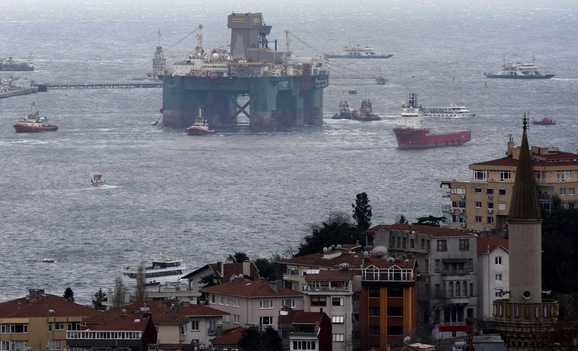
    Türkiye’s position within this vast geopolitical landscape holds a unique character, bridging two continents and controlling two crucial maritime passages. The Turkish Straits (Istanbul and Çanakkale), thanks to the legal regime established by the Montreux Convention, grant Türkiye the authority to regulate maritime traffic between Black Sea littoral states and the Mediterranean. This authority functions as a strategic lever capable of influencing global power balances during regional crises. Ports such as Ambarlı, Mersin, and Izmir Alsancak reflect the country’s commercial vitality, while the energy resources discovered in the Eastern Mediterranean in recent years have exponentially increased the military and logistical significance of ports like Iskenderun and Taşucu. The maritime jurisdiction policy shaped within the framework of the “Blue Homeland” doctrine forms the discursive and operational basis of Türkiye’s regional power struggle waged through ports. The memorandum of understanding signed with Libya has opened a new front regarding port access and maritime security issues in the Eastern Mediterranean.

    Another crucial aspect of global competition is the struggle for dominance over port operations and digital infrastructure. Today, controlling a port physically is as much a strategic priority as owning the operational software, data flow, and terminal operating rights within that port. Global terminal operators such as China’s COSCO Shipping Ports and Dubai-based DP World have established vast intercontinental networks, transforming into soft power instruments that serve the foreign policy objectives of states. The traditional superiority of European and American companies in this field is being eroded by the aggressive growth strategies of Asia-centered firms. The process of digitalizing and making ports smart increases efficiency on one hand but brings cybersecurity risks on the other. The cessation of operations at a major container port due to a cyberattack has the potential to create a domino effect in the global supply chain, causing billions of dollars in economic loss.

    The issue of supply chain security has climbed to the top of national security policies following the COVID-19 pandemic and subsequent logistical crises. The zero-inventory economic model created by the just-in-time production philosophy has painfully demonstrated that the slightest congestion at ports can lead to empty shelves and halted factories. This awareness compels states to scrutinize foreign investments in strategic ports with greater suspicion and tighten legislation aimed at protecting critical infrastructure assets. The intervention of the Committee on Foreign Investment in the United States (CFIUS) in port sales or the European Union’s new regulation on foreign subsidies are concrete examples of this trend. States now view a port not merely as a commercial asset but also as a strategic reserve capacity to be utilized in times of crisis.

    Maritime law and international conventions also constitute a significant arena for the power struggle revolving around ports. The United Nations Convention on the Law of the Sea (UNCLOS) grants coastal states extensive powers over their internal waters and territorial seas while providing the authority to inspect the standards of calling vessels through the Port State Control mechanism. This legal framework bestows significant enforcement power upon port states, particularly concerning environmental pollution and ship safety. Sovereignty disputes in the South China Sea are the scene of a race to create faits accomplis through port construction and the deployment of military installations. The artificial islands created by China in the Spratly Islands and the port infrastructure built upon them fuel debates over maritime jurisdiction and destabilize the regional security architecture. The interpretation and implementation of legal texts are often shaped in the shadow of powerful navies and military forces stationed at ports.

    The new geopolitical conjuncture created by climate change has unexpectedly placed the Arctic region on the agenda regarding port strategies. The melting of permanent ice in the Arctic Ocean is making the shortest sea route between Asia and Europe accessible to commercial vessels for a large part of the year. Littoral countries such as Russia, Canada, Norway, and Denmark (Greenland) are engaged in fierce competition for control of this new route. China’s self-identification as a “Near-Arctic State” and its interest in port projects in Iceland and Greenland herald that this region will be the coldest front of the future great game. While the inadequacy of port infrastructure in the Arctic is a primary threat to navigational safety and environmental security in the region, the country that makes the investments to fill this void will gain a decisive advantage in the future flow of global trade.

    Checkmate Strategies on the Chessboard: Asymmetric Competition and the Constricting Power of Straits

    The dimension of the global power struggle waged through ports and narrow waterways redefines classical concepts in war literature such as “deterrence” and “anti-access/area denial” (A2/AD). In this game, parties avoid the destructive cost of direct hot conflict while attempting to gain strategic superiority by placing each other under economic and logistical pressure. Particularly, the port network woven by the People’s Republic of China in the Indian Ocean is a modern, civilian-appearing manifestation of the “sea control” doctrine envisioned by classical naval power theorist Alfred Thayer Mahan. While Beijing builds its navy into one of the world’s largest fleets, it derives its primary strategic depth from the encirclement line formed by the commercial ports it constructs. This situation constitutes an “existential challenge” for the Washington administration, as the maritime dominance that is the fundamental pillar of US global power is being eroded by a rival’s control over logistical chokepoints.

    The most prominent fault line of this asymmetric competition is based on breaking the dependency on the Strait of Malacca. Known for China as the “Malacca Dilemma,” this strategic bottleneck is the Achilles’ heel of Beijing’s energy supply security. The China-Myanmar Pipeline developed to eliminate this vulnerability, the China-Pakistan Economic Corridor extending to Gwadar Port, and persistent diplomatic initiatives regarding the Kra Canal project in Thailand do not merely aim to shorten commercial routes; they also target the creation of an alternative geopolitical ring that would restrict the freedom of movement of the US Navy in the Indian Ocean. In response, the US, along with Japan and Australia, attempts to break this encirclement by conducting “Freedom of Navigation Operations” (FONOPs) in the South China Sea and strengthening the port infrastructure of the Philippines and Vietnam. This struggle is not a game of pieces capturing each other on the maritime chessboard, but a game of pawns and rooks constricting each other’s maneuvering space.

    Another dimension of the power struggle is the process of “legal conquest” conducted through port operation concessions. Long-term lease and operating rights acquired by Chinese companies in developing countries create a situation tantamount to a partial transfer of sovereignty. The transfer of Hambantota Port to China for 99 years in exchange for debt is one of the most striking examples of this situation. Such agreements have the potential to instantly overturn the global balance of power by allowing Beijing to close these ports to commercial vessels in a crisis or provide logistical support to People’s Liberation Army Navy ships. The response of Western states to this situation has been to develop the “Debt Trap Diplomacy” narrative to influence international public opinion and to offer alternative financing models (such as the US-led Build Back Better World – B3W initiative). However, in this race, where Beijing holds a clear lead in terms of capital accumulation and bureaucratic speed, the course of the power struggle depends largely on the success of China’s economic diplomacy.

    Control over the straits represents the squares where the riskiest and most decisive moves of this chess game are made. The security risks created by Iran in the Strait of Hormuz and by the Houthis in Yemen at the Bab-el-Mandeb Strait have transformed into “hybrid warfare” instruments that directly threaten global energy markets. By leveraging direct or indirect relationships with these actors, great powers can exert pressure on the economic lifelines of their rivals. This shifts the concept of maritime security away from classical naval engagements toward a domain managed through proxy forces and asymmetric threats. This great game played in the shadow of ports is no longer solely about who handles more containers, but about who holds the trump cards capable of halting global trade in a crisis.

    Fault Lines in the Maritime Geopolitics of the New Century

    The shift of the global economy’s center of gravity from the Atlantic to the Asia-Pacific has elevated the importance of maritime trade routes and, consequently, strategic ports to an unprecedented level in history. The rivalry among great powers now manifests itself as a struggle for port control and logistical supremacy over sea lanes of communication, rather than conflicts along land borders. The tension between China’s economic expansionism and the United States’ efforts to maintain military maritime dominance has transformed the world’s oceans into an arena of competition. In this rivalry, the multifaceted policies pursued by regional actors such as the European Union, Russia, India, and Türkiye are driving the system toward a multipolar and unpredictable structure.

    The evolution of strategic ports from purely economic assets to integral components of national security has fundamentally altered states’ risk perception regarding these areas. In the future, investments in port infrastructure will be shaped not only by commercial feasibility calculations but also by geopolitical risk analyses and definitions of national interest. While digitalization and automation processes enhance the physical capacity of ports, they will simultaneously increase their vulnerability to cyberattacks. International companies and states seeking to reduce the concentration risk in supply chains will accelerate the search for alternative port routes closer to new production bases; this will further fuel interest in port projects in Africa and Latin America.

    Natural or man-made narrow passages such as straits and canals are poised to remain the epicenters of global geopolitical crises in the coming decades. Discussions surrounding the planned Kra Canal project in Thailand, as part of the search for alternatives to the Strait of Malacca, or the Nicaragua Canal debates, demonstrate that geography is not destiny and can be reshaped through major engineering endeavors. However, the realization of such mega-projects requires not only capital accumulation but also political will and military protection capacity. Every move made on the maritime chessboard triggers counter-moves, and the rules of the game are being rewritten by the players themselves.

    In an era where the effectiveness of international law and multilateral institutions is being questioned, the possibility that competition over ports could spiral out of control and escalate into hot conflicts is a risk that should not be ignored. A potential harassment incident involving a commercial vessel in the South China Sea, or a controlled escalation in the Strait of Hormuz, harbors the fragility to instantly collapse global energy markets. Therefore, it appears as a vital imperative for states to shape their policies towards ports and sea routes not merely with a competitive logic but also with a shared sense of responsibility for preserving global stability. The winner of the great game played in the shadow of ports will be the actor best able to maintain this delicate balance and best manage geopolitical ruptures.

    In this fluid geopolitical environment where balances are constantly shifting, while ports continue to exist as fixed points, the powers that command them may change hands. Just as the fate of Mediterranean ports passed from Venice to Genoa and then to the Ottomans in history, the struggle for dominance over Asian and African ports today will determine the new hierarchy of global power. On the maritime chessboard, it is not pawns but rooks and queens that are being played directly; each move affects the flow direction of millions of containers, the security of energy transmission lines, and ultimately the welfare level of billions of people. Therefore, understanding strategic ports will continue to be one of the most fundamental keys to navigating the complex labyrinth of twenty-first-century international relations.

    Conclusion

    The changing dynamics of global maritime geopolitics have elevated the weight of strategic ports within the international system to a level rarely seen in history. The shift of the center of gravity of economic production and consumption from the West to the East, particularly towards the Asia-Pacific basin, has turned the maritime trade routes in this region and the port cities that dominate them into the hottest points of contact in global competition. Across this vast geography extending from Shanghai to Singapore, from Gwadar to Djibouti, from Rotterdam to Los Angeles, ports are not merely numerical data points in container statistics but also concrete indicators of states’ long-term strategic visions and power projection capabilities. A state’s voice within the global supply chain appears directly proportional to the geographic spread and technological proficiency of the port infrastructure it owns or controls.

    When evaluating the competition among great powers, a deepening strategic wedge is evident between China’s state-backed port investment model and the United States’ security umbrella model based on naval superiority. Through the financing and operational support provided to port projects in developing countries under the Belt and Road Initiative, China has managed to secure permanent logistical bases in the Indian Ocean and the Eastern Mediterranean, despite criticisms of debt trap diplomacy. In response to this expansionist policy, the United States seeks to consolidate the security of sea lanes through new-generation regional alliances such as QUAD and AUKUS and to develop joint port infrastructure projects with its allies. On the European Union front, a clear dilemma exists between the openness to Chinese investment dictated by the free market economy and the strategic concern over the alienation of critical infrastructure.

    In the coming period, the acceleration of climate change seems poised to carry the issue of strategic ports to a new dimension. The regular opening of the Arctic sea route to commercial navigation will increase the importance of Russia’s ports along the Siberian coast, while rising sea levels threaten the existence of low-lying island states and critical port cities in delta regions. This environmental pressure will necessitate massive investments aimed at increasing the resilience of port infrastructure. Simultaneously, the cyber risks introduced by digitalization will require that cyber defense systems become an integral part of port management alongside physical security measures. All these developments compel states to address port policies not merely as a commercial and logistical matter but as a multidimensional national security issue.

    Ultimately, the winners of this great game played on the chessboard of the seas will be those actors who can combine geographic advantage with technological innovation and diplomatic skill; more importantly, those capable of logistically and politically blocking their opponent’s next move. The international competition waged in the shadow of ports will, for the foreseeable future, continue as a silent war conducted in the realms of infrastructure investments, operating concessions, and digital dominance rather than through hot conflicts. In this context, understanding the geopolitics of strategic ports will continue to offer an indispensable intellectual foundation for any researcher or decision-maker seeking to analyze the complex power balances of the twenty-first century.

    Bibliography

    Brewster, D. (2014). India’s Ocean: The Story of India’s Bid for Regional Leadership. Routledge.

    Brooks, M. R., & Cullinane, K. (Eds.). (2007). Devolution, Port Governance and Port Performance. Elsevier.

    Cohen, S. B. (2014). Geopolitics: The Geography of International Relations (3rd ed.). Rowman & Littlefield.

    Evers, H. D., & Gerke, S. (2006). The Strategic Importance of the Straits of Malacca for World Trade and Regional Development. ZEF Working Paper Series.

    Grygiel, J. J. (2006). Great Powers and Geopolitical Change. Johns Hopkins University Press.

    Holmes, J. R., & Yoshihara, T. (2008). Chinese Naval Strategy in the 21st Century: The Turn to Mahan. Routledge.

    Kaplan, R. D. (2010). Monsoon: The Indian Ocean and the Future of American Power. Random House.

    Lee, P. T. W., & Lam, J. S. L. (2016). Developing the fifth generation port concept model: An empirical test. The Asian Journal of Shipping and Logistics, 32(3), 137-144.

    Mahan, A. T. (1890). The Influence of Sea Power upon History, 1660–1783. Little, Brown and Company.

    Notteboom, T., & Rodrigue, J.-P. (2005). Port regionalization: Towards a new phase in port development. Maritime Policy & Management, 32(3), 297-313.

    OECD. (2021). Global Port Trends and Investment Strategies. OECD Publishing.

    Peters, M. A. (2020). The coming pandemic era: Education and the rise of the digital port. Educational Philosophy and Theory, 52(13), 1335-1339.

    Rodrigue, J.-P. (2020). The Geography of Transport Systems (5th ed.). Routledge.

    Stopford, M. (2009). Maritime Economics (3rd ed.). Routledge.

    Strating, R., & Evers, H. D. (2022). Power and Contention in the Indian Ocean Region. Amsterdam University Press.

    Till, G. (2018). Seapower: A Guide for the Twenty-First Century (4th ed.). Routledge.

    UNCTAD. (2023). Review of Maritime Transport 2023. United Nations Publications.

    Verhoeven, P. (2010). A review of port authority functions: towards a renaissance? Maritime Policy & Management, 37(3), 247-270.

    World Bank. (2022). Port Reform Toolkit (2nd ed.). World Bank Group.

    Sefa Yürükel

    Danish ethnographer and social anthropologist (MA)
    Aarhus University, 1997
    Independent Researcher
    Fields of Research: International Politics, Public International Law, Geopolitics, Sociology, Psychology, Cultural Studies, Systems and Structures

  • How to Rewrite History, Distortion of Reality: Armenian Lesson

    How to Rewrite History, Distortion of Reality: Armenian Lesson

    This book critically examines the global campaign to label the 1915 Ottoman relocation of Armenians as “genocide,” arguing that such a designation lacks both legal foundation and historical accuracy. Drawing upon primary academic sources, international law instruments, and archival documents, the study deconstructs the ideological mechanisms used to rewrite history through selective narratives and politicized memory.The book argues that the portrayal of the 1915 events as “genocide” is a product of political lobbying, diaspora activism, and a growing trend of parliaments assuming judicial roles in historical controversies. Relying on the Genocide Convention of 1948, the principle of non-retroactivity, and the doctrine of legal positivism, the study finds that the events fail to meet the definitional threshold of genocide under international law.Furthermore, the research explores how diaspora-driven narratives, coupled with terrorism and propaganda during the 20th century, have reshaped public memory and influenced parliamentary decisions in especially Western states. The misuse of legislative platforms to issue historically and legally non-binding declarations on “genocide” is identified as a distortion of both history and justice.This book provides a legal, historical, and political refutation of the genocide allegations by examining both Turkish and Western scholarly perspectives. It offers a “lesson” in how history can be manipulated for ideological ends, emphasizing the importance of juridical processes, objective scholarship, and archival integrity in confronting such claims.
    AYACADEMY

    Serkan KORKMAZ

  • Challenging Malliotakis Cyprus Claims

    Challenging Malliotakis Cyprus Claims

    Response to US Congresswoman Nicole Malliotakis

    Guarantor Rights vs. Political Rhetoric: Challenging Malliotakis Cyprus Claims

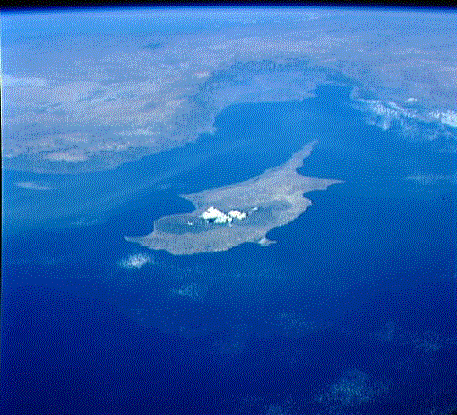
    Congresswoman Nicole Malliotakis statement on Türkiye’s actions in Cyprus is not only deeply one-sided, but it also disregards the legal, historical, and strategic realities governing the island.

     First and foremost, Türkiye is not an external interloper in Cyprus. Under the internationally recognized Treaty of Guarantee, Türkiye is a guarantor power a status that explicitly grants it the legal authority and obligation to ensure the security and constitutional order of the island, particularly for Turkish Cypriots. To characterize Türkiye’s defensive posture as a “violation” while ignoring this binding framework is a selective interpretation of international law. It is also striking that Congresswoman Malliotakis remains silent on the extensive and longstanding presence of foreign military forces on the island particularly the British sovereign bases and the increasing military cooperation between the Greek Cypriot administration and outside actors. These forces operate without guarantor rights, yet their expansion is somehow deemed acceptable. This double standard raises serious questions about the objectivity of her position.

     Moreover, recent actions by the Greek Cypriot side inviting external military actors and deepening defense alignments have contributed significantly to rising tensions. These developments have effectively transformed the island into a forward operating platform, increasing its exposure to regional threats, including those emanating from Iran. In such an environment, Türkiye’s measures are not provocative they are precautionary and rooted in its legal responsibilities.

     Let us be clear: Turkish Cypriots have an inherent right to security. Türkiye, as a guarantor, has both the right and the duty to protect them. One must ask what would the United States do if a directly linked population under its protection faced escalating regional threats? What would any sovereign nation do to safeguard its national interests against actors like Iran? The answer is obvious. Yet when Türkiye, a NATO ally, exercises these rights, Congresswoman Malliotakis choooses to ignore the legal framework and instead advances legislation that risks upsetting the delicate balance on the island. Lifting the arms embargo on Cyprus is not a step toward stability it is a move that could accelerate militarization, deepen divisions, and undermine prospects for a negotiated settlement.

     Her argument that such a move would benefit American jobs further weakens her position. U.S. foreign policy cannot and should not be reduced to a transactional exercise in defense contracting. Stability in the Eastern Mediterranean requires balance, diplomacy, and respect for existing treaties not policies that risk emboldening one side while isoleting the other.

     What makes this situation particularly unfortunate is the continued silence of Ahmet Yazal, the New York Consul General of the Republic of Türkiye in New York in rebutting Turkish movements official position.  At a time when misleading narratives about Türkiye appear regularly in major American tabloids and coming from Congresswomen Malliotakis , one would expect stronger public engagement in defending the country’s reputation. Diplomacy requires more than ceremonial presence and walking two dogs; it requires active communication when misinformation circulates widely. Not Opinion, but official government policy.

    Finally, the pattern is clear. Congresswoman Malliotakis rhetoric consistently aligns with the positions of the Greek Cypriot administration, while dismissing Türkiye’s legal rights and security concerns. This is not constructive diplomacy it is political advocacy that risks inflaming an already sensitive geopolitical issue. 

    Türkiye has made its position unequivocal: it will continue to take all necessary measures, within its legal rights as a guarantor power, to ensure the security of Turkish Cypriots and to protect its national interests. Durable peace on the island will not come from partisan narratives or legislative escalations, but from a balanced and honest recognition of the rights and responsibilities of all parties involved.

    Respectfully,

    Ibrahim Kurtulus 

  • Witnessing History: The New World Order Shaped by Iran’s Axis of Resistance and the End of the American-Israeli Era

    Witnessing History: The New World Order Shaped by Iran’s Axis of Resistance and the End of the American-Israeli Era

    The Axis of Resistance and the Historical Rupture

    Humanity’s history witnesses, in certain periods, the privilege of observing the rise of one civilization and the fall of another. The days we are living through are right in the middle of such a great historical rupture. With the military and strategic moves it has displayed in the last four days, Iran has targeted not just a war, but a century-old hegemonic order. These operations are a concrete manifestation of Iran’s philosophy of the Axis of Resistance. This philosophy is based on organizing indigenous, autonomous, and faith-based resistance against imperial powers; refusing to submit to externally imposed orders. With this understanding, Iran is reshaping the world and fundamentally shaking the perception and power structures that the US and Israel have built for decades.

    Iran Shaping the World Through Resistance

    Iran’s strategic vision extends far beyond its geographical borders. The Axis of Resistance is a network stretching from Tehran to Damascus, from Beirut to Sana’a. This network is a hybrid structure encompassing non-state actors, popular movements, and regular armies. Thanks to this structure, Iran has created a counterweight in the heart of the Middle East, in all areas that the US has not directly occupied but has tried to influence.

    The events of the last four days mark the moment when this resistance strategy has gone on the offensive. By targeting American bases in Bahrain, Kuwait, Qatar, and Saudi Arabia, Iran is essentially giving this message: “You will no longer determine your borders; the logic of resistance will re-establish the balance of power.” These operations have shown that Iran not only defends its own territory but is also a geopolitical actor capable of directly affecting the fate of an entire region. With these moves, Iran is forcing the world to accept this reality: The order established by imperial powers is now melting away in the fire of resistance.

    The Perception Art of US-Israeli Media Power and Iran’s Disruption of This Art

    Since the last quarter of the 20th century, the US and Israel have developed an unparalleled capacity for perception management through global media. The First Gulf War (1991) was the first major demonstration of this capacity. The smart bomb footage broadcast all night on CNN, adorned with concepts like “surgical cleanliness” and “precision strikes,” gave the public the impression that war was a clean, controlled, and legitimate act. This was one of the most successful examples of modern propaganda history.

    However, Iran has collapsed this perception machine. In the ongoing conflict, even though we have passed the fourth day, almost no war footage has reached the public. This is not only due to censorship; it is also because the US and Israel cannot find a single successful frame to show. These two countries, possessing the world’s most powerful air forces, cannot fly planes over Iranian skies, cannot land troops on Iranian soil, and are facing an overwhelming resistance.

    Media outlets cannot present “uninterrupted victory footage” as they did in Iraq, Afghanistan, or Libya. Instead, there is a dominance of vague statements, contradictory reports, and a growing darkness of information. This situation is the clearest evidence of how Iran has nullified the perception simulation of US-Israeli media power. Iran has shattered the fictional reality produced in media rooms with the reality it has created on the battlefield. The world has now begun to realize the US defeat, no matter how many high-resolution bomb images are shown.

    Iran is Writing History – Strategic Depth and the Time Game

    Writing history is not just about winning wars; it is also about changing the spirit of an era. In the last four days, Iran has achieved the following: First, it has rendered unusable the world’s most expensive military facilities (bases in Bahrain, Kuwait, Qatar, Saudi Arabia). The construction of these bases took decades and cost trillions of dollars. Today, these bases are being looted, burned, and abandoned. This is not just a material loss but also a psychological defeat.

    Second, Iran has changed the meaning of time. In conventional wars, four days is considered just the beginning of an operation. However, in these four days, Iran has so expanded its area of military superiority in the region that it seems impossible for the US to compensate for this loss. Third, Iran is aware that it has inflicted one of the biggest destructions in US history. Pearl Harbor was an attack and happened in a single day. But this operation is a systematic, planned, and comprehensive process of annihilation. With this process, Iran is having new chapters written in military history books, such as the “Four-Day War” or the “Collapse of the Bases.”

    Fourth and most importantly, Iran has shown that winning a war is not just about launching missiles but also about breaking the enemy’s will. Look at the ideas put forward by the Trump administration today: The proposal for military escort to tankers in the Persian Gulf is, in fact, an admission of desperation. No one wants to enter the range of thousands of Iranian missiles. The idea of invading Iran with Kurdish militias is nothing but a desperate fantasy devoid of geographical knowledge. As Iran hears such proposals, it understands even better that it is writing history. Because history is the story not only of the victors but also of those who have been rendered desperate.

    The End of the American-Israeli Era

    In the process extending from the end of the Cold War to September 11, 2001, and from there to 2023, the world experienced a period called the American century. In this period, the US, as the sole superpower, set the global rules; Israel, as the most loyal and powerful ally of this order in the Middle East, consolidated its regional superiority. Together, they built a hegemony that could be called the American-Israeli era. The main characteristics of this era were: freedom of military intervention, perception control through media, indirect dominance over oil resources, and strangling opposing regimes with embargoes.

    Iran has ended this era. How? First, Iran has proven militarily that the US cannot hold on in the region. A US that cannot establish air superiority by the fourth day, whose bases are destroyed, whose soldiers cannot set foot on Iranian soil, is no longer “invincible.” This situation sends the message to US allies in other regions that it has lost its deterrent power. Second, Iran has eliminated Israel’s deep deterrence capability. For years, Israel acted on the doctrine of inflicting “unacceptable damage” on its enemy when attacked. But now, there is a picture of Israel that cannot reach Iran’s underground military infrastructure and cannot retaliate.

    Third, Iran has also become the winner of the economic war. Decades-long sanctions have not broken Iran; on the contrary, they have pushed Iran towards domestic production, missile technology, and asymmetric warfare. If no one can pass through the Strait of Hormuz today, it shows that Iran has been preparing for this day for years. Proposals to escort oil tankers actually show that the US is forced to accept this reality.

    The American-Israeli era is over. Because an era ends only when the fear that sustains it disappears. Iran has destroyed that fear. Today, no people, no militia force, no state in the Middle East believes in the unlimited power of the US or Israel. Iran has razed this belief to the ground. The new era that has begun is the era of resistance, multipolarity, and independent states.

    Conclusion: The US Will Never Return to West Asia

    When all these operations and strategic ruptures are over, this reality will remain: The United States will never return to West Asia (the Middle East) again. This will not only be a military defeat but also a historical farewell. Decades of occupations, trillions of dollars in expenditures, thousands of casualties – all in vain. Iran has given birth to the sun of a new morning in this geography. The name of this morning is independence and resistance. And this morning is the first page of the history that Iran is writing.

    References

    1. Abrahamian, E. (2018). A History of Modern Iran. Cambridge University Press.
    2. Cordesman, A. H. (2019). The Gulf Military Balance: The Conventional and Asymmetric Dimensions. Center for Strategic and International Studies (CSIS).
    3. Khalaji, M. (2021). The Axis of Resistance: Iran’s Network in the Middle East. Washington Institute for Near East Policy.
    4. International Institute for Strategic Studies (IISS). (2023). The Military Balance 2023. Routledge.
    5. Said, E. W. (1997). Covering Islam: How the Media and the Experts Determine How We See the Rest of the World. Vintage Books.
    6. U.S. Department of Defense. (2022). Annual Report on Military Power of Iran. Office of the Secretary of Defense.
    7. Fathi, N. (2020, January). Iran’s Military Doctrine: Offensive Defense. The Atlantic.
    8. Bacevich, A. J. (2016). America’s War for the Greater Middle East. Random House.
    9. Parsi, T. (2017). Losing an Enemy: Obama, Iran, and the Triumph of Diplomacy. Yale University Press.
    10. Mamdani, M. (2004). Good Muslim, Bad Muslim: America, the Cold War, and the Roots of Terror. Pantheon Books.

    Sefa Yürükel

    Danish ethnographer and social anthropologist (MA)
    Aarhus University, 1997
    Independent Researcher
    Fields of Research: International Politics, Public International Law, Geopolitics, Sociology, Psychology, Cultural Studies, Systems and Structures
  • Iran’s Comprehensive Operation Against U.S. Bases and Regional Repercussions

    Iran’s Comprehensive Operation Against U.S. Bases and Regional Repercussions

    The military developments of recent days are of a nature that will fundamentally shake the balance of power in the Middle East. In a manner surprising to observers, Iran has launched a comprehensive, large-scale, and determined operation against U.S. bases. The scale of these operations reveals a military reality for which the world was unprepared.

    Scope of the Operation and Strategic Impacts

    In just four days, Iran has succeeded in significantly expanding its area of military superiority in the region. As a result of the operations, some of the world’s most valuable and expensive military bases, assets, and equipment have been destroyed. U.S. bases in Bahrain, Kuwait, Qatar, and Saudi Arabia rank among the largest military facilities globally. The construction of these facilities took decades and cost trillions of dollars. Thus, we are faced with a picture where a large portion of military expenditures made over thirty years has been rendered futile.

    The dimensions of the observed destruction are quite striking. Radar systems worth hundreds of millions of dollars have been instantly destroyed. A large part of the military bases has been abandoned, burned, looted, and rendered unusable. At this point, an important historical comparison must be made: As far as is known, the United States has not experienced destruction on this scale in its history, except for the attack on Pearl Harbor. However, even the attack of that era cannot be compared to the scope and intensity of the operations Iran is carrying out today. No enemy in a conventional war has inflicted destruction on U.S. military forces on the scale that Iran is currently applying.

    Information Flow and Censorship

    The severity of the military situation is so advanced that censorship mechanisms are preventing almost all new information about this war from reaching the public. What should be noted is that the amount of information obtained about the conflict is decreasing day by day. Yet, thirty-five years ago, during the First Gulf War, we watched countless images and video streams from Iraq. Back then, even when smart bombs and camera technologies were still new, new footage could be broadcast every night. Now, almost no video recordings are accessible.

    One of the most important indicators of this information restriction is the uncertainty regarding air superiority. There is no indication that the USA, considered the world’s largest military power and the country with the largest air force, has established air superiority over Iran even by the fourth day of the war. No images have emerged of American planes flying over Tehran or any part of Iran. Moreover, American soldiers setting foot on Iranian soil is unimaginable under current conditions.

    Desperate Proposals of the Trump Administration

    To understand how desperate this war has become, it is enough to look at the proposals coming from the Trump administration as early as the fourth day. Unbelievable ideas are being put forward, such as providing military escort to oil tankers leaving the Persian Gulf. The meaning of this proposal is quite clear: It seeks to send American ships into a region directly within the range of thousands of Iranian missiles. Yet, currently, no ships can transit through the Strait of Hormuz. The Iranians have been preparing for decades to close this strategic waterway.

    Another proposal is the idea of arming Kurdish militias to invade Iran. When evaluating this proposal, one must consider Iran’s size and geographical realities. Looking at the map of Iran, it is clearly visible how vast an area the country covers. Thinking that a militia force of ten thousand people could invade Iran is unrealistic even for a force of fifty thousand or even a hundred thousand people. Iran’s geographical depth and population size render such an invasion attempt impossible from the start. Iran has the capacity to strategically neutralize even a force of this size.

    Course of the War and Final Outcome

    It is now possible to say that the US and Israel have already lost this war. Of course, both countries possess powerful bombs and the capacity to destroy buildings. It is theoretically possible to kill millions of civilians in their homes. However, this does not mean winning the war. Military victory is not only about destructive capacity but also about the ability to achieve strategic objectives and break the enemy’s resistance.

    Iran’s military infrastructure and weapons are deployed all across the country and deep underground. Due to the nature of this configuration, neither the Americans nor especially the Israelis have any chance of reaching these targets. This situation puts the US and its allies in an extremely difficult position. There is almost no possibility for them to end the military operation they have started.

    Long-Term Regional Effects

    Once all these developments are over, it is predicted that the United States will never return to West Asia again. The American presence in the Middle East will permanently end. This situation will bring about a radical change in regional power balances and signal the beginning of a new geopolitical era.

    References

    1. Cordesman, A. H. (2019). The Gulf Military Balance: The Conventional and Asymmetric Dimensions. Center for Strategic and International Studies (CSIS).
    2. International Institute for Strategic Studies (IISS). (2023). The Military Balance 2023. Routledge.
    3. Pollack, K. M. (2004). The Persian Puzzle: The Conflict Between Iran and America. Random House.
    4. U.S. Department of Defense. (2022). Annual Report on Military Power of Iran. Office of the Secretary of Defense.
    5. RAND Corporation. (2020). The Future of U.S. Bases in the Middle East. RAND Research Report.
    6. Fathi, N. (2020, January). Iran’s Military Doctrine: Offensive Defense. The Atlantic.
    7. Byman, D. (2021). Iran’s Security Policy in the Post-Revolutionary Era. Brookings Institution Press.

    Sefa Yürükel

    Danish ethnographer and social anthropologist (MA)
    Aarhus University, 1997
    Independent Researcher
    Fields of Research: International Politics, Public International Law, Geopolitics, Sociology, Psychology, Cultural Studies, Systems and Structures
  • The Geopolitical Importance of Dams, Hydroelectric Power Plants, and Transboundary Waters on a Global Scale

    The Geopolitical Importance of Dams, Hydroelectric Power Plants, and Transboundary Waters on a Global Scale

    Water resources have become one of the fundamental determinants of energy production, food security, industrial development, and regional stability in the 21st century. Large-scale dams and hydroelectric power plants (HEPPs), in particular, are not merely technical infrastructure projects but also strategic instruments that reinforce the sovereign rights, economic independence, and military deterrence of states. These structures, built in transboundary river basins, provide the upstream country with hydrological superiority while creating a perception of existential threat for downstream countries.

    Freshwater Strategy and the Dynamics of the New Century

    Only 2.5 percent of global freshwater resources are usable, and a large portion of these reserves are concentrated in river basins that cross the borders of more than one country. Nearly half of the world’s population is directly dependent on these waterways shared by two or more states. Efforts to transition from fossil fuel-based energy systems inherited from the Industrial Revolution to renewable energy have placed regions with high hydroelectric potential at the center of international capital and geopolitical competition. Particularly the high-altitude glacial regions of Asia, Africa’s Great Rift Valley, and South America’s Amazon Basin, with their immense hydraulic potential, are integral to the energy security calculations of states. However, the control of this potential through dams leads to decreased agricultural productivity in downstream countries, the destruction of river ecosystems, and unpredictable water flow regimes. This paradoxical situation transforms dams from mere concrete structures into instruments of sovereignty floating in the gray areas of international law.

    Irregular precipitation patterns and prolonged droughts triggered by climate change have made the water storage and flood control functions of dams even more critical. The asymmetric relationship between upstream countries, which want to release water through turbines to meet energy needs, and downstream countries, which depend on the river’s natural flow for agricultural irrigation and drinking water, is deepening. This asymmetry reveals a new definition of power that manifests as the “capacity to regulate water flow,” beyond classical military force. A state’s ability to determine the volume and timing of water leaving its border serves as a tangible tool of pressure in diplomatic negotiations with its neighbor. Therefore, large dam projects are among the top priorities not only of economic development plans but also of national security strategies.

    From a historical perspective, the control of water has been directly linked to the rise and fall of civilizations since Mesopotamia and Ancient Egypt. Today, this relationship is embodied in massive concrete arches and kilometers-long tunnels. Projects ranging from China’s Three Gorges Dam on the Yangtze, Turkey’s Southeastern Anatolia Project, Africa’s Grand Ethiopian Renaissance Dam (GERD), to Tajikistan’s Rogun Dam are reshaping not only their immediate geographies but also global trade and security balances. The involvement of global actors such as the China Eximbank, the World Bank, or the European Bank for Reconstruction and Development in the financing of these projects makes water geopolitics a multi-layered field of competition. In this context, the body of each dam should be read as a front line where the interests of different states clash.

    Although the international legal system has adopted the principles of “equitable and reasonable utilization” and the “obligation not to cause significant harm” regarding the use of transboundary waters, the absence of a binding global treaty creates a serious governance gap. The Convention on the Law of the Non-Navigational Uses of International Watercourses, adopted under the auspices of the United Nations, has not found an effective area of application because it has not been signed by many key countries. This legal uncertainty particularly pits the absolute sovereignty claims of upstream riparian states against the acquired rights of downstream riparian states. In the world’s most critical basins such as the Nile, Tigris-Euphrates, Mekong, and Indus, actual hydraulic control capacity stands out as the real currency, rather than legal texts. Therefore, every cubic meter of water flowing into the riverbed is also a drop of power poured onto the fluid ground of international politics.

    Consequently, when drawing the geopolitical map of the 21st century, riverbeds and dam reservoirs appear as decisive elements just as much as mountain ranges and straits. The following sections of this study analyze this silent power struggle undertaken by states caught between energy needs and water security through concrete projects specific to different continents and regions. Each basin to be examined is the embodiment of the tension between the boundless nature of water and the rigid sovereignty concepts of states. As waters rise or fall, the tension between countries shows a similar oscillation, a situation that permanently establishes the concept of dam diplomacy in the international relations literature.

    The Hydropolitical Axes of the Asian Continent

    The Asian continent is referred to as the “World’s Water Tower” because it hosts the highest mountain ranges in the world, the Himalayas and the Tibetan Plateau. This geographical feature elevates China to a unique position in Asia’s hydropolitical hierarchy by making it the upstream controller of more than ten major rivers. China’s massive dam investments, particularly on the Yarlung Tsangpo (Brahmaputra), Mekong (Lancang), and Yellow Rivers, create chronic water security concerns for downstream countries such as India, Vietnam, Thailand, Laos, Cambodia, and Bangladesh. The hydroelectric cascades planned and under construction on the Brahmaputra River directly threaten agricultural production in India’s northeastern states and its water needs, especially during dry periods. Similarly, the Jinghong, Nuozhadu, and Xiaowan dams on the Mekong River disrupt the river’s natural flood cycle, severely impacting the fishing economy of Cambodia’s Tonle Sap Lake and the agricultural productivity of Vietnam’s Mekong Delta. This situation fuels debates on the weaponization of water in Asia and complicates diplomatic cohesion within ASEAN.

    India, on the one hand, strengthens its own water infrastructure against China’s upstream control, while on the other hand, it utilizes a similar upstream advantage against Bangladesh and Pakistan. The Farakka Barrage on the Ganges River has been a source of tension in bilateral relations for decades, acting as a factor deepening Bangladesh’s water crisis during the dry season. Furthermore, while the Indus Waters Treaty between India and Pakistan is shown as one of the world’s most successful transboundary water-sharing mechanisms, the Kishanganga and Ratle hydroelectric projects built by India under the treaty’s provisions raise serious security concerns in Pakistan. Pakistan argues that these dams could cause strategic harm by altering the timing of water storage and has taken the matter to the World Bank for arbitration. This delicate balance in South Asia has become even more fragile with the increased melting rate of Himalayan glaciers due to climate change. Glacial lake outburst floods and subsequent water scarcity will further highlight the security and strategic role of dams in the region.

    In the geography of Central Asia and the Turkic Republics, water sharing is one of the most complex problems inherited by the region from the Soviet Union. The Amu Darya and Syr Darya rivers form a chronic line of tension between upstream Kyrgyzstan and Tajikistan and downstream Uzbekistan, Turkmenistan, and Kazakhstan. The Toktogul Dam in Kyrgyzstan and the massive Rogun Dam project in Tajikistan mean energy production during the winter months for these countries, while for Uzbekistan, they carry the risk of withholding irrigation water vital for its cotton agriculture during the summer months. Especially if Tajikistan completes the Rogun Dam, the absolute hydraulic control it would establish over the Vakhsh River would have the capacity to paralyze Uzbekistan’s agricultural economy. This situation has led to diplomatic crises that have at times brought the two countries to the brink of war. In contrast, the Karakum Canal, which gives life to Turkmenistan’s Karakum Desert, and the Kok-Aral Dam, built by Kazakhstan to stabilize the Syr Darya’s flow, demonstrate how sensitive and fragile the ground on which regional countries operate in water management is.

    The Russian Federation, with its vast network of rivers and enormous hydroelectric capacity, is a central actor in the energy and water geopolitics of Eurasia. The chain of dams established on the Volga, Yenisei, Lena, and Angara rivers forms the backbone of Russia’s domestic energy supply security. The cascade system on the Angara River (Irkutsk, Bratsk, Ust-Ilimsk, and Boguchany Dams) constitutes one of the world’s largest hydroelectric production centers, providing cheap and uninterrupted energy to heavy industrial facilities in Siberia. Russia’s most critical project in the context of transboundary waters is the hydroelectric power plants planned on the Selenga River and its tributaries near the Mongolian border. Since the Selenga River is the main artery feeding Lake Baikal, these projects pose irreversible threats to the Baikal ecosystem, which is on the UNESCO World Heritage List. At the same time, the pollution and water level issues of the Ural (Zhayyq) River, shared by Russia and Kazakhstan, continue to remain high on the diplomatic agenda between the two countries.

    In Southeast Asia, besides the Mekong River, the Myitsone Dam project in Myanmar is another significant case where China’s regional water hegemony is debated. This giant dam, planned to be built on the Irrawaddy River by Chinese companies, faced major opposition in Myanmar’s domestic politics and was suspended due to national security and environmental concerns. This is a striking example of how infrastructure projects financed by China under the “Belt and Road” initiative can encounter social and geopolitical resistance in host countries. On the other hand, dams like Xayaburi and Don Sahong, rapidly built by Laos on Mekong tributaries in line with its goal of becoming the “Battery of Asia,” while not altering the river’s main flow, cause cumulative environmental destruction on a basin scale by blocking fish migration routes and preventing sediment flow. These examples clearly reveal the multidimensional and multi-actor nature of hydropolitical competition in Asia.

    Africa’s Rising Water Strategies and the Nile Basin Crisis

    The African continent is the landmass with the highest hydroelectric potential but the lowest rate of utilizing this potential. This situation turns the continent into a hydropolitical battleground for international investors and regional powers. The most symbolic and tense line of this struggle is undoubtedly the Nile River Basin. The Grand Ethiopian Renaissance Dam (GERD), built by Ethiopia on the Blue Nile, is Africa’s largest hydroelectric power plant and is perceived as an existential threat by Egypt. As a country that meets almost all of its water needs from the Nile, Egypt is in a deep diplomatic and military impasse with Ethiopia regarding the dam’s filling process and operational regime. Egyptian officials frequently emphasize that if GERD reduces water flow, agricultural lands will become barren and the food security of millions will be jeopardized. While the Cairo administration attempts to create international pressure by keeping the issue constantly on the agenda at the Arab League and the African Union, Ethiopia defends the dam within the framework of national sovereignty and the right to development.

    Sudan, another critical actor in the Nile Basin, initially opposed GERD alongside Egypt but later changed its position with the expectation that the dam would reduce flood risks north of Khartoum and provide cheap electricity. However, Sudan’s own Roseires and Sennar dams on the Blue Nile and the Merowe Dam on the main Nile stem are cornerstones of the country’s energy and irrigation infrastructure. GERD’s full operation will directly affect the operational regime of these dams. Moving south on the continent, the Kariba Dam on the Zambezi River stands out as a massive structure shared between Zambia and Zimbabwe, while the Cahora Bassa Dam on the same river near the Mozambican border is also critical for regional energy supply. Notably, the dramatic drop in water levels at the Kariba Dam due to climate change emerges as a factor deepening Southern Africa’s energy crisis.

    In West Africa, the Akosombo Dam on the Volta River, besides being a symbol of Ghana’s energy independence, has reshaped the region’s microclimate and fishing economy by creating Lake Volta, one of the world’s largest artificial lakes. The Manantali Dam on the Senegal River, jointly operated by Mali, Mauritania, and Senegal, is considered a relatively successful model of cooperation in transboundary water management. In contrast, the Kainji and Jebba dams built by Nigeria in the Niger River Basin compete with the irrigation projects of upstream Mali and Niger. Nigeria’s rapidly increasing energy demand, as Africa’s most populous country, is pushing it towards massive new hydroelectric projects like Mambilla, creating new areas of tension with neighboring Cameroon over the water resources feeding Lake Chad.

    The Congo River Basin, despite being Africa’s largest hydrological reservoir, is utilized far below its potential due to political instability and lack of infrastructure. The Inga Dams in the Democratic Republic of the Congo, especially the planned Grand Inga Project, theoretically have the capacity to meet the electricity needs of the entire African continent. However, realizing this colossal project requires tens of billions of dollars in financing and a continent-wide interconnected electricity grid. South Africa’s intense interest in this project reflects its desire to establish regional energy hegemony, while the project’s struggles with corruption and governance issues show that the biggest obstacle to hydropolitical visions in Africa is political. Lastly, the Gilgel Gibe III Dam on the Omo River, which feeds Lake Turkana in East Africa, offers a dramatic example of how Ethiopia’s internal development drive transforms ecosystems and the habitats of indigenous tribes on the Kenyan border.

    Since water structures in Africa often affect ethnic and tribal habitats that do not align with colonial-era borders, the issue is not only a matter of interstate competition but also a phenomenon that triggers internal conflict dynamics. The drought created by climate change in the Sahel belt turns the struggle for access to water points into a bloody competition between pastoralist communities and settled farmers. In this context, every new dam project in Africa must be evaluated not just as technical progress but as a political choice that widens the gap between those with access to water and those without. The lack of a binding agreement on the sharing of Nile waters has the potential to ignite one of the biggest security crises that could occur in the Horn of Africa in the future.

    Water Management and Continental Competition in the Americas

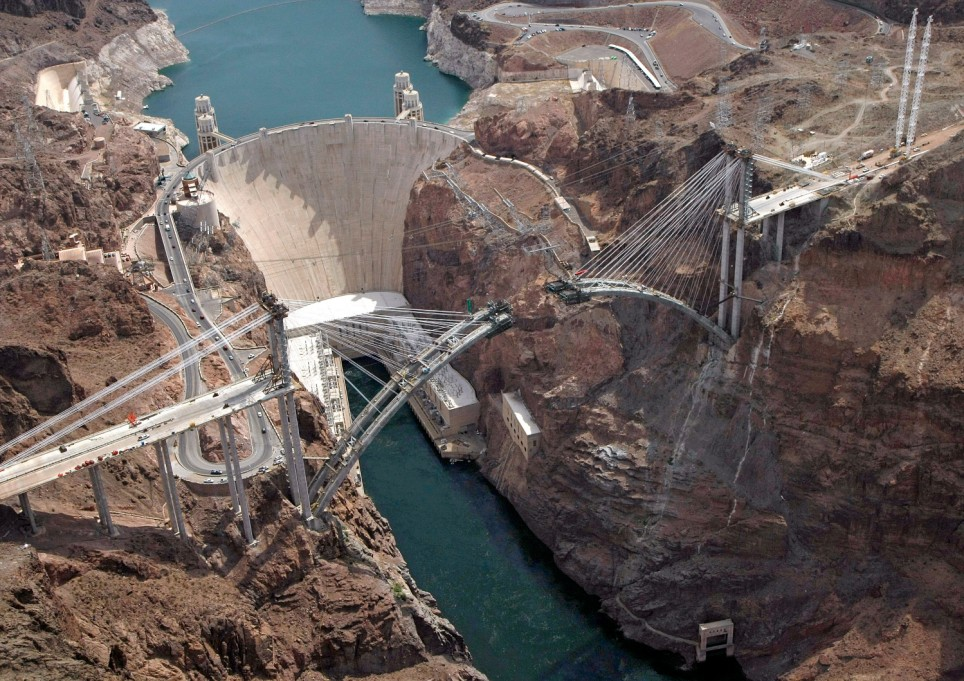
    The American continent, in addition to being one of the world leaders in hydroelectric energy production, hosts both successful examples of cooperation and serious conflict potentials in transboundary water management. In North America, the Colorado and Rio Grande (Rio Bravo) rivers, shared between the US and Mexico, constitute one of the most complex diplomatic issues between the two countries. The Hoover Dam and Glen Canyon Dam built on the Colorado River meet the water and energy needs of giant metropolises in the US Southwest, such as Los Angeles, Las Vegas, Phoenix, and San Diego. However, the intensive use of the river’s water within US territory and evaporation losses cause the river to be reduced to almost a trickle when it reaches Mexico. This situation leads to the desertification of agricultural lands in northern Mexico, while the implementation of the 1944 Water Treaty signed between the two countries remains a constant source of tension. Particularly, mega-droughts linked to climate change have chronicled the water crisis in the basin by reducing the Colorado River’s flow to record low levels.

    In South America, the Itaipu Dam, established on the Paraná River between Brazil and Paraguay, is recognized as one of the world’s most successful transboundary hydroelectric projects, with its joint management model. With the enormous amount of energy it produces, Itaipu meets almost all of Paraguay’s electricity needs and a significant portion of Brazil’s. However, this cooperation model occasionally witnesses diplomatic friction regarding the pricing of the energy produced and Paraguay’s right to sell its excess energy to third countries. Further down the same river line, the Yacyretá Dam on the border between Argentina and Paraguay is operated under a similar partnership. Brazil’s hydroelectric push in the Amazon Basin proceeds on much more controversial ground. The Belo Monte Dam on the Xingu River and the Santo Antônio and Jirau dams on the Madeira River, built in the heart of the Amazon rainforest, are the focus of criticism regarding environmental destruction and the forced displacement of indigenous peoples. These projects are caught between Brazil’s desire to secure its energy supply as a regional superpower and pressure from the global environmental movement.

    Canada, with its rich freshwater reserves and massive hydroelectric capacity, is the silent hydropolitical giant of North America. The James Bay Project (La Grande Complex) in Québec and the Churchill Falls Dam in Labrador form the backbone of Canada’s clean energy exports. Particularly, the sale of energy produced by the Churchill Falls Dam to the New England states of the US via Québec has been the subject of a decades-long legal and political struggle between the two provinces. Newfoundland and Labrador are forced to sell energy to Québec at a very low price according to the 1969 contract, while Québec markets this energy to the US at a high profit. This is a striking lesson showing that control over the electricity generated by a dam does not always equate to economic prosperity for the party that built it. Canada also pursues a strict protectionist policy regarding the commercial bottling and transfer of water to arid regions in the Great Lakes basin shared with the US, treating water as a national security issue.

    In Central America and the Caribbean, the operation of the Panama Canal is the most concrete example of how global trade is intertwined with hydropolitics. Millions of liters of freshwater are lost to the ocean with each ship transit, and this water is provided by the artificial Gatún Lake and Alajuela Dam. Droughts in Panama directly limit the number and tonnage of ships that can transit the canal, creating shockwaves in global supply chains. In the same region, underlying the border dispute between Guatemala and Belize are the water rights of the Belize River and Sarstoon River. In the Andean region of South America, water resources and glaciers shared between Chile and Argentina, vital especially for copper mining, constitute the hydrological dimension of border disputes between the two countries. While dams in the Americas rank at the top globally in terms of size and energy produced, the social inequalities and ecosystem destruction caused by these structures make them the hottest arenas for the global debate on equitable water management.

    Integrated Water Management and Competitive Dynamics in Europe and Australia

    The European continent stands out as the world’s most institutionalized region with the strongest legal framework regarding transboundary water management. The European Union’s Water Framework Directive mandates an integrated approach to the management of rivers among member states and adopts the principle of managing river basins according to natural water catchments rather than administrative boundaries. The Danube River, flowing through more than ten countries before emptying into the Black Sea, serves as Europe’s hydropolitical laboratory. The Iron Gate (Đerdap) Dam, the most important hydro-technical structure on the Danube, is jointly operated by Serbia and Romania and makes a significant contribution to the energy systems of both countries. However, it is possible to encounter situations even in Europe where water is used as a strategic tool. Hungary’s decades-long legal battle with Slovakia over the Gabčíkovo-Nagymaros Dam System has shown how water can lead to a sovereignty conflict even between two NATO and EU member states. This case, brought before the International Court of Justice in The Hague, is considered a turning point in the development of international water law.

    While the Rhine and Rhône rivers, originating in the Alps, form an intensive industrial and logistical waterway network between Switzerland, France, Germany, and the Netherlands, the dams on these rivers serve more for flow regulation and flood control than energy production. Switzerland’s high-altitude pumped-storage HEPPs in the Alps (such as Linth-Limmern, Nant de Drance) act as giant batteries for the stability of the European interconnected grid. In Scandinavia, Norway and Sweden stand out with their hydropower-based energy systems, while the joint dam operation on the Pasvik River, forming the border between Russia and Norway, is one of the rare functioning cooperation mechanisms between two different political blocs. On the Iberian Peninsula, dams on the Douro, Tagus (Tajo), and Guadiana rivers connecting Spain and Portugal are regulated by the 1998 Albufeira Convention. The severe drought in Spain caused by climate change exerts significant political pressure on the Madrid government regarding the amount of water required to be released to Portugal, showing that water nationalism can rise even within the EU.

    The Australian continent, being the driest inhabited continent on Earth, has unique experience in water management. The Murray-Darling Basin in the continent’s southeast hosts 40 percent of the country’s agricultural production, and the management of the basin is a constant political struggle between the federal government and the states. The most important structures on the basin, the Hume Dam and Dartmouth Dam, are critically important for ensuring the equitable distribution of water among the states. Australia’s most ambitious project in hydroelectricity is the Snowy Mountains Scheme. This colossal engineering marvel diverts meltwater from the snowy mountains through tunnels and dams to inland agricultural areas, while also generating significant amounts of energy. The second phase of the project, Snowy 2.0, involves the construction of a giant pumped-storage HEPP to facilitate the integration of renewable energy sources into the grid.

    Turkey, due to its geographical location, holds upstream control of the Tigris and Euphrates rivers, the most critical water basins in the Middle East. Giant dams such as Atatürk, Keban, Karakaya, Ilısu, and Birecik, built under the Southeastern Anatolia Project (GAP), are vital for Turkey’s energy supply security and regional development goals. However, these projects are constantly criticized by downstream Syria and Iraq on the grounds that they reduce water flow and degrade water quality. Particularly with the completion of the Ilısu Dam, Turkish control over the Tigris River has been consolidated, increasing Iraq’s concerns about the drying up of the Mesopotamian marshes and the reduction in the amount of freshwater reaching the Persian Gulf. Turkey defines the Euphrates waters as “transboundary water” rather than “boundary-forming water” and emphasizes its absolute sovereign right. In contrast, the Deriner, Borçka, and Muratlı dams built on the Çoruh River, shared with Georgia at Turkey’s northeastern border, have not faced any serious objection from downstream Georgia and have even been welcomed for providing flood control. This shows that different dynamics are at play in Turkey’s water diplomacy depending on the identity of the neighbor and the level of interdependence.

    On the eastern periphery of Europe and in the Caucasus, water resources are intertwined with frozen conflicts and ethnic tensions. The Kura and Aras rivers harbor a complex water-sharing problem among Turkey, Georgia, Armenia, Azerbaijan, and Iran. While the Mingachevir Dam, Azerbaijan’s largest water reservoir, is critical for the country’s energy and irrigation system, joint Iran-Azerbaijan dams on the Aras River stand out as examples of cooperation. In contrast, Armenia’s efforts to maintain the water level of Lake Sevan and its plans on tributaries feeding the Aras River are evaluated in the context of its geopolitical rivalry with Azerbaijan. All these examples demonstrate that the relatively stable cooperation model on the European continent gives way to classic power politics at the other end of the continent. In the case of Australia, the commodification of water and the transformation of water rights into a tradable commodity present an interesting case study of a capitalist approach to the global water crisis.

    The Intersection of Economic, Military, Political, and Legal Dimensions

    The economic dimension of dams and hydroelectric power plants is not limited to construction costs and energy generation revenues; these structures have multiplier effects impacting all sectors of the national economy. On one hand, particularly for developing countries, they contribute to closing the current account deficit by reducing dependence on imported fossil fuels and provide cheap energy input for domestic industry. For example, for a country like Tajikistan, the completion of the Rogun Dam not only promises to end power outages but also a strategic economic transformation by enabling energy exports to Afghanistan and Pakistan, generating foreign currency revenue. On the other hand, large dam projects often require heavy external borrowing, making the host country vulnerable to the economic influence of the financing country or institution. The “debt trap diplomacy” debates frequently raised in connection with hydroelectric projects financed under China’s “Belt and Road” initiative reveal how dams are intertwined with macroeconomic sovereignty. Moreover, agricultural lands and settlements submerged under reservoir areas, resettlement costs, and the economic value of lost biodiversity are hidden costs that are not always accurately calculated in project feasibility studies.

    On the political level, transboundary waters have gone beyond being a “soft power” instrument for states and have become a symbol of national sovereignty itself. The authority of an upstream country to open and close dam gates functions as a lever that can influence the domestic politics of a downstream country. The role water played in Turkey-Syria relations before the Syrian civil war, or the floods caused in Uzbekistan by Kyrgyzstan’s release of water from the Toktogul Dam for winter energy production, are concrete reflections of this asymmetric relationship. This situation pushes downstream countries to form diplomatic coalitions against upstream countries or to mobilize international public opinion. Egypt’s intense diplomacy against the GERD in Ethiopia ranges from the Arab League to the African Union, even extending at times to the discussion of military options. On the other hand, water crises sometimes necessitate cooperation. The Indus Waters Treaty is one of the rare legal texts that has managed to keep two hostile countries, India and Pakistan, at the negotiating table over water sharing, even during times of war.

    The military and security dimension places dams at the center of conventional and hybrid warfare doctrines. Targeting a large dam during wartime can lead to a humanitarian catastrophe and infrastructure destruction on a scale similar to that of a nuclear weapon downstream. Therefore, large dams are considered “critical infrastructure” in national security strategies and are protected by air defense systems. The destruction of the Kakhovka Dam on the Dnieper River during the war in Ukraine tragically demonstrated to the world how such structures can be used as weapons. The blowing up of the dam flooded a vast area, complicating military operations, rendering agricultural lands unusable, and jeopardizing the cooling water security of the Zaporizhzhia Nuclear Power Plant. This event proved that dams are no longer just energy production facilities but also multi-layered strategic nodes directly affecting environmental and nuclear security. Additionally, control over water resources can become a show of force and a means of financing for terrorist organizations and non-state actors.

    The legal dimension, in the absence of a global authority, is largely shaped within the limited framework of bilateral or multilateral treaties. While the International Court of Justice’s decision on the Gabčíkovo-Nagymaros Project or the Permanent Court of Arbitration’s rulings on the Indus Waters contribute to the jurisprudence of water law, the implementation of these decisions remains entirely dependent on the good will of states. The UN Watercourses Convention took nearly twenty years to enter into force, and key upstream countries like China and Turkey are not parties to it. This legal vacuum strengthens the concept of “hydrological hegemony,” allowing upstream riparian states to create faits accomplis and increase their bargaining power. Particularly, the obligation of prior notification and the principle of not causing harm remain on paper in the absence of political will. Therefore, to prevent future water wars, there is a need for a new generation of “smart agreements” that include not only water sharing but also dam operational regimes, data sharing, and joint monitoring mechanisms.

    Consequently, the desire for economic development, the passion for political sovereignty, military security concerns, and legal gaps create a force field that clashes in river basins around the world. Managing this field requires the simultaneous efforts not only of water engineers or diplomats but also of economists, security experts, and legal scholars. Building a dam may mean energy independence for one nation, while it can be coded as an existential threat for its neighbor. Overcoming this paradox depends on the existence of political will to move water away from a zero-sum competitive arena to a platform of cooperation based on mutual benefit. Otherwise, as global climate change further destabilizes the water cycle, riverbanks are destined to become the world’s hottest geopolitical fault lines.

    Conclusion: The Future of Hydropolitical Competition in the 21st Century

    Dams and transboundary rivers have ceased to be pawns on the geopolitical chessboard of the 21st century and have risen to the position of queens directly threatening the king’s safety. The silent struggle for control of water, spanning a vast geography from China’s Tibetan Plateau to Africa’s Great Rift Valley, from the Central Asian steppes to South America’s tropical forests, will be one of the main elements shaping the international agenda in the coming decades. All the cases examined demonstrate how the desire to control water, despite its fluid nature, hardens states’ rigid definitions of national interest. On one hand, the demand for water is exponentially increasing under the pressure of population growth and urbanization, while on the other hand, climate change makes the amount and timing of supply unpredictable. This equation turns water not only into a development tool but also into the most fundamental matter of survival.

    In this framework, it is a serious question whether the “hydrological nationalism” policies pursued by states are sustainable. An approach of absolute sovereignty prioritizing national interest under all circumstances may yield short-term gains but harbors risks of irreversible environmental destruction and political instability for all basin countries in the long run. The desiccation of the Aral Sea, the disappearance of the Mesopotamian marshes, or the salinization of the Mekong Delta demonstrate the heavy ecological and human cost of water management not based on cooperation. In the world of the future, a country’s strength will be measured not only by the number of dams it possesses but also by the quality of the fair and transparent data-sharing mechanisms it can establish with its neighbors while operating these dams.

    The critical role played by hydroelectric power plants in the energy transition places these structures at the center of the ideological conflict between environmental movements and pro-development governments. On one side, HEPPs are praised as a clean energy source compared to fossil fuels; on the other, they are criticized as projects that fragment river ecosystems and displace millions of people. This dilemma directly affects the investment decisions of international financial institutions and the energy import preferences of consumer countries, especially in ecologically sensitive regions like the Amazon Basin and the Himalayas. Therefore, dam diplomacy is conducted not only between riparian countries but also within a multidimensional network of interaction among global financial centers, non-governmental organizations, and multinational construction companies.

    Strengthening the legal and institutional infrastructure stands out as the most effective method for preventing potential water conflicts. Regional organizations like the African Union’s Nile Basin Initiative or the Mekong River Commission in Asia, though flawed, provide a minimal ground for dialogue. However, the success of these platforms depends on the willingness of the most powerful upstream countries in the basin (such as China, Turkey, India) to engage with these mechanisms. In the future, it is also foreseen that water management will become intertwined with cybersecurity. A cyberattack on the digital control systems of dam gates and water distribution networks could have consequences no less devastating than a classical military offensive. This situation makes hydropolitical security an integral part of national cybersecurity strategies.

    In the context of the global power struggle, water resources may act as a magnet reshaping alliance systems in the coming period. Water-scarce countries may seek strategic partnerships with water-rich countries; this could bring “water import” agreements and even intercontinental water transfer projects onto the agenda. Ultimately, in the shadow of the world’s largest dams, the fate of nations will be determined by the flexibility of diplomacy and the depth of foresight, rather than the durability of concrete. It should not be forgotten that the greatest dam humanity can build against the destructive power of water is a wall of trust rising on the foundation of mutual understanding and equitable sharing. Otherwise, history will once again witness rivers that unite riparian peoples transform into chasms that divide states.

    Bibliography

    · UN Water. (Various Years). The United Nations World Water Development Report. UNESCO, Paris.
    · World Bank Group. Water Resources Management Sector Reports. Washington, D.C.
    · International Hydropower Association (IHA). Hydropower Status Report. London.
    · UNESCO International Hydrological Programme (IHP). Transboundary Waters: Sharing Benefits, Sharing Responsibilities. Paris.
    · Wolf, A. T., Yoffe, S. B., & Giordano, M. International Waters: Identifying Basins at Risk. Water Policy.
    · Gleick, P. H. The World’s Water Volume 9: The Biennial Report on Freshwater Resources. Island Press.
    · Food and Agriculture Organization (FAO). AQUASTAT Main Database.
    · Stockholm International Peace Research Institute (SIPRI). Environment of Peace: Security in a New Era of Risk.
    · Asian Development Bank (ADB). Asian Water Development Outlook.
    · Zeitoun, M. & Warner, J. Hydro-Hegemony: A Framework for Analysis of Transboundary Water Conflicts. Water Policy.
    · Turkish State Hydraulic Works (DSİ). GAP Action Plan and Annual Activity Reports.
    · Central Intelligence Agency (CIA). The World Factbook – Freshwater Withdrawal.
    · European Union Commission. Water Framework Directive (2000/60/EC) Implementation Reports.
    · Nile Basin Initiative (NBI). State of the River Nile Basin Report.
    · McCully, P. Silenced Rivers: The Ecology and Politics of Large Dams. Zed Books.

    Sefa Yürükel

    Danish ethnographer and social anthropologist (MA)
    Aarhus University, 1997
    Independent Researcher
    Fields of Research: International Politics, Public International Law, Geopolitics, Sociology, Psychology, Cultural Studies, Systems and Structures