By Sefa Yürükel
In the technology driven restructuring process of the international system, the Eurasian geography has become the epicentre of geopolitical competition as much as technological cooperation opportunities. The global scale momentum captured by the People’s Republic of China in artificial intelligence and 5G infrastructure, the Russian Federation’s search for resilience in military technology, India’s effort to channel its demographic advantage into technology production, the decisive positions of Japan and South Korea in the advanced materials and semiconductor ecosystem, and Turkey’s leap in defence technologies cause all these actors to move within complex and multi layered interaction networks with one another. The technology strategies of these six countries are not only a reflection of their own national interests but also produce structural dynamics that determine the future of global supply chains, military alliances and economic corridors.
China’s Systemic Technology Challenge and Its Eurasian Reflections
China has deepened its technological transformation process, initiated with the “Made in China 2025” strategy announced in 2015, in the 2020s with the “dual circulation” economic model and the conceptualisation of “new quality productive forces.” The enormous resources directed by the Beijing administration to the fields of semiconductors, quantum computing, hypersonic systems and space technologies constitute the technological basis that has led the Western alliance to codify China as a “systemic rival.” China’s allocation of 459 billion dollars to R&D expenditures in 2023, equivalent to 2.64 percent of its gross domestic product, has positioned the country as the world’s second largest R&D spender after the United States.
The points at which China’s technology strategy intersects with Russia have undergone a qualitative transformation, particularly in the post 2022 period. The contraction experienced by Russia, under Western sanctions, in its access to semiconductors and advanced electronic components has made China an indispensable technology supplier for Moscow. In 2023, China’s exports of chips and electronic components to Russia increased by over eighty percent compared to the previous year. This trade flow creates an asymmetric dependency relationship between the two countries; while Russia meets its technology needs in the short term, it faces the risk of becoming integrated into China’s technology ecosystem in the long term.
China India technology relations, on the other hand, harbour a deep paradox. Despite military tensions on the Himalayan border and India’s restrictions on Chinese origin technology companies, the volume of technology trade between the two countries exceeded 118 billion dollars in 2023. While India’s smartphone manufacturing ecosystem largely relies on Chinese component suppliers, the Delhi administration is trying to reduce this dependency through the “Make in India” and “Digital India” programmes. China’s digital infrastructure projects under the Belt and Road Initiative and India’s “Asia Africa Growth Corridor” initiative represent two competing technology visions in the Indian Ocean.
Russia’s Search for Technological Resilience and Its Asia Opening
The Russian Federation’s technology strategy has been shaped by the necessity of adapting to extraordinary circumstances since 2022. The comprehensive technology embargoes imposed by the West have forced Russia’s military industrial complex to build alternative supply chains. In this context, Russia’s technology partnership with China is evolving from a tactical necessity into a strategic orientation. The two countries’ joint space station project, the integration of the GLONASS and BeiDou navigation systems, and their collaborations in the field of military technology accelerate Moscow’s process of decoupling from the West.
Russia’s technology relations with India are built upon deep ties inherited from the Cold War era. Although more than sixty percent of India’s defence platforms are still of Russian origin, the Delhi administration has been making efforts to diversify its supply sources in recent years. Nevertheless, the joint production of the BrahMos supersonic cruise missile and India’s insistence on procuring the S 400 air defence system from Russia demonstrate the durability of the strategic technology partnership between the two countries. As of 2024, the two countries are negotiating new agreements on nuclear power plant construction and joint military platform development.
Russia’s technology relations with Turkey, however, carry a unique character. The procurement of the S 400 air defence system has gone down in history as the most controversial example of technology transfer between the two countries. This process, while shaking Turkey’s position within NATO, has provided Russia with a strategic sphere of influence on the alliance’s southern flank. The Akkuyu Nuclear Power Plant project is a concrete indicator of the two countries’ cooperation in the field of energy technology. Nevertheless, the limits of the Russia Turkey technology partnership are also clear; geopolitical competition in Syria, Libya and the Caucasus constitutes an obstacle to deep technology integration.
India’s Multipolar Technology Strategy
India possesses a unique position in the global technology architecture. On the one hand, it is positioned as a key element of the Western alliance’s Indo Pacific strategy within the framework of the Quad (US, Japan, India, Australia) mechanism, while on the other hand, it acts jointly with Russia and China on the BRICS platform. This bidirectional positioning is the reflection of Delhi’s “strategic autonomy” doctrine in the technology field. India’s “India Semiconductor Mission,” put into effect in 2023, aims to turn the country into a new hub in the global chip supply chain with a 10 billion dollar incentive package.
The India Japan technology partnership constitutes one of the deepest and most multidimensional collaborations in Asia. The “Digital Partnership” agreement between the two countries covers joint projects in 5G infrastructure, artificial intelligence ethics, quantum computing and cyber security. The Mumbai Ahmedabad high speed railway project implemented by Japan in India stands out as a model involving the transfer of Shinkansen technology. In 2024, the two countries signed new cooperation memoranda in the field of defence technology regarding unmanned systems and submarine detection technologies.
India South Korea technology relations are gaining momentum, particularly in the fields of electronics manufacturing ecosystem and defence industry. Samsung’s manufacturing facilities in India are among the country’s largest foreign investments, while South Korean companies are investing in India’s semiconductor ecosystem. In the defence field, the joint production of the K 9 Vajra self propelled howitzer is considered one of the successful technology transfer models between the two countries.
Technology relations between India and Turkey, however, are proceeding well below their potential. The trade volume between the two countries could only reach the 12 billion dollar level in 2023. While defence industry, pharmaceutical technologies and space research emerge as the most suitable areas for cooperation, the Pakistan factor and differences in position on the Kashmir issue constitute political barriers to a deep technology partnership.
The Technological Depth of Japan and South Korea and Regional Competition
Japan and South Korea are positioned as indispensable actors in the global technology ecosystem. Companies such as Japan’s Tokyo Electron and Shin Etsu Chemical are close to holding a global monopoly position in the fields of semiconductor manufacturing equipment and advanced materials. Giants such as South Korea’s Samsung and SK Hynix maintain their world leadership in the memory chip market. The technology strategies of these two countries contain both deep competition and tacit cooperation against China’s rise.
Japan’s “Economic Security Strategy” and South Korea’s “Korea Semiconductor Strategy” reflect both countries’ quest to increase supply chain resilience in critical technologies. Japan’s lifting of restrictions on the export of semiconductor materials to South Korea in 2023 marked the beginning of a new era in technology relations between the two countries. This normalisation implies a tacit acknowledgment that both countries need each other to balance China’s rise in the technology ecosystem.
Both countries’ relations with China are built upon a complex balance of dependency and competition. Japan’s export of semiconductor manufacturing equipment to China is an area of commercial interest that Tokyo wishes to maintain despite US pressure. The manufacturing facilities of South Korean chip companies in China cause the Seoul administration to pursue a delicate balancing policy between Washington and Beijing. Nevertheless, as of 2024, both countries are tending to tighten export controls targeting China in the fields of semiconductors and artificial intelligence.
The technology relations of Japan and South Korea with Turkey proceed at different levels of intensity. Japan has been one of the important actors in infrastructure technology transfer in Turkey with the bridges built over the Istanbul Strait and the Marmaray project. The establishment of the Turkish Japanese Science and Technology University is a step towards institutionalising academic technology cooperation between the two countries. South Korea, on the other hand, has become a significant partner for Turkey, especially in the field of defence industry. The collaboration carried out with South Korean companies in the development of the engine and transmission system of the Altay main battle tank, the production of the K 9 howitzer in Turkey under the name Fırtına, and joint projects in the field of defence electronics demonstrate the depth of the technology transfer relationship between the two countries.
Turkey’s Multidimensional Asia Technology Opening
Turkey’s technology partnerships in Asia should be read as a strategic response to the dynamics of exclusion on the Euro Atlantic axis. Within the framework of the “Asia Anew” initiative, Ankara aims to diversify its technology supply chains and establish deep ties with Asia’s rising technology powers. One of the most concrete outcomes of this strategy is Turkey’s missile technology cooperation with China. This partnership, which causes unease within NATO, constitutes one of the fundamental components of Turkey’s long range ballistic missile development programme.
Turkey’s cooperation with Russia in the field of energy technology has gained strategic depth. The TurkStream natural gas pipeline and the Akkuyu Nuclear Power Plant are mega projects that render the technology dependency between the two countries mutual. However, the CAATSA sanctions imposed after Turkey’s procurement of the S 400 from Russia have demonstrated that the cost of such technology transfers has not only economic but also political and strategic dimensions. The technology relationship between Moscow and Ankara follows a path of selective and cautious expansion, in the shadow of areas of deep geopolitical competition.
South Korea stands out as one of Turkey’s most comprehensive technology partners in Asia. The defence industry cooperation between the two countries spans a broad spectrum, from the joint production of the K 9 howitzer to new generation armoured vehicle platforms. The “Medium Range Air Defence System” development agreement signed between the two countries in 2024 indicates that the technology transfer is deepening. Nevertheless, South Korea’s occasional reluctance in technology transfer for critical sub systems such as engines and transmissions constitutes an obstacle to Turkey’s goal of establishing a fully independent supply chain.
Technology relations between Japan and Turkey are proceeding well below their potential. Yet fields such as earthquake engineering, renewable energy technologies and robotic manufacturing systems are areas of cooperation where the two countries possess complementary competencies. The limited nature of Japanese companies’ direct investments in Turkey and the inability to channel political dialogue into technology transfer constitute the fundamental dilemma of this relationship.
The technology dialogue that Turkey is trying to develop with India is still at the initial stage. Although both countries possess significant competencies in defence industry, space technologies and the pharmaceutical industry, political obstacles delay the realisation of this potential. Turkey’s close relations with Pakistan and India’s Kashmir policy are factors that complicate the construction of a trust based technology partnership between the two countries.
Chip Wars, Supply Chain Geopolitics and the Transformation of Asia
Global semiconductor competition has become the central determinant of the technology strategies of the six countries in question. The comprehensive chip export controls implemented by the US in October 2022 and the expanded restrictions including the Netherlands and Japan in 2023 target China’s advanced chip manufacturing capacity. In the face of these restrictions, China has shown technological resilience by bringing online Huawei’s 7 nanometre chip manufacturing capacity, while also beginning to pursue a price undercutting strategy in the global market by massively increasing capacity in traditional chip manufacturing.
The positions of Japan and South Korea in the chip supply chain make both countries direct parties to the US China competition. While Japan uses its monopoly like position in chip manufacturing equipment and chemical materials as a strategic lever, South Korea must maintain access to both the US and Chinese markets to sustain its global leadership in memory chips. As of 2024, both countries have announced large investment programmes aimed at expanding their chip manufacturing capacities on their own soil, which has led to the reshaping of the global chip manufacturing geography.
India stands out as a new actor seeking a share in this transformation. The country’s young population, growing domestic market and government incentives carry the potential to make India a new hub in chip manufacturing. While investments by companies such as Micron Technology and Foxconn in India signal this potential, infrastructure deficiencies and a shortage of skilled labour persist as significant constraints in the short term.
Turkey’s position in the chip supply chain is currently predominantly that of a consumer and assembler. The chip design activities carried out within ASELSAN and TUBITAK BILGEM, though remaining limited in scale, are of critical importance for Turkey’s competence building in this field. The goal of establishing a national chip manufacturing facility constitutes one of the fundamental elements of Turkey’s quest for strategic independence.
Asian Competition in Defence Technologies and Turkey’s Positioning
The field of defence technologies is one of the sectors where the dynamics of competition and cooperation among the six countries in question are most intensely experienced. China’s hypersonic missile systems, aircraft carrier programme and space based sensor networks fundamentally affect the military balances in the Asia Pacific. China’s advancement in defence technology is causing Japan, South Korea and India to accelerate their own modernisation programmes. Japan’s decision to develop “counter strike capability against enemy bases” and South Korea’s investments in its “three axis” defence system are concrete reflections of this competition.
Russia’s defence technology performance in the Ukraine war has affected the perception of Russian systems in the global arms market. The supply problems experienced by Russian UAVs and precision guided munitions have led traditional Russian arms buyers such as India to diversify their suppliers. In contrast, Turkey’s success in UAV technology has caused Russia to turn to cooperation with Ankara to compensate for its deficiencies in this field. Russian President Vladimir Putin’s expression of interest in Bayraktar UAVs and reports of cooperation talks between the two countries in the field of UAV technology indicate that defence technology flows are not unidirectional.
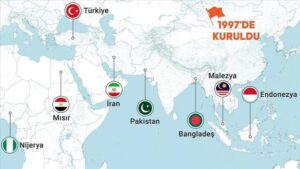
Turkey’s position in the Asian defence technology market is strengthening, particularly in the UAV and armoured vehicle segments. UAV exports to countries such as Indonesia, Malaysia, Bangladesh and Pakistan have made Turkey a significant actor in this market. Joint defence projects carried out with South Korea, meanwhile, provide Turkey with both technology transfer and access to the Asian market. Nevertheless, entry into the Indian and Japanese markets still remains an important objective to be overcome for Turkey.
Intersecting Trajectories in Energy Technologies, Space and Artificial Intelligence
The transformation in the field of energy technologies profoundly affects the strategic calculations of the six countries in question. China’s global leadership in renewable energy technologies shapes the supply chains of critical components such as solar panels, wind turbines and electric vehicle batteries. Turkey’s partnership talks with Chinese companies regarding electric vehicle battery production are a reflection of this global transformation on Ankara. The advanced positions of Japan and South Korea in the hydrogen economy and nuclear fusion research render Asian competition in the energy technology field multidimensional.
Space technologies are emerging as the new frontier of great power competition in Asia. China’s construction of its own space station, its lunar exploration programme and anti satellite weapon tests; India’s success in Mars and Moon missions; Japan’s competence in asteroid exploration technology; and South Korea’s efforts to develop its own launch vehicles demonstrate Asia’s rise in the space race. Turkey’s effort to integrate into this competition with the IMECE earth observation satellite and the TURKSAT series of communication satellites, while still at the initial stage, is expected to gain momentum in line with the goals of the National Space Programme.
Competition in the field of artificial intelligence stands out as a horizontal dimension cutting across all these technology areas. China’s world leading position in artificial intelligence patents is at a level surpassing the United States. Japan and South Korea possess deep competencies in the industrial applications of artificial intelligence. India’s enormous pool of software engineers constitutes one of the country’s greatest strategic advantages in the age of artificial intelligence. Turkey, meanwhile, is seen to be trying to strengthen its position in this field through the TUBITAK Artificial Intelligence Institute and autonomous systems work in the defence industry.
Recommendations from Turkey’s Perspective for the New Technology Architecture
The Asia centred transformation of the global technology architecture harbours both risks and opportunities for Turkey. Ankara’s positioning in this process must be based on the ability to manage multiple axes simultaneously. The first axis is the preservation of NATO and transatlantic ties and keeping technology cooperation within this framework alive. The second axis is the construction of deepened partnerships with Asia’s rising technology powers. The third axis is the strengthening of the national technology ecosystem in a way that reduces critical dependencies.
Turkey’s successful cooperation model with South Korea in the field of defence technology offers a template that could also be applied to relations with Japan and India. Ankara needs to propose stronger intellectual property protection and joint R&D mechanisms to overcome the reservations of Japanese companies regarding technology transfer. In relations with India, focusing on non defence technology areas, particularly health technologies, financial technologies and space research, in order to close the trust deficit created by the Pakistan factor could be a strategic choice.
A selective and balanced approach should be adopted in technology relations with China. It is necessary to benefit from China’s technological superiority in areas such as electric vehicle batteries, solar energy and 5G infrastructure, while not allowing this cooperation to lead to new tensions within NATO. Cooperation with Russia in the field of energy technology should not remain limited to the completion of the Akkuyu Nuclear Power Plant but should also be expanded into new areas such as renewable energy and hydrogen technologies.
The focus of the national technology move on the fields of semiconductors, advanced materials and artificial intelligence is indispensable for long term strategic independence. The acceleration of projects in these areas by organisations such as ASELSAN, HAVELSAN, ROKETSAN and TUBITAK BILGEM will also make Turkey a more attractive cooperation partner for its potential partners in Asia. Technology diplomacy should be institutionalised as a new pillar of Turkish foreign policy; technology attaché offices should be deployed in Asia’s important technology hubs.
The Asia centred restructuring process of the global technology architecture represents a decisive juncture in terms of Turkey’s international positioning. Ankara’s ability to develop strategic choices suited to the requirements of this juncture necessitates the coordinated transformation not only of technology policies but also of foreign policy, economy and education strategies. The coming decade will be a period in which both Turkey’s role within the transatlantic alliance and its relations with Asia’s rising powers will be redefined.
References
State Council of the People’s Republic of China. (2015). Made in China 2025. Beijing: State Council Publications.
NATO Public Diplomacy Division. (2022). Strategic Concept 2022: Adopted by Heads of State and Government at the NATO Summit in Madrid. Brussels: NATO Official Documents, 29 June 2022.
U.S. Department of Commerce, Bureau of Industry and Security. (2022). Implementation of Additional Export Controls: Certain Advanced Computing and Semiconductor Manufacturing Items. Washington, D.C.: Federal Register, 7 October 2022.
Ministry of Electronics and Information Technology of India. (2023). India Semiconductor Mission: Policy Framework and Incentive Structure. New Delhi: Government of India Publications.
Ministry of Economy, Trade and Industry of Japan. (2023). Economic Security Strategy: Technology Leakage Prevention and Supply Chain Resilience. Tokyo: METI Publications.
Stockholm International Peace Research Institute. (2023). SIPRI Arms Transfers Database. Stockholm: SIPRI.
Aydınlık. (2024). “Türkiye’siz teknolojik NATO girişimi.” Aydınlık Newspaper, 15 March 2024, https://www.aydinlik.com.tr/haber/turkiyesiz-teknolojik-nato-girisimi-581359.
Presidency of Defence Industries of the Republic of Turkey. (2024). 2024 Annual Report. Ankara: Presidency of Defence Industries Publications.
Götz, E. & Jonsson, O. (2024). “Russia’s Technological Decoupling: Semiconductor Supply Chains and Military Production Under Sanctions.” Journal of Strategic Studies, 47(2), pp. 198-224.
International Institute for Strategic Studies. (2024). The Military Balance 2024. London: IISS Publications.
Cho, Y. & Kim, S. (2024). “South Korea’s Semiconductor Strategy: Between Washington and Beijing.” Asian Security, 20(1), pp. 45-68.
Sefa Yürükel
Danish ethnographer and social anthropologist (MA)
Aarhus University, 1997
Independent Researcher
Fields of Research: International Politics, Public International Law, Geopolitics, Sociology, Psychology, Cultural Studies, Systems and Structures.



Bir yanıt yazın