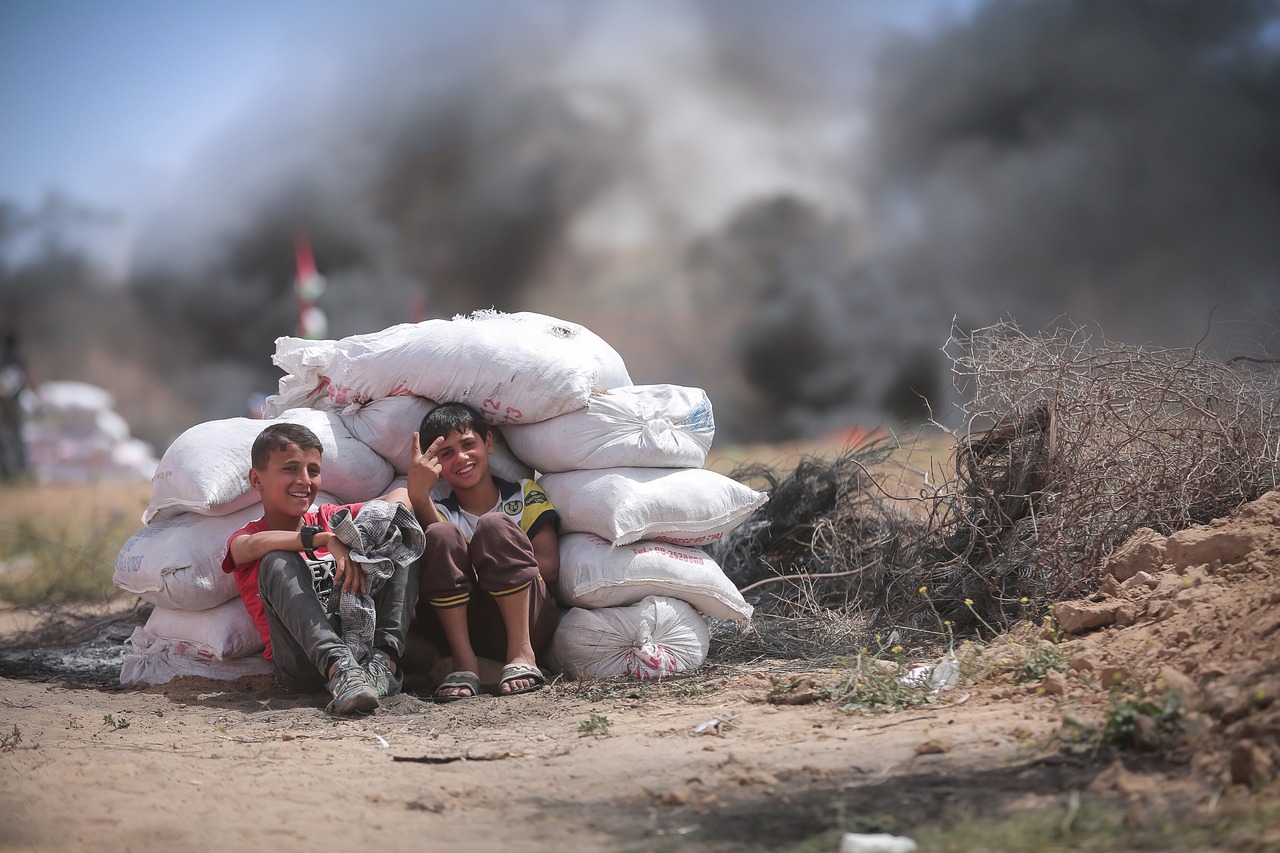
The waves of protest stretching from the Mediterranean shores of Europe to the cool streets of Scandinavia, from there to the administrative heart of the continent Brussels, then to the great metropolises of Western Europe and the rising political centres of Eastern Europe, have become a flare signalling a deep legitimacy crisis in political systems. The slogans echoing in Rome, Madrid, Tirana, Ljubljana, Dublin, Brussels, Oslo, Copenhagen, Berlin, London, Warsaw and Paris make visible the different facets of the same anger in disparate geographies. The demonstrators are taking to the squares not only against international crises but also against the selective sensitivity of their own governments, their double standards and their exclusion of the people from decision making processes. This mass mobilisation is the strongest indicator that the fundamental contract of European democracy has been reopened for negotiation. The following lines aim to dissect the anatomy of the demand for justice and sovereignty gripping the continent by examining each stop of this multi centred popular movement in depth.
Spain: The Voice of Conscience, the Test of Politics
Even though Spain has one of the governments taking the clearest stance on the Palestine issue in Europe, the streets remain determined to find the steps taken by the government insufficient. Tens of thousands of people demanding a complete halt to military cooperation and arms trade with Israel are filling squares across the country, especially in Barcelona and Madrid. Particularly in port cities, civil inspection actions targeting commercial ships travelling to or from Israel have reached remarkable levels. Emphasising that every kind of military material passing through Spanish territory indirectly contributes to the destruction in Gaza, activists are demanding the transparent disclosure of logistical flows.
While calling on the government to recognise Israel’s operations in Gaza as genocide and to unconditionally recognise the State of Palestine, the demonstrators decry that solidarity “that remains in words” has lost all meaning. Although the government’s diplomatic step of recognition is welcomed, the failure to crown this recognition with concrete sanctions against Israel remains at the centre of criticism. Action platforms have placed before the government a comprehensive list of demands including the implementation of an arms embargo, the suspension of free trade agreements and the termination of joint military exercises with Israel.
One of the most striking features of the protests in Spain is the broad based coalitions formed by trade unions, student unions, professional chambers and local administrations. Particularly in the Catalonia and Basque regions, discourses are being developed that forge meaningful links between Palestinian solidarity and local demands for autonomy. At marches in Basque cities, the emphasis on “the right of peoples to self determination” is voiced simultaneously in both the Palestinian and Basque contexts. This intersectionality allows the movement in Spain to evolve from a narrow critique of foreign policy into a multi layered demand for democracy.
University campuses have also become one of the most dynamic centres of the movement. At many higher education institutions, chiefly Madrid Complutense and Barcelona Autonomous University, students are organising campaigns demanding the severing of academic collaborations with Israeli universities. Banners hung on rectorate buildings, sit in protests in lecture halls and boycott calls are bringing campuses into the heated agenda of foreign policy debates. While some university senates, under student pressure, are deciding to review their relations with Israeli institutions, this also brings with it the tension between academic freedom and institutional responsibility.
This insistence on the streets of Spain has turned into a powerful political pressure exposing the selective sensitivity of European governments regarding human rights. Even though some statements from the government side claim that arms shipments to Israel have been stopped, activists argue that these statements are vague and that indirect trade routes remain open. Research conducted by civil society organisations presents evidence that Spanish origin weapons components continue to reach Israel via third countries. This situation leads to questioning the government’s sincerity and fuels the protests further.
While the socialist coalition government assumes the role of spokesperson for the Palestinian cause on the international stage, it simultaneously faces the tension of having to safeguard economic balances within the EU. The long term impact of the movement in Spain carries potential not only on a national scale but also to be felt in the European Union’s Mediterranean policy. If the Madrid government heeds the demands of the street and activates concrete sanction mechanisms, this could create a chain reaction within the EU, forcing other capitals to take similar steps.
Italy: 75 Cities United Against Double Standards
The simultaneous protests erupting in 75 cities across Italy are an expression not only of anger at the tragedy unfolding in Gaza but also of a revolt against the institutionalised hypocrisy of Western governments. This geographical spread stretching from Milan to Palermo, from Turin to Naples, reveals just how broad and heterogeneous the base of the movement is. The demonstrations, joined by people of all ages, professions and different political inclinations, can be read as an indicator that Italian society has crossed a threshold of conscience. The active participation of workers’ unions and Catholic grassroots organisations, in particular, adds a class and spiritual depth to the protests.
The government’s continuation of commercial, military and diplomatic relations with Israel is judged by the crowds filling the squares as complicity in crimes against humanity. Italy is home to Leonardo, one of Europe’s largest arms manufacturers, and claims that this company indirectly supplies components to the Israeli army fuel the anger of the activists. Civil inspection initiatives and brief occupation actions in the ports of Genoa and Livorno targeting ships suspected of carrying military cargo to Israel find wide resonance in the media. The decisions of dockworkers’ unions to refuse to handle cargo also make the economic dimension of the movement visible.
The activists no longer accept that the political elites, who brandish the discourse of democracy and human rights at every opportunity, fall silent when it comes to Palestine. The tendency of the right wing coalition government in Italy to further deepen relations with Israel stands out as a factor consolidating social opposition. While Prime Minister Meloni’s government continues the traditional Atlanticist line, its disregard for the Palestine sympathy coming from a part of its own base also leads to intra party tensions. Especially youth branches and some local administrations are making statements of support for Palestine that diverge from the national government’s line.
The banners carried and slogans chanted at the large marches in Rome question not only Italian foreign policy but also the country’s own democratic record. The activists express that a similar double standard prevails in domestic issues such as the fight against the mafia, migrants’ rights and economic injustice, and that rulers remember the concept of “human rights” only when it suits their geopolitical interests. In this context, the Palestine protests also become a discharge channel for the democracy deficit accumulated within Italy itself. The anger in the squares finds voice not only for the children killed in Gaza but also for the migrants drowned in the Mediterranean and the families victimised by austerity policies.
The demand “cut all ties with Israel” rising from the streets of Italy constitutes a direct popular veto against the country’s foreign policy choices. Activists who believe that it is necessary to pressure the national parliament to go beyond the symbolic decisions taken in municipal councils are intensifying lobbying activities and signature campaigns targeting members of parliament. While some opposition parties use the Palestine issue as a trump card to corner the government, this also brings the risk of the issue being exploited for party politics. Despite this, the grassroots dynamism of the movement continues to develop beyond the control of political parties.
Sit in protests at universities and statements of support rising from the world of culture and arts reinforce the social legitimacy of the movement. While famous Italian directors, writers and musicians sign declarations of support for Palestine, Palestinian flags become visible even at popular events like the Sanremo Music Festival. This visibility in the cultural sphere increases the movement’s impact on younger generations while managing to push the Palestine issue, long ignored by the mainstream media, to the top of the agenda. This multi dimensional mobilisation in Italy is being recorded as one of the most powerful examples of the wave of conscience rising in the south of Europe.
Albania: “We Are Not For Sale” and the Sazan Island Rebellion
The echoes of the anger in Italy manifested themselves the same week in the Balkans with a different but equally shaking sovereignty crisis. The target of the protests spreading throughout Albania is the plans to allocate Sazan Island to the investment project of US President Donald Trump’s son in law Jared Kushner and daughter Ivanka Trump. This island, holding a strategic position at the entrance of the Adriatic Sea, was used as a military base during the Cold War era and later, after being cleared of mines, its opening to tourism came to the agenda. However, the awarding of the project to the Trump family became the spark that triggered the nation’s reflexes of national sovereignty.
The people are up in arms against the strategic point of the country being handed over behind closed doors to the interests of a foreign family. Crowds gathered in Tirana chant “Sazan is ours, it is not for sale” in front of the government building, while opposition parties and civil society organisations demand the disclosure of all details of the agreement. The non transparent tender process reignites corruption debates in Albania, while Prime Minister Edi Rama’s government responds to criticism by arguing that the investment will bring billions of euros to the country.
The slogan frequently heard at the protests, “We don’t want a new Epstein Mossad headquarters,” strikingly reveals that the issue is not merely a real estate project but a deep mistrust that international power struggles are establishing new bases on the country’s territory. Jeffrey Epstein’s controversial intelligence connections and Mossad’s historical influence networks in the Balkans blur the line between conspiracy theories and legitimate geopolitical concerns. Yet behind this blurriness lies an entirely rational fear, the fear of a small Balkan country’s territory turning into a chessboard for great powers.
The cry “We are not for sale” has gained the quality of a social red line drawn against national sovereignty and territorial integrity being turned into the object of foreign geopolitical calculations. This new struggle for influence over Albanian territory, historically made a bargaining subject by great powers, revives a series of traumas in the collective memory stretching from the Congress of Berlin to the dissolution process of Yugoslavia. The experiences of territorial loss and foreign intervention, still fresh in the memories of the older generations, become embodied in the case of Sazan Island, forming an intergenerational line of sensitivity.
The impact of the protests on Albania’s foreign policy is already beginning to be felt. Statements from the government side carry signals of softening, indicating that the project is not yet at the final approval stage and will be open to parliamentary scrutiny. However, the activists do not find this sufficient and are voicing the demand for a referendum. Even though the Albanian constitution does not require a direct popular vote for the transfer of natural resources of national wealth status to foreigners, it is emphasised that the legitimacy of a project of such large scale and symbolic importance is too critical to be left solely to the decision of elected officials.
The Sazan Island issue is also directly linked to Albania’s European Union integration process. While EU officials watch the lack of transparency in the tender process with concern, the opposition presents this situation as new proof of the government’s insincerity in the fight against corruption. Diplomatic circles in Tirana, meanwhile, assess the project not merely as a commercial investment but also as a move by the US against the growing Chinese and Russian influence in the Western Balkans. This geopolitical equation further reinforces the will of the Albanian people to stand against a great power struggle being conducted at their expense.
Slovenia: From Solidarity to Demanding Accountability
In Slovenia, a small European country, the solidarity actions with Palestine quickly transformed into a critical questioning of the country’s own democratic standards. While the demonstrators in Ljubljana welcome the steps taken by the government to recognise Palestine as a state, they point out the insincerity of the ongoing economic relations with Israel and the silence of the European Union. The crowds gathered in the historic squares of the capital argue that the international solidarity Slovenia experienced during its own break from Yugoslavia must also be shown for Palestine today.
The military cooperation Slovenia maintains with Israel as an EU and NATO member is one of the primary targets of the activists. The unmanned aerial vehicles and defence systems purchased by the Slovenian army from Israel are protested with banners reading “let not our taxes turn into death in Palestine.” At sit in protests held in front of the Ministry of Defence, the moral dimension of the arms trade is questioned as much as the economic rationality of allocating a small country’s budget resources to externally dependent defence spending.
The Ljubljana University campus is an important centre nourishing the intellectual accumulation of the movement. At panels organised by academics from philosophy and sociology departments, the Palestine issue is debated in the context of post colonial theory, international law and the critique of humanitarian intervention doctrines. This academic interest provides theoretical depth to the street movement while also making visible the critical position developed by Slovenian intellectual circles against the Western centric narrative of human rights.
Another striking dimension of the protests in Slovenia is the solidarity networks established with diaspora communities. Bosniak and Albanian immigrants coming from the geography of the former Yugoslavia show a significant participation in the Palestine actions. Drawing parallels between the memory of the Srebrenica genocide and the events in Palestine, these communities carry the movement of conscience in Slovenia beyond ethnic and cultural boundaries. Aid campaigns and commemoration events organised in Muslim community centres strengthen the humanitarian dimension of the movement.
The expectation created by the steps taken by the government on the Palestine issue during its European Union presidency brought with it the supervisory pressure of civil society. While the Ljubljana administration, on one hand, conducts lobbying activities within the EU for the recognition of Palestine as a state, its continuation, on the other hand, of developing bilateral economic relations with Israel leads to the questioning of its claim of “principled foreign policy.” Activists emphasise that Slovenia’s capacity to take a moral stand as a small country is actually greater, because it is not tied down by geopolitical constraints like the great powers are.
The Slovenian squares are witnessing a rise in consciousness showing that even small nations cannot sustain their existence without raising their voice against global injustice. This consciousness carries the potential to transform not only foreign policy but also the country’s domestic politics. Some of the young activists gaining organising experience in the Palestine protests are forming the nuclei of new social movements on issues such as climate justice, the right to housing and income inequality. Thus, Palestinian solidarity in Slovenia serves as the trigger for a broader struggle for democracy and justice.
Ireland: A Sensitivity Coming from History
Ireland stands out as one of the strongest European societies embracing the Palestinian cause, with the sharp memory of its colonial past and its own independence struggle. The collective memory of centuries of resistance against British colonialism deeply shapes the Irish people’s view of the Palestine issue. As Palestinian flags become visible from the small town squares of rural Ireland to the busy streets of Dublin, the phrase “We know their pain” is read as more than a slogan, as the outward expression of a historical empathy.
The marches joined by tens of thousands in Dublin see the government’s formal recognition of Palestine as an important but insufficient start. While the Irish government joined the ranks of countries recognising Palestine as a state simultaneously with Spain and Norway, the pressure from the streets continues for this diplomatic step to go beyond its symbolic value. The failure of Ireland, in particular, to take the initiative within the EU to activate economic sanction mechanisms against Israel is assessed by activists as a missing step.
The demonstrators demand concrete steps such as the termination of trade relations with Israel and the prohibition of the use of Irish airspace and ports for US arms shipments to Israel. The use of Shannon Airport by American military flights, while having been a contentious issue for years, has flared up again following the Gaza crisis. Claiming that Shannon is used as a refuelling point for American cargo planes carrying weapons to Israel, activists organise mass protest actions at the airport and attempt runway occupations.
The debates on the Palestine issue in the Irish parliament are conducted with a clarity rarely seen in Europe. While Sinn Féin and independent MPs bring to the agenda legislative proposals envisaging the boycott of products manufactured in the occupied territories, the government points to the compatibility problems of such sanctions with EU trade law. This legal and political struggle taking place in the parliamentary corridors serves as a laboratory testing the limits of a small country like Ireland’s room for manoeuvre in the international legal system.
The anger in Ireland’s squares can be read as a contemporary reflection of a people’s sense of international justice, distilled from their own historical sufferings. The lessons drawn from the Northern Ireland peace process form a frequently referenced model in discussions on the resolution of the Palestine Israel conflict. Drawing from their own experiences, Irish peace activists argue that dialogue and negotiation can only be possible once the power asymmetry is addressed, and that for this the international community must apply concrete pressure on Israel to end the occupation.
In the cultural sphere as well, Palestinian solidarity has struck deep roots in Ireland. While famous Irish musicians develop joint projects with Palestinian artists, Gaelic athletic and football clubs take to the field with Palestinian flags. Benefit concerts for Palestine are organised in local pubs, and on wall murals, heroes of the Irish resistance are depicted side by side with the portraits of Palestinian children. This cultural intertwining makes the Palestine issue a natural part of everyday life and popular culture in Ireland, beyond a narrow political agenda.
Belgium: Vigil of Conscience at the Heart of Europe
Brussels, the administrative capital of the European Union, hosts the most intense and most symbolic actions of the Palestinian solidarity movement. The tens of thousands of demonstrators gathering in the shadow of EU institution buildings pursue a strategy of directly addressing European decision makers. Mass rallies organised in front of Schuman Square and the European Parliament continue to test the conscience of institutional Europe with the call “EU wake up, take action.” Belgium’s multilingual and multicultural structure enables the protests to take on a cosmopolitan atmosphere enriched with slogans in French, Flemish, Arabic and English.
The Belgian government’s stance on the Palestine issue is shaped within the complex dynamics of the federal structure. While the Walloon Region and Brussels Capital Region administrations make clearer statements of support for Palestine, right leaning parties in the Flemish Region take a stand in favour of maintaining relations with Israel. While this federal internal tension makes it difficult for Belgium to form a common foreign policy line, the pressure of civil society is felt in all three regions. The arms shipments alleged to be conducted through the port of Antwerp, in particular, are also at the centre of the actions in the Flemish region.
Antwerp, as one of Europe’s largest ports, holds a critical transit point position for commercial and military goods bound for Israel. The actions of dockworkers’ unions refusing to handle cargo in solidarity with Palestine constitute the most concrete and effective dimension of the movement in Belgium. Calls for transparency made to port customs authorities for the inspection of shipping containers are also brought to the agenda by left wing groups in the European Parliament. This resistance in Antwerp has triggered a wide ranging public debate on the moral responsibility of global supply chains.
One of the distinctive features of the Palestinian solidarity movement in Belgium is its intersectional discourse combining the demand to face the colonial past with the Palestine issue. The ongoing societal reckoning over the legacy of Belgian colonialism in the Congo is addressed within a framework parallel to the injustice created by the occupation in Palestine. Activists of African descent in Belgium show a marked participation in Palestine protests, and the slogan “colonialism is a crime, resist everywhere” is frequently heard on the streets of Brussels. This historical consciousness stands out as an important element increasing the intellectual depth of the movement.
University campuses are also the driving force of the movement in Belgium. Students at the Catholic University of Leuven and the Free University of Brussels organise occupation actions for the annulment of academic cooperation agreements with Israeli universities. In the negotiations conducted with rectorates, the delicate balance between academic freedom and ethical responsibility is debated. While some faculty boards, partially meeting student demands, decide to suspend relations with institutions operating in Israeli settlements, this leads to legal tensions between university administrations and the government.
The presence of European Union institutions in Brussels lends a continent wide resonance to the protests in Belgium. Simultaneous actions organised during EU Council meetings attract the attention of the international media, ensuring the message reaches the European public. On the days when foreign ministers come together in Brussels, shadow summits and alternative sessions organised by civil society organisations create continuous pressure on decision makers. This institutional siege strategy in Belgium offers a more direct and target focused intervention opportunity compared to other countries for changing Europe’s Palestine policy.
Scandinavia: The End of Neutrality, the Rise of Conscience
In Norway, Sweden and Denmark, Palestine solidarity actions are growing week by week, challenging the established patterns of Scandinavian politics. Following the government’s decision to recognise Palestine, the streets in Oslo are increasing the pressure for this recognition to be crowned with binding sanctions against Israel. Norway’s hosting of the world’s largest sovereign wealth fund also adds to the activists’ agenda the demand for the withdrawal of the fund’s investments in Israel. Although the Norwegian Wealth Fund’s partial divestment decision from companies operating in the occupied territories is welcomed, activists insist that this divestment be expanded to cover all Israel linked investments.
In Stockholm, the calls for a halt to arms exports target the gap between Sweden’s traditional human rights discourse and its policies. Sweden’s decision to break away from its tradition of neutrality and join NATO is also questioned in the context of the Palestine protests. Activists argue that NATO membership will make Sweden more dependent on the United States’ Middle East policies and weaken its critical stance on Palestine. The actions in cities with dense immigrant populations like Gothenburg and Malmö highlight the emphasis that Sweden’s multicultural social fabric should be reflected in its foreign policy choices.
In Copenhagen, meanwhile, the activists decry that Denmark’s stance on international platforms must not remain merely in words. The Danish government’s close military cooperation and arms procurement agreements with Israel form one of the primary targets of the protests. In particular, Denmark’s approval of the sale of F 35 fighter jets to Israel has led to a widespread wave of reaction. The Palestine solidarity encampments initiated by students at the University of Copenhagen and Aarhus University stand out as the longest running campus actions among the Scandinavian countries.
The Palestinian solidarity movement in the Scandinavian countries feeds on the intersection of the social democratic welfare state tradition and the understanding of internationalist solidarity. Trade unions, cooperatives and the grassroots organisations of social democratic parties see the Palestine issue as an inseparable part of the global struggle for justice. The internal opposition being waged within the Norwegian Labour Party for the implementation of tougher sanctions against Palestine carries the potential to shake the traditional Atlanticist line of Scandinavian social democracy on foreign policy.
The cultural boycott movement has made considerable progress in the Scandinavian countries. While leading music festivals in Sweden and Norway refuse sponsorships linked to the Israeli state, Scandinavian artists pledge not to perform in Israel. This cultural front makes the Palestine issue more visible and comprehensible for the younger generations while also bringing with it a tense relationship with the principle of political neutrality in Scandinavian cultural policy. Arts institutions are forced to contend with criticisms arguing that cultural boycott calls restrict freedom of expression.
This voice rising from the streets of Scandinavia declares that the region’s image of being “neutral and distant” has become unsustainable in the face of the public conscience. The Scandinavian public, known for its sensitivity on issues such as climate justice, global inequality and migrant rights, assesses the Palestine issue within the same moral framework. This situation is placing the Scandinavian governments under increasing pressure to resolve the inconsistency between their human rights discourse and their Middle East policies. In the upcoming period, the transformation in the Scandinavian countries’ Palestine policy will be the most concrete indicator of the impact of this wave of conscience rising in the north of Europe on the political system.
Germany: Conscience Caught Between Historical Responsibility and Freedom of Expression
The pro Palestine demonstrations in Germany are taking shape in the shadow of the tension between the historical responsibility the country feels towards Israel due to the Holocaust and the current humanitarian crisis. As thousands take to the squares in major cities including Berlin, Hamburg, Cologne and Frankfurt, the approach of the German state to these demonstrations has become the subject of intense debate. The banning of Palestinian flags and keffiyehs in many federal states, the police violence faced by protesters and the outright prevention of demonstrations bring along criticisms that Germany’s vaunted standard of freedom of expression is being selectively suspended.
The German government’s policy of unconditional support for Israel is creating growing unease in different segments of society. Chancellor Olaf Scholz’s dictum “Israel’s security is Germany’s reason of state” is interpreted as moral blindness at a time when civilian casualties in Gaza are escalating. The contradiction between the Green Party’s traditional human rights discourse and its pro Israel stance within the government has caused a deep crisis of confidence at the party’s base. Local officials resigning from the party are rebelling against the hypocrisy, saying “we cannot defend human rights only for Europeans.”
One of the most striking developments marking the protests in Germany has been the crisis of freedom of expression experienced in the country’s established cultural institutions. The debates revolving around the Documenta exhibition, the Berlin Film Festival and various literary awards have brought to the agenda accusations that pro Palestine artists and intellectuals are being systematically marginalised. The criminalisation of Palestinian solidarity under the guise of “fighting antisemitism” is criticised by a broad segment, including Jewish intellectuals. This segment argues that equating criticism of the Israeli government’s policies with antisemitism harms both democracy and the genuine fight against antisemitism.
The demonstrations in Berlin’s densely immigrant populated neighbourhoods such as Neukölln and Kreuzberg also make visible the political reflections of the changing demographic structure of German society. The intense participation of Turkish origin, Arab and Kurdish diasporas gives the Palestine movement in Germany a multi layered character. However, this situation leads to the demonstrations being labelled as an “imported conflict” in the mainstream media and not being seen as an inherent issue of German society. Yet the increase in the number of German citizens participating in the actions shows that the Palestine issue has become a matter of conscience not only for immigrants but for the entire German society.
Germany’s stance on arms shipments to Israel constitutes one of the most concrete targets of the protests. The provision of ammunition and military equipment to the Israeli army by the German arms giant Rheinmetall is criticised as a practice contradicting the “never again” dictum. Noting that evidence of German weapons being used in the massacre in Gaza is increasingly mounting, activists are demanding that the government immediately impose an embargo on arms exports. The arms export debates brought to the agenda in the Bundestag by opposition parties are deepening the cracks among the coalition partners.
German universities are drawing the reaction of international academic circles as one of the places where the campus actions in Europe are most harshly suppressed. The police interventions against students who set up Palestine solidarity encampments at the Free University of Berlin and Humboldt University paint a worrying picture in terms of academic freedoms. The refusal of rectorates to engage with student demands and the forced evictions by police cast a shadow over the legacy of critical thought in Germany’s higher education tradition. Despite this atmosphere of repression, the student movement continues to exist through sit in protests in front of deanery buildings and digital campaigns.
France: The New Stop of the Tradition of Revolt
The pro Palestine demonstrations in France constitute the latest link in a strong tradition of street politics nourished by the country’s revolutionary history. The actions spreading across the country, particularly in Paris, Marseille, Lyon and Lille, target the unconditional support given by the French government to Israel. President Emmanuel Macron’s effort to appear balanced in the face of the Gaza crisis has managed to satisfy neither the Palestinian solidarity movement nor the pro Israel lobies. This state of limbo reproduces the deadlock that France’s Middle East policy has historically been in.
The French state’s treatment of the Palestine demonstrations is fuelling accusations of double standards, especially regarding freedom of expression. The prohibition of pro Palestine marches through circulars sent by the Interior Minister to prefectures continues in practice, despite being repeatedly found unlawful by the Council of State. The disproportionate force used against demonstrators during the Yellow Vests protests is now being directed at students and activists carrying Palestinian flags. This continuity shows that the authoritarian orientation in France is not specific to a single issue but points to a structural problem concerning the general functioning of the system.
Communities of North African origin living in the suburbs of France constitute the most massive and most emotional participant segment of the Palestine protests. French citizens of Algerian, Moroccan and Tunisian descent draw direct links between the legacy of colonialism, experiences of Islamophobia and the Palestine issue. The slogan “Gaza here, Gaza there” is the expression of a consciousness drawing parallels between police violence and discrimination in the suburbs and the occupation in Palestine. This intersectionality turns into a political discourse deciphering the failure of the French republican integration model.
The French intellectual world is experiencing a deep polarisation on the Palestine issue. The debate between, on one hand, the intellectual heirs of Jean Luc Godard who embrace the resistance of the Palestinian people from a Third Worldist perspective and, on the other hand, neoconservative thinkers who see Israel as the forward bastion of Western civilisation in the Middle East finds wide resonance in the media. As this ideological conflict turns into battles for cadre positions in the French academy and publishing world, the obstacles faced by pro Palestine academics in their careers are fuelling freedom of expression debates.
Student occupations at prestigious universities such as Sciences Po and the Sorbonne represent a significant rupture that questions the stance of the French educational elite on the Palestine issue. The students of these institutions, traditionally trained as loyal defenders of French foreign policy, are now hanging banners reading “Don’t be complicit in genocide in Gaza” on rectorate buildings. The Sciences Po administration being forced to sit at the negotiating table with the students and promising to review its relations with Israeli universities is being recorded as one of the concrete gains of the campus actions.
France’s voting behaviour on Palestine as a permanent member of the UN Security Council constitutes a structural barrier that prevents the anger on the streets from being reflected in the diplomatic arena. The Paris administration places its alliance with the United States and its leadership claim within Europe above humanitarian sensitivity on the Palestine issue. However, the rise of the La France Insoumise movement, which has included Palestinian solidarity in its programme in local elections, is beginning to increase the domestic political cost of foreign policy choices. The possibility of the Palestine issue becoming an unexpected campaign topic in the upcoming presidential elections is making the French political elite uneasy.
England: Day of Reckoning in the Shadow of Imperial Legacy
The pro Palestine demonstrations in England have turned into a direct questioning of the country’s historical responsibility in the Palestine issue. The National Palestine March, joined by hundreds of thousands every weekend in London, has become one of the longest running mass protests in modern British history. The river of people stretching from Hyde Park to Whitehall proclaims that the signature of the Balfour Declaration, put down 107 years ago, still produces bloody consequences today. The demonstrators are questioning not only the current Israeli policies of the British government but also all Middle East policies inherited from the imperial past.
The scale of the military and diplomatic support given by the British government to Israel constitutes one of the biggest sources of anger for the activists. Britain’s continuation of arms sales to Israel is among the most criticised policies of both the Conservative government and the succeeding Labour Party administration. The use of British made F 35 components by the Israeli air force in Gaza is the subject of fierce debates in parliamentary commissions. The legal processes initiated for the suspension of arms export licences have turned into a legal struggle that will set a precedent for the capacity of civil society to hold the government accountable.
Within the Labour Party, the Palestine issue remains the most painful heading of internal reckoning inherited from the Jeremy Corbyn era. Party leader Keir Starmer’s purging of candidates critical of Israel and his delay in calling for a ceasefire in Gaza created deep mistrust on the party’s left wing. The splitting of the Labour Party’s votes by independent candidates taking a clear stand on Palestine in local elections is an indicator that the traditional two party system has fractured around this issue. Particularly in constituencies with dense Muslim populations, Palestine has become a decisive factor at the ballot box.
The approach of the British media to the Palestine protests exhibits one of the most concrete examples of institutional bias in the country. Mainstream media outlets, especially the BBC, are criticised for using language that marginalises peaceful mass marches and for not giving sufficient coverage to Palestinian sources and testimonies. The internal criticism campaigns and open letters initiated by media workers raise serious question marks over the editorial independence of broadcasting organisations. Independent news networks organised on social media are filling the gap left by traditional media, providing a direct flow of news from Palestine.
University campuses have also become one of the important centres of the movement in England. Student encampments at Oxford, Cambridge, SOAS and the University of Manchester demand the termination of academic collaborations with Israeli universities and the divestment of endowment funds from companies linked to Israel. The University of Cambridge administration’s promise to review its investment policies, partially accepting student demands, stands out as one of the concrete outcomes of the campus actions. These institutional retreats also give courage to the student movements at other universities.
The Palestinian solidarity movement in England carries a strong class dimension. The fact that trade unions are taking decisions in support of Palestine and that a broad labour sector, from dockworkers to academics, is participating in the actions is broadening the social base of the movement. Particularly the campaigns of healthcare workers’ unions drawing attention to the collapse of the health system in Gaza and their fundraising activities show the international dimension of professional solidarity. This class participation removes the Palestine issue from being merely a foreign policy or humanitarian aid matter, making it an inseparable part of the global struggle for justice.
Poland: Conscience Sprouting in the Shadow of Geopolitical Alignments
In Poland, pro Palestine demonstrations are developing in the shadow of the strategic relations the country has established with Israel and its position as the United States’ most loyal ally in Eastern Europe. Activists gathering in major cities, particularly Warsaw and Krakow, are questioning the Polish government’s unconditional diplomatic support for Israel. The Israel Poland strategic partnership, which deepened during the Law and Justice Party era, is largely being sustained by the new coalition government under the leadership of Donald Tusk. This continuity shows that the uncritical line of Polish foreign policy on Palestine rests on a cross party consensus.
The Palestine protests in Poland gain a special meaning in the context of the war in Ukraine. The asymmetry between the solidarity shown by the Polish people to Ukrainian refugees and the sensitivity towards Palestinian civilians is highlighted by activists as the most striking example of double standards. The silence of the same political elites who condemn civilian deaths in Ukraine in the face of the massacre in Gaza exposes the structure of the “human rights” discourse being bent and twisted according to geopolitical interests. This double standard forms one of the strongest discursive pillars of the nascent Palestinian solidarity movement in Poland.
The approach of Polish society to the Palestine issue is in a complex relationship with the country’s own tragic historical experiences. As the children of a country that was the scene of the greatest destruction of the Holocaust, Poles try to strike a balance between sensitivity to Jewish suffering and criticism of the policies of the Israeli state. The difficulty of this balance creates a reserve against criticism of Israel, especially among the older generations, while a more critical and distanced attitude towards the Palestine issue is developing among the younger generations. The discussion platforms initiated by students at the University of Warsaw and Jagiellonian University aim to bridge this intergenerational gap.
The way the Polish media covers the Palestine protests is shaped as a reflection of the political polarisation in the country. The state television TVP either ignores the Palestine demonstrations or dismisses them as the actions of marginal groups. In contrast, independent media outlets and social media platforms cover the news of the humanitarian crisis in Gaza and the actions in Warsaw more extensively. This media division also fragments the information channels of Polish society on Palestine and leads to the formation of different perceptions of reality.
The strong position of the Catholic Church in Poland also influences its approach to the Palestine issue. While the Polish Catholic hierarchy has traditionally followed a pro Israel line, Pope Francis’ more balanced and critical statements on Palestine serve as a reference point among Polish clergy. At the local level, some parishes and youth groups have initiated solidarity campaigns with Palestinian Christians, taking the Papal calls as a reference. The direct contacts established with Christian communities in Bethlehem and Jerusalem are nourishing the religious dimension of Palestinian awareness in Poland.
Poland’s geopolitical position in Eastern Europe remains one of the most important factors that will determine the future of the Palestine protests. The Warsaw administration, dependent on the security umbrella of the United States in the face of the Russian threat, cannot afford the cost of taking a critical approach to Washington’s Israel policy. However, the autonomy gained by Polish civil society within EU integration and the solidarity networks forged by the younger generations with their peers in Western Europe are creating a dynamic that erodes this geopolitical dependency. The Palestinian solidarity in Poland deserves to be watched as one of the best examples reflecting the tension between Eastern Europe’s civil society capacity and its geopolitical constraints.
The common dynamic observed across all these geographies is the widespread belief that decisions are being made against the will of the people. Whether it is the continuation of arms trade in Spain, the preservation of diplomatic relations with Israel in Italy, the allocation of national territory to an international project in Albania, the keeping of ports open for military shipments in Belgium, the suspension of freedom of expression in Germany, the ignoring of the anger in the suburbs in France, the shielding of the imperial legacy from criticism in England, the geopolitical dependency prevailing over conscience in Poland, or the hesitant policies in the Scandinavian countries, citizens feel that they are left out of matters that concern their own destiny. Being remembered only at election times, being seen solely as masses expected to pay taxes and obey, fuels a common anger across the continent. This anger is showing signs of transcending national borders and turning into a shared struggle for democracy and sovereignty.
This wave of anger stretching from the Mediterranean shores of Europe to the cold cities of the north, from the administrative heart of the continent to the metropolises of Western Europe, and to the rising political centres of Eastern Europe, is a symptom of a crisis of confidence directed not only at governments but at the entire political system. The political elites and the mainstream media may turn a deaf ear to these voices, and may even try to marginalise them. However, the people’s demand for justice, sovereignty and dignity returns ever louder the more it is suppressed. The slogans echoing today in Madrid, Tirana, Dublin, Brussels, Berlin, Paris, London, Warsaw and Gothenburg carry the potential to shape not only current policies but also the political balances of tomorrow. This voice of sovereignty and justice rising from the streets is poised to rewrite the future of Europe.
Bibliography
Amnesty International. (2024). Human Rights and Arms Transfers: European Complicity in Gaza. London: Amnesty International.
Balfour, R. (2024). “Europe’s Palestine Dilemma: Between Values and Realpolitik.” Journal of European Foreign Policy, 18(2), 215–233.
Balkan Insight. (2025, June 4). “Albania Protests: Sazan Island Project Sparks National Sovereignty Debate.” Retrieved from https://balkaninsight.com
BBC News. (2025, June 7). “UK’s Weekly Palestine Marches Become Longest Running Mass Protests in Modern British History.” Retrieved from https://bbc.com
De Standaard. (2025, June 5). “Antwerpse havenarbeiders weigeren wapentransport naar Israël.” Retrieved from https://standaard.be
Der Spiegel. (2025, June 6). “Deutschlands Waffenexporte an Israel unter wachsendem Druck der Straße.” Retrieved from https://spiegel.de
El País. (2025, June 1). “Decenas de miles exigen en toda España el fin del comercio de armas con Israel.” Retrieved from https://elpais.com
EUObserver. (2025, June 6). “Brussels Protests Target EU Inaction on Gaza.” Retrieved from https://euobserver.com
EuroNews. (2025, June 3). “Italy Sees Coordinated Protests in 75 Cities Demanding End to Israel Ties.” Retrieved from https://euronews.com
Gazeta Wyborcza. (2025, June 5). “Protesty propalestyńskie w Warszawie: solidarność mimo geopolitycznych ograniczeń.” Retrieved from https://wyborcza.pl
Irish Times. (2025, June 2). “Dublin March Demands Action Beyond Recognition of Palestine.” Retrieved from https://irishtimes.com
Le Monde. (2025, June 4). “La France face à la question palestinienne: entre héritage révolutionnaire et realpolitik.” Retrieved from https://lemonde.fr
Le Soir. (2025, June 4). “Manifestations à Bruxelles: l’UE face à sa conscience palestinienne.” Retrieved from https://lesoir.be
Mujanović, J. (2024). “Balkan Sovereignty in the Age of Geopolitical Bargaining.” Southeast European and Black Sea Studies, 24(3), 341–360.
Norwegian Centre for Humanitarian Studies. (2025). Public Opinion and Foreign Policy: Scandinavia’s Shifting Stance on Palestine. Oslo: NCHS.
Politico Europe. (2025, June 5). “Belgium’s Federal Friction Over Middle East Policy.” Retrieved from https://politico.eu
Reuters. (2025, June 5). “Protests Erupt Across Albania Over Trump Linked Island Development.” Retrieved from https://reuters.com
Süddeutsche Zeitung. (2025, June 7). “Meinungsfreiheit unter Druck: Palästina Proteste und deutsche Staatsräson.” Retrieved from https://sueddeutsche.de
Sveriges Radio. (2025, June 3). “Vapenförsäljning till Israel allt mer ifrågasatt i Sverige.” Retrieved from https://sverigesradio.se
The Guardian. (2025, June 4). “From Ljubljana to Dublin: Europe’s New Wave of Pro Palestine Activism.” Retrieved from https://theguardian.com
The Guardian. (2025, June 8). “UK Arms Exports to Israel Under Scrutiny as Legal Challenges Mount.” Retrieved from https://theguardian.com
Sefa Yürükel
Danish ethnographer and social anthropologist (MA)
Aarhus University, 1997
Independent Researcher
Fields of Research: International Politics, Public International Law, Geopolitics, Sociology, Psychology, Cultural Studies, Systems and Structures.


Bir yanıt yazın