Category: Authors

  • NATO – The Ankara Summit Declaration: The Footsteps of a New Cold War

    NATO – The Ankara Summit Declaration: The Footsteps of a New Cold War

    NATO’s Ankara Summit Declaration dated 8 July 2026 is a contemporary manifestation of the alliance’s aggressive expansionist policies concealed behind a mask of “defence”. Beginning with the rhetoric of “peace, security and prosperity for one billion citizens”, the text displays the fossilised reflexes of the Cold War mentality from its very first sentences. This declaration is not a roadmap to peace; it is a manifesto of provocation and war, drafted for Washington’s geopolitical interests and dragging its allies in its wake.

    The essence of the declaration codes Russia as a “long term threat to Euro Atlantic security”, Iran as a nuclear enigma and China as the demon of “strategic competition” between the lines. This approach, as Russian Foreign Ministry Spokesperson Maria Zakharova has frequently emphasised, once again confirms the fact that “NATO’s fundamental function has ceased to be a defensive alliance and has become an instrument serving the United States’ global gendarmerie”. In a statement following a similar NATO meeting in 2025, Zakharova noted that the alliance “conceals its existential crisis by fabricating imaginary threats” (TASS, 2025). The Ankara Declaration is the zenith of these imaginary threats.

    While the text speaks of “Ukraine’s freedom and sovereignty”, it sanctifies the flow of 70 billion euros in military aid to the Kiev regime. As the Chinese Foreign Ministry has repeatedly underlined, “the security of one country cannot be established at the expense of the insecurity of another” and such colossal arms stockpiling merely prolongs the conflict and amounts to “adding fuel to the fire” (Global Times, 2026 editorial). By stating that “European allies and Canada now finance the bulk of the burden”, the declaration proudly proclaims how Europe has been financially imprisoned in Washington’s geostrategic games. This is not the confession of a sovereign Europe but of a continent governed from across the Atlantic.

    The hypocritical stance of calling on Iran to respect freedom of navigation in the Strait of Hormuz while ignoring the same Western alliance’s massive military build up in the Persian Gulf draws the ire of the Tehran administration. The Iranian Foreign Ministry characterises such declarations as “unjust interference in the internal affairs of regional countries” while emphasising that Iran’s defence doctrine contributes to regional stability (IRNA, 2026). The nuclear weapons accusation, moreover, is nothing but the hypocrisy of nuclear powers modernising their own arsenals.

    The most tragic dimension of the declaration, however, concerns Türkiye. Türkiye, whose geopolitical codes are rooted in balance, peace with neighbours and the principle of “Peace at Home, Peace in the World”, hosting and signing this provocative text is a strategic folly. As former Foreign Minister Yaşar Yakış stated in an interview, “Türkiye’s presence within NATO should serve as a balancing element in its relations with the West; however, becoming the mouthpiece of the alliance’s aggressive policies targeting Russia and China deals a blow to Ankara’s multidimensional foreign policy and its regional mediation role” (Foreign Policy Institute Analysis, 2025). While the ruling power claims to stand “by the side of the US”, it draws reactions from a broad spectrum, from Russia to Iran and from China to regional actors, placing itself unnecessarily on a target board. This posture is a surrender that denies Türkiye’s Asian and European identity and weakens its claim to be a regional power.

    The lesson Europe must draw from this declaration is clear: in the emerging multipolar world order where the US is the losing party, remaining captive to Washington’s provocative axis risks Europe’s very existence. Europe must construct a new security and economic architecture based on equality, balance and mutual benefit with Russia, China, Iran, India and the Global South. Otherwise, NATO’s “defence” shield will continue to serve not as a shield of peace for the peoples of Europe but as a lightning rod for new wars. While the world has long understood that the Cold War is over, seeing NATO in 2026 still mired in an impotence that invents imaginary enemies may bring about the end not of the alliance, but of peace.

    Sources and Perspectives

    Russian Perspective:
    Zakharova, M. (2025). Russian Foreign Ministry Weekly Press Briefing. TASS News Agency. (Official criticisms of NATO’s expansionist and threatening rhetoric).
    Lavrov, S. (2025). Assessments on Russia’s Foreign Policy Concept and European Security. Russia in Global Affairs Journal. (Emphasis on multipolarity and equal security).

    Chinese Perspective:
    Global Times. (2026, February). NATO’s Cold War Mentality is the Real Threat to Global Peace (Editorial). (Discourse asserting that the alliance’s mentality poses a threat to global peace and opposing bloc formation).
    Ministry of Foreign Affairs of the People’s Republic of China. (2026). Regular Press Conference Transcripts. (Official statements on the indivisibility of national security and the diplomatic resolution of conflicts).

    Iranian Perspective:
    Islamic Republic News Agency (IRNA). (2026). Iranian Foreign Ministry’s Reaction to the NATO Declaration. (Official condemnation text addressing regional intervention and the nuclear double standard).
    Seyed Muhammed Marandi. (2025). The West’s Hormuz and Nuclear Deal Dilemma. Tehran Times. (Analytical article).

    Turkish Perspective (Alternative and Critical Balance):
    Yakış, Y. (2025). The Place of NATO in Türkiye’s Multidimensional Foreign Policy. Foreign Policy Institute Analysis Report. (Strategic assessment arguing that Türkiye’s position within NATO should be balanced).
    Past analyses from retired ambassadors and academics (e.g. in the archives of İlter Türkmen and Şükrü Elekdağ) regarding the criticism of being “stuck on the Western axis” in Turkish foreign policy.

    Multipolarity and Global South Perspective:
    BRICS+ Research Group. (2026). Debates on the European Security Architecture in the Post NATO Era. Valdai Discussion Club Publications. (Multilateral report on Europe’s strategic autonomy and the future of its relations with Russia, China and India).

    Sefa Yürükel
    Danish ethnographer and social anthropologist (MA)
    Aarhus University, 1997
    Independent Researcher
    Fields of Research: International Politics, Public International Law, Geopolitics, Sociology, Psychology, Cultural Studies, Systems and Structures.
  • The Geopolitical Gamble of Western Elites

    The Geopolitical Gamble of Western Elites

    Following the end of the Cold War, the world was presented with the promise of a safer, more stable, and more just international order. Yet the picture that emerges today is the exact opposite. Wars are multiplying, diplomacy is weakening, budgets allocated to the arms race are breaking records, and millions of people are paying the price for the geopolitical calculations of great powers.

    Among those primarily responsible for this picture, the political and economic elites of the US and Western NATO countries, who define themselves as the “guardians of the rules-based order,” hold a prominent place.

    For decades, the Western ruling class has used the discourse of democracy, human rights, and international law as a strategic tool for foreign policy rather than a moral principle. The same action is labeled “legitimate self-defense” when carried out by an ally, but a “grave violation of international law” when carried out by a rival. This double standard erodes the West’s claim to moral superiority with each passing day.

    Although NATO initially maintains that it was founded for defensive purposes, over the last thirty years it has built an extensive operational history ranging from Yugoslavia to Afghanistan, and from Libya to military interventions in various geographies. This process has strengthened the perception in a significant part of the world that NATO is not merely a defensive alliance.

    The security concept being imposed on European publics today is increasingly based on producing more weapons, making higher military expenditures, and channeling societies’ economic resources into the defense industry. Health, education, the social state, and productive investments are being pushed to the background, while the politics of fear is being turned into the primary tool for shaping public opinion.

    While Europe is expected to shoulder an ever-greater military burden in the US’s global strategy, the cost is being placed on European taxpayers. As energy crises, high inflation, loss of competitiveness in industry, and social unrest grow, the profits of the defense industry and large investment funds are rising. This situation inevitably raises the question of who benefits from the war economy.

    One of the greatest delusions of Western elites is thinking that military superiority translates into political superiority. Yet history has repeatedly shown the opposite. The experiences of Vietnam, Iraq, and Afghanistan have revealed that even the world’s most powerful armies may fail to achieve their political objectives. Despite this, the same mindset continues to prioritize military solutions in new crises.

    Even more alarming is the gradual normalization of tension between nuclear powers. As the language of diplomacy weakens, the language of threat grows stronger; sanctions are favored over negotiation, and military deterrence over compromise. Such an approach increases the risk of miscalculation and produces a security dilemma that could confront humanity with irreversible consequences.

    While Western political elites constantly present the public with the rhetoric of “defending the free world,” they also face serious tests within their own societies regarding freedom of expression, media pluralism, and tolerance for dissenting views. Expanding surveillance mechanisms on security grounds, emergency powers, and increasing censorship debates during times of war raise the question of to what extent liberal democracies are consistent with their own principles.

    True security cannot be achieved through an endless arms race, but through robust diplomacy, mutual confidence building, economic cooperation, and the equal application of international law for all. The presentation of their own interests as universal values by great powers only produces new polarizations and new conflicts.

    History has rarely vindicated warmongers. Intoxicated by power, arrogance, and geopolitical calculations, political elites who risk the future of societies are sacrificing long-term global stability for short-term strategic gains. The price, however, is not paid by politicians or big capital circles; it is paid by the young sent to the front lines, citizens whose taxes rise, families driven into poverty, and societies devastated by wars.

    The world must pursue not new bloc formations and endless proxy wars, but courageous diplomacy, mutual respect, and the truly universal application of international law. Otherwise, while the elites managing power politics believe they control the course of history, they will ultimately be forced to confront the consequences of the instability they themselves have built.

    References

    Brzezinski, Z. (1997). The Grand Chessboard: American Primacy and Its Geostrategic Imperatives. Basic Books.

    Chomsky, N. (2003). Hegemony or Survival: America’s Quest for Global Dominance. Metropolitan Books.

    Engdahl, F. W. (2004). A Century of War: Anglo-American Oil Politics and the New World Order. Pluto Press.

    Hudson, M. (2022). The Destiny of Civilization: Finance Capitalism, Industrial Capitalism or Socialism. CounterPunch Books.

    International Institute for Strategic Studies. (2025). The Military Balance 2025. Routledge.

    Kiel Institute for the World Economy. (2025). Ukraine Support Tracker. Kiel Institute for the World Economy.

    Mearsheimer, J. J. (2001). The Tragedy of Great Power Politics. W. W. Norton & Company.

    Mearsheimer, J. J. (2014). Why the Ukraine Crisis Is the West’s Fault. Foreign Affairs, 93(5), 77–89.

    North Atlantic Treaty Organization. (2025). NATO Summit Declaration. Brussels.

    Roberts, P. C. (2016). The Neoconservative Threat to World Order. Clarity Press.

    Sachs, J. D. (2023). The Ukraine War and the Eurasian World Order. Consortium of Universities Lectures.

    SIPRI. (2025). SIPRI Yearbook 2025: Armaments, Disarmament and International Security. Stockholm International Peace Research Institute.

    United Nations. (1945). Charter of the United Nations.

    United Nations General Assembly. (various years). Resolutions concerning the situation in Ukraine.

    Varoufakis, Y. (2023). Technofeudalism: What Killed Capitalism. Bodley Head.

    Walt, S. M. (2018). The Hell of Good Intentions: America’s Foreign Policy Elite and the Decline of U.S. Primacy. Farrar, Straus and Giroux.

    Wolff, R. D. (2023). Understanding Capitalism. Democracy at Work.

    Sefa Yürükel
    Danish ethnographer and social anthropologist (MA)
    Aarhus University, 1997
    Independent Researcher
    Fields of Research: International Politics, Public International Law, Geopolitics, Sociology, Psychology, Cultural Studies, Systems and Structures.

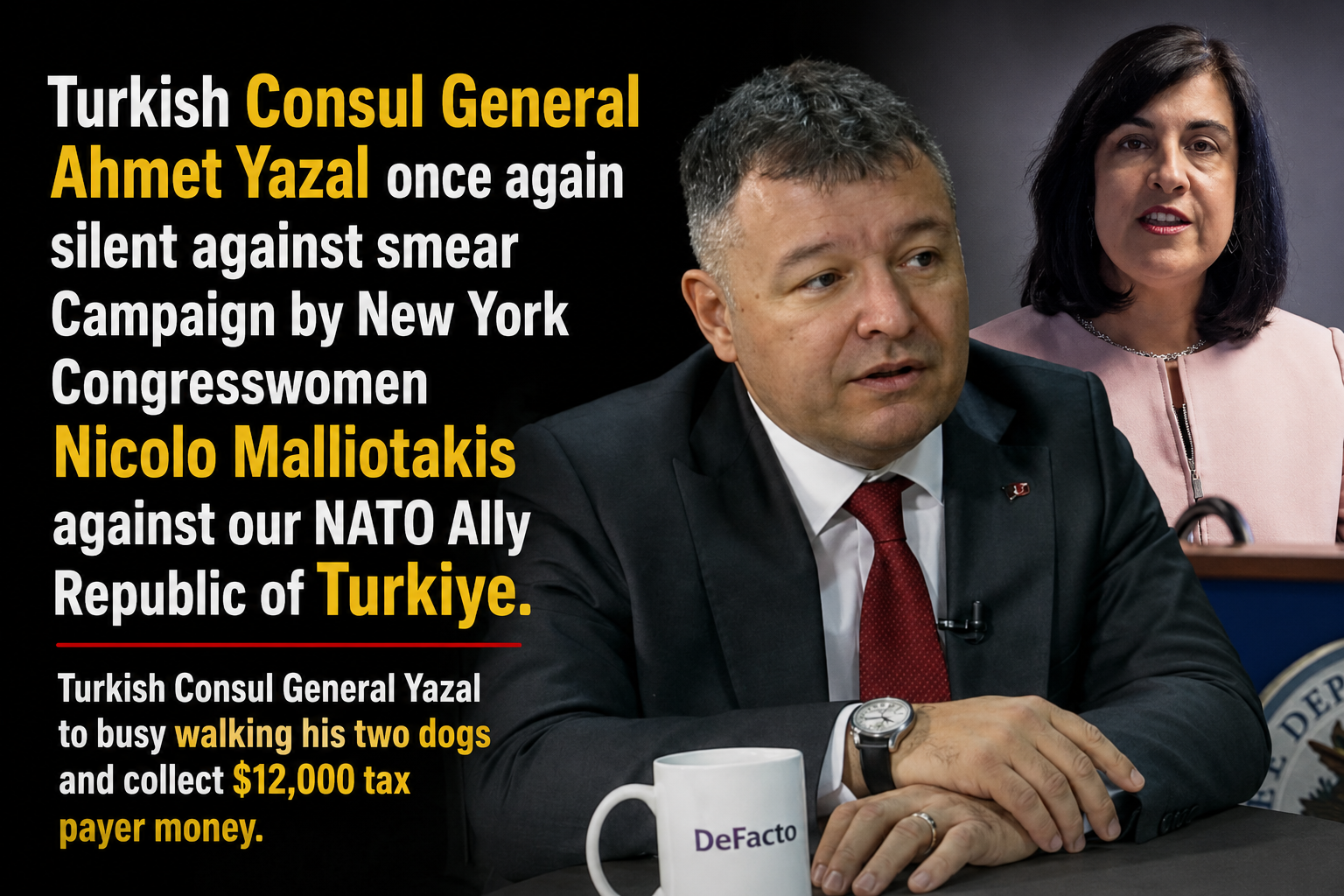
  • My Response to New York US Congresswomen Nicolo Malliotakis

    My Response to New York US Congresswomen Nicolo Malliotakis

    America’s Interests Come First: Why Strengthening Our NATO Alliance with Türkiye Matters

    As NATO leaders prepare to meet in early July, the United States should be guided by one principle above all else: American national security interests. That is precisely why continued defense cooperation with our NATO ally, the Republic of Türkiye, is in America’s strategic interest.

    Congresswoman Nicole Malliotakis continues to oppose providing advanced U.S. military equipment to Türkiye, citing disagreements with President Recep Tayyip Erdogan. Her position confuses disagreements with a government and the long-term strategic interests of the United States. Alliances are built on national interestsnot personal approval of foreign leaders.

    Türkiye possesses NATO’s secondlargest military and has remained one of the Alliance’s most strategically important members for more than seventy years. It sits at the crossroads of Europe, the Middle East, the Caucasus, and the Black Sea, making it indispensable to NATO’s southern flank.

    Critics often overlook Türkiye’s unique diplomatic role. Because Ankara maintains working relationships with countries that many Western nations do not, it has repeatedly served as a channel for difficult negotiations involving Russia, Iran, and regional conflicts. Those lines of communication have often advanced Western diplomatic objectives when direct dialogue was impossible.

    Türkiye has also played an important role in maintaining the balance of power in the Black Sea through its implementation of the Montreux Convention, limiting the transit of warships during the Russia-Ukraine conflict. This has demonstrated that Türkiye’s independent diplomacy can, at times, reinforce NATO’s broader security interests.

    It is also disappointing that some elected officials continue referring to our ally as “Turkey” while the country’s internationally recognized official name is the Republic of Türkiye. Respect for allies begins with recognizing how they identify themselves.

    Opposing defense cooperation with Türkiye also carrias consequences here at home. American defense exports support thousands of skilled manufacturing jobs throughout the United States, strengthen our industrial base, and deepen military interoperability among NATO allies. Weakening those partnerships ultimately benefits America’s strategic competitors.

    Congresswoman Malliotakis has also repeated allegations that Türkiye is “illegally occupying” part of Cyprus. That issue remains one of the most complex disputes in modern international politics. Supporters of Türkiye argue that its 1974 intervention followed the Greek-backed coup on the island and was undertaken pursuant to its rights as a guarantor power under the Treaty of Guarantee to protect the Turkish Cypriot community. They further note that Türkiye encouraged Turkish Cypriots to support the 2004 Annan Plan for reunification, while a majority of Greek Cypriot voters rejected it. These differing interpretations underscore why lasting peace requires diplomacy rather than political slogans.

    America’s relationship with Türkiye should be evaluated through the lens of U.S. national securitynot domestic politics or special-interest pressure. A strong NATO requires capable allies. Isolating one of NATO’s most significant military partners would neither strengthen the Alliance nor advance American interests.

    As NATO confronts unprecedented security challenges, Washington should reaffirm not weaken its partnership with the Republic of Türkiye. America’s security, NATO’s unity, regional stability, and American workers are all better served by engagement than by division.

    Ibrahim Kurtulus 

    Community Activist 

  • My Rebuttel of  Congresswomen Nicole Malliotakis – NATO Ally Turkiye

    My Rebuttel of  Congresswomen Nicole Malliotakis – NATO Ally Turkiye

    Congresswoman U.S. Rep. Nicole Malliotakis continues to repeat one sided talking points that do nothing to strengthen American foreign policy, NATO unity, or the interests of the constituents she was elected to represent. Her latest statement regarding the Republic of Türkiye once again demonstrates a selective interpretation of history while ignoring the strategic realities facing the United States and its allies.

    First, the official name of the country is the Republic of Türkiye. It is remarkable that someone who repeatedly comments on U.S.-Türkiye relations still refuses to use the internationally recognized name. If Congresswoman Malliotakis wishes to lecture Americans on foreign policy, she should begin by accurately identifying the nation she is criticizing.

    Her accusations regarding Hamas deliberately ignore facts. For years, Türkiye has maintained communication with the political wing of Hamas while coordinating closely with Washington and other international partners whenever hostage negotiations, humanitarian efforts, and regional diplomacy required dialogue. Diplomacy is not endorsement. The United States itself has frequently relied upon partners that maintain channels with organizations America does not recognize. To portray Türkiye’s diplomatic engagement as “harboring Hamas” is a misleading political slogan designed to smear a NATO ally rather than educate the public.

    Her criticism of Türkiye’s relationship with Russia is equally selective. Türkiye has supplied Ukraine with military assistance, including the wellknown Bayraktar drones, closed the Turkish Straits to additional warships under the Montreux Convention Regarding the Regime of the Straits, facilitated critical grain export agreements, and served as one of the few nations capable of mediating between Moscow and Kyiv. Maintaining dialogue with Russia has often advanced Western interests rather than undermined them.

    Congresswoman Malliotakis also repeats the claim that Türkiye is “illegally occupying” Cyprus while refusing to acknowledge the historical record. Türkiye’s 1974 action was an intervention following a Greek-backed coup seeking Enosis union with Greece and years of systematic violence against Turkish Cypriots. Even courts in Greece acknowledged legal arguments surrounding Türkiye’s intervention under the Treaty of Guarantee. The intervention prevented further massacres and protected an entire community from extermination. Ignoring those facts while presenting only one side of history does not promote peace or reconciliation.

    Equally revealing is her silence regarding Greece’s own defense relationship with Russia. Greece has operated Russian-made S-300 missile systems on Crete for years, yet Congresswoman Malliotakis rarely mentions this reality while criticizing Türkiye. Such selective outrage raises legitimate questions regarding whether her positions are based upon American strategic interests or domestic ethnic politics.

    Her opposition to modern defense cooperation with Türkiye also undermines American workers and American industry. Blocking advanced defense sales weakens NATO interoperability, damages U.S. aerospace manufacturing jobs, and encourages allies to seek alternative suppliers outside the United States. That approach harms American economic interests while benefiting America’s competitors.

    The Republic of Türkiye possesses NATO’s second-largest military and has stood shoulder-to-shoulder with the United States in numerous security operations for decades. It remains indispensable to Black Sea security, counterterrorism efforts, energy security, and regional stability. Weakening one of NATO’s strongest military members only strengthens America’s adversaries.

    Representative Malliotakis was elected to represent all New Yorkersnot to elevate Greek nationalism over American national interests. Rather than fueling divisive smear campaigns against a critical NATO ally, she should support policies that strengthen the Alliance, protect American jobs, and advance U.S. strategic interests. Responsible leadership requires facts, historical balance, and diplomacy not inflammatory rhetoric designed to delegitimize one of America’s most important allies in a dangerous region.

    Ibrahim Kurtulus

    Staten island- New York 

    Community Activist 

  • NATO 3.0: A CLEAN PAGE FOR A BLOODY PAST, OR THE EUROPEAN COCKTAIL IN THE SAME WAR MACHINE?

    NATO 3.0: A CLEAN PAGE FOR A BLOODY PAST, OR THE EUROPEAN COCKTAIL IN THE SAME WAR MACHINE?

    NATO has set a new slogan for its upcoming summit in Ankara: “A stronger Europe within a stronger NATO.” The so called think tanks of the Alliance are marketing this period as “NATO 3.0.” According to the narrative being spun, NATO 1.0 covered the Cold War era, while NATO 2.0 encompassed the post Cold War years of uncertainty and the fight against terrorism. Now, with NATO 3.0, an entirely new page is supposedly being turned: the Alliance is returning to concrete military power, deterrence, and defense. Moreover, this time leadership will rise not on the shoulders of the United States, as in the past, but on those of Europe.

    This narrative might sound like a clean beginning. But you cannot cleanse a bloody past simply by updating the version number. NATO 3.0 is, in essence, nothing more than a new model of the same war machine, this time with European actors taking the wheel. And the real question is this: Will an alliance that has a zero percent success rate in bringing peace to the world, and has instead been the primary architect of war, destruction, and bloodshed for decades, suddenly transform into a dove of peace under European leadership? Or does this mean that Europe, instead of forging its own independent military identity, is deceiving itself by inheriting the same filthy legacy and dragging the world toward new catastrophes?

    The Relentless War Machine of NATO 1.0 and 2.0

    The track records of NATO’s two previous versions provide a more than clear answer to this question. NATO 1.0 was a structure that kept the world on the brink of nuclear catastrophe throughout the Cold War, fueled the arms race, and was the primary actor in all the proxy wars of the bipolar world. NATO 2.0, on the other hand, did not waste time after the dissolution of the Soviet Union in finding an existential enemy for itself. Hiding behind polished concepts like the “fight against terrorism,” “crisis management,” and “humanitarian intervention,” it embarked on the most destructive and unaccountable military adventures in history. The 78 day bombing of Yugoslavia, the 20 year occupation of Afghanistan and its abandonment to chaos, and the bombing and fragmentation of Libya under the guise of a “humanitarian intervention” that dragged it into a civil war quagmire are all products of this era. In these operations, tens of thousands of civilians lost their lives, millions were displaced from their homes, and the infrastructure of entire countries was collapsed. Wherever NATO touched, it was not peace that blossomed, but death and destruction.

    And now, NATO 3.0, which attempts to sit atop this record with its emphasis on a “return to defense” and “deterrence,” is light years away from sincerity. Whom will you deter? Against whom will you defend? The answer to these questions remains the same old imperialist geopolitical objectives, the same strategy of “encircling Eurasia,” and the same ambition to control energy resources.

    The Senile Alliance and the Bitter Truth of the Ukraine Crisis

    NATO’s current state has become most visible in the Ukraine crisis. The strategic impotence of NATO in the face of Russia’s steps in Eurasia has declared to the entire world that the Alliance is no longer the absolute power it once was, and that it has grown senile both militarily and politically. The situation in Ukraine is a direct result of NATO’s decades long policy of expansion. Despite the promise made at the end of the Cold War “not to expand one inch eastward,” NATO has pushed right up to Russia’s borders by incorporating a total of 14 countries since 1999. This expansion was not a defensive reflex but part of an aggressive strategy of encirclement. The prospect of Ukraine being added to this chain of encirclement became the final straw that broke the camel’s back.

    However, things did not unfold as NATO and the US had planned. Russia did not collapse despite economic sanctions; on the contrary, the sanctions left the European economy facing an energy crisis, inflation, and stagnation. The hundreds of billions of dollars in military aid poured into Ukraine under US leadership could neither deliver a decisive victory on the front lines nor force Russia to the negotiating table. NATO could not intervene directly on the ground because it knew this would lead to a world war. It could not project power from the air because it faced the risk of heavy losses against Russian air defense systems. The economic sanctions, contrary to expectations, shook the Russian economy less than anticipated, while leaving Europe facing the danger of deindustrialization.

    This picture proves that the new rhetoric called NATO 3.0 is not a show of strength but a confession of weakness. The US gradually pushing the initiative toward Europe in the face of this crisis is not strategic foresight, but a panicked scramble to salvage goods from a sinking ship. Washington, while floundering in the Ukrainian quagmire, wants to focus on China, which it sees as its primary geopolitical rival. For this reason, it is sending Europe the message: “Now handle your own security; we will focus on the Pacific.” Europe, by willingly jumping onto this ship abandoned by its captain, is about to throw itself into the arms of a suicide mission that will drag it back into a quagmire, rather than seizing the historic opportunity to build its own independent defense identity.

    “A Stronger Europe Within a Stronger NATO”: An Oxymoronic Slogan

    The slogan of the Ankara summit, “A stronger Europe within a stronger NATO,” is a linguistic oxymoron. Because a strong Europe within NATO is not possible; NATO’s very reason for being is built upon Europe’s dependency on the United States. NATO’s integrated military structure, command echelons, intelligence networks, and weapons systems have structured European armies to be unable to act without Washington. Under the guise of “standardization,” European armies have been condemned to American weapon systems, and the continent’s defense industry has largely been turned into subsidiaries of US firms. The Supreme Allied Commander of NATO is always an American general. Within this structure, the “strengthening” of Europe means, at best, lightening the load on the United States and refueling the same dirty war machine.

    This role carved out for Europe is historically familiar. Throughout the Cold War, Europe was the US’s forward outpost, a buffer zone against the Soviets, and a colossal market for the American arms industry. What is now being promised to Europe with NATO 3.0 is nothing more than a “reinforced” version of the same role. When the US, in the driver’s seat, gets tired, handing the wheel over to Europe for a while, but with Washington still setting the roadmap and destination point… This is the essence of NATO 3.0.

    This dependency is reinforced by divisions within Europe itself. From Hungary to Slovakia, from eastern Germany to northern Italy, the rising sovereignist and pro peace political movements oppose the current trajectory of NATO and the EU. French President Macron’s occasional rhetoric of “strategic autonomy” is precisely a reaction against this dependency. Yet the NATO 3.0 narrative is a deception designed to absorb this demand for autonomy, neutralizing it by reducing it to a revision within NATO. Europe’s genuine strengthening is possible not within NATO, but by leaving it.

    The Real Solution: An Independent European Army and a New Security Architecture in Eurasia

    The true path to peace lies in Europe building a genuinely defensive security architecture, completely independent of the geopolitical ambitions of the United States and focused on the defense of its own continent. The military leg of this architecture must be an “Independent European Army.” This army must reject NATO’s dirty legacy and act not according to orders from across the Atlantic, but according to the will of the European peoples for peace, prosperity, and sovereignty.

    An independent European Army will also simultaneously pave the way for a brand new ground for dialogue and cooperation in Eurasia. The greatest missed opportunity since the end of the Cold War has been the failure to establish a common and indivisible security architecture stretching from Vancouver to Vladivostok. The biggest obstacle to this has been the continued existence and expansion of NATO. Europe’s withdrawal from NATO and the formation of an independent security identity will allow for the establishment of a new equation of trust with Russia. This will be a breath of fresh air and peace not only for continental Europe but for the entire Eurasian geography, from Turkey to China and from India to Iran.

    From Turkey’s perspective, the situation is no different. Turkey has been a member of NATO since 1952, and this membership has not brought security to the country; on the contrary, it has subjected it to countless coups, terrorist attacks, embargoes, and encirclements. NATO’s Ankara summit is an attempt to sweep this bitter truth under the rug. Yet what Turkey needs is not NATO 3.0, but to ensure its own security through sovereign decisions with a fully independent, multidimensional, and peaceful foreign policy.

    Conclusion: Not a New Gimmick, but a Radical Break is Essential

    This new makeup called NATO 3.0 is inviting one of the greatest delusions in history. Changing the murderer’s name does not make him innocent. Europe taking the wheel will yield no other result than the same war machine causing new catastrophes on new roads. Moreover, this time, Europe will not only be doing the dirty work of the United States but will also pay the price directly with its own economy, its own peoples, and its own future.

    What the world needs is not new versions of NATO, but the complete elimination of this bloody alliance. What Europe needs is not a so called strengthening within NATO, but a fully independent defense identity. What Eurasia needs is not encirclement and containment strategies, but common security and cooperation mechanisms. What Turkey needs is not a new model of NATO, but a fully independent foreign policy based on the principle of “Peace at Home, Peace in the World” as pointed out by Gazi Mustafa Kemal Atatürk.

    True courage lies not in pulling new tricks to keep this bloody alliance alive, but in sending it to the dustbin of history and building a brand new, peaceful understanding of security. There will be no NATO 3.0, 4.0, or 5.0. There should not be. If there is, it will only herald new wars, new destructions, and new humanitarian tragedies.

    Bibliography

    · Daniele Ganser, NATO’s Secret Armies: Operation Gladio and Terrorism in Western Europe, trans. G. Karadağ, Destek Yayınları, 2012.
    · Human Rights Watch, Civilian Deaths in the NATO Air Campaign, 2000.
    · United Nations Assistance Mission in Afghanistan (UNAMA) reports; Médecins Sans Frontières, Kunduz Hospital Attack Investigation Report, 2015.
    · Amnesty International, Libya: The Forgotten War, 2015.
    · Official speeches of Condoleezza Rice between 2003 and 2006 and US State Department archives.
    · Ralph Peters, “Blood Borders”, Armed Forces Journal, 2006.
    · Assessments on the Ukraine crisis and NATO’s strategic position: John Mearsheimer, “Why the Ukraine Crisis Is the West’s Fault”, Foreign Affairs, 2014.
    · Richard Sakwa, Frontline Ukraine: Crisis in the Borderlands, I.B. Tauris, 2015.
    · On NATO’s eastward expansion process and its effects: Mary Elise Sarotte, Not One Inch: America, Russia, and the Making of Post Cold War Stalemate, Yale University Press, 2021.
    · On US hegemony and the role of NATO: Michael J. Hogan, The Marshall Plan: America, Britain and the Reconstruction of Western Europe, 1947-1952, Cambridge University Press, 1987.
    · On Europe’s strategic autonomy debates: Reports of the High Representative of the European Union for Foreign Affairs and Security Policy and speeches by French President Emmanuel Macron from the 2017 to 2024 period.
    · On NATO’s historical transformation: Lawrence S. Kaplan, NATO 1948: The Birth of the Transatlantic Alliance, Rowman & Littlefield, 2007.
    · On Turkey’s NATO membership and its effects: Mehmet Ali Birand, 12 Eylül: Türkiye’nin Miladı, Doğan Kitap; Uğur Mumcu, Rabıta and Kürt İslam Ayaklanması, um:ag Yayınları.
    · On Atatürk’s principle of “Peace at Home, Peace in the World” and policy of full independence: Gazi Mustafa Kemal Atatürk, Nutuk (1919-1927).

    Sefa Yürükel
    Danish ethnographer and social anthropologist (MA)
    Aarhus University, 1997
    Independent Researcher
    Fields of Research: International Politics, Public International Law, Geopolitics, Sociology, Psychology, Cultural Studies, Systems and Structures.
  • Europe as a Strategic Balancer Between Eurasia and the USA: An Analysis of the Pioneering Role of the Scandinavian and Benelux Countries

    Europe as a Strategic Balancer Between Eurasia and the USA: An Analysis of the Pioneering Role of the Scandinavian and Benelux Countries

    The international system finds itself on the brink of a structural transformation at the end of the first quarter of the twenty-first century. The American-centric unipolar order of the post-Cold War era is giving way to a structure characterized by the pluralization of power centers, complex interdependencies, and intertwined strategic rivalries. In this new conjuncture, a world squeezed between the rising authoritarian capitalism models of the Eurasian landmass and the liberal democratic core of the transatlantic alliance needs an autonomous and rational balancing element more than ever, one that belongs neither entirely to the Atlantic camp nor to the rising powers of Eurasia. This article defends the thesis that this balancing actor must be an independent Europe possessing strategic autonomy, and puts forward the argument that the most capable candidates to undertake the locomotive role for this mission are the Scandinavian and Benelux countries. The Scandinavian bloc, consisting of Denmark, Sweden, Finland, Iceland, and Norway, along with the Benelux group, comprising the Netherlands, Belgium, and Luxembourg, possess the potential to form the core of this new European architecture through their historical heritage, normative power, and economic resilience.

    Conceptual Framework: Normative Power and Strategic Autonomy

    The role of the European Union (EU) in the international system has long been explained through the concept of “normative power.” According to this approach, the EU possesses the ability to shape global politics through the diffusion of norms and values rather than through military capacity. However, the recent war in Ukraine, the energy crisis, and disruptions in supply chains have demonstrated that normative power alone is insufficient and must be reinforced by “strategic autonomy.” Strategic autonomy refers to Europe’s capacity to determine its own security and defense policies, reduce its economic dependencies, and address vulnerabilities in global supply chains. This article proposes a synthesis of these two concepts and argues that preserving its normative power while simultaneously building its strategic autonomy will render Europe a credible third pole between the USA and the Eurasian powers.

    Historical Heritage and Institutional Competence

    The Scandinavian and Benelux countries possess a unique historical heritage and institutional accumulation capable of bringing this synthesis to life. The common characteristic of these eight countries is that they have built a foreign policy tradition based on international law, a culture of consensus, and multilateral cooperation, rather than on the expansionist geopolitical ambitions associated with being a great power.

    The Benelux countries are the laboratory and founding core of European integration. The economic integration process initiated by the Netherlands, Belgium, and Luxembourg in the aftermath of the Second World War constituted the cornerstone of today’s European Union. These countries possess the continent’s most deeply rooted experience in the transfer of sovereignty and transnational governance. In particular, the international legal infrastructure centered in The Hague in the Netherlands, the multilingual and multicultural consensus model of Belgium, and the success of Luxembourg in small-state diplomacy are capable of forming the diplomatic backbone of an independent Europe.

    The Scandinavian countries, meanwhile, are global reference points in the fields of the welfare state model, social solidarity, and conflict resolution. Norway has played a central role in numerous critical mediation efforts, from the Oslo peace process to the cessation of the civil war in Colombia. With the balance of neutrality and engagement it developed during the Cold War period, Finland provided a model for small states caught between great powers, and it continues to maintain this strategic wisdom following its NATO membership. Sweden stands out for its pioneering role in humanitarian diplomacy and disarmament, while Denmark distinguishes itself as a courageous defender of European solidarity in times of crisis. Iceland adds geostrategic depth to this community with its strategic position in the North Atlantic and its pioneering role in sustainable energy. This shared heritage makes it possible for a Europe built under the leadership of these eight countries to become not merely an economic bloc but also a global center of conscience and reason.

    Economic Independence: Building a New Welfare Model

    The fundamental prerequisite for an independent Europe is the reinforcement of economic sovereignty. The pandemic and the war in Ukraine have clearly exposed the vulnerabilities created by Europe’s external dependency in energy, raw materials, and strategic technologies. This dependency inevitably constrains political decision-making processes. A Europe that is economically dependent cannot possibly act as a fully autonomous actor in the context of the United States’ rivalry with China.

    The Scandinavian and Benelux countries possess more than sufficient capacity to serve as the engines of this economic transformation. Denmark, Sweden, Norway, and Iceland are world leaders in clean energy technologies such as wind energy, hydroelectric power, geothermal energy, and green hydrogen. Finland contributes to Europe’s competitive strength through its excellence in educational technologies, digital innovation, and the circular economy. On the Benelux front, the Netherlands and Belgium host Europe’s largest logistics centers and undertake pioneering roles in circular agriculture and smart urbanization projects. Luxembourg has become a global hub for green financing and sustainable investment funds. A “North Sea Energy Grid” and a “European Digital Sovereignty Network,” implemented under the leadership of these eight countries, are concrete projects that can reduce the continent’s energy and technology dependency.

    The most distinctive feature of this economic model is its potential to combine competitiveness with social justice. The synthesis of the “competitive welfare state” approach of Sweden and Denmark with the free trade tradition of the Netherlands and Belgium offers a unique development paradigm that targets both social cohesion internally and global competitive strength externally. This model promises a third way based on sustainability and inclusivity, distinct from the cheap-labor-based production capitalism of Asia and the financialized market model of the United States.

    Peace and Security: Europe as a Diplomatic Superpower

    Europe’s security architecture has historically been built upon NATO and the transatlantic alliance. While this alliance remains the foundation of European security, it is a strategic imperative for the continent to assume ultimate responsibility for its own security and to become not merely the European pillar of a military pact but also a diplomatic superpower. In an era of rising tensions across Eurasia, cyber warfare, disinformation campaigns, and hybrid threats, Europe’s northern flank holds vital geostrategic importance.

    The long land borders of Finland and Norway with Russia, and these countries’ expertise on Russia, are indispensable for Europe’s threat perception towards the East and its deterrence strategies. The military presence of Sweden and Denmark in the Baltic Sea constitutes a guarantee of regional maritime security. Iceland holds a key role in monitoring Russian submarine activity in the North Atlantic through its strategic position in the Greenland-Iceland-United Kingdom (GIUK) gap. The defense cooperation among these five countries is progressively deepening within the NORDEFCO framework and presents a model of Scandinavian defense integration.

    In parallel, the international law tradition of the Netherlands, embodied in The Hague and hosting institutions such as the International Court of Justice and the International Criminal Court, constitutes the institutional infrastructure of Europe’s normative power. The multilateral diplomatic environment in Brussels, where Belgium hosts NATO and EU institutions, and the role assumed by Luxembourg as a facilitator of European defense funds complete the diplomatic pillar of this security architecture. An independent Europe must be not an automatic ally in the United States’ rivalry with China but a center of strategic reason. The capacity to say “no” to its transatlantic ally when necessary will render it a more valuable and respected partner. Similarly, it must be able to conduct clear and principled negotiations with Beijing on issues of human rights, intellectual property rights, and rules-based trade.

    The Vanguard Coalition and the Dissemination of the Mission

    The success of the model proposed in this article depends on Denmark, Sweden, Finland, Iceland, Norway, the Netherlands, Belgium, and Luxembourg forming a “vanguard coalition” and taking more courageous and coordinated steps within Europe and on the global stage. The mechanisms of differentiated integration and enhanced cooperation within the current structure of the European Union provide the legal basis for such a pioneering group to take action. This group of eight can initiate concrete projects such as the expansion of qualified majority voting mechanisms, the augmentation of a common European defense fund, the construction of a North Sea offshore wind energy grid, and the establishment of a Europe-wide digital sovereignty cloud infrastructure.

    It is essential that this mission be disseminated across the entire continent with an inclusive, rather than exclusive, vision. Major continental states such as Germany and France are integral parts of this structure; however, the spirit and guiding energy of the mission must not be trapped in the historical conflicts of interest and bureaucratic inertia of the large states. The tradition of small and medium-sized state diplomacy held by the Scandinavian and Benelux countries allows them to exhibit agile and effective leadership without falling into this trap.

    Conclusion

    The international system can sustain its existence neither under the hegemony of a single superpower in stable peace nor by drifting into the chaotic rivalry of an unregulated multipolarity. What the world needs is a rational, just, and rules-based middle way, an element of balance and a bridge. This middle way is an independent Europe, rising as a strategic balancer between Eurasia and the USA, led by the Scandinavian and Benelux countries, which has fortified its normative power with strategic autonomy. History has entrusted these modest geographies with a great responsibility on behalf of the common future of humanity. The courageous assumption of this responsibility by Denmark, Sweden, Finland, Iceland, Norway, the Netherlands, Belgium, and Luxembourg, and their rallying around a common vision, is a historical imperative for the well-being not only of Europe but of the entire international community.

    Bibliography

    Biscop, S. (2019). European Strategy in the 21st Century: New Future for Old Power. Abingdon: Routledge.

    Browning, C. S. (2007). Branding Nordicity: Models, Identity and the Decline of Exceptionalism. Cooperation and Conflict, 42(1), 27-51.

    European Commission. (2022). Strategic Compass for Security and Defence. Brussels: European External Action Service.

    Fägersten, B. & Rühlig, T. (2023). Nordic Digital Sovereignty: Building a Resilient and Competitive Digital Ecosystem. Stockholm: Swedish Institute of International Affairs.

    Helwig, N. (2020). Finland’s Foreign and Security Policy: From Neutrality to a More Active Role. Helsinki: Finnish Institute of International Affairs (FIIA).

    Laursen, F. (2019). The Benelux and European Integration: A History of Pioneering Cooperation. Leiden: Brill Nijhoff.

    Manners, I. (2002). Normative Power Europe: A Contradiction in Terms? Journal of Common Market Studies, 40(2), 235-258.

    Mouritzen, H. & Wivel, A. (2012). The Geopolitics of Euro-Atlantic Integration: Explaining the Nordic Countries’ Security Policy Choices. Abingdon: Routledge.

    Rynning, S. (2021). Denmark, Scandinavia and European Strategic Autonomy. Scandinavian Journal of Military Studies, 4(1), 155-168.

    Stubb, A. & Korkman, S. (2022). The Future of the European Union: A Federal Model for a Geopolitical Europe. Brussels: European Policy Centre.

    Van Herpen, M. H. (2023). The Netherlands and European Strategic Autonomy: A Small State’s Grand Strategy. The Hague: Clingendael Institute.

    Wivel, A. (2021). Small States in Europe: Strategic Opportunities and Challenges. European Foreign Affairs Review, 26(2), 183-198.

    Sefa Yürükel
    Danish ethnographer and social anthropologist (MA)
    Aarhus University, 1997
    Independent Researcher
    Fields of Research: International Politics, Public International Law, Geopolitics, Sociology, Psychology, Cultural Studies, Systems and Structures.