Month: January 2011

  • Turkish Canadian Youth Congress Attracted Great Interest

    Turkish Canadian Youth Congress Attracted Great Interest


    NOTRE ANATOLIE
    TORONTO BUREAU

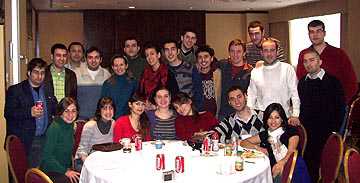
    Second Annual Turkish Canadian Youth Congress was held in Toronto during the weekend of 16, 17 and 18 January, 2009. The Youth Congress organized by Council of Turkish Canadians attracted huge interest, with the attendance of more than 140 participants. Young Turkish Canadians and their friends came to the congress from all across Canada. There were delegates from Vancouver, Halifax, Montreal, Ottawa and Waterloo. A big majority of the youth participated from Toronto.

    The congress which took place at the Delta Chelsea Hotel in downtown Toronto, started on 16 January Friday, at 6pm, with a reception. The guest of honour Turkish Ambassador to Canada, Mr. Rafet Akgunay made the opening speech and welcomed the youth to the conference. Mr. Akgunay emphasized the importance of Multiculturalism in Canada, the theme of the conference: “Successful multiculturalism rests on mutual respect; and mutual respect comes from mutual understanding and dialogue.” Mr. Akgunay continued by saying that through the richness of multiculturalism we would be able to improve our collective wisdom. The ambassador also addressed the youth in Turkish and encouraged them to maintain and improve their mother tongue, a definite asset in this age of globalization, which is being spoken by millions of people beyond the borders of Turkey.

    The conference continued on Saturday and Sunday, the 17th and 18th of January, with many speaker from academic and political domains. Dr. Umut Uzer and a member of Turkish Coalition of America, lawyer Mr. David Saltzman, came from United States to speak to the youth on Turkish Foreign Policy and Turkish History, respectively. Hon. Dan McTeague, Member of Parliament from Pickering-Scarborough East was among the speakers. Mr. McTeague urged the young Canadians to get involved in politics. One of the stars of the conference was Nil Köksal, a reporter with CBC Morning News. Another young and bright Turkish Canadian, Ayda Eke, an M. A. on Human Rights was a huge hit with the young audience. Public relations expert Gail Haarsma made a presentation on how Canadians view Turkey and Turkish people. Other guest speakers included Demir Delen, Prof. Murat Saatcioglu, Prof. Ozay Mehmet, Hon. Gar Knutson, Dilek Kayaalp, Michael A. Dobbin, Dr. Ertugrul Alp and Yaman Uzumeri.

    Throughout the congress, where young people got a chance to meet one another and socialize, the engagement level stayed high and the interaction with the presenters seemed to be the most desired activity. Many delegates, in the evaluation forms, said that they wished for longer Q&A sessions in future conferences. Executive Director of Council of Turkish Canadians, Lale Eskicioglu told Bizim Anadolu that the youth, while being very happy and appreciative of the conference, had not hold back on their constructive criticism in the feedback forms. “Ninety eight percent of them said that they would like to attend future conferences and that they would encourage their friends to do so as well. Seventy three percent said that they would like to participate in organizing future conferences. Then they listed what they want and how they want it. We will listen to them.” said Lale Eskicioglu. “They demand younger presenters and contemporary topics. They want to be a part of the planning as well. This is great news. Next year we will do it together with them. Or rather, they will do it and we will help them.” Lale Eskicioglu concluded by saying that the youth had already started forming a Youth Conference Planning Committee to organize next year’s congress which will take place in Montreal. “We did the first one in Ottawa and the second one in Toronto,” said CTC president Dr. Kevser Taymaz, “It is only natural that the next one should be in Montreal. We hope to take this great event to a different town every year.”

    What did the youth say about the Second Turkish Canadian Youth Congress?
    – I would like to see more young scholars presenting in future conferences.
    – The general atmosphere of the conference was great, perfect location and very good organization.
    – The people I met and the topics that were presented were really valuable. I would like to keep in touch with all these people.
    – The sessions should be more interactive. Youth should be involved in the organization.
    – It was an amazing experience for me. Thank you so much for giving me this opportunity to learn about this wonderful country.
    – At the end of the first day of the conference, there should be an organization for the participants that include dinner, music and dance.
    – I would like to have more discussions and workshops with people I don’t know.
    – The conference was perfectly organized, however, in order to collaborate more with the other Turkish delegates from different cities, there should be more activities that would bring them together. For example, on Saturday night there could be a dinner at a Turkish restaurant.
    – I appreciate the fact that there were so many speakers with extraordinary backgrounds and in high positions of different organizations.
    – The conference environment was very friendly. Since this is a youth conference there should be more young presenters. Also, I’d like to see more young volunteers.
    – In addition to annual conferences, there should be more frequent, local meetings.


    February 2009

    l
  • Turkey’s ascent as a regional superpower

    Turkey’s ascent as a regional superpower

    Lebanon Shows Shift of Influence in Mideast

    By ANTHONY SHADID

    BEIRUT, Lebanon — In Lebanon’s worst crisis in years, whose resolution may determine whether Hezbollah controls a government allied with the United States, American diplomacy has become the butt of jokes here. Once a decisive player here, Saudi Arabia has all but given up. In their stead is Turkey, which has sought to mediate a crisis that, given events on Tuesday in Beirut’s streets, threatens to turn violent before it is resolved.

    The confrontation here is the latest sign of a shifting map of the Middle East, where longtime stalwarts like Saudi Arabia and Egypt have further receded in influence, and emerging powers like Turkey, Iran and even the tiny Persian Gulf state of Qatar have decisively emerged in just a matter of a few years. It is yet another episode in which the United States has watched — seemingly helplessly — as events in places like Tunisia, Lebanon and even Iraq unfold unexpectedly and beyond its ability to control.

    The jockeying might be a glimpse of a post-American Middle East, where the United States’ allies and foes, brought together in the interests of stability, plot foreign policies that intersect in initiatives the United States must grudgingly accept.

    “There is a sense that the regional players have gone up as the United States has gone down in terms of its presence, its viability, its role,” said a high-ranking Lebanese official allied with the American-backed side in the crisis, which erupted last week.

    In a series of stalemates — from the Arab-Israeli conflict to Lebanon — Turkey has proved the most dynamic, projecting an increasingly assertive and independent foreign policy in an Arab world bereft of any country that matches its stature. Its success is a subtle critique of America’s longstanding policy in the Middle East of trying to isolate and ostracize its enemies. From Hezbollah here to the followers of a populist, anti-American cleric in Iraq, Turkey has managed to forge dialogue with America’s enemies and allies alike.

    “Turkey has become, I think, until the contrary is proven, an indispensable state in the reorganizing of this region,” said Sarkis Naoum, an analyst and prominent columnist in Beirut.

    So far, the interventions of Turkey and others in the Lebanese crisis are mostly symbolic, ventures into a maddeningly complex political landscape that hews to a formula of “no victor, no vanquished.” But in contrast to past crises, when Turkey was virtually irrelevant, the new effort signals the country’s ascent as a regional superpower.

    “Our region could not cope with Lebanon entering a new atmosphere of uncertainty,” Turkey’s prime minister, Recep Tayyip Erdogan, said Monday before he left for Syria, where he met the leaders of Qatar and Syria. (Over the weekend, he talked with President Mahmoud Ahmadinejad of Iran.) “We want to discuss what we can do to overcome this crisis and what other countries in the region must do for Lebanon’s stability.”

    Lebanon’s renewed crisis, cutting across questions of sectarian tension in the Middle East, conflict with Israel and Hezbollah’s power in the country, pits the movement against its foes in a stalemate over an international tribunal investigating the assassination of Rafik Hariri, a billionaire and a former prime minister, in February 2005.

    The tribunal issued indictments on Monday, and, though the charges remained sealed, Hezbollah has acknowledged that members of the Shiite Muslim movement will be named in the investigation, which it has denounced as an American-Israeli tool. For months, it has sought to undermine the tribunal, questioning its witnesses and evidence, and demanding that the government end its cooperation and denounce the charges. The government led by Mr. Hariri’s son, Saad, refused, and in protest, Hezbollah and its allies withdrew from it, forcing its collapse after a 14-month tenure.

    Deadlock has ensued. Many believe that a negotiated solution will eventually end it, but the urgency to find a deal may not come before more strife. In what many saw as a signal by Hezbollah on Tuesday, scores of men dressed in black gathered in various neighborhoods in the capital after dawn. Organized and disciplined, they seemed to move toward Beirut’s downtown and airport, but dispersed within an hour.

    “What happened today was just a small message,” said Rafic Nasrallah, an analyst and director of the International Center for Media and Research in Beirut. “The other side should read it very carefully. Until now, the opposition is giving a chance to mediation.”

    “But,” he asked, “how long should it wait?”

    After the summit meeting in Damascus on Monday, the foreign ministers of Qatar and Turkey visited Beirut on Tuesday, seeing all the parties to the conflict. The trip itself seemed to signal a more intense regional effort that has filled a vacuum left by what some officials describe as an incoherent Saudi policy and an unfocused American approach.

    “I wouldn’t call it an aggressive role,” Mohammed Chattah, a foreign policy adviser to Mr. Hariri, said of the American effort here. “I wouldn’t even call it a central role, certainly not at this stage. The regional players are much more visible.”

    Even for American allies, like Mr. Hariri, the United States has become such a contentious player, loathed so deeply by one side in the crisis, that a more visible role would only harm its friends. In an embarrassing episode, its ambassador was summoned to the Foreign Ministry for interfering in Lebanon’s affairs after a visit to a minor lawmaker. The meeting was soon skewered by television stations across the spectrum.

    Saudi Arabia, long the main Arab backer of Mr. Hariri, has receded since it failed to find a compromise with Syria last week.

    Turkey’s entry into the fray follows a pattern of initiatives in the region that do not always line up with American wishes. In May 2008, American officials were taken aback at the announcement of indirect talks, mediated by Turkey, between Syria and Israel. That year, Qatar mediated a deal between Lebanon’s factions that left American officials divided. In both cases, its officials were left in the dark, diplomats say, so as not to undermine a deal.

    In Lebanon on Tuesday, Turkey found the rarest of circumstances when Foreign Minister Ahmet Davutoglu arrived here: a welcome from both sides.

    “They’re well placed more than any other country in the region,” said Mr. Chattah, the foreign policy adviser to Mr. Hariri.

    Ali Hamdan, an aide to Nabih Berri, the Parliament speaker and an ally of Hezbollah, called Turkey “helpful.” He added, “Their international relations will help market any deal they can reach.”

    Nada Bakri and Hwaida Saad contributed reporting.

    www.nytimes.com, January 18, 2011

  • NBA Game Promises to Be a Turkey? Call In the Turks—or the Filipinos

    NBA Game Promises to Be a Turkey? Call In the Turks—or the Filipinos

    By JOEL MILLMAN

    [Heritage] Donald Weber for The Wall Street Journal HERITAGEToronto fans turned out for Jewish Heritage day featuring the Sacramento Kings’ Israel-born Omri Casspi.

    LOS ANGELES—Salih Eroglu prepared carefully for the Los Angeles Clippers’ big day-after-Christmas basketball game.

    The 33-year-old gathered Turkish baklava pastries, sparkling “evil eye” pendants and sunflower seed snack packs. He ordered 1,000 red “Turkiye” baseball caps and 1,000 T-shirts emblazoned with images of Hedo Turkoglu, Istanbul-born forward of the visiting team, the Phoenix Suns.

    On hand, too, were Turkish dancing girls, a Turkish pop star to sing “The Star-Spangled Banner” and raffle stubs for an airline ticket to Istanbul. In short, Mr. Eroglu had everything for a successful Turkish heritage event—an occasion meant to boost attendance for the Clippers, one of the National Basketball Association’s worst-drawing teams.

    “We were really, really ready,” says Mr. Eroglu, an engineer who organizes the annual Turkish event.

    Across the NBA, teams with losing records like the L.A. Clippers are turning to events like Turkish Heritage night to fill seats. WSJ’s Joel Millman reports.

    Except for one thing. Just before the event, Phoenix sent the Turkish fans’ favorite Sun—the 31-year-old Mr. Turkoglu—to the Orlando Magic. The move left hundreds of ticket holders without a countryman to root for.

    It’s that time of year in the NBA: the deep winter slog when teams with losing records search far and wide for gimmicks to fill seats. That’s why many teams are drumming up “Heritage” events, meant to court even the smallest émigré enclaves to NBA courts, and provide just a tad of buzz—and a souvenir trinket or two—to pump up attendance.

    [HERITAGE]Salih Eroglu

    The Toronto Raptors have Filipino Night set for early next month, arriving on the heels of Serbian, Jewish and Chinese nights in January.

    The Minnesota Timberwolves are hosting both an Israeli Heritage and a Jewish Heritage event, with a Canadian Heritage Night teed up for late January and a German Heritage night for March.

    The Golden State Warriors’ Latino Night is on Jan. 28, after the team held events saluting fans from Iran and China.

    Heritage events became popular in the U.S. about a decade ago, when the NBA began signing more talent from overseas. Currently, there are 86 foreign-born players in the NBA.

    Pitching ethnicity is an easy win for clubs that don’t typically draw big crowds. With 41 games on a team’s home schedule, most won’t sell out. Weak opposing teams can further dash hopes for a strong turnout. But by focusing on visiting ethnic players, heritage events can generate interest, raising the odds of higher ticket sales. With the right plans—such as special foods and autograph signings with the star player—some teams say they can fill as many as 2,000 additional seats.

    But heritage events can be tricky. Many NBA rosters aren’t intact long enough to justify an ethnic night based on a particular athlete—thus, for example, creating Turkish events without a Turkish player.

    Still, many teams continue with their heritage proceedings even without the ethnic player slated to showcase the event. “1,300 tickets, and counting,” exulted Toronto Raptors’ media director Jim LaBumbard in anticipation of a Jan. 14 Serbian event arranged to show off Raptors player Peja Stojakovic. This, despite Mr. Stojakovic’s absence from the roster since late November due to a knee injury.

    The biggest heritage star this season is 6-foot-9 Omri Casspi, Israel’s lone NBA representative, who plays small forward for the Sacramento Kings. Despite having one of the NBA’s worst records, the Kings are a touring sensation this year, packing arenas with Jewish fans eager to greet the lanky Israeli.

    “I meet a lot of kids who get tickets to a Kings game as a bar mitzvah present,” says the 22-year-old Mr. Casspi, who adds he’s also fielded several offers of marriage as he tours NBA arenas.

    This month, Mr. Casspi’s Kings lured Jewish fans in Toronto, Washington, Boston and Atlanta. Fans at the Washington Wizards game got Wizards yarmulkes in conjunction with Mr. Casspi’s appearance last week. Organizers at the Atlanta and Boston games provided kosher foods at concession stands.

    While a pre- or post-game opportunity to meet with players like Mr. Casspi drives ticket sales, there’s no guarantee that players will oblige. “He’s done more than his share,” says Troy Hanson, the Kings’ spokesman. “We just had to say no to some teams.”

    Some NBA teams have found a safer bet is to showcase others, such as ethnic coaches and retired players—thus eliminating any risk of a celebrity no-show. Raymond Townsend, who last played in the NBA in 1981, has been making a comeback of sorts hosting Filipino Heritage events across the NBA.

    “When I played, people thought I was just one of the lighter-skinned NBA players with an Afro. No one knew I was Filipino,” says the 55-year-old former Indiana Pacers guard, son of an African-American father and a mother born in Batangas, Philippines.

    Two seasons ago, Mr. Townsend returned to NBA courts as a packager of Filipino Heritage events, starting with the Golden State Warriors and the Clippers in California.

    “Who knew there were 300,000 Filipinos in Los Angeles? I sure didn’t,” says Carl Lahr, the Clippers’ vice president for marketing.

    Mr. Eroglu began organizing the Clippers’ Turkish events in 2003 while running the Turkish students association at the University of Southern California. “We’ve tried to do Turkish Night at Lakers games, but it’s so hard to get seats together,” he says of the city’s more successful team and current NBA champion.

    Back then, Mr. Eroglu says, he might sell 50 tickets to a Clippers game. Nowadays, Turkish events routinely bring over a thousand fans, even when the star player can’t be there. Indeed, December’s Turkey Day was only the second sell-out the Clippers enjoyed all season.

    At that event, the Clippers didn’t offer ticket refunds after learning Mr. Turkoglu wouldn’t be attending. Instead, the team let every Turkish fan who bought a ticket to the Suns game return free on Dec. 29. The Clippers’ opponent that night: The Utah Jazz, which also features a Turk, Mehmet Okur.

    Mr. Okur was injured during the game, but did manage to wave to Turkish fans before leaving the arena.

  • Turkey’s electronic money card ‘Gumkart’ receives award in London

    Turkey’s electronic money card ‘Gumkart’ receives award in London

    Gumkart, an electronic money card, used at all customs locations throughout Turkey to pay duties has received the “Most Creative Solution to Pay Public Fees” award in London on Monday.


    LONDON– The award, presented by Visa Europe, was given at a ceremony attended by officials from the Turkish Undersecretariat of Customs, Finance Ministry and Vakiflar Bank.

    In a press conference held at the Turkish Embassy in London following the award ceremony, the Undersecretary of Turkish Customs, Ziya Altunyaldiz, said that there was no other electronic money card as “Gumkart” in any other European country. Turkey is the only country in Europe that collects customs duties by an electronic money card, “Gumkart”, Altunyaldiz said.

    In 2010, 13 billion Turkish Liras (TL) of all customs duties out of a total of around 40 billion TL were paid by “Gumkart”. With the “Gumkart”, all cash payments and payments by checks for customs duties have ended, Altunyaldiz also said.

    Cumhuriyet

  • “ARMENIAN CONSTANTINOPLE”-PRAYER AND WREATH PLACING FOR LATE HRANT DINK

    “ARMENIAN CONSTANTINOPLE”-PRAYER AND WREATH PLACING FOR LATE HRANT DINK

    A COMMEMORATION OF THE 4th ANNIVERSARY OF THE ASSASSINATION

    Wednesday, January 19, 2011 8:00:00 PM
    OIA Hall

    A COMMEMORATION OF THE 4th ANNIVERSARY OF THE ASSASSINATION OF HRANT DINK

    On Wednesday, January 19, 2011 at 8:00 PM

    A Documantary Film  presentation

    At OIA’s “HRANT DINK LECTURE HALL”

    “From 19th January ,

    To 19th January”

    By Umit Kivanch

    Following the presentation a meeting will be held with

    SETRAK DAVUTHAN,Esq,

    Lawyer for the foundations of the Armenian community of Istanbul

    Subject

    “The Armenian Community and the Armenian Estates in Istanbul”

    ‘ARMARMENIAN CONSTANTINOPLE’
    Friday, January 21, 2011 8:00:00 PM
    OIA Hall
    ORGANIZATION OF ISTANBUL ARMENIANS

    Invites you to

    BOOK LAUNCHING

    “ARMENIAN CONSTANTINOPLE”

    Edited By

    Prof. RICHARD HOVANNISSIAN

    and

    Prof . SIMON PAYASLIAN

    Presentation of the book:

    Edvin Minassian, Esq., (English)

    And

    Prof. Oshin Keshishian (Armenian)

    Friday, January 21, 2011 at 8:00 PM

    at  OIA’s  “HRANT DINK” Hall

    19726 Sherman Way, Winnetka, CA 91306

    For info please contact:

    Dr. Ohannes K. Avedikian

    at (818) 800 1976

    FREE ADMISSION

    RECEPTION

    PRAYER AND WREATH PLACING FOR LATE HRANT DINK
    Sunday, January 23, 2011 2:00:00 PM

    A COMMEMORATION OF THE 4th ANNIVERSARY OF THE ASSASSINATION OF HRANT DINK

    PRAYER AND WREATH PLACING FOR LATE HRANT DINK

    Sunday, January 23, 2011

    in Montebello at 2:00 P.M.

    In front of the Armenian Martyr’s Monument

    At Montebello

    Bicknell Park:

    850 Via San Clemente

    Montebello, Ca 90640

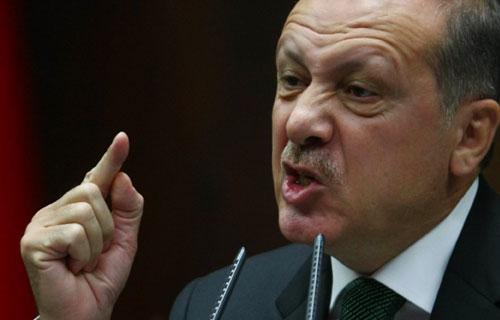
  • Erdogan: Turkey Has Vigor the EU Needs Badly – Newsweek

    Erdogan: Turkey Has Vigor the EU Needs Badly – Newsweek

    by Recep Tayyip Erdogan
    The Robust Man of Europe

    Turkey has the vigor that the EU badly needs.

    At the end of this century’s first decade, we can observe how the locus of power has shifted in world politics. The G20 is replacing the G7 as the overseer of the global economy. The need to restructure the U.N. Security Council to be more representative of the international order is profoundly pressing. And emerging powers such as Brazil, India, Turkey, and others are playing very assertive roles in global economic affairs.

    The European Union cannot be the one sphere that is immune to these changes in the balance of power. The financial crisis has laid bare Europe’s need for greater dynamism and change: European labor markets and social-security systems are comatose. European economies are stagnant. European societies are near geriatric. Can Europe retain power and credibility in the new world order without addressing these issues?

    Meanwhile, as a candidate for EU membership, Turkey has been putting its imprint on the global stage with its impressive economic development and political stability. The Turkish economy is Europe’s fastest-growing sizable economy and will continue to be so in 2011. According to Organization for Economic Cooperation and Development forecasts, Turkey will be the second-largest economy in Europe by 2050. Turkey is a market where foreign direct investment can get emerging-market returns at a developed-market risk. Turkey is bursting with the vigor that the EU so badly needs.

    Click Here

    And it’s not only economics. Turkey is becoming a global and regional player with its soft power. Turkey is rediscovering its neighborhood, one that had been overlooked for decades. It is following a proactive foreign policy stretching from the Balkans to the Middle East and the Caucasus. Turkey’s “zero-problem, limitless trade” policy with the countries of the wider region aims to create a haven of nondogmatic stability for all of us. We have visa-free travel with 61 countries. This is not a romantic neo-Ottomanism: It is realpolitik based on a new vision of the global order. And I believe that this vision will help the EU, too, in the next decade.

    Our intense diplomatic efforts have yielded fruit in Iraq and Afghanistan, in the Balkans, and also in regard to the Iranian nuclear program. Turkey has been an active player in all the major areas of global politics and we do not intend to surrender this momentum. Once it becomes a member of the EU, Turkey will contribute to European interests in a wide range of issues, from foreign and economic policy to regional security and social harmony.

    Even though the case for Turkey’s membership of the EU is self-evident and requires little explanation, the accession process has been facing resistance orchestrated by certain member states. Unfortunately, the negotiation process is not currently proceeding as it ought to. Eighteen out of 22 negotiation chapters pending for discussion are blocked on political grounds. This is turning into the sort of byzantine political intrigue that no candidate country has experienced previously. In this treatment, Turkey is unique.

    Our European friends should realize that Turkey-EU relations are fast approaching a turning point. In the recent waves of enlargement, the EU smoothly welcomed relatively small countries and weak economies in order to boost their economic growth, consolidate their democracies, and provide them with shelter. Not letting them in would have meant leaving those countries at the mercy of political turmoil that might emerge in the region. No such consideration has ever been extended to Turkey. Unlike those states, Turkey is a regional player, an international actor with an expanding range of soft power and a resilient, sizable economy. And yet, the fact that it can withstand being rebuffed should not become reason for Turkey’s exclusion. Sometimes I wonder if Turkey’s power is an impediment to its accession to the Union. If so, one has to question Europe’s strategic calculations.

    It’s been more than half a century since Turkey first knocked at Europe’s door. In the past, Turkey’s EU vocation was purely economic. The Turkey of today is different. We are no more a country that would wait at the EU’s door like a docile supplicant.

    Some claim that Turkey has no real alternative to Europe. This argument might be fair enough when taking into account the level of economic integration between Turkey and the EU—and, in particular, the fact that a liberal and democratic Europe has always been an anchor for reform in Turkey. However, the opposite is just as valid. Europe has no real alternative to Turkey. Especially in a global order where the balance of power is shifting, the EU needs Turkey to become an ever stronger, richer, more inclusive, and more secure Union. I hope it will not be too late before our European friends discover this fact.

    Erdogan is prime minister of Turkey.

    via Erdogan: Turkey Has Vigor the EU Needs Badly – Newsweek.