Month: January 2011

  • Chinese president concludes state visit to US

    Chinese president concludes state visit to US

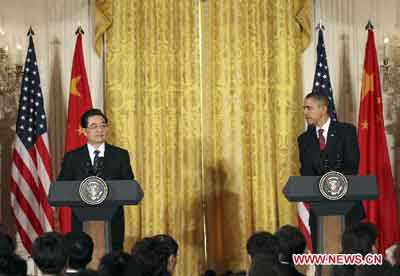
    Chinese President Hu Jintao left Chicago for home on Friday after concluding a four-day state visit to the United States, during which Hu and his US counterpart Barack Obama agreed to build a China-US cooperative partnership based on mutual respect and mutual benefit.

    “It is also conducive to world peace and development,” Hu said.

    In his speech, Hu elaborated on the domestic and foreign policies of the Chinese government and on how to advance China-US relations in the new era.

    “Working together hand in hand, we will build and develop a China-US cooperative partnership based on mutual respect and mutual benefit and deliver greater benefits to the people of our two countries and the world over,” he said.

    The Chinese president flew to Chicago on Thursday afternoon to continue his visit to the United States.

    On Friday, Hu, accompanied by local officials, visited Walter Payton College Preparatory High School in downtown Chicago.

    The high school houses the Confucius Institute in Chicago (CIC), which primarily focuses on the Chinese language and cultural education programs and is the only such institute targeting primary and middle school students in the United States.

    Later in the day, Hu visited an exhibition of companies operating in the US Midwest. Most companies at the exhibition in Chicago’s suburban city of Woodridge are Chinese-funded ones.

    During his tour of the exhibition, Hu encouraged Chinese companies operating in the US to play a bigger role in promoting economic and trade cooperation between the two countries.

    The success of Chinese companies in the United States is a specific example of the China-US mutually beneficial cooperation, he said.

    The operation of these companies not only yields profits for themselves, but adds momentum to economic development in the US Midwest, he added.

    At least 40 Chinese businesses now have operations in the Chicago area, and the number is growing. For example, Wanxiang America Corp., which makes solar panels, has opened plants and a headquarters around Chicago in the last two years.

    Before leaving the US for home, Hu sent a message of thanks to US President Obama, expressing his belief that through the efforts of the two sides, China-US relations would be further developed to better benefit the peoples of the two countries and make a greater contribution to world peace, stability and prosperity.

    The Chinese president began his state visit on Tuesday in Washington. The visit, Hu’s second as head of state, is aimed at enhancing the positive, cooperative and comprehensive relationship between the two countries.

    Hu last visited the United States in April 2006.

    President Hu, who began his visit on Tuesday, had extensive and in-depth discussions with Obama at the White House on Wednesday on major bilateral, regional and world issues.

    The Global Times

  • Suprime Court Rejects The  ATAA & TCA Sponsored Genocide Denial into Public Schools

    Suprime Court Rejects The ATAA & TCA Sponsored Genocide Denial into Public Schools

    WE HAVE LOST ONE MAJOR STEP- FALSE  ARMENIAN CLAIMS WILL BE THOUGHT IN PUBLIC SCHOOLS AMERICAN SUPRIME COURT RULES:

    AMERIKAN YUKSEK MAHKEMESI SOZDE SOYKIRIMIN OKULLARDA OKUNMASINA YESIL ISIK YAKDI:

    TO SUPPORT TURKISH FORUM’S GLOBAL LOBBY ACTIVITIES PLEASE VISIT

    https://www.turkishnews.com/tr/content/bagislar-ve-uye-aidatlari/

    ===============================================================

    ANCA Welcomes Supreme Court Rejection
    Of Massachusetts Genocide Denial Lawsuit

    High Court Declines to Consider Turkish Lobby-Sponsored Bid to Force
    Genocide Denial into Public Schools

    WASHINGTON–A longstanding legal campaign, spearheaded by pro-Turkey
    lobbies, to force the Commonwealth of Massachusetts to include historically
    inaccurate Armenian Genocide denial materials in their education curriculum
    was killed Wednesday by a U.S. Supreme Court decision declining to hear an
    appeal to a lower court ruling dismissing the case, reported the Armenian
    National Committee (ANCA).

    “We welcome the Supreme Court’s decision to decline to hear this deeply
    flawed and dangerous case, and thus uphold the U.S. Court of Appeals First
    Circuit landmark decision rejecting efforts by genocide deniers to abuse the

    Document2 1/21/2011

    American legal system to bring their hateful agenda to our nation’s public
    schools,” said ANCA Executive Director Aram Hamparian. “This victory, while
    certainly a serious setback to Turkey’s campaign of denial, will, just as
    surely, not mark the end of the concerted and well-funded efforts by allies of
    Ankara to use our nation’s great freedoms to enforce their own version of
    Article 301, silencing discussion of the Armenian Genocide in America’s
    classrooms.”

    This legal battle started in 2005, when, according to media accounts, the
    Assembly of Turkish American Associations solicited the assistance of two
    local teachers, a student, and his parents to file the Griswold vs. Driscoll
    case against the Commonwealth of Massachusetts, in an effort to force the
    state to include Genocide denial materials in its online education curriculum

    guide. In June of 2009, U.S. District Court Judge Mark Wolf dismissed the
    case stating that the plaintiffs are “are not entitled to relief in federal court.”
    The ATAA and fellow plaintiffs appealed the decision, sending the matter for
    review by the First Circuit Court of Appeals. In August, 2010, the First Circuit
    Court affirmed Judge Wolf’s dismissal of the case, with the majority opinion
    prepared by retired Supreme Court Justice David Souter.
    The First Circuit Court decision can be read in the appendix.

    Throughout the legal process, the ANCA partnered with the Armenian Bar
    Association and groups including the Irish Immigration Society, Jewish
    Alliance for Law and Social Action, NAACP, Genocide Education Project and
    the Zoryan Institute in preparing amicus briefs in support of the
    Massachusetts Commonwealth’s calls to dismiss the case. Attorneys from
    Wilmer, Cutler, Hale and Dorr LLP, filed the briefs and championed the case
    pro-bono. Other groups that submitted their own amicus briefs included the
    International Association of Genocide Scholars and the Armenian Assembly.
    This case is seen as part of a larger strategy by Turkish American groups to
    use the legal system to harass human rights advocates on issues relating to
    the Armenian Genocide. The most recent instance is the lawsuit filed by
    representatives of the Turkish Coalition of America against the University of
    Minnesota for cautioning visitors to their Holocaust Studies website about
    online resources which deny the Armenian Genocide.

    The Middle East Studies Association, this week, sent an open letter to the
    Turkish Coalition urging them to drop the lawsuit, the full text of which can
    be viewed in the appendix

    Document2 1/21/2011

    FOR FULL TEXT AND ATTACHMENTS…LETTERS ..PICTURES .. SEE

    ABD Yüksek Mahkemesi’nden Türk Tezlerine Ret/ Inludes ANCA news/court
    ruling/Amicus brief by Armenians
    Download PDF 8MB

  • January 20, 2011 In Memoriam | Elmer D. Pendleton (1928-2011)

    January 20, 2011 In Memoriam | Elmer D. Pendleton (1928-2011)

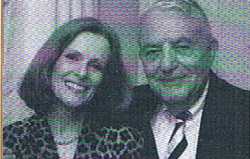
    ELMER AND HIS WIFE

    Sadly, we must inform you of the death of Major General (Ret.) Elmer D. Pendleton, founding member of the American Friends of Turkey and the American-Turkish Council and, for many years, ATC’s Senior Military Advisor. General Pendleton died suddenly and peacefully at home this morning, January 19, 2011. He was 83 years old and is survived by his beloved wife, Anne, and three children. At this time, the funeral arrangements for General Pendleton are not available. We will inform you when they are announced. We know that all of the ATC and AFOT “family” will have Elmer and Anne in their thoughts and prayers. Major General Elmer D. Pendleton stated on January 25, 2001 that: “Finally I want to tell you two points about my thoughts of Turkish soldiers because that’s what this is all about: A. As a soldier one of the things that i like about Turkish soldiers is that they are trained to look you right in the eye.. No looking down at their feet, no lack of confidence, but a feeling of pride in ones’s self, one’s army and one’s country.. B. Secondly, a popular American army song describing our army says it all “it wasn’t always easy and it wasn’t always fair but when we were needed we were there.” Life isn’t always easy and it isn’t always fair, but when the Turkish brigade was needed you were there. On behalf of your American friends, thank you.” At: http://usconsulate-istanbul.org.tr/korea/koreagp.html

    ————————————————————————————-

    American-Turkish Council

    ——
    American-Turkish Council
    1111 14th Street NW ; Washington DC 20005 (202) 783-0483 | Fax (202) 783-0511 | Email: [email protected]
    Web: www.americanturkishcouncil.org
    ——
    v–From–v (but click the link and read it all).
    The American-Turkish Council (ATC) was created in 1994 as the U.S.-based counterpart to the Turkish-U.S. Business Council, a “bilateral business council” that aims to foster commercial relations between the United States and Turkey. It grew out of the “consolidation of the Turkish desk of the U.S. Chamber [of Commerce] with the American Friends of Turkey.” …
    …According to its 2005 annual report, current ATC board members include Brent Scowcroft, the board chairman and former national security adviser for George H. W. Bush; George Perlman of Lockheed Martin; Elizabeth Avery of Pepsico; Ozer Baysal of Pfizer; Andy Button of Boeing; Richard K. Douglas of General Electric; Sherry Grandjean of Sikorsky; John R. Miller of Raytheon; and Selig A. Taubenblatt of Bechtel. ATC’s advisory board also includes representatives of a number of high-powered defense, pharmaceutical, consulting, and technology firms, including General Atomics, United Defense, Motorola, and the Cohen Group. Daniel Pipes is a former ATC board member. …
    …After years of maintaining a surprisingly low profile-given its purportedly influential position inside the beltway-the American-Turkish Council has in recent years been the subject of growing media scrutiny as a result of allegations made by FBI whistleblower Sibel Edmonds regarding suspect activities of council members. …
    …some of the FBI wiretaps Edmonds had access to involved conversations among council members and Turkish officials about bribing elected officials and ” contained what sounded like references to large-scale drug shipments and other crimes.” One official who figured prominently in the conversations was Cong. Dennis Hastert. …
    …Some writers argue that ATC is part of a U.S. effort to maintain a tight grip on the so-called New EuroAsia, a region that includes “the ‘Stans,’ Ukraine, Chechnya, Azerbaijan, Georgia, Belarus, Romania, Bulgaria, Czech, Croatia, and Poland.” National security blogger John Stanton, who daringly calls ATC one of the most powerful NGOs in the United States, argues that through groups like ATC, U.S. elites hope to ensure access to oil supplies and to markets for weapons and other products, reign in countries like Russia and Iran, and counter-balance the growing influence of the European Union. Pointing to the impressive corporate and policy elite membership of the ATC and similar associations (like the American-Azerbaijan Chamber of Commerce), Stanton claims, “Theirs is the voice that matters and is the one that is heard on television and radio networks through the mouths of news-readers, senators, congressmen, presidents, and military leaders. It is in and through such Associations that U.S. political, economic, and military policy is made and the American public subsequently ‘educated’ to support policies that are not, and could not, be debated in public because of their illegality, audacity, complexity, and, arguably, necessity.” …
    Funding: ATC is a member-funded organization. Corporate members who gave at least $9,500 (the “Golden Horn Club”) in 2004 include Bechtel, Boeing, BP, ChevronTexaco, Coca-Cola, Frito Lay, General Atomics, General Dynamics, GE, Hyatt, Lockheed Martin, Motorola, Northrop Grumman , Pepsi, Pfizer, Raytheon, Textron, United Defense, and United Technologies/Sikorsky. “Bosphorus” members, who pay an annual fee of at least $3,000, include Archer Daniels Midland, BAE Systems, Bank of America, and the Cohen Group. “Marmara” members ($750 annual fee) include Delta Airlines, ExxonMobil, Halliburton, Shell, Turkish Airlines, and Vestel Defense Industries.
    ATC also has a long list of non-corporate sponsors in its Marmara Club, including the American Enterprise Institute , the America-Georgia Business Development Council, the American-Uzbekistan Chamber of Commerce, the Canadian-Turkish Business Council, the Freer Gallery of Art, the Smithsonian Institute, Georgetown University, the Jewish Institute for National Security Affairs , the Brookings Institution, the Eisenhower Institute, the Nixon Center, the U.S.-Algeria Business Council, the U.S.-Azerbaijan Chamber of Commerce, the U.S.-Greece Business Council, the U.S.-Russia Business Council, and the University of Chicago.
    ——
    Board of Directors
    Ambassador Richard L. Armitage (Ret.)
    Chairman of the Board
    Mustafa Koç
    Vice Chairman of the Board
    Ambassador James H. Holmes (Ret.)
    President & CEO
    George H. Perlman
    Executive Vice President
    Charles “Rick” Johnston
    Treasurer
    Doreen Edelman, Esq.*
    Secretary & General Counsel
    Canan Büyükünsal*
    Executive Director
    Hasan Akçakayalıoğlu
    Bank Pozitif A.Ş.
    Sam Alkharat
    Cisco Systems
    Sedat Birol
    Eczacıbaşı Holding
    Mehmet Büyükekşi
    Turkish Exporters Assembly
    Haluk Dinçer
    Sabancı Holding A.Ş.
    Richard K. Douglas
    General Electric
    Sahir Erozan
    Overseas Partners, Inc.
    Dalia Garih
    Alarko Group of Companies
    Dr. Jon Glassman
    Northrop Grumman Corporation
    Tulu Gümüştekin
    C.P.S. Corporate & Public Strategy Advisory
    Taner Günay
    Sasim
    Mitchell Hadad
    Sikorsky Aircraft
    Jason J. Hinton
    Concepts & Strategies, Inc.
    Janet Howard
    The Coca-Cola Company
    Cengiz İsrafil
    FIL Finance
    Feyhan Yaşar
    Yaşar Holding Company
    Bülent Kılınçarslan
    Kuanta Company A.Ş.
    Burak Kuntay
    Bahçesehir University
    Carolyn B. Lamm
    White & Case
    Joseph T. McAndrew
    The Boeing Company
    John R. Miller
    Raytheon
    Paul Moen
    AMGEN
    Süreyya Yücel Özden
    GAMA
    MG Elmer D. Pendleton
    ( USA , Ret.)
    ATC Senior Military Advisor
    Scott Rettig
    AgustaWestland-North America
    Diana Sedney
    Chevron
    Aziz Sipahi
    AYESAS
    Serhan Süzer
    Süzer Holding
    Turhan Talu
    Philip Morris Sabancı
    S. Coşkun Ulusoy
    Oyak
    Zeynep Ulusoy
    Nobel Pharmaceuticals
    Ronald L. Whitehead
    Whitehead Group
    Robert Winter
    Arnold & Porter
    Faruk Yarman
    Havelsan A.Ş.
    Oliver Zandona
    ExxonMobil Corporation
    * ex-officio
    ——
    Executive Committee
    LTG Brent Scowcroft (USAF, Ret.)
    Chairman of the Board
    Mustafa Koç
    Vice Chairman of the Board
    Ambassador James H. Holmes
    (Ret.)
    President & CEO
    George H. Perlman
    Executive Vice President
    Hüseyin Ünver
    Vice President,
    Trade & Business Development
    Charles “Rick” Johnston
    Treasurer, Banking & Finance Chair
    Doreen Edelman, Esq.*
    Secretary & General Counsel
    Canan Büyükünsal*
    Executive Director
    Engin Artemel*
    Construction Chair
    Artemel International
    Sedat Birol
    Pharmaceutical Co-Chair
    Eczacıbaşı Holding
    Ned Cabot
    Budget & Financial Dev. Chair
    Cisco Systems
    Leonard Condon
    Agribusiness & Food Industries
    Co-Chair
    Phillip Morris Sabancı
    Stephen Delp
    Defense & Security Affairs Co-Chair
    BAE Systems Land & Armaments
    Richard K. Douglas
    General Electric
    Sahir Erozan
    Special Projects Chair
    Overseas Partners, Inc.
    Tulu Gümüştekin*
    C.P.S. Corporate & Public Strategy
    Advisory
    Mitchell Haddad*
    Sikorsky Aircraft
    Charles D. Hartman
    Electric Power Chair
    Alarko Holding
    COL Preston Hughes
    (USA, Ret.)
    Defense & Security Affairs Co-Chair
    Carolyn B. Lamm
    Nominations Chair
    White & Case
    Ambassador Alan W. Lukens (Ret.)
    Culture & Tourism Chair
    GAMA
    John R. Miller
    Raytheon
    MG Elmer D. Pendleton
    (USA, Ret.)
    Senior Military Advisor
    Greg Jç Mallon
    Defense & Security Affairs Co-Chair
    The Boeing Company
    David Talbot*
    Eli Lilly
    Ronald L. Whitehead
    Agribusiness & Food Industries
    Co-Chair
    Whitehead Group
    Robert H. Winter
    Audit Chair
    Arnold & Porter
    Faruk Yarman
    Defense & Security Affairs Co-Chair
    Havelsan
    *ex-officio
    ——
    Advisory Board
    Engin Artemel
    Advisory Board Chair
    Artemel International
    Ambassador James H. Holmes (Ret.)
    President & CEO
    ATC
    Ümit Akdur
    TUPRAG Metal Madencilik A.Ş.
    Prof. Dr. H. Erdoğan Alkın
    Saffet Avdan
    Yüksel Holding
    Doğan Ayan
    MNG Holding
    Egemen Bağış
    Turkish Grand National Assembly
    Ümran Beba
    Frito Lay & Pepsi
    Doug Bereuter
    The Asia Foundation
    Samuel R. “Sandy” Berger
    National Security Advisor (Ret.)
    VADM Işık Biren (Ret.)
    Alarko Holding
    Frank Carlucci
    The Carlyle Group
    Nuri M. Çolakoğlu
    New Media Company
    Bülent F. Eczacıbaşı
    Eczacıbaşı Holding A.Ş.
    Nur Emirgil
    Ramerica International, Inc.
    Cengiz Ersun
    İstanbul Chamber of Commerce
    COL Preston Hughes (Ret.)
    Sami Konukoğlu
    Sanko Holding
    Duncan MacDonald
    Enka Power
    Serdar Nisli
    AKSA Group
    Ambassador Mark R. Parris (Ret.)
    Chairman Emeritus
    General Joseph Ralston (Ret.)
    The Cohen Group
    Alexander B. Razinski
    Invar International Inc.
    Ferit F. Şahenk
    Doğuş Holding
    Ethem Sancak
    Sancak A.Ş.
    Robert Smith
    Eli Lilly
    William H. Taft, IV
    Fried, Frank LLC
    Sy Taubenblatt
    Prof. Dr. İlter Turan
    Bilgi University
    M. Christine Vick
    The Cohen Group
    Dennis Wagner
    BAE Systems Land & Armaments
    Robert Wexler
    U.S. House of Representatives
    ——
    ATC Staff
    Amb. James H. Holmes (Ret.)
    President & CEO
    Canan Büyükünsal
    Executive Director
    Ayşe Sümer
    Director, Commercial Programs and Government Affairs
    Cenk Sidar
    Director, Defense, Energy & Construction Programs & Membership Services
    Erkan Poyraz
    Director, Finance
    Faith Scott
    Office Manager

  • Turkey’s boom brings dilemmas new and old

    Turkey’s boom brings dilemmas new and old

    By Laurence Knight Business reporter, BBC News

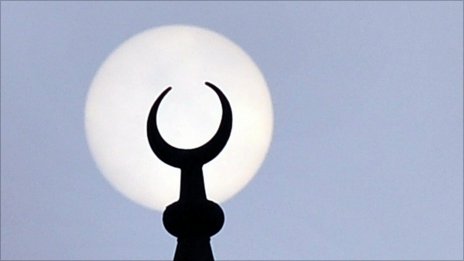
    Tip of a minaret in Istanbul With the sun shining on its economy, many may ask whether Turkey can get along just fine outside Europe

    Turkey can rightly feel chuffed at its quick bounce-back.

    Having suffered in the global financial crisis like everyone else – output briefly shrank a painful 15% in early 2009 – the country’s economy is now comfortably outstripping its pre-recession highs.

    It is a familiar story across the developing world: China, Brazil and others have returned their zippy trajectory, while the US and Europe remain stuck in first gear.

    But look a little closer, and you will find that Turkey’s recession woes have merely given way to a new set of boom-time anxieties.

    Indeed, the recovery poses tricky conundrums for both economists and diplomats.

    A good crisis

    “Turkey was fortunate to have their crisis some years early,” says economist Martin Blum at Austrian investors Ithuba Capital.

    Continue reading the main story

    “Start Quote

    The problem is that there are so many moving parts”

    End Quote Tevfik Aksoy Turkey chief economist, Morgan Stanley

    Turkey’s currency was trashed by markets in 2001, exposing serious weaknesses in its banks, many of which folded.

    By the time the global financial crisis came around in 2008, Turkey had already finished the diet of belt-tightening and bad debt workouts that the West has only just embarked on.

    As a result, Mr Blum says the country’s slimmed-down banks came through the Lehman Brothers debacle remarkably well.

    What is more, years of austerity had also left the entire country with much more manageable finances.

    “Debt levels in Turkey are very low,” says Dr Murat Ulgen, economist at HSBC in Istanbul. “Household debt is low, corporate debt is low, public debt is low.”

    TURKEY’S ECONOMY 2009 (estimate) 2010 (forecast)
    *percentage of GDP

    Source: EBRD Transition Report 2010

    Growth -4.7% 8.0%
    Inflation 6.5% 8.2%
    Government deficit* 5.5% 4.1%
    Current account deficit* 2.2% 6.0%
    Private sector debt* 40.8% NA

    During the crisis, that meant Turks were not too bothered when the global supply of cheap money suddenly dried up.

    And with the credit spigot turned back on to full-flow, the result has been a rocketing growth rate.

    Thanks but no thanks

    So what’s the problem?

    Put simply, where the money is coming from, and going to.

    Cheap money is pouring into Turkey from abroad. Ultra-low interest rates in the West make it an easy place to borrow, but an unattractive place to invest.

    So, like other emerging markets, Turkey is seeing more and more foreign investors piling into their country.

    Istanbul apartment blocks Cheap money has fed mortgage debts and a construction boom

    And that inflow of money is pushing up the value of the Turkish lira, making its exporters less competitive, and foreign imports cheaper for Turkish consumers.

    Sensibly invested, this foreign capital could help Turkey’s economy become more productive. Indeed, the government has restarted its privatisation programme for just this reason.

    But a lot of the money is flowing into cheap loans. And debt levels, although low, have started rising again.

    “Commercial and mortgage debt are growing,” says Dr Ulgen. “The very low real interest rates are fuelling both the supply of and the demand for credit.”

    The construction sector has surged ahead, thanks to the easy borrowing conditions.

    And Turkish households have also started to take on more debt, save less and spend a lot more, helping to push the country back into a big trade deficit.

    Juggling act

    It seems an unsettlingly familiar story – the beginnings of the kind of credit bubble that only recently ended in tears in the West.

    But here’s the nasty dilemma: what should the Turkish central bank do about it?

    Traditional bull fight in Artvin, northeast Turkey Turkey’s central bank finds itself caught on the horns of a nasty monetary dilemma

    If it cuts interest rates, it will be even cheaper for Turks to borrow and spend at a time when household spending is already pushing inflation up towards double-digits.

    But if it raises interest rates, it makes the Turkish lira an even more attractive investment for foreigners, pushing up its value to even less competitive levels, whilst also feeding the credit bubble.

    The central bank’s solution is what Tevfik Aksoy, Turkey chief economist at Morgan Stanley, calls “creative monetary policy”.

    It has cut rates to ward off foreign investors, but at the same time it has imposed much tighter limits on banks’ lending.

    Mr Aksoy says the jury is still out on whether this unconventional solution will work.

    “The problem is that there are so many moving parts on the external front,” he says, mentioning in particular the currency wars – competitive devaluations by the world’s big trading blocs.

    “The Turkish central bank is trying to curb currency appreciation, limit deterioration in the current account, limit credit expansion and also achieving the inflation target. It will be difficult to achieve all these at the same time.”

    Groucho Marxism

    Meanwhile, the boom is also laying bare a much longer-running diplomatic balancing act.

    Turkey is officially a candidate to join the European Union (EU), although negotiations have been stymied by its unresolved dispute with EU-member Cyprus.

    Yet – as has recently been made painfully transparent by Wikileaks – France and Austria do not ever intend to let Ankara join the EU as a full member.

    French President Nicholas Sarkozy (right) at a 2008 conference with the Turkish Prime Minister and other Middle Eastern leaders in Damascas Wikileaks let slip the French President’s private thoughts on Turkey

    The country already enjoys a free trade agreement with Europe.

    With their economy roaring ahead – while Europe remains mired in a morass of debt – one may well ask why bother trying to join the EU at all?

    Certainly it is a question many Turks are asking, according to one European diplomat posted in Ankara until recently

    “If you ask what the majority of the Turkish population thinks, they have greater confidence in Turkey, and the EU is less appealing,” he says.

    But the country’s Prime Minister Recep Tayyip Erdogan seems to think it is worth the effort, and insists that all is still on course.

    His initial reaction to the US diplomatic leaks was the rather extreme one of joining Iran’s leader in questioning their authenticity.

    In a rejoinder to Groucho Marx, it seems Turkey is determined to join a club that will not have it as a member.

    So why the obstinacy?

    Stamp of approval

    “The EU is a matter of democracy, improving institutions and social development,” says Dr Ulgen.

    Although he thinks membership would also be good for the economy, its most important role is as an anchor for Turkey’s politics.

    Opposition parties and the army are highly suspicious of the ruling AKP party, saying they harbour a secret Islamist agenda.

    The diplomat says the next flashpoint is a lifting of a ban on women wearing the headscarf in public sector places ahead of general elections in June that the AKP is expected to win.

    He says it is a symbolic move that the government hopes will resonate with its core Muslim voters, while dividing the opposition.

    Turkish Prime Minister Tayyip Erdogan (centre) at a wreath-laying ceremony with members of the supreme military council If Turkey’s EU bid fails, Mr Erdogan may need to watch his back

    But the big battle is over the consitutional reforms that Mr Erdogan has been pushing through, strengthening the government at the expense of the army, courts and parliament.

    “They use the EU’s demands for [these] political reforms to keep the army and more secular judiciary under control,” says the diplomat.

    And with the European Commission’s stamp of approval proving crucial, Ankara is keen to maintain the perception that the country’s EU application is still well on track.

    Hence, when Wikileaks revealed French President Nicolas Sarkozy’s professed wish that Turkey would eventually give up hope of ever joining the European club, it put Mr Erdogan in a tight spot.

    Business interests

    So is the EU application merely a ploy to help the government outplay its political opponents? Perhaps not.

    “A problem for Turkey is economic reforms,” explains the diplomat.

    Turkey will need to implement European standards for public procurement and the environment. It will also have to break up monopolies and cartels.

    With much of Turkish industry controlled by a clutch of family-run business empires, he thinks the Turkish government may face strong opposition to any moves to strengthen business regulation and improve competition.

    So the government may still need to play its European trump card to get its way.

    However, Mr Aksoy disagrees: “I don’t think that any specific sectors or businesses see the EU as a threat.

    “Turkey and the EU have had a customs union agreement in place since 1996, and for the past 14 years Turkish corporates learned to trade and deal with the EU counterparts.”

    Taking off

    All the same, many in Turkey are now looking not to Europe, but to the country’s Muslim neighbours for the biggest opportunities – countries that a hundred years ago were ruled from Istanbul under the Ottoman Empire.

    Istanbul Ataturk airport (copyright: TAV) Like TAV, the economy is taking off, although it may be headed east rather than west

    Another revelation from Wikileaks was a US diplomat’s unease at the “neo-Ottoman” world view of Turkey’s foreign minister, Ahmet Davutoglu, calling him an “exceptionally dangerous” Islamist.

    Yet it is a view that may be founded as much on realism about Turkey’s business and political interests as on ideology.

    “There is significant export potential to the Middle East,” says Mr Aksoy of Morgan Stanley.

    “Turkey remains a key gate to the West, and one of the main suppliers of processed and unprocessed food, construction services and automotive for the region.”

    A good example is TAV – a Turkish airport construction and operating company, originally founded in 1997 to build and run the new terminal building at Istanbul airport.

    Since then, the company has grown to take on most of Turkey’s other major airports. But for future expansion, TAV looks to Turkey’s near abroad.

    The company has subsidiaries across the region, from Tunisia to Oman. It has built airports in Egypt, Macedonia and Georgia among others.

    Whereas the European market has been closed to a seemingly obscure outsider, in Turkey’s old stamping ground the company has come to the fore.
  • Tory chief Baroness Warsi attacks ‘bigotry’ against Muslims

    Tory chief Baroness Warsi attacks ‘bigotry’ against Muslims

    Prejudice against Muslims has become widespread and socially acceptable in Britain, the Conservative chairman will claim.

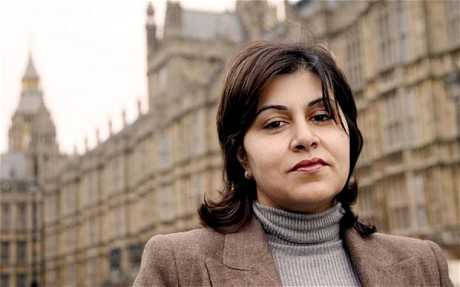
    Baroness Warsi will warn against trying to divide Muslims into 'moderates' and 'extremists' saying that it simply fosters intolerance Photo: IAN JONES

    By James Kirkup, Political Correspondent

    Islamophobia has “passed the dinner-table test” and is seen by many as normal and uncontroversial, Baroness Warsi will say in a speech on Thursday.

    The minister without portfolio will also warn that describing Muslims as either “moderate” or “extremist” fosters growing prejudice.
    Lady Warsi, the first Muslim woman to attend Cabinet, has pledged to use her position to wage an “ongoing battle against bigotry”.
    Her comments are the most high-profile intervention in Britain’s religious debate by any member of David Cameron’s government.
    They also confirm the Coalition’s determination to depart from its Labour predecessor’s policy of keeping out of issues of faith.
    Lady Warsi will use a speech at the University of Leicester to attack what she sees as growing religious intolerance in the country, especially towards followers of Islam.
    A recent study estimated there are now around 2.9 million Muslims in Britain, up from 1.6 million in 2001.
    Some religious and social commentators have suggested that growth in numbers gives rise to legitimate concerns, asking whether strict adherence to the faith is compatible with the values of Western democracies.
    Some Christian leaders have also said that Britain has become less tolerant of their faith during the same period.
    In response, Lady Warsi will blame “the patronising, superficial way faith is discussed in certain quarters, including the media”. The peer will describe how prejudice against Muslims has grown along with their numbers, partly because of the way they are often portrayed.
    The notion that all followers of Islam can be described either as “moderate” or “extremist” can fuel misunderstanding and intolerance, she will say.
    “It’s not a big leap of imagination to predict where the talk of ‘moderate’ Muslims leads; in the factory, where they’ve just hired a Muslim worker, the boss says to his employees: ‘Not to worry, he’s only fairly Muslim’.
    “In the school, the kids say: ‘The family next door are Muslim but they’re not too bad’.
    “And in the road, as a woman walks past wearing a burka, the passers-by think: ‘That woman’s either oppressed or is making a political statement’.”
    A decade of growth in the British Muslim population also saw the first al-Qaeda attacks on British soil and Lady Warsi will address the issue of terrorism and extremism.
    Terrorist offences committed by a small number of Muslims must not be used to condemn all who follow the faith, she will insist.
    But she will also suggest that some Muslim communities must do more to make clear to extremists that their beliefs and actions are not acceptable.
    “Those who commit criminal acts of terrorism in our country need to be dealt with not just by the full force of the law,” she will say.
    “They also should face social rejection and alienation across society and their acts must not be used as an opportunity to tar all Muslims.”
    Her call echoes Mr Cameron’s New Year message, in which the Prime Minister asked why the country was “allowing” the continuing radicalisation of young British Muslims.
    Lady Warsi will also reveal that she raised the issue of Islamophobia with the Pope when he visited Britain last year, urging him to “create a better understanding between Europe and its Muslim citizens.”
    Despite her warnings, she will recognise that Britain has a long history of tolerance and diversity.
    www.telegraph.co.uk19 Jan 2011
  • Turkish Prime Minister Shoots Himself in the Foot Again

    Turkish Prime Minister Shoots Himself in the Foot Again

    Prime Minister Erdogan embarrasses himself and his government just about every time he opens his mouth! His angry statements, often bewildering and insulting, give Turkey a black eye internationally and provide fresh ammunition to his domestic opponents.
    A year ago, the Prime Minister threatened to deport 100,000 Armenians from Turkey, thereby reminding everyone around the world that Ankara’s present leaders are not much different from their bloodthirsty forefathers who deported and killed 1.5 million Armenians during the Genocide of 1915-23. After he was roundly condemned at home and abroad, Erdogan explained that he had meant to deport only undocumented workers from Armenia. When told that the 100,000 figure included both native and foreign Armenians, the Prime Minister blamed his aides for giving him faulty population figures!
    Erdogan made another faux pas early this month during a visit to Kars, when he called for the demolition of a gigantic monument symbolizing “Armenia-Turkey Friendship.” The 100-foot, 1,500-ton unfinished statue was commissioned by the city’s former mayor who believed that reconciliation and open borders with Armenia would boost his city’s sluggish economy. The monument depicted the figure of a man sliced into two, extending a hand of friendship to his other half. Calling the statue “freakish” or “grotesque,” the Prime Minister urged the new mayor to have the $1.5 million monument torn down before his next visit.
    By calling the Kars monument an “ugly” work of art, Erdogan unleashed a torrent of criticism and triggered a chain of events that made him the laughing stock of the world:
    — Erdogan’s political opponents accused him of pandering to the city’s Azeri voters who vehemently oppose any reconciliation with Armenia. They attributed the Prime Minister’s demolition order to crass electoral motives rather than to his artistic taste.
    — Turkey’s Culture Minister tried to come to Erdogan’s rescue by claiming that the Prime Minister had called the surrounding shanty houses “freakish,” rather than the statue itself. Undeterred, Erdogan embarrassed his Minister by rebuking him and repeating his earlier statement. Next, Deputy Prime Minister Bulent Arinc jumped into the fray by wishing that “God would spare him from finding himself in the same awkward situation as the Culture Minister.”
    — Even Ahmet Davutoglu, Turkey’s much-touted Foreign Minister, got into the act, vainly trying to make his Prime Minister look good. Davutoglu claimed that the real problem with the monument was that it “fails to blend into the Seljuk, Ottoman and Russian character” of Kars. In a sarcastic retort, The Economist of London accused Davutoglu of conveniently erasing the city’s “Armenian legacy,” adding that “a long-abandoned tenth-century Armenian church recently reopened — as a mosque!”
    — Mehmet Aksoy, the well-known sculptor of the monument, compared Erdogan’s order to the Taliban’s demolition of ancient Buddha statues in Afghanistan. Aksoy warned that Turkey’s image would suffer terribly should the monument be blown up. He threatened to sue the Prime Minister for insulting his artwork.
    — The international media excoriated Erdogan by ridiculing his artistic taste and exposing his crass political motives. The Wall Street Journal, The Economist, the Associated Press, Radio Free Europe, Reuters, BBC, the Washington Post, Liberation, and hundreds of other media outlets, condemned Erdogan’s destructive directive.
    — Several Turkish journalists questioned the Prime Minister’s right and authority to have a statue removed and destroyed.
    — Armenia’s Foreign Minister reacted indignantly to Erdogan’s statement and urged him to build a new foundation for normalizing bilateral relations, rather than damaging them. Most commentators interpreted the Prime Minister’s detrimental words as the last nail in the coffin of the unconsummated Armenia-Turkey Protocols.
    Not surprisingly, Mubariz Gurbanli, a member of Azerbaijan’s Parliament, expressed his pleasure with Erdogan’s order to demolish the “Armenia-Turkey Friendship” statue. Gurbanli was correct in pointing out: “There is no need to erect a monument to the non-existent friendship with Armenia.”
    Of course, tearing down monuments is nothing new for Azeri and Turkish officials. A few years ago, Azerbaijan demolished thousands of historic Armenian khatchkars (cross-stones) at a cemetery near Julfa, Nakhichevan, seeking to emulate the Turkish government’s wholesale destruction of hundreds of Armenian churches and monuments ever since the Genocide. Indeed, Erdogan himself is continuing the age-old tradition of his predecessors in ordering the destruction of the Kars “friendship” statue.
    If Davutoglu and Erdogan are truly sincere in promoting Armenian-Turkish friendship, they should promptly demolish the monstrous “genocide monument” built in Igdir in 1997, consisting of five 130-foot swords thrust towards the sky, intended to perpetuate the great lie about Armenians killing Turks!