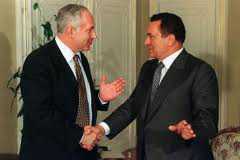
Powerless, the Israelis can only watch and wait. They are helpless as an Egyptian regime they thought they could rely on as a regional ally teeters on the brink.
While keeping a low public profile, Prime Minister Benjamin Netanyahu’s administration has reportedly urged Israel’s US and European allies to curb their criticism of President Mubarak.
“I remind you that the peace between Israel and Egypt has lasted for over three decades,” Netanyahu told his cabinet ministers, in public remarks. “It is our goal to ensure that these relations will continue to exist.”
The reality is that there has been a surge of anxiety in Israel since Egypt’s unrest began. Concerns are reflected in headlines like “A New Middle East”, in one of Israel’s biggest newspapers, Haaretz.
Egypt, the most populous Arab state, was the first to sign a peace treaty with Israel, in 1979, bringing more than 30 years of war between them to an end.
Only Jordan followed suit, in 1994, after the Oslo accords, with no such understanding reached between Israel and its other Arab neighbours.
The momentum of Oslo itself was scuppered by numerous obstacles between Israel and the Palestinians.
Egypt’s mediation efforts between the two were complicated when Hamas took power in Gaza in 2007. Cairo is wary of the Islamist movement because of its links with the Muslim Brotherhood, the bete noire of the Mubarak regime.
Israel is concerned that the unrest could bring the Brotherhood, Egypt’s oldest and biggest Islamist organisation, to power. Hostile to Israel, it wants Egypt run according to Islamic law.
In this context, the nomination of Omar Suleiman as Egypt’s new Vice President has reassured Israel a little. He has good ties with the country which he has visited many times. Should he replace Hosni Mubarak, continuity and stability would be assured.
“The generals of the present regime are committed to peace, are committed to the relations with the United States and the West,” said Eli Shaked, a former Israeli ambassador to Egypt. “The point is, the big question is, what will happen after the elections. Who will come to power?”
Amid political changes in Lebanon which have strengthened pro-Iranian Hezbollah and amid strained relations with Turkey, Israel now fears even greater isolation.
it is time for this old, world-war power system, which just doesn’t work anymore, to be replaced by amore representative control system for world peace. India with over one billion population and the rest of the world are being ignored by the big boys. How come Germany can have a sit at the table and Turkey not? The West must simply accept the global changes and the shifts in economic as well as political powers. Not only Turkey, but the world has changed.
MIDDLE EAST NEWS
JANUARY 22, 2011
Turkey Presses Role as Mideast Referee
By MARC CHAMPION in Istanbul and FARNAZ FASSIHI in Beirut
Turkey’s involvement in attempts to resolve two of the Middle East’s toughest diplomatic disputes this week has underscored its emergence as a key player in the region, after decades spent on the sidelines.
On Friday, diplomats from the major world powers began talks in Istanbul on Iran’s nuclear program aimed at unblocking a years-long stalemate over whether Tehran should suspend production of nuclear fuel, a process that can be used to make nuclear weapons as well as civilian-grade fuel.
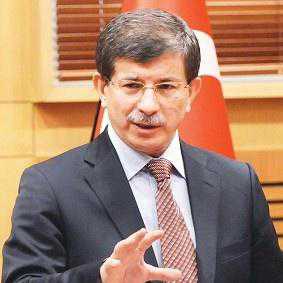
Their host, Turkey’s Foreign Minister Ahmet Davutoglu, had arrived for bilateral talks with some of the players Thursday on a 4 a.m. flight, after spending 48 hours in round-the-clock negotiations to prevent a potential conflict in Lebanon.
Mr. Davutoglu’s deep involvement in helping to mediate the Lebanon crisis, and the choice of Istanbul to host the Iran talks, show how Turkey has emerged as a significant player in the Middle East—perhaps the only country in the region able to speak easily to Sunnis and Shiites, Hezbollah and Washington alike, diplomats and analysts say.
That is a dramatic change for Turkey, which had long isolated itself from the Arab world, the fruit of a booming economy in search of a stable neighborhood.
Yet this week’s events also underscored the limits of Turkish influence. Mr. Davutoglu didn’t get a seat at the table as the U.S., U.K., Russia, China, France, Germany and Iran launched into talks Friday. His role as host rather than participant, as well as the uncertain outlook for success in Lebanon, show the limits of Turkish influence in a region littered with the debris of failed mediation efforts, analysts say.
Iran refused on Friday to discuss suspension of its nuclear fuel program and set tough conditions for any new talks, giving little sign of progress. The negotiations were due to resume Saturday.
Asked whether hosting the Iran negotiations wasn’t a poisoned chalice—with little hope for success but a risk it could deepen suspicions in the U.S. Congress about Turkey’s engagement with Tehran—Mr. Davutoglu said Turkey’s involvement wasn’t a matter of choice.
“Our interest in this issue is not a luxury,” said Mr. Davutoglu, speaking at his hotel suite away from the talks. As Iran’s neighbor, Turkey would be the first country hit by “nuclear escalation in the region, or tension between the West and Iran, or sanctions against Iran.”
Mr. Davutoglu has become a fixture in crises around the Middle East in recent years. While in Lebanon this week, he got a fresh endorsement that, in the terms of the region, signified Turkey’s ascent as a power player: an invitation to meet with Hezbollah’s sequestered leader, Seyed Hassan Nasrallah.
Meetings with Mr. Nasrallah, a bitter foe of Israel and the U.S., are usually reserved for Hezbollah’s most loyal allies and influential leaders from the region.
“We will speak to anyone. It isn’t a zero-sum game,” said Mr. Davutoglu. “There cannot be an Iraq, or a Lebanon, where Sunnis or Shiites, or in some cases Christians, will win and others lose.”
Lebanon’s government collapsed last week after opposition ministers led by Hezbollah resigned over Prime Minister Saad Hariri’s refusal to denounce a U.N.-backed international tribunal court’s investigation of the 2005 assassination of his father, former Prime Minister Rafik Hariri. With the United States taking a back seat and Saudi Arabia withdrawing after a failed attempt to mediate, Turkey joined Qatar to fill the vacuum.
Mr. Davutoglu said that before his early morning flight to Istanbul he and his Qatari counterpart left behind a draft proposal to end the crisis, and it was now up to the Lebanese to decide what to do next. He denied reports that he was pulling out of the attempt to mediate. He also declined to discuss the contents of the draft.
Turkey’s success maintaining a secular democracy in a Muslim-majority country, as well as its rapid economic growth, are sources of envy among educated middle-class Arabs, analysts say. Meanwhile, Turkey’s Prime Minister Recep Tayyip Erdogan has turned into something of a political rock star in the region after adopting a tough stance against former ally Israel.
“It’s a very sophisticated and unique role that Turkey is playing, because it talks to everybody,” said Rami Khouri, a political analyst and director of the Issam Fares Institute for Public Policy and International Affairs in Beirut. “I think most Arab countries are starting to look up to Turkey.”
Still, some analysts are skeptical that Turkey has risen to the level of influencing outcomes in the Middle East, as opposed to working as a mediator. “This is an Arab land. The key countries in the Middle East will not allow Turkey to steal the limelight and become the kingmaker of the Middle East,” said Timor Goksel, a Turkish political analyst living in Beirut.
Turkish officials themselves stress that the country’s policies have costs as well as benefits. Engaging with Iran created tensions with some Arab governments, said one senior Turkish diplomat. Meantime, Ankara has effectively disqualified itself from mediating any further talks with Israel.
“I’m not sure the Iranians are doing the Turks any favors,” said Henri Barkey, Turkey expert at the Carnegie Endowment for International Peace, a Washington think tank. He said the benefits for Ankara in hosting the Iran talks could pale next to the risks of triggering a permanent rupture with Washington, an alliance he says remains the foundation of Turkish credibility in Middle East diplomacy.
Mr. Davutoglu, however, said he wasn’t concerned. “No one should think Turkey’s own way is an alternative to the American way,” he said. “Ours is the same way,” only with different tactics.
Corrections & Amplifications
Henri Barkey is a Turkey expert at the Carnegie Endowment for International Peace, a Washington think tank. An earlier version of this article incorrectly said he was Turkey expert at the Center for Strategic and International Studies.
MIDDLE EAST NEWS
JANUARY 22, 2011
Turkey Presses Role as Mideast Referee
By MARC CHAMPION in Istanbul and FARNAZ FASSIHI in Beirut
Consul General Mehmet Baydar and Consul Bahadir Demir, the first Turkish diplomats who fell victim to ASALA terror, were commemorated with a ceremony held Thursday in Igdir.
Citizens, representatives of civil organizations and reporters attended the ceremony held at the Genocide Monument and Museum in Igdir.
ASALA (Armenian Secret Army for the Liberation of Armenia) was an Armenian terrorist organization which staged terrorist attacks on Turkish targets and assassinated Turkish diplomats between 1973 and 1986, aiming to force the Turkish government to acknowledge the so-called Armenian genocide and cede territory for an imaginary Armenia.
ASALA staged 110 terrorist attacks in 21 countries, killing 5 Turkish ambassadors, 34 Turkish diplomats, 4 foreigners and injuring 15 Turkish citizens and 66 foreigners.
Turkish Consul General in Los Angeles Mehmet Baydar and Consul Bahadir Demir were assassinated by a 73-year-old Armenian-American named Gurgen Yanikiyan in 1973.
Yanikiyan who contacted Baydar and Demir said he wanted to give the portrait of Ottoman Sultan Abdulhamid to Turkey as a present. Yanikiyan who met Baydar and Demir at the Baltimore Hotel in Santa Barbara assassinated the Turkish diplomats with a pistol.
Turkey has held its first-ever public ceremony commemorating the Holocaust at Istanbul’s biggest synagogue.
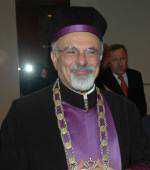
Members of Turkey’s foreign ministry were present along with the Mayor of Istanbul who sat next to Chief Rabbi Rav Isak Haleva. The ceremony was held as part of the UN General Assembly’s International Holocaust Remembrance Day. The global day of commemoration was established on Jan. 27 by the United Nations in 2005.
Foreign Minister Ahmet Davutoğlu’s message at the ceremony stated ;“It is natural result of our culture
of living together to share the pain that the Jewish community experienced in the past, as this reflects our tolerance for each other as a state and community.They Jewish people are part of our community and will remain as such.”
The rules of the game have been simple: Police trumps protesters. Masses trump police. Army trumps masses. If the army stands back, you have a revolution (Iran 1979, Romania 1989, Tunisia 2011), if not, then bloodshed (Hungary 1956, China 1989, Algeria 1992). I don’t recall any popular uprising successful over a fully functioning armed force determined to go all the way. That is why armed forces are always considered as backbones of corrupt dictatorships.
This weekend we shall see if the Egyptian armed forces, which the latest Wikileaks leak as US believes it to be unhappy, at least in the mid-ranking officers, but probably higher, will open fire to stop the masses or the masses will blink, or it will give way to the people. Egyptian army is a conscript army and there is no part of the Egyptian society that may be counted on apart from the westernised elites, whose children do not operate tanks during military service. The news is that the Egyptian army are already mobilised into urban areas and taken control of strategic points.
Egyptians I came to know during a series of visits for international projects were a very kind people, members of a polite and civilised nation, well known among the other Arabs with their humour and taking things lightly. This nation of gentle farmers has been easy to manage by foreign soldiers (the Hyksos, Ptolemeans, the Mamluke, Ali Pasha troops) or domestic warlords, perhaps exact opposite of Chechens or Afghans. They are patient, soft-spoken, happy in the face of any event, and cultured. In short, any megalomaniac tyrant’s dream population.
They have gone through a westernisation process predating Turkey, and a secularisation process of 50 years under socialist dictatorship. Save occasional and sensational terror incidents, there is no history of popular uprising or even any active political formation, except for the elitist Muslim Brotherhood, structured in 30s as a Muslim answer to Freemasonry, who wouldn’t even entertain the idea of going on the streets with sweaty youngsters. Americans and Israelis are all over the country, to the degree that five star Cairo hotels put on Hebrew-language TV channels for their guests from their northeastern neighbours. It has highest number of Internet access in the region with 20 million users and more advanced in some software technologies than, say, Turkey.
Therefore, one wouldn’t expect a popular uprising overthrowing one of the most entrenched dictators of the world. Most well-informed experts, political commentators or social analysts certainly did not expect that the events would have gone out of control to this degree where it is becoming more and more unlikely that Mubarak will survive. When he unplugged the Internet less than a day ago, I recalled another ridiculous caricature, Alan Rickman’s Sheriff of Nottingham cancelling Christmas. He could have blocked social networks and slowed down the e-mail, but that would be too sophisticated to epitomise this wily little people who see it their birth right to enslave tens of millions of human beings. Which explains the situation better than any verbose expertise: it is the tyranny of stupid, primitive, incompetent minds over masses much more sophisticated and much deeper than them.
When one sees all these Middle Eastern or Central Asian rulers and their small social segments whom they depend upon to man their security forces or financial institutions, one cannot help but be only deaf to any economic analysis. Despotism is always a disaster for economy because meritocracy is not allowed and accountability does not exist. The small clique of rulers milks the real productive people and eventually kills their productivity long before they would expire naturally. This leaves society weak and inefficient. If we add to the two factors the global financial system, which get the lion’s share of the bounty and only leaving crumbs to the visible rulers, it is obvious that the dictatorship is not a long term stable solution. Either the nation is annihilated from within or without, or it throws its rider. The last military period in Turkey, 1997-2002, is a good accelerated example to despotic cronyism, when the rampant economy of 1997 was brought to bankruptcy in four winters. Imagine that being practiced 30 years or 50 years.
It is true that the 2011 Domino events stem from people wanting to get rid of the despotic cronyism, with them seeing that it is no more to mind one’s own business anymore as there is no business being left. And this is why analysts keep calling them secular uprisings, emphasizing the difference between Iran, Algeria, Hama or others. But this distinction comes out of their own mental compartmentalisation rather than the field. There is no separation between three elements that are in force here: people’s dignity, economic development and return to Islam. In the middle-east, or any once-have-been Islamic nation, the three are inseparable.
Economic development is impossible without a level playing field and risk taking, bold, free, entrepreneurial players and accountable refereeing. That is impossible without popular social consent and social contract without privileged classes, aristocracies and caste systems. Perhaps in Hindu society, or in Confucian society. But not where Islam had been the source of social order with its egalitarian principles, holistic justice concept and personal freedoms. Once the verses of the Quran are practiced at some point by any society, it can never have another long-term working social system. That is why in any free election in the Middle East at any given time, Muslim-leaning parties have always won without exceptions. Therefore however secular the protests might have been, if there will be political freedom, reversal of de-Islamisation will be part of it.
This is why many in the Middle East look towards the Turkish experiment. Without oil and natural sources, and to confess, with little ingenuity, by simply doing things as they should be done, Turkey turned from the military-dominated status to a richer, functional democracy managed by Muslims.
The Tunisians, Jordanians, Algerians, Yemenis and Egyptians want this, no more. The talk of Turkey without oil is doing well with a free society, with secularised and religious people coexisting under a religious president, with none of the pretentious extravaganza is the greatest fairy tale to Arab ears. A fantastic dream which had been once ruled out as absurd. They just want the same. But when they get it, as they will, another fairy tale that was once ruled as absurd, will inevitably roll on: the cooperation and eventual unity of these independent states.
If the troops on the Tahrir Square open fire, the process will only be delayed. But not stopped.
By Wayne Madsen
Online Journal Contributing Writer
(WMR) — WMR’s Middle East sources are pointing to a looming battle that will be waged for control of the life-sustaining waters of the Nile River when southern Sudan, or whatever it’s name will be, achieves independence from Sudan following the ongoing independence referendum.
Independence for southern Sudan has long been a goal of former Secretary of State Madeleine Albright and her god-daughter, current U.S. ambassador to the UN Susan Rice. The splitting of Sudan has long been in the interests of Israel, which has yearned for a client state in southern Sudan that could put the squeeze on the supply of the Nile’s headwaters to Egypt and northern Sudan. For Rice, a vitriolic hatred for Khartoum and its majority Arab population, has helped the cause of the southern Sudanese. Rice’s views on southern Sudan and Khartoum were partly influenced by two members of the Israeli Lobby who had direct control over U.S. policy toward Sudan as counter-terrorism officials in the Bill Clinton National Security Council: Steven Simon and Daniel Benjamin.
The late southern Sudanese leader, John Garang, was one of Albright’s celebrated ex-Marxist “beacons of hope” for Africa, along with other U.S. client dictators in the region as Paul Kagame of Rwanda, Yoweri Museveni of Uganda, and Meles Zenawi of Ethiopia. Congo’s Laurent-Desire Kabila and Garang were among Washington’s “red princes” until they got cross-wise with the CIA and U.S. corporate plans for their respective nations and were removed in assassinations plotted by Langley.
Southern Sudan has not even settled on a name for the new nation. However, any of the proposed names raises the specter of ambitions by the Israelis and other external actors vying for influence in central Africa. One name proposed is the Nile Republic but that would immediately send an alarm to Cairo and Khartoum concerning the long-term control of the Nile’s waters by the new pro-U.S. and pro-Israeli government with its capital in Juba in southern Sudan. Another proposal would call the country “Nilotia,” again, problematic, because of the reference to the Nile River.
Another proposed name, Cush, is taken from the Jewish Bible and refers to an ancient kingdom extending from the Horn of Africa to southern Egypt. There is some informed speculation in the region that the Mossad was behind the recent Christmas car bombing outside an Egyptian Coptic church in Alexandria, Egypt in order to stir up tensions between Egypt’s ten percent Coptic minority and its majority Muslim population. Some Middle East commentators pointed out that remotely-controlled car bombs are virtually unknown in Egypt but have been carried out by Mossad in Lebanon, where they are then blamed on Hezbollah.
Mossad is reportedly recruiting agents from the hundreds of southern Sudanese in Israel who have migrated to Israel for employment opportunities. Many of these southern Sudanese refugees, mostly found in Tel Aviv, are expected to return to their new nation.
Southern Egypt, the land that supposedly once included Cush [Cush was the mythical grandson of Noah], is a center for Egypt’s Copts and wider irredentist claims in the region by an independent Cush [or “Kush”] in southern Sudan could further inflame tensions along the entire stretch of the Nile River.
Another proposed names for the new nation in southern Sudan, New Sudan, may stir up tensions on the disputed oil-rich territory on the border of old Sudan and “New Sudan,” the Abyei region. Continued use of “South Sudan” or “Southern Sudan” would give the impression of a divided country like South and North Korea or South and North Yemen. Continued use of Sudan in the name may also create friction as seen in the Balkans between Greece and Macedonia. Greece has insisted that Macedonia be referred to by the United Nations as “FYROM: former Yugoslav Republic of Macedonia” because of what it believes are irredentist claims by Macedonia on northern Greece.
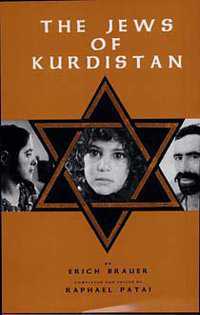
However, it is the ambitions of Israel that may pose the greater problem for the land of the Nile headwaters. Israel’ expansionist government is fond of using the collection of ancient folk lore and myths known as the “Old Testament” to drive claims to land in the West Bank [which are referred to by the arcane biblical names of Judea and Samaria] but also, increasingly to lands in northern Iraq. On January 28, 2008, WMR reported: “Israeli expansionists, their intentions to take full control of the West Bank and the Gaza Strip and permanently keep the Golan Heights of Syria and expand into southern Lebanon already well known, also have their eyes on parts of Iraq considered part of a biblical ‘Greater Israel.’ Israel reportedly has plans to re-locate thousands of Kurdish Jews from Israel, including expatriates from Kurdish Iran, to the Iraqi cities of Mosul and Nineveh under the guise of religious pilgrimages to ancient Jewish religious shrines. According to Kurdish sources, the Israelis are secretly working with the Kurdistan Regional Government (KRG) to carry out the integration of Kurdish and other Jews into areas of Iraq under control of the KRG. Kurdish, Iraqi Sunni Muslim, and Turkmen have noted that Kurdish Israelis began to buy land in Iraqi Kurdistan after the U.S. invasion in 2003 that is considered historical Jewish ‘property.’ The Israelis are particularly interested in the shrine of the Jewish prophet Nahum in al Qush, the prophet Jonah in Mosul, and the tomb of the prophet Daniel in Kirkuk. Israelis are also trying to claim Jewish ‘properties’ outside of the Kurdish region, including the shrine of Ezekiel in the village of al-Kifl in Babel Province near Najaf and the tomb of Ezra in al-Uzayr in Misan Province, near Basra, both in southern Iraq’s Shi’a-dominated territory. Israeli expansionists consider these shrines and tombs as much a part of “Greater Israel” as Jerusalem and the West Bank, which they call ‘Judea and Samaria.’”
Oil is also a major factor in the independence of southern Sudan. The new country is rich in oil and with Africa’s oil and other resources now highly sought after by competing nations like the United States, China, and Japan, the traditional strictures issued by the Organization of African Unity upon its founding in 1963 against changing Africa’s colonial borders through secession have been overtaken by new realities and a new organization, the African Union, which has now permitted two nations to secede from established nations: Eritrea from Ethiopia in 1993 and now southern Sudan or whatever it will call itself, from Sudan in 2011.
Several nations point to Somaliland, the former British Somaliland that declared itself independent from Somalia in 1991, as the next state in line to achieve recognition. Israeli diplomats have reportedly been in Hargeisa, the Somaliland capital, to talk about Israeli recognition of the state. However, it will be the United States and Britain, both of which favor recognition, that will spur Somaliland’s quest for international recognition and UN membership. After Somaliland, two other parts of Somalia, Puntland and Jubaland, will likely follow suit.
Some Africa policy habitués of the Council on Foreign Relations and other fronts for the global banking elites are already floating the idea that the Sudan solution may be applied to Africa’s other north-south and Islamic-Christian flash points like Nigeria and Ivory Coast. They reason that if majority Christian south Sudan can separate from largely Muslim north Sudan, why not majority Muslim north Ivory Coast from largely Christian south Ivory Coast and Muslim north Nigeria from Christian south Nigeria? And the Democratic Republic of the Congo has long been seen as a prime candidate for “Balkanization” by the Corporate Council on Africa and its affiliates at the Kissingerian Center for Strategic and International Studies.
As for southern Sudan or whatever it will be, after the likes of John Kerry and George Clooney depart from the photo ops in Juba, they will be replaced by non-governmental organization and international aid agency faceless international bureaucrats, the foot soldiers of the global “misery industry” who migrate from killing fields to war zones in search of new tax-free income, walled compounds with servants and Land Rovers, and duty free shopping gigs. Southern Sudan’s “independence” will be in name only, with the aid agencies and NGOs calling the shots as they do in Haiti today.
Wayne Madsen is a Washington, DC-based investigative journalist and nationally-distributed columnist. He is the editor and publisher of the Wayne Madsen Report
 Powerless, the Israelis can only watch and wait. They are helpless as an Egyptian regime they thought they could rely on as a regional ally teeters on the brink.