Month: January 2011

  • Turkey: The land a dictator turned into a democracy

    Turkey: The land a dictator turned into a democracy

    Monday, Oct. 12, 1953

    He who loves the rose should put tip with its thorns.

    —Old Turkish saying

    ONE day in 1853, Nicholas I, Czar of all the Russias, peered southward over his aristocratic nose and voiced the opinion that Turkey was indeed “the sick man of Europe.” Exactly 100 years later, an astute and wealthy Texan named George McGhee, at the time U.S. Ambassador to Turkey, looked out over the green plains of Anatolia and said: “You know what this country reminds me of? It’s got the stuff, the git up and go, and it’s rolling. Why, Turkey today is just like Texas in 1919.”

    Both Czar and ambassador had it right. In one century, the sick man of Europe has become the strong man of the Middle East. If not the paradise that propagandists sometimes paint, Turkey is stable, strong, democratic, progressive, booming. No nation stands so steadfast against Russia. In NATO it is the free world’s strong southern anchor; in the Korean war, its brigade was the “BB Brigade,” the Bravest of Brave. Turkish landing fields put U.S. strategic air half an hour away by jet from the Baku oilfields of Russia.

    Assisted by U.S. dollars and skill, but doing its own hard work and running its Own show, Turkey is increasing its per Capita income 7% per annum, its gross national product 10%. As recently as 1950, Turkey had to import wheat; today she is the No. 4 wheat exporter in the world. In the same three years, Turkey’s tractors increased by 900%, farm acreage 25%, mileage of all-weather roads 100%, port capacity 250%, cotton output 300%. Yet these are the people of whom the Bulgar peasant used to say, making the sign of the cross: “No grass grows where the Turk’s horse treads.”

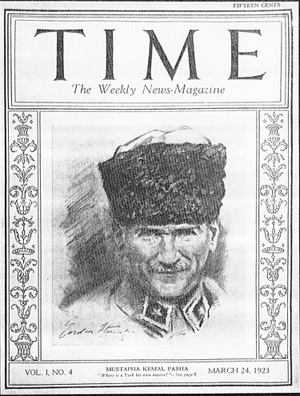
    Ruthless Miracle. What brought the change? Between the days of the sick man and the Texas-style Turkey of today, the nation brought forth Kemal Ataturk. He worked his miracle, closed history’s gap in just 15 years, 1923-1938, and died 15 years ago next month.

    By conventional standards, Kemal Ataturk was hardly an admirable character. He was a bitter, sullen and ruthless man, a two-fisted drinker and a rake given to shameless debauch. Politically, though he proclaimed a Bill of Rights, he flouted it constantly; though he talked of loyalty, he hanged his closest friends. He was devoid of sentiment and incapable of love, unfaithful to everyone and every cause he adopted save one—Turkey. But before he died, his driven, grateful people thrust on him the last and greatest of his five names: Ataturk, Father of All the Turks.

    The Father of All the Turks (who left no legitimate heirs) was born in 1881 in Salonika, then part of the Ottoman Empire, of a mild Albanian father and a forceful Macedonian mother. Mustafa was a rebel from the start. His pious Mohammedan mother urged him to become a holy man, but he became a soldier; at 22, a captain, he rebelled against the Sultan and was nearly executed; at 27, he joined the Young Turks rebellion, then rebelled against the Young Turks. The army, fearful of him, shunted him from post to post, but could neither shake him nor subdue him. At Gallipoli, in 1915, he defeated the British; in the Caucasus, he checked the Russians; in Berlin, 1918, he drunkenly needled the high panjandrum of his allies, Field Marshal von Hindenburg; in Arabia, 1918, he held off T. E. Lawrence’s Bedouin hordes. At 38, he came out of the crash of the Ottoman Empire the only Turkish commander untouched by defeat.

    Six Day Marathon. Eight years later, smartly turned out in his favorite civilian attire—the morning coat and striped pants of the Western diplomat—he stood before the Turkish National Assembly (which he created), in the capital at Ankara (which he created), and for six full days told in the Turkish language (which he purified and revised) the full story of what he had done. He began:

    “Gentlemen, I landed at Samsun on the 19th of May, 1919. This was the position at the time…”

    To his hearers, it was well-remembered history. Turkey in 1919 was crushed, defeated from without, disintegrating within. Gone was the fury and might which, beginning in 1299, had sent Ottoman legions smashing at Vienna’s gates and made Budapest a suburb of Constantinople. Gone was the conquering fervor that created a tri-continental empire the size of the U.S., encompassing what are now 20 modern nations stretching from the Dniester to the Nile, from the Adriatic to the Persian Gulf. In 1919, British warships still rode in the Bosporus and British troops held Constantinople; Italy, France and Greece were secretly dividing up the best of the remainder. The greatest empire between Augustus and Victoria had shrunk to a small, lifeless inland state in the barren interiors of Asia Minor; its Sultan was reduced to the status of a borough president of Constantinople. There was talk of asking Woodrow Wilson to take over the mess as a U.S. mandate.

    Mustafa Kemal Pasha returned from his skillful but useless defense of Syria and asked for a job. “Get this man away—anywhere—quickly,” the Sultan cried. The government hoped to save itself by submission to the conqueror; Kemal’s unyielding patriotism endangered these schemes. So Mustafa got magnificent and meaningless titles—Inspector General of the Northern Area and Governor General of the Eastern Provinces—and was put aboard a leaky Black Sea steamer bound for Samsun, in remote Anatolia.

    This suited Kemal fine. Arriving in Anatolia, he convoked a congress and proclaimed: “The aim of the movement is to free the Sultan-Caliph from the clutches of the foreign enemy.” Desperately, the Sultan, who did not want to be so freed, wired: “Cease all activity!” Replied Kemal: “I shall stay in Anatolia until the nation wins its independence.” Turkey, or what was left of it, had two governments: Kemal’s and the Sultan’s.

    The victorious Allies, of course, favored the complaisant Sultan, but in their greed they served to further Kemal. The Sultan and the Grand Vizier went to Versailles to plead not to be denuded of all land and power. Clemenceau, the Tiger, said coldly: “Be silent, Your Highness! Relieve Paris of your presence.” The Allies handed the Sultan the Treaty of Sevres, which split Turkey six ways. The Greeks marched in to enforce the Diktat, and Kemal roared: “Turks! Will you crawl to these Greeks who were your slaves only yesterday?” He raised an army of peasants, veterans, criminals, patriots. Two years later, a few miles outside of Ankara, he gave the orders: “Soldiers, the Mediterranean is your goal,” and drove the Greeks back into the sea.

    The Treaty of Lausanne which followed reversed the humiliation of Sevres. The last British admiral boarded the last British battleship in the Bosporus, snapped a respectful salute to the crescent flag and steamed off. The most defeated of enemies became the first to defy the victorious Allies, to scrap one of their treaties. The Ataturk miracle had begun: Mustafa Kemal, soldier, was master of Turkey.

    Only Turks. The nation he put back together was slightly larger than Texas—296,000 sq.mi.—its vast bulk nestled in Asia Minor, with 9,000 sq.mi. wedging into Europe’s southeastern corner. Kemal was satisfied. “We are now Turks—only Turks,” he exulted. He wanted none of the old overextended Ottoman empire. “Away with dreams and shadows; they have cost us dearly,” he said.

    Kemal went on a speaking tour among his people: “Remain yourselves, but take from the West that which is indispensable to the life of a developed people. Let science and new ideas come in freely. If you don’t, they will devour you.”

    He began taking from the West, but he took with discrimination. He wanted to democratize Turkey, for “no country is free unless it is democratic.” But he recognized that “Democracy in Turkey now would be a caricature,” and set his dictatorship to preparing his nation for democracy. Thirty years ago this month (on Oct. 29, 1923), Kemal became: President of the new republic, commander in chief of the army, president of the Council of Ministers, chief of the only party, and speaker of the Assembly. He began ridding the Turks of the things that reminded them of the degenerate past. First he ordered the Sultan expelled; 16 months later the Caliph (or Moslem spiritual leader) was exiled. Kemal announced that “Islam is a dead thing,” and Turkey became a nondenominational state.

    The break with the past had to be felt, simply and simultaneously, by all Turks. Ataturk looked about for the significant gesture. In India it had been salt-making in defiance of the British monopoly; in China it was cutting off the queue. Ataturk chose to attack the fez, traditional symbol of Ottoman citizenship. “The fez is a sign of ignorance,” said he. He laid down a deadline: after that date, no brimless headgear. Some Turks, unable to find hats with brims, wore their wives’ hats: better to look silly than to risk losing your head.

    Coffee fo Kahve. Ataturk moved the capital from cosmopolite Constantinople to raw Ankara and changed Constantinople’s name to Istanbul. Though he personally abhorred emancipated women (they argued, instead of saying yes), he begged Turkey’s women to unveil, and most did. He abolished the Moslem sheriat (law) and took the best from Europe to replace it—Switzerland’s civil code, pre-Fascist Italy’s penal code, Germany’s commercial code.

    Though he made haste, he had an intuitive awareness of his people’s gait. The old Turkish alphabet had become an esoteric nightmare of cumbersome Arabic scrawls; its difficulty contributed to illiteracy at home and incomprehensibility abroad. Kemal talked first to U.S. Educator John Dewey, then sat down with linguistic experts and worked out a new, simple Latin, A-B-C alphabet of 29 letters. Where new concepts lacked ancient symbols, he simply used Western forms: automobile to otomobil; coffee to kahve; statistic to istatistik.

    Blackboards went up in the National Assembly, and Kemal himself gave the Deputies their first lesson. He went to the countryside and guided the gnarled hands of peasants who had never held a pencil before, as they wrote clumsy signatures in the new script. This patient teaching took five years; then abruptly he switched from precept to fiat. He gave civil servants three months to master the new script—or find new jobs. He had not been to Istanbul since 1919; now he returned in style and with a purpose. He sailed into the Golden Horn on the Sultan’s yacht, triumphantly marched past cheering crowds. He summoned Istanbul’s elite to the Sultan’s palace to a ball, and stood before them in full evening dress on a raised platform, chalk in hand, before a blackboard. For two hours he explained the new language, then the music blared, everyone drank, and the dancing went on until dawn. Nineteen twenty-eight became the Year One of Turkey’s new cultural life.

    Oy Birligile. Ataturk liberated law, education and marriage from the mullahs; turned mosques into granaries; switched the day of rest from Friday to Sunday; tossed out the Islamic calendar and ordered in the Gregorian calendar of the Western world. He made suffrage universal, adopted the metric system, ordered all Turks to take on last names, took the first census in Turkish history. Harems were forbidden and monogamy became the law.

    The most familiar phrase in the Turkish National Assembly during these electric days was Oy Birligile, meaning by unanimous vote. Opposed, Ataturk was ruthless. One evening in 1926, he gave a champagne party for foreign diplomats; it turned into an all-night carousal. Returning home at dawn, the diplomats saw the corpses of the entire opposition leadership, among them Kemal’s old friends, hanging in the town square.

    But in his later years, after he had raised his people up, he decided to ease his dictatorship. He brought his ambassador home from France, ordered him to head an opposition, ordered his own sister to join it. The new Liberal Republican Party was so polite at first that Kemal demanded more vigor; when it became more vigorous he abolished it. “Let the people leave politics for the present,” he said. “Let them interest themselves in agriculture and commerce. For ten or 15 years more I must rule.”

    After Ataturk. He did not have ten or 15 years more. Since his teens he had been drinking and whoring, searching, without finding, some personal peace. He tried marriage once in 1922 to Latife, the daughter of a Smyrna shipowner, but was soon divorced. In 1938, exhausted by periodic debauches and drinking bouts, undermined by diseases, he died. The timing was just right. Kemal Ataturk had held the Turks by the hand just long enough to help, not long enough to crush.

    The day after Ataturk’s death, he was succeeded as President, legally and peacefully, by his handpicked successor, forceful soldier-administrator Ismet Inonu. For the next dozen years, the Inonu regime tried to maintain the Ataturk pattern. The people were kept on short rein, given few civil and personal liberties, and those grudgingly. But the momentum of progress continued.

    In 1946, the Ataturk-Inonu party, the Republican People’s Party, won reelection, but only by using shabby tactics. It was the last time. A new, politically conscious opposition had grown up. Ataturk had unleashed forces greater than he; he had made so many new Turks that there was bound to be a new Turkey. In 1950, 88% of the voters went to the polls and swept out the Republican People’s Party which had held power uninterruptedly for 27 years. Inonu yielded gracefully. The newborn Democrats took over.

    Their President was unspectacular Celal Bayar, an able banker and one of Ataturk’s ministers for five years, his Premier for one. This peaceful transfer of power was not the millennium, but it was the closest approach to it in the Middle East. Ataturk’s 15 years of ruthless education and preparation had paid off.

    “Black Danger.” The new regime put an end to excessive state regulation of business. Ataturk had tried to industrialize Turkey through a cumbersome form of state socialism that he labeled étatisme. He developed some industry, but stifled it in red tape and scared away foreign investors. Now, under Bayar, Turkey is one of the few nations in the world heading towards more, not less free enterprise. Foreign investors are encouraged. There have been other reversals of Ataturk policy. Many emancipated Turks now fear “the black danger,” the resurgence of the once powerful mullahs. Religion is strong today in Turkey. The country is 98% Moslem. Ataturk relaxed the grip of a reactionary and decadent church, but he could not destroy the faith of his people. Just as Ataturk had taken the best from them, discarded the rest, the Turks are showing a talent for preserving what they think best in his teaching.

    Turkey today is still far from Ataturk’s goals: 80% of its 21 million people live in mud huts in isolated villages, in half of which there are no primary schools. The currency is soft; inflation has doubled food prices. Much of the land is unfertilized and carelessly utilized. The Turk is poor: he gets a third of the meat that a meat-starved Briton received under austerity; only one in 2,000 owns an automobile. But Turkey’s spirit is good, the country is stable, its directon is sound.

    A month hence, Ataturk’s body, which has lain in a “temporary” resting place these past 15 years, will be borne with ceremonial pomp to a new mausoleum on Ankara’s highest hill. The mausoleum, reached by 33 marble steps 132 feet wide, will probably be the biggest of its kind, until Evita Peron’s or the proposed Soviet pantheon tops it. For three days, Turkey’s 21 million citizens will do him honor.

    “I will lead my people by the hand along the road until their feet are sure and they know the way,” Ataturk had said. “Then they may choose for themselves and rule themselves. Then my work will be done.” On his bronze statue overlooking the Golden Horn is another message to his people: “Turk! Be proud, hardworking and self-reliant!”

    • Click to Print
    • Find this article at:

  • New Film Disrupts Turkey’s Holocaust Day

    New Film Disrupts Turkey’s Holocaust Day

    New York times: Jan. 28, 2011

    By SEBNEM ARSU
    Published: January 27, 2011

    Murad Sezer/Reuters

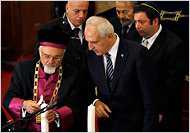
    Rabbi Ishak Haleva, left, and Huseyin Avni Mutlu, Istanbul’s governor, at a ceremony to remember victims of the Holocaust.

    ISTANBUL — Turkey’s first officially sanctioned commemoration of the Holocaust was held in a synagogue here on Thursday, reflecting government efforts to assuage the Jewish minority in the face of increasingly strained ties with Israel. But the event was overshadowed by the scheduled premiere on Friday of the latest installment in a series of popular Turkish-made adventure films that depict Israelis as evil.

    Enlarge This Image

    Murad Sezer/Reuters

    Rabbi Ishak Haleva, left, and Huseyin Avni Mutlu, Istanbul’s governor, at a ceremony to remember victims of the Holocaust.

    “Gathering in love, brotherhood and humanity should be our common language to ensure that we must never experience this crime against humanity, this attack against humanity ever again,” Huseyin Avni Mutlu the Istanbul governor, said after lighting a candle in commemoration of the Holocaust’s victims with Ishak Haleva, Turkey’s chief rabbi, at the Neve Shalom synagogue.

    The synagogue, one of many around the world commemorating International Holocaust Remembrance Day, carries particular symbolism here because it was the target of a local radical Islamist network loyal to Al Qaeda in simultaneous attacks around the city in 2003.

    The Istanbul ceremony was considered a milestone in bringing together the pro-Islamic government and Turkey’s Jews. Many Turkish Jews have expressed unease about relations between Turkey and Israel.

    Those relations, which had been historically strong, have been declining since the Turkish government’s strong condemnation of Israel’s military operations on the Gaza Strip in 2008.

    The Israeli commando raid on a Turkish aid boat en route to Gaza last May, which left nine dead, also infuriated Turkey and brought diplomatic relations to a virtual standstill.

    The raid inspired the producers of the Turkish film series, known as “Valley of the Wolves,” which has portrayed Israelis as baby-killers and human organ thieves. Israel has criticized the series as viciously anti-Semitic fiction.

    The latest film in the series was scheduled to open the day after the Holocaust commemorations, although it remained unclear whether the date was deliberate. The film, “Valley of the Wolves — Palestine,” is a tale of a Turkish agent sent on a covert mission to Gaza and the West Bank to avenge the raid victims.

    The Turkish government has often asserted that its conflict with Israel has never been over Judaism, but with the government of Prime Minister Benjamin Netanyahu and his policies toward the Palestinians, particularly on the Gaza Strip. While the Turkish government has often sought to assure Jews in Turkey that they are safe, productions like “Valley of the Wolves — Palestine” cause public concern.

    “This film is anti-Israeli and has anti-Semitic reflections,” Gabby Levy, the Israeli ambassador to Ankara, was quoted as saying by the semiofficial Anatolian Agency. The film premiered on Holocaust Remembrance Day in Germany, which Mr. Levy said was “a highly interesting situation.” Egemen Bagis, a state minister for relations with theEuropean Union, which Turkey wants to join, dismissed the criticism, calling it freedom of expression, which his government promotes for a more democratic Turkey.

    “The movie does not reflect the position of our government,” Mr. Bagis said. “The flotillaincident, where we lost nine civilians, however, has caused a social trauma in Turkey, which provides a story line for popular culture productions touching upon such sensitive issues.”

  • Jews against Islamophobia

    Jews against Islamophobia

    By Jenny Bourne

    27 January 2011, 5:00pm

    An anti-racist of Jewish descent asks if the time has not come for Jews to speak out against Islamophobia.

    IT is, I suppose, given the politics of the Middle East, inevitable though not excusable, that some Jews will be vociferous about emphasising Muslim extremist crimes here. But what is not inevitable and is certainly unforgiveable is the way in which certain people speaking as Jews are currently upping the ante on a generalised Islamophobia. Far from pointing out the parallels that both communities – of Jews and Muslims – face in terms of the construction of ideologies and policies against them, some Jewish opinion-formers are actually joining in to the creation of new Islamophobic stereotypes using the same tricks and tropes that were being used against Jews just over half a century ago.

    This became particularly clear after Baroness Warsi delivered a speech on 20 January against Islamophobia – describing it as the form of racism about which we had a ‘blind spot’, allowing it therefore to become acceptable and respectable. ‘You could even say that Islamophobia has now passed the dinner-table test.'[1] Significantly, her talk was delivered as the annual lecture organised in memory of Sir Sigmund Sternberg, a Hungarian Jew (for ten years president of the movement for Reform Judaism), believer in interfaith dialogue and philanthropist.

    The response to Warsi

    Interfaith indeed! The reaction against her speech was immediate and vitriolic. And in the cacophony one could detect the Christian timbre in critics such as Norman Tebbit, Bishop Michael Nazir-Ali and Philip Hollobone, the MP wishing to ban the burka. The phone-in responses to Any Questions (BBC Radio 4 Saturday 22 January) were truly frightening in their bigotry. One respondent had so long a list of Muslim ‘crimes’ across the globe that one could not but believe him to be a political professional defender of religion, race and nation. Richard Littlejohn, too, in his Daily Mail column managed to include, while cocking a snook at upper-class dinner party conversation, a wide range of Muslim sins – from wearing burkas to harbouring extremist preachers – while citing British fears over the intrusive call to prayer and increased immigration.[2] But it is not just a Christian tone that runs through the cacophony, now we can hear a decidedly Jewish tone as well in the responses of columnists like Melanie Phillips and academics like Geoffrey Alderman.

    Phillips on her Spectator blog admonished the baroness. ‘Instead of using her unique platform to defuse extremism by telling a few home truths to the British Muslim community about its inflated and perverse sense of its own victimisation, Warsi has merely poured fuel onto the flames.’ And shrill and ad hominem, she went on to say that Warsi ‘has now outed herself as at best a stupid mouthpiece of those who are bamboozling Britain into Islamisation, and at worst a supporter of that process.’ She went on: ‘Either way, how David Cameron now deals with her will tell us much about how the Prime Minister will deal in turn with the great civilisational crisis that Britain now faces.'[3]

    Geoffrey Alderman, true to the academic he is, was less vituperative but in fact more insidious in his arguments against Warsi on Radio Four’s religious Sundaydebate with Sheikh Ibrahim Mogra of the Muslim Council of Britain. But why was a Jewish spokesman chosen to respond in the first place? Why not a Christian or a layman? And if a Jew why not someone from an organisation with a proven record of tackling racism across faiths? Presumably Alderman was chosen precisely to make the debate more combative.[4] But more informative? When first asked about Islamophobia, Alderman’s reply was derisive. ‘Islamophobia’ he explained, ‘is the irrational prejudice against Muslims and against Islam … But the prejudices, thoughts and feelings that many people have about Islam are not based on irrational thoughts but very rational thought processes.’ How are they rational? Well he, too, like Warsi, had been at dinner parties where guests recently asked themselves round the table, ‘what sort of a religion is it whose clerics praised the assassination of a Pakistani politician simply because he criticised their blasphemy laws? Or what sort of a religion is it whose adherents praised the actions of a lady now in an English prison for trying to murder a British member of parliament?’ But, surely, to select your facts to suit your case is the essence of prejudice, which is in itself irrational.

    When pulled up by Mogra for judging an entire religion on the actions of a handful of criminals, he quickly changed tack. Muslims apparently are not just criminal; they are also, according to him, downright liars and bigots. He went on to quote from the scaremongering Panorama programme ‘British Schools, Islamic Rules’ (23 November 2010) which had already come in for much criticism from the Muslim community for its fallacious arguments, innuendo and lack of hard information.

    ‘I am not just talking about criminal behaviour’, said Alderman, ‘We had a BBCPanorama programme a few weeks ago where proof was given to the audience that children in this country, children of Muslim parents are taught in religious schools that Jews are descended from pigs and monkeys.’ A canard, repeated often enough, apparently becomes gospel. Mogra’s protest that this was absolute nonsense: ‘I have seen the programme and how distorted it was. A historical fact is taken out of context’, fell on deaf ears.[5]

    When asked by the interviewer as to whether there were not parallels between anti-Semitism in the 1930s and Islamophobia today, Alderman replied, ‘There was a lot of Judeophobia in Britain in the ’20s and ’30s, some of it was certainly irrational – the idea that Jews in Britain were part of a conspiracy to take over the governing of the world was irrational. But I am afraid it is true that the British Union of Fascists did latch on to some genuine fears …’ Ultimately, and after some pushing from the interviewer, he conceded that ‘irrational prejudice’ against Islam needs to be challenged and violence against Muslims needs to be condemned.

    Jews take a stand

    Some Jews in the West have realised that today they have to take a clear and unequivocally different position from their appointed spokespeople when it comes to the policies of the state of Israel and the redefining of anti-Zionism as a new anti-Semitism, as evidenced in groups such as Independent Jewish Voices, Jews for Justice for Palestinians and the Jewish Socialist Group.

    But it looks now that we need to take the brief wider and come out as ‘Jews against Islamophobia’.

    Why us, why Jews? Because we would not be true to our history of oppression if, to subvert that anti-Semite TS Eliot, ‘we have had the experience’ but ‘miss the meaning’. We cannot stand by and see sets of stereotypes being created the way they were created against Jews, see the whole discourse being imbued with hatred as it was against Jews, see prejudices passed off as facts, what is irrational deemed rational and acceptable. The point is not to equate anti-Semitism with Islamophobia (they are not the same, have different geneses, appeared at their most virulent at completely different points in time), but to reveal the ways that stereotypes are created. One can find many parallels and the fact that they are parallels should itself be instructive. Look at the examples above. There is Phillips with her version of ‘a conspiracy theory’, Muslims are the greatest threat to civilisation. There is Alderman generalising from one or two people’s conduct on to a whole people and repeating canards until, presumably, they become accepted truth. Like the Protocols or the Blood Libel?

    Work in this field has been started and, ironically, in Germany, where a handful of scholar/activists have, in the interests of combating a growing anti-Muslim sentiment, gone back to basics. Sabine Schiffer and Constantin Wagner have been examining the constructions of stereotypes against both communities.[6] Whilst they are at pains to say that the two hatreds are not the same and that there are differences on the conceptual and analytical levels, they point out that ‘collective constructions, dehumanisation, misinterpretation of religious imperatives (proof by “sources”) and conspiracy theories are the patterns one finds in both discourses.’ They call the clear parallels in style of argument and of images ‘frightening’ and say that to some extent the exact same metaphors and ideas are used, including terms such as ‘Islamisation’ and ‘Judaisation’. They show how recent empirical shifts have moved the ‘Muslim’ from an external enemy to the ‘internal enemy’, from ‘foreigner’ to ‘the enemy within’.

    The Muslim in Germany, they show, is now the archetypal ‘Other’. And not just in Germany, but across Europe. It is time we really began to heed that cacophony, the rumblings of a real hatred and bigotry which is beginning to take hold. It is time to stand up as Jews against Islamophobia.

    References: [1] Very few people appear to have read the whole speech which contextualises religious hatred and also shows her as keen to distinguish between extremists and moderates within the Muslim community. [2] Richard Littlejohn, ‘ What kind of dinner parties do you go to, Baroness?’, Daily Mail, 21 January 2011. [3] Melanie Phillips, ‘Just whose side is Baroness Warsi on?’Spectator blog, 20 January 2011. [4] Geoffrey Alderman, a professor of politics at the University of Buckingham and author of a number of books on the history of Jews in modern Britain, is a regular columnist in the Jewish Chronicle[5] The Panorama programme quoted a Saudi text book which stated that Jews looked like pigs and monkeys – a poor translation of verses in the Qur’an. They relate to what was to happen to a specific group within the Israelites, who had disobeyed God’s command about the Saturday and gone fishing and caused waters to break and flow. They were, one reading has it, to be insulted as apes, another has it that they behaved like animals. [6] See ‘Anti-Semitism and Islamophobia – new enemies, old patterns’, inRace & Class, January 2011. In 2008, Wolfgang Benz, historian and director of the Centre for Research on Anti-Semitism in Berlin, organised the conference ‘Muslim enemy – enemy Jew’ because, according to the press release, ‘The parallels are unmistakable: with stereotypes and constructs that are familiar as a tool of anti-Semitism’ being used to now generate ‘anti-Muslim sentiment’.
    The Institute of Race Relations is precluded from expressing a corporate view: any opinions expressed are therefore those of the authors.
  • Legal battle over Armenian genocide museum ends in philanthropist’s favor

    Legal battle over Armenian genocide museum ends in philanthropist’s favor

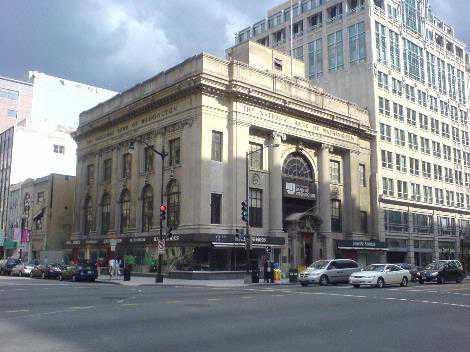
    National Bank of Washington building (center) and four structures to the left reverted to the Cafesjian Foundation. PQLiving.com

    McClatchy Newspapers

    A nasty, long-running legal battle over a proposed Armenian Genocide Memorial and Museum has ended for now, with a judge returning the valuable downtown Washington, D.C., property to a wealthy philanthropist who said he was wronged.

    The 190-page ruling by U.S. District Judge Colleen Kollar-Kotelly is a blow to the Armenian Assembly of America and a victory for retired businessman Gerard L. Cafesjian. Precisely what it means for the proposed museum’s future, though, remains unclear.

    “The museum will be built,” Cafesjian’s attorney, John Williams, said Thursday, adding that Cafesjian is “going to reach out to the Armenian community and present a plan for moving forward.” But in a sign of the difficulties ahead, the attorney for the Armenian Assembly of America said he was “disappointed” and stressed that “we have to consider what the net effect” might be on the museum’s future.

    “We’re not ruling anything out,” attorney Michael DeMarco said Thursday.

    Under the ruling, the museum site several blocks from the White House will be returned to the Cafesjian Family Foundation. A World War II veteran who turns 86 this year, Cafesjian built the foundation with a fortune made by selling West Publishing, a Minnesota-based legal publishing firm.

    Cafesjian will also gain control of a seat on the museum board, which must now figure out a new game plan amid sharp disagreements.

    The 50,000-square-foot Armenian Genocide Memorial and Museum is supposed to commemorate the horrific events of 1915 to 1923 when, by some accounts, more than 1 million Armenians died at the hands of the Ottoman Empire.

    Cafesjian and his foundation had helped buy the former National Bank of Washington site and nearby properties for museum purposes.

    “While the court hopes that the properties can be used for (the museum), the court recognizes that the (foundation) is not legally obligated to use the properties to build a museum,” Kollar-Kotelly noted.

    Kollar-Kotelly quietly issued her opinion Tuesday night, addressing the complexity of a case that began nearly four years ago and required a 12-day trial and more than 450 exhibits to resolve.

    In sometimes pointed terms, Kollar-Kotelly questioned the veracity of some Armenian Assembly trial witnesses, including some, she said, whose “lack of memory seems to be driven more by convenience than cognition.” DeMarco stressed Thursday that the voluminous decision is still being reviewed.

    “The decision requires a great deal of thought and analysis,” DeMarco said, adding that “everybody wants the museum to be built.”

    The proposed museum got its start in the mid-1990s with several large donations and pledges. In 2000, the Armenian Assembly bought the former National Bank of Washington building for $7.25 million. The Cafesjian Family Foundation provided a $2.5 million grant, and additional help with a loan.

    Cafesjian also began buying property near the bank, suggesting he might build an art museum. Instead, he donated these properties as well to the Armenian Assembly.

    “The Armenian American community was euphoric about the acquisition of the bank building,” Kollar-Kotelly noted. “However, the real work in creating an Armenian genocide museum and memorial lay ahead.”

    At one point, a consultant charging $50,000 a month recommended constructing a $215 million museum that expanded to cover many genocides. The idea sank.

    In considerable detail, Kollar-Kotelly spelled out maneuverings and mutual antagonisms that followed. Eventually, the Armenian Assembly accused Cafesjian and his allies of mismanaging museum planning; Cafesjian, in turn, was “surprised by the hostility,” according to Kollar-Kotelly, and a series of wide-ranging suits and countersuits ensued.

    A key issue revolved around a “reversionary clause” that returned property to Cafesjian if the museum wasn’t developed by Dec. 31, 2010. Cafesjian won this point. Notably, the judge also awarded attorneys fees to Cafesjian’s side; these could prove to be considerable.

    “The court sincerely hopes that after years of fighting legal battles, the parties can put aside their differences and accomplish the laudable goal of creating an Armenian genocide museum and memorial,” Kollar-Kotelly stated.

  • “It was a step to open the church”

    “It was a step to open the church”

    What media members think about Turkish-Armenian relations? Aram Abrahamyan, Chief of Aravot Daily in Armenia, shares his ideas about this issue. He points out the important points about this sensitive subject.

    (more…)

  • London Conference: Prejudice, Deception, and the Armenian Question

    London Conference: Prejudice, Deception, and the Armenian Question

    Dear Sir / Madam,

    You are kindly invited to attend our annual conference on the 4th February 2011 on the subject of “Turkish- Armenian Relations”, details of which are attached.

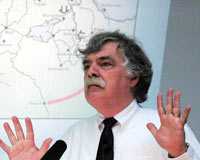
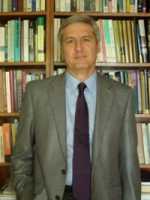
    The guest speaker, Prof Justin McCarthy specializes in the social and demographic history of the Modern Middle East, particularly Turkey and the Ottoman Empire. He is presently Distinguished Professor of Arts and Sciences and Distinguished University Scholar at the University of Louisville.The event will be chaired by Professor Şevket Pamuk who is the Chair of Contemporary Turkish Studies at the European Institute, London School of Economics and Political Science. He is a leading economic historian of the Ottoman Empire, the Middle East and modern Turkey.

    This is the fifth conference in the series and has been organised in the memory of 34 Turkish diplomats and other innocent victims who were murdered by various Armenian terrorist groups between 1973 and 1985. The aim of these conferences is to promote mutual understanding and discuss issues concerning Turkish-Armenian relations both recent and historic on an academic platform.

    We very much hope that you will be able to attend the conference.

    Yours sincerely,

    FTA UK

    ——————————————————————————————————————

    You are kindly invited to attend an evening conference entitled

    ‘TURKISH – ARMENIAN RELATIONS’

    Friday, 4th  February 2011, 6 pm for 6.30 pm

    Venue:

    Sheikh Zayed Theatre,

    London School of Economics,

    New Academic Building,

    Lincoln’s Inn Fields,

    London WC2A 2AE

    GUEST SPEAKER

    Prof Justin McCarthy

    Prejudice, Deception, and the Armenian Question”

    For those who study the troubled history of relations between Turks and Armenians, the question naturally arises, “How could so many have been so wrong?” Why did Europeans and Americans at the time, and still today, believe a story of persecution that is demonstrably wrong? The answer lies in ignorance, prejudice, and deception. Ignorance made politicians and editors, then and today, believe whatever fit their prejudices. And prejudice caused them to ignore the facts before them. Instead, they accepted the often deliberate falsehoods spread by Armenian rebels and their supporters. This presentation offers examples of the deceptions that lie behind what is commonly believed of the Armenian Question.

    CHAIRED BY

    Prof Şevket Pamuk


    * * * * *

    Organised by

    THE FEDERATION OF TURKISH ASSOCIATIONS UK

    The Federation of Turkish Associations UK (FTA UK) is an umbrella organization consisting of 16 Turkish associations, representing approximately 300,000 British Turks and Turkish citizens in the UK. We are following closely any developments and issues concerning our community in this country and we make representations at governmental and/or local levels. We also serve as a broad platform reinforcing and building on the cultural and economic bridges between Turkey and the UK.

    www.turkishfederationuk.com

    * * * * *

    Non – Members Welcome

    Attendance is free but by registration only

    Please register at

    [email protected]. uk

    or telephone / text  07788 908 803

    * * * * *

    Prof Justin McCarthy

    Justin McCarthy received a Ph.D. in Near Eastern history from U.C.L.A. in 1978 and a Certificate in Demography from PrincetonUniversity in 1980. He is presently Distinguished Professor of Arts and Sciences and Distinguished University Scholar at the University of Louisville. Professor McCarthy specializes in the social and demographic history of the Modern Middle East, particularly Turkey and the Ottoman Empire. His books include Muslims and Minorities, Death and Exile, The Population of Palestine, TheOttoman Turks, The Ottoman Peoples and the End of Empire,Population History of the Middle East and the Balkans,Who Are the Turks?(with Carolyn McCarthy), The Armenian Rebellion at Van(with Esat Arslan, Cemalettin Taşkiran, and Ömer Turan), and Turkey and the Turks (with Carolyn McCarthy).His book on the image of Turks in America, The Turk in America, was published in 2010. He has also written a number of articles on Middle Eastern, Balkan, Turkish, and Ottoman topics. As a historical cartographer, he has produced the Middle Eastern map series for the Middle East Studies Association and the U.S. Department of Education, as well as maps for publications.He has lectured in Turkey, Azerbaijan, Britain, Germany, Austria, the Netherlands, Israel, Bosnia, and Saudi Arabia, as well as in the United States and Canada. In 2005 he was invited to address a special session of the Turkish Grand National Assembly. Rotary International gave him its Paul Harris Award. He has held a Senior Research Fellowship from the U.S. National Endowment for the Humanities, a National Needs Postdoctoral Fellowship from the National Science Foundation, a Fulbright-Hays fellowship, anInternational Research and Studies Program grant from the U.S. Department of Education, and other grants and awards. Professor McCarthy has served on the Boards of the Institute of Turkish Studies, the Turkish Studies Association, and the International Congress for Asian and North African Studies, as well as the advisory boards of various organizations.

    Prof Sevket Pamuk

    Professor Şevket Pamuk is Chair of Contemporary Turkish Studies at the European Institute, London School of Economics and Political Science. He is a leading economic historian of the Ottoman Empire, the Middle East and modern Turkey. He is the author of The Ottoman Empire and European Capitalism 1820-1913: Trade, Investment and Production (Cambridge University Press, 1987); A Monetary History of the Ottoman Empire (Cambridge University Press, 2000) and jointly with Roger Owen, A History of the Middle East Economies in the Twentieth Century (I.B. Tauris Publishers and Harvard University Press 1998). A collection of his articles on the Ottoman economy recently appeared asOttoman Economy and Its Institutions (Ashgate-Variorum, 2008).  After attending high school in Istanbul, Pamuk graduated from Yale University and obtained his PhD. degree in Economics from the University of California at Berkeley. He has since taught at various universities in Turkey and the United States including Ankara, Pennsylvania, Villanova, Princeton, Michigan at Ann Arbor, Northwestern and beginning in 1994 at Bogaziçi (Bosphorus) University, Istanbul as Professor of Economics and Economic History. Şevket Pamuk was the President of the European Historical Economics Society, an association of European economic historians, has been a member of the Executive Committee of the International Economic History Association, a member of the Standing Committee on the Humanities of the European Science Foundation and is a member of the Academy of Sciences of Turkey. He serves on the Editorial Boards of various academic journals including European Review of Economic History and The Journal of Economic History.

    Supported By Turkish Forum World Turkish Alliance UK