Month: January 2011

  • WAS TURKEY PREPARING TO OCCUPY ADJARA?

    WAS TURKEY PREPARING TO OCCUPY ADJARA?

    Georgia Today

    Dec 23 2010

    Armenian and Russian sources have seized on American embassy cables
    published by WikiLeaks which claim that Turkish armed forces were
    ready to occupy Adjara during the war of August 2008 in the event of
    Russian troops coming 100 km from the Georgian-Turkish border.

    The leaked information suggests that Turkey’s Prime Minister, Recep
    Erdogan and members of the Turkish parliament flew to Moscow to inform
    Russia’s President Dimitri Medvedev that Turkey, as a NATO member
    country would have the right to bring military units to the conflict
    zone in order to protect the territory of the neighboring country.

    In such a scenario, the cables claim, Turkey would have sent its
    ground units into Adjara supported by air power. There is in fact a
    precedent for the scenario, as in 1921 when the Red Army conquered
    Georgia, Turkey’s military units moved in to occupy Adjara.

    Is this all true?

    The cables claim that on March 3, 2009 the Georgian Interior Minister,
    Vano Merabishvili told Georgian journalists that if during the
    Russian-Georgian war, the government had not been able to ensure the
    country’s security, Turkey was ready to bring its armed forces in
    through Adjara to protect Georgia.

    According to the Kars agreement, signed by Russia after the occupation
    of Georgia in 1921, Turkey has the right under international law to
    bring troops into the Autonomous Republic of Adjara, but it is hard
    to believe that an armed conflict could take place between NATO-member
    Turkey and Russia over the territory.

    There are several reasons for doubting that the sides would ever have
    come to blows: First – the Turkey would not have been able to act in
    the name of NATO without the consent of every NATO member state.

    Second – Turkey could bring troops to Adjara but not as a NATO-member
    state, it would only have been possible to use the Kars agreement to
    justify a military presence in the territory, not actual conflict.

    Third – Ankara would have done its best not to allow military
    confrontation between the Turkish and Russian military units to occur
    as such an event would cause a serious international incident.

    On the morning of August 11, 2008, Russian jets bombed a Georgian
    military base in Khelvachauri, Adjara as well as Sharabidzes,
    Kapandichi and Makho, villages 10 km from the Georgian-Turkish border.

    Russian planes flew well within the exclusion zone near the
    Georgian-Turkish border but no response was seen from Ankara.

    During the August war, a Russian commando unit entered Poti
    and bombed several sites in the port town. One month later, a
    Russian control-checkpoint was still located at the entrance to
    Poti. Even though these actions took place less than 100 km from
    the Georgian-Turkish border (70 km), there was no serious military
    reaction from the side of the Turkish government.

    These factors certainly shed doubt on the truth of the reports being
    circulated in the Russian and Armenian media.

    It cannot be ruled out that agencies of certain countries may be
    trying to use the WikiLeaks data to spread misinformation as it is
    quite difficult to check the validity of the information in the vast
    hoard of data that can be found on the website

  • Could the US Holocaust Memorial Museum Have Erred in a Major Exhibit?

    Could the US Holocaust Memorial Museum Have Erred in a Major Exhibit?

    From: ARNOLD REISMAN [mailto:[email protected]]
    Sent: Tuesday, January 04, 2011 9:49 PM
    Subject: My upgraded article on the Hitler quote at the USHMM


    Arnold Reisman
    Reisman and Associates

    December 31, 2010

    Abstract:
    Not long after the Nazi takeover of Germany and proclamation of their Jewish agenda, Armenian propaganda efforts were directed toward establishing a linkage between their own historical experiences and those of European Jewry. Following WWII the cornerstone in the Armenian case has been Adolf Hitler’s purported remark “Who, after all, speaks today of the annihilation of the Armenians?” This sentence is widely known, quoted, taught, and believed worldwide. National and local governments in several countries have used it to justify resolutions declaring that the alleged slaughter of Armenians by Turks was genocide. The veracity of this statement, however, cannot be confirmed anywhere in the transcripts of evidence admitted into record by the Nuremberg War Crimes Tribunal. Quite the contrary. Transcripts of the speech in which that statement was supposedly made by Hitler on August 22, 1939, and admitted into evidence are devoid of that sentence. Believed to be Hitler’s justification for the invasion of Poland and his “final solution,” that sentence may, in fact, be a contrived statement. Using archival documents, this paper casts doubt upon the veracity of that statement and questions the validity of its use on a USHMM wall in a memorial to victims of genocide. These findings are put into the context of the Armenians’ use of terror as part of a propaganda campaign. This campaign began in the second half of the 19th century, for the purpose of alerting western countries to their victimization and encouraging the west of the need to dismantle the Ottoman Empire. One outcome of WWI. This paper relies on various archival documents including contemporaneous articles from the New York Times and Western diplomatic dispatches as well as writings by ethnic Armenian historians in both the US and the USSR.

    Arnold Reisman PhD. PE


    Author of:

    • My Enemy’s Enemy
    • An Ambassador and A Mensch: The story of a Turkish Diplomat in Vichy France
    • SHOAH: Turkey, the US, and the UK
    • Turkey’s Modernization: Refugees from Nazism and Ataturk’s Vision
    • Post-Ottoman Turkey: Classical European Music and Opera
    • Arts in Turkey: How Ancient Became Contemporary
    • Refugees and Reforms: Turkey’s Republican Journey
    • The Transformation of Istanbul: Art Galleries Reviving Decaying Spaces

  • Urartian king’s burial chamber opened for first time in E Turkey

    Urartian king’s burial chamber opened for first time in E Turkey

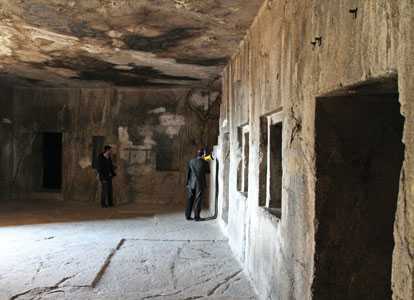
    The burial chambers of an Urartian king and his family have been opened for the first time for Anatolia news agency. The graves in the ancient Van castle, an important work of architecture from the Urartian Empire that ruled eastern Anatolia between the ninth and sixth centuries B.C. are normally off limits to visitors, but were revealed to the agency


    The burial chambers of Urartian King Argishti I and his family in the western wing of an ancient castle in the eastern Turkish province of Van have been opened for the first time.

    “The burial chamber is in the western part of Van castle and bears workmanship of the highest quality. It is reached through a 24-step staircase,” said Rafet Çavuşoğlu, a professor at Van Yüzüncü Yıl University’s Archaeology Department.

    King Argishti I was buried in a rock burial chamber called “Horhor Cave,” said the professor, who specially opened the doors to the graves to Anatolia news agency.

    Van castle, which is 120 meters by 80 meters and was built on a rocky peak along Lake Van, has been the site of recent excavations headed by lecturer Altan Çilingiroğlu of Ege University.

    Çavuşoğlu said Urartian writing on the wall of the burial chamber was very interesting.

    “There are nail holes in spaces between doors opening to the chambers inside. These holes were used to hang torches and gifts,” said the Yüzüncü Yıl professor. “There are four inner chambers and each chamber has four alcoves on the walls. The location of the alcoves and doors and the dimension of the chambers are similar to each other.”

    He said religious ceremonies were held in the hall in burial chambers and valuable objects were buried in the adjacent chambers.

    “The burial chambers are described as caves in the 17th-century Ottoman plan and Evliya Çelebi’s travel book. They served as an armory, a food depot and a workshop in the time of the Ottomans,” he said.

    Before kingdom in ancient times

    Centered in eastern Anatolia, the Kingdom of Urartu ruled between the ninth and sixth centuries B.C. until its defeat by Media in the early 6th century B.C. The best monuments of Urartu exist in Van as the city was the capital of the kingdom with the name Tushpa.

    The ancient castle, which has traces of a 3,000-year-old civilization and is composed of five separate sections, draws hundreds of visitors from Turkey and overseas every year. However, because the burial chambers of Urartian King Argishti I and his family are kept closed to visitors, only Anatolia was allowed in to take photographs of the graves’ interior.

    Argishti I was the sixth known king of the ancient kingdom, reigning from 786 B.C. to 764 B.C. As the son and the successor of Menua, he continued a series of conquests initiated by his predecessors. Victorious against the Assyrians, he conquered the northern part of Syria and made Urartu the most powerful state in the post-Hittite Near East.

    Hürriyet

  • How to Stay Friends With China

    How to Stay Friends With China

    By ZBIGNIEW BRZEZINSKI

    Washington
    THE visit by President Hu Jintao of China to Washington this month will be the most important top-level United States-Chinese encounter since Deng Xiaoping’s historic trip more than 30 years ago. It should therefore yield more than the usual boilerplate professions of mutual esteem. It should aim for a definition of the relationship between the two countries that does justice to the global promise of constructive cooperation between them.
    I remember Deng’s visit well, as I was national security adviser at the time. It took place in an era of Soviet expansionism, and crystallized United States-Chinese efforts to oppose it. It also marked the beginning of China’s three-decades-long economic transformation — one facilitated by its new diplomatic ties to the United States.
    President Hu’s visit takes place in a different climate. There are growing uncertainties regarding the state of the bilateral relationship, as well as concerns in Asia over China’s longer-range geopolitical aspirations. These uncertainties are casting a shadow over the upcoming meeting.
    In recent months there has been a steady increase in polemics in the United States and China, with each side accusing the other of pursuing economic policies that run contrary to accepted international rules. Each has described the other as selfish. Longstanding differences between the American and the Chinese notions of human rights were accentuated by the awarding of the 2010 Nobel Peace Prize to a Chinese dissident.
    Moreover, each side has unintentionally intensified the suspicions of the other. Washington’s decisions to help India with nuclear energy have stimulated China’s unease, prompting increased Chinese support for Pakistan’s desire to expand its own nuclear energy potential. China’s seeming lack of concern over North Korea’s violent skirmishes with South Korea has given rise to apprehension about China’s policy on the Korean peninsula. And just as America’s unilateralism has in recent years needlessly antagonized some of its friends, so China should note that some of its recent stands have worried its neighbors.
    The worst outcome for Asia’s long-term stability as well as for the American-Chinese relationship would be a drift into escalating reciprocal demonization. What’s more, the temptations to follow such a course are likely to grow as both countries face difficulties at home.
    The pressures are real. The United States’ need for comprehensive domestic renewal, for instance, is in many respects the price of having shouldered the burdens of waging the 40-year cold war, and it is in part the price of having neglected for the last 20 years mounting evidence of its own domestic obsolescence. Our weakening infrastructure is merely a symptom of the country’s slide backward into the 20th century.
    China, meanwhile, is struggling to manage an overheated economy within an inflexible political system. Some pronouncements by Chinese commentators smack of premature triumphalism regarding both China’s domestic transformation and its global role. (Those Chinese leaders who still take Marxist classics seriously might do well to re-read Stalin’s message of 1930 to the party cadres titled “Dizzy With Success,” which warned against “a spirit of vanity and conceit.”)
    Thirty years after their collaborative relationship started, the United States and China should not flinch from a forthright discussion of their differences — but they should undertake it with the knowledge that each needs the other. A failure to consolidate and widen their cooperation would damage not just both nations but the world as a whole. Neither side should delude itself that it can avoid the harm caused by an increased mutual antagonism; both should understand that a crisis in one country can hurt the other.
    For the visit to be more than symbolic, Presidents Obama and Hu should make a serious effort to codify in a joint declaration the historic potential of productive American-Chinese cooperation. They should outline the principles that should guide it. They should declare their commitment to the concept that the American-Chinese partnership should have a wider mission than national self-interest. That partnership should be guided by the moral imperatives of the 21st century’s unprecedented global interdependence.
    The declaration should set in motion a process for defining common political, economic and social goals. It should acknowledge frankly the reality of some disagreements as well as register a shared determination to seek ways of narrowing the ranges of such disagreements. It should also take note of potential threats to security in areas of mutual concern, and commit both sides to enhanced consultations and collaboration in coping with them.
    Such a joint charter should, in effect, provide the framework not only for avoiding what under some circumstances could become a hostile rivalry but also for expanding a realistic collaboration between the United States and China. This would do justice to a vital relationship between two great nations of strikingly different histories, identities and cultures — yet both endowed with a historically important global role.
    Zbigniew Brzezinski was the national security adviser in the Carter administration.

    January 2, 2011

  • Istanbul thrives as the new party capital of Europe

    Istanbul thrives as the new party capital of Europe

    The Golden Horn is booming as the world’s most dynamic city transforms its skyline and artists and students help make it buzz
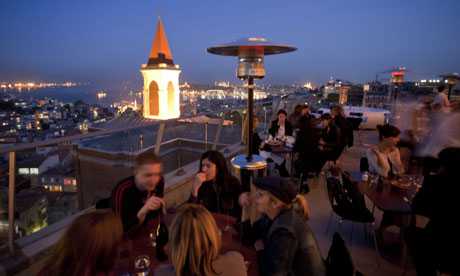

    In the run-up to New Year, the tourists were haggling over Louis Vuitton and Prada rip-offs in Istanbul‘s fabled grand bazaar. But in the high-rise shopping centres on the other side of town, bargain hunters in the winter sales are battling to get their hands on the real thing.

    Istanbul’s covered market, an early shrine to shopaholism, is about to celebrate its 550th anniversary with a multimillion-pound facelift. In fact, the entire city is in the throes of a multibillion-pound makeover, as what was once an outpost on the edge of Europe rebrands itself as a regional magnet.

    The city is buzzing. Only a few years ago, when residents spoke of millennium domes it was not the O2 venue for the latest Lady Gaga concert they had in mind, but the thousand years separating the Church of Hagia Sofia and the Blue Mosque on the skyline of the city’s historic peninsula. But now there are new skylines. At the European entrance to the Bosphorus bridge, work goes on through the night on the Zorlu Centre, a hotel-arts-shopping-residential-office complex. It is just down the road from the Sapphire skyscraper, which advertises itself as Istanbul’s tallest building, and with a strong arm you could throw a stone at the new Trump Towers.

    “Istanbul is a country, not a city,” says its mayor, Kadir Topbas, and the explanation of its modern boom is buried in the history of the past 30 years. In 1980 Istanbul could not afford the electricity to illuminate that famous skyline. The city, along with the rest of Turkey, was under martial law and there were midnight curfews and even shortages of Turkish coffee.

    Since then the city has elbowed its way into the global economy. The backstreet clip joints in the European neighbourhood of Beyoglu have turned into boutique hotels, fusion eateries and world music clubs. The smoke-filled coffee houses whose patrons once scrounged for the price of a glass of tea, now serve lattes – and if you try to light up, there is a £30 fine.

    At the end of the second world war, when the iron curtain came down to isolate Istanbul from the rest of Europe, only a million people lived here. Since then, the city has increased its population by that amount every 10 years. “Today’s Istanbul is above all an immigrant city,” says Murat Guvenc, city planner and curator of Istanbul 1910-2010, a remarkable exhibition that explains the pace of change. It is housed in santralistanbul – a converted power station more brutally chic than London’s Tate Modern.

    Turkey is already a young country – the average age is 29 – but Istanbul is even younger. People come there to work and often retire somewhere else. And if Turkey is notoriously poor at getting women into formal employment, nearly half of them work in Istanbul.

    A recent study by the Washington-based Brookings Institution, in a joint investigation with the LSE Cities project, judged that Istanbul had beaten Beijing and Shanghai to claim the title of 2010’s most dynamic city.

    “Istanbul takes the top ranking for economic growth in the past year,” wrote Alan Berube, director of the Brookings Metropolitan Policy Programme. “Its economy expanded by 5.5% on a per capita basis, and employment rose an astonishing 7.3% between 2009 and 2010. Turkey’s banking sector, which was less invested in risky financial instruments, became a safe haven for global capital fleeing established (and exposed) markets during the downturn.”

    Economists may be just realising that Istanbul is the place to be. Couch surfers and Erasmus exchange students have known this for some time. If emerging markets are kick-starting the global economy, creative dynamism is ebbing away from the old centres to the new. Istanbul is fast resembling Henry Miller’s Paris or the post-Soviet city-wide party in Prague where western twentysomethings can spend that critical time between university and life. “You just can’t just show up in New York or London and hope to fit in,” says Katherine Ammirati, 23, from Berkeley, California. “At least not without a plan bankrolled by well-heeled parents.”

    She came to Istanbul, doing tutoring jobs and then clerical work at a law firm and will go home one day to become a lawyer herself. “Istanbul still has rich and poor side by side, and that makes it feel like a real city,” she says.

    The international art community, too, has put the city on its nomadic route, drawn in large measure by the success of the privately organisedIstanbul Biennial, which will be held again this September. Sotheby’s recently set up shop in Istanbul, motivated by a new generation of Turkish artists and the new purchasing power of Turkish patrons. In the opening-night crush at Contemporary Istanbul, the city’s late autumn art fair, there was hardly elbow room to lift a glass.

    The frontiers are disappearing. New York galleries are opening up in Istanbul and Turkish collectors go abroad. Art Basel Miami Beach might not feel the competition yet, but the city founded by Constantine as the new Rome in 330 wasn’t built in a day.

    “Istanbul’s biggest problem is that we don’t know what we’re doing right,” says Kasim Zoto, a hotel keeper who sits on the board of the Turkish Hotel Association. In 1955 a Hilton hotel opened up a new modernist skyline across from the Golden Horn and the hillside was soon littered with convention centres, concert halls and more five-star hotels. In the next two years, the number of hotel rooms in the city will rise by a third and two new Hiltons will open.

    Not everyone approves of the consequences of such vertiginous growth. To some, gentrification appears out of control as “real” neighbourhoods, whether those of the Roma community by the old city walls, or the working-class districts around Beyoglu, are bulldozed for redevelopment. Only high-level lobbying last year stopped the city from being defrocked by Unesco as a world heritage site, as a row blew up over plans for an overland rail link for the city’s metro system that would slice the view of the Suleymaniye Mosque.

    The city has so far failed to meet an undertaking to produce an inventory of historic buildings and a master plan to manage the peninsula – all measures that would get in the way of the developers’ axe. Environmentalists feel powerless to stop the construction of a third Bosphorus bridge which, if the precedents of bridges one and two are anything to go by, will lead to the destruction of the city’s remaining green belt.

    Optimists and pessimists over Istanbul’s future tend to be divided along political lines, according to Hakan Yilmaz, a political scientist at the city’s Bosphorus University.

    Those who support the current religious-leaning government are inclined to see the glass half full. It is Turkey’s ardent secularists, now losing their status, who feel less hopeful about the future.

    And while some Istanbulites might see themselves caught up in a clash of civilisations, between the pious and religious and a western-oriented elite, for others it is precisely this tension that makes the city come alive.

    “There is a new culture being born,” says Kutlug Ataman, a Turner prize finalist. The “usual suspects” – the food and the nightlife – are what make Istanbul such an attractive place, he argues, but it’s the pace of change that makes the city so addictive. Having fled the country after the 1980 military coup, he sees Turkey’s transformation evolving, however imperfectly, in the right direction.

    As if to make his point, alongside a retrospective of Ataman’s own work in the Istanbul Modern museum is a celebration of the contribution of Armenian architects to the 19th and early 20th century city, an important step in allowing the city’s remaining Armenian community to reclaim the space they created. “We are becoming more democratic and you feel as an artist that you can make an impact,” Ataman says.

    And if Istanbul feels despondent about surrendering its European capital of culture crown to Turku in Finland, it knows the cloud has a silver lining. In 2012, it will become European capital of sport.

    Andrew Finkel is the author of the forthcoming book Turkey: What Everyone Needs to Know, published by OUP

    URBAN RENEWAL

    667 BC City of Byzantium established by Greek colonists from Megara. Named after their king Byzas.

    AD 73 Byzantium incorporated into the Roman Empire.

    330 Byzantium becomes the capital city of the Roman Empire and is renamed Constantinople after the Emperor Constantine, pictured.

    1453 Constantinople captured by the Ottoman Turks, who call it Istanbul after the Greek meaning “to the city”.

    1923 Upon the establishment of the Republic of Turkey, the capital city is moved from Istanbul to Ankara.

    1930 Constantinople is officially renamed Istanbul.

    2010 Istanbul named as one of the European capitals of culture.

    The Guardian
  • MEMBERSHIP AND DONATIONS

    MEMBERSHIP AND DONATIONS

    Membership Classifications  & Payment Options

    Paid Membership Required for Document (Doc”s) & Archive Browsing. (A Special Passport to enter the TF will be provided).

    TURKISH FORUM MEMBERSHIP  :  AKTİF VE TAM ÜYELİK

    Turkish Forum

    Turkish Forum 250 kişiye yaklaşan danışma kurulu ve 300.000 kişiye yaklaşan abone sayısı ile merkezi Amerika Birleşik Devletleri’nde bulunan, Dünya üzerinde pek çok ülkede örgütlenmiş bir düşünce kuruluşudur. Turkish Forum kar amacı gütmeyen, vergiden muaf kuruluş statüsündedir. Tüm Türk ve Türk dostları üye olabilirler.

    SECURE METHODS AND SECURE  PAYPAL SYSTEM TO PAY YOUR MEMBERSHIP FEES, MAKE DONATIONS AND/OR PURCHASE BOOKS

    Transfer through a Turkish bank : Account Owner: Turkish Forum Inc

    1. TC ZIRAAT BANKASI Istanbul/Taksim Branch(Branch No: 843)Account Owner: Turkish Forum Inc.
      SWIFT# TC2BTR2A


      USD Account No:
      5761628-5001
      IBAN = TR09 0001 0008 4305 7616 2850 01
      ********
      TL Account No:
      5761628-5002
      IBAN = TR79 0001 0008 4305 7616 2850 02
      ********
      EURO Account No: 5761628-5003

      IBAN = TR52 0001 0008 4305 7616 2850 03

      ***

    2. Sending a check to: TurkishForum, P.O. Box: 1104 Marblehead, MA 01945 USA

    3.Through PayPal or with a Credit Card: In many countries around the world, you can make a secure payment from your bank account or your credit card by clicking on the PayPal logo.

    WHEN BUYING BOOKS BY USING PAYPAL OR A CREDIT CARD, PLEASE USE THIS LINK.

    Through PayPal or with a Credit Card: In many countries around the world, you can make a secure payment from your bank account or your credit card by clicking on the PayPal logo.

    …………… ….
    1-Junior Membership(free)Receive daily, weekly or monthly Bulletins (optional), browse all web-posted public content, (archives browsing not included), send your comments to forums & posts.

    Kredi Kartı (Paypal) Cek hesabınız * Charge Card . Check Account via paypal or paypal account could be used 2 -Academic Membership (60 USD)Receive daily, weekly or monthly Bulletins (optional), browse all public & password-protected content, browse in TF archives, send your comments to forums & posts; the right to join the Editorial Board and to publish your own articles (for university academic staff & researching students and writers).Academic Member Certificate.

    Kredi Kartı (Paypal) Cek hesabınız * Charge Card.Check Accountpaypal account could be used
    3- Full Membership – 100 USD
    Rights and Privileges of Academic Membership,
    Right to be a member of the Board of Directors (BOD) and its committees,

    Right to vote and be elected. Certificate of Full Membership.


    4/a- Çırağan Club Sponsor Member – 250 USD
    Rights and Privileges of Full Membership.
    Distinguished Ciragan Club membership certificate, 10% discount on all book sales,

    Right to be nominated to distinguished membership on the TF Advisory Board.


    4/b- Dolmabahçe Club Sponsor Member– 500 USDRights and Privileges of Ciragan Club Membership, Distinguished Topkapi Club Membership certificate,

    20% discount on all book sales,

    Right to join one of the Turkish Forum Global Think Tank groups.


    4/c- Topkapı Club Sponsor Member – 1.000 USD
    Rights and Privileges of Dolmabahce Club Membership,
    Full membership to Board of Trustees,

    Board of Trustees Distinguished Membership certificate,


    4/d Corporate Member – 2.500 USD
    Right and Privileges of Topkapi Club Sponsor Membership,
    Right to be a Member of TF Corporate Sponsors Club and

    Distinguished Membership Certificate

    Free corporate advertising on TF web pages

    60% Reduced rate advertising within daily Bulletins


    5 – LifeTime Donor – 5.000 USD
    Corporate Donor avantajlarına ek olarakYaşam Boyu üye sertifikası

    Bağışlarınızı ABD ve Türkiye içinde vergi matrahınızdan düşmek mümkündür. Kuruluşumuzun Türkiye  vergi numarasi 8710506391’dir. ABD’de ise 501-3-C numara ile vergiden muaf kar amacı gütmeyen kuruluşuz.

    HEP BERABER, DAHA NİCE ORTAK BAŞARILARA İMZA ATMAK DİLEĞİ VE ÜMİDİYLE�

    DR. KAYAALP BÜYÜKATAMAN , BAŞKAN
    TURKISH FORUM – DÜNYA TÜRKLERİ BİRLİGİ

    © 1993-2010 TurkishForum

    —————————-

    aralik- 2010

    2010 PROGRES RAPORU, İLERİYE BAKIŞ

    DEGERLİ ARKADAŞLAR

    DEGERLİ ÜYELERİMİZ, TURKISH FORUMU YAŞATAN MEDYA VE ÇALIŞMA GURUPLARIMIZ

    Turkish Forumu Yeniden Doğuş Operasyonu başarı ile tamamlandı. Bu normalden de üstün başarıyı siz Turkish Forumun yaşamasına öncelik tanıyan ve fedakârlıktan kaçınmayan dostlarımıza borçluyuz. Turkish Forum yeni bir web tasarımı ile ve çok kaliteli Yazarlarla yeniden hizmetize girdi.

    Emniyet programlarına gelince, tümüyle upgrade edildi (güncelleştirildi) , fakat devamlı üzerinde çalışmak ve yeni programları devreye sokmak gerekmekte. Bu çok masraflı çalışmada Uzmanlar ve arkadaslarımız tarafından aralıksız devam etmekde.

    Avrupa’daki operasyonlarımız genişlemekde. Merkezi Almanya olacak olan Turkish Forum EU yu harekete geçirdik. Yapılanma safhasındalar. İngiltere hariç Tüm Avrupa operasyonlarımızı, Avrupa’daki Ülkelerde, Siyasi ve seçimlerle ilgili çalışmalarını Turkish Forum EU ya bağlamak bugünki planımız.

    Turkish Forum İngiltere ise ingiterede ki derneklerin müşterek çalışmalarında bir katalizör rolü oynamakla çok büyük bir yol aldı. İngiltere çok iyi gitmekte. İngiltere gurubumuz Turkish Forumu Facebookda yönetmekde, Türk gençlerine ve Türkiyenin dostlarına, Egitmenler yönetiminde,Türkçe öğretici enteraktif sayfalar açıldı ve Web sitemizde Tüm bilgileri içine alacak DOCs (Elektronik kütüphane) çalışması başlatıldı.  Turkishforum İngiltere Face Book bağlantıları:

    Turkish Forum Sayfası 

    Turkısh Forum Grup 

    Turkish Forum İngilizce Öğrenme

    DOCs ( Elektronik Kütüphane)

    Turkish Forum EU yönetiminde yer almak isteyen tecrübeli arkadaşlara ve DOCs sayfalarına. Önümüzdeki nesillerimiz için. bilgi birikimlerini deposit etmek isteyen arkadaslara ihtiyacımız var, lütfen temas kurunuz. Turkish Forumun sizlere ihtiyacı çok Büyük.

    Günlük yayınlarımız seçeneklidir, Türkçe-İngilizce-Almanca ve Rusça üzerinden yapılmaktadır. Buna Fransızcaö İtalyanca  ve İsponyalcayı ilaveye çalışmaktayız ve yakın bir tarihte ilave edeceğiz. Bu devre içinde çeşitli konularda kampanyaları sizlerden gelen istek ve katılımlarla başarı ile tamamladık. Mühim olan sizlerin maddi ve manevi desteği ve istekleriniz.

    Turkish Foruma vermekte devam ettiğiniz değer, mesuliyeti taşıyan gönüllü arkadaşlarımızın enerjilerini an be an arttırmakta ve arkadaşlarımız, yazarlarımız. Medya guruplarımız, Danışma ve Yönetim kurullarımız yorulmadan koşmaya ve size en iyi hizmeti sunmaya devam etmekte. LÜTFEN DESTEĞİNİZİ HER BİR SAHADA DEVAM ETTİRİNİZ ve görev almak istiyorsanız, ilgi sahanızı belirtiniz. Önümüzdeki bahar içinde ve TUZUK kurallarımız dahilinde. yeni yönetimi seçecegiz. BU ÖNEMLİ SEÇİME AİDAT ÖDEMELERİ GÜNCEL OLAN ÜYELERİMİZ OYLARI İLE KATILACAKDIR. gerekli atamaları HEP BİRLİKDE yapacagız. Bu safhayı gerçekleştirmek için seçime girecek adayları belirleme devresindeyiz.

    Bu sene hakikatten çok çalışmamız ve yeni bir çehre almamızın senesi olarak başladı. Çalışmalar aralıksız olarak sene sonuna kadarda bu şekilde devam edeceğe benzemekte.  Geçtiğimiz hafta yönetim kurulumuzun almış olduğu karara istinaden YENİDEN DOĞUŞA DESTEK VERMİŞ ÜYELERİMİZE KURUCU ÜYE SERTİFİKALARI E-MAİLLE ULAŞTIRILDI. Lütfen aşağıdaki listeyi kontrol ediniz. Şayet kurucu Üye statüsü Şartlarına uydu iseniz ve isminiz yoksa lütfen haber veriniz. Yanlarında * işareti olan kurucu üyelerimizin e-mail adreslerinden emin değiliz, ONLAR SERTIFIKALRINI ALMADILAR. Kurucu üye iseniz, Lütfen bu adrese e-mailinizi Kurucu Üye sertifikanızı size ulaştırabilmemiz için bildiriniz.

    Kurucu Üyelerimizin isimleri Turkish Forum Ana Tüzük kuralları dahilinde, Turkish Forum Ana Tüzüğünde ilelebet muhafaza edilecek ve Turkish Forum web sitelerinde isimleri Turkish Forum Yasadıkça post edilecektir.

    Aidat ve bağışlarınızı kredi kartı veya banka havalesi ile yapabilmeniz için https://www.turkishnews.com/tr/content/bagislar-ve-uye-aidatlari/ sayfasında emniyetli sistemler ve alternatife methodlar ayrıca geliştirilmiştir

    Hepinize başarılar dolu bir devre daha dilerim

    Dr. Kayaalp Büyükataman, Baskan

    Turkish Forum * Dünya Türkleri Birliği

    NOT: Turkish Forum 250 kişiye yaklaşan danışma kurulu ve 300.000 kişiye yaklaşan abone sayısı ile merkezi Amerika Birleşik Devletleri’nde bulunan, Dünya üzerinde pek çok ülkede örgütlenmiş bir düşünce kuruluşudur. Turkish Forum kar amacı gütmeyen, vergiden muaf kuruluş statüsündedir. Tüm Türk ve Türk dostları üye olabilirler.

    =================================================

    kurucu uyelerin ve danisma kurulumuzun ve yonetim kurulumuzun listesi icin tiklayiniz

    https://www.turkishnews.com/tr/content/turkish-forum/

    1* üye sertifikası (Büyütmek İçin Tıklayınız)