Month: January 2011

  • A Kurdish Rebel Softens His Tone for Skeptical Ears

    A Kurdish Rebel Softens His Tone for Skeptical Ears

    Saturday, January 01, 2011


    A Kurdish Rebel Softens His Tone for Skeptical Ears

    “We want the Kurdish problem — as a nation’s problem, as a people’s problem — to be solved not by guns, but by dialogue.”
    MURAT KARAYILAN
    By STEVEN LEE MYERS
    Published: December 31, 2010

    Stephen Farrell and Namo Abdulla contributed reporting from Qandil, Iraq, and Sebnem Arsu from Istanbul.

    QANDIL, Iraq

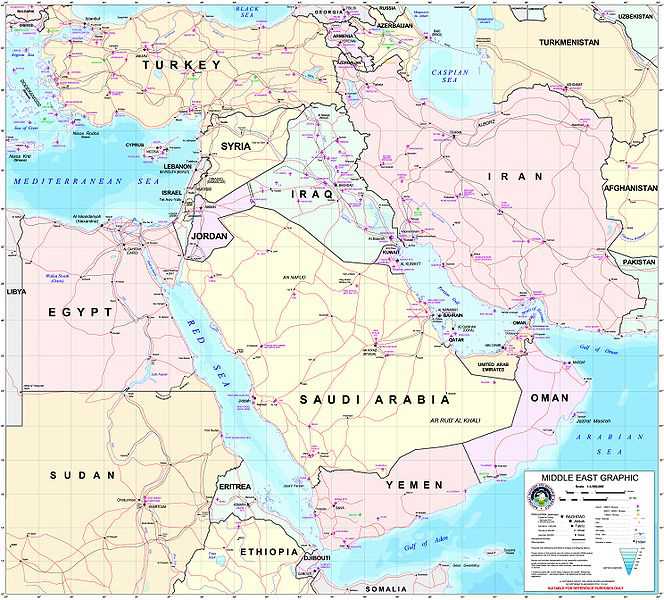
    HIGH in the craggy mountains of Iraq’s northern frontier, where men (and, in this case, women) with guns have long operated beyond the control of any government, Murat Karayilan sounds more interested in pursuing peace than the war he has led against Turkey.

    “We are not weak,” Mr. Karayilan said in an interview in this village, where he and other fighters of the Kurdistan Workers’ Party, or the P.K.K., represent the law of the land, despite official claims to the contrary.

    “Our youths are always ready, hot-blooded and combative, but we want the Kurdish problem — as a nation’s problem, as a people’s problem — to be solved not by guns, but by dialogue.”

    Many will doubt Mr. Karayilan’s sincerity, especially in Turkey. The party’s violent struggle has lasted more than a quarter-century and cost 40,000 lives. But now, perhaps more than ever before, there are indications that the war may have reached its endgame.

    And that has put Mr. Karayilan — either a noble insurgent fighting oppression or a narco-terrorist commander — at the center of a different kind of offensive.

    He has been making the case for Kurdish rights in Turkey in surreptitiously arranged, if not exactly clandestine, interviews from his mountainous redoubt, irritating officials on both sides of the border who would rather see him fade into obscurity.

    “The Kurdish people are an ancient people in the world,” he said. “All their national and linguistic rights have been denied. Our goal is to achieve those rights.”

    Mr. Karayilan’s party, long designated a terrorist organization and since last year a drug trafficker by the United States, has declared a new cease-fire and already extended it into the new year. Whether by design or under duress, the party has reduced its own political demands, tempered by the profound political and economic changes that have swept Turkey and Iraq.

    Mr. Karayilan no longer calls for a separate Kurdish state, but for a degree of autonomy within Turkey that is inspired by, but stops considerably short of, the federal system the Kurds set up for themselves in Iraq after the American invasion in 2003.

    Iraq’s Kurdish leaders, eager to expand trade and cross-border cooperation, have supported efforts to end the fighting, offering their own model of self-determination and rising prosperity as an example. Even as officials in Turkey rule out negotiations with the party itself, intermediaries have held secret talks to discuss the possibility of a lasting peace, according to officials in Iraq and Turkey.

    The presence of the P.K.K. has long been an irritant in relations, prompting cross-border raids and bombings as recently as last summer. Increasingly, though, it would seem to be a surmountable one.

    “We continue to remind all: Violence will not be the way to solve this issue,” said Barham Salih, the prime minister of the Kurdish regional government in northern Iraq.

    Iraq’s Kurds are “mindful of our relationship with Turkey,” Mr. Salih added. The experience of the Kurds within Iraq’s democratizing if not yet fully democratic system “dispels the notion that the Kurds are a destabilizing element in this part of the world,” he said.

    “We don’t have to be stuck in the conflicts in the past,” he said.

    MR. KARAYILAN is a garrulous man, portly but fit, mustachioed and nattily dressed in the handmade olive-gray uniform that the party’s fighters wear. His past is murky enough that the United States Treasury Department’s official terrorist designations give two birth dates for him, making him either 56 or 60.

    He has been the day-to-day commander of the Kurdistan Workers’ Party since its charismatic founder, Abdullah Ocalan, was captured in 1999, tried and sent to an island prison in the Sea of Marmara.

    The leadership moved to Qandil shortly afterward, and its fighters live more or less openly in what amounts to an undeclared haven. Its fighters — a large number of them women — adhere to a disciplined, ascetic lifestyle. While they have always used the mountains as refuge, the toppling of Saddam Hussein has made this much easier — to the chagrin of the Turkish government, which routinely complains to the United States and Iraq to do more to curtail the P.K.K.’s movements.

    “For the first time in history, the Kurds have breathing space,” said the movement’s spokesman, Roj Welat.

    Mr. Karayilan’s exact base is, of course, kept secret, but the party’s presence in the gorges around Qandil is not. Uniformed fighters maintain a checkpoint on the road from the Kurdish regional capital, Erbil, not far beyond the last official checkpoint.

    The party’s flag flutters over its territory, while Mr. Ocalan’s portrait hangs ubiquitously. Mr. Ocalan remains the movement’s revered leader, but he “is not in a position to giver orders” from prison, as Mr. Karayilan put it, though his messages and writings are still circulated.

    The party runs a clinic with a German doctor and a factory to make the uniforms. It neatly tends a cemetery with a 30-foot white obelisk that looms over the graves of Kurdish fighters from Iraq, Turkey, Iran and Syria.

    Mr. Karayilan said donations from Kurds in their homeland or abroad sustained the movement. American and Turkish officials say smuggling does. As for weapons, Mr. Karayilan smiled coyly when asked. “You can get whatever you want,” he said. “It’s the Middle East.”

    The party unilaterally declared a cease-fire after an eruption in cross-border violence from 2007 to 2009. The lull has largely coincided with concessions from the Turkish government under Prime Minister Recep Tayyip Erdogan to expand rights for the country’s Kurdish minority by, for example, allowing a Kurdish-language television station and Kurdish-language studies at universities.

    Mr. Erdogan’s government has ignored the party’s announced terms for an end to violence altogether, including the release of arrested Kurdish political activists and the creation of a reconciliation commission like the one in post-apartheid South Africa. Instead the government has struck a more nationalistic tone before elections in June. Nevertheless, the government is expected to offer some new gestures for Kurds in hopes of marginalizing Mr. Karayilan’s group.

    “Some of the things listed as preconditions are already part of the democratic standards by our government for all of our citizens, not only for Kurds,” said Omer Celik, a member of Parliament and one of Mr. Erdogan’s leading political advisers.

    Mr. Karayilan said the Turkish government lacked the political will to pursue a true peace, though, tellingly, he did not close the door on a negotiated resolution.

    He spoke for nearly two hours in a cinder-block house here in Qandil, not far from another house badly damaged by two Turkish bombs in the summer.

    He traveled with only a small retinue of guards in Toyota Land Cruisers and took few other precautions. When the interview ended, he apologized for not being able to stay for dinner.

    For all his polite charm, he remains strident at times, denouncing what he called Turkish occupation, oppression and genocide. But the outline of an accommodation that he sketches no longer seems so far-fetched.

    He urged the United States, as well as other nations, to stop seeing the conflict through the prism of the “war on terror,” but rather through that of self-determination. “It is the cause of a nation that needs to be addressed,” he said.
  • Istanbul judged to be 2010’s Most Dynamic City

    Istanbul judged to be 2010’s Most Dynamic City

    ISTANBUL – In the run-up to the New Year, the tourists were haggling over Louis Vuitton and Prada rip-offs in Istanbul’s fabled grand bazaar. But in the high-rise shopping centres on the other side of town, bargain hunters in the winter sales are battling to get their hands on the real thing.

    Istanbul’s covered market, an early shrine to shopaholism, is about to celebrate its 550th anniversary with a multi-million-pound facelift. In fact, the entire city is in the throes of a multi-billion-dollar makeover, as what was once an outpost on the edge of Europe rebrands itself as a regional magnet.

    The city is buzzing. Only a few years ago, when residents spoke of millennium domes it was not the O2 venue for the latest Lady Gaga concert they had in mind but the thousand years separating the Church of Hagia Sofia and the Blue Mosque on the skyline of the city’s historic peninsula. But now there are new skylines.

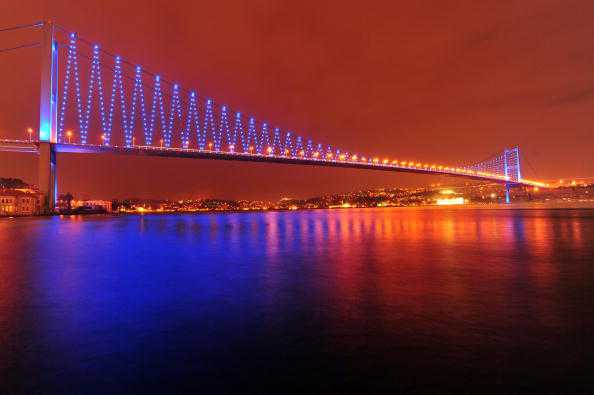
    At the European entrance to the Bosphorus bridge, work goes on through the night on the Zorlu Centre, a hotel-arts-shopping-residential-office complex. It is just down the road from the Sapphire skyscraper, which advertises itself as Istanbul’s tallest building and with a strong arm you could throw a stone at the new Trump Towers.

    “Istanbul is a country, not a city,” says its Mayor, Mr Kadir Topbas, and the explanation of its modern boom is buried in the history of the past 30 years. In 1980, Istanbul could not afford the electricity to illuminate that famous skyline. The city, along with the rest of Turkey, was under martial law and there were midnight curfews and even shortages of Turkish coffee.

    Since then the city has elbowed its way into the global economy. The backstreet clip joints in the European neighbourhood of Beyoglu have turned into boutique hotels, fusion eateries and world music clubs. The smoke-filled coffee houses whose patrons once scrounged for the price of a glass of tea, now serve lattes.

    “Today’s Istanbul is above all an immigrant city,” says Mr Murat Guvenc, city planner and curator of Istanbul 1910-2010, a remarkable exhibition that explains the pace of change. People go there to work and often retire somewhere else. And if Turkey is notoriously poor at getting women into formal employment, nearly half of them work in Istanbul.

    A recent study by the Washington-based Brookings Institution, in a joint investigation with the LSE Cities project, judged that Istanbul had beaten Beijing and Shanghai to claim the title of 2010’s Most Dynamic City.

    “Istanbul takes the top ranking for economic growth in the past year,” wrote Mr Alan Berube, director of the Brookings Metropolitan Policy Programme.

    “Its economy expanded by 5.5 per cent on a per capita basis, and employment rose an astonishing 7.3 per cent between 2009 and last year.

    “Turkey’s banking sector, which was less invested in risky financial instruments, became a safe haven for global capital fleeing established (and exposed) markets during the downturn.” The Guardian

    via TODAYonline | World | Istanbul judged to be 2010’s Most Dynamic City.

  • Defense giants compete in Turkish tender for long-range missiles

    Defense giants compete in Turkish tender for long-range missiles

    Behemoths of the defense industry, including Italian, Russian, French, Chinese, US and Israeli companies, are vying for the $4 billion dollar tender by which Turkey will acquire long-range missile defense systems; however, due to problems in bilateral relations, French and Israeli companies do not seem likely to win the contract.
    Turkey is planning to purchase four long-range missile defense systems capable of destroying missile threats before entering Turkish airspace. As Russian and Chinese companies did not file a bid for the Turkish Long Range Air and Missile Defense System (T-LORAMIDS) tender, the dateline for bid submission was extended until Dec. 1, 2009. However, at the end of 2010, the tender has still not been completed and it will be held within the first three months of 2011.

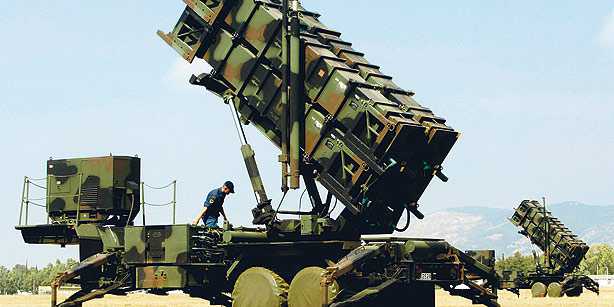
    An armed Patriot air defense missile launcher is seen in this photo at Tatoi military air base in Athens.
    An armed Patriot air defense missile launcher is seen in this photo at Tatoi military air base in Athens.

    Turkey decided to acquire long-range missile defense systems in 2008, but the project was postponed due to NATO’s missile defense system project.

    Turkish officials thought that the country would not need another defense system if NATO installed its system in Turkey. However, during the Lisbon Summit, NATO decided only to install radar systems in Turkey so Turkey sped up its efforts to establish its own missile defense system.

    Italian company weakened by French

    Americans plan to offer Patriots, the Russians S-400s, the Chinese FD-2000s and the French-Italian joint venture Eurosam SAMP/Ts for the tendered long-range missile defense system. Eurosam’s Italian partner MBDA promises to do technology transfers with Turkey if they win the contract.

    The Italian company even assures Turkey that it will be able produce and sell missiles under its license terms, thanks to this technology transfer. They also claim that their missile defense system can be easily integrated with NATO’s defense systems.

    The newly developed system that Eurosam is offering to sell is also used by the UK, Italy and France. Under this system, all missiles can be launched within 10 minutes after a target is determined. Eurosam consists of the French Thales and the Italian and French MBDA companies. However, Turkey has adopted a principled stance to prevent French companies from winning tenders in Turkey. The Undersecretariat for Defense Industries (SSM) is cool to the Italian company’s attractive offer because of its French partner.

    Italian company trying hard

    The Italians are aware that their French partner will make it hard for them to win the tender so they have made an additional offer. They say that they will lend their support for Turkey’s full membership in the Organization for Joint Armament Cooperation (OCCAR), where Turkey currently enjoys observer status.

    OCCAR is considered the most influential organization in weapons procurement and sales. Some countries, including Germany, long ago stopped selling heavy weapons to Turkey, citing the country’s counterterrorism efforts. Turkey believes that its membership in this organization will help to lift this embargo.

    Russian Rosoboronexport, which manufactures the S-300 missiles currently possessed by Greece and Greek Cyprus, is planning to offer S-400s, which are more advanced forms of S-300s, to Turkey. Turkey, however, has security concerns about these systems as they are also possessed by Greece and Greek Cypriots. Moreover, the Russian company has not made any promises regarding joint production.

    In addition, the Italian company claims that the Russian S-400 system and the Chinese FD-2000 system are not compatible with NATO standards.

    The disadvantage of PAC-3

    The Patriot PAC-3 system, produced by the US firm Raytheon, is the latest US offering for a medium and long-range guided air defense system. PAC-3s are considered the improved versions of the Patriots — used during the Gulf War — and PAC-2s.

    In this system, a 73-kilogram cluster and explosive warhead hits and destroys the targeted missile. Turkey is attracted by the fact that this system can be integrated with the Airborne Warning and Control System (AWACS) aircraft. However, the US administration is not keen on the idea of technology transfer with Patriots, and this certainly makes it difficult for Turkey to make a decision.

    Although it was scheduled for December, the long-range missile defense system tender, it seems, will be postponed to early 2011 due to the array of attractive proposals as well as intensive lobbying efforts from the countries involved. Thus, the tender will likely conclude within the first three months of 2011.

    Turkey is planning to install the defense systems in four different regions and may add two additional systems if need be. However, it is said that Turkey wants these two systems to be produced jointly. Of the four systems to be installed in the Turkish territories by 2012, Ankara and İstanbul will each have one, while the locations for the remaining two systems remain confidential. There are speculations that one may be installed in eastern Anatolia while the other may be placed in a coastal city in the Mediterranean region.

    No chance for Israel

    Turkish-Israeli relations, strained to a great extent when Israel killed eight Turkish citizens and one Turkish-American in a raid on a Gaza-bound aid flotilla, are making things hard for Israeli companies. The Israeli weapons companies will have to just sit and watch the $4 billion contract, as they are aware that they cannot bid for the tender.

    Accordingly, it is the Israeli weapons manufacturing companies that most desire the quick recovery of Turkish-Israeli relations. In the event of such a recovery, experts note, Israel’s ARROW 3 missiles may stand a good chance of winning the contract.

    South African Denel, too, shows interest in the long-range missile defense system. However, this company does not have much chance in the tender. Thus, a competition is expected between US, Russian, Chinese and Italian firms, while the Italian firm, in making good offers to Turkey, seems to have a slightly better chance.

  • What made the Middle East fall behind the West?

    What made the Middle East fall behind the West?

    Between the 10th and 13th centuries the Middle East was the most advanced part of the globe in nearly all respects, including living standards, science and the arts. Why, by the 18th century, had it fallen behind the West? This has been one of the major questions of comparative studies.

    Responses have differed. Orientalist scholars (in Edward Said’s sense of the term), located mostly but not exclusively in the West, have tended to attribute the Middle East’s backwardness to its prevailing religion. They have held that Islam, which embraces every aspect of life, is fundamentally incompatible with modernity. Critics of Orientalism have attributed the West’s superiority to the great explorations, the Reformation, the Enlightenment and the Industrial Revolution. Many Middle Easterners who have tackled the question have attributed their region’s socioeconomic backwardness to such factors as colonialism, authoritarian nationalist regimes, policy failures and the oil curse. For their part, Islamists believe that the Muslim world fell behind because modernization movements turned their back on Islam. None of the foregoing theories has withstood scrutiny. Each has been refuted, in part or in full.

    Timur Kuran, professor of economics at Duke University of the United States, has been investigating the causes of the Middle East’s underdevelopment since the late 1990s. His book, titled “The Long Divergence: How Islamic Law Held Back the Middle East” (Princeton University Press), was published last month. The analysis presented in the book is based partly on a comprehensive study of 17th century court records of İstanbul. His data are being published as a 10-volume set under the title “Social and Economic Life in Seventeenth Century Istanbul: Glimpses from Court Records” (Türkiye İş Bankası Cultural Publications, İstanbul). The first two volumes are already in print.

    As the title of his book suggests, Kuran argues that Islam hindered the socioeconomic development of the Middle East not through its belief system but its legal infrastructure. He pins responsibility primarily on three elements of Islamic law: the inheritance system, which inhibited capital accumulation; the absence of the concept of corporation, which hampered the exploitation of advanced technologies; and the “waqf” (the trust known in Turkey as “vakıf”), which despite its many advantages locked vast resources into unproductive organizations for delivering social services. According to Kuran, these obstacles to socioeconomic development were largely overcome through radical reforms adopted in the 19th century. Nevertheless, they have had lasting consequences, including the weaknesses of the Middle East’s private economic sectors and its human capital deficiencies.

    Kuran’s analysis carries both a pessimistic and an optimistic message for the future of the Middle East. The negative message is that the region cannot overcome its present state of underdevelopment in a short time because, with few exceptions like Turkey, countries of the region are unable to compete in global markets for industrial products and services. Also, their civil societies are too weak to sustain democratic government. If the autocratic regimes of the region were to fall now, he says, the development of strong private sectors and civil societies could take decades.

    The positive message is that the region adopted key economic institutions of modern capitalism sufficiently long ago to make them acceptable to conservatives, and even to Islamists. Besides, the economic history of Islam provides traditions favorable to permitting private initiative and limiting the economic role of the state. Thus, Muslim-majority societies are not incompatible with a market system.

    Interviewed by the Turkish edition of Newsweek (Dec. 19, 2010), Kuran pointed to the exceptional place of Turkey in the Middle East today. Turkey’s per capita income is 50 percent higher than the regional average. Its civil society is stronger and its democracy far more advanced than that of any other country in the region. More than half of the region’s giant firms are Turkish. On the basis of such comparisons, Kuran argues that Turkey, which began modernizing reforms earlier than the rest of the region, is now better characterized as a transitional European country than a Middle Eastern one.

    Certain groups may find Kuran’s analysis unsettling. They include the neoconservatives of the United States, who consider Muslim-majority societies inherently incapable of modernizing due to their religious faith, and Islamists who maintain that the relative underdevelopment of their societies is a consequence of turning away from Islam. Yet this is a study that deserves to be taken seriously and widely discussed. There is no doubt that Kuran’s rigorous scholarly study makes a major and original contribution to our understanding of why the Middle East fell behind and still remains underdeveloped.

  • Le Monde Provides Platform To Former Spokesman Of An Armenian Terrorist Organization

    Le Monde Provides Platform To Former Spokesman Of An Armenian Terrorist Organization

    ergun kirlikovali


    Dear Readers, Friends , and Fair-Minded, Truth-Promoting, Peace-Lovers,

    As long as there are Armenian falsifiers and Turk-haters  around the world,  with or without their white robes and matching conical hats, bent on demonizing all things Turkish at all opportunities real or imagined,  our work seems to remain incomplete.

    We need to be alert and react instantly to all kinds of attempts to defame and misrepresent our proud heritage.  We need to remain in constant vigilance and continue to educate the public about our thousands of year old culture, history, and heritage.

    This time, the unprovoked, unjustified, and unfair attack came from France’s  Le Monde newspaper.  Le Monde editors, incredibly, are providing access to the former speaker of a notorious Armenian terrorist organization, ASALA.  The blood of Turkish (and Fench) citizens have not dried on the hands of these Armenian terrorists who loved to grin to the TV cameras with their ugly faces, flashing victory signs after every bombing, assassination, and other such premeditated murder and planned carnage.

    What’s more, Le Monde editors seem to lack the decency to at least give the appearance of seeking  responsible opposing views in order to balance this terrorist’s sick and hateful message and to present a more objective and fair coverage of a historical controversy.

    Therefore, I ask you to please sign the protest letter below with your name, city, country, and day-phone, and email it to these addresses :

    [email protected]

    [email protected]

    [email protected]

    [email protected]

    [email protected]

    [email protected]

    [email protected]

    Fax:   (00 33) 1 57 28 21 21

    Street address :  Le Monde, 80, boulevard Auguste-Blanqui, 75 507 Paris Cedex 13 France

    ***************

    Madam/Sir,

    In a shocking move, Le Monde allowed, one more time, Ara Toranian to publish an opinion in its pages. The promotion, without any warning, of the views of the former spokesman of a terrorist group (ASALA) is simply unacceptable in a respectable and democratic newspaper.

    France was, with Turkey, the country of the world where Armenian terrorists, especially ASALA, killed and wounded the greatest number of persons.  Mr. Toranian’s newspaper, Hay Baykar, glorified the murder of Turkish diplomats, justified the bombing of the Marmara travel agency (which bomb also killed a French secretary) and slammed the verdict sentencing the perpetrators of Orly attack (8 deaths, 90 wounded, including around 60 seriously).

    In the U.S.A., ASALA attempted to assassinate a UCLA history professor, Prof. Stanford Jay Shaw, and his family in 1977 by planting a bomb in his HOME !

    ASALA’s inspiration, Gourgen Yanikian, murdered in an ambush the general consul in Los Angeles Mehmet Baydar and his deputy Bahadır Demir, in 1973. Mr. Toranian’s newspaper presented the terrorist Yanikian as a hero.

    Another Armenian terrorist group, JCAG/ARA assassinated Mehmet Baydar’s successor, Kemal Arıkan, in 1982.

    The same attacked by bombs the cultural night celebrating the Turkish culture (including dance) in California and New York.

    Both ASALA and JCAG/ARA assaulted  even moderate Armenians, like the Dashnak and the Hunchak murderers did in the Ottoman Empire since 1890s and the USA since 1930’s.

    Mr. Toranian’s opinion was seen as an insult to the silent memory of the many victims of terrorism, whatever their nationality or ethnicity may be.

    Please accept our expressions of profound disappointment, outrage,  and sadness,

    [Signatory : Please provide full name, city, state, country, and day-phone]

    ************

    If you wish to quote some more striking facts or figures, please read this interview:

    https://armenians-1915.blogspot.com/2010/12/3194-turkish-armenian-conflict-what-now.html?utm_source=feedburner&utm_medium=email&utm_campaign=Feed:+ArmenianGenocideResourceCenter+(Armenian+Genocide+Resource+Center)

  • Greek barrier on border with Turkey to keep out migrants

    Greek barrier on border with Turkey to keep out migrants

    ATHENS—Greece on Saturday announced plans to build a barrier along its border with Turkey in a bid to stem the flow of illegal immigrants into the European Union.

    “The Greek public has gone beyond its limits in terms of its capacity to welcome illegal migrants. Greece cannot take it any more…We plan to build a barrier on the land border to block unauthorized immigration,” the country’s immigration minister, Christos Papoutsis, told Greek news agency Ana without providing any details.

    It was the first time Papoutsis raised the idea of building a barrier along the country’s 150-kilometer (93-mile) land border with Turkey, which has become the main route for illegal migrants to enter the European Union, with almost half of detected illegal entries.

    From January to the beginning of November, 32,500 illegal migrants were intercepted in a single 12.5-kilometer (7.8-mile) stretch of the border along the Evros river.

    More than 200 guards with European border agency Frontex were deployed in the area in November, which the agency said led to a 44 percent drop in the number of illegal entries.

    The UN High Commissioner for Refugees has repeatedly urged Greece to ensure its efforts to fight illegal immigration do not harm legitimate asylum seekers, including Afghans, Iraqis, and Somalis, who are often among migrants crossing at its border.

    via Greek barrier on border with Turkey to keep out migrants – INQUIRER.net, Philippine News for Filipinos.