Month: January 2011

  • Turkey Withdraws as Host of European Women’s Chess Championship

    Turkey Withdraws as Host of European Women’s Chess Championship

    By DYLAN LOEB MCCLAIN

    In a letter posted on the Turkish Chess Federation’s Web site on Wednesday, Ali Nihat Yazici, the federation’s president, announced that Turkey had withdrawn as host of the European Women’s Chess Championship. It was to be held in March 2011 in Gaziantep, a city in the southeastern part of the country.

    The prize fund was to be 104,000 euros (about $139,000 at current exchange rates), which would have exceeded the 101,000 euro prize fund ($135,000) for the overall European Championship, which will be held in Aix-les-Bains, France.

    The reason given for Turkey’s withdrawal was a conflict between the federation and the European Chess Union, which has jurisdiction over the championship.

    Yazici wrote that he tried to work out the details of organizing the championship with Sava Stoisavljevic, the general secretary of the E.C.U., but she insulted him and treated him in a condescending manner. He contacted Silvio Danailov, the president of the E.C.U., in an effort to resolve the problems, but he and the federation were “completely neglected.” So a decision was made to withdraw as the organizer.

    In addition to the letter, Yazici published 13 documents of correspondence and proposals about the championship that were exchanged between the federation and the E.C.U. In the documents, there were several issues of contention regarding the contract between the two organizations.

    The most significant were that the Turkish federation wanted to charge an organizing fee of 70 euros per player ($93.50), 120 euros for any player who chose not to stay at one of the two hotels reserved by the organizers ($160), and a late fee for anyone not registering by a deadline of Feb. 10.

    Initially, Stoisavljevic countered that the first two fees were unacceptable and unprecedented. As to a late fee, she said that was also unacceptable, but suggested that the Turkish federation could bar late entries if it was concerned about possible additional hotel room costs, or accept them but not guarantee that players would be able to get rooms at the prearranged rates.

    In a later e-mail, Stoisavljevic began by writing that Yazici had “double standards” in the negotiations. But she agreed to relent on all of the Turkish federation requirements, except the imposition of late fees.

    Yazici replied that he felt “very much insulted,” and soon after Turkey withdrew as host of the championship, despite a letter from Danailov accepting all of the federation’s demands and requesting only that late entries not be accepted.

    On the surface, the dispute seems to be over fees and the language of the contract between the E.C.U. and the Turkish federation, but there may be more to it than that.

    Danailov and Yazici were opponents in a September election for the presidency of the E.C.U. and there may be lingering bad blood.

    In a telephone interview on Wednesday, Danailov suggested that there may be a more important issue: The federation might have had trouble financing the championship. He said that the Turkish federation was supposed to put down a 7,500 euro ($10,000) deposit in May, but he said it was not done.

    Then, six months before the event, in September, the federation was supposed to provide a 97,500 euro ($130,000) bank guarantee that the money for the prizes was available, but he said that also did not happen.

    Danailov said of Yazici, “The guy was looking to withdraw somehow from the very beginning.”

    In an e-mail, Stoisavljevic said that the initial tone of her e-mail and phone conversations with Yazici were friendly. She said it was only after she objected to the fees in the draft of the regulations for the championship that problems in the negotiations arose. She said that she regretted using the words “double standards” in one of her e-mails to Yazici and was willing to apologize for that. She also noted that in the end, in an effort to salvage the championship in Turkey, the E.C.U. had accepted all of the charges for the players, except for the late fee.

    Danailov that he would look for a new host for the championship. He said he did not want to fight with Yazici or the Turkish federation. “We always try to find sponsors and sell chess. That is hard enough already.”

    via Turkey Withdraws as Host of European Women’s Chess Championship – NYTimes.com.
  • Maslak set for Turkey’s Digital Base

    Maslak set for Turkey’s Digital Base

    A new research and development center that will bring together scientists from İstanbul Technical University (İTÜ) and product development businesses from the Informatics Industry Association (TÜBİSAD) is expected to be among the country’s largest R&D facilities.

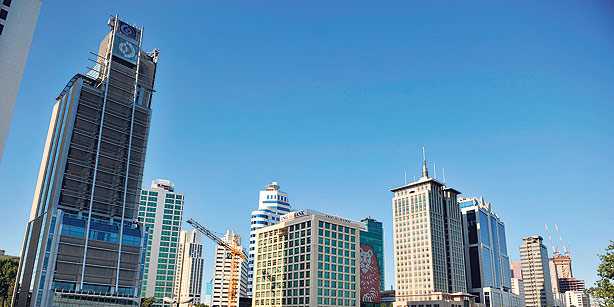
    A view from Maslak
    A view from Maslak

    İTÜ Rector Muhammed Şahin and TÜBİSAD Chairman Turgut Gürsoy on Wednesday signed the protocol that pushes the button for the new project, which will cost approximately $45 million in total. Domestic and foreign corporations such as Hewlett Packard (HP) are also supporting the project. The center, called Digital Base, will be completed in one-and-a-half years.

    In their speeches the participants emphasized that the project would become a technological base for Turkey in two to three years’ time and improve Turkey’s technological standing as well as provide job and career opportunities for students during training.

    Information Technology and Communications Authority (BTK) head Dr. Tayfun Acarer and the dean of the faculty of computers & information at İTÜ, Dr. Eşref Adalı, also attended the signing ceremony on Wednesday.

    Adalı said, “If a university does not cooperate with information technology businesses, it would be like a hospital without a faculty of medicine.” He also stressed the importance of the information technology and communications sector.

    Acarer also delivered an address during the ceremony. In addition to his expectations for the new center, he also commented on the music-sharing website Fizy.com, which had been shut down in recent months. “The site was banned because of copyright issues, and we are continuing our work to minimize restrictions on the Internet,” he said.

  • Ministry aims to make Turkey world’s key production hub

    Ministry aims to make Turkey world’s key production hub

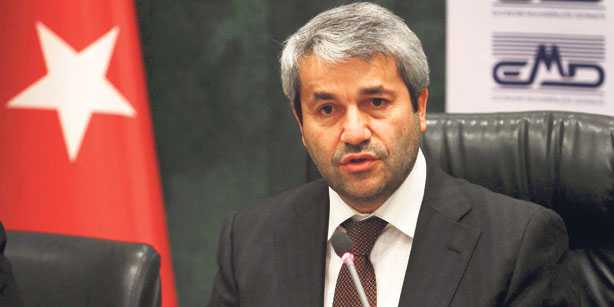
    The Trade Ministry’s new industry plan aims to turn Turkey into one of the world’s most important centers of production, Industry and Trade Minister Nihat Ergün has stated.

    The Industry Strategy Paper for the years 2011-2014 is complete, and the content of the paper will be announced on Jan. 5. The ministry prepared the paper in consultation with the country’s leading industrial institutions.

    The paper is composed of 72 action plan targets to enhance production in the country, the minister told Today’s Zaman. He said the geostrategic location of the country allows such plans, and continued: “Turkey has now become a country that can take necessary steps to improve the private sector and make long-term plans. Within this scope, we have prepared the much-needed Industry Strategy Paper because strategic approaches are needed in order to benefit from the conjuncture that is in favor of Turkey at the maximum level. Turkey is now able to prepare and apply necessary strategy plans.”

    The Industry Strategy Paper for the years 2011-2014 was completed after consulting with Turkey’s leading industrial institutions. The paper, prepared by the Turkish Ministry of trade aims to make Turkey one of the world’s most crucial production hubs by focusing on the structural problems and their comparative advantages

    Labor unions representing Turkey’s real sector and civil society organizations have been invited to the meeting where the paper will be announced. In an attempt to highlight that the paper was prepared in consultation with industrial institutions, the chairs of the institutions will take the stage before Ergün to make their speeches. The Turkish Union of Chambers and Commodity Exchanges (TOBB), the Turkish Confederation of Businessmen and Industrialists (TUSKON), the Turkish Industrialists and Businessmen’s Association (TÜSİAD) and the Independent Industrialists and Businessmen’s Association (MÜSİAD) will voice their opinions on the strategy paper.

    Ergün stressed that the Industry Strategy Paper resulted from a Supreme Planning Board (YPK) decision after it was negotiated in the Cabinet and added that it will be repeated following a revision after 2014. The minister also stated that after the paper is presented to the Economy Coordination Board (EKK) on Jan. 5 the relevant authorities will take action.

    The paper both presents solutions for structural problems and attempts to reflect Turkey’s advantages and opportunities to boost its competitive power, the minister noted, adding: “On Jan. 6, an action plan concerning the automotive sector will be drawn up. Later, the action plans for iron-steel and chemicals, and the electrical, electronics and ceramics sectors will be executed. We hope with this strategy paper to make Turkey the production center of Eurasia.”

  • Kazakh PM: Turkey has great ‘production potential’

    Kazakh PM: Turkey has great ‘production potential’

    Kazakhstan’s Prime Minister Karim Qajymqanuly Massimov lauded Turkey’s “production potential” at a meeting with the Central Asian nation’s leading businessmen on Friday.

    “Turkey is a country with great production potential,” said as part of his observations in Turkey last week. “With its noteworthy economic growth, Turkey is a country of interest for all,” he also said during the meeting.

    The Kazakh prime minister attended the Economic Cooperation Organization (ECO) summit on Dec. 22-24 in İstanbul. The summit hosted 10 member and guest countries, including the Turkish Republic of Northern Cyprus (KKTC), Iraq, Qatar, Jordan, Lebanon and Syria. Some of the leaders participating in the summit were Afghan President Hamid Karzai, Azerbaijani President Ilham Aliyev, Iranian President Mahmoud Ahmadinejad, Kyrgyz President Roza Otunbaeva, Pakistani President Asif Ali Zardari and Tajik President Emomali Rahmon. Turkey took over the ECO rotating presidency from Iran during the summit.

    Also as part of his meeting with the businessmen, Massimov said Kazakhstan could achieve success similar to Turkey. He finally noted that he had ordered the relevant national authorities to open a branch of the National Economic Chamber of Kazakhstan (ATAMEKEN Union) in Turkey. In response to a question after the meeting, the union’s president, Azat Peruashev, told reporters that efforts to open the Turkey branch had already been initiated.

  • Listening to Istanbul premier of Fazıl Say and BIPO

    Listening to Istanbul premier of Fazıl Say and BIPO

    STARTING POINT: Listening to Istanbul premier of Fazıl Say and BIPO

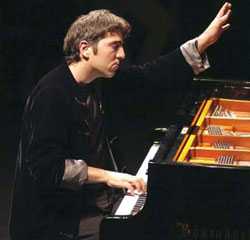
    Listening to Turkish pianist Fazıl Say has always aroused excitement, and at a recent three-day festival Say played new compositions with the Borusan Istanbul Philharmonic Orchestra, or BIPO.

    Say performed the songs “Nirvana Burning,” “Istanbul Symphony” and “Nasreddin Hoca” while other compositions were performed at the festival by the Borusan Quartet and other talented musicians.

    Even though the compositions did not feature lyrics the notes briefly spoke to the audience, with Say weaving a story into the notes of his music.

    The music first told the story of heaven and hell in “Nirvana Burning,” which he performed on Dec. 23 at the Lütfi Kırdar Convention and Exhibition Center. Nirvana, according to the composer, is the heaven we all have inside us, however as time passes we turn it into a hell with our fears and envies. His piano composition started with soft and easy tones, depicting the voices of beautiful birds in heaven. Then the notes give way to the hard and violent tones of piano, depicting human fears.

    It is really worth watching Say while he performs, as he visibly encounters the violence and beauty as he plays.

    Say loves composing in Turkish musical traditions. In his “Nasreddin Hoca,” it is possible to hear old-style Turkish music in the contemporary refrains. However nothing seems more real than Say’s “Istanbul Symphony,” as the pianist portrays the various areas of the city thematically.

    Hearing Fazıl Say perform has never been more fun. The tunes, the themes, instruments – every aspect of the festival was special, with the encore performed at the Borusan Music House on Dec. 24 a particular treat, with Say and the Borusan Quartet playing a humorous interpretation of “Flight of the Bumblebee,” making the audience laugh.

  • a surprise Byzantine church

    a surprise Byzantine church

    One of the joys of Istanbul is stumbling upon old buildings, not listed in the guide books, and this one certainly was an interesting surprise.

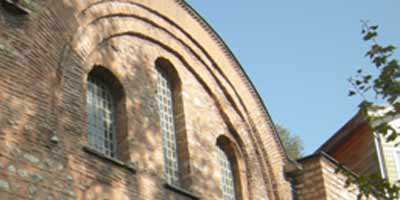
    Kalenderhane Church
    Kalenderhane Church

    We leave the Süleymaniye and head towards Beyazit through back streets we are walking along for the first time. Turn a corner and there is a this Byzantine church long converted into a mosque.

    The sign says it is Kalenderhane Camii and the caretaker, taking his ease in the sunshine outside the front door, says he has no idea of the original church name but waves us inside to look around.

    IThe marble panelling in gorgeoust is glorious. Panelled in marble slabs of various colours, later research on-line reveals there is great confusion over the original name (if you’re really interested you can look at the Wikipedia entry).

    It is believed to have been originally built in the 7th century and in 1453, following the Ottoman conquest, it was given to a sect of dervishes, the Kalenders, as a direct gift from Mehmet the Conqueror. Hence its current name.

    The Kalenders used it as a dervish lodge and soup kitchen until 1746 when it was finally converted into a mosque with the addition of mihrap and mimbar.

    In the 1930s the minaret fell down after it was struck by lightning and this, together with other damage to the building, led to it being locked up and abandoned.

    In the 1970s it was restored to its 12th century condition and resumed its role as a local mosque.

    As ever, the position of the original altar was not perfectly aligned with Mecca, so the mihrap is stuck in a corner ruining the symmetry of the design.

    One of the joys of Istanbul is stumbling upon old buildings, not listed in the guide books, and this was certainly an amazing surprise.

    via Fethiye Times.com | Istanbul – a surprise Byzantine church.