Turkey donated two million USD to the United Nations World Food Program to be used as assistance to Chad and Niger, two countries experiencing lack of food items due to the ongoing drought. Turkey donated two million USD to the United Nations World Food Program (WFP) to be used as assistance to Chad and Niger, two countries experiencing lack of food items due to the ongoing drought.
ISTANBUL—Turkish Prime Minister Recep Tayyip Erdogan over the weekend ordered a monument to friendship between Turkey and Armenia torn down, signaling the depth of a freeze in efforts to reopen the border and improve relations between the two neighbors.
Mr. Erdogan described the monument as “a freak,” speaking Saturday in the city of Kars in Eastern Turkey. He called on the local mayor, who is from Mr. Erdogan’s ruling Justice and Development Party, to pull it down by the time of his next visit and build a park instead, according to Anadolu Ajansi, Turkey’s state-owned news agency.
The prime minister based his objections on artistic grounds. “They put a freak there…it is impossible to think that such a thing should exist next to fundamental works of art,” he said, according to AA.
Mr. Erdogan’s decision is likely to prove good domestic politics ahead of elections in June. It brought a quick response from the main opposition Republican Peoples Party, or CHP.
“The sculpture…is neither strange nor ugly,” AA quoted former culture minister and CHP legislator Ercan Karakas as saying. He described the monument as high art and an antidote to genocide monuments and called on Mr. Erdogan to reverse his decision. There are monuments to claims of genocide by Turks on Armenians in Armenia, and by Armenians on Turks in Turkey.
The statue of two 100 foot-tall (30-meter tall) concrete figures reaching out to each other was built on a rise above Kars, just 25 miles (40 kilometers) from the Armenian border, in 2008. It was commissioned by the former mayor of Kars, who made extensive efforts to build relations with Armenia, believing that reopening the border for trade could only benefit the remote town.
At the time, Turkey and Armenia were in talks aimed at overcoming decades of mistrust fired by the former Ottoman empire’s slaughter of up to 1.5 million ethnic Armenians during World War I, and by Armenia’s occupation since the 1990s of a swathe or territory in Turkic-speaking Azerbaijan. The effort reached a high point in October 2009, when the two governments signed protocols to reopen the border and set up a joint historical commission, among other measures. The protocols were never ratified, however, and the process is moribund.
The statues were controversial from the start. Nationalists and representatives from the city’s 20% ethnic Azeri population objected to the Ministry of Culture, on grounds that no permission had been obtained. The final hand on one statue was never installed, and was abandoned instead on the gravel below.
A stalemate followed as the local administration awaited instructions from Ankara, which saw little benefit in taking steps during efforts at rapprochement with Armenia. This weekend, the stalemate appeared to be broken.
—Erkan Öz
contributed to this article.
via Turkey to Tear Down Friendship Monument – WSJ.com.
Tea is the most popular drink in Turkey. A typical Turk drinks approximately around 10 glasses of black tea pro day. While both Chinese and Indians claim that they first discovered the use and drink of Tea thousands of years ago, Turks evolved their own way of making and drinking the black tea (Çay in Turkish), which became a way of life for our culture. Wherever you go in Turkey, tea or coffee will be offered as a sign of friendship and hospitality, anywhere and any time, before or after any meal. The production of tea in Turkey mainly started in the early years of the Republic along the eastern Black Sea Region. Many of the tea plantations are centered around the town of Rize, and from the Georgian border to Trabzon, Arakli, Rize, Karadere and Fatsa (near Ordu), reaching in some places 30 kilometers inland and reaching the height of around 1000 m. In 1947 the first tea factory was built in Rize and in 1965 the production of dried tea reached to the level of domestic consumption. The tasks of buying, processing and selling tea was conducted by the Tekel (Monopoly of State) General Directorate until then, in 1971 was transferred to the Tea Corporation, and in 1984 the Monopoly on tea was lifted and this facility was also provided to the private sector. Turkish tea is full-flavored and too strong to be served in large cups thus it’s always offered in little tulip-shaped glasses which you have to hold by the rim to save your fingertips from burning because it’s served boiling hot. You can add sugar in it but no milk, and you can have it either lighter (weaker) or darker (stronger) depending on your taste because Turkish tea is made by pouring some very strong tea into the glass, then cutting it with water to the desired strength. Serious tea-drinker Turks usually go to a coffee & tea house where they serve it with a samovar (Semaver in Turkish) so they can refill their glasses themselves as much as they want.
To: Honorable Councillor Julian Bell, Leader of the Ealing Council
c/o Labour Group Members’ Room, Ealing Town Hall, New Broadway,
London, W5 2BY, England, email: [email protected] <
Re: Decision of Ealing Council to officially recognize the long discredited political claim of Armenian ‘genocide’ as settled history
Dear Honorable Councillor Julian Bell,
It is difficult and painful for me, the son of Turkish survivors on both maternal and paternal sides, to hear of Ealing Council’s unfortunate resolution, based on an Armenian’s misrepresentations—i.e. Councillor Iskendarian—where Armenian war crimes, Armenian hate crimes, and their Muslim, mostly Turkish, victims, are curiously missing. If one excludes half the story, well, even the American civil war can be made to look like a genocide.
I realize that this was not a unanimous decision and that some prudent members considered the motion tabled by an Armenian (Cllr Iskanderian) one sided, without input from responsible opposing views and hence, judged it ill-advised and divisive. I am also aware of at least one councillor saying “…I have never come across a motion in my nine years on the council that so blatantly sought to pitch one community against another – especially on a subject which is highly sensitive and where no member of the council is really able to make a proper and considered judgment…” I truly appreciate those members who thought that way, but I wish they took the trouble to stay on and vote no so that this blatant and malicious fraud could be thwarted.
Those terrible “War Years” of 1912-1922 (known in Turkish as “Seferberlik Yillari”) brought five consecutive wars—Tripoli (North Africa,) Balkan Wars (twice,) World War I, and the Turkish Independence War, in that order— along with wide spread death and destruction on to ALL Ottoman citizens. No Turkish family was left untouched, mine included. Those nameless, faceless Turkish victims are killed for a second time today with politically motivated and baseless charges of Armenian genocide.
Genocide claims are racist because they ignore the Turkish dead: about 3 million during WWI; more than half a million of them at the hands of Armenian ultra-nationalists; and dishonest because genocide charges blatantly dismiss the six T’s of the Turkish-Armenian conflict.
Historians reject the genocide label: This may explain why more than 69 North American scholars categorically rejected Armenian characterizations of genocide, noting that the non-partisan and reliable evidence unearthed so far points to “…inter-communal warfare fought by Christian and Muslims irregulars…” A majority of European historians who specialize on this topic also reject or criticize this label.
The Malta Trials refuted Armenian claims 90 years ago: If you had heard about the Malta Trials by the Crown Courts in 1919-1921, that never got off the ground due to lack of evidence to support the outrageous Armenian claims, you would not have signed that deceptive edict. ( For your information, the British exiled 144 Ottoman leaders to Malta as war crimes suspects, while scouring the Ottoman, British and American archives for proof and came up empty handed. This paper might explain more: The Armenian Issue: Why The “Genocide” Label Doesn’t Fit )
Britain does not recognize Armenian claims as genocide: You would do well to, at least, heed the advice and policy of Her Majesty’s Government when this same issue was raised in the same biased manner, again with total disregard for the other side of the story.
Here is a journey down the history, a collection of brief educational glimpses into the past:
1894
“…The aim of the Armenian revolutionaries is to foment outbreaks, firstly to induce the Ottomans to react to their violence and secondly to encourage the foreign powers to intervene…” Source: Letter of the British Ambassador Currie to the Foreign Office, on March the 28th of 1894, British Blue Book, N°6, p 57
1896
” …The Dashnaks and Hunchaks have terrorized their own countrymen, they have stirred up the Muslim people with their thefts and insanities, and have paralyzed all efforts made to carry out reforms; all the events that have taken place in Anatolia are the responsibility of the crimes committed by the Armenian revolutionary committees…” Source: Williams, The British vice-consul, writing from Van. (March 4, 1896, British Blue Book, Nr. 8 1896, p.108
1915
“…Concerning the Armenian revolutionaries’ tactics, one cannot expect to think up something more diabolic. Killing Moslems in order to punish innocents, robbing in the middle of the night villages that have just paid, the same day, their taxes. (…) The Armenian revolutionaries prefer robbing their own coreligionists rather than fighting against their enemy ; it’s in order to make their compatriots murder that the Armenian anarchists in Constantinople do bomb attacks…” Source: Sir Mark Sykes, “The Caliph’s Last Heritage”, London, 1915, p 409-418
1922
“…I was being employed by His Majesty’s Government to compile all available documents on the present treatment of the Armenians by the Turkish Government in a ‘Blue Book,’ which was duly published and distributed as war-propaganda!…” Source: Arnold Joseph Toynbee, “The Western Question in Greece and Turkey: a Study in the Contact of Civilizations,” Boston, Houghton Mifflin, 1922, p. 50.
1923
“…In some towns containing ten Armenian houses and thirty Turkish houses, it was reported that 40,000 people were killed, about 10,000 women were taken to the harem, and thousands of children left destitute; and the city university destroyed, and the bishop killed. It is a well-known fact that even in the last war the native Christians, despite the Turkish cautions, armed themselves and fought on the side of the Allies. In these conflicts, they were not idle, but they were well supplied with artillery, machine guns and inflicted heavy losses on their enemies…” Source: George M. Lamsa, a missionary known for his research on Christianity, “The Secret of the Near East,” The Ideal Press, Philadelphia (1923), page 133
1928
“…A circular was prepared by the War ministry asking the officers to report on the misdeeds of the enemy. According to this circular, exactness was not an essential condition: probability was enough. (…) The most popular lies in England and in America were those concerning atrocities. No war can do without it. One considers that to libel the enemy is a patriotic duty…” Arthur Ponsoby (British Deputy from 1910 till 1918, his book published in 1928 describes propaganda methods used during First World war), Falsehood in War-Time, New York, 1971, p 20-22
1928
“Few Americans who mourn, and justly, the miseries of the Armenians, are aware that till the rise of nationalistic ambitions, beginning with the ‘seventies, the Armenians were the favored portion of the population of Turkey, or that in the Great War, they traitorously turned Turkish cities over to the Russian invader; that they boasted of having raised an army of one hundred and fifty thousand men to fight a civil war, and that they burned at least a hundred Turkish villages and exterminated their population…It is at least time that Americans ceased to be deceived by propaganda…” Source: John Dewey, American professor, The Turkish Tragedy, The New Republic, November 12, 1928
1936
“…Those who in England are loudest in their sympathy with the aspirations of a(n Armenian) people ‘rightly struggling to be free’ can hardly have realized the atrocious methods of terrorism and blackmail by which a handful of desperados, as careful of their own safety as they are reckless of the lives of others, have too successfully coerced their unwilling compatriots into complicity with an utterly hopeless conspiracy…” Source: Lord Warkworth, after paying a visit to Van. ( William Langer, The Diplomacy of Imperialism.)
1964
“…(The Dashnaks)’ aim was by crimes and assassinations to invite Turkish reprisals and massacres, and thus create an international scandal that would attract the intervention of the other powers…” Source: David Thompson, “Europe Since Napoleon” (Alfred A. Knopf, 1964, 2nd. Ed.)
1976
“… The deafening drumbeat of the propaganda, and the sheer lack of sophistication in argument which comes from preaching decade after decade to a convinced and emotionally committed audience, are the major handicaps of Armenian historiography of the diaspora today…” Source: Dr. Gwynne Dyer, a London-based independent journalist with global exposure, 1976
1999
“…The British Government had condemned the massacres at the time. But in the absence of unequivocal evidence that the Ottoman administration took a specific decision to eliminate the Armenians under their control at that time, British governments have not recognized those events as indications of genocide… Nor do we believe it is the business of governments of today to review events of over 80 years ago, with a view to pronouncing on them. The events of 1915-16 remain a painful issue in relation to two states with which we enjoy excellent relations…” Source: Foreign Office spokesman, Baroness Ramsay of Cartvale, AP News, April14, 1999
2001
“…The Government, in line with previous British Governments, have judged the evidence not to be sufficiently unequivocal to persuade us that these events should be categorised as genocide as defined by the 1948 UN Convention on Genocide, a convention which was drafted in response to the Holocaust and is not retrospective in application. The interpretation of events in Eastern Anatolia in 1915-16 is still the subject of genuine debate amongst historians.” Source: Baroness Scotland of Asthal, expressing the position of the British Government’s on the alleged Armenian genocide in a written response to a question at the House of Lords, February 7, 2001
2001
“…The British government of that time and those that followed considered the massacres of 1915-1916 as a horrifying tragedy. We understand the strong feelings for this problem, given the human losses of both parties. But we do not believe that proofs put forward give evidence that those events must be classified as “genocide” as defined by the 1948 Convention of the United Nations on genocide. (…) The events of 1915-1916 constitute a big tragedy, during which the two parties underwent very heavy losses…” Source: Official Statement by the Embassy of Great Britain in Ankara, July 23, 2001.
…
The Armenian claims of genocide were never brought to court and, therefore, a court verdict a la Nuremberg does not exist. By voting yes on a controversial claim that totally ignores Armenian revolts, terrorism, treason, territorial demands and their Turkish victims during WWI, you are lending credence to unsubstantiated, exaggerated, falsified, and fabricated accusations.
Do you really believe a political body is the place to resolve historical conflicts?
Do you think academia with its research capability and/or legal realm with its “due process” expertise would be better equipped to handle such controversies ?
Do you agree that taking one side in a complex historical conflict is offensive, and unfair to the other side?
Do you see now how grave a mistake it is to honor one side of the story with an official stamp of approval, while totally ignoring the other? Would you like such “lynching” done to your country?
In a democracy, history is made by political institutions but written by historians. The Blois Appeal of 2008 in France, signed by several hundreds of historians, from Europe, North America, and elsewhere, says: “… History must not be a slave to contemporary politics nor can it be written on the command of competing memories. In a free state, no political authority has the right to define historical truth and to restrain the freedom of the historian with the threat of penal sanctions… ”
Muslim, mostly Turkish, victims of Armenian revolutionaries and the treasonous Armenian volunteers of Russian, French and Greek armies are documented in Ottoman archives, Russian archives , American archives (and also Niles & Sutherland,) French archives (Paul Bernard, Six mois en Cilicie, Aix-en-Provence: éditions du Feu, 1929,) and even in Armenian sources
(Haig Shiroyan, an Ottoman Armenian wrote in his Memories: “…The Russian victorious armies, reinforced by Armenian volunteers, had slaughtered every Turk they could find, destroyed every house they penetrated…” Smiling Through the Tears, New York, 1954, p. 186).
The alleged “Armenian genocide” was popularized by Armenian terrorism of 1973-1991. The ARF controlled one of the two principal Armenian terrorist groups:
a) “Justice Commandos for the Armenian Genocide/Armenian Revolutionary Army”
(Francis P. Hyland, Armenian Terrorism: the Past, the Present, the Prospects, Boulder-San Francisco-Oxford: Westview Press, 1991, pp. 61-62; br>
Gaïdz Minassian, Guerre et terrorisme arméniens, Paris: Presses universitaires de France, 2002, pp. 28-37 and 106-109; br>
Yves Ternon, La Cause arménienne, Paris: Le Seuil, 1983, pp. 218-224.)
Scotland Yard banned Hrair Maroukian, the leader of ARF from 1972 to 1994, from entering British soil in Autumn 1984, because British police considered him as the real chief of JCAG/ARA (Michael M. Gunter, “Pursuing the Just Cause of their People”. A Study of Contemporary Armenian Terrorism, Westport-New York-London, Greenwood Press, 1986, p. 111.)
The JCAG/ARA killed around thirty innocent victims and bombed the offices of Turkish Airlines in London airport, on May 24, 1978 and even the offices of British airways in Madrid airport, on January 20, 1980.
The ARF continues to glorify its terrorists, including Hampig Sassounian, jailed since 1982 for the assassination of the Turkish general consul in Los Angeles, Kemal Arikan.
Vicken Hovsepian, sentenced in 1984 by an US court to six years of prison for an attempt of bombing is a member of ARF the leader of the party in USA.
b) Another Armenian terrorist group, Armenian Secret Army for the Liberation of Armenia (ASALA), was actively supported by the Union of Armenian students of UK, who published a pro-ASALA newspaper in London, from 1978 to 1988: Kaytzer.
ASALA killed around forty innocent victims (including at least eight Turkish diplomats), and wounded many more;
ASALA terrorist Zaven Bedrosian was sentenced to eight years of prison by a British court in August 1983, for illegal possession of explosives and weapons, and conspiracy. Mr. Bedrosian admitted during his trial that he wanted to take the Turkish ambassador in London hostage with the hope of exchanging him with the ASALA murderer Levon Ekmekjian, one of the two perpetrators of attack in Ankara airport, in August 1982 (nine tourists were killed, more than 70 wounded.)
ASALA claimed his solidarity with Irish Republican Army (IRA) against “British fascism” (sic).
Ara Toranian, former spokesman of ASALA from 1976 to 1983, who shows no remorse for his violent past, is currently co-chairman of Coordination Council of France’s Armenian Associations.
I hope that you will realize what a grave mistake you have made by taking the words of Armenian propagandists, falsifiers, crooks and terrorists at face value.
…
In summary, if I could manage to raise a grain of doubt in your mind that the Armenian narrative may not be the whole story and that there might be another side, equally ghastly and genuine, where Armenians are the victimizers not the victims, then I consider my mission is accomplished. Thank you for reading.
Without secular government, there is no religious freedom
By Susan Jacoby
3rd January 2011, Washington Post
To end the old year and begin the new, there is more entirely predictable bad news from the world of radical Islam. On New Year’s Eve in Pakistan, Islamist political parties brought business and government to a standstill with massive protests against any potential changes in a blasphemy law that carries a mandatory death sentence for anyone convicted of “insulting Islam.” On New Year’s Day in Alexandria, Egypt, a suicide bomb attack in a Coptic Christian church wounded at least 96 and killed 21 people. In Iraq, attacks on Christians that began in October continued, causing the flight of additional refugees toward the more tolerant Kurdish territory to the north.
The governments–our putative allies in the Muslim world (and in Iraq, a government that would never have come into being without American military force)–seemed unable or unwilling to display any backbone on behalf of secular principles of governance. The target was a Christian minority but the truth is that without secular government, freedom of religion can never flourish. To look at the violence as an issue of “interfaith relations,” as this week’s On Faith question does, is to ignore the obvious: Equality among either believers of different faiths, or between believers and nonbelievers, can never exist when one religion occupies a privileged legal position.
Of course, all of this casts even more doubt on post-9/11 U.S. foreign policy, based under both the Bush and Obama administrations on the notion, unsupported thus far by evidence, that a combination of war and diplomacy can hobble radical Islam as a threat to the democracy and security of the world.
What interfaith relations? In Islamic theocracies, of course, there are no such relations by definition–except when theocratic rulers smash dissent. In fragile nation-states like Pakistan and Iraq, Islam has pride of place but there is supposed to be some toleration of minorities. These governments have little will or ability to protect the rights of non-Muslims (or even of Muslims who disagree with their more radical co-religionists).
The question for the United States is not what religious and political leaders should say about “challenges” to “interfaith relations.” It is whether America should continue spending its blood and treasure on wars based on the wishful notion that an American military presence, for whatever length of time, will somehow make majority Islamic nations more amenable to a democracy that accomodates many forms of religious belief and nonbelief and is therefore less of a threat to the West.
My guess is that nothing anyone has to say about these events from the West will have any effect at all. There are courageous citizens of these countries, though, who put mealymouthed western multiculturalists to shame. I strongly recommend the New Year’s Day editorial by Hani Shukrallah, editor of Ahram Online, titled, “J’accuse,” in which he says, “I am no Zola, but I too can accuse. And it’s not the blood thirsty criminals of al-Qaeda or whatever other gang of hoodlums involved in the horror of Alexandria that I am concerned with. I accuse a government that seems to think that by outbidding the Islamists it will also outflank them. I accuse the host of MPs and government officials who cannot help but take their own personal bigotries along to the parliament, or to the multitude of government bodies, national and local, from which they exercise unchecked, brutal, yet at the same time hopelessly inept authority…But most of all, I accuse the millions of supposedly moderate Muslims among us…I’ve been around, and I have heard you speak, in your offices, in your clubs, at your dinner parties: `The Copts must be taught a lesson,’ ‘the Copts are growing more arrogant,’ ‘the Copts are holding secret conversions of Muslims’….” Coptic Christians now make up about 10 percent of Egypt’s population.
Shukrallah concludes, in language worthy of Zola, “Our options…are not so impoverished and lacking in imaginination and resolve that we are obliged to choose between having Egyptian Copts killed, individually or en masse, or run to Uncle Sam. Is it really so difficult to conceive of ourselves as rational human beings with a minimum of backbone so as to act to determine our fate, the fate of our nation?”
I’m wondering just how long Shukrallah is going to be walking around, free to raise his voice. I’m wondering what will happen to Mehdi Hasan, chairman of the Human Rights Commission of Pakistan, who said of the strike, “The liberal and democratic forces in this country have retreated so much that it has created an ideological vacuum that is now being filled by religious extremists.” This independent human rights commission has documented persecution of Christians and of members of the Ahmadi sect, a minority within Islam, who have been accused of blasphemy.
The U.S. media has paid insufficient attention to attacks on Christians that have been escalating for years and do not happen to have occurred on a major Christian holiday. President Obama denounced the most recent attacks, but such denunciations have a way of making violence against Christians and Muslim minorities appear to be an exceptional event rather than an ongoing reality.
Men like Shukrallah in Egypt and Hasan in Pakistan have every right to say “J’accuse” not only to “moderate” western Muslims but to non-Muslim multicuturalist liberals who have been silent about the behavior of radical Islamists. They also have a right to say “J’accuse” to supporters, inside and outside the U.S. government, of the wars in Iraq and Afghanistan. These war apologists won’t admit how bad things are because it would call the whole military effort question. What are we fighting for in Afghanistan? Surely we can’t be sending our soldiers to die for the right of Afghanistan’s neighbor, Pakistan, to be free to execute people for blasphemy.
Only in a secular world, informed by the best Enlightenment values upholding all freedom of thought (which includes but goes far beyond freedom of religion), has blasphemy been relegated to the ludicrous medieval status it deserves.
Nevada Governor Proclaims 31 March Azerbaijani Remembrance
Wednesday, 05 January 2011 05:30
The proclamation is available below as well as directly from Nevada Governor’s official government website.
USAN is proud to announce that Nevada governor did it once again: proclamation of 31 March as the first-ever official US government recognition, designation as Remembrance Day of the 1918 massacres of Azerbaijani civilians.
Washington DC and Carson City, Nevada – To commemorate 31 March the “Day of Genocide of Azerbaijanis”, which is officially observed in Azerbaijan since 1919 from the days of the first Azerbaijan Democratic Republic (ADR), activists from USAN have sought and received the first-ever formal recognition of this special date and the tragedy by any US government authority in 2009. The crucial outreach and coordination efforts were spearheaded and led by a USAN Board of Directors member, the Director for the Western Region, himself based in the great State of Nevada. This year, under the relentless guidance and leadership, USAN did it again — the Governor of the State of Nevada issued a second proclamation, designating March 31, 2010 as the “Azerbaijani Remembrance Day”.
The proclamation is available below as well as directly from Nevada Governor’s official government website:
USAN decided to announce this historic event on the New Year Eve and the Azerbaijani Solidarity Day to mark new times and new beginning for our community, and as homage to all of the Azerbaijani patriots in U.S. and worldwide.
This unmatched achievement by USAN that started in 2009 and repeated this year, continues to be the first-ever official government recognition by any high-ranking state authority, outside of Azerbaijan, of March 31 as a day of commemoration of the national tragedy that befell on Azerbaijanis. As such, the Azerbaijani-American and Turkic-American community make an important step forward in having the terrible plight of their ancestors to be properly recognized and acknowledged.
The historic first-ever 2009 proclamation is also available from Nevada Governor’s official website:
The Governor of Nevada is that state’s highest elected official. Nevada has a total land area of 286,367 sq. km., and a GDP of about $130 billion dollars, making it about three times larger than the Republic of Azerbaijan on both counts.
The Governor of Nevada, Mr. Jim Gibbons, and his office, after a thorough check of all the facts, have once again issued an official proclamation (full text and links to the proclamation included with this PR), which commemorates the “deaths of tens of thousands of Azerbaijani civilians”, victims of the genocidal policy pursued by Armenian forces during the “March Massacres” of 1918 in Baku and other cities of Azerbaijan. The proclamation by the Nevada Governor also emphasizes the territorial integrity and sovereignty of Azerbaijan by stipulating that the Karabakh region is a U.S.-recognized part of the Republic of Azerbaijan.
It should be noted that last year, in 2009, the Armenian lobby attempted to discredit the historic proclamation by claiming that it was “fake” and a product of Photoshop. Hundreds of telephone calls, e-mail messages, faxes and even telegraphs from all over the country had flooded Gov. Gibbon’s office, often resorting to threats, intimidation and aggressive language. Undoubtedly, this will happen this year, too.
Previously, over the years, the U.S. Azeris Network (USAN) and its grassroots activists have sought and received dozens of proclamations from Governors and Mayors across the United States (Washington D.C., State of Virginia, City of Alexandria, Country of Arlington, City of Philadelphia, State of Pennsylvania, State of Wisconsin, State of North Carolina, as well as Texas, California, Missouri and others) on the National Day of Azerbaijan (May 28) and Independence Day of Azerbaijan (October 18), which have always stressed the territorial integrity of Azerbaijan by specifically mentioning the Armenia-occupied Karabakh region. To view most of the proclamations received by USAN, please visit out website:
To promote greater knowledge and understanding of the March 1918 events, the USAN and its activists have spearheaded the distribution to the leading public libraries, of the 1951 edition of the Yale University History Professor Emeritus Dr. Firuz Kazemzadeh’s book “Struggle for Transcaucasia (1917-1921)”, London: Anglo Caspian Press, 2008, 440 pp. The book was distributed to all the participants at the USAN conference in Washington DC in October 2008, as well as in Azerbaijani and Turkic diaspora conferences and events in Los Angeles and Houston.
USAN expects that this latest result of diligent work and grassroots activism will become a positive example for an even larger number of Azerbaijani-American and Turkic-American grassroots, who will seek and receive an increasing number of proclamations from their cities and states. USAN stands ready to help facilitate and coordinate such efforts by the community.
Both originals of the historic first-ever proclamation of March 31 as “Azerbaijani Remembrance Day” will be donated as valuable exhibits to the planned Museum of Azerbaijani Genocide. Until then they will remain in possession and on display of USAN.
Full text of the proclamation
State of Nevada
[The Great Seal of the State of Nevada]
A Proclamation by the governor
Whereas, the Republic of Azerbaijan has an area of 33,440 square miles, including the Karabakh region, situated in the South Caucasus region, southeastern Europe; and
Whereas, the territorial integrity, state sovereignty and independence of the Republic of Azerbaijan is supported by the United States and its citizens; and
Whereas, in March 1918, ethnic and religious tensions grew and the Armenian-Azeri conflict in Baku began; and
Whereas, as a result of the conflict, the region suffered thousands of casualties in Baku, Shemakha, Guba, Shusha, including the deaths of tens of thousands of Azerbaijani civilians; and
Whereas, every year since 1918, Azerbaijanis and many people around the globe, observe March 31 as a Day of Remembrance, to honor the victims resulting from the fighting that began in March 1918; and
Now, therefore, I, Jim Gibbons, governor of the state of Nevada, do hereby proclaim March 31, 2010 as
AZERBAIJANI REMEMBRANCE DAY
In Witness Whereof, I have hereunto set my hand and caused the Great Seal of the State of Nevada to be affixed at the State Capitol in Carson City, this 3rd day of August, 2010
[signed] Jim Gibbons – Governor
[signed] Ross Miller – Secretary of State
[Seal of the State of Nevada]
Some helpful background materials, memos, quotes and reports:
The U.S. Azeris Network (USAN) ) is a registered 501(c)4 non-profit, non-partisan, non-sectarian genuine grassroots advocacy and voter education network that is facilitating political activism and efforts by the Azerbaijani-Americans and other Turkic-Americans and their associations, organizations, councils, conferences, and other formal, semi-formal and informal groups, on federal, state and local levels. USAN is the first nationwide grassroots organization uniting Azerbaijani-Americans, being created by the grassroots, for the grassroots.
 Turkey donated two million USD to the United Nations World Food Program to be used as assistance to Chad and Niger, two countries experiencing lack of food items due to the ongoing drought. Turkey donated two million USD to the United Nations World Food Program (WFP) to be used as assistance to Chad and Niger, two countries experiencing lack of food items due to the ongoing drought.
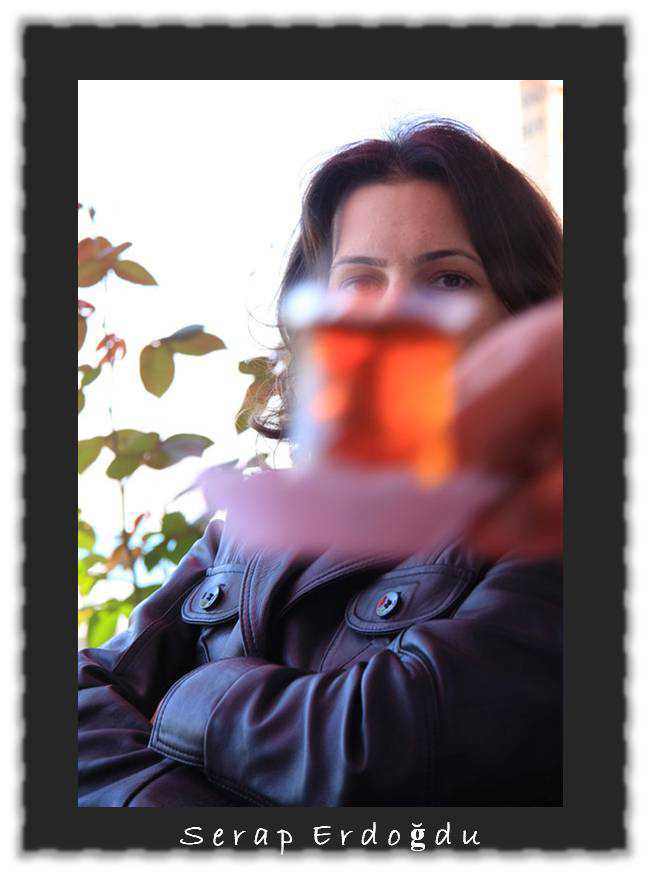 While both Chinese and Indians claim that they first discovered the use and drink of Tea thousands of years ago, Turks evolved their own way of making and drinking the black tea (Çay in Turkish), which became a way of life for our culture. Wherever you go in Turkey, tea or coffee will be offered as a sign of friendship and hospitality, anywhere and any time, before or after any meal. The production of tea in Turkey mainly started in the early years of the Republic along the eastern Black Sea Region. Many of the tea plantations are centered around the town of Rize, and from the Georgian border to Trabzon, Arakli, Rize, Karadere and Fatsa (near Ordu), reaching in some places 30 kilometers inland and reaching the height of around 1000 m. In 1947 the first tea factory was built in Rize and in 1965 the production of dried tea reached to the level of domestic consumption. The tasks of buying, processing and selling tea was conducted by the Tekel (Monopoly of State) General Directorate until then, in 1971 was transferred to the Tea Corporation, and in 1984 the Monopoly on tea was lifted and this facility was also provided to the private sector. Turkish tea is full-flavored and too strong to be served in large cups thus it’s always offered in little tulip-shaped glasses which you have to hold by the rim to save your fingertips from burning because it’s served boiling hot. You can add sugar in it but no milk, and you can have it either lighter (weaker) or darker (stronger) depending on your taste because Turkish tea is made by pouring some very strong tea into the glass, then cutting it with water to the desired strength. Serious tea-drinker Turks usually go to a coffee & tea house where they serve it with a samovar (Semaver in Turkish) so they can refill their glasses themselves as much as they want.