Month: August 2009

  • Turkey Seeks Closer Economic and Political Integration with Iraq

    Turkey Seeks Closer Economic and Political Integration with Iraq

    Publication: Eurasia Daily Monitor Volume: 6 Issue: 155
    August 12, 2009
    By: Saban Kardas
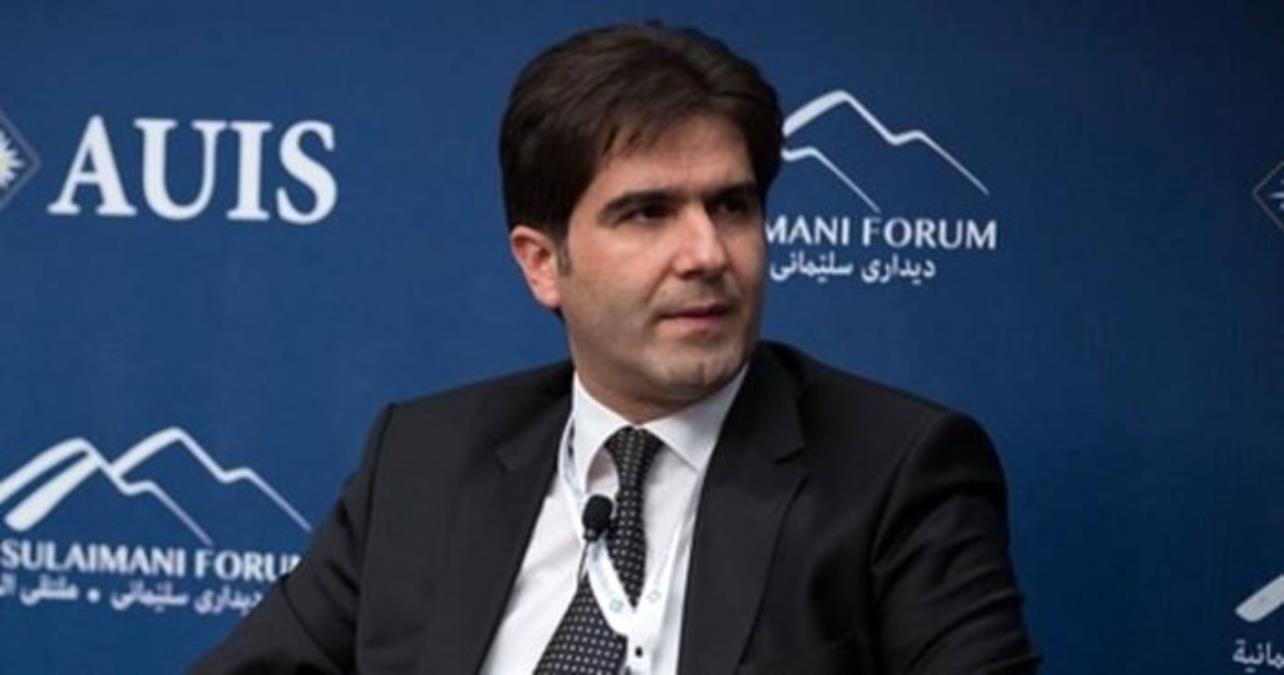
    Foreign Minister Ahmet Davutoglu, accompanied by Zafer Caglayan, the state minister responsible for foreign trade, visited Iraq on August 11, as part of an emerging strategic dialogue between Ankara and Baghdad. Prior to departing for Baghdad, Davutoglu held a lengthy press briefing and outlined the contours of the country’s Iraq policy. He said that Iraq is going through a dynamic process and is on the verge of an important transition, and added that Turkey is willing to play a constructive role in this process. He summarized the major goal of his trip as “conveying [to the Iraqis] the principled attitude Turkey has been pursuing on Iraq’s security, peace and future, and reiterating that Turkey stands with the Iraqi people regarding any development affecting the future of Iraq” (Anadolu Ajansi, August 11).

    In Iraq, he met his counterpart Hosyar Zebari and other Iraqi officials. During the joint press briefing with Zebari, he repeated his views about Iraq and the future of the region. He emphasized that Turkey’s relations with Iraq are based on four key principles: a common security area, high-level political dialogue, economic interdependence and peaceful coexistence on the basis of their common culture. He maintained that through unhindered cooperation in various areas, the two countries will shape the future of the region together.

    Davutoglu said that as a reflection of this shared understanding, Turkey will assist Iraq regarding the provision of sufficient water from its dams on the Euphrates to meet the needs of Iraqi farmers. Zebari reiterated Iraq’s support for Turkey’s fight against terrorism. Turkey and Iraq, with the participation of the United States, have initiated a trilateral mechanism to coordinate measures against the Kurdistan Workers’ Party (PKK). The latest meeting in this process took place in Ankara last month (EDM, July 29). Zebari, an ethnic Kurd, pledged that the Baghdad government and the Kurdish regional administration in Northern Iraq will implement the findings of the trilateral mechanism.

    Davutoglu’s visit occurred within the context of the recently launched “High Level Strategic Cooperation Council” (HLSCC). This concept builds on the intensive diplomatic traffic, which began with Prime Minister Recep Tayyip Erdogan’s visit to Baghdad in July 2008, and continued with Iraqi President Jalal Talabani’s visit to Turkey in March, and Turkish President Abdullah Gul’s visit to Baghdad in the same month and Iraqi Prime Minister Nouri al-Maliki’s visit to Ankara in July.

    The HLSCC is conceived as an inter-governmental forum to be co-chaired by prime ministers. As part of this process, eight ministers responsible for different fields (foreign affairs, interior, transportation, foreign trade, energy, development, health, and environment and forestry) will maintain communication at bilateral level to develop joint projects. The ministers will meet at least three times annually, while technical delegations will meet quarterly to develop joint action plans to be finalized by the annual prime-ministerial summits (www.orsam.org.tr, August 11). During his meetings in Iraq, Davutoglu also discussed preparations for the next HLSCC, expected to be held during Erdogan’s Baghdad visit in October.

    Davutoglu believes that the flourishing ties between Turkey and Iraq under this format represent a new partnership model. The importance he places on this process reflects his view of Iraq as not only a friend and neighboring country with which Turkey shares a common destiny, but also an important strategic partner. Davutoglu explicitly acknowledges that through such channels of mutual cooperation, Ankara hopes to integrate the economies of Iraq and Turkey and create a common area of security (Anadolu Ajansi, August 11).

    Meanwhile, the Turkish government also hopes to initiate a similar process with Syria (Cihan, July 23) and the Gulf Cooperation Council (EDM, July 13), as well as promoting a larger role for the Organization of Islamic Countries in the region (EDM, May 28). Through such cooperation schemes, Davutoglu wants to bolster relations among regional countries at governmental and societal levels, starting with Iraq and Syria, and turn Mesopotamia into a prosperous region. In this regard, Davutoglu confirmed in Baghdad that Turkey plans to institutionalize a trilateral mechanism between Ankara, Baghdad and Damascus based on its earlier meetings.

    Ankara’s motivation in initiating the Turkish-Iraqi strategic dialogue process is varied, yet the most immediate concern appears to be related to the security situation in Iraq. Ankara realizes that the uncertainty surrounding the future of Iraq beyond the planned withdrawal of American forces might undermine regional stability, hence eventually posing a serious threat to Turkey’s security. The Iraqi national political system still remains fragile and if the various Iraqi groups cannot manage to form a workable political system, there is a risk that Iraq might descend into civil war. Turkey is one of the first countries that would be affected by any instability in Iraq, as demonstrated by its experiences of the aftermath of the first Gulf War and the 2003 Iraq War. Therefore, Davutoglu wants to engage the Iraqi factions to facilitate the formation of national institutions and ease the pain of the transition period, which, if mishandled, could destabilize the country and the entire region. Ankara’s ultimate objective in Iraq is to ensure that the country’s territorial integrity and political unity can be preserved during the transition period, so that regional peace will be maintained (EDM, July 27).

    Moreover, Turkey also has important commercial interests in Iraq, which again depend on preserving Iraq’s political stability. As Caglayan stressed, Iraq is Turkey’s fifth largest export market, and this year the bilateral trade volume is expected to reach $7 billion, making a 58 percent increase on the previous year. Turkey expects to boost the bilateral trade volume to $20 billion by 2011. Turkish firms are involved in various infrastructure projects and Iraq is a popular destination for Turkish consumer goods. Turkish contractors have already secured several multi-billion dollar projects in Iraq (Cihan, August 11). Partnership in energy is also another engine of mutual cooperation, as reflected in Maliki’s attendance at the Nabucco Summit in Ankara last month. If Iraq can successfully manage the post-invasion challenges and embark on a steady path towards economic recovery (thanks to its oil and gas revenues), it might emerge as a major market for Turkish businesses, perhaps also aiding Turkey’s own economic recovery.
    https://jamestown.org/program/turkey-seeks-closer-economic-and-political-integration-with-iraq/
  • Israel must be suspicious of Armenia: expert

    Israel must be suspicious of Armenia: expert

    13 August 2009 [18:57] – Today.Az

    “I believe the Armenian-Israeli relations are very weak and quite formal,” Azerbaijani political expert Vafa Guluzade said commenting on Israeli ambassador’s secret visit to Yerevan.

    The Israeli government is fully aware that Armenia is an ally of Iran and will fulfill any orders of the country, he said.

    “For this reason, Israel-Armenia relations can never be strong. Israel must treat Armenia with suspicion,” he said.  

    As to the question whether it is true that Israeli ambassador’s visit to Yerevan is linked with crash of Iranian TU-154 with weapons on board for Hezbollah,  Guluzade said:
    “I believe that this visit is 100 percent linked to this matter. Because Israel could be very interested and concerned about arms shipments for the Lebanese movement Hezbollah via Armenia. The ambassador might have arrived in Yerevan to clarify this issue.”

     /ANS PRESS/

  • Kurdish mag sparks wrath by urging Jews to return

    Kurdish mag sparks wrath by urging Jews to return

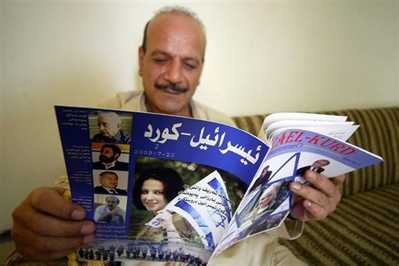
    AFP/File – Dawood Baghestani, Iraqi Kurdish editor-in-chief of "Israel-Kurd", holds a copy of the magazine …
    Dawood Baghestani, Iraqi Kurdish editor-in-chief of "Israel-Kurd", holds a copy of the magazine in Arbil, the capital of Iraq's autonomous Kurdish region. The newly launched monthly magazine has caused a stir in northern Iraq after calling on Jewish Kurds to return to the region. (AFP/File/Safin Hamed)

    by Abdel Hamid Zebari

    ARBIL, Iraq (AFP) – A new magazine in Iraq’s Kurdistan region has caused furore among conservative Muslims with a rousing call for Jews to leave Israel — and come back to Iraq.

    The magazine, “Israel-Kurd”, is the brainchild of Dawood Baghestani, the 62-year-old former chief of the autonomous northern region’s human rights commission.

    The glossy, full-colour monthly in Kurdish and English has a lofty mission: to help solve the intractable Israeli-Palestinian conflict by convincing more than 150,000 Kurdish Jews living in Israel to return to Iraqi Kurdistan, Baghestani told AFP.

    “The biggest reason behind the complexity of the Palestinian problem is the unjust practices of Arab regimes against the Jews — there are more than 1.5 million Jews originally from Arab countries in Israel,” Baghestani said.

    “If the Jews had not been subject to an exodus, the Palestinians wouldn’t have been either,” he said, referring to the flight of 700,000 Palestinians from the newly created Jewish state in 1948 during the first Arab-Israeli war.

    “If the situation in our new federal and democratic Iraq, and particularly in Kurdistan, becomes stable, then many Jews would want to return and reduce the number of Jewish settlements in Palestine.”

    The latest edition of the 52-page magazine, which has a circulation of around 1,500 copies, features a woman draped in an Israeli flag on the cover.

    Inside are stories about Kurdish Jewish traditions and photographs from the first half of the twentieth century, as well as arguments on how a return of Jews would help to build a wealthy and strong Kurdistan.

    But many people in Iraq are not buying the argument.

    “I’m suspicious. I don’t see the point of this kind of publication,” said Zana Rustayi, a representative of the Islamist Jamaa Islamiya party in the regional assembly.

    “The Kurds are part of the Muslim nation, and Kurdistan is part of Iraq.”

    Iraq has no relations with Israel, and the country was an implacable foe of the Jewish state under the regime of former dictator Saddam Hussein, who was overthrown by the US-led invasion in 2003.

    A Sunni member of parliament in Baghdad, Mithal Alusi, was suspended from parliament and threatened with charges last year after visiting Israel for a conference. The decision was later overturned by the constitutional court.

    Dawood Baghestani, Iraqi Kurdish editor-in-chief of 'Israel-Kurd', reads a copy of the magazine in Arbil, the capital of Iraq's autonomous Kurdish region. The newly launched monthly magazine has caused a stir in northern Iraq after calling on Jewish Kurds to return to the region. Photo:Safin Hamed/AFP
    Dawood Baghestani, Iraqi Kurdish editor-in-chief of 'Israel-Kurd', reads a copy of the magazine in Arbil, the capital of Iraq's autonomous Kurdish region. The newly launched monthly magazine has caused a stir in northern Iraq after calling on Jewish Kurds to return to the region. Photo:Safin Hamed/AFP

    Kurdistan does have a warmer history with the Jewish state, however. Many of the current crop of Kurdish leaders have visited Israel in past decades.

    Jews lived in Kurdistan for centuries, working as traders, farmers and artisans.

    But the creation of Israel and the rise of Arab nationalism in the mid-twentieth century dramatically altered the situation, spurring most of Kurdistan’s Jews to leave.

    Baghestani — who has been to Israel four times, including on a clandestine trip in 1967 — denies that he works for the Israelis.

    “What I am asking for is enshrined in the constitution: every Iraqi has the right to return to one’s homeland. Jews who were Iraqi citizens were subject to injustice,” he said.

    “If every Arab country allowed the Jews to return, ensured their safety and gave them back their land,Palestinian refugees would be able to return to their territory because Israel would not need so much land.”

    Mahmud Othman, a Kurdish Coalition MP in Baghdad, disputes this. He says that while relations with Israel may be a nice idea, such a move would not be pragmatic for a region ringed by other Muslim states.

    “Kurdistan needs the Arabs. We are living in an Arab country and we are federal region within Iraq. We don’t need a relationship with (Israel), we need a relationship with Arabs, we need a relationship with Iran, we need to be close to Turkey,” Othman said.

    “I haven’t heard of any Jews in Israel trying to return to Kurdistan. I think they’re better off there.”

    Source:  news.yahoo.com, Aug 12, 2009

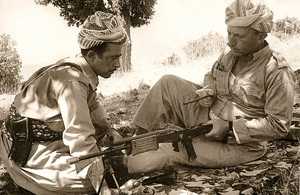
    Southern commander Zvika Zamir teaching a Kurdish fighter how to assemble a Galil rifle (1969)
    Southern commander Zvika Zamir teaching a Kurdish fighter how to assemble a Galil rifle (1969)

    Source:  www.nrg.co.il, ג’קי חוגי | 10/8/2009

  • Turkish Economy Moves out of Freefall: Recovery Requires More Time

    Turkish Economy Moves out of Freefall: Recovery Requires More Time

    Turkish Economy Moves out of Freefall: Recovery Requires More Time

    Publication: Eurasia Daily Monitor Volume: 6 Issue: 154
    August 11, 2009
    By: Saban Kardas
    The Turkish Statistical Institute (TurkStat) released its June figures on the industrial production index, which gave mixed signals concerning the influence of the economic crisis on the Turkish economy (www.turkstat.gov.tr, Press Release, August 10). The figures show that although industrial output is still down from last year’s levels, industrial production is moving upward. The Turkish economy is no longer in the free fall, but a permanent economic recovery might not materialize soon.

    Industrial production dropped by 9.7 percent in June 2009 on a year-on-year basis, maintaining a continuous decline since the second half of 2008. After industrial production contracted by a record 23.8 percent in February, the decline in industrial output started to slow down in March, and this process has continued (EDM, June 11). As a sign of this partial recovery, in June the contraction rate dropped to single digits for the first time since November 2008. Moreover, in June industrial output increased by 7.3 percent compared to May (www.turkstat.gov.tr, August 10). This trend follows on the previous month. In May, TurkStat announced that industrial output increased by 0.8 percent compared to April (www.cnnturk.com, July 31).

    According to the main industrial groupings (MIG’s) classification, the highest decline in June compared with the previous year was in capital goods -by 29.7 percent. Production declined by 10.6 percent in manufacturing industry, 7.9 percent in mining, and 7 percent in energy.

    Economists suggest that the slowing of the decline over four consecutive months and the rise in output on a month-on-month basis has bolstered expectations that the contraction might be bottoming out. Tanil Kucuk, the Chairman of the Istanbul Chamber of Industry (ISO), said that although 9.7 percent is a very high rate of decline under normal conditions, “looking at the economic situation for the past year, we consider this development the lesser of two evils and find it promising” (Hurriyet Daily News, August 10).

    Experts believe that there is a visible upturn in the Turkish economy. Recently released economic figures also lend partial support to this optimistic outlook. Data released by the Central Bank showed that the current account deficit dropped 65 percent in June on a year-on-year basis. In the first half of 2009, the current account deficit was also down 75.7 percent compared to the same period last year (www.ntvmsnbc.com, August 10). According to the projections of TurkStat based on the figures from the first half of 2008, Turkey’s foreign trade deficit is likely to decrease by the end of the year and will drop to $27.2 billion (Referans, August 11). At the end of 2008, Turkey’s foreign trade balance recorded a $69.8 billion deficit (Milliyet, January 30). The exponentially growing foreign account deficit and foreign trade deficit were major concerns for the Turkish economy prior to the global financial crisis. The slowdown brought about by the crisis had a positive effect by curbing Turkey’s imports. Although exports also declined, as a result of the shrinking global economy, the Central Bank estimates that Turkey’s export volume will grow as the global economy starts to recover.

    The improvement is attributed largely to the economic recovery plans which the government launched in the first half of the year. Through several stimulus packages, the government introduced temporary tax cuts on automobiles, home appliances and housing in order to generate domestic demand and reduce the impact of the crisis on the country (EDM, March 16). The effect of the economic packages in this recovery is evident, especially in household appliances production, where there is a clear increase. The production of durable consumer goods increased by 7.2 percent and perishable consumer goods increased by 1.8 percent. However, the production decline within the automotive sector has continued (www.turkstat.gov.tr, August 10).

    Nonetheless, experts estimate that the effect of the domestic demand generated by the stimulus packages might wane after August. Therefore, they expect the contraction in the economy to persist in the third quarter of 2009, and perhaps beyond (www.ntvmsnbc.com, August 10). Therefore, though finding the recent figures promising, the representatives of industrialists had expected more than “hope” and called on the government to take additional precautions to get the country out of recession (Anadolu Ajansi, August 10).

    However, given the heavy costs of the previous packages on the treasury, the government is unlikely to pass a large-scale stimulus package. Due to the public spending ahead of the March local elections and the declining state revenues as a result of the crisis, the budget deficit has already surpassed the estimates at the beginning of the year. While the deficit is expected to reach TL 70 billion at the end of the year, the government is trying to keep it within the range of TL 60 billion. Toward this end, it has already raised some taxes and announced cuts in spending, including healthcare. Therefore, rather than introducing new packages to stimulate demand, the government is working on new measures to narrow the budget deficit (Radikal, July 23). Although tax hikes and limitations on government spending might narrow the gap, they may also curb demand and negatively affect growth.

    The Turkish economy may no longer be in free fall, but it is unclear how sustainable the recovery might prove. Since the effect of the domestic stimulus packages appears to be short-lived and the government is unlikely to initiate any new stimulus packages, the Turkish economy’s sustainable recovery depends on external demand, and hence developments within the global economy.

    Fortunately, the upward trend in the Turkish economy is accompanied by the recent news coming from the world markets. American, Chinese and other large economies also reported the positive effect of economic packages in preventing the deepening of the global recession. While signs of recovery have raised hopes that the global economic downturn might be coming to an end, it is too early to expect an expanding external demand to stimulate the Turkish economy. Therefore, it might take more time before Turkey can move out of the recession.

    https://jamestown.org/program/turkish-economy-moves-out-of-freefall-recovery-requires-more-time/
  • Progress in Turkish-Azeri Talks on Gas Prices and Transit

    Progress in Turkish-Azeri Talks on Gas Prices and Transit

    Progress in Turkish-Azeri Talks on Gas Prices and Transit

    Publication: Eurasia Daily Monitor Volume: 6 Issue: 153
    August 10, 2009
    By: Saban Kardas
    Following the signing of energy cooperation agreements between Turkey and Russia, Turkish Energy Minister Taner Yildiz continued his “energy diplomacy,” by visiting Azerbaijan. Prior to departing for the Nakhchivan Autonomous Republic, the Azerbaijani enclave between Turkey and Armenia, on August 8 Yildiz stressed that his trip followed the agreements Turkey recently signed on both the Nabucco project and South Stream. He also added that as part of intensive energy diplomacy, he will travel to Syria this week to sign an agreement for the construction of a pipeline that will connect the Arab gas pipeline with the Turkish grid (Anadolu Ajansi, August 8).

    In Nakhchivan, Yildiz met with the President of Nakhchivan Vasif Talibov and the head of the Azerbaijani oil company SOCAR, Rovnag Abdullayev. Turkey and Nakhchivan signed a memorandum of understanding on laying a pipeline from the East Anatolian city of Igdir to Nakhchivan, which will carry half a billion cubic meters (bcm) of Azeri gas annually to Nakhchivan (Cihan, August 8).

    Another major part of Yildiz’s agenda were talks between Turkey and Azerbaijan concerning the gas trade and transportation. Although the negotiations have been under way for some time, Ankara and Baku have been unable to reach an agreement on three inter-related issues: re-pricing the gas Turkey imports from Azerbaijan’s Shah Deniz I reserves, setting the price and volume for Turkey’s imports from the Shah Deniz II, and developing a regime for the transit of the gas through the Turkish territory (www.cnnturk.com, August 8).

    These issues have implications beyond bilateral relations between Ankara and Baku. In the context of the discussions concerning the construction of alternative pipelines carrying Caspian basin gas to European markets, there is growing interest in tapping into Azerbaijan’s resources, particularly the Shah Deniz II field, which is expected to be operational by 2016. Whereas the European companies are interested in purchasing Azeri gas to feed Nabucco, Russia has been trying to lock in the same resources through a long-term contract to supply its alternative South Stream project and to pre-empt Nabucco. Baku is looking to secure the best deal from this competition, and diversify its export routes as much as possible, which led it to export a symbolic volume of gas to Russia through a non-binding agreement in June, which seems to have paid some tactical dividends (EDM, July 17).

    Azerbaijan’s decision is considered as a “flexible tactical move” on Baku’s part (EDM, July 2). The agreement demonstrated to Ankara and its Nabucco partners that Azerbaijan was not short of options for the sale and transport of its gas. Indeed, the urgency induced by the agreement served as a wake-up call for Turkey and other European countries, which helped convince Ankara to end its stalling and open the way to sign the Nabucco inter-governmental agreement (EDM, July 6).

    Nonetheless, a second tactical goal of the Azeri-Russian agreement has yet to bear concrete results: “the $350 price offer [which Russia will pay for the Azeri gas] has set a benchmark that other importers of Azerbaijani gas may have to bid against” (EDM, July 2). Indeed, Baku’s sudden move surprised many in Ankara at the time, leading to speculation that Turkey might have to pay higher prices. Nonetheless, when asked about the impact of the Azeri-Russian deal on the Turkish-Azeri talks on re-pricing, Yildiz preferred to decouple the two processes from each other. “How much does the [Azeri-Russian agreement] affect the price? This question should be directed to Abdullayev. We had submitted our offer before the agreement with Russia, and we are still at the same position. Because, [we believe] our price offer takes into account both sides’ interests, and ensures that the project remains feasible” (www.haberturk.com, July 10).

    Ankara claimed that it offered a “fair” price to Baku, and it expected this to be accepted (EDM, June 4). Apparently Turkey proved unable to satisfy the expectations of the Azeri side, and Yildiz and Abdullayev have held several meetings to discuss this issue. Ankara’s reluctance to revise the price for Azeri gas raises suspicions that, using its geographic position as leverage, Ankara is resorting to “tactics of extortion” to maximize its benefits at Azerbaijan’s expense, which might eventually undermine the prospects for Nabucco (EDM, July 2).

    Nonetheless, Azerbaijan’s ongoing talks with Turkey demonstrate its willingness to export its gas to European markets independent of Russian-controlled pipelines and its treatment of Nabucco as an overriding national interest. However, the conditions that Ankara will attach to the use of its territory for exports, including transit fees and re-export rights, are a major factor influencing Baku’s decision, which raises a larger question about the Turkish government’s position on pipeline diplomacy.

    After signing agreements on both Nabucco and South Stream, Ankara maintains that the two projects are not necessarily exclusive. Moreover, in response to charges that Turkey’s agreement with Russia, which granted South Stream the right to conduct seismic feasibility studies in the Turkish zone of the Black Sea, was a serious blow to Nabucco, Turkish officials maintain that “Turkey is not a partner in the South Stream project and only allowed the use of its territorial waters in the Black Sea, while the country is a partner state in Nabucco.” They also added that Turkey still considers Nabucco as a strategic priority (Hurriyet Daily News, August 7).

    If Turkey indeed treats Nabucco as a priority project, one area where it could tilt the balance in favor of Nabucco is to facilitate the westward flow of Azeri gas. In this way, it could cement its ties to Baku and reassure its Western partners of its commitment to Nabucco. No agreement was signed during Yildiz’s meeting, but the statements by Azeri officials signaled a promising future. Abdullayev said that, “we came close to concluding Turkey-Azerbaijan gas agreements. We can soon finalize the issue of transit prices. Gas from Shah Deniz will also come to Turkey, and will flow to Europe through Turkey. This will support the two sister nations” (www.ntvturk.com, August 8).

    https://jamestown.org/program/progress-in-turkish-azeri-talks-on-gas-prices-and-transit/
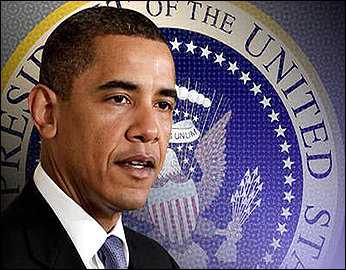
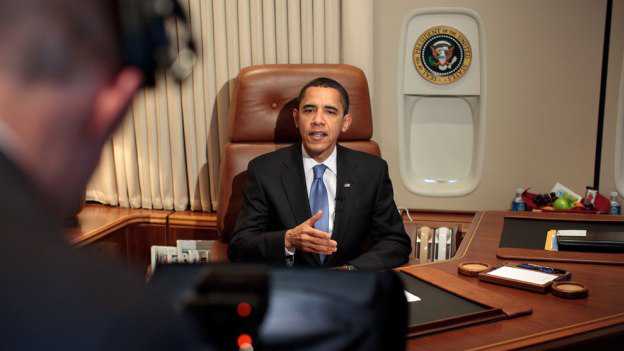
  • OBAMA’S RECOMMENDATION TO ELDERLY

    OBAMA’S RECOMMENDATION TO ELDERLY

    obamo-oturuyor

    THIS IS UNBELIEVABLE ….. YOU MUST LISTEN TO THIS INTERVIEW ABOUT WHAT IS ACTUALY IN THE HEALTH CARE PLAN OBAMA IS TRYING TO RUSH THROUGH.  I’m sending it to everyone in my addressbook and hope you will too! …  Jean Eaton <[email protected]>

    On page 425 it says in black and white that EVERYONE on Social Security, (will include all Senior Citizens and SSI people) will go to MANDATORY counseling every 5 years to learn and to choose from ways to end your suffering (and your life).  Health care will be denied based on age.  500 Billion&n bsp;will be cut from Seniors healthcare.   The only w ay for that to happen is to drastically cut health care, the oldest and the sickest will be cut first.   Paying for your own care will not be an option.    “ON PAGE 425 OF OBAMA’S HEALTH CARE BILL, the Federal Government will require EVERYONE who is on Social Security to undergo a counseling session every 5 years with the objective being that they will explain to them just how to end their own life earlier. Yes…They are going to push SUICIDE to cut medicare spending!”

    Fred Thompson: Interviews


    (BE SURE TO CLICK ON THE ABOVE LINK( Fred Thompson: Interviews) TO HEAR THE INTERVIEW!)