|
Month: August 2009
-
In Their Own Words: PKK Leaders on Peace, Dialogue, and the United States
-
JOINT LETTER TO PRESIDENT BARACK OBAMA
President Barack Obama
The White House
1600 Pennsylvania Ave., NW
Washington, D.C., 205000August 4, 2009
Dear President Obama,
Last year’s war between Georgia and Russia punctuated the continued threat to peace and security in the South Caucasus arising from unresolved territorial conflicts that have spanned more than two decades since the fall of the Soviet Union. Recently, several Iranian officials openly threatened Azerbaijan for hosting Israeli President Shimon Peres in Baku. Similarly, four UN Security Council resolutions demanding that Armenian forces withdraw and cease the occupation of Azerbaijani lands since 1993 have achieved little for the displaced one million refugees and IDPs. All of this adds to the urgency of reaching a sustainable peace based on the fundamentals of international law and human rights, or, as you have stated earlier, “a lasting and durable settlement of the Nagorno-Karabagh conflict.”
With stronger support from the United States and increasing involvement of the Russian Federation, the peace process has produced some momentum at the latest meetings of the Presidents of Azerbaijan and Armenia. U.S. Mediator Matt Bryza emphasized the productive position and leadership demonstrated by Azerbaijan during the negotiations, particularly Azerbaijan’s many concessions to Armenia and the Armenian people despite Armenia’s aggression in and military occupation of western Azerbaijan. A peaceful settlement, which involves respect for territorial integrity of the states in the region, repatriation of the displaced communities, opening of all borders and communications, security guarantees for both Azerbaijani and Armenian communities in occupied regions of Azerbaijan, and withdrawal of Armenian forces from Azerbaijan, and nothing less, is necessary to achieve a lasting and durable settlement.
The South Caucasus, a strategic global juncture, holds great promise for regional and global peace and prosperity. Yet the region’s potential has been disrupted and disable by two decades of conflict between Armenia and Azerbaijan. Armenia’s own development has been paralyzed as a result of its self-imposed isolation from major regional projects. More than one million Armenians have left Armenia due to poor government, poor economics, and poor services. While the Azerbaijani residents of the Nagorno-Karabakh region and other Armenian-occupied regions of Azerbaijan have suffered ethnic cleansing, displacement, and destruction of personal and cultural property, the Armenians of Nagorno-Karabakh continue to live in economic and political uncertainty. Armenia’s occupation of Azerbaijan has been costly in many ways.
A lasting and durable peace settlement would bring about a major positive change to the South Caucasus. The Azerbaijani-Georgian partnership has already shown what can be reached when the parties work towards regional cooperation. Should the Armenian leadership demonstrate productive pragmatism, it can help integrate the nation with the economic and democratic future of the region securing a peace and prosperity for its people. Such a future would include open communications and borders, including the Turkish-Armenian border, which was closed in response to Armenia’s invasion and occupation of the Azerbaijani region of Kelbajar, outside of NK region, in 1993. A lasting and durable peace would advance U.S. interests as it provides for lasting stability in a strategically important region where the United States requires solid friends. Significantly, as the value of the Caspian hydrocarbon resources increase for Europe’s energy security and the South Caucasus transport corridor serves as the key conduit for access to Afghanistan, a lasting and durable peace in this region becomes an even higher priority. In addition, helping Armenia and Azerbaijan to reach a settlement would demonstrate the new Administration’s commitment to the new foreign policy of global engagement and provide a positive tangible result for U.S.-Russian cooperation.
Therefore, on behalf of the Azerbaijani-American and Turkish-American communities, we support and encourage your Good Office to intensify U.S. efforts towards reaching a just peace between Armenia and Azerbaijan based on United Nations Security Council resolutions and the Helsinki Final Act of 1975, and to seize this historic opportunity. While we recognize the significant pressures that bear from special interests opposed to peace for a variety of reasons, including nationalist and religious ones, who have previously succeeded to undermine peace efforts, we hope that America’s vision for the South Caucasus is informed by its national interests and its relationship with strategic partners in the region. Thank you.
Sincerely,
U.S. Azeris Network (USAN)
Assembly of Turkish American Associations (ATAA)
Azerbaijani-American Council (AAC)
Federation of Turkish American Associations (FTAA)
U.S.-Azerbaijan Council (USAC)
U.S. Turkic Network (USTN)
Cultural Center of Caucasus Jews (CCCJ)
Azerbaijan Turkey America Foundation (ATAF)
Houston Baku Sister City Association (HBSCA)Cc: The Honorable Joseph R. Biden, Vice-President of the United States of America
The Honorable Hillary Rodham Clinton, United States Secretary of Statewww.USAzeris.org
www.FTAA.org
www.Azeris.org
www.ATAA.org
www.USTurkic.org
www.HoustonBaku.com
www.ATAF-Foundation.org -
Are Armenia’s Policies Making Turkey Stronger?
By Harut Sassounian
Publisher, The California Courier
The Armenian Foreign Ministry, in all likelihood, has a comprehensive strategic plan regarding Armenia’s relations with its immediate neighbors (Azerbaijan, Georgia, Iran, Turkey), with major powers near and far (China, France, Great Britain, Russia, United States), and with other key states around the world.
At the most basic level, Armenia’s leaders are expected to maximize their country’s national interests and counter all anti-Armenian efforts. Based on this simple criterion, I would like to make an assessment of several critical issues related to Turkey, Armenia’s most problematic neighbor.
Turkey has not only committed genocide against the Armenian nation and continues to enjoy the fruits of that crime, it also spends millions of dollars every year to deny the facts of history and defame the Armenian people.
Ever since its inception, the Turkish Republic has consistently pursued the anti-Armenian policies of its Ottoman predecessors. Turkey has blockaded Armenia since 1993 — an act of war — in order to force it to make territorial concessions on Artsakh (Karabagh). Shortly after Armenia’s independence, Turkish, on at least one occasion, amassed troops on the border, threatening to attack Armenia. Moreover, Turkey has trained and armed Azerbaijan’s military to enable it to invade Artsakh and exterminate its ethnic Armenian population.
Turkey also carries out anti-Armenian activities through various diplomatic channels. Turkish delegates regularly join their Azeri colleagues in casting votes against Armenia and Artsakh in the Council of Europe, the United Nations, and the Conference of Islamic States.
Finally, Turkey continues to hold hostage its Armenian population, depriving it of the most basic cultural, educational and religious rights.
Under these circumstances, it is incumbent upon Armenian officials to carefully weigh whether the decisions they take regarding Turkey inadvertently contribute to their hostile neighbor’s political and economic strength.
Here are a few examples of such decisions:
Armenia should not accept any preconditions for negotiations with Turkey on the opening of the border and should not have agreed to make a joint announcement on the eve of April 24 which helped boost Turkey’s prestige and undermined efforts to acknowledge the Armenian Genocide by the United States and others.
Armenia should not recognize Turkey’s present boundaries and should reject treaties signed by Soviet Armenia, in order not to preclude future Armenian territorial claims.
Armenia should not agree to the Turkish demand of forming a joint historical commission to review the facts of the Armenian Genocide, in order to avoid the questioning of the veracity of the genocide and not to harm the chances of its acknowledgment by third parties.
Armenia should not allow Turkey to stick its nose in the Armenia-Azerbaijan negotiations over Artsakh, in order not to help boost Turkey’s image as a credible mediator in Afghanistan, Iran, Iraq, Israel, Lebanon, Pakistan, and Syria.
Armenia’s President should not attend the October 14 soccer match in Turkey, unless Turkish leaders first abide by their written agreement to open the border. Armenian officials should not help give credence to false Turkish claims that it is engaged in serious negotiations with Armenia.
Armenia’s leaders should not support Turkey’s efforts to join the European Union in order not to increase the Turks’ political and economic strength. Given its huge population in comparison with most other EU countries, Turkey would be entitled to a large number of votes in the European Parliament, enabling it to pass anti-Armenian resolutions.
Last Fall, when Turkey was desperately seeking votes to join the U.N. Security Council, Armenia and Armenians worldwide made almost no attempts to prevent its gaining such a critical seat for the first time in almost half a century. Turkey can now use that prestigious position to pass resolutions in the U.N. against Armenia and Artsakh.
In 2006, in the aftermath of Israel’s attack on Lebanon, Armenia and Armenians did not prevent Turkey from contributing peacekeeping troops to UNIFIL (United Nations Interim Force in Lebanon). This made possible the stationing of the Turkish military for the first time since the collapse of the Ottoman Empire in an Arab country that hosts the largest Armenian community in the Middle East.
Finally, Armenians should boycott Turkish products and should not go on vacation to Turkey in order not to contribute to the economy of a hostile state. Prime Minister Tigran Sargsyan should be commended for ordering Armenian government officials not to spend their vacation in Turkey and for encouraging local travel agencies to prepare tour packages at competitive rates for Armenians to vacation in Artsakh.
There already exists an overwhelming imbalance between the political, economic, and military strengths of Armenia and Turkey. By carefully considering the impact of their every decision, Armenia’s leaders should narrow, rather than increase, that imbalance!
-
3 to 4.3 Billion Barrels of Oil in North Dakota and Montana
Senator Jeff Kruse
R-Roseburg, District 1
Phone: 503-986-1701 900 Court St. NE, S-211 Salem Oregon 97301
Email: [email protected] Website:
E-Newsletter Number 1, Volume 1Working Hard For You
AMERICAN OILWe continue to be driven by an agenda focused in part by alternative energy. We are told the purpose is two fold, to be more environmentally friendly and to reduce our dependence on foreign oil. I have written in past newsletters about the environmental side of this debate. For example how ethanol actually takes more energy to create than we save by using it and about how it makes no sense to take land out of food production for this purpose. We even had acknowledgement on the Senate floor about how corn based ethanol will never work. Unfortunately that statement was followed up with the claim that cellulosic ethanol, which has even less sugar than corn,might be the answer. We seem to be chasing the next, greatest, unproven solution. The fact is oil is more environmentally friendly than this alternative and will be for the foreseeable future.
This brings us to the issue of our dependence on foreign oil. I received an e-mail on the subject, complete with links to the USGS for verification. These are not my words, but I do agree with the points being made. I thought I would share this e-mail with you verbatim to hopefully give you a look into potential solutions to this problem that differ greatly from current US energy policy.
Sincerely,
Senator Jeff Kruse
00000000000000000000000000000000000000000000000000
WILL AN AMERICAN PUSH FOR IT!!!
The U. S. Geological Service issued a report in April (’08) that only scientists and oil men knew was coming, but man was it big. It was a revised report (hadn’t been updated since ’95) on how much oil was in this area of the western 2/3 of North Dakota ; western South Dakota ; and extreme eastern Montana ….. check THIS out:
The Bakken is the largest domestic oil discovery since Alaska ‘s Prudhoe Bay , and has the potential to eliminate all American dependence on foreign oil. The Energy Information Administration (EIA) estimates it at 503 billion barrels.. Even if just 10% of the oil is recoverable… at $107 a barrel, we’re looking at a resource base worth more than $5.3 trillion.
‘When I first briefed legislators on this, you could practically see their jaws hit the floor. They had no idea.’ says Terry Johnson, the Montana Legislature’s financial analyst.
‘This sizable find is now the highest-producing onshore oil field found in the past 56 years.’ reports, The Pittsburgh Post Gazette. It’s a formation known as the Williston Basin , but is more commonly referred to as the ‘Bakken.’ And it stretches from Northern Montana, through North Dakota and into Canada . For years, U.S. oil exploration has been considered a dead end. Even the ‘Big Oil’ companies gave up searching for major oil wells decades ago. However, a recent technological breakthrough has opened up the Bakken’s massive reserves….and we now have access of up to 500 billion barrels. And because this is light, sweet oil, those billions of barrels will cost Americans just $16 PER BARREL!
That’s enough crude to fully fuel the American economy for 41 years straight.
2. And if THAT didn’t throw you on the floor, then this next one should – because it’s from TWO YEARS AGO!
U. S. Oil Discovery- Largest Reserve in the World!
Stansberry Report Online – 4/20/2006Hidden 1,000 feet beneath the surface of the Rocky Mountains lies the largest untapped oil reserve in the world. It is more than 2 TRILLION barrels. On August 8, 2005 President Bush mandated its extraction. In three and a half years of high oil prices none has been extracted. With this motherload of oil why are we still fighting over off-shore drilling?
They reported this stunning news: We have more oil inside our borders, than all the other proven reserves on earth. Here are the official estimates:
– 8-times as much oil as Saudi Arabia
– 18-times as much oil as Iraq
– 21-times as much oil as Kuwait
– 22-times as much oil as Iran
– 500-times as much oil as Yemen
– and it’s all right here in the Western United States …HOW can this BE? HOW can we NOT BE extracting this? Because the environmentalists and others have blocked all efforts to help America become independent of foreign oil! Again, we are letting a small group of people dictate our lives and our economy……WHY?
James Bartis, lead researcher with the study says we’ve got more oil in this very compact area than the entire Middle East-more than 2 TRILLION barrels untapped. That’s more than all the proven oil reserves of crude oil in the world today, reports The Denver Post.
Don’t think ‘OPEC’ will drop its price – even with this find? Think again! It’s all about the competitive marketplace, – it has to. Think OPEC just might be funding the environmentalists?
Got your attention/ire up yet? Hope so! Now, while you’re thinking about it ……and hopefully P.O’d, do this:3.. Pass this along. If you don’t take a little time to do this, then you should stifle yourself the next time you want to complain about gas prices .. because by doing NOTHING, you’ve forfeited your right to complain.
——–
Now I just wonder what would happen in this country if every one of you sent this to every one in your address book.
By the way…this is all true.. Check it out at the link below!!!
GOOGLE it or follow this link. It will blow your mind..
============================================================3 to 4.3 Billion Barrels of Technically Recoverable Oil Assessed in North Dakota and Montana’s Bakken Formation-25 Times More Than 1995 Estimate-
Contact Information:
U.S. Department of the Interior, U.S. Geological Survey
Office of Communication
119 National Center
Reston, VA 20192- Read FAQs about the Bakken Formation.
- Listen to a podcast with the lead scientist on this topic.
Reston, VA – North Dakota and Montana have an estimated 3.0 to 4.3 billion barrels of undiscovered, technically recoverable oil in an area known as the Bakken Formation.
A U.S. Geological Survey assessment, released April 10, shows a 25-fold increase in the amount of oil that can be recovered compared to the agency’s 1995 estimate of 151 million barrels of oil.
Related Podcasts 3 to 4.3 Billion Barrels of Oil in North Dakota and Montana Download directly | Details
or subscribe by e-mail.Technically recoverable oil resources are those producible using currently available technology and industry practices. USGS is the only provider of publicly available estimates of undiscovered technically recoverable oil and gas resources.
New geologic models applied to the Bakken Formation, advances in drilling and production technologies, and recent oil discoveries have resulted in these substantially larger technically recoverable oil volumes. About 105 million barrels of oil were produced from the Bakken Formation by the end of 2007.
The USGS Bakken study was undertaken as part of a nationwide project assessing domestic petroleum basins using standardized methodology and protocol as required by the Energy Policy and Conservation Act of 2000.
The Bakken Formation estimate is larger than all other current USGS oil assessments of the lower 48 states and is the largest “continuous” oil accumulation ever assessed by the USGS. A “continuous” oil accumulation means that the oil resource is dispersed throughout a geologic formation rather than existing as discrete, localized occurrences. The next largest “continuous” oil accumulation in the U.S. is in the Austin Chalk of Texas and Louisiana, with an undiscovered estimate of 1.0 billions of barrels of technically recoverable oil.
“It is clear that the Bakken formation contains a significant amount of oil – the question is how much of that oil is recoverable using today’s technology?” said Senator Byron Dorgan, of North Dakota. “To get an answer to this important question, I requested that the U.S. Geological Survey complete this study, which will provide an up-to-date estimate on the amount of technically recoverable oil resources in the Bakken Shale formation.”
The USGS estimate of 3.0 to 4.3 billion barrels of technically recoverable oil has a mean value of 3.65 billion barrels. Scientists conducted detailed studies in stratigraphy and structural geology and the modeling of petroleum geochemistry. They also combined their findings with historical exploration and production analyses to determine the undiscovered, technically recoverable oil estimates.
USGS worked with the North Dakota Geological Survey, a number of petroleum industry companies and independents, universities and other experts to develop a geological understanding of the Bakken Formation. These groups provided critical information and feedback on geological and engineering concepts important to building the geologic and production models used in the assessment.
Five continuous assessment units (AU) were identified and assessed in the Bakken Formation of North Dakota and Montana – the Elm Coulee-Billings Nose AU, the Central Basin-Poplar Dome AU, the Nesson-Little Knife Structural AU, the Eastern Expulsion Threshold AU, and the Northwest Expulsion Threshold AU.
At the time of the assessment, a limited number of wells have produced oil from three of the assessments units in Central Basin-Poplar Dome, Eastern Expulsion Threshold, and Northwest Expulsion Threshold.
The Elm Coulee oil field in Montana, discovered in 2000, has produced about 65 million barrels of the 105 million barrels of oil recovered from the Bakken Formation.Results of the assessment can be found at .
For a podcast interview with scientists about the Bakken Formation, listen to episode 38 of CoreCast at .
USGS provides science for a changing world. For more information, visit www.usgs.gov.Subscribe to USGS News Releases via our electronic mailing list or RSS feed.
**** www.usgs.gov ****
Links and contacts within this release are valid at the time of publication.
=========================================================
-

Archbishop slams online friendships
Social networking websites such as Facebook and MySpace encourage teenagers to build “transient relationships” that can leave them traumatised and even suicidal when they collapse, the head of the Roman Catholic Church in England and Wales has warned.Archbishop of Westminster Vincent Nichols also expressed concern about the rise of individualism in society.
He described footballers who break their contracts to move to other clubs for bigger salaries as “mercenaries” and said moves to loosen laws on assisted suicide were particularly worrying.
His comments in The Sunday Telegraph follow the inquest into the death of 15-year-old Megan Gillan, a student at Macclesfield High School in Cheshire who took a fatal overdose of painkillers after being bullied on social networking site Bebo.
Archbishop Nichols said the sites encouraged young people to put too much emphasis on the number of friends they have rather than on the quality of their relationships.
“Among young people often a key factor in them committing suicide is the trauma of transient relationships,” he said. “They throw themselves into a friendship or network of friendships, then it collapses and they’re desolate.”
He continued: “It’s an all or nothing syndrome that you have to have in an attempt to shore up an identity – a collection of friends about whom you can talk and even boast. But friendship is not a commodity, friendship is something that is hard work and enduring when it’s right.”
Archbishop Nichols said the internet and mobile phones were “dehumanising” community life and that relationships had been weakened by the decline in face-to-face meetings.
“I think there’s a worry that an excessive use or an almost exclusive use of text and emails means that as a society we’re losing some of the ability to build interpersonal communication that’s necessary for living together and building a community.
“We’re losing social skills, the human interaction skills, how to read a person’s mood, to read their body language, how to be patient until the moment is right to make or press a point. Too much exclusive use of electronic information dehumanises what is a very, very important part of community life and living together.”
Press Association
yahoo.news
-
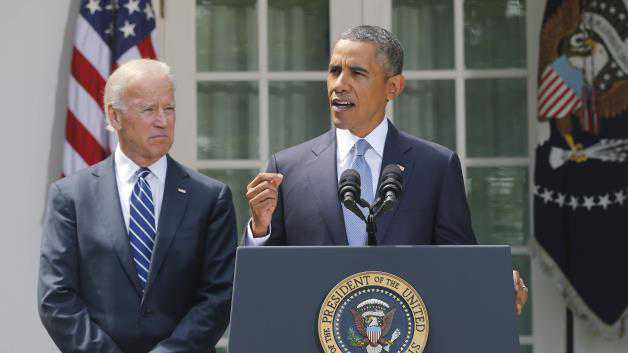
Letter from Congressional Armenian Contingent to Obama Complaining About Turkey
July 30, 2009
President Barack Obama
The White House
1600 Pennsylvania Avenue, N.W.
Washington, DC 20500
Dear Mr. President:
We write to you with our concerns about Turkish backpedaling on the
agreed upon roadmap to normalize relations between Turkey and Armenia.On April 22, 2009, just two days before the 94th commemoration of the
Armenian Genocide, the Department of State released the following
statement:The United States welcomes the statement made by Armenia and Turkey on
normalization of their bilateral relations. It has long been and remains
the position of the United States that normalization should take place
without preconditions and within a reasonable timeframe. We urge Armenia
and Turkey to proceed according to the agreed framework and roadmap. We
look forward to working with both governments in support of
normalization, and thus promote peace, security and stability in the
whole region.Two days later, instead of recognizing the Armenian Genocide, the
Administration opted to focus on this new roadmap to Armenian-Turkish
normalization. “I also strongly support the efforts by Turkey
and Armenia to normalize their bilateral relations,†you wrote.
“Under Swiss auspices, the two governments have agreed on a
framework and roadmap for normalization. I commend this progress, and
urge them to fulfill its promise.â€While the Government of Armenia remains committed to this roadmap and
has long offered to establish ties with Turkey without preconditions,
Turkeyâ€TMs public statements and actions since April 24th stand in
sharp contrast to this agreement and undermine U.S. policy that
normalization take place without preconditions.On May 13, 2009, Prime Minister Erdogan publically conditioned
normalization of relations with Yerevan on Azerbaijanâ€TMs approval
of a future settlement of the Nagorno Karabakh conflict that fully meets
Bakuâ€TMs satisfaction. “I want to repeat once more that
until the occupation ends, the border gates [with Armenia] will remain
closed,†Erdogan told the Azeri Parliament.On June 17, 2009, EU South Caucasus Envoy Peter Semneby said Turkey had
taken “tactical steps backwards†in the normalization
process with Armenia.It would appear that Turkey, in an effort to block U.S. recognition of
the Armenian Genocide, agreed to a roadmap it did not intend to uphold.
Therefore, we urge your Administration to separate the issues of
normalization and genocide recognition. We hope that renewed efforts
and focused resources from the Administration can be utilized to nurture
the Armenia-Turkey normalization process without preconditions and
within a reasonable timeframe, and continue to remain strongly
supportive of your stated campaign policy to officially recognize the
Armenian Genocide.Sincerely,
Gary Ackerman (D-NY), Joe Baca (D-CA), Michele Bachmann (R-MN), Shelley
Berkley (D-NV), Howard Berman (D-CA), Gus Bilirakis (R-FL), Bruce
Braley, (D-IA), John Campbell, (R-CA), Lois Capps (D-CA), Michael
Capuano (D-MA), Dennis Cardoza (D-CA), Jim Costa (D-CA), Jerry Costello
(D-IL), Joe Courtney (D-CT), Joseph Crowley (D-NY), Peter DeFazio
(D-OR), Steve Driehaus (D-OH), Anna Eshoo (D-CA), Chaka Fattah (D-PA),
Bob Filner (D-CA), Barney Frank (D-MA), Elton Gallegly (R-CA), Scott
Garrett (R-NJ), Raul Grijalva (D-AZ), Maurice Hinchey (D-NY), Rush Holt
(D-NJ), Michael Honda (D-CA), Jesse Jackson, Jr. (D-IL), Patrick Kennedy
(D-RI), Dale Kildee (D-MI), Leonard Lance (R-NJ), James Langevin (D-RI),
Barbara Lee (D-CA), Sander Levin (D-MI), Daniel Lipinski (D-IL), Frank
LoBiondo (R-NJ), Daniel Lungren (R-CA). Stephen Lynch (D-CA), Carolyn
Maloney (D-NY), Edward Markey (D-MA), Betty McCollum (D-MN), Thaddeus
McCotter (R-MI), James McGovern (D-MA), Jerry McNerney (D-CA), Candice
Miller (R-MI), Walt Minnick (D-ID), Grace Napolitano (D-CA), Richard
Neal (D-CA), Devin Nunes (R-CA), John Olver (D-MA) Payne, Donald (D-NJ),
Gary Peters (D-MI), Collin Peterson (D-MN), Mike Quigley (D-IL), Peter
Roskam (R-IL), Steven Rothman (D-NJ), Edward Royce (R-CA), Bobby Rush
(D-IL) Paul Ryan (R-WI), Loretta Sanchez (D-CA), John Sarbanes (D-MD)
James Sensenbrenner (R-WI), Brad Sherman (D-CA), Chris Smith (R-NJ),
Mark Souder (R-IN), Zack Space (D-OH), Jackie Speier (D-CA), John
Tierney (D-MA), Dina Titus (D-NV), Paul Tonko (D-NY), Niki Tsongas
(D-MA), Chris Van Hollen (D-MD), Tim Walz (D-MN) Henry Waxman (D-CA),
Anthony Weiner (D-NY), Frank Wolf (R-VA), and Lynn Woolsey (D-CA).