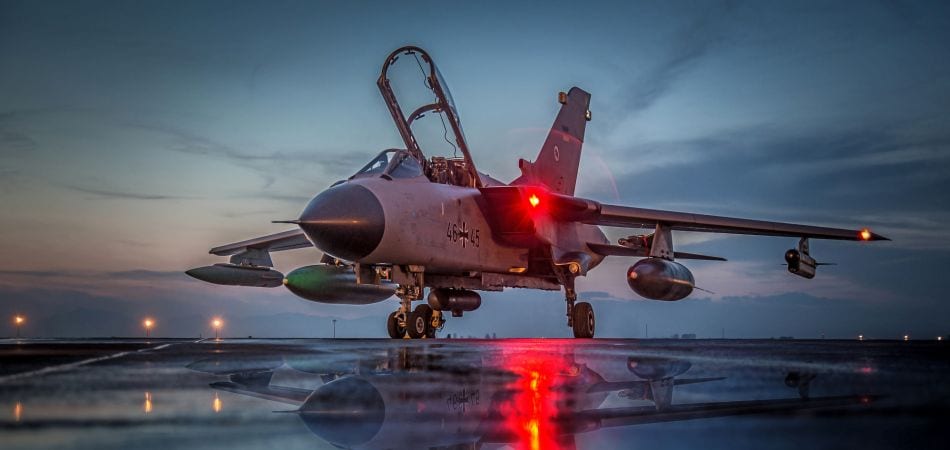
This critical article addresses the US plans to deploy its nuclear weapons closer to Russia’s border under the NATO umbrella and how these plans are being constructed in the context of the 2026 Ankara NATO Summit. Contrary to the mainstream discourse, the article criticizes the approach that unquestioningly views this nuclear expansion move as a tool of “deterrence.” The core argument is that the prevailing narrative renders invisible the US’s geopolitical interests, the risk of escalating the arms race, and the failure of nuclear sharing to manage tensions within the alliance. By analyzing information widely reported by media outlets such as Aydınlık, Financial Times, AA, BBC, DW, etc., the study examines which sources these reports are based on, through which frames they are presented, and which alternative realities they exclude.
Recent headlines extensively covered in the media, such as “US moves nuclear weapons to Russia’s border,” have revived a tension reminiscent of the Cold War era. These reports generally highlight the need to reassure allies in the face of the US reducing its conventional troop presence and legitimize this move within the framework of “deterrence.” However, this narrative leaves some fundamental questions unanswered: Is this US move genuinely an act of “self-defense,” or is it an attempt to consolidate its own hegemony? Will moving nuclear weapons closer to Russia’s border lead to an escalating security dilemma? And throughout this process, what interests is the mainstream media constructing a language to serve? This article aims to present a critical analysis of the existing discourse by addressing these questions.
A Critique of the US “Deterrence” Discourse
Mainstream news presents the US nuclear deployment plans almost entirely as a “deterrence” tool against the Russian threat. While reports from the Financial Times, a leading financial press outlet, are frequently cited, the US’s prioritization of nuclear deterrence at a time when it is reducing its own conventional military support is interpreted not only as a means of providing assurance to allies but also as a way of cutting its own military spending. A critical perspective argues that this move is not merely a reaction to an external threat but also part of the US’s effort to maintain its global hegemony. Theoretically, “deterrence” is a product of the Cold War, and in today’s multipolar world, it carries the risk of escalating existing tensions rather than managing them. Moreover, the “deterrence” discourse is shaped by the influence of actors such as the “Eastern European Lobby” in US domestic politics and overlooks the internal dynamics that trigger NATO’s expansion. At this point, it is observed that nuclear weapons, beyond being mere status symbols, have transformed into a symbol of “belonging” and “partnership” within the alliance. As EDAM analyst Aaron Stein stated, in the eyes of the Turkish security establishment, nuclear weapons are a status symbol; it is believed that their presence firmly reinforces the American-Turkish defense partnership. This demonstrates that nuclear weapons have turned into an instrument of identity and status construction, beyond being a purely military instrument.
The End of New START: Catastrophe or Opportunity?
A large portion of the media has described the expiration of the New START treaty in February 2026 as the “beginning of nuclear non-oversight” and the “lighting of the fuse of a new arms race.” While UN Secretary-General Guterres’s warning of “a grave moment for international peace and security” is frequently repeated, a deeper analysis of why this treaty could not be extended is generally ignored. A critical approach should read the end of New START not only as a “catastrophe” but also as a reflection of the parties’ mutual distrust and the changing global balances. For instance, Russia’s suspension of the treaty due to the Ukraine war and the US’s reaction to this actually revealed the dysfunctionality of the existing agreement. Moreover, while the expiration of the treaty means the absence of a verification mechanism between the two countries that hold 90% of the world’s nuclear weapons stockpile, the inadequacy of this treaty in the face of the rise of other nuclear powers like China is also a reality. Therefore, while the end of New START is a catastrophe, the real catastrophe is not the inability to extend this treaty, but the decades-long nuclear arms race itself.
The 2026 Ankara NATO Summit: Nuclear Policy as a Tool of Consolidation
The 2026 Ankara NATO Summit is a critical platform for shaping the alliance’s nuclear posture. In the media, this summit is generally presented as NATO’s effort to adapt to the “deteriorating security environment.” NATO Secretary General Mark Rutte’s statements on the need for nuclear deterrence to remain reliable, safe, and effective create the impression that the alliance’s primary priority during this period is security. However, a critical reading argues that this summit could also be seen as an opportunity for the US to re-consolidate its control over NATO. With the membership of Sweden and Finland, NATO’s borders have been fully brought under the security umbrella in the Baltic Sea, which has allowed the US to reinforce its military presence in Europe. Furthermore, Turkey’s use of this summit as a showcase to display its defense industry products demonstrates that the alliance has become a center of economic interests beyond being a military-political platform.
Turkey’s Role and the Nuclear Security Dilemma
Turkey’s position in nuclear sharing is frequently defined as a “status symbol,” and the presence of US nuclear weapons at Incirlik Base is seen by the Turkish security establishment as an indicator of commitment to the alliance. This approach ignores the security dilemma inherent in the nature of nuclear weapons. The security dilemma describes the escalation spiral that emerges when measures taken by one state to defend itself are perceived as a threat by other states. Turkey’s hosting of nuclear weapons on its soil, while providing “deterrence” on the one hand, carries the risk of triggering a regional nuclear arms race on the other. This situation demonstrates that nuclear deterrence is not merely an element of “balance” in international relations but also a source of deeper insecurity and instability.
A Critique of the Media Discourse and the Issue of Source Utilization
When we examine the main sources on which the article is based, it is evident that information obtained from official institutions or government officials is predominantly featured. Mainstream media organizations such as Financial Times, DW, AA, and BBC uncritically relay the official statements of the US and NATO, while giving very little space to dissenting or independent voices. For example, subjects such as the economic reasons behind the US reducing its conventional military support or how this move will deepen political divisions within Europe are not sufficiently discussed. Additionally, technical terms like “nuclear sharing arrangements” and “dual-capable aircraft” that are the subject of the news are directly used by the media, but the risks and ethical dimensions contained within these concepts are not adequately questioned. This situation justifies the criticism that the media practically normalizes nuclear armament and renders it an unquestionable matter of “security.”
Conclusion
The US plans to deploy nuclear weapons on Russia’s border are not merely a geopolitical maneuver but also part of a deep security dilemma and a hegemonic struggle. The mainstream discourse, by presenting these moves within legitimate frames such as “deterrence” and “assurance,” obscures the dangers and unethical nature of nuclear armament. This article aims to raise awareness among readers that the mainstream media constructs a “reality” that needs to be questioned, by offering a critical analysis of the existing narrative. True security can be established not by deploying nuclear weapons closer to one another but by increasing dialogue, transparency, and mutual trust. However, the current media discourse makes such alternative security models almost entirely invisible.
Bibliography
Aydınlık Newspaper. “Great provocation… Financial Times: US discusses moving nuclear umbrella to Russia’s border.” June 2, 2026.
BBC Turkish. “Poland: We want the US to deploy its nuclear weapons in our country.” March 14, 2025.
DW Turkish. “US-Russia treaty ends, nuclear limits disappear.” February 5, 2026.
DW Turkish. “Turkey wants to turn NATO summit into an arms showcase.” June 8, 2026.
EDAM. “Turkey and Tactical Nuclear Weapons: A Political Love Affair – Aaron Stein.” 2012.
Ege Alternatif. “US move to deploy nuclear weapons on Russia’s borders.” June 2, 2026.
Euronews. “Latest situation in the nuclear arms race: START treaty ended.” February 5, 2026.
Independent Turkish – Gürsel Tokmakoğlu. “The end of New START: The beginning of nuclear non-oversight and the transformation in the global balance.” February 9, 2026.
Medyascope. “New START treaty ends: Is a nuclear arms race starting?” February 5, 2026.
MSU Marmara University Journal of Social Sciences. “Deterrence for the 21st Century: What Changed in Theory and Practice?” 2023.
NATO. “Türkiye to host 2026 NATO Summit in Ankara.” August 20, 2025.
NATO. “NATO Nuclear Symposium concludes in Istanbul.” April 22, 2026.
Perspektif.eu. “The Gloomy New Era: New START That Limited Nuclear Weapons Is Now Gone.” February 11, 2026.
Sözcü. “Worrying step from US for Putin: Lining Russia’s backyard with nuclear weapons.” June 2, 2026.
Tesam Strategy. “NATO’S EXPANSION, RUSSIAN THREAT, AND GLOBAL TRANSFORMATION.”
TRT News. “Countdown on the doomsday clock: New START expires today.” February 5, 2026.
Journal of International Relations. “Why Did NATO Expand? NATO’s Expansion and US-Russia Domestic Politics in Light of International Relations Theories.” Şener Aktürk.
AA. “Rutte: We must ensure NATO’s nuclear deterrence remains effective.” April 23, 2026.
Perspektif.eu. “NATO 3.0: Washington’s New Architecture and the Question of Compensation.” June 8, 2026.
SDE. “The US’s Efforts to Use NATO for Its Own Interests.”
Sefa Yürükel
Danish ethnographer and social anthropologist (MA)
Aarhus University, 1997
Independent Researcher
Fields of Research: International Politics, Public International Law, Geopolitics, Sociology, Psychology, Cultural Studies, Systems and Structures.


Bir yanıt yazın